China Immunologic Disorders Market Size & Growth Rate
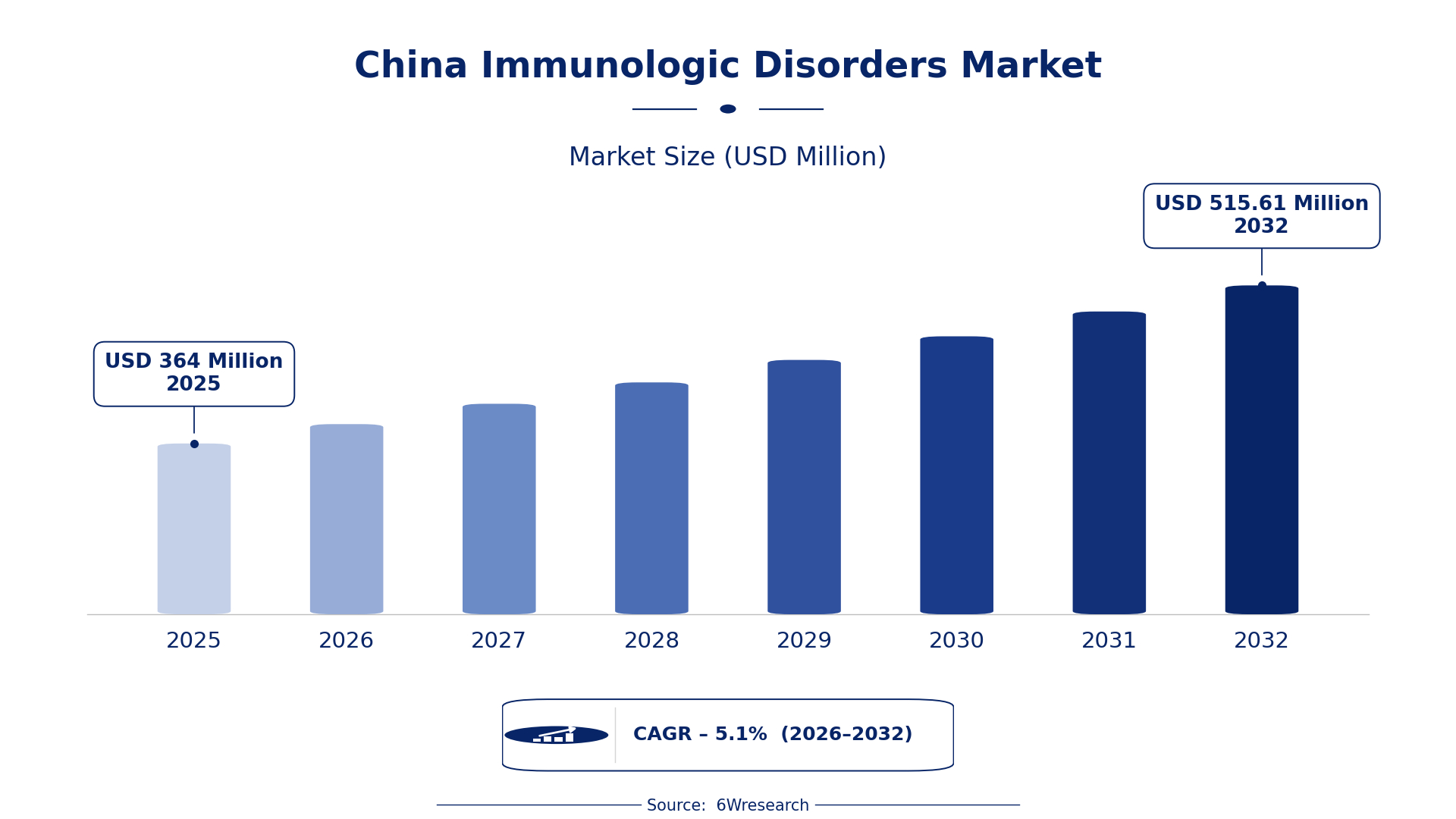
According to 6Wresearch internal database and industry insights, the China Immunologic Disorders Market was valued at USD 364.0 million in 2025 and is projected to reach USD 515.61 million by 2032, growing at a CAGR of approximately 5.1% during 2026–2032.
China Immunologic Disorders Market Highlights
| Report Metric | Details |
| Report Name | China Immunologic Disorders Market |
| Market Size 2025 | USD 364.0 million |
| Market Size 2032 | USD 515.61 million |
| Absolute Growth 2025–2032 | USD 151.61 million |
| CAGR 2026–2032 | 5.1% |
| Peak Annual Growth | 7.6% in 2029 |
| Forecast Period | 2026–2032 |
| Historical Data | 2022–2025 |
| Base Year | 2025 |
| Leading Disorder Category, 2025 | Autoimmune Disorders (44% share) |
| Leading Pathophysiology, 2025 | Overactive Immune System (38% share) |
| Leading Treatment Modality, 2025 | Immunosuppressive Therapy (36% share) |
| Leading End User, 2025 | Rheumatology Clinics (48% share) |
| Fastest-Growing Disorder Category | Immunodeficiencies (7.5% CAGR) |
| Fastest-Growing Pathophysiology | Weak/Absent Immune Response (7.4% CAGR) |
| Fastest-Growing Treatment Modality | Immunoglobulin Therapy (7.4% CAGR) |
| Fastest-Growing End User | Rare Disease Clinics (6.5% CAGR) |
| Growing Sector | Rheumatology Clinics |
| Key End Users | Rheumatology Clinics, Allergy Specialists, Rare Disease Clinics |
China Immunologic Disorders Market Year-wise Growth Rate and Key Drivers (2022–2032)
This graph illustrates the annual growth rates of the market from 2022 to 2032, highlighting a steady upward trajectory and projected market expansion over the forecast period.
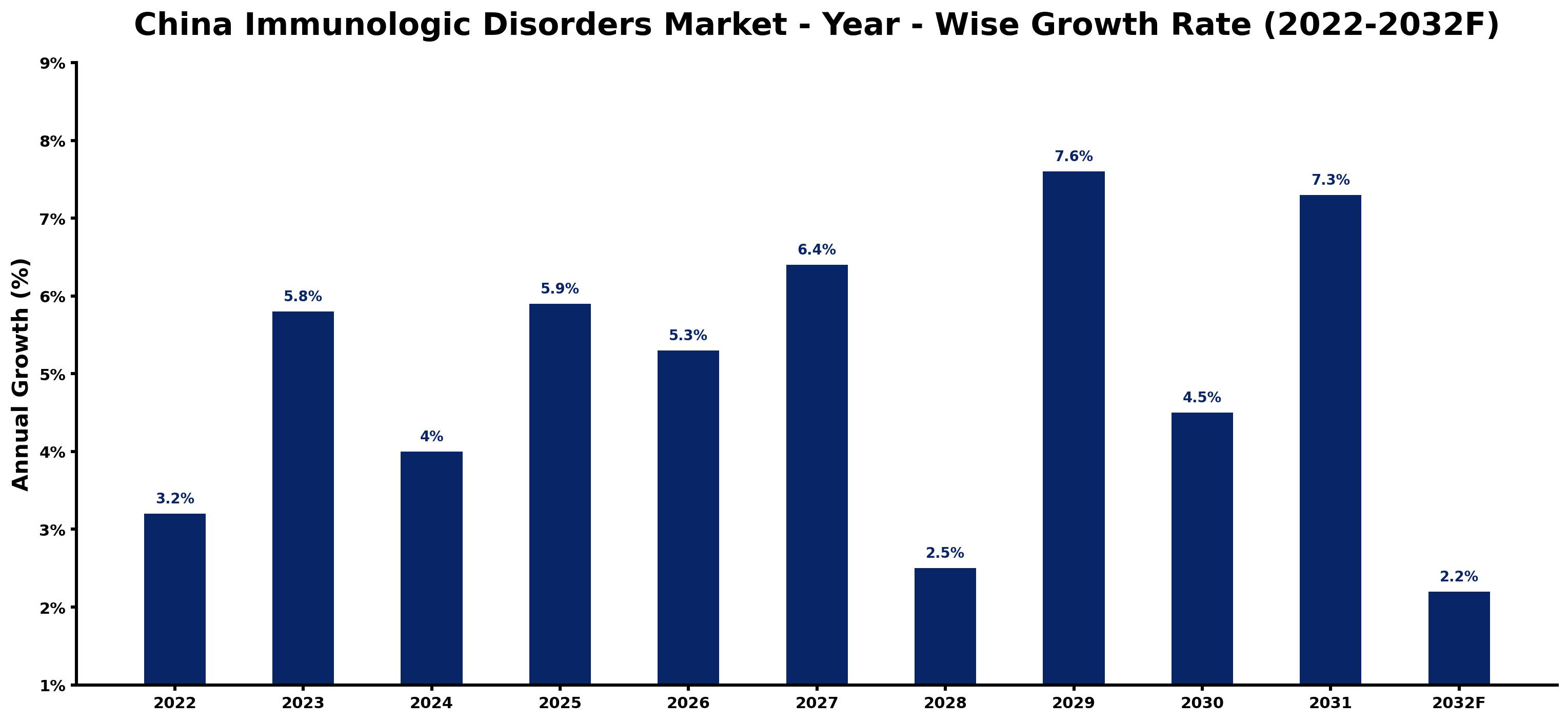
The following table presents the estimated annual growth rate for each year together with the principal factor influencing market performance.
| Year | Estimated Annual Growth (%) | Market Rationale |
| 2022 | 3.2 | The market experienced steady growth due to the existing patient base and healthcare infrastructure. |
| 2023 | 5.8 | Increased awareness of immunologic disorders led to higher patient consultations and treatment uptake. |
| 2024 | 4.0 | The growth rate slowed as healthcare facilities adjusted to rising demand and treatment protocols. |
| 2025 | 5.9 | A surge in immunoglobulin therapy demand contributed to faster growth this year. |
| 2026 | 5.3 | The market faced a slowdown as new treatment guidelines were implemented across facilities. |
| 2027 | 6.4 | Rising investments in research and development spurred growth in immunologic therapies. |
| 2028 | 2.5 | The growth rate declined as market saturation began to affect new patient enrollments. |
| 2029 | 7.6 | A peak in growth was driven by advancements in biologics and immunosuppressive therapies. |
| 2030 | 4.5 | The growth rate slowed as the market began stabilising after rapid expansion. |
| 2031 | 7.3 | Renewed interest in rare disease management led to increased growth in specialized clinics. |
| 2032 | 2.2 | The market is expected to grow at a slower rate as established therapies dominate. |
Note: Market size estimations and growth projections presented in this report are based on 6Wresearch's proprietary forecasting methodology, utilizing the latest available industry data, government publications, and primary research inputs.
China Immunologic Disorders Market Synopsis
Immunologic Disorders in China include conditions that affect the immune system's functionality. These disorders encompass autoimmune diseases, immunodeficiencies, and allergies, which are diagnosed through clinical evaluations and laboratory tests. The China Immunologic Disorders Market is growing as patient numbers rise, with around 120 million individuals affected by autoimmune disorders. Increased investment in treatment protocols and healthcare infrastructure is driving demand, particularly in regions like Guangdong and Jiangsu, where specialised clinics are concentrated.
Market Dynamics Impact Analysis (2026–2032)
| Factor | Type | Impact | Primary Segment Affected |
| Rising patient numbers and healthcare investments drive demand for immunologic therapies. | Driver | High | Autoimmune Disorders |
| Increased prevalence of allergic conditions among children boosts demand for allergy treatments. | Driver | High | Allergic Conditions |
| Expanding immunoglobulin therapy market presents opportunities for suppliers. | Opportunity | High | Immunodeficiencies |
| Growing awareness of immunologic disorders creates demand for specialized clinics. | Opportunity | Medium | Rheumatology Clinics |
| Limited access to advanced therapies in rural areas restricts patient treatment options. | Restraint | High | Immunoglobulin Therapy |
| High costs of biologics may deter patients from seeking treatment. | Restraint | Medium | Biologics & Steroids |
| The market still has to solve a few problems, including limited access to therapies. | Challenge | High | Autoimmune Disorders |
| Regulatory hurdles can delay the approval of new treatments, affecting availability. | Challenge | Medium | Autoimmune Disorders |
Evaluation of Drivers in China Immunologic Disorders Market (2026–2032)
The main growth drivers and the segments they affect most are set out below.
| Drivers | Primary Segment Affected | Why It Matters (Evidence) |
| Increased investment in healthcare infrastructure improves treatment access for patients. | Immunodeficiencies | Over 10 million patients receive immunoglobulin therapy annually, leading to higher demand. |
| Growing prevalence of autoimmune disorders drives the need for effective therapies. | Autoimmune Disorders | Approximately 120 million patients in China are affected, creating a substantial market. |
| Rising awareness of allergic conditions increases consultations and treatments. | Allergic Conditions | The prevalence of allergic conditions in urban areas is around 30% among children. |
| Advancements in biologics improve treatment options for immunologic disorders. | Biologics & Steroids | The China Food and Drug Administration has set guidelines for biologics since 2020. |
| Investment in research and development fosters innovation in immunologic therapies. | Immunosuppressive Therapy | In 2023, the government allocated 500 million CNY for immunologic disorder research. |
Market growth in China for Immunologic Disorders rests on increased investment in healthcare infrastructure, improving treatment access for patients. Approximately 120 million individuals are affected by autoimmune disorders, driving demand for effective therapies. The prevalence of allergic conditions among children is around 30%, resulting in higher consultations and treatment uptake.
Evaluation of Restraints in China Immunologic Disorders Market
The key brakes on demand, and where they bite hardest, are shown below.
| Market Restraint | Primary Segment Affected | Why It Matters (Evidence) |
| Limited access to advanced therapies in rural areas restricts patient treatment options. | Immunoglobulin Therapy | Patients in rural regions often face challenges accessing necessary treatments, affecting health outcomes. |
| High costs of biologics may deter patients from seeking treatment. | Biologics & Steroids | The price of biologics can be prohibitive, limiting patient access to essential therapies. |
| Regulatory hurdles can delay the approval of new treatments, affecting availability. | Autoimmune Disorders | Long approval times for new therapies can hinder patient access to essential treatments. |
| Healthcare disparities exist between urban and rural areas, impacting treatment access. | Immunosuppressive Therapy | Urban areas have more resources, leading to unequal access for patients in rural regions. |
| Limited awareness of immunologic disorders in some regions can slow diagnosis. | Autoimmune Disorders | Patients may not seek treatment due to a lack of understanding of their conditions. |
China Immunologic Disorders Market Challenges
The China Immunologic Disorders Market faces several challenges, starting with high treatment costs. In 2022, around 120 million patients with autoimmune disorders encountered financial difficulties, as many therapies remain unaffordable for low-income families. A shortage of skilled professionals exacerbates this issue, especially in provinces like Guangdong and Jiangsu, where rheumatology clinics struggle to find qualified specialists, delaying patient access to necessary care. Regulatory hurdles complicate the market; guidelines for biologics introduced in 2020 have increased compliance costs for producers, ultimately raising prices for buyers. Supply chain issues arise from the concentration of treatment facilities, resulting in uneven availability of therapies across regions and leaving patients waiting for essential treatments.
Trends in the China Immunologic Disorders Market
Four trends stand out in the China Immunologic Disorders Market.
- National Immunology Strategy Improving Treatment Access: The National Health Commission's 'National Immunology Strategy' launched in 2021 aims to improve treatment protocols. This initiative has a budget of 500 million CNY allocated for research, increasing patient access to immunologic therapies.
- Rising Demand for Allergy Treatments: In urban centres, the prevalence of allergic conditions among children is around 30%. This trend has led to an increase in allergy specialists, with over 1,000 registered in China, responding to the growing need for effective treatments.
- Expansion of Rare Disease Clinics: The establishment of the National Rare Disease Registry in 2020 has led to the growth of rare disease clinics. These clinics are projected to increase their patient base, with a CAGR of 6.5% from 2026 to 2032.
- Focus on Immunoglobulin Therapy: Immunoglobulin therapy is gaining traction as a critical treatment for immunodeficiencies. With over 10 million patients receiving this therapy annually, the demand for immunoglobulin products is expected to rise.
Investment Opportunities in the China Immunologic Disorders Market
Investors looking at the China Immunologic Disorders Market should consider the following areas.
- Growing Need for Immunoglobulin Therapy: With over 10 million patients receiving immunoglobulin therapy annually, the demand for these products is high. Suppliers can enter this market by partnering with healthcare facilities to ensure product availability.
- Investment in Allergy Treatment Solutions: The prevalence of allergic conditions among children is around 30%, creating a demand for effective treatments. Investing in allergy treatment solutions can benefit specialists in urban centres like Guangdong.
- Expansion of Rare Disease Management: The establishment of the National Rare Disease Registry has created a need for specialized clinics. Investing in rare disease management can tap into a growing patient base, particularly in urban areas.
- Focus on Biologics Development: With the government allocating 500 million CNY for immunologic research, there is a strong opportunity in biologics development. Collaborating with research institutions can facilitate entry into this market.
Government Initiatives in the China Immunologic Disorders Market
The 'National Immunology Strategy' was launched by the National Health Commission in 2021 to improve treatment access and standards for immunologic disorders. This strategy aims to improve the quality of care and increase patient awareness. Additionally, the 'Allergy Prevention and Control Program' initiated by the Ministry of Health in 2022 focuses on reducing the incidence of allergic conditions nationwide. This program supports healthcare facilities in implementing effective treatment protocols for allergies, with a budget of 300 million CNY allocated for its implementation.
The National Medical Products Administration is responsible for approving new treatments and streamlining the approval process for biologics. Their updated 'Biologics Regulation Framework' in 2021 aims to facilitate faster access to innovative therapies. Furthermore, the Chinese Society of Immunology promotes awareness and research in immunologic disorders, ensuring that healthcare professionals are informed about the latest developments and treatment options. In 2023, the government allocated 500 million CNY for immunologic research initiatives.
Future Insight of the China Immunologic Disorders Market
The China Immunologic Disorders Market is poised for transformation by 2032, primarily driven by the National Immunology Strategy launched in 2021, which aims to enhance treatment protocols nationwide. The government’s allocation of 500 million CNY for immunologic disorder research in 2023 will likely lead to advancements in therapies. Increased awareness promoted by the Chinese Society of Immunology will improve patient education and early diagnosis, enhancing outcomes. The establishment of the National Rare Disease Registry in 2020 will facilitate better tracking and management of rare immunologic disorders, ensuring more targeted care for affected individuals.
Market Segmentation Analysis
Each segment group is reviewed below, with the leader by share and the fastest grower by CAGR.
By Disorder Category – Autoimmune Disorders Dominated, Immunodeficiencies Expected to Grow Fastest
According to Sachin Kumar Rai, Senior Research Analyst at 6Wresearch, in 2025, Autoimmune Disorders led the disorder category split with a 44% share. Autoimmune disorders hold the largest share in the China immunologic disorders market due to approximately 120 million patients affected. This substantial patient base drives demand for treatments, particularly in rheumatology clinics concentrated in provinces like Guangdong and Jiangsu. Immunodeficiencies are set to record the highest CAGR in this split, 7.5% over 2026–2032. The immunodeficiencies segment is experiencing rapid growth, primarily because over 10 million patients receive immunoglobulin therapy annually. As awareness and diagnosis improve, the number of patients needing treatment is expected to rise, further solidifying this segment's market position. Suppliers should strategically focus on immunodeficiencies to effectively capture the growing market share.
By Pathophysiology – Overactive Immune System Dominated, Weak/Absent Immune Response Expected to Grow Fastest
Overactive Immune System took a 38% share of pathophysiology in 2025, more than any other category. The overactive immune system segment leads the market as it is crucial for treating various autoimmune conditions prevalent in China. This significance is underscored by the National Immunology Strategy, which aims to enhance treatment protocols for affected patients. The quickest growth will come from Weak/Absent Immune Response, forecast to expand at a CAGR of 7.4% between 2026 and 2032. Weak or absent immune response is the fastest-growing segment, driven by the increasing necessity for effective management of immunodeficient patients. As the recognition of primary immunodeficiencies expands, this segment is set for notable growth. Buyers should prioritise acquiring advanced therapies targeting weak or absent immune responses to ensure comprehensive patient care.
By Treatment Modality – Immunosuppressive Therapy Dominated, Immunoglobulin Therapy Expected to Grow Fastest
Immunosuppressive Therapy accounted for a 36% market share by treatment modality in 2025. Immunosuppressive therapy dominates the market as the primary treatment for autoimmune diseases affecting millions of patients. This widespread adoption is reinforced by established guidelines from the China Food and Drug Administration for immunologic treatments. Immunoglobulin Therapy is projected to grow fastest, at a CAGR of 7.4% during 2026–2032. Immunoglobulin therapy is rapidly growing, essential for over 10 million patients with immunodeficiencies each year. The rising demand reflects an increasing recognition of the need for targeted therapies in managing immunologic disorders. Suppliers must prioritise innovations in immunoglobulin therapy to effectively meet the surging demand in the market.
By End User – Rheumatology Clinics Dominated, Rare Disease Clinics Expected to Grow Fastest
With a 48% revenue share in 2025, Rheumatology Clinics was the largest end user category. Rheumatology clinics are the leading end-user segment, providing specialised care for the vast number of patients with autoimmune disorders. Their concentration in key provinces like Guangdong and Jiangsu further solidifies their market share. Over 2026–2032, Rare Disease Clinics are expected to post the fastest growth, at a CAGR of 6.5%. Rare disease clinics are experiencing the fastest growth, driven by the establishment of the National Rare Disease Registry in 2020. This initiative highlights the need for specialised care in managing unique immunologic conditions. Providers should consider partnerships with rare disease clinics to tap into this expanding market.
Key Attractiveness of the Report
- 10 Years of Market Numbers
- Historical Data Starting from 2022 to 2025
- Base Year 2025
- Forecast Data until 2032
- Key Performance Indicators Impacting the Market
- Major Upcoming Developments and Projects
Key Highlights of the Report:
- China Immunologic Disorders Market Outlook
- Market Size of China Immunologic Disorders Market, 2025
- Forecast of China Immunologic Disorders Market, 2032
- Historical Data and Forecast of China Immunologic Disorders Revenues & Volume for the Period 2022 - 2032F
- China Immunologic Disorders Market Trend Evolution
- China Immunologic Disorders Market Drivers and Challenges
- China Immunologic Disorders Price Trends
- China Immunologic Disorders Porter's Five Forces
- China Immunologic Disorders Industry Life Cycle
- Historical Data and Forecast of China Immunologic Disorders Market Revenues & Volume By Disorder Category for the Period 2022 - 2032F
- Historical Data and Forecast of China Immunologic Disorders Market Revenues & Volume By Autoimmune Disorders for the Period 2022 - 2032F
- Historical Data and Forecast of China Immunologic Disorders Market Revenues & Volume By Immunodeficiencies for the Period 2022 - 2032F
- Historical Data and Forecast of China Immunologic Disorders Market Revenues & Volume By Allergic Conditions for the Period 2022 - 2032F
- Historical Data and Forecast of China Immunologic Disorders Market Revenues & Volume By Inflammatory Syndromes for the Period 2022 - 2032F
- Historical Data and Forecast of China Immunologic Disorders Market Revenues & Volume By Pathophysiology for the Period 2022 - 2032F
- Historical Data and Forecast of China Immunologic Disorders Market Revenues & Volume By Overactive Immune System for the Period 2022 - 2032F
- Historical Data and Forecast of China Immunologic Disorders Market Revenues & Volume By Weak/Absent Immune Response for the Period 2022 - 2032F
- Historical Data and Forecast of China Immunologic Disorders Market Revenues & Volume By Hyperactive Reactions for the Period 2022 - 2032F
- Historical Data and Forecast of China Immunologic Disorders Market Revenues & Volume By Cytokine Storms, IL Overdrive for the Period 2022 - 2032F
- Historical Data and Forecast of China Immunologic Disorders Market Revenues & Volume By Treatment Modality for the Period 2022 - 2032F
- Historical Data and Forecast of China Immunologic Disorders Market Revenues & Volume By Immunosuppressive Therapy for the Period 2022 - 2032F
- Historical Data and Forecast of China Immunologic Disorders Market Revenues & Volume By Immunoglobulin Therapy for the Period 2022 - 2032F
- Historical Data and Forecast of China Immunologic Disorders Market Revenues & Volume By Desensitization & Biologics for the Period 2022 - 2032F
- Historical Data and Forecast of China Immunologic Disorders Market Revenues & Volume By Biologics & Steroids for the Period 2022 - 2032F
- Historical Data and Forecast of China Immunologic Disorders Market Revenues & Volume By End User for the Period 2022 - 2032F
- Historical Data and Forecast of China Immunologic Disorders Market Revenues & Volume By Rheumatology Clinics for the Period 2022 - 2032F
- Historical Data and Forecast of China Immunologic Disorders Market Revenues & Volume By Rare Disease Clinics for the Period 2022 - 2032F
- Historical Data and Forecast of China Immunologic Disorders Market Revenues & Volume By Allergy Specialists for the Period 2022 - 2032F
- Historical Data and Forecast of China Immunologic Disorders Market Revenues & Volume By Inpatient Immunology Units for the Period 2022 - 2032F
- China Immunologic Disorders Import Export Trade Statistics
- Market Opportunity Assessment By Disorder Category
- Market Opportunity Assessment By Pathophysiology
- Market Opportunity Assessment By Treatment Modality
- Market Opportunity Assessment By End User
- China Immunologic Disorders Top Companies Market Share
- China Immunologic Disorders Competitive Benchmarking By Technical and Operational Parameters
- China Immunologic Disorders Company Profiles
- China Immunologic Disorders Key Strategic Recommendations
Market Covered
This report examines the market across the segments below.
By Disorder Category
- Autoimmune Disorders
- Immunodeficiencies
- Allergic Conditions
- Inflammatory Syndromes
By Pathophysiology
- Overactive Immune System
- Weak/Absent Immune Response
- Hyperactive Reactions
- Cytokine Storms
- IL Overdrive
By Treatment Modality
- Immunosuppressive Therapy
- Immunoglobulin Therapy
- Desensitization & Biologics
- Biologics & Steroids
By End User
- Rheumatology Clinics
- Rare Disease Clinics
- Allergy Specialists
- Inpatient Immunology Units































