China Immunosuppressive Therapy Market Size & Growth Rate
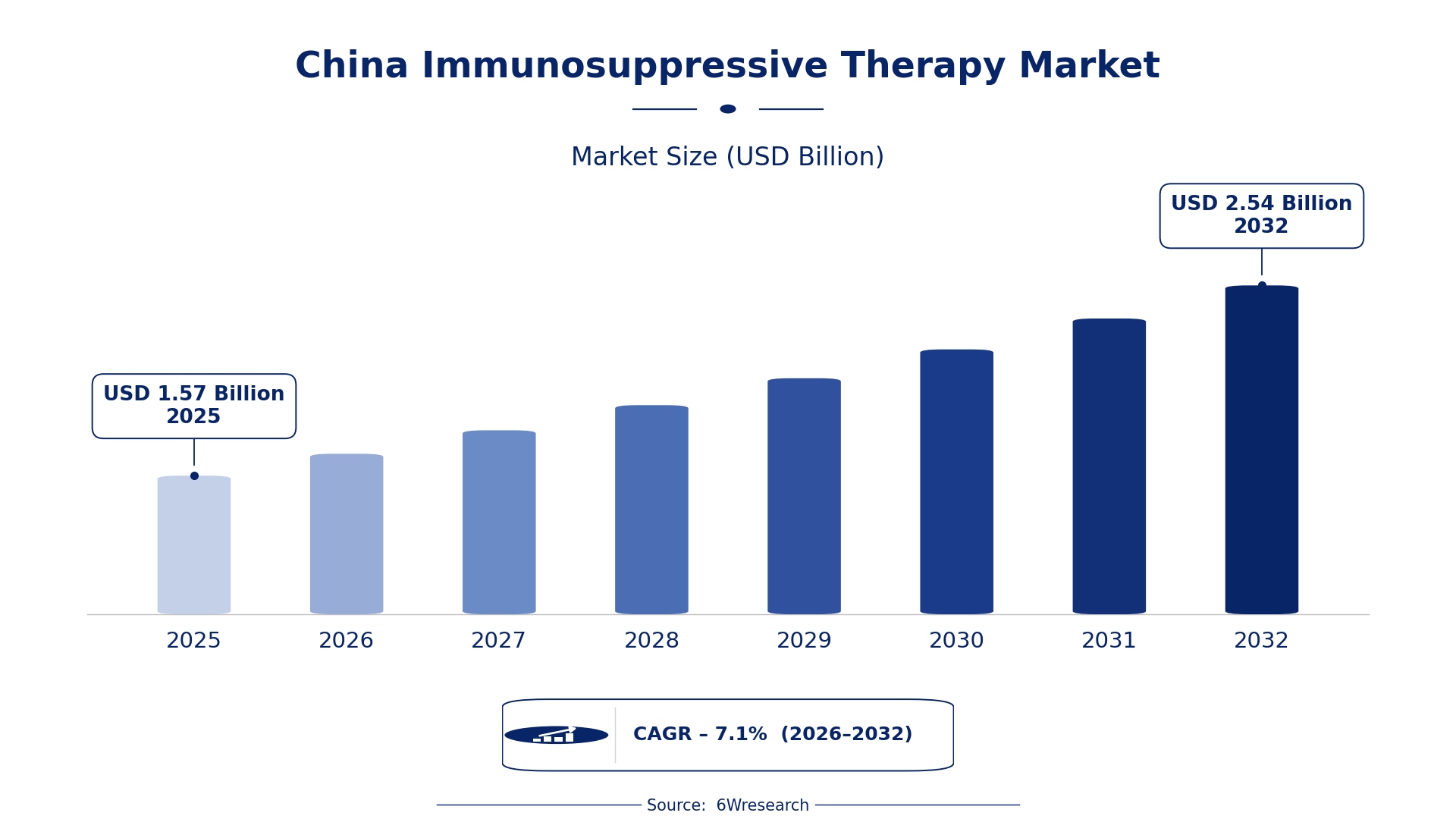
According to 6Wresearch internal database and industry insights, the China Immunosuppressive Therapy Market was valued at USD 1.57 billion in 2025 and is projected to reach USD 2.54 billion by 2032, growing at a CAGR of approximately 7.1% during 2026–2032.
China Immunosuppressive Therapy Market Highlights
| Report Metric | Details |
| Report Name | China Immunosuppressive Therapy Market |
| Market Size 2025 | USD 1.57 billion |
| Market Size 2032 | USD 2.54 billion |
| Absolute Growth 2025–2032 | USD 0.97 billion |
| CAGR 2026–2032 | 7.1% |
| Peak Annual Growth | 9.4% in 2030 |
| Forecast Period | 2026–2032 |
| Historical Data | 2022–2025 |
| Base Year | 2025 |
| Leading Therapy Type, 2025 | Induction Therapy (46% share) |
| Leading Patient Type, 2025 | Transplant Recipients (43% share) |
| Leading Administration Site, 2025 | Hospital IV Unit (40% share) |
| Leading End User, 2025 | Organ Transplant Centers (38% share) |
| Fastest-Growing Therapy Type | Combination Therapy (9.0% CAGR) |
| Fastest-Growing Patient Type | Autoimmune Disease Patients (9.8% CAGR) |
| Fastest-Growing Administration Site | Outpatient Injection (9.2% CAGR) |
| Fastest-Growing End User | Immunology Departments (8.2% CAGR) |
| Growing Sector | Organ Transplantation |
| Key End Users | Transplant Recipients, Autoimmune Disease Patients, Organ Transplant Centers, Healthcare Providers |
China Immunosuppressive Therapy Market Year-wise Growth Rate and Key Drivers (2022–2032)
This graph illustrates the annual growth rates of the market from 2022 to 2032, highlighting a steady upward trajectory and projected market expansion over the forecast period.
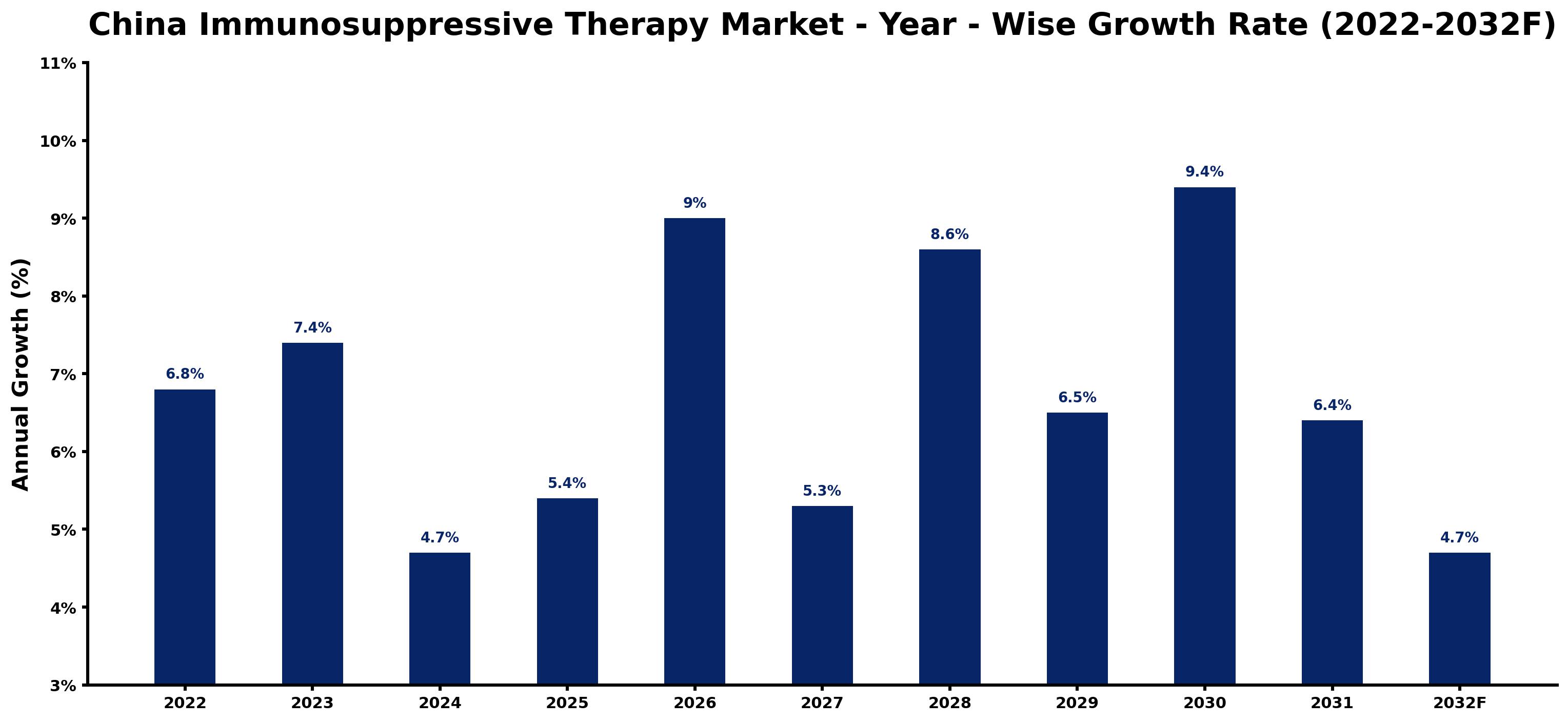
Each row of the following table gives one year's estimated growth and the event or demand shift that explains it.
| Year | Estimated Annual Growth (%) | Market Rationale |
| 2022 | 6.8 | The market experienced steady growth due to increasing healthcare access and organ transplant procedures. |
| 2023 | 7.4 | Growth accelerated as more patients received immunosuppressive therapy for autoimmune diseases. |
| 2024 | 4.7 | A slowdown occurred as market adjustments were made to evolving treatment protocols and patient needs. |
| 2025 | 5.4 | Demand increased as healthcare facilities expanded their transplant services and patient outreach efforts. |
| 2026 | 9.0 | Growth surged with advancements in immunosuppressive therapies and increased patient enrolment in transplant programs. |
| 2027 | 5.3 | A slowdown was noted as market saturation began to affect therapy adoption rates. |
| 2028 | 8.6 | Demand rose again as outpatient treatment options became more widely accepted among patients. |
| 2029 | 6.5 | Growth slowed as the market faced challenges related to therapy standardisation and regulatory processes. |
| 2030 | 9.4 | A peak in growth was reached due to heightened awareness and improved outcomes from the Organ Transplant Development Plan. |
| 2031 | 6.4 | The market experienced a slowdown as the focus shifted towards long-term patient management strategies. |
| 2032 | 4.7 | Growth continued to slow as the market stabilised with established treatment protocols. |
Note: Market size estimations and growth projections presented in this report are based on 6Wresearch's proprietary forecasting methodology, utilizing the latest available industry data, government publications, and primary research inputs.
China Immunosuppressive Therapy Market Synopsis
Immunosuppressive Therapy in China includes drugs that prevent rejection of transplanted organs and manage autoimmune diseases. These therapies are synthesized and administered in various forms, primarily for organ transplantation and autoimmune disorder management. The China Immunosuppressive Therapy Market is expanding due to increased healthcare access, with over 1.5 million patients treated in 2022 and 300 organ transplant centres actively utilising these therapies. The launch of the "Organ Transplant Development Plan" in 2023 further supports this growth by improving transplant outcomes.
Market Dynamics Impact Analysis (2026–2032)
| Factor | Type | Impact | Primary Segment Affected |
| Increasing number of organ transplant centers | Driver | High | Transplant Recipients |
| Rising patient population with autoimmune diseases | Driver | High | Autoimmune Disease Patients |
| Investment in transplant infrastructure | Opportunity | High | Organ Transplant Centers |
| Growing demand for outpatient treatment options | Opportunity | Medium | Outpatient Injection |
| Regulatory hurdles in therapy approvals | Restraint | High | Induction Therapy |
| Limited awareness among patients about available therapies | Restraint | Medium | Maintenance Therapy |
| Immunosuppressive Therapy in China faces high costs for patients | Challenge | High | Transplant Recipients |
| Complexity in managing long-term therapy regimens | Challenge | Medium | Autoimmune Disease Patients |
Evaluation of Drivers in China Immunosuppressive Therapy Market (2026–2032)
The main growth drivers and the segments they affect most are set out below.
| Drivers | Primary Segment Affected | Why It Matters (Evidence) |
| Expansion of organ transplant centers | Transplant Recipients | Over 300 centers in China are actively using immunosuppressive therapy, increasing patient access. |
| Growing prevalence of autoimmune diseases | Autoimmune Disease Patients | China has an estimated 30 million patients, driving demand for effective therapies. |
| Government investment in transplant infrastructure | Organ Transplant Centers | In 2023, 500 million yuan was allocated to improve transplant facilities and services. |
| Increased adoption of outpatient treatment options | Outpatient Injection | Outpatient injections are gaining popularity, with a projected growth rate of 9.2%. |
| Rising awareness of immunosuppressive therapies | Maintenance Therapy | The Chinese Society of Transplantation provides guidelines that improve therapy knowledge among healthcare providers. |
Over 300 organ transplant centers are actively using immunosuppressive therapy, which boosts patient access and treatment options. With an estimated 30 million patients suffering from autoimmune diseases, the demand for effective therapies continues to rise. Additionally, outpatient treatment options are becoming more popular, with a projected CAGR of 9.2% for outpatient injections, further driving market expansion.
Evaluation of Restraints in China Immunosuppressive Therapy Market
The table below lists the restraints and the evidence behind each.
| Market Restraint | Primary Segment Affected | Why It Matters (Evidence) |
| High costs of immunosuppressive therapies | Transplant Recipients | Patients face financial barriers, limiting access to necessary treatments. |
| Regulatory complexities for new therapies | Induction Therapy | Approval processes can delay access to innovative therapies, impacting patient treatment timelines. |
| Limited patient awareness of available therapies | Maintenance Therapy | Many patients remain uninformed about treatment options, hindering therapy adoption. |
| Inconsistent therapy management practices | Autoimmune Disease Patients | Variability in treatment protocols can lead to suboptimal patient outcomes. |
| Healthcare provider shortages in rural areas | Organ Transplant Centers | Limited access to specialists affects the delivery of immunosuppressive therapies. |
China Immunosuppressive Therapy Market Challenges
The China Immunosuppressive Therapy Market struggles with a critical supply issue stemming from limited raw materials for drug synthesis, which delays production timelines for hospitals. Buyers face challenges with inconsistent availability of therapies, leading to treatment interruptions for approximately 1.5 million patients receiving immunosuppressive therapy for autoimmune diseases. Competition from alternative therapies is escalating, as new entrants disrupt established supply chains, complicating procurement for hospitals. Rising costs associated with compliance to ISO 9001 standards increase operational expenses for healthcare providers, potentially raising treatment costs for patients by up to 20%.
Trends in the China Immunosuppressive Therapy Market
Below mentioned are some of the trends shaping the China Immunosuppressive Therapy Market growth.
- Shift Towards Outpatient Treatment: In China, outpatient treatment options for immunosuppressive therapy are gaining traction, with a projected growth rate indicating increased patient preference. This shift allows for more flexible patient care and reduces hospital stays, improving overall treatment efficiency.
- Growing Focus on Combination Therapy: Healthcare providers are increasingly adopting combination therapy due to its effectiveness in improving treatment outcomes. This segment is expected to grow, driven by the need for more effective management of transplant patients.
- Increased Standardisation in Therapy Protocols: The Chinese Society of Transplantation is working on standardising immunosuppressive therapy protocols, improving treatment consistency across facilities. This initiative aims to improve patient outcomes and is supported by established quality standards.
- Expansion of Organ Transplant Centers: China's healthcare system is witnessing an increase in organ transplant centers, with over 300 currently operational. This expansion is vital for improving access to immunosuppressive therapy and enhancing patient care.
Investment Opportunities in the China Immunosuppressive Therapy Market
Investors looking at the China Immunosuppressive Therapy Market should consider the following areas.
- Joint Ventures with Local Healthcare Providers: With over 1.5 million patients needing immunosuppressive therapy, partnerships with local healthcare providers can improve service delivery. Entering through joint ventures can help navigate regulatory landscapes and improve patient access.
- Targeting Autoimmune Disease Patients: The growing population of over 30 million autoimmune disease patients presents a substantial opportunity for therapy providers. Focusing on tailored solutions can improve patient outcomes and drive sales in this segment.
- Investment in Hospital Infrastructure: The Chinese government allocated 500 million yuan in 2023 to improve transplant infrastructure. Suppliers can capitalise on this by providing advanced therapies and equipment to organ transplant centres, improving service delivery.
- Certification for Outpatient Treatment Facilities: As outpatient treatment options grow, obtaining necessary certifications for facilities can open new markets. This is particularly relevant for outpatient injection services, which are projected to see significant growth.
Government Initiatives in the China Immunosuppressive Therapy Market
The "Organ Transplant Development Plan" launched in 2023 improves existing regulations by focusing on transplant outcomes and access to immunosuppressive therapies. This plan builds on the "Transplantation Regulation Amendment" enacted in 2022, which streamlined approval processes for new therapies. Together, these measures aim to create a more efficient framework for organ transplantation and therapy administration, ultimately benefiting patients and healthcare providers. The National Health Commission oversees these initiatives, ensuring compliance and effectiveness in implementation.
Healthcare providers, particularly organ transplant centres, benefit from the "National Health Improvement Program" launched in 2023, which focuses on increasing access to immunosuppressive therapy. This program allocates funding to improve treatment facilities and patient outreach. Additionally, the "Drug Administration Law" updated in 2020 expedites the approval of new immunosuppressive medications, allowing providers to access innovative therapies more quickly. These measures aim to improve patient care and expand treatment options across the country.
Future Insight of the China Immunosuppressive Therapy Market
The China Immunosuppressive Therapy Market will undergo substantial changes by 2032, primarily driven by the "Organ Transplant Development Plan" aimed at improving transplant outcomes. Government investment in transplant infrastructure, amounting to 500 million yuan, will expand therapy access for hospitals. Advances in drug formulation technology will likely produce more effective treatments, benefiting healthcare providers and patients. The increasing number of over 30 million individuals with autoimmune diseases will continue to propel demand for immunosuppressive therapies.
Market Segmentation Analysis
Each segment group is reviewed below, with the leader by share and the fastest grower by CAGR.
By Therapy Type – Induction Therapy Dominated, Combination Therapy Expected to Grow Fastest
According to Sachin Kumar Rai, Senior Research Analyst at 6Wresearch, Induction Therapy took a 46% share of therapy type in 2025, more than any other category. Induction Therapy holds the largest share in the China Immunosuppressive Therapy Market because it is critical for the success of organ transplants. With over 300 organ transplant centres actively employing this therapy, it is indispensable in the initial treatment phase. The quickest growth will come from Combination Therapy, forecast to expand at a CAGR of 9.0% between 2026 and 2032. Combination Therapy is witnessing rapid growth as it is recognised for its effectiveness in managing transplant rejection. The increasing number of patients requiring tailored treatment plans is propelling this segment's expansion, ensuring its continued relevance in the market. This trend suggests that suppliers should prioritise the development of more combination therapies to meet the growing demand.
By Patient Type – Transplant Recipients Dominated, Autoimmune Disease Patients Expected to Grow Fastest
In 2025, Transplant Recipients led the patient type split with a 43% share. Transplant Recipients represent the largest share of the market as they are the primary users of immunosuppressive therapy following organ transplants. The approximately 1.5 million patients receiving this therapy underscores its crucial role in post-transplant management. Autoimmune Disease Patients are projected to grow fastest, at a CAGR of 9.8% during 2026–2032. Autoimmune Disease Patients are the fastest-growing segment, driven by the estimated 30 million individuals affected by autoimmune disorders in China. This increasing patient population is generating heightened demand for effective treatment options in the market. Suppliers need to adapt their strategies to cater to the expanding requirements of autoimmune disease patients.
By Administration Site – Hospital IV Unit Dominated, Outpatient Injection Expected to Grow Fastest
The largest administration site category in 2025 was Hospital IV Unit, with a 40% share of total revenue. The Hospital IV Unit commands the largest market share as it functions as the primary site for administering immunosuppressive therapy, particularly for transplant patients. These units are essential for providing necessary treatments in a controlled and monitored environment. Over 2026–2032, Outpatient Injection is expected to post the fastest growth, at a CAGR of 9.2%. Outpatient Injection is experiencing the fastest growth due to its convenience for ongoing treatment, allowing patients to receive care without the need for prolonged hospital stays. This shift indicates a rising preference for more flexible treatment options among patients. Suppliers should consider enhancing their outpatient service offerings to align with this emerging trend.
By End User – Organ Transplant Centers Dominated, Immunology Departments Expected to Grow Fastest
With a 38% revenue share in 2025, Organ Transplant Centers was the largest end user category. Organ Transplant Centers command the largest share of the market as they are the main facilities administering immunosuppressive therapy to transplant recipients. Their established role in the healthcare system ensures a steady demand for these therapies. Immunology Departments are set to record the highest CAGR in this split, 8.2% over 2026–2032. Immunology Departments are the fastest-growing end user segment, as they specialise in treating autoimmune diseases and are increasingly integrating immunosuppressive therapies into their protocols. This trend highlights a broader acceptance of these treatments in various medical fields. Suppliers should target immunology departments to capitalise on this expanding market opportunity.
Key Attractiveness of the Report
- 10 Years of Market Numbers
- Historical Data Starting from 2022 to 2025
- Base Year 2025
- Forecast Data until 2032
- Key Performance Indicators Impacting the Market
- Major Upcoming Developments and Projects
Key Highlights of the Report:
- China Immunosuppressive Therapy Market Outlook
- Market Size of China Immunosuppressive Therapy Market, 2025
- Forecast of China Immunosuppressive Therapy Market, 2032
- Historical Data and Forecast of China Immunosuppressive Therapy Revenues & Volume for the Period 2022 - 2032F
- China Immunosuppressive Therapy Market Trend Evolution
- China Immunosuppressive Therapy Market Drivers and Challenges
- China Immunosuppressive Therapy Price Trends
- China Immunosuppressive Therapy Porter's Five Forces
- China Immunosuppressive Therapy Industry Life Cycle
- Historical Data and Forecast of China Immunosuppressive Therapy Market Revenues & Volume By Therapy Type for the Period 2022 - 2032F
- Historical Data and Forecast of China Immunosuppressive Therapy Market Revenues & Volume By Induction Therapy for the Period 2022 - 2032F
- Historical Data and Forecast of China Immunosuppressive Therapy Market Revenues & Volume By Maintenance Therapy for the Period 2022 - 2032F
- Historical Data and Forecast of China Immunosuppressive Therapy Market Revenues & Volume By Pulse Therapy for the Period 2022 - 2032F
- Historical Data and Forecast of China Immunosuppressive Therapy Market Revenues & Volume By Combination Therapy for the Period 2022 - 2032F
- Historical Data and Forecast of China Immunosuppressive Therapy Market Revenues & Volume By Patient Type for the Period 2022 - 2032F
- Historical Data and Forecast of China Immunosuppressive Therapy Market Revenues & Volume By Transplant Recipients for the Period 2022 - 2032F
- Historical Data and Forecast of China Immunosuppressive Therapy Market Revenues & Volume By Autoimmune Disease Patients for the Period 2022 - 2032F
- Historical Data and Forecast of China Immunosuppressive Therapy Market Revenues & Volume By Severe Disease Flare-Ups for the Period 2022 - 2032F
- Historical Data and Forecast of China Immunosuppressive Therapy Market Revenues & Volume By Multi-System Disorders for the Period 2022 - 2032F
- Historical Data and Forecast of China Immunosuppressive Therapy Market Revenues & Volume By Administration Site for the Period 2022 - 2032F
- Historical Data and Forecast of China Immunosuppressive Therapy Market Revenues & Volume By Hospital IV Unit for the Period 2022 - 2032F
- Historical Data and Forecast of China Immunosuppressive Therapy Market Revenues & Volume By Outpatient Injection for the Period 2022 - 2032F
- Historical Data and Forecast of China Immunosuppressive Therapy Market Revenues & Volume By Daycare Infusion for the Period 2022 - 2032F
- Historical Data and Forecast of China Immunosuppressive Therapy Market Revenues & Volume By In-Clinic & At-Home for the Period 2022 - 2032F
- Historical Data and Forecast of China Immunosuppressive Therapy Market Revenues & Volume By End User for the Period 2022 - 2032F
- Historical Data and Forecast of China Immunosuppressive Therapy Market Revenues & Volume By Organ Transplant Centers for the Period 2022 - 2032F
- Historical Data and Forecast of China Immunosuppressive Therapy Market Revenues & Volume By Immunology Departments for the Period 2022 - 2032F
- Historical Data and Forecast of China Immunosuppressive Therapy Market Revenues & Volume By Rheumatology Hospitals for the Period 2022 - 2032F
- Historical Data and Forecast of China Immunosuppressive Therapy Market Revenues & Volume By Home Healthcare Providers for the Period 2022 - 2032F
- China Immunosuppressive Therapy Import Export Trade Statistics
- Market Opportunity Assessment By Therapy Type
- Market Opportunity Assessment By Patient Type
- Market Opportunity Assessment By Administration Site
- Market Opportunity Assessment By End User
- China Immunosuppressive Therapy Top Companies Market Share
- China Immunosuppressive Therapy Competitive Benchmarking By Technical and Operational Parameters
- China Immunosuppressive Therapy Company Profiles
- China Immunosuppressive Therapy Key Strategic Recommendations
Market Covered
The report offers an extensive study of the following market segments.
By Therapy Type
- Induction Therapy
- Maintenance Therapy
- Pulse Therapy
- Combination Therapy
By Patient Type
- Transplant Recipients
- Autoimmune Disease Patients
- Severe Disease Flare-Ups
- Multi-System Disorders
By Administration Site
- Hospital IV Unit
- Outpatient Injection
- Daycare Infusion
- In-Clinic & At-Home
By End User
- Organ Transplant Centers
- Immunology Departments
- Rheumatology Hospitals
- Home Healthcare Providers































