China Inborn Errors of Metabolism Market Size & Growth Rate
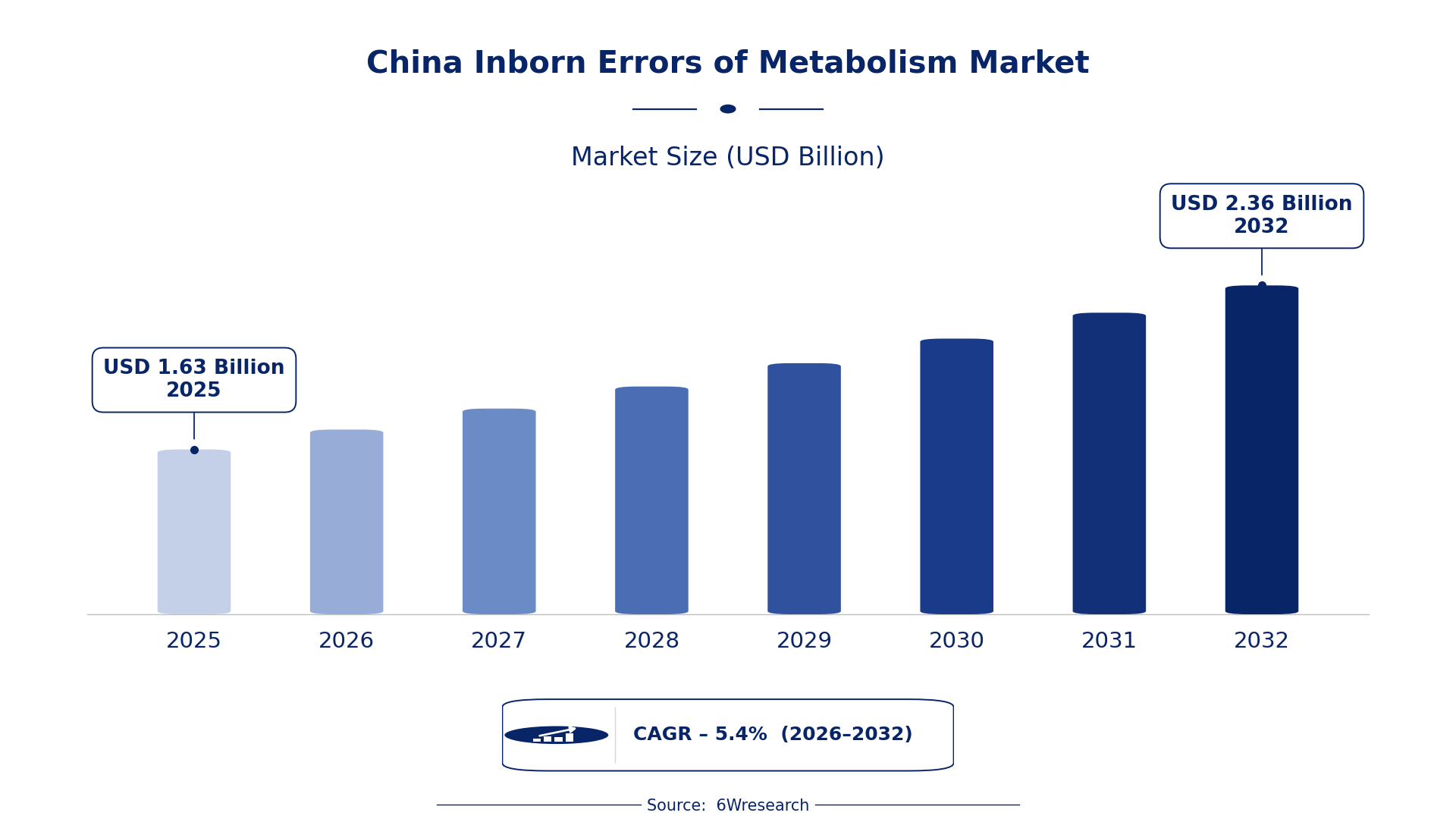
According to 6Wresearch internal database and industry insights, the China Inborn Errors of Metabolism Market was valued at USD 1.63 billion in 2025 and is projected to reach USD 2.36 billion by 2032, growing at a CAGR of approximately 5.4% during 2026–2032.
China Inborn Errors of Metabolism Market Highlights
| Report Metric | Details |
| Report Name | China Inborn Errors of Metabolism Market |
| Market Size 2025 | USD 1.63 billion |
| Market Size 2032 | USD 2.36 billion |
| Absolute Growth 2025–2032 | USD 0.73 billion |
| CAGR 2026–2032 | 5.4% |
| Peak Annual Growth | 6.6% in 2027 |
| Forecast Period | 2026–2032 |
| Historical Data | 2022–2025 |
| Base Year | 2025 |
| Leading Disorder Type, 2025 | Amino Acid Disorders (41% share) |
| Leading Diagnosis Method, 2025 | Newborn Screening (42% share) |
| Leading Treatment Type, 2025 | Dietary Supplements (41% share) |
| Leading End User, 2025 | Pediatric Hospitals (47% share) |
| Fastest-Growing Disorder Type | Urea Cycle Disorders (7.9% CAGR) |
| Fastest-Growing Diagnosis Method | Genetic Testing (6.5% CAGR) |
| Fastest-Growing Treatment Type | Enzyme Replacement (7.6% CAGR) |
| Fastest-Growing End User | Metabolic Clinics (7.0% CAGR) |
| Growing Sector | Pediatric Healthcare |
| Key End Users | Pediatric Hospitals, Rare Disease Centers, Metabolic Clinics, Genetic Counseling Labs |
China Inborn Errors of Metabolism Market Year-wise Growth Rate and Key Drivers (2022–2032)
This graph illustrates the annual growth rates of the market from 2022 to 2032, highlighting a steady upward trajectory and projected market expansion over the forecast period.
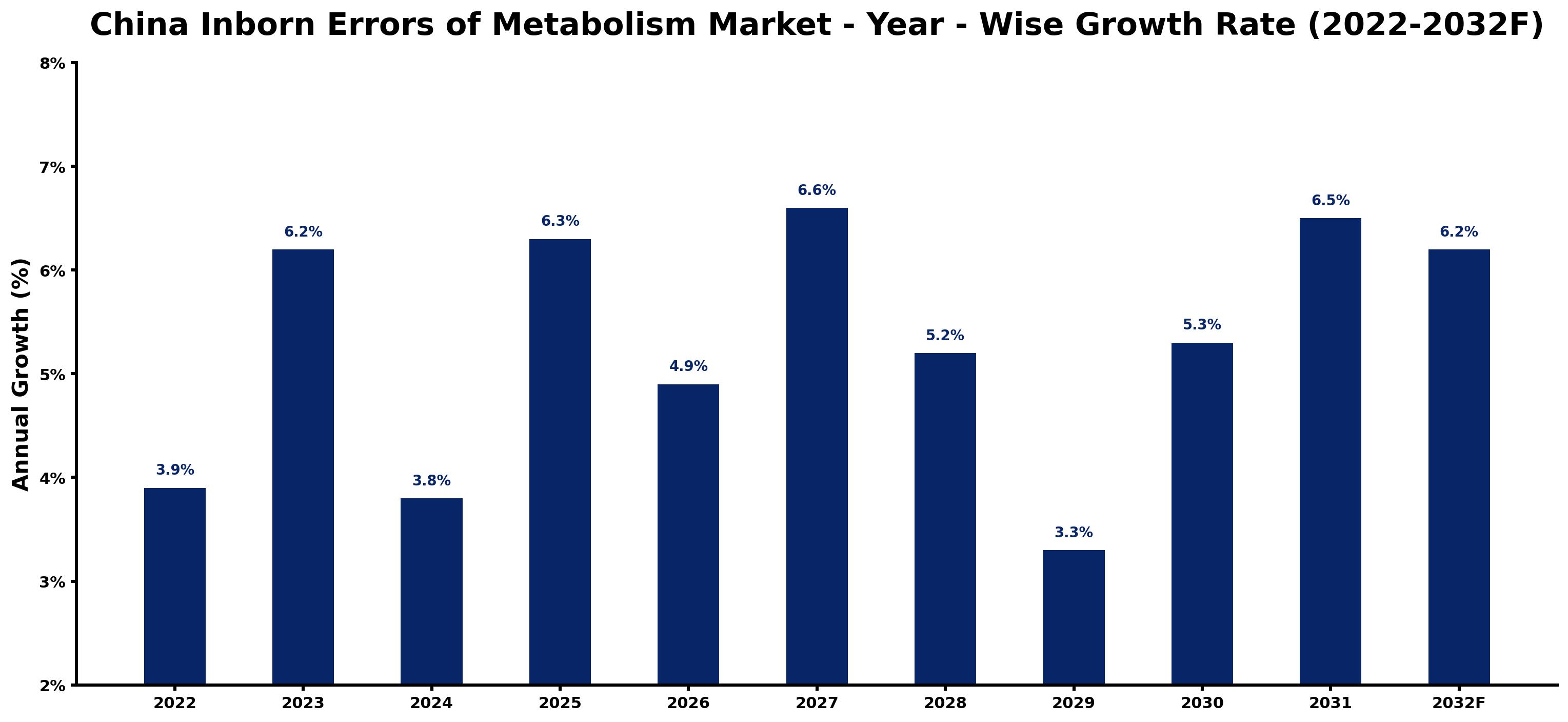
Annual growth estimates for each year appear below with the principal reason behind them, explaining the shifts that set the pace of the market.
| Year | Estimated Annual Growth (%) | Market Rationale |
| 2022 | 3.9 | The market showed steady growth, supported by ongoing newborn screening initiatives. |
| 2023 | 6.2 | Demand surged due to increased awareness of metabolic disorders among healthcare providers. |
| 2024 | 3.8 | Growth slowed as the market adjusted to new treatment protocols and guidelines. |
| 2025 | 6.3 | The market experienced a resurgence driven by advancements in diagnostic technologies. |
| 2026 | 4.9 | Growth moderated as healthcare facilities adapted to evolving treatment standards. |
| 2027 | 6.6 | A significant rise in demand occurred due to the introduction of new enzyme replacement therapies. |
| 2028 | 5.2 | Growth decelerated as the market faced challenges in treatment accessibility. |
| 2029 | 3.3 | Demand continued to slow as market saturation began to take effect. |
| 2030 | 5.3 | A rebound in growth was driven by enhanced medical nutrition therapy practices. |
| 2031 | 6.5 | The market expanded as more pediatric hospitals adopted comprehensive care models. |
| 2032 | 6.2 | Growth slowed again as the market stabilised following rapid advancements. |
Note: Market size estimations and growth projections presented in this report are based on 6Wresearch's proprietary forecasting methodology, utilizing the latest available industry data, government publications, and primary research inputs.
China Inborn Errors of Metabolism Market Synopsis
Inborn Errors of Metabolism in China includes a variety of rare genetic disorders that disrupt metabolic processes. These conditions are identified through advanced screening techniques and managed with dietary adjustments or enzyme replacement therapies. The market is expanding due to the rollout of nationwide newborn screening programmes and rising demand from healthcare providers. In 2022, around 1.4 million births were eligible for screening, underscoring the potential treatment needs. The Chinese government has made rare disease research a priority, further propelling market growth.
Market Dynamics Impact Analysis (2026–2032)
| Factor | Type | Impact | Primary Segment Affected |
| Nationwide newborn screening programs enhance early diagnosis and treatment access. | Driver | High | Newborn Screening |
| Increased government funding for rare disease research supports treatment development. | Driver | High | Dietary Supplements |
| Growing prevalence of metabolic disorders creates demand for specialized medical facilities. | Opportunity | High | Pediatric Hospitals |
| Expansion of metabolic clinics in urban areas provides more treatment options. | Opportunity | Medium | Metabolic Clinics |
| Limited awareness among healthcare providers can delay diagnosis and treatment. | Restraint | High | Genetic Testing |
| Challenges in accessing specialized treatments can hinder patient outcomes. | Restraint | Medium | Enzyme Replacement |
| High costs associated with enzyme replacement therapies limit patient access. | Challenge | High | Dietary Supplements |
| Regulatory hurdles can delay the approval of new treatments for metabolic disorders. | Challenge | Medium | Medical Nutrition Therapy |
Evaluation of Drivers in China Inborn Errors of Metabolism Market (2026–2032)
Below mentioned are some major drivers and their influence on market dynamics.
| Drivers | Primary Segment Affected | Why It Matters (Evidence) |
| Implementation of nationwide newborn screening programs increases early detection. | Newborn Screening | This initiative has been in place since 2018, covering over 95% of newborns. |
| Government funding for rare disease research boosts treatment options. | Dietary Supplements | In 2021, 500 million CNY was allocated for research and treatment initiatives. |
| Rising prevalence of amino acid disorders drives demand for specialized care. | Amino Acid Disorders | The prevalence is estimated at 1 in 10,000 births, necessitating targeted interventions. |
| Advancements in diagnostic technologies enhance treatment planning. | Genetic Testing | Tandem mass spectrometry is widely used in over 300 hospitals for accurate diagnosis. |
| Growing patient population with IEM increases demand for comprehensive care. | Pediatric Hospitals | China's population of patients with IEM is estimated to be around 100,000 individuals. |
The prevalence of amino acid disorders is estimated at 1 in 10,000 births, driving demand for specialized care in pediatric hospitals. Additionally, tandem mass spectrometry is widely used in over 300 hospitals, improving diagnostic accuracy and treatment planning. This combination of factors is prompting healthcare providers to invest more in metabolic disorder management.
Evaluation of Restraints in China Inborn Errors of Metabolism Market
The main factors holding the market back are set out below.
| Market Restraint | Primary Segment Affected | Why It Matters (Evidence) |
| Limited awareness among healthcare providers can delay diagnosis and treatment. | Genetic Testing | This can result in missed opportunities for early intervention, affecting patient outcomes. |
| Access to specialized treatments remains a challenge for many patients. | Enzyme Replacement | This limits the effectiveness of treatment options available to those diagnosed. |
| High costs of enzyme replacement therapies restrict patient access. | Dietary Supplements | Many families struggle to afford necessary treatments, impacting health outcomes. |
| Regulatory hurdles can delay the approval of new treatments for metabolic disorders. | Medical Nutrition Therapy | This can slow the introduction of new therapies into the market. |
| Limited availability of specialized medical facilities can hinder patient access. | Pediatric Hospitals | This affects timely diagnosis and management of metabolic disorders. |
China Inborn Errors of Metabolism Market Challenges
The China Inborn Errors of Metabolism market encounters strict regulatory requirements that slow the approval of new treatments. These regulations arise from the necessity for thorough safety and efficacy data, leading to an average approval delay of 18 months for producers, which hinders timely access to therapies for hospitals. Buyers, particularly healthcare providers, face challenges due to the lag in treatment availability, risking negative patient outcomes. Technological limitations in rural healthcare settings restrict access to advanced diagnostic methods, causing delays in diagnoses that can extend for several months, ultimately impacting patient care. The high costs of enzyme replacement therapies can reach up to 1 million CNY annually, imposing a financial strain on many families.
Trends in the China Inborn Errors of Metabolism Market
The trends below show where the China Inborn Errors of Metabolism Market is heading.
- Shift towards Improved Newborn Screening: Since 2018, China has implemented nationwide newborn screening for metabolic disorders, covering over 95% of newborns. This initiative is vital for early diagnosis, leading to better treatment outcomes for affected children.
- Transition to Advanced Genetic Testing: The introduction of advanced genetic testing methods in 2021 has improved diagnostic accuracy for IEM. This shift is evident as more hospitals adopt these technologies, improving patient care.
- Emergence of Integrated Care Models: In 2020, the Ministry of Health introduced the Integrated Care Model for Rare Diseases, providing support for IEM patients. This model is being adopted in various healthcare facilities, improving treatment access.
- Prioritisation of Rare Disease Research: The Chinese government has prioritised rare disease research in its 14th Five-Year Plan (2021-2025). This focus is driving funding and innovation in treatment options for IEM.
Investment Opportunities in the China Inborn Errors of Metabolism Market
Below are the investment opportunities with the strongest case in the China Inborn Errors of Metabolism Market.
- Expansion of Metabolic Clinics in Urban Areas: The 2022 initiative to enhance metabolic clinics in urban areas presents a notable opportunity. With 500 million CNY allocated for rare disease research, investing in these clinics will improve patient access to treatments.
- Investment in Genetic Testing Technologies: The growing demand for genetic testing services creates an opportunity for investment in advanced diagnostic technologies. Healthcare providers and genetic counselling labs are key buyers, seeking to improve their service offerings.
- Development of Dietary Management Programs: The increasing prevalence of metabolic disorders highlights the need for dietary management programs. Paediatric hospitals are looking to implement these programs, creating opportunities for suppliers of dietary supplements.
- Collaboration with Rare Disease Centers: Collaborating with Rare Disease Centers can facilitate access to specialised treatments for IEM. With over 200 centres established, there is a clear pathway for partnerships to improve service delivery.
Government Initiatives in the China Inborn Errors of Metabolism Market
In 2021, the National Health Commission of China launched the 'National Rare Disease Prevention and Control Plan' to improve diagnosis and treatment of rare diseases including IEM. This plan builds on previous initiatives and aims to increase the availability of diagnostic services and treatment options across the country. It also emphasises the importance of training healthcare professionals in the management of rare diseases, ensuring a well-equipped workforce to handle these conditions. This approach is expected to lead to better health outcomes for patients with IEM. Additionally, the government allocated 500 million CNY for rare disease research, enhancing resources available for treatment.
The Ministry of Education initiated the 'Metabolic Disorder Education Program' in 2022 to train healthcare professionals on IEM management. This program focuses on improving the skills and knowledge of medical staff involved in the diagnosis and treatment of metabolic disorders. Furthermore, the State Council approved the 'National Strategy for Rare Diseases' in 2023, which aims to improve access to treatments and support for patients with IEM. This strategy includes funding for research and development of new therapies, further strengthening the healthcare framework for managing rare diseases.
Future Insight of the China Inborn Errors of Metabolism Market
The China Inborn Errors of Metabolism market is expected to advance by 2032, propelled by government prioritisation of rare disease research. Enhanced newborn screening initiatives will improve early detection rates, reducing the average age of diagnosis. The establishment of dedicated rare disease centres will improve treatment access across provinces. Training programs for healthcare professionals will equip them with the necessary skills to manage these complex conditions effectively, ensuring better patient outcomes in the long term.
Market Segmentation Analysis
The analysis below covers each segmentation, its leading category in 2025 and its fastest-growing category through 2032.
By Disorder Type – Amino Acid Disorders Dominated, Urea Cycle Disorders Expected to Grow Fastest
According to Sachin Kumar Rai, Senior Research Analyst at 6Wresearch, Amino Acid Disorders took a 41% share of disorder type in 2025, more than any other category. Amino Acid Disorders hold the largest market share due to their high prevalence, estimated at 1 in 10,000 births in China. The nationwide newborn screening program ensures early detection and management of these disorders, making them a priority for healthcare providers. Urea Cycle Disorders are set to record the highest CAGR in this split, 7.9% over 2026–2032. Urea Cycle Disorders are experiencing rapid growth as awareness increases and screening methods improve, with a prevalence of 1 in 30,000 births. The Chinese government's focus on rare disease research further supports this segment's expansion. Suppliers should focus on developing targeted solutions for both amino acid and urea cycle disorders to meet the growing demand.
By Diagnosis Method – Newborn Screening Dominated, Genetic Testing Expected to Grow Fastest
With a 42% revenue share in 2025, Newborn Screening was the largest diagnosis method category. Newborn Screening is the leading method for diagnosing inborn errors of metabolism, covering over 95% of newborns in China since 2018. This widespread implementation ensures early identification of metabolic disorders, driving its market share. The quickest growth will come from Genetic Testing, forecast to expand at a CAGR of 6.5% between 2026 and 2032. Genetic Testing is growing quickly, as it provides accurate diagnosis and is now covered under the national health insurance scheme. This accessibility encourages more families to seek genetic testing for their children. Suppliers of diagnostic tools should prioritise innovations in genetic testing to capitalise on the increasing demand for accurate IEM diagnoses.
By Treatment Type – Dietary Supplements Dominated, Enzyme Replacement Expected to Grow Fastest
The largest treatment type category in 2025 was Dietary Supplements, with a 41% share of total revenue. Dietary Supplements hold the largest market share as they are vital for managing specific metabolic deficiencies in individuals with inborn errors of metabolism. Their widespread use in treatment protocols across healthcare facilities reinforces their position in the market. Enzyme Replacement is projected to grow fastest, at a CAGR of 7.6% during 2026–2032. Enzyme Replacement therapy is experiencing rapid growth due to its critical role in effectively managing certain inborn errors of metabolism. The increasing awareness among healthcare professionals about its benefits is propelling its adoption in treatment regimens. Suppliers should focus on developing enzyme replacement therapies to cater to the growing needs of healthcare providers and patients.
By End User – Pediatric Hospitals Dominated, Metabolic Clinics Expected to Grow Fastest
Pediatric Hospitals accounted for a 47% market share by end user in 2025. Pediatric Hospitals hold the largest market share as they offer dedicated care for children with inborn errors of metabolism, ensuring effective management and treatment. Their established presence and focus on paediatric care, particularly in urban areas, contribute to their dominance in this sector. Over 2026–2032, Metabolic Clinics are expected to post the fastest growth, at a CAGR of 7.0%. Metabolic Clinics are experiencing rapid growth due to their specialised focus on metabolic disorders, which aligns with the increasing demand for tailored healthcare solutions. The establishment of new clinics is enhancing patient access to necessary treatments and services. Suppliers should consider partnerships with metabolic clinics to improve service delivery and meet the growing demand for specialised IEM treatments.
Key Attractiveness of the Report
- 10 Years of Market Numbers
- Historical Data Starting from 2022 to 2025
- Base Year 2025
- Forecast Data until 2032
- Key Performance Indicators Impacting the Market
- Major Upcoming Developments and Projects
Key Highlights of the Report:
- China Inborn Errors of Metabolism Market Outlook
- Market Size of China Inborn Errors of Metabolism Market, 2025
- Forecast of China Inborn Errors of Metabolism Market, 2032
- Historical Data and Forecast of China Inborn Errors of Metabolism Revenues & Volume for the Period 2022 - 2032F
- China Inborn Errors of Metabolism Market Trend Evolution
- China Inborn Errors of Metabolism Market Drivers and Challenges
- China Inborn Errors of Metabolism Price Trends
- China Inborn Errors of Metabolism Porter's Five Forces
- China Inborn Errors of Metabolism Industry Life Cycle
- Historical Data and Forecast of China Inborn Errors of Metabolism Market Revenues & Volume By Disorder Type for the Period 2022 - 2032F
- Historical Data and Forecast of China Inborn Errors of Metabolism Market Revenues & Volume By Amino Acid Disorders for the Period 2022 - 2032F
- Historical Data and Forecast of China Inborn Errors of Metabolism Market Revenues & Volume By Fatty Acid Oxidation for the Period 2022 - 2032F
- Historical Data and Forecast of China Inborn Errors of Metabolism Market Revenues & Volume By Urea Cycle Disorders for the Period 2022 - 2032F
- Historical Data and Forecast of China Inborn Errors of Metabolism Market Revenues & Volume By Organic Acidurias for the Period 2022 - 2032F
- Historical Data and Forecast of China Inborn Errors of Metabolism Market Revenues & Volume By Diagnosis Method for the Period 2022 - 2032F
- Historical Data and Forecast of China Inborn Errors of Metabolism Market Revenues & Volume By Newborn Screening for the Period 2022 - 2032F
- Historical Data and Forecast of China Inborn Errors of Metabolism Market Revenues & Volume By Genetic Testing for the Period 2022 - 2032F
- Historical Data and Forecast of China Inborn Errors of Metabolism Market Revenues & Volume By Blood Ammonia Analysis for the Period 2022 - 2032F
- Historical Data and Forecast of China Inborn Errors of Metabolism Market Revenues & Volume By Tandem Mass Spectrometry for the Period 2022 - 2032F
- Historical Data and Forecast of China Inborn Errors of Metabolism Market Revenues & Volume By Treatment Type for the Period 2022 - 2032F
- Historical Data and Forecast of China Inborn Errors of Metabolism Market Revenues & Volume By Dietary Supplements for the Period 2022 - 2032F
- Historical Data and Forecast of China Inborn Errors of Metabolism Market Revenues & Volume By Enzyme Replacement for the Period 2022 - 2032F
- Historical Data and Forecast of China Inborn Errors of Metabolism Market Revenues & Volume By Protein Restriction for the Period 2022 - 2032F
- Historical Data and Forecast of China Inborn Errors of Metabolism Market Revenues & Volume By Medical Nutrition Therapy for the Period 2022 - 2032F
- Historical Data and Forecast of China Inborn Errors of Metabolism Market Revenues & Volume By End User for the Period 2022 - 2032F
- Historical Data and Forecast of China Inborn Errors of Metabolism Market Revenues & Volume By Pediatric Hospitals for the Period 2022 - 2032F
- Historical Data and Forecast of China Inborn Errors of Metabolism Market Revenues & Volume By Rare Disease Centers for the Period 2022 - 2032F
- Historical Data and Forecast of China Inborn Errors of Metabolism Market Revenues & Volume By Metabolic Clinics for the Period 2022 - 2032F
- Historical Data and Forecast of China Inborn Errors of Metabolism Market Revenues & Volume By Genetic Counseling Labs for the Period 2022 - 2032F
- China Inborn Errors of Metabolism Import Export Trade Statistics
- Market Opportunity Assessment By Disorder Type
- Market Opportunity Assessment By Diagnosis Method
- Market Opportunity Assessment By Treatment Type
- Market Opportunity Assessment By End User
- China Inborn Errors of Metabolism Top Companies Market Share
- China Inborn Errors of Metabolism Competitive Benchmarking By Technical and Operational Parameters
- China Inborn Errors of Metabolism Company Profiles
- China Inborn Errors of Metabolism Key Strategic Recommendations
Market Covered
This report examines the market across the segments below.
By Disorder Type
- Amino Acid Disorders
- Fatty Acid Oxidation
- Urea Cycle Disorders
- Organic Acidurias
By Diagnosis Method
- Newborn Screening
- Genetic Testing
- Blood Ammonia Analysis
- Tandem Mass Spectrometry
By Treatment Type
- Dietary Supplements
- Enzyme Replacement
- Protein Restriction
- Medical Nutrition Therapy
By End User
- Pediatric Hospitals
- Rare Disease Centers
- Metabolic Clinics
- Genetic Counseling Labs































