China Incontinence Implants Market Size & Growth Rate
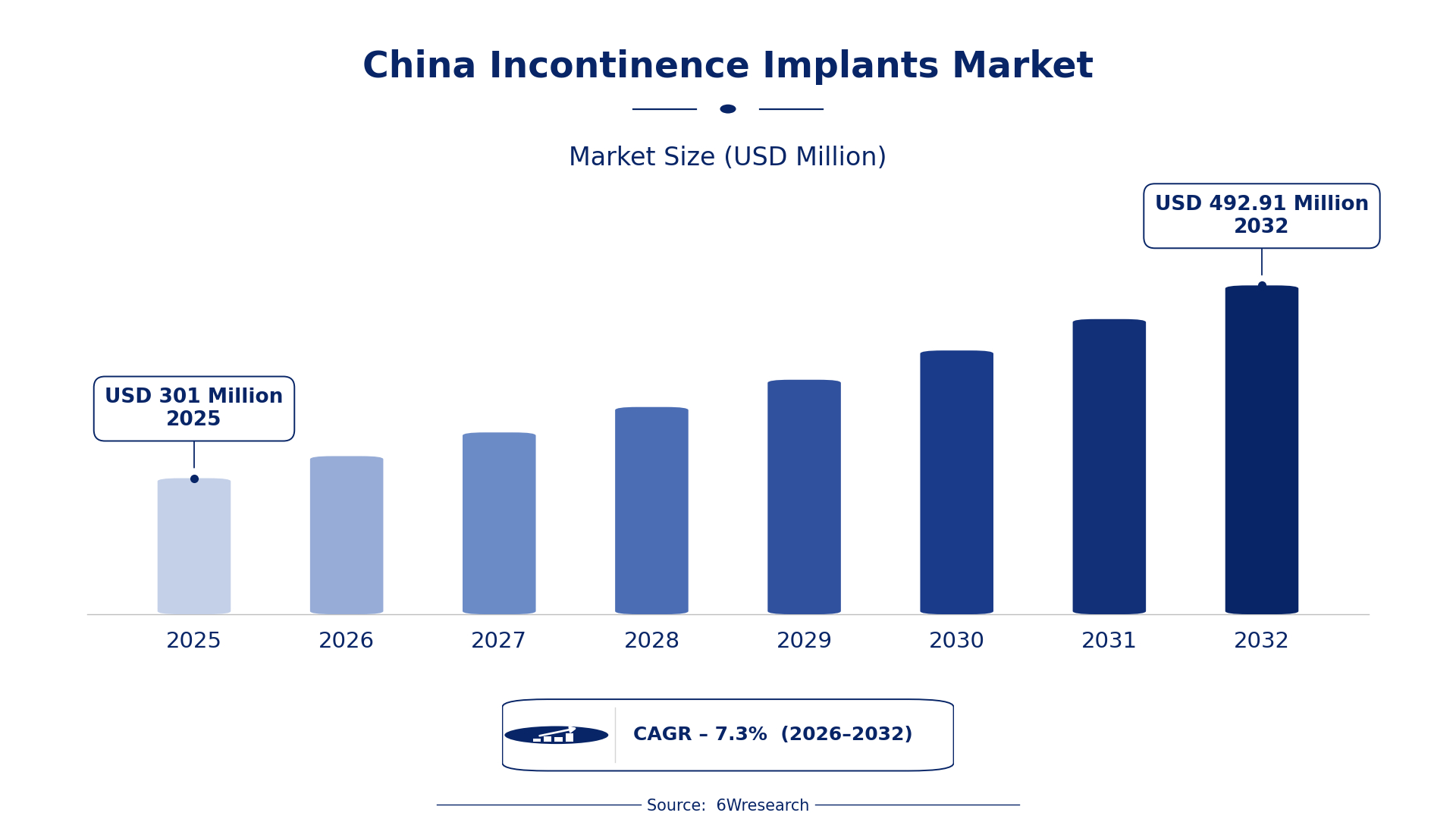
According to 6Wresearch internal database and industry insights, the China Incontinence Implants Market was valued at USD 301.0 million in 2025 and is projected to reach USD 492.91 million by 2032, growing at a CAGR of approximately 7.3% during 2026–2032.
China Incontinence Implants Market Highlights
| Report Metric | Details |
| Report Name | China Incontinence Implants Market |
| Market Size 2025 | USD 301.0 million |
| Market Size 2032 | USD 492.91 million |
| Absolute Growth 2025–2032 | USD 191.91 million |
| CAGR 2026–2032 | 7.3% |
| Peak Annual Growth | 9.7% in 2029 |
| Forecast Period | 2026–2032 |
| Historical Data | 2022–2025 |
| Base Year | 2025 |
| Leading Implant Type, 2025 | Urethral Slings (55% share) |
| Leading Gender Focus, 2025 | Female Focused (39% share) |
| Leading Mechanism of Action, 2025 | Sphincter Compression (49% share) |
| Leading End User, 2025 | Urology Departments (37% share) |
| Fastest-Growing Implant Type | Bladder Stimulators (9.8% CAGR) |
| Fastest-Growing Gender Focus | Nerve Modulation (9.2% CAGR) |
| Fastest-Growing Mechanism of Action | Electrical Signal Device (9.5% CAGR) |
| Fastest-Growing End User | Neurology/Urology Centers (10.0% CAGR) |
| Growing Sector | Neurology/Urology Centers |
| Key End Users | Urology Departments, Women's Health Clinics, Neurology/Urology Centers, Outpatient Surgery Units |
China Incontinence Implants Market Year-wise Growth Rate and Key Drivers (2022–2032)
This graph illustrates the annual growth rates of the market from 2022 to 2032, highlighting a steady upward trajectory and projected market expansion over the forecast period.
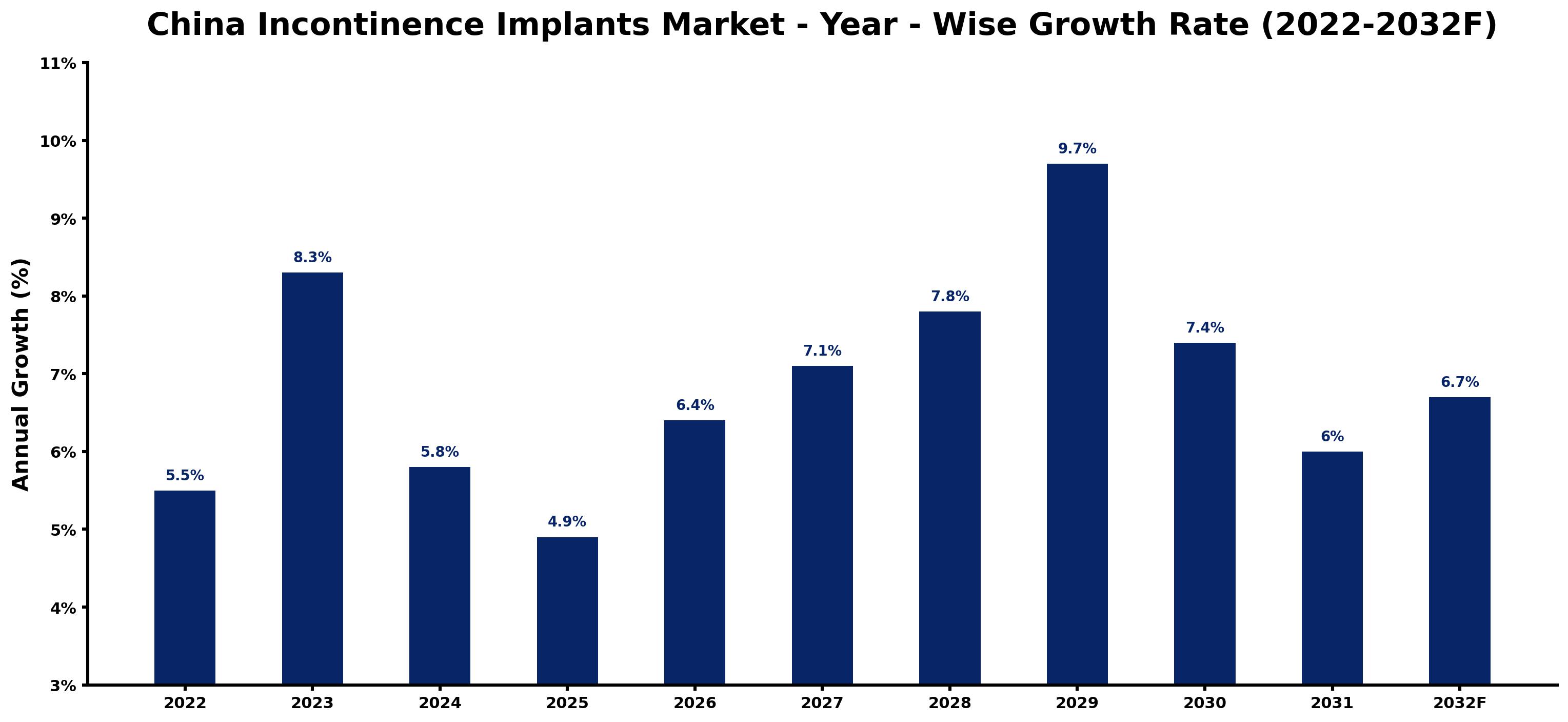
The table below sets out the estimated growth rate for each year and the main factor behind it.
| Year | Estimated Annual Growth (%) | Market Rationale |
| 2022 | 5.5 | The market experienced steady growth driven by the updated 'Clinical Practice Guidelines for Urinary Incontinence' by the National Health Commission. |
| 2023 | 8.3 | Demand surged due to a 15% rise in urology department procedures reported by the National Health Commission. |
| 2024 | 5.8 | Growth slowed as the market adjusted to previous rapid increases in demand for bladder stimulators. |
| 2025 | 4.9 | The market continued to grow, albeit at a slower pace, reflecting ongoing treatment needs in urology departments. |
| 2026 | 6.4 | An increase in outpatient surgery units is expected to boost demand for incontinence implants. |
| 2027 | 7.1 | Growth will be supported by rising investments in urology services across healthcare facilities. |
| 2028 | 7.8 | The market is projected to expand as bladder stimulators gain traction in specialized centers. |
| 2029 | 9.7 | A peak in growth is anticipated as the 'National Urology Improvement Program' improves service access. |
| 2030 | 7.4 | The market will see a slowdown as growth stabilizes after reaching peak levels in previous years. |
| 2031 | 6.0 | Demand remains strong but growth rates are expected to normalise as the market matures. |
| 2032 | 6.7 | An increase in treatment options will drive renewed interest in incontinence implants. |
Note: Market size estimations and growth projections presented in this report are based on 6Wresearch's proprietary forecasting methodology, utilizing the latest available industry data, government publications, and primary research inputs.
China Incontinence Implants Market Synopsis
Incontinence Implants in China are medical devices designed to treat urinary incontinence, primarily made from biocompatible materials. These implants are used in surgical procedures to restore function to the urinary system and improve patients' quality of life. The China Incontinence Implants Market is expanding due to a rising number of adults suffering from urinary incontinence, with approximately 70 million affected. Increasing procedures in urology departments and government initiatives to improve treatment access are key drivers of this growth.
Market Dynamics Impact Analysis (2026–2032)
| Factor | Type | Impact | Primary Segment Affected |
| Rising number of adults suffering from urinary incontinence drives demand for implants. | Driver | High | Artificial Urinary Sphincters |
| Increased funding for outpatient surgery units enhances treatment access. | Driver | High | Urethral Slings |
| Growing interest in bladder stimulators presents new market opportunities. | Opportunity | Medium | Bladder Stimulators |
| The National Urology Improvement Program aims to increase service availability. | Opportunity | Medium | Urology Departments |
| Regulatory changes may complicate approval processes for new devices. | Restraint | High | Injectable Implants |
| Limited awareness of treatment options may hinder market growth. | Restraint | Medium | Bladder Stimulators |
| High costs of advanced implants can deter some patients from seeking treatment. | Challenge | High | Urethral Slings |
| Supply chain disruptions can delay the availability of incontinence implants. | Challenge | Medium | Artificial Urinary Sphincters |
Evaluation of Drivers in China Incontinence Implants Market (2026–2032)
The main growth drivers and the segments they affect most are set out below.
| Drivers | Primary Segment Affected | Why It Matters (Evidence) |
| Increasing prevalence of urinary incontinence among adults drives demand for implants. | Artificial Urinary Sphincters | Approximately 70 million adults in China suffer from urinary incontinence, leading to higher demand for effective treatments. |
| Growing number of urology procedures supports the use of incontinence implants. | Urethral Slings | The National Health Commission reported a 15% increase in urology department procedures from 2021 to 2022. |
| Investment in outpatient surgery units enhances access to incontinence treatments. | Bladder Stimulators | In 2023, the Ministry of Health initiated a subsidy program for outpatient surgery units. |
| Rising awareness of treatment options encourages more patients to seek implants. | Injectable Implants | The average age of patients receiving implants is around 65 years, indicating a growing demographic. |
| Government initiatives aim to improve treatment access for urinary incontinence. | Urology Departments | The 'National Urology Improvement Program' launched in 2021 targets a 20% increase in service availability by 2025. |
Market growth for Incontinence Implants in China is underpinned by the increasing prevalence of urinary incontinence, with approximately 70 million adults affected. A reported 15% rise in urology department procedures from 2021 to 2022 drives demand for effective treatments. The average patient age is around 65 years, indicating a growing demographic seeking treatment options. Additionally, the installed base of incontinence implants in China surpassed 1 million units as of 2023, reflecting rising adoption rates.
Evaluation of Restraints in China Incontinence Implants Market
Below mentioned are some major restraints and their influence on market dynamics.
| Market Restraint | Primary Segment Affected | Why It Matters (Evidence) |
| Regulatory changes may complicate approval processes for new devices. | Injectable Implants | In 2022, new regulations were issued by the State Administration for Market Regulation, affecting device approvals. |
| Limited awareness of treatment options may hinder market growth. | Bladder Stimulators | Many patients remain unaware of the latest treatments available for urinary incontinence. |
| High costs of advanced implants can deter some patients from seeking treatment. | Urethral Slings | The average cost of incontinence implants can be prohibitive for many patients. |
| Supply chain disruptions can delay the availability of incontinence implants. | Artificial Urinary Sphincters | Manufacturers face challenges in sourcing materials due to global supply chain issues. |
| Insurance coverage limitations can restrict access to incontinence treatments. | Urology Departments | Many insurance plans do not fully cover the costs associated with incontinence implants. |
China Incontinence Implants Market Challenges
The China Incontinence Implants Market faces a critical skills shortage among healthcare professionals, which limits the number of qualified surgeons available for procedures. This issue stems from insufficient training programs, resulting in longer wait times for patients and decreased revenues for hospitals. Buyers encounter high costs for incontinence implants, with prices reaching 15% more than alternative treatments, making them less affordable for many. Competition from urethral slings forces producers to lower prices, potentially compromising the quality of implants and negatively impacting patient outcomes.
Trends in the China Incontinence Implants Market
Buyers and suppliers in the China Incontinence Implants Market are adjusting to the following trends.
- Increased Adoption of Bladder Stimulation Techniques: Urology departments are increasingly adopting bladder stimulators for neurogenic bladder management. In 2023, their use rose by 10% in specialised facilities, reflecting a growing trend in treatment options.
- Growing Focus on Female Patients: The 'Women's Health Initiative' has increased attention on treatment options for female urinary incontinence. This programme, established in 2020, aims to improve outcomes for women, with funding of 100 million yuan allocated in 2023.
- Expansion of Outpatient Surgery Units: The number of outpatient surgery units is expanding to improve access to incontinence treatments. In 2023, the Ministry of Health initiated a subsidy program to support these facilities, with a budget of 100 million yuan.
- Implementation of Updated Clinical Guidelines: The updated 'Clinical Practice Guidelines for Urinary Incontinence' in 2022 have led to better treatment protocols. This has resulted in a 15% increase in urology department procedures in 2023.
Investment Opportunities in the China Incontinence Implants Market
The following opportunities in the China Incontinence Implants Market pair current demand with a clear way in.
- Growing Demand for Bladder Stimulators: With a growing number of patients requiring neurogenic bladder management, there is an opportunity for suppliers of bladder stimulators. The market is expected to expand as more urology departments adopt these devices.
- Investment in Outpatient Surgery Units: Now is an ideal time to invest in outpatient surgery units that provide incontinence treatments. The Ministry of Health's subsidy program for these facilities, with a budget of 100 million yuan, supports this growth.
- Focus on Female Incontinence Treatments: The 'Women's Health Initiative' highlights the need for improved treatment options for female patients. Suppliers can engage with women's health clinics to meet this demand effectively.
- Expansion of Urology Departments: As urology departments increase their service offerings, there is an opportunity for manufacturers to supply a wider range of incontinence implants. The National Urology Improvement Program aims for a 20% increase in service availability by 2025.
Government Initiatives in the China Incontinence Implants Market
The 'National Urology Improvement Program' launched by the National Health Commission in 2021 aims to improve access to urology services, targeting a 20% increase in service availability by 2025. This program is designed to streamline treatment pathways and improve patient outcomes, benefiting both producers and buyers of incontinence implants. The updated 'Clinical Practice Guidelines for Urinary Incontinence' in 2022 provide new protocols for treatment options, ensuring that healthcare providers adhere to the latest standards and practices.
In 2023, the Ministry of Health initiated a subsidy program for outpatient surgery units to improve treatment access, with a budget of 100 million yuan. This funding supports the establishment and enhancement of facilities that provide incontinence treatments, increasing the availability of these essential services for patients. The State Administration for Market Regulation also issued new regulations in 2022 to streamline the approval pathways for incontinence medical devices, facilitating faster access to innovative solutions.
Future Insight of the China Incontinence Implants Market
Several forward-looking factors should support the China Incontinence Implants Market over the coming years. The 'National Urology Improvement Program' will enhance treatment access, likely increasing adoption rates. Increased government funding for innovative treatment research will promote advancements in implant technology. By 2032, the installed base of incontinence implants is expected to exceed 2 million units, reflecting a growing demand for effective solutions and improved patient outcomes.
Market Segmentation Analysis
Each segment group is reviewed below, with the leader by share and the fastest grower by CAGR.
By Implant Type – Urethral Slings Dominated, Bladder Stimulators Expected to Grow Fastest
According to Sachin Kumar Rai, Senior Research Analyst at 6Wresearch, Urethral Slings accounted for a 55% market share by implant type in 2025. Urethral slings lead the market share due to their widespread use as the primary surgical intervention for female urinary incontinence. Their established role in hospitals across China, coupled with an installed base exceeding 1 million units, highlights their critical importance in addressing this health issue. Bladder Stimulators are projected to grow fastest, at a CAGR of 9.8% during 2026–2032. Bladder stimulators are experiencing rapid growth as they are increasingly utilised in neurology/urology centres for managing neurogenic bladder. The recent government funding for research into innovative incontinence treatments is expected to further boost their adoption rates. Suppliers should focus on developing bladder stimulators to meet the rising demand in specialised treatment centres.
By Gender Focus – Female Focused Dominated, Nerve Modulation Expected to Grow Fastest
With a 39% revenue share in 2025, Female Focused was the largest gender focus category. The female-focused segment commands a substantial market share as it specifically caters to the needs of women suffering from urinary incontinence, which is particularly common among older demographics. This targeted approach has resulted in strong adoption rates in hospitals and clinics, solidifying its leadership position. Over 2026–2032, Nerve Modulation is expected to post the fastest growth, at a CAGR of 9.2%. Nerve modulation is the fastest-growing segment, as it complements existing treatment options and shows potential for improving patient outcomes. The increasing emphasis on female urinary health and ongoing research initiatives are propelling this segment's growth. Buyers should consider the expanding range of nerve modulation options to improve treatment effectiveness for female patients.
By Mechanism of Action – Sphincter Compression Dominated, Electrical Signal Device Expected to Grow Fastest
The largest mechanism of action category in 2025 was Sphincter Compression, with a 49% share of total revenue. Sphincter compression mechanisms lead the market share due to their proven effectiveness in providing urinary control, making them the preferred choice among healthcare professionals. Their success in surgical interventions solidifies their dominant position in the market. The quickest growth will come from Electrical Signal Device, forecast to expand at a CAGR of 9.5% between 2026 and 2032. Electrical signal devices are gaining popularity as they represent a modern approach in advanced treatments, appealing to both patients and healthcare providers. Ongoing research and development in this area are expected to further boost their adoption. Suppliers must invest in electrical signal devices to stay competitive in a market that values modern treatment solutions.
By End User – Urology Departments Dominated, Neurology/Urology Centers Expected to Grow Fastest
Urology Departments held a 37% share of the China Incontinence Implants Market by end user in 2025. Urology departments are the primary end users of incontinence implants, integral to hospitals' surgical offerings for urinary incontinence treatment. Their established role in patient care ensures a substantial market share. Neurology/Urology Centers are set to record the highest CAGR in this split, 10.0% over 2026–2032. Neurology/urology centers are experiencing the fastest growth as they focus on specialised treatments for complex urinary issues, which are increasingly recognised as essential in patient management. The integration of advanced technologies in these centres is propelling their expansion. Suppliers should strengthen collaborations with neurology/urology centers to capitalise on the increasing demand for specialised incontinence treatments.
Key Attractiveness of the Report
- 10 Years of Market Numbers
- Historical Data Starting from 2022 to 2025
- Base Year 2025
- Forecast Data until 2032
- Key Performance Indicators Impacting the Market
- Major Upcoming Developments and Projects
Key Highlights of the Report:
- China Incontinence Implants Market Outlook
- Market Size of China Incontinence Implants Market, 2025
- Forecast of China Incontinence Implants Market, 2032
- Historical Data and Forecast of China Incontinence Implants Revenues & Volume for the Period 2022 - 2032F
- China Incontinence Implants Market Trend Evolution
- China Incontinence Implants Market Drivers and Challenges
- China Incontinence Implants Price Trends
- China Incontinence Implants Porter's Five Forces
- China Incontinence Implants Industry Life Cycle
- Historical Data and Forecast of China Incontinence Implants Market Revenues & Volume By Implant Type for the Period 2022 - 2032F
- Historical Data and Forecast of China Incontinence Implants Market Revenues & Volume By Artificial Urinary Sphincters for the Period 2022 - 2032F
- Historical Data and Forecast of China Incontinence Implants Market Revenues & Volume By Urethral Slings for the Period 2022 - 2032F
- Historical Data and Forecast of China Incontinence Implants Market Revenues & Volume By Bladder Stimulators for the Period 2022 - 2032F
- Historical Data and Forecast of China Incontinence Implants Market Revenues & Volume By Injectable Implants for the Period 2022 - 2032F
- Historical Data and Forecast of China Incontinence Implants Market Revenues & Volume By Gender Focus for the Period 2022 - 2032F
- Historical Data and Forecast of China Incontinence Implants Market Revenues & Volume By Male/Female for the Period 2022 - 2032F
- Historical Data and Forecast of China Incontinence Implants Market Revenues & Volume By Female Focused for the Period 2022 - 2032F
- Historical Data and Forecast of China Incontinence Implants Market Revenues & Volume By Nerve Modulation for the Period 2022 - 2032F
- Historical Data and Forecast of China Incontinence Implants Market Revenues & Volume By Volume Augmentation for the Period 2022 - 2032F
- Historical Data and Forecast of China Incontinence Implants Market Revenues & Volume By Mechanism of Action for the Period 2022 - 2032F
- Historical Data and Forecast of China Incontinence Implants Market Revenues & Volume By Sphincter Compression for the Period 2022 - 2032F
- Historical Data and Forecast of China Incontinence Implants Market Revenues & Volume By Supportive Mesh for the Period 2022 - 2032F
- Historical Data and Forecast of China Incontinence Implants Market Revenues & Volume By Electrical Signal Device for the Period 2022 - 2032F
- Historical Data and Forecast of China Incontinence Implants Market Revenues & Volume By Bio-Bulking Agents for the Period 2022 - 2032F
- Historical Data and Forecast of China Incontinence Implants Market Revenues & Volume By End User for the Period 2022 - 2032F
- Historical Data and Forecast of China Incontinence Implants Market Revenues & Volume By Urology Departments for the Period 2022 - 2032F
- Historical Data and Forecast of China Incontinence Implants Market Revenues & Volume By Women s Health Clinics for the Period 2022 - 2032F
- Historical Data and Forecast of China Incontinence Implants Market Revenues & Volume By Neurology/Urology Centers for the Period 2022 - 2032F
- Historical Data and Forecast of China Incontinence Implants Market Revenues & Volume By Outpatient Surgery Units for the Period 2022 - 2032F
- China Incontinence Implants Import Export Trade Statistics
- Market Opportunity Assessment By Implant Type
- Market Opportunity Assessment By Gender Focus
- Market Opportunity Assessment By Mechanism of Action
- Market Opportunity Assessment By End User
- China Incontinence Implants Top Companies Market Share
- China Incontinence Implants Competitive Benchmarking By Technical and Operational Parameters
- China Incontinence Implants Company Profiles
- China Incontinence Implants Key Strategic Recommendations
Market Covered
This report examines the market across the segments below.
By Implant Type
- Artificial Urinary Sphincters
- Urethral Slings
- Bladder Stimulators
- Injectable Implants
By Gender Focus
- Male/Female
- Female Focused
- Nerve Modulation
- Volume Augmentation
By Mechanism of Action
- Sphincter Compression
- Supportive Mesh
- Electrical Signal Device
- Bio-Bulking Agents
By End User
- Urology Departments
- Women's Health Clinics
- Neurology/Urology Centers
- Outpatient Surgery Units































