China Infant Carriers Market Size & Growth Rate
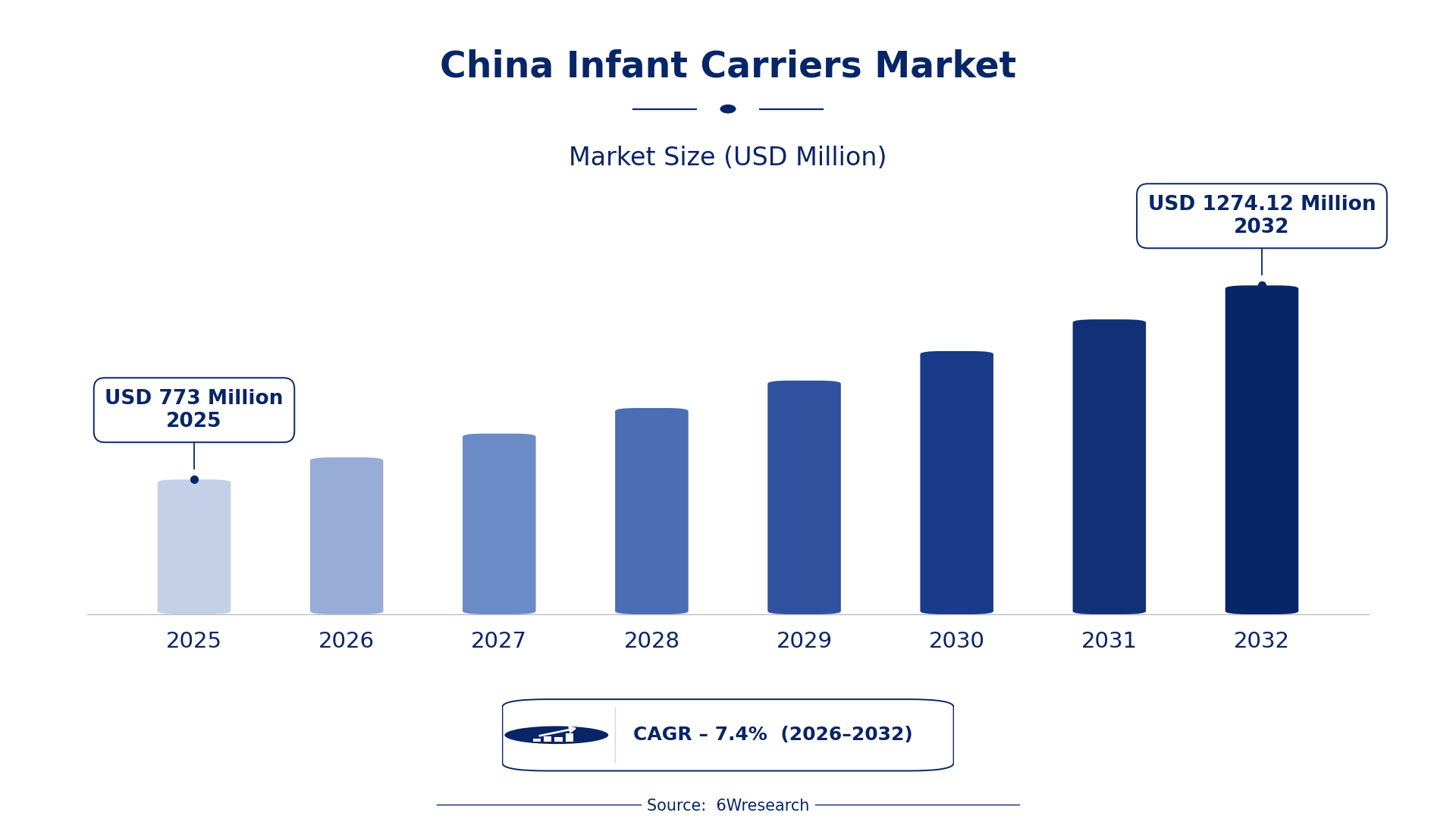
According to 6Wresearch internal database and industry insights, the China Infant Carriers Market was valued at USD 773.0 million in 2025 and is projected to reach USD 1,274.12 million by 2032, growing at a CAGR of approximately 7.4% during 2026–2032.
China Infant Carriers Market Highlights
| Report Metric | Details |
| Report Name | China Infant Carriers Market |
| Market Size 2025 | USD 773.0 million |
| Market Size 2032 | USD 1,274.12 million |
| Absolute Growth 2025–2032 | USD 501.12 million |
| CAGR 2026–2032 | 7.4% |
| Peak Annual Growth | 9.3% in 2028 |
| Forecast Period | 2026–2032 |
| Historical Data | 2022–2025 |
| Base Year | 2025 |
| Leading Carrier Type, 2025 | Soft Structured Carriers (49% share) |
| Leading Material Type, 2025 | Cotton/Elastane (50% share) |
| Leading Age Group, 2025 | 0–6 Months (53% share) |
| Leading Distribution Channel, 2025 | E-commerce Platforms (43% share) |
| Fastest-Growing Carrier Type | Sling Carriers (9.8% CAGR) |
| Fastest-Growing Material Type | Organic Cotton (9.9% CAGR) |
| Fastest-Growing Age Group | 6–24 Months (8.5% CAGR) |
| Fastest-Growing Distribution Channel | Baby Boutiques (9.1% CAGR) |
| Growing Sector | Baby-wearing devices |
| Key End Users | Parents, caregivers, outdoor enthusiasts, e-commerce platforms |
China Infant Carriers Market Year-wise Growth Rate and Key Drivers (2022–2032)
This graph illustrates the annual growth rates of the market from 2022 to 2032, highlighting a steady upward trajectory and projected market expansion over the forecast period.
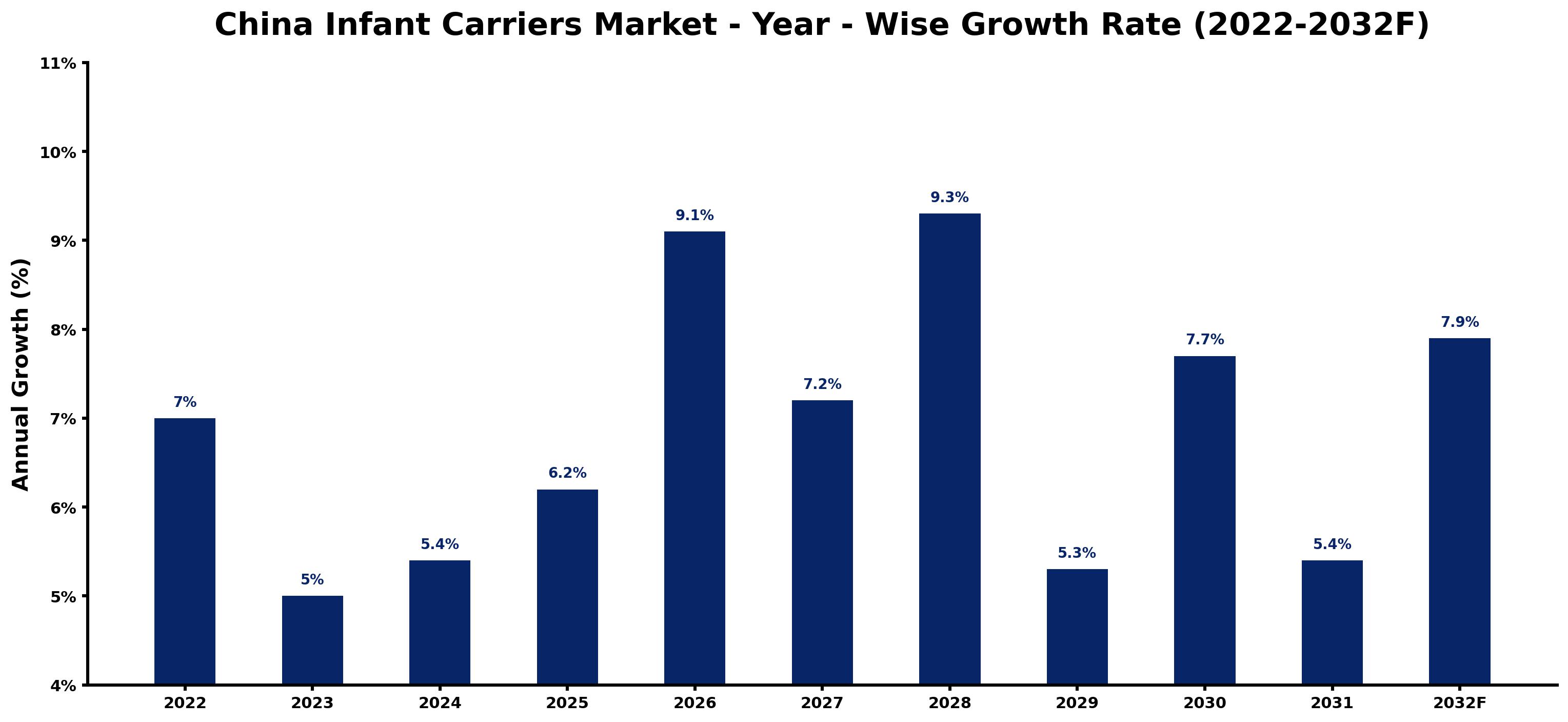
The table below sets out the estimated growth rate for each year and the main factor behind it.
| Year | Estimated Annual Growth (%) | Market Rationale |
| 2022 | 7.0 | The market saw strong interest as parents increasingly embraced baby-wearing practices. |
| 2023 | 5.0 | Growth slowed due to a temporary dip in consumer spending on non-essential items. |
| 2024 | 5.4 | A rise in outdoor activities led to increased interest in versatile carriers. |
| 2025 | 6.2 | Urbanization and a growing population of young families boosted demand for infant carriers. |
| 2026 | 9.1 | The introduction of new ergonomic designs is expected to spark renewed interest in the market. |
| 2027 | 7.2 | Demand is projected to stabilise as consumers adjust to new product offerings and pricing. |
| 2028 | 9.3 | Heightened awareness of safe baby-wearing practices is expected to peak market interest. |
| 2029 | 5.3 | Market growth is projected to slow as it begins to mature and competition intensifies. |
| 2030 | 7.7 | A resurgence in interest will be driven by effective marketing and product features. |
| 2031 | 5.4 | The market is expected to experience a slowdown as consumer preferences shift towards sustainability. |
| 2032 | 7.9 | Growth is projected to rise again as urban lifestyles continue to evolve. |
Note: Market size estimations and growth projections presented in this report are based on 6Wresearch's proprietary forecasting methodology, utilizing the latest available industry data, government publications, and primary research inputs.
China Infant Carriers Market Synopsis
Infant carriers in China are baby-wearing devices designed to securely hold infants while allowing caregivers to keep their hands free. These devices facilitate mobility for parents while promoting bonding and hands-free activities. The China Infant Carriers Market is expanding due to the increasing birth rate, with approximately 9.56 million infants born in 2022, and a shift towards online purchasing, where e-commerce platforms accounted for 60% of sales. Major cities like Beijing and Shanghai lead demand, supported by initiatives such as "Healthy China 2030" promoting safe baby products.
Market Dynamics Impact Analysis (2026–2032)
| Factor | Type | Impact | Primary Segment Affected |
| Increasing birth rate drives demand for infant carriers among new parents. | Driver | High | Wrap Carriers |
| E-commerce platforms are expanding access to a wider range of carriers. | Driver | High | Soft Structured Carriers |
| Growing interest in eco-friendly products creates opportunities for organic cotton carriers. | Opportunity | Medium | Organic Cotton |
| Rising outdoor activities among families boosts demand for backpack carriers. | Opportunity | Medium | Backpack Carriers |
| Stricter quality control measures may increase production costs for manufacturers. | Restraint | High | Sling Carriers |
| Competition from low-cost alternatives may limit market growth for premium products. | Restraint | Medium | Cotton/Elastane |
| The market faces challenges from fluctuating raw material costs affecting pricing. | Challenge | High | Soft Structured Carriers |
| Consumer preferences are shifting towards sustainable options, creating pressure on traditional materials. | Challenge | Medium | Polyester/Cotton Blend |
Evaluation of Drivers in China Infant Carriers Market (2026–2032)
The main growth drivers and the segments they affect most are set out below.
| Drivers | Primary Segment Affected | Why It Matters (Evidence) |
| Increased birth rate leads to higher demand for infant carriers among new parents. | Wrap Carriers | In 2022, approximately 9.56 million infants were born in China, driving purchases. |
| E-commerce platforms are expanding access to a wider range of carriers. | Soft Structured Carriers | In 2022, e-commerce accounted for 60% of infant carrier sales, boosting convenience. |
| Growing interest in eco-friendly products creates opportunities for organic cotton carriers. | Organic Cotton | The rising demand for eco-friendly products is prompting parents to seek sustainable options. |
| Rising outdoor activities among families boosts demand for backpack carriers. | Backpack Carriers | The increasing popularity of outdoor activities is driving families to invest in versatile carriers. |
| The average age of first-time parents is around 30 years, influencing purchasing decisions. | Sling Carriers | Parents in urban areas are more inclined to purchase carriers that offer convenience and comfort. |
Market growth for Infant Carriers in China is underpinned by rising birth rates, expanding e-commerce access, and increasing interest in eco-friendly products. In 2022, approximately 9.56 million infants were born, leading to heightened demand for baby-wearing devices. E-commerce platforms accounted for 60% of sales, improving consumer convenience and access. The average age of first-time parents is around 30 years, which influences their purchasing decisions. Families are increasingly engaging in outdoor activities, which drives demand for versatile carriers. This combination of factors is creating a dynamic market environment that encourages new purchases.
Evaluation of Restraints in China Infant Carriers Market
The key brakes on demand, and where they bite hardest, are shown below.
| Market Restraint | Primary Segment Affected | Why It Matters (Evidence) |
| Stricter quality control measures may increase production costs for manufacturers. | Sling Carriers | In 2022, the State Administration for Market Regulation introduced stricter measures, impacting costs. |
| Competition from low-cost alternatives may limit market growth for premium products. | Cotton/Elastane | The presence of cheaper options affects pricing strategies and profit margins for premium brands. |
| Fluctuating raw material costs can impact pricing and availability of carriers. | Soft Structured Carriers | Manufacturers face challenges in sourcing materials, affecting overall market stability. |
| Consumer preferences are shifting towards sustainable options, creating pressure on traditional materials. | Polyester/Cotton Blend | The demand for eco-friendly products is pushing buyers to reconsider their purchasing choices. |
| Economic fluctuations may lead to reduced discretionary spending on non-essential items. | Wrap Carriers | Economic uncertainty affects consumer confidence, impacting sales of baby-wearing devices. |
China Infant Carriers Market Challenges
The China Infant Carriers Market faces a few practical problems, and the first is intense competition among producers. Many local manufacturers struggle to differentiate their products, which can lead to price wars that reduce profit margins by up to 20% for smaller brands. Regulatory challenges impact distributors, as the updated China National Standards for infant carriers require compliance that can delay product launches by several months. Importers encounter supply chain issues, as fluctuating material costs can increase the price of carriers by 10-15%, affecting pricing strategies for retailers. Buyers face rising costs, with the average price of a soft structured carrier ranging from 400 to 800 CNY, straining budgets for new parents.
Trends in the China Infant Carriers Market
Below mentioned are some of the trends shaping the China Infant Carriers Market growth.
- Shift Towards Online Purchasing: Parents are increasingly opting for online platforms to purchase infant carriers, with e-commerce accounting for 60% of sales in 2022. This trend reflects the convenience and variety offered by digital shopping, particularly in urban areas.
- Growing Demand for Eco-Friendly Products: There is a notable rise in interest for organic cotton infant carriers as parents seek sustainable options. This trend is driven by a growing awareness of environmental issues, with organic cotton carriers projected to grow at a CAGR of 9.9%.
- Increased Focus on Safety Standards: The updated China National Standards for infant carriers in 2021 have heightened safety regulations, ensuring better quality and usability. This shift is crucial for consumer confidence and market growth.
- Rise in Outdoor Activities: Families are increasingly engaging in outdoor activities, driving demand for versatile backpack carriers. This trend is particularly strong in major cities like Beijing and Shanghai, where outdoor lifestyles are becoming more popular.
Investment Opportunities in the China Infant Carriers Market
Some of the investment opportunities in the China Infant Carriers Market are mentioned below.
- Partnerships with E-commerce Platforms: Now is an ideal time to partner with leading e-commerce platforms, which accounted for 60% of sales in 2022. Collaborating with these platforms can improve visibility and reach among urban consumers.
- Investment in Eco-Friendly Materials: With the rising interest in organic cotton carriers, investing in sustainable materials presents a timely opportunity. Parents are increasingly seeking eco-friendly options, particularly in urban areas.
- Expansion into Baby Boutiques: Baby boutiques are becoming a key distribution channel, with a projected growth rate of 9.1%. Establishing partnerships with these specialized stores can improve product visibility and attract discerning buyers.
- Focus on Urban Areas: The increasing birth rate in major cities like Beijing and Shanghai creates a strong demand for infant carriers. Targeting these urban markets can lead to higher sales and brand recognition.
Government Initiatives in the China Infant Carriers Market
The "Healthy China 2030" initiative, launched by the National Health Commission in 2023, promotes safe and ergonomic baby products, including infant carriers. This initiative builds on previous standards by improving safety measures and encouraging manufacturers to adopt best practices. The initiative aims to boost consumer confidence and ensure that products meet high safety standards, which is important for market growth.
In 2022, the State Administration for Market Regulation introduced stricter quality control measures for baby products, including infant carriers. This agency is responsible for ensuring that products meet safety and quality standards, protecting consumers and promoting fair competition. These measures are expected to improve the overall quality of infant carriers available in the market, benefiting both producers and consumers.
Future Insight of the China Infant Carriers Market
The China Infant Carriers Market is expected to grow substantially by 2032, driven by several key factors. The "Healthy China 2030" initiative will promote safer baby products, boosting consumer confidence and demand. Urbanisation will lead to more first-time parents, typically around 30 years old, expanding the customer base. Innovations showcased at parenting expos will inspire new product designs, catering to the growing trend of outdoor family activities, which is projected to increase sales by 30%.
Market Segmentation Analysis
The report offers a comprehensive study of the following market segments and their leading categories in the market.
By Carrier Type – Soft Structured Carriers Dominated, Sling Carriers Expected to Grow Fastest
According to Shubham Deep, Research Manager at 6Wresearch, Soft Structured Carriers took a 49% share of carrier type in 2025, more than any other category. Soft structured carriers lead the market due to their ergonomic design, which is highly valued by parents in major cities like Beijing and Shanghai. This type of carrier ensures comfort and support, making it the preferred choice for caregivers during daily activities. Sling Carriers are projected to grow fastest, at a CAGR of 9.8% during 2026–2032. Sling carriers are experiencing rapid growth as they provide versatile carrying positions that cater to the varying needs of parents. With the increasing trend towards hands-free parenting, this segment is set to expand significantly in the coming years. Suppliers should prioritise the development of sling carriers to meet the growing demand for versatile and comfortable baby-wearing solutions.
By Material Type – Cotton/Elastane Dominated, Organic Cotton Expected to Grow Fastest
The largest material type category in 2025 was Cotton/Elastane, with a 50% share of total revenue. Cotton/elastane is the top material choice for infant carriers, appreciated for its softness and stretchability, which is crucial for the comfort of infants. Parents consistently opt for this material, especially in urban areas, due to its reliability and comfort. The quickest growth will come from Organic Cotton, forecast to expand at a CAGR of 9.9% between 2026 and 2032. Organic cotton is rapidly gaining traction as parents increasingly prefer eco-friendly baby products that reflect their values. This shift towards sustainability is driving the demand for organic materials in the infant carrier market. Manufacturers should expand their product lines to include more organic cotton options to cater to the rising consumer preference for sustainable materials.
By Age Group – 0–6 Months Dominated, 6–24 Months Expected to Grow Fastest
In 2025, 0–6 Months led the age group split with a 53% share. The 0–6 months age group holds the largest market share, as products are specifically designed for infants who require secure and comfortable carrying solutions. This segment is crucial for first-time parents in urban environments where mobility is essential. Over 2026–2032, 6–24 Months are expected to post the fastest growth, at a CAGR of 8.5%. The 6–24 months age group is witnessing significant growth as parents look for carriers suitable for older infants transitioning to toddlerhood. This increase is linked to a rise in outdoor activities and the need for versatile carrying options among families. Retailers should ensure a diverse range of carriers for older infants to effectively meet the changing needs of parents.
By Distribution Channel – E-commerce Platforms Dominated, Baby Boutiques Expected to Grow Fastest
E-commerce Platforms accounted for a 43% market share by distribution channel in 2025. E-commerce platforms dominate the distribution of infant carriers, accounting for 60% of sales as parents favour the convenience of online shopping. This trend is particularly pronounced in urban areas where busy lifestyles necessitate efficient purchasing methods. Baby Boutiques are set to record the highest CAGR in this split, 9.1% over 2026–2032. Baby boutiques are the fastest-growing distribution channel, providing curated selections that attract parents seeking specialised products. This trend indicates a shift towards personalised shopping experiences that cater to discerning consumers. Suppliers should strengthen collaborations with baby boutiques to capitalise on the increasing demand for curated infant carrier selections.
Key Attractiveness of the Report
- 10 Years of Market Numbers
- Historical Data Starting from 2022 to 2025
- Base Year 2025
- Forecast Data until 2032
- Key Performance Indicators Impacting the Market
- Major Upcoming Developments and Projects
Key Highlights of the Report:
- China Infant Carriers Market Outlook
- Market Size of China Infant Carriers Market, 2025
- Forecast of China Infant Carriers Market, 2032
- Historical Data and Forecast of China Infant Carriers Revenues & Volume for the Period 2022 - 2032F
- China Infant Carriers Market Trend Evolution
- China Infant Carriers Market Drivers and Challenges
- China Infant Carriers Price Trends
- China Infant Carriers Porter's Five Forces
- China Infant Carriers Industry Life Cycle
- Historical Data and Forecast of China Infant Carriers Market Revenues & Volume By Carrier Type for the Period 2022 - 2032F
- Historical Data and Forecast of China Infant Carriers Market Revenues & Volume By Wrap Carriers for the Period 2022 - 2032F
- Historical Data and Forecast of China Infant Carriers Market Revenues & Volume By Soft Structured Carriers for the Period 2022 - 2032F
- Historical Data and Forecast of China Infant Carriers Market Revenues & Volume By Sling Carriers for the Period 2022 - 2032F
- Historical Data and Forecast of China Infant Carriers Market Revenues & Volume By Backpack Carriers for the Period 2022 - 2032F
- Historical Data and Forecast of China Infant Carriers Market Revenues & Volume By Material Type for the Period 2022 - 2032F
- Historical Data and Forecast of China Infant Carriers Market Revenues & Volume By Cotton/Elastane for the Period 2022 - 2032F
- Historical Data and Forecast of China Infant Carriers Market Revenues & Volume By Polyester/Cotton Blend for the Period 2022 - 2032F
- Historical Data and Forecast of China Infant Carriers Market Revenues & Volume By Organic Cotton for the Period 2022 - 2032F
- Historical Data and Forecast of China Infant Carriers Market Revenues & Volume By Nylon/Polyester for the Period 2022 - 2032F
- Historical Data and Forecast of China Infant Carriers Market Revenues & Volume By Age Group for the Period 2022 - 2032F
- Historical Data and Forecast of China Infant Carriers Market Revenues & Volume By 0 6 Months for the Period 2022 - 2032F
- Historical Data and Forecast of China Infant Carriers Market Revenues & Volume By 6 24 Months for the Period 2022 - 2032F
- Historical Data and Forecast of China Infant Carriers Market Revenues & Volume By Newborns for the Period 2022 - 2032F
- Historical Data and Forecast of China Infant Carriers Market Revenues & Volume By Toddlers (Outdoor Use) for the Period 2022 - 2032F
- Historical Data and Forecast of China Infant Carriers Market Revenues & Volume By Distribution Channel for the Period 2022 - 2032F
- Historical Data and Forecast of China Infant Carriers Market Revenues & Volume By E-commerce Platforms for the Period 2022 - 2032F
- Historical Data and Forecast of China Infant Carriers Market Revenues & Volume By Retail Chains for the Period 2022 - 2032F
- Historical Data and Forecast of China Infant Carriers Market Revenues & Volume By Baby Boutiques for the Period 2022 - 2032F
- Historical Data and Forecast of China Infant Carriers Market Revenues & Volume By Specialty Stores for the Period 2022 - 2032F
- China Infant Carriers Import Export Trade Statistics
- Market Opportunity Assessment By Carrier Type
- Market Opportunity Assessment By Material Type
- Market Opportunity Assessment By Age Group
- Market Opportunity Assessment By Distribution Channel
- China Infant Carriers Top Companies Market Share
- China Infant Carriers Competitive Benchmarking By Technical and Operational Parameters
- China Infant Carriers Company Profiles
- China Infant Carriers Key Strategic Recommendations
Market Covered
Segments analysed in this report are listed below.
By Carrier Type
- Wrap Carriers
- Soft Structured Carriers
- Sling Carriers
- Backpack Carriers
By Material Type
- Cotton/Elastane
- Polyester/Cotton Blend
- Organic Cotton
- Nylon/Polyester
By Age Group
- 0–6 Months
- 6–24 Months
- Newborns
- Toddlers (Outdoor Use)
By Distribution Channel
- E-commerce Platforms
- Retail Chains
- Baby Boutiques
- Specialty Stores































