China Infant Health Devices Market Size & Growth Rate
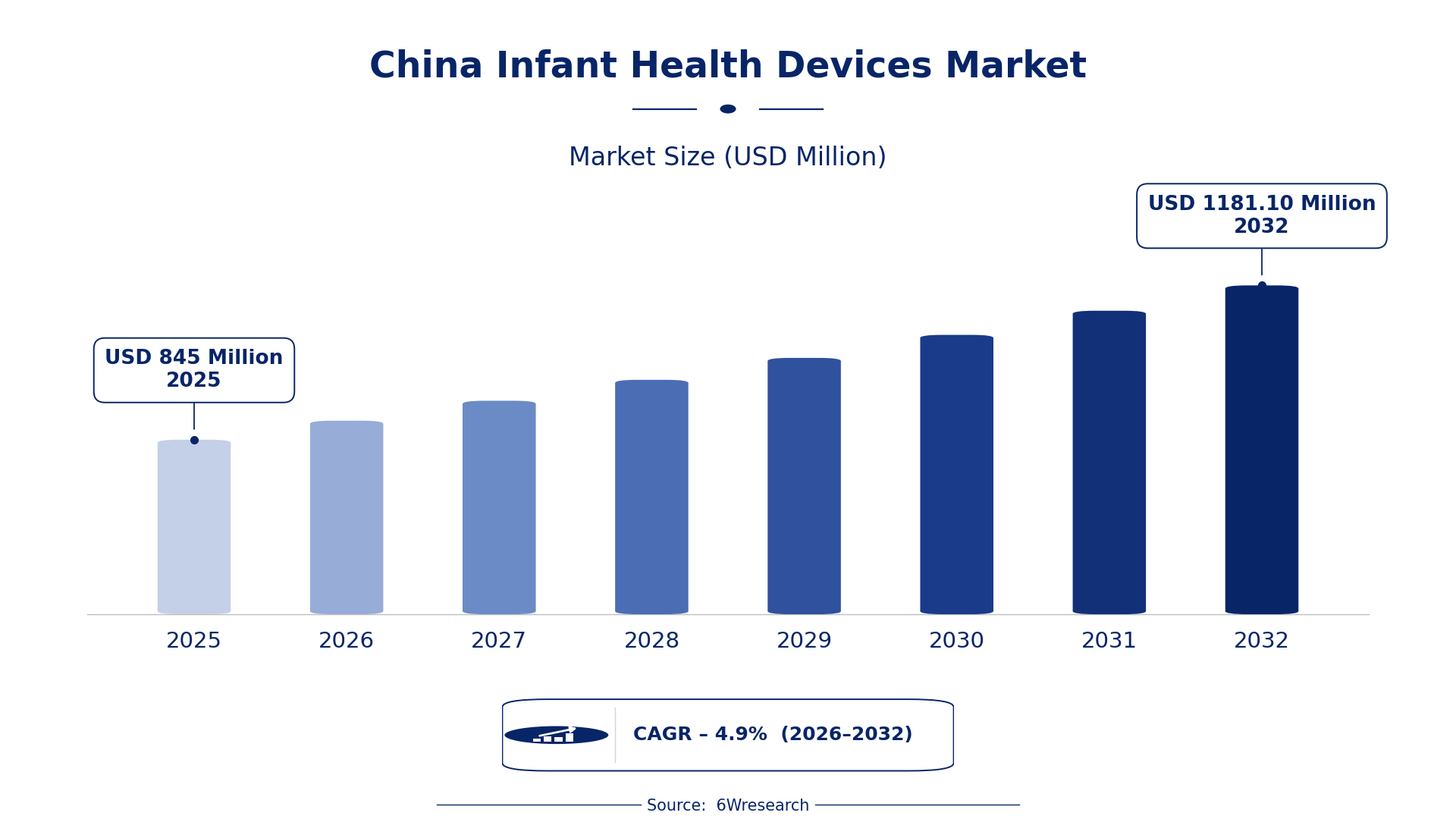
According to 6Wresearch internal database and industry insights, the China Infant Health Devices Market was valued at USD 845.0 million in 2025 and is projected to reach USD 1,181.10 million by 2032, growing at a CAGR of approximately 4.9% during 2026–2032.
China Infant Health Devices Market Highlights
| Report Metric | Details |
| Report Name | China Infant Health Devices Market |
| Market Size 2025 | USD 845.0 million |
| Market Size 2032 | USD 1,181.10 million |
| Absolute Growth 2025–2032 | USD 336.10 million |
| CAGR 2026–2032 | 4.9% |
| Peak Annual Growth | 7.5% in 2030 |
| Forecast Period | 2026–2032 |
| Historical Data | 2022–2025 |
| Base Year | 2025 |
| Leading Device Type, 2025 | Digital Thermometers (49% share) |
| Leading Health Monitoring Focus, 2025 | Fever Measurement (44% share) |
| Leading Usage Context, 2025 | Hospitals (41% share) |
| Leading Distribution Channel, 2025 | Online Medical Platforms (45% share) |
| Fastest-Growing Device Type | Baby Pulse Oximeters (6.6% CAGR) |
| Fastest-Growing Health Monitoring Focus | Oxygen Monitoring (6.7% CAGR) |
| Fastest-Growing Usage Context | At-Home Monitoring (7.6% CAGR) |
| Growing Sector | Online Medical Platforms |
| Key End Users | Online Medical Platforms, Medical Equipment Stores, Pharmacies, Direct Healthcare Sales |
China Infant Health Devices Market Year-wise Growth Rate and Key Drivers (2022–2032)
This graph illustrates the annual growth rates of the market from 2022 to 2032, highlighting a steady upward trajectory and projected market expansion over the forecast period.
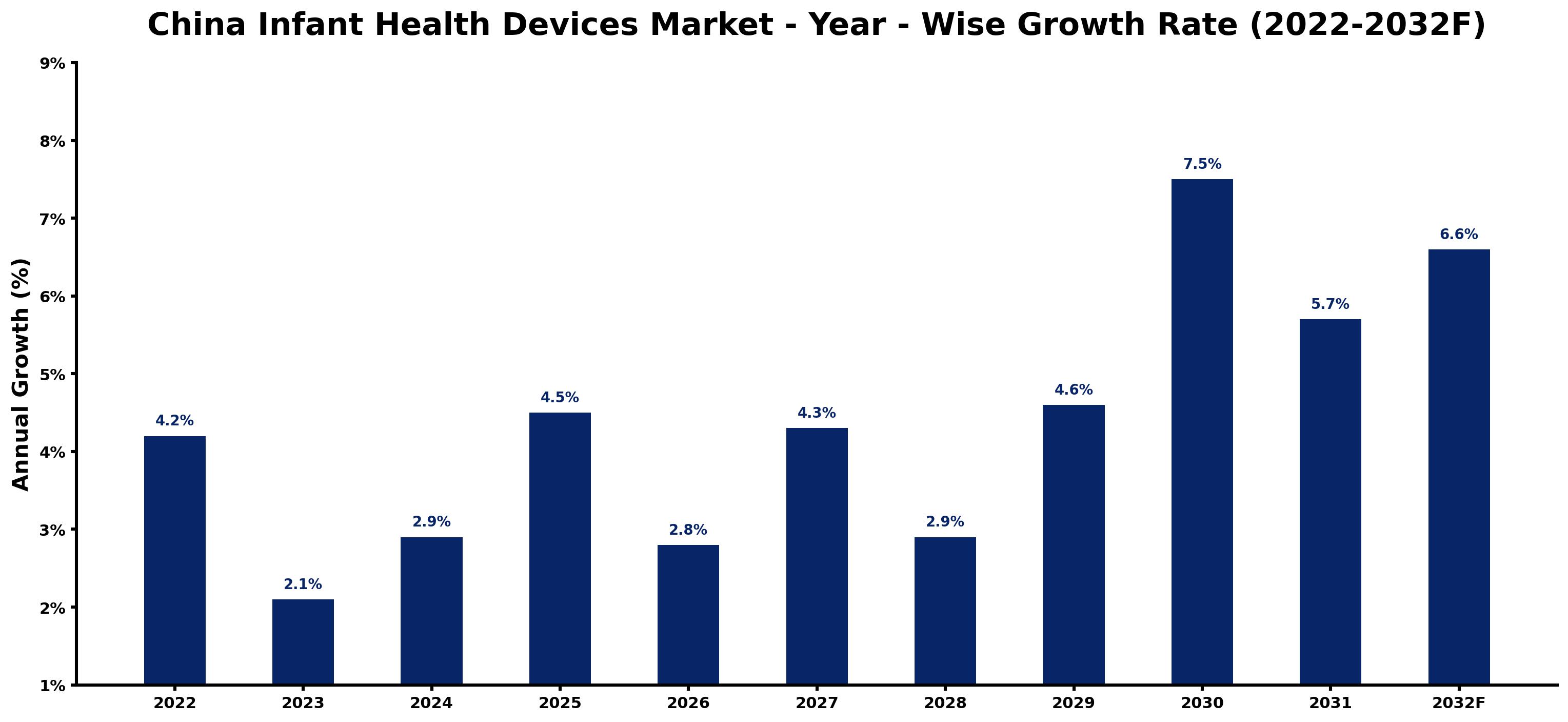
Below, each year's estimated growth is shown next to the factor that most influenced it.
| Year | Estimated Annual Growth (%) | Market Rationale |
| 2022 | 4.2 | The market experienced steady growth, driven by the National Health Commission's promotion of digital health devices for infants. |
| 2023 | 2.1 | Growth slowed as parents faced higher costs for advanced health devices amid rising competition in the market. |
| 2024 | 2.9 | Demand improved as hospitals expanded their pediatric departments and health device offerings, increasing access for parents. |
| 2025 | 4.5 | Growth accelerated with the introduction of new health monitoring technologies in hospitals, enhancing infant care. |
| 2026 | 2.8 | Market growth slowed due to regulatory compliance challenges affecting product launches and market entry. |
| 2027 | 4.3 | Demand increased as investment in pediatric healthcare technology gained momentum, boosting device availability. |
| 2028 | 2.9 | Growth decelerated slightly as competition intensified among local manufacturers, impacting pricing strategies. |
| 2029 | 4.6 | The market rebounded with rising sales of online medical platforms for infant health devices, improving consumer access. |
| 2030 | 7.5 | Peak growth occurred as government initiatives promoted digital health devices for infants, increasing adoption rates. |
| 2031 | 5.7 | Growth moderated as the market adjusted to new safety standards and regulations, influencing product offerings. |
| 2032 | 6.6 | Demand is expected to rise as educational campaigns improve parental awareness of infant health monitoring. |
Note: Market size estimations and growth projections presented in this report are based on 6Wresearch's proprietary forecasting methodology, utilizing the latest available industry data, government publications, and primary research inputs.
China Infant Health Devices Market Synopsis
Infant Health Devices in China include technologies that monitor and support the health of infants. These devices, such as digital thermometers and baby pulse oximeters, are crucial for early detection of health issues. The China Infant Health Devices Market is expanding due to strong domestic demand from healthcare facilities and parents looking for dependable monitoring solutions. With around 80 million children under five, the necessity for effective health monitoring is clear. Initiatives from the National Health Commission further drive investment in this sector, promoting innovation and accessibility.
Market Dynamics Impact Analysis (2026–2032)
| Factor | Type | Impact | Primary Segment Affected |
| Increasing demand for digital thermometers due to their essential role in fever measurement. | Driver | High | Fever Measurement |
| The rise in online medical platforms enhances consumer access to infant health devices. | Driver | High | Online Medical Platforms |
| Growing interest in baby pulse oximeters as parents prioritize oxygen monitoring for newborns. | Opportunity | Medium | Baby Pulse Oximeters |
| Expansion of pediatric departments in urban hospitals creates demand for advanced health devices. | Opportunity | High | Hospitals |
| Outdated technology in production limits innovation and affects product quality. | Restraint | High | Digital Thermometers |
| High costs of advanced devices restrict accessibility for many parents. | Restraint | Medium | Smart Wearables |
| Regulatory compliance challenges delay product availability in the market. | Challenge | High | Nasal Aspirators |
| Intense competition from international brands pressures local manufacturers to lower prices. | Challenge | Medium | Baby Pulse Oximeters |
Evaluation of Drivers in China Infant Health Devices Market (2026–2032)
The main growth drivers and the segments they affect most are set out below.
| Drivers | Primary Segment Affected | Why It Matters (Evidence) |
| Increased healthcare spending on pediatric technology drives demand for digital thermometers. | Digital Thermometers | China's investment in pediatric healthcare technology has risen by 15% since 2020. |
| Growing parental awareness of infant health monitoring boosts sales of baby pulse oximeters. | Baby Pulse Oximeters | The average age of first-time parents in China is now over 30 years, increasing demand. |
| The expansion of pediatric departments in hospitals increases the need for infant health devices. | Hospitals | Over 90% of hospitals in urban areas have pediatric departments, enhancing service offerings. |
| The rise of online medical platforms facilitates easier access to infant health devices for parents. | Online Medical Platforms | Sales of infant health devices on these platforms increased by 30% in 2023, reflecting demand. |
| Government initiatives promoting digital health devices support market growth. | Smart Wearables | The National Health Commission promotes the use of digital health devices for infants, increasing adoption. |
Growth in the Infant Health Devices market in China stems from increased healthcare spending, heightened parental awareness, and the expansion of pediatric departments. Investment in pediatric healthcare technology has surged by 15% since 2020, resulting in greater demand for digital thermometers. The average age of first-time parents has risen to over 30 years, boosting interest in baby pulse oximeters. The expansion of pediatric departments in hospitals, where over 90% have dedicated facilities, heightens the need for these devices. The rise of online medical platforms has also made access easier, with sales increasing by 30% in 2023, creating a vibrant market environment.
Evaluation of Restraints in China Infant Health Devices Market
The main factors holding the market back are set out below.
| Market Restraint | Primary Segment Affected | Why It Matters (Evidence) |
| Outdated technology limits the ability of producers to innovate and meet modern safety standards. | Digital Thermometers | Many producers still rely on older manufacturing processes, which restrict advancements. |
| High costs for advanced devices make them less accessible for parents. | Smart Wearables | The average price for smart wearables can exceed 1,000 yuan, limiting consumer access. |
| Regulatory compliance with updated safety standards adds time and expense for producers. | Nasal Aspirators | Compliance with the National Standard for Infant Health Devices is mandatory, increasing costs. |
| Increased competition from international brands pressures local manufacturers to lower prices. | Baby Pulse Oximeters | This can compromise quality and affect consumer trust in local products. |
| Limited distribution channels hinder the availability of certain devices in rural areas. | Fever Measurement | Not all medical equipment stores stock advanced infant health devices, affecting access. |
China Infant Health Devices Market Challenges
The China Infant Health Devices Market encounters several practical problems, starting with outdated technology. Many producers rely on legacy manufacturing methods, limiting their ability to innovate and comply with modern safety protocols, which ultimately compromises product reliability for hospitals. Buyers face high costs for advanced products, as smart wearables often exceed 1,000 yuan, restricting access for many parents. Increased competition from international brands pressures local manufacturers to lower prices, which can lead to quality compromises. Regulatory challenges arise from the updated National Standard for Infant Health Devices, adding delays and costs for producers, which can hinder timely market entry.
Trends in the China Infant Health Devices Market
Below mentioned are some of the trends shaping the China Infant Health Devices Market growth.
- Shift Towards Home Monitoring: Parents are increasingly choosing at-home monitoring solutions for their infants, motivated by convenience and technology. In 2023, the rise of smart wearables has simplified health tracking at home, with a notable increase in adoption.
- Growth of Online Medical Platforms: The trend of purchasing infant health devices through online medical platforms is gaining traction. In 2023, sales on these platforms rose by 30%, reflecting changing consumer preferences for convenience and accessibility.
- Increased Focus on Digital Health Devices: The emphasis on digital health devices for infants is rising as parents seek trustworthy monitoring solutions. Initiatives from the National Health Commission are promoting these devices, improving accessibility nationwide.
- Integration of Health Education in Parenting Courses: In 2022, the Ministry of Education launched a program to incorporate health monitoring education into parenting courses. This shift aims to equip new parents with essential knowledge for effective infant health management, enhancing overall awareness.
Investment Opportunities in the China Infant Health Devices Market
Several openings in the China Infant Health Devices Market merit attention from investors.
- Supply of Smart Wearables: With the growing demand for smart wearables, there is an opportunity to supply health tracking devices. The average age of first-time parents in China is over 30, indicating a tech-savvy demographic that values these products, leading to increased sales.
- Investment in Pediatric Healthcare Technology: A 15% increase in investment in pediatric healthcare technology highlights a gap in advanced health devices. Targeting hospitals and clinics with innovative solutions can create significant market entry opportunities, enhancing product offerings.
- Expansion of Online Medical Platforms: Online medical platforms are rapidly expanding, with a 30% increase in sales in 2023. Collaborating with these platforms can provide access to a wider consumer base seeking infant health devices, improving market penetration.
- Development of Educational Campaigns: The National Health Commission's initiatives to educate parents on health monitoring present a valuable opportunity. Creating educational materials and resources can boost brand visibility and consumer trust, driving demand for health devices.
Government Initiatives in the China Infant Health Devices Market
The 'Healthy China 2030' initiative, launched by the National Health Commission in 2020, aims to improve infant health monitoring standards nationwide. This initiative encourages the adoption of advanced health devices in hospitals and at home, promoting better health outcomes for infants. It also supports funding for research and development in pediatric healthcare technology, ensuring that new products meet safety and efficacy standards. By improving accessibility to these devices, the initiative is expected to significantly reduce the infant mortality rate, which was 6.8 per 1,000 live births in 2022.
The Ministry of Health oversees the implementation of updated safety standards for infant health devices. The agency ensures that all products comply with the National Standard for Infant Health Devices, which was revised in 2022. This includes rigorous testing and certification processes that improve consumer protection and device reliability. The agency also provides approvals for new products entering the market, facilitating innovation while maintaining safety protocols.
Future Insight of the China Infant Health Devices Market
By 2032, buyers and suppliers in the China Infant Health Devices Market can anticipate substantial changes driven by government initiatives and technological advancements. The National Health Commission's promotion of digital health devices will improve accessibility for families, while increased investment in pediatric healthcare technology will stimulate innovation. Online medical platforms are likely to broaden their offerings, reflecting a growing trend in consumer demand for infant health monitoring solutions. Educational campaigns targeting parents will further raise awareness and encourage the adoption of reliable health devices.
Market Segmentation Analysis
The report offers a comprehensive study of the following market segments and their leading categories in the market.
By Device Type – Digital Thermometers Dominated, Baby Pulse Oximeters Expected to Grow Fastest
According to Shubham Deep, Research Manager at 6Wresearch, Digital Thermometers held a 49% share of the China Infant Health Devices Market by device type in 2025. Digital thermometers hold the largest share in the China infant health devices market due to their essential role in fever measurement, crucial for early health issue detection. Their prevalence in over 90% of urban hospitals highlights their significance in both clinical and home settings. Baby Pulse Oximeters are projected to grow fastest, at a CAGR of 6.6% during 2026–2032. Baby pulse oximeters are experiencing rapid growth as parents increasingly recognise the importance of monitoring oxygen levels in newborns, particularly in urban healthcare environments. The 30% increase in online sales of infant health devices in 2023 underscores this rising awareness. Suppliers should focus on ensuring the availability of baby pulse oximeters to meet the growing demand from health-conscious parents.
By Health Monitoring Focus – Fever Measurement Dominated, Oxygen Monitoring Expected to Grow Fastest
In 2025, Fever Measurement led the health monitoring focus split with a 44% share. Fever measurement leads the market as it is critical for the early detection of health issues, especially in light of the infant mortality rate of 6.8 per 1,000 live births in 2022. National health initiatives that promote early detection and intervention further solidify this focus. The quickest growth will come from Oxygen Monitoring, forecast to expand at a CAGR of 6.7% between 2026 and 2032. Oxygen monitoring is the fastest-growing segment, driven by heightened parental awareness regarding the importance of infant safety and health. The surge in digital health device usage, supported by government initiatives, is propelling this growth. Buyers will find improved options in oxygen monitoring devices as they strive to ensure the health and safety of their infants.
By Usage Context – Hospitals Dominated, At-Home Monitoring Expected to Grow Fastest
The largest usage context category in 2025 was Hospitals, with a 41% share of total revenue. Hospitals dominate the market due to their key role in providing critical infant care, with the average hospital stay for infants being 5 days post-delivery. This environment necessitates the use of reliable health monitoring devices to ensure optimal care. At-Home Monitoring is set to record the highest CAGR in this split, 7.6% over 2026–2032. At-home monitoring is rapidly gaining traction as parents seek convenience and reassurance in managing their infants' health. The increasing average age of first-time parents, now over 30 years, contributes to this trend as they embrace technology for health management. Suppliers should consider expanding their product lines to cater to the growing demand for at-home monitoring solutions among parents.
By Distribution Channel – Online Medical Platforms Dominated and Is Expected to Record the Fastest Growth
Online Medical Platforms accounted for a 45% market share by distribution channel in 2025. Online medical platforms are the leading distribution channel for infant health devices, providing consumers with convenient access to a broad array of products. The notable rise in online sales reflects a shift in purchasing habits among parents seeking dependable health solutions. Its lead should widen, with a projected CAGR of 6.0% during 2026–2032, the highest in this split. Online medical platforms are also the fastest-growing channel, appealing to tech-savvy parents who prefer efficient purchasing methods for health devices. The ongoing increase in digital health device adoption continues to support this trend. Suppliers must enhance their online presence to effectively engage the growing number of parents purchasing health devices through digital platforms.
Key Attractiveness of the Report
- 10 Years of Market Numbers
- Historical Data Starting from 2022 to 2025
- Base Year 2025
- Forecast Data until 2032
- Key Performance Indicators Impacting the Market
- Major Upcoming Developments and Projects
Key Highlights of the Report:
- China Infant Health Devices Market Outlook
- Market Size of China Infant Health Devices Market, 2025
- Forecast of China Infant Health Devices Market, 2032
- Historical Data and Forecast of China Infant Health Devices Revenues & Volume for the Period 2022 - 2032F
- China Infant Health Devices Market Trend Evolution
- China Infant Health Devices Market Drivers and Challenges
- China Infant Health Devices Price Trends
- China Infant Health Devices Porter's Five Forces
- China Infant Health Devices Industry Life Cycle
- Historical Data and Forecast of China Infant Health Devices Market Revenues & Volume By Device Type for the Period 2022 - 2032F
- Historical Data and Forecast of China Infant Health Devices Market Revenues & Volume By Digital Thermometers for the Period 2022 - 2032F
- Historical Data and Forecast of China Infant Health Devices Market Revenues & Volume By Baby Pulse Oximeters for the Period 2022 - 2032F
- Historical Data and Forecast of China Infant Health Devices Market Revenues & Volume By Smart Wearables for the Period 2022 - 2032F
- Historical Data and Forecast of China Infant Health Devices Market Revenues & Volume By Nasal Aspirators for the Period 2022 - 2032F
- Historical Data and Forecast of China Infant Health Devices Market Revenues & Volume By Health Monitoring Focus for the Period 2022 - 2032F
- Historical Data and Forecast of China Infant Health Devices Market Revenues & Volume By Fever Measurement for the Period 2022 - 2032F
- Historical Data and Forecast of China Infant Health Devices Market Revenues & Volume By Oxygen Monitoring for the Period 2022 - 2032F
- Historical Data and Forecast of China Infant Health Devices Market Revenues & Volume By Vitals Tracking for the Period 2022 - 2032F
- Historical Data and Forecast of China Infant Health Devices Market Revenues & Volume By Congestion Relief for the Period 2022 - 2032F
- Historical Data and Forecast of China Infant Health Devices Market Revenues & Volume By Usage Context for the Period 2022 - 2032F
- Historical Data and Forecast of China Infant Health Devices Market Revenues & Volume By Home / Clinics for the Period 2022 - 2032F
- Historical Data and Forecast of China Infant Health Devices Market Revenues & Volume By Hospitals for the Period 2022 - 2032F
- Historical Data and Forecast of China Infant Health Devices Market Revenues & Volume By At-Home Monitoring for the Period 2022 - 2032F
- Historical Data and Forecast of China Infant Health Devices Market Revenues & Volume By Pediatric Use for the Period 2022 - 2032F
- Historical Data and Forecast of China Infant Health Devices Market Revenues & Volume By Distribution Channel for the Period 2022 - 2032F
- Historical Data and Forecast of China Infant Health Devices Market Revenues & Volume By Medical Equipment Stores for the Period 2022 - 2032F
- Historical Data and Forecast of China Infant Health Devices Market Revenues & Volume By Direct Healthcare Sales for the Period 2022 - 2032F
- Historical Data and Forecast of China Infant Health Devices Market Revenues & Volume By Online Medical Platforms for the Period 2022 - 2032F
- Historical Data and Forecast of China Infant Health Devices Market Revenues & Volume By Pharmacies for the Period 2022 - 2032F
- China Infant Health Devices Import Export Trade Statistics
- Market Opportunity Assessment By Device Type
- Market Opportunity Assessment By Health Monitoring Focus
- Market Opportunity Assessment By Usage Context
- Market Opportunity Assessment By Distribution Channel
- China Infant Health Devices Top Companies Market Share
- China Infant Health Devices Competitive Benchmarking By Technical and Operational Parameters
- China Infant Health Devices Company Profiles
- China Infant Health Devices Key Strategic Recommendations
Market Covered
The report offers an extensive study of the following market segments.
By Device Type
- Digital Thermometers
- Baby Pulse Oximeters
- Smart Wearables
- Nasal Aspirators
By Health Monitoring Focus
- Fever Measurement
- Oxygen Monitoring
- Vitals Tracking
- Congestion Relief
By Usage Context
- Home / Clinics
- Hospitals
- At-Home Monitoring
- Pediatric Use
By Distribution Channel
- Medical Equipment Stores
- Direct Healthcare Sales
- Online Medical Platforms
- Pharmacies































