China Inherited Movement Disorder Market Size & Growth Rate
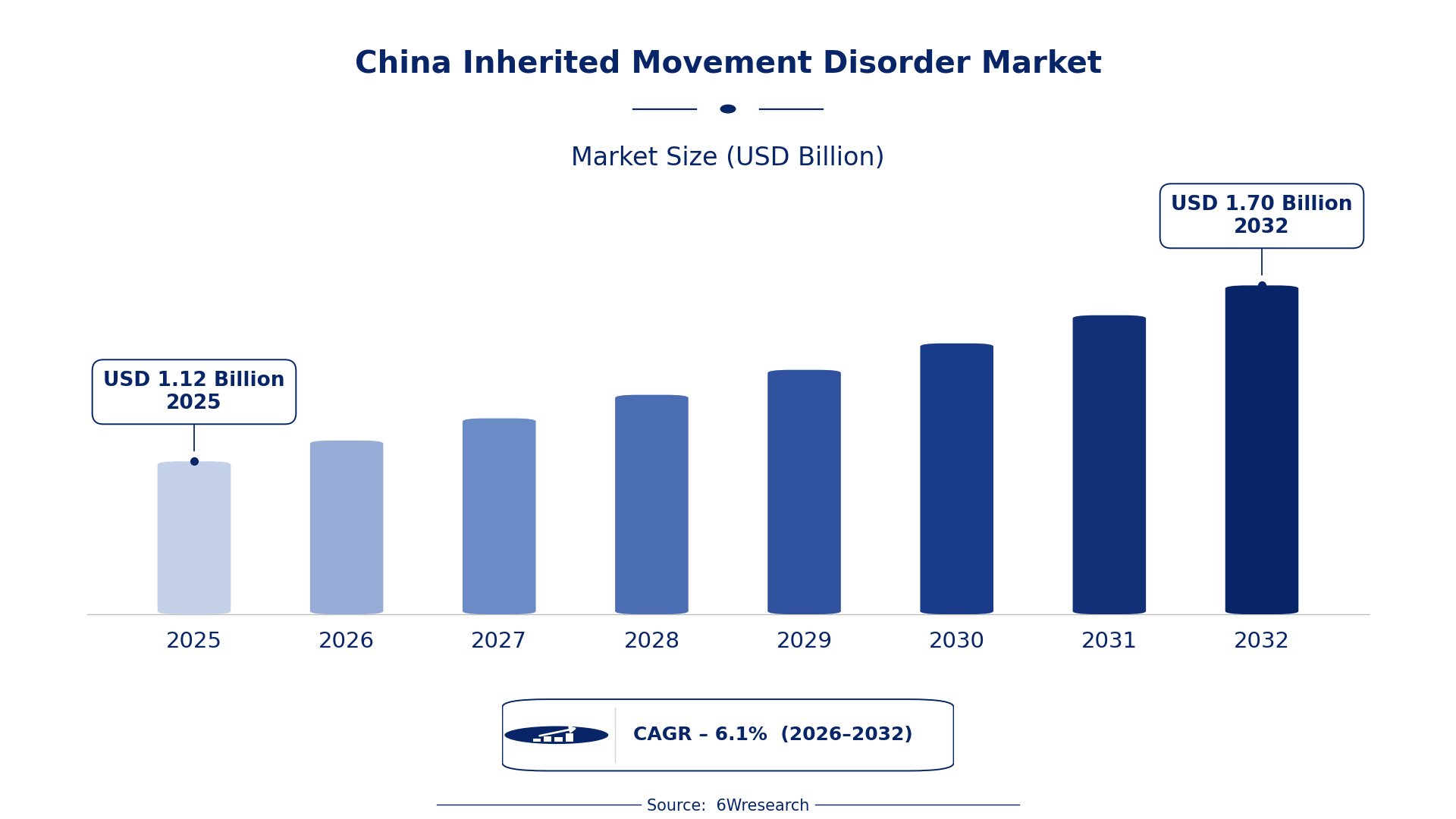
According to 6Wresearch internal database and industry insights, the China Inherited Movement Disorder Market was valued at USD 1.12 billion in 2025 and is projected to reach USD 1.70 billion by 2032, growing at a CAGR of approximately 6.1% during 2026–2032.
China Inherited Movement Disorder Market Highlights
| Report Metric | Details |
| Report Name | China Inherited Movement Disorder Market |
| Market Size 2025 | USD 1.12 billion |
| Market Size 2032 | USD 1.70 billion |
| Absolute Growth 2025–2032 | USD 0.58 billion |
| CAGR 2026–2032 | 6.1% |
| Peak Annual Growth | 8.2% in 2029 |
| Forecast Period | 2026–2032 |
| Historical Data | 2022–2025 |
| Base Year | 2025 |
| Leading Disorder Type, 2025 | Huntington's Disease (46% share) |
| Leading Genetic Cause, 2025 | HTT Mutation (38% share) |
| Leading Treatment Type, 2025 | Symptomatic Drug Therapy (37% share) |
| Leading Distribution Channel, 2025 | Specialized Hospitals (48% share) |
| Fastest-Growing Disorder Type | Ataxia Syndromes (7.8% CAGR) |
| Fastest-Growing Treatment Type | Motor Training + Therapy (7.2% CAGR) |
| Fastest-Growing Distribution Channel | Neuro Rehab Centers (7.2% CAGR) |
| Growing Sector | Neuro Rehab Centers |
| Key End Users | Specialized Hospitals, Neurology Clinics, Neuro Rehab Centers, Clinical Pharmacology Labs |
China Inherited Movement Disorder Market Year-wise Growth Rate and Key Drivers (2022–2032)
This graph illustrates the annual growth rates of the market from 2022 to 2032, highlighting a steady upward trajectory and projected market expansion over the forecast period.
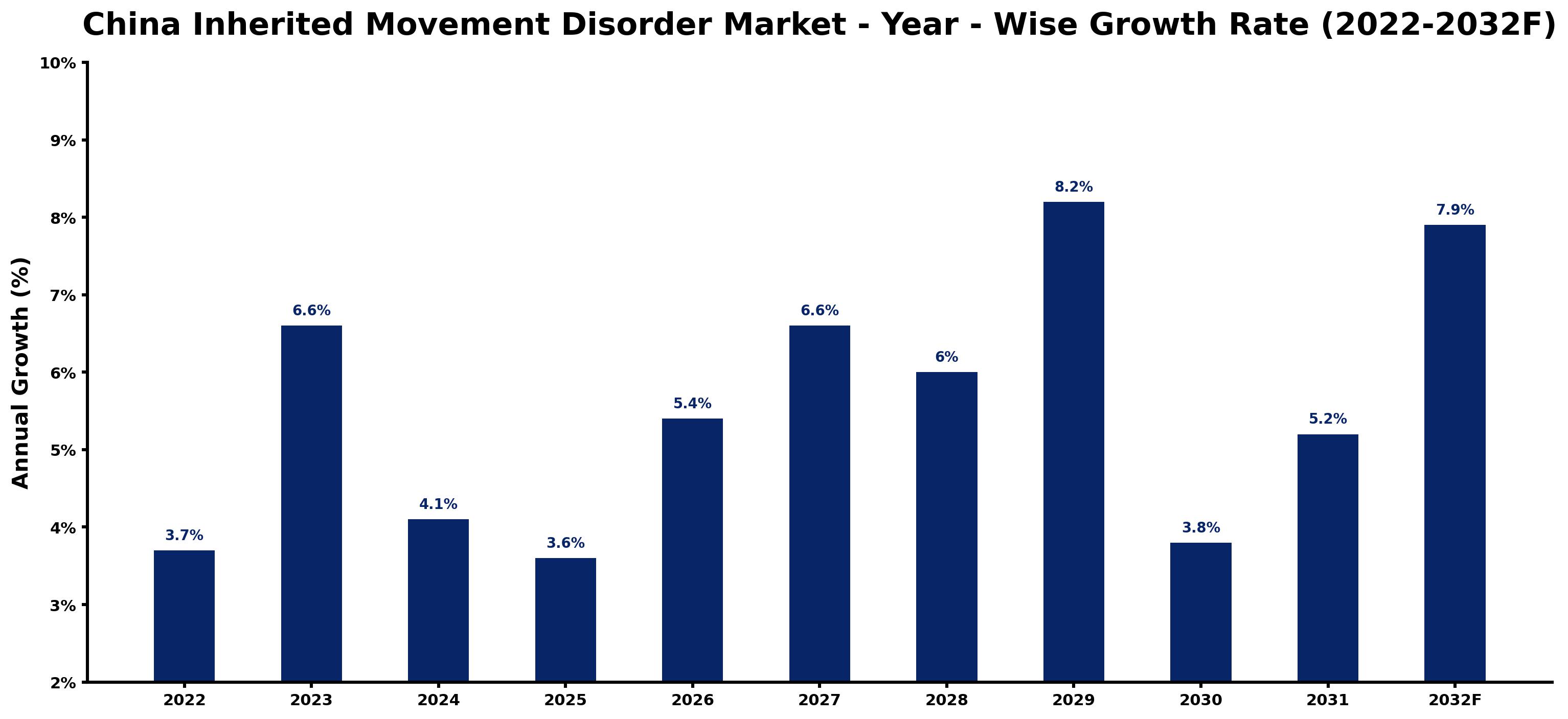
Annual growth estimates for each year appear below with the principal reason behind them, explaining the shifts that set the pace of the market.
| Year | Estimated Annual Growth (%) | Market Rationale |
| 2022 | 3.7 | The market experienced steady growth due to increased awareness of genetic disorders, supported by the National Rare Disease Registry. |
| 2023 | 6.6 | Demand surged following new guidelines from the National Health Commission for inherited movement disorders. |
| 2024 | 4.1 | Growth slowed as healthcare providers adjusted to new treatment protocols and patient needs, particularly in urban areas. |
| 2025 | 3.6 | Market expansion continued but at a slower pace as genetic testing accessibility improved through the Genetic Disease Prevention and Control Plan. |
| 2026 | 5.4 | Investment in rehabilitation facilities is expected to lead to a rise in treatment options available for patients. |
| 2027 | 6.6 | The growing adoption of motor training therapy in urban rehabilitation centres is projected to increase demand. |
| 2028 | 6.0 | Growth is expected to decelerate as the market adjusts to the influx of new treatment methodologies and patient needs. |
| 2029 | 8.2 | A peak in growth is anticipated due to heightened public health initiatives and awareness campaigns. |
| 2030 | 3.8 | Market growth is projected to slow as competition among treatment providers intensifies in urban areas. |
| 2031 | 5.2 | Demand is expected to increase again as more patients seek specialized care for movement disorders. |
| 2032 | 7.9 | Advancements in genetic testing technologies and increased accessibility will drive market growth. |
Note: Market size estimations and growth projections presented in this report are based on 6Wresearch's proprietary forecasting methodology, utilizing the latest available industry data, government publications, and primary research inputs.
China Inherited Movement Disorder Market Synopsis
Inherited Movement Disorder in China encompasses genetic conditions affecting motor control, diagnosed through genetic testing and clinical evaluation. These disorders require symptom management and rehabilitation to improve patients' quality of life. The market is growing due to rising demand from healthcare providers and domestic users. Increased accessibility to genetic testing, supported by the National Rare Disease Registry, is driving this growth.
Market Dynamics Impact Analysis (2026–2032)
| Factor | Type | Impact | Primary Segment Affected |
| Increased awareness of genetic disorders drives demand for testing and treatment options. | Driver | High | Huntington's Disease |
| The rise in specialized hospitals enhances treatment accessibility for patients. | Driver | High | Specialized Hospitals |
| Investment in motor training therapy presents opportunities for rehabilitation centers to expand services. | Opportunity | High | Motor Training + Therapy |
| The growing prevalence of Ataxia Syndromes creates demand for targeted therapies. | Opportunity | High | Ataxia Syndromes |
| Limited access to advanced genetic testing hampers patient diagnosis and treatment. | Restraint | High | HTT Mutation |
| High costs associated with advanced therapies can restrict patient access. | Restraint | Medium | Dystonia |
| Healthcare providers face challenges in keeping up with rapidly evolving treatment protocols. | Challenge | High | Wilson's Disease |
| The complexity of genetic disorders makes it difficult for patients to receive timely diagnoses. | Challenge | Medium | Ataxia Syndromes |
Evaluation of Drivers in China Inherited Movement Disorder Market (2026–2032)
The main growth drivers and the segments they affect most are set out below.
| Drivers | Primary Segment Affected | Why It Matters (Evidence) |
| Increased awareness of genetic disorders | Huntington's Disease | This awareness leads to higher demand for testing and treatment options, with approximately 2-7 per 100,000 people affected. |
| Investment in specialized hospitals | Specialized Hospitals | Improved facilities increase patient access to treatment, with these hospitals projected to hold a 48% share in the distribution channel. |
| Growing prevalence of Ataxia Syndromes | Ataxia Syndromes | With a prevalence of around 1 in 100,000 individuals, demand for targeted therapies rises significantly. |
| Adoption of motor training therapy | Motor Training + Therapy | This approach is increasingly used in rehabilitation centers, improving patient outcomes and satisfaction. |
| Recognition of Botulinum toxin therapy | Dystonia | As a standard treatment, it drives demand for therapeutic interventions in clinical guidelines. |
Market growth in China for Inherited Movement Disorder is driven by heightened demand from healthcare providers and the response from specialised hospitals. The prevalence of genetic disorders is leading to more testing and treatment options, with around 2-7 per 100,000 individuals affected. Investment in specialised hospitals is enhancing accessibility, with these facilities expected to capture a 48% share of the distribution channel. The increasing adoption of motor training therapy in rehabilitation centres is improving patient outcomes, further propelling market growth. The growing acceptance of Botulinum toxin therapy as a standard treatment is also driving demand for effective interventions.
Evaluation of Restraints in China Inherited Movement Disorder Market
Below mentioned are some major restraints and their influence on market dynamics.
| Market Restraint | Primary Segment Affected | Why It Matters (Evidence) |
| High costs associated with advanced therapies | Dystonia | These costs restrict patient access, impacting treatment rates in specialized hospitals, particularly for families with limited resources. |
| Insufficient training for healthcare providers | Ataxia Syndromes | This leads to inconsistent treatment approaches, affecting patient care quality and delaying effective management. |
| Limited availability of genetic testing kits | Huntington's Disease | Supply chain disruptions can delay diagnosis and treatment for patients, hindering timely intervention. |
| Regulatory hurdles in treatment approvals | Wilson's Disease | These hurdles can slow down the introduction of new therapies, affecting patient access to new treatments. |
| Lack of public awareness about inherited disorders | Huntington's Disease | This limits early diagnosis and treatment, resulting in poorer patient outcomes and increased healthcare costs. |
China Inherited Movement Disorder Market Challenges
In the China Inherited Movement Disorder market, intense competition among urban clinics offering similar services leads to price wars that reduce profit margins for healthcare providers. This competitive environment limits their capacity to invest in advanced treatment options, affecting the quality of care. Supply chain disruptions cause inconsistent availability of essential genetic testing kits, delaying diagnosis and treatment for patients, which can worsen their conditions. Skills shortages in specialized clinics hinder effective management of these disorders, resulting in longer wait times for patients seeking care. High costs of therapies, such as botulinum toxin treatments, burden families, making access to care challenging for those affected by these conditions.
Trends in the China Inherited Movement Disorder Market
Several trends are reshaping the China Inherited Movement Disorder Market; the most important are set out below.
- Shift Towards Advanced Genetic Testing: Healthcare providers are increasingly adopting advanced genetic testing methods, as seen in urban hospitals where testing prevalence has increased by 20% over the last three years. This shift allows for more accurate diagnoses and tailored treatment plans.
- Growing Adoption of Motor Training Therapy: Rehabilitation centers in major cities are prioritising motor training therapy, reflecting a shift in treatment approaches. This method is gaining traction, with a notable increase in patient participation and satisfaction.
- Increased Focus on Public Awareness Campaigns: Public health initiatives are raising awareness of inherited movement disorders, supported by the National Rare Disease Registry. This effort is essential in improving patient access to necessary treatments and community support.
- Expansion of Specialized Hospitals: The number of specialized hospitals is growing, driven by rising patient demand for targeted therapies. This expansion is vital for improving treatment accessibility across the country, with a projected 48% share in the distribution channel.
Investment Opportunities in the China Inherited Movement Disorder Market
The following opportunities in the China Inherited Movement Disorder Market pair current demand with a clear way in.
- Supply of Advanced Genetic Testing Services: The demand for advanced genetic testing services is on the rise, with a 20% increase in prevalence in urban hospitals. Investing in testing facilities can meet the needs of healthcare providers seeking accurate diagnoses and timely interventions.
- Provision of Motor Training Therapy: Rehabilitation centres are looking to broaden their offerings of motor training therapy, which is becoming more popular in urban areas. This presents an opportunity for investment in specialised training programmes and equipment.
- Development of Targeted Therapies for Ataxia Syndromes: The increasing prevalence of Ataxia Syndromes highlights a gap in treatment options. Investing in research and development can benefit healthcare providers focused on these disorders and improve patient outcomes.
- Expansion of Specialized Hospitals: With a projected 48% share in the distribution channel, there is a strong opportunity to invest in specialised hospitals. Collaborating with local healthcare providers can facilitate entry into this growing market and improve patient care.
Government Initiatives in the China Inherited Movement Disorder Market
In 2021, the National Health Commission launched the 'Genetic Disease Prevention and Control Plan' with a budget of 500 million RMB to improve genetic disorder management. This measure complements existing laws by providing funding for genetic testing and treatment initiatives, aiming to improve patient care across the country. The updated 'National Rare Diseases Action Plan' in 2022 further supports diagnosis and treatment access for rare genetic disorders, ensuring that healthcare providers have the necessary resources to address these conditions effectively.
The 'National Standard for Genetic Testing' established in 2020 by the Standardization Administration ensures quality in genetic testing services. The Ministry of Education's 'Genetic Literacy Program', initiated in 2023, aims to educate healthcare professionals on genetic disorders, improving the overall quality of care for patients with inherited movement disorders.
Future Insight of the China Inherited Movement Disorder Market
The China Inherited Movement Disorder market will undergo transformative changes by 2032, primarily due to improved genetic testing and treatment accessibility. The National Rare Disease Registry will enhance data collection, enabling better resource allocation for affected individuals. Increased adoption of motor training therapy in rehabilitation centres will lead to better patient outcomes. The Ministry of Health's initiatives to expand genetic testing will result in a 20% increase in testing rates, facilitating earlier diagnosis and intervention for patients. These advancements will empower healthcare providers to deliver more effective care.
Market Segmentation Analysis
Each segment group is reviewed below, with the leader by share and the fastest grower by CAGR.
By Disorder Type – Huntington's Disease Dominated, Ataxia Syndromes Expected to Grow Fastest
According to Shubham Deep, Research Manager at 6Wresearch, in 2025, Huntington's Disease led the disorder type split with a 46% share. Huntington's Disease holds a significant market share in China due to its prevalence, affecting approximately 2-7 individuals per 100,000. The requirement for specialised medical intervention for effective management makes it a focal point for healthcare providers. Ataxia Syndromes are set to record the highest CAGR in this split, 7.8% over 2026–2032. Ataxia Syndromes are experiencing rapid growth as awareness and diagnosis improve, with a prevalence of around 1 in 100,000 individuals. The increasing emphasis on targeted rehabilitation therapies is propelling this segment's expansion. Suppliers should prioritise developing tailored treatment solutions for Ataxia Syndromes to leverage this growing segment.
By Genetic Cause – HTT Mutation Dominated and Is Expected to Record the Fastest Growth
HTT Mutation took a 38% share of genetic cause in 2025, more than any other category. The HTT Mutation leads the market share as it is directly linked to the diagnosis of Huntington's Disease, a prominent inherited movement disorder in China. Its significance in targeted treatment approaches makes it a focal point for healthcare providers. Its lead should widen, with a projected CAGR of 7.5% during 2026–2032, the highest in this split. The HTT Mutation is also the fastest-growing segment, as advancements in genetic testing have increased its identification. This dual role in diagnosis and treatment will further solidify its market position. Suppliers should invest in genetic testing technologies to meet the rising demand for accurate diagnosis and management.
By Treatment Type – Symptomatic Drug Therapy Dominated, Motor Training + Therapy Expected to Grow Fastest
The largest treatment type category in 2025 was Symptomatic Drug Therapy, with a 37% share of total revenue. Symptomatic Drug Therapy captures the largest market share as it is the primary method for alleviating symptoms of inherited movement disorders, providing essential relief to patients. This approach is widely implemented in specialised clinics across China, ensuring broad accessibility. Motor Training + Therapy is projected to grow fastest, at a CAGR of 7.2% during 2026–2032. Motor Training + Therapy is rapidly gaining traction due to its direct benefits in enhancing motor function, with increased adoption in rehabilitation centres. The shift towards comprehensive treatment strategies is driving this segment's growth. Healthcare providers should broaden their service offerings to include integrated rehabilitation therapies to better meet patient requirements.
By Distribution Channel – Specialized Hospitals Dominated, Neuro Rehab Centers Expected to Grow Fastest
With a 48% revenue share in 2025, Specialized Hospitals was the largest distribution channel category. Specialised Hospitals lead the market share as they deliver direct care for complex cases of inherited movement disorders, ensuring patients receive necessary interventions. These facilities are equipped to manage the complexities associated with such disorders, making them indispensable in the healthcare system. Over 2026–2032, Neuro Rehab Centers are expected to post the fastest growth, at a CAGR of 7.2%. Neuro Rehab Centers are the fastest-growing distribution channel, driven by the rising demand for rehabilitation services specifically designed for movement disorders. The growing focus on recovery and improving quality of life is fuelling this growth. Suppliers should explore collaborations with Neuro Rehab Centers to enhance service delivery and expand their reach to a wider patient audience.
Key Attractiveness of the Report
- 10 Years of Market Numbers
- Historical Data Starting from 2022 to 2025
- Base Year 2025
- Forecast Data until 2032
- Key Performance Indicators Impacting the Market
- Major Upcoming Developments and Projects
Key Highlights of the Report:
- China Inherited Movement Disorder Market Outlook
- Market Size of China Inherited Movement Disorder Market, 2025
- Forecast of China Inherited Movement Disorder Market, 2032
- Historical Data and Forecast of China Inherited Movement Disorder Revenues & Volume for the Period 2022 - 2032F
- China Inherited Movement Disorder Market Trend Evolution
- China Inherited Movement Disorder Market Drivers and Challenges
- China Inherited Movement Disorder Price Trends
- China Inherited Movement Disorder Porter's Five Forces
- China Inherited Movement Disorder Industry Life Cycle
- Historical Data and Forecast of China Inherited Movement Disorder Market Revenues & Volume By Disorder Type for the Period 2022 - 2032F
- Historical Data and Forecast of China Inherited Movement Disorder Market Revenues & Volume By Huntington s Disease for the Period 2022 - 2032F
- Historical Data and Forecast of China Inherited Movement Disorder Market Revenues & Volume By Ataxia Syndromes for the Period 2022 - 2032F
- Historical Data and Forecast of China Inherited Movement Disorder Market Revenues & Volume By Dystonia for the Period 2022 - 2032F
- Historical Data and Forecast of China Inherited Movement Disorder Market Revenues & Volume By Wilson s Disease for the Period 2022 - 2032F
- Historical Data and Forecast of China Inherited Movement Disorder Market Revenues & Volume By Genetic Cause for the Period 2022 - 2032F
- Historical Data and Forecast of China Inherited Movement Disorder Market Revenues & Volume By HTT Mutation for the Period 2022 - 2032F
- Historical Data and Forecast of China Inherited Movement Disorder Market Revenues & Volume By Autosomal Recessive for the Period 2022 - 2032F
- Historical Data and Forecast of China Inherited Movement Disorder Market Revenues & Volume By Gene-Linked Neurotransmitters for the Period 2022 - 2032F
- Historical Data and Forecast of China Inherited Movement Disorder Market Revenues & Volume By Copper Accumulation for the Period 2022 - 2032F
- Historical Data and Forecast of China Inherited Movement Disorder Market Revenues & Volume By Treatment Type for the Period 2022 - 2032F
- Historical Data and Forecast of China Inherited Movement Disorder Market Revenues & Volume By Symptomatic Drug Therapy for the Period 2022 - 2032F
- Historical Data and Forecast of China Inherited Movement Disorder Market Revenues & Volume By Motor Training Therapy for the Period 2022 - 2032F
- Historical Data and Forecast of China Inherited Movement Disorder Market Revenues & Volume By Botulinum / DBS for the Period 2022 - 2032F
- Historical Data and Forecast of China Inherited Movement Disorder Market Revenues & Volume By Chelating Agents for the Period 2022 - 2032F
- Historical Data and Forecast of China Inherited Movement Disorder Market Revenues & Volume By Distribution Channel for the Period 2022 - 2032F
- Historical Data and Forecast of China Inherited Movement Disorder Market Revenues & Volume By Neurology Clinics for the Period 2022 - 2032F
- Historical Data and Forecast of China Inherited Movement Disorder Market Revenues & Volume By Neuro Rehab Centers for the Period 2022 - 2032F
- Historical Data and Forecast of China Inherited Movement Disorder Market Revenues & Volume By Specialized Hospitals for the Period 2022 - 2032F
- Historical Data and Forecast of China Inherited Movement Disorder Market Revenues & Volume By Clinical Pharmacology Labs for the Period 2022 - 2032F
- China Inherited Movement Disorder Import Export Trade Statistics
- Market Opportunity Assessment By Disorder Type
- Market Opportunity Assessment By Genetic Cause
- Market Opportunity Assessment By Treatment Type
- Market Opportunity Assessment By Distribution Channel
- China Inherited Movement Disorder Top Companies Market Share
- China Inherited Movement Disorder Competitive Benchmarking By Technical and Operational Parameters
- China Inherited Movement Disorder Company Profiles
- China Inherited Movement Disorder Key Strategic Recommendations
Market Covered
The report offers an extensive study of the following market segments.
By Disorder Type
- Huntington's Disease
- Ataxia Syndromes
- Dystonia
- Wilson's Disease
By Genetic Cause
- HTT Mutation
- Autosomal Recessive
- Gene-Linked Neurotransmitters
- Copper Accumulation
By Treatment Type
- Symptomatic Drug Therapy
- Motor Training + Therapy
- Botulinum / DBS
- Chelating Agents
By Distribution Channel
- Neurology Clinics
- Neuro Rehab Centers
- Specialized Hospitals
- Clinical Pharmacology Labs































