China Skin Care Oil Market Size & Growth Rate
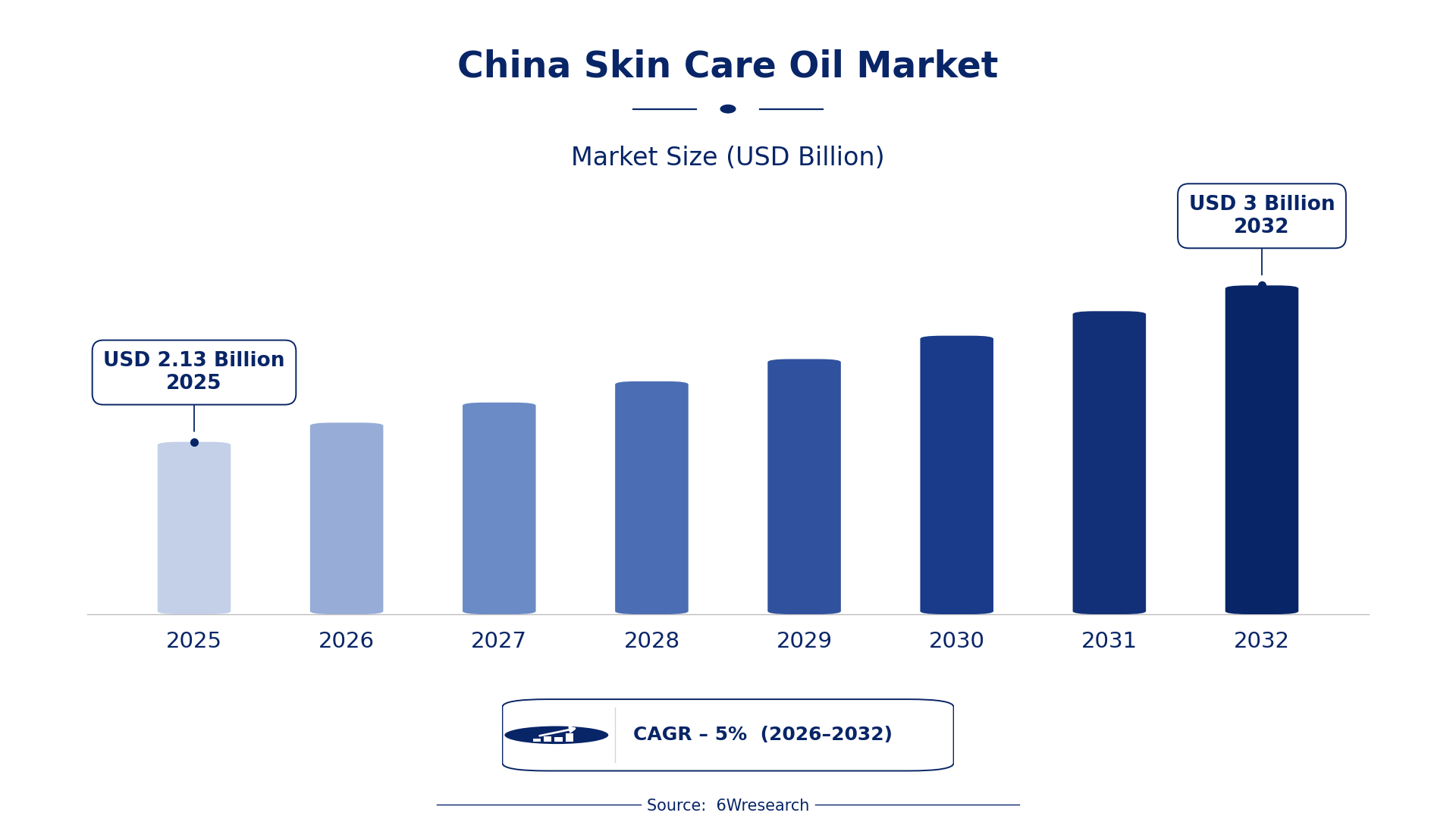
According to 6Wresearch internal database and industry insights, the China Skin Care Oil Market was valued at USD 2.13 billion in 2025 and is projected to reach USD 3 billion by 2032, growing at a CAGR of approximately 5% during 2026–2032.
China Skin Care Oil Market Highlights
| Report Metric | Details |
| Report Name | China Skin Care Oil Market |
| Market Size 2025 | USD 2.13 billion |
| Market Size 2032 | USD 3 billion |
| Absolute Growth 2025–2032 | USD 0.87 billion |
| CAGR 2026–2032 | 5% |
| Peak Annual Growth | 6.9% in 2031 |
| Forecast Period | 2026–2032 |
| Historical Data | 2022–2025 |
| Base Year | 2025 |
| Leading Oil Type, 2025 | Coconut Oil (42% share) |
| Leading Source, 2025 | Plant-Based (45% share) |
| Leading Skin Benefit, 2025 | Hydration & Antibacterial (51% share) |
| Leading End User, 2025 | Natural Beauty Brands (45% share) |
| Fastest-Growing Oil Type | Tea Tree Oil (7.6% CAGR) |
| Fastest-Growing Source | Essential Oil (6.4% CAGR) |
| Fastest-Growing Skin Benefit | Anti-inflammatory (7.7% CAGR) |
| Growing Sector | Natural Beauty |
| Key End Users | Natural Beauty Brands, Retail Cosmetic Brands, Wellness Product Firms |
China Skin Care Oil Market Year-wise Growth Rate and Key Drivers (2022–2032)
This graph illustrates the annual growth rates of the market from 2022 to 2032, highlighting a steady upward trajectory and projected market expansion over the forecast period.
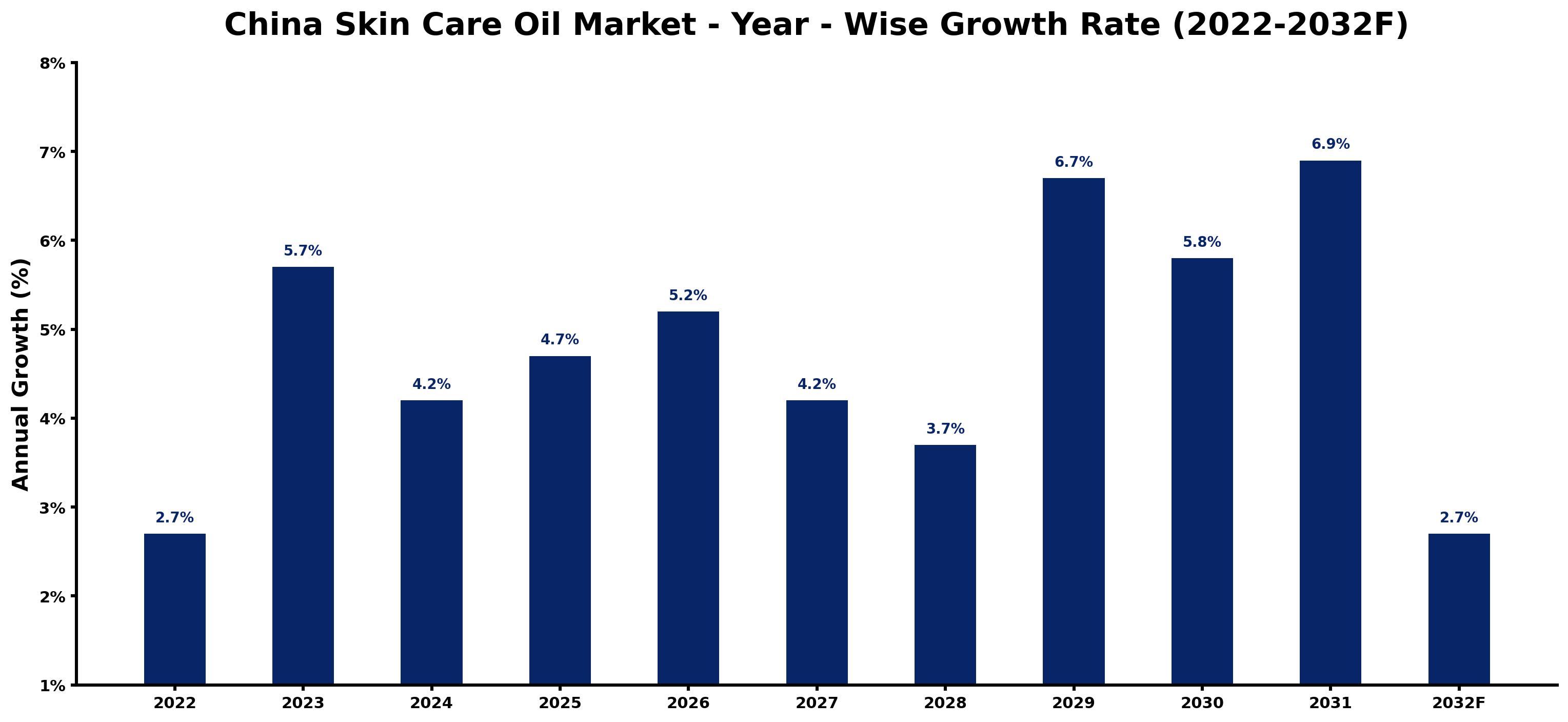
The following table presents the estimated annual growth rate for each year together with the principal factor influencing market performance.
| Year | Estimated Annual Growth (%) | Market Rationale |
| 2022 | 2.7 | The market showed steady growth, reflecting the launch of the 'National Health and Wellness Plan' promoting natural ingredients. |
| 2023 | 5.7 | Consumer demand for natural skin care products surged, driven by the growing middle class's awareness of skin health. |
| 2024 | 4.2 | Growth slowed as consumers began to explore a wider range of skin care products, impacting traditional oil sales. |
| 2025 | 4.7 | The market rebounded with renewed interest in hydration-focused skin care oils, particularly among younger demographics. |
| 2026 | 5.2 | Demand is expected to increase as consumers seek products with anti-aging benefits, aligning with market trends. |
| 2027 | 4.2 | Growth will slow as market competition intensifies among various skin care oils, affecting smaller brands. |
| 2028 | 3.7 | The market will continue to grow, driven by rising awareness of skin health and the benefits of natural oils. |
| 2029 | 6.7 | A surge in demand for antibacterial oils, particularly tea tree oil, will boost market growth significantly. |
| 2030 | 5.8 | Growth will slow as consumers become more discerning in their product choices, focusing on quality and sustainability. |
| 2031 | 6.9 | The market will peak with heightened interest in natural beauty products and sustainable practices, attracting new buyers. |
| 2032 | 2.7 | Growth will slow as market maturity sets in, but demand for quality oils remains strong. |
Note: Market size estimations and growth projections presented in this report are based on 6Wresearch's proprietary forecasting methodology, utilizing the latest available industry data, government publications, and primary research inputs.
China Skin Care Oil Market Synopsis
Skin Care Oil in China includes various natural oils that provide hydration and nourishment to the skin. Sourced from plants, these oils are increasingly sought after for their anti-aging and therapeutic properties. The China Skin Care Oil Market is growing, driven by a rising middle class and heightened consumer awareness of skin health, with demand for natural products increasing by 20% annually since 2020. The 'Green Cosmetics Initiative' launched in 2023 further supports sustainable beauty, boosting purchases in this sector.
Market Dynamics Impact Analysis (2026–2032)
| Factor | Type | Impact | Primary Segment Affected |
| Increasing consumer preference for natural ingredients drives demand for skin care oils. | Driver | High | Plant-Based |
| The rise of e-commerce platforms facilitates easier access to skin care oils. | Driver | High | Retail Cosmetic Brands |
| Growing interest in holistic health creates opportunities for wellness product firms. | Opportunity | Medium | Wellness Product Firms |
| The surge in online sales presents a gap for new entrants in the market. | Opportunity | High | Natural Beauty Brands |
| Regulatory compliance can be challenging for new product formulations. | Restraint | Medium | Essential Oil |
| Intense competition among brands can limit market share for smaller producers. | Restraint | High | Retail Cosmetic Brands |
| Skin Care Oil in China faces challenges from fluctuating consumer preferences. | Challenge | High | Natural Beauty Brands |
| Supply chain disruptions can delay product availability in the market. | Challenge | Medium | Plant-Based |
Evaluation of Drivers in China Skin Care Oil Market (2026–2032)
The main growth drivers and the segments they affect most are set out below.
| Drivers | Primary Segment Affected | Why It Matters (Evidence) |
| Rising demand for hydration-focused products boosts sales of coconut oil. | Coconut Oil | In 2022, coconut oil held a 42% market share, attracting consumers seeking moisture. |
| Tea tree oil's antibacterial properties are increasingly sought after for acne treatment. | Tea Tree Oil | Tea tree oil is recognized for its effectiveness in treating acne among consumers. |
| The growing middle class is driving up spending on skin care products. | Natural Beauty Brands | The average consumer spends about 1,000 CNY annually on skin care products. |
| E-commerce growth transforms retail channels, increasing product accessibility. | Retail Cosmetic Brands | Online sales accounted for 30% of skin care purchases in 2022. |
| The 'Healthy China 2030' initiative promotes skin health awareness. | Essential Oil | This initiative emphasises the importance of natural ingredients in personal care products. |
Market growth in China for Skin Care Oil rests on rising consumer demand for hydration-focused products, increased spending from the growing middle class, and the transformation of retail channels through e-commerce. In 2022, coconut oil commanded a 42% market share, driven by consumers seeking moisture. The average consumer spends about 1,000 CNY annually on skin care products, further boosting demand. The effectiveness of tea tree oil in treating acne appeals to younger demographics, contributing to its popularity. The promotion of natural ingredients in personal care products is expected to further fuel demand.
Evaluation of Restraints in China Skin Care Oil Market
The following restraints limit how fast demand can grow.
| Market Restraint | Primary Segment Affected | Why It Matters (Evidence) |
| Regulatory compliance can be complex for new entrants in the market. | Essential Oil | The National Standard for Cosmetic Ingredients regulates oil usage, complicating formulations. |
| Intense competition among brands can limit market share for smaller producers. | Retail Cosmetic Brands | Established brands dominate the market, making it hard for newcomers to gain traction. |
| Consumer preferences can shift rapidly, affecting product demand. | Natural Beauty Brands | The rise of new beauty trends can divert attention from traditional skin care oils. |
| Supply chain disruptions can delay product availability in the market. | Plant-Based | Global supply chain issues have impacted the availability of key raw materials. |
| High marketing costs can restrict smaller brands from reaching their audience effectively. | Wellness Product Firms | Limited budgets hinder promotional efforts, affecting brand visibility. |
China Skin Care Oil Market Challenges
The China Skin Care Oil Market encounters regulatory challenges, as the National Standard for Cosmetic Ingredients (GB 7916-2018) imposes strict guidelines that can delay product approvals for suppliers. Rising production costs, driven by a 20% annual increase in demand for natural skin care products, pressure buyers with higher prices. Supply chain inefficiencies in Guangdong province may result in logistical delays, impacting product availability for retailers. Intense competition among local and international brands leads to price reductions, squeezing profit margins for producers and limiting their capacity to innovate.
Trends in the China Skin Care Oil Market
Several trends are reshaping the China Skin Care Oil Market; the most important are set out below.
- Launch of the Green Cosmetics Initiative: In 2023, the Ministry of Industry and Information Technology introduced the 'Green Cosmetics Initiative' to promote sustainable beauty products. This initiative aims to increase demand for eco-friendly skin care oils, with a projected 40% rise in sales over the next few years.
- Shift towards E-commerce Channels: Since 2022, the rise of e-commerce has transformed retail channels for skin care oils. Online sales now account for 30% of purchases, making it essential for brands to establish a strong online presence.
- Growing Preference for Natural Ingredients: The Chinese population is increasingly adopting plant-based beauty products, with a 40% rise in sales. This trend is leading to a greater focus on natural formulations, particularly among younger consumers.
- Rise of Anti-inflammatory Products: The anti-inflammatory segment is gaining traction, driven by consumer interest in products that soothe skin irritations. This segment is projected to grow at a CAGR of 7.7% through 2032.
Investment Opportunities in the China Skin Care Oil Market
Investors looking at the China Skin Care Oil Market should consider the following areas.
- Guangdong as a Manufacturing Hub: Guangdong province serves as a major hub for skin care product manufacturing, presenting substantial investment opportunities for local production facilities. This can help meet the increasing demand for skin care oils, particularly among natural beauty brands.
- Partnerships with Natural Beauty Brands: The average Chinese consumer spends about 1,000 CNY annually on skin care products. Forming partnerships with natural beauty brands can tap into this growing market segment and improve product visibility.
- Expansion of Online Sales Channels: With online sales accounting for 30% of skin care purchases, there is a significant opportunity for brands to refine their e-commerce strategies. Collaborating with local e-commerce platforms can facilitate market entry and growth.
- Investment in Sustainable Practices: The 'Green Manufacturing Program' launched in 2022 promotes environmentally friendly practices. Companies can invest in sustainable production methods to attract eco-conscious consumers and differentiate their offerings.
Government Initiatives in the China Skin Care Oil Market
In 2023, the Ministry of Industry and Information Technology launched the 'Green Cosmetics Initiative', which builds on the existing 'Cosmetic Supervision and Administration Regulation' from 2021. This new measure promotes sustainable practices in the cosmetics industry, requiring producers to adopt environmentally friendly methods in their operations. It aims to improve safety standards and consumer trust in skin care products, ultimately benefiting both producers and buyers by ensuring higher quality offerings. The initiative is expected to drive market growth and stimulate innovation in product formulations.
The State Administration for Market Regulation oversees the implementation of cosmetic safety standards and regulations. This agency approves new cosmetic products and ensures compliance with safety protocols. Additionally, the Ministry of Ecology and Environment's 'Green Manufacturing Program' funds initiatives that promote environmentally friendly practices in the cosmetics industry, supporting manufacturers in adopting sustainable production methods. In 2022, this program allocated significant funding to assist local producers in transitioning to greener practices.
Future Insight of the China Skin Care Oil Market
By 2032, the China Skin Care Oil Market will undergo transformative changes driven by the 'Healthy China 2030' initiative, which will raise consumer awareness of skin health. The Green Cosmetics Initiative will encourage suppliers to adopt sustainable practices, appealing to eco-conscious buyers. E-commerce will reshape retail dynamics, with online sales expected to account for an increasing share of skin care purchases. The essential oils segment is projected to grow substantially, reflecting a continued consumer preference for natural ingredients.
Market Segmentation Analysis
The analysis below covers each segmentation, its leading category in 2025 and its fastest-growing category through 2032.
By Oil Type – Coconut Oil Dominated, Tea Tree Oil Expected to Grow Fastest
According to Dhaval Chaurasia, Assistant Manager at 6Wresearch, Coconut Oil took a 42% share of oil type in 2025, more than any other category. Coconut oil holds the largest share as it is widely recognised for its hydrating and nourishing properties, appealing to consumers across China. Its popularity is particularly pronounced in Guangdong province, a key manufacturing hub for skin care products. The quickest growth will come from Tea Tree Oil, forecast to expand at a CAGR of 7.6% between 2026 and 2032. Tea tree oil is experiencing the fastest growth due to its effectiveness in treating acne, which has led to a notable increase in consumer interest. This aligns with the 20% annual growth in demand for natural skin care products since 2020, indicating a strong market trend. This trend suggests that suppliers should focus on coconut oil while also expanding their tea tree oil offerings to meet rising consumer demand.
By Source – Plant-Based Dominated, Essential Oil Expected to Grow Fastest
The largest source category in 2025 was Plant-Based, with a 45% share of total revenue. Plant-based sources dominate the market as they are essential for formulating natural skin care products that appeal to health-conscious consumers. The growing awareness of the benefits of plant-based beauty products is driving their widespread adoption across China. Essential Oil is set to record the highest CAGR in this split, 6.4% over 2026–2032. Essential oils are rapidly gaining traction due to their therapeutic and aromatic applications, with a notable rise in sales reflecting consumer interest in holistic beauty solutions. The market for essential oils reached 5 billion CNY in 2022, highlighting this trend. Buyers are increasingly seeking plant-based and essential oil products, prompting suppliers to innovate and expand their natural product lines.
By Skin Benefit – Hydration & Antibacterial Dominated, Anti-inflammatory Expected to Grow Fastest
Hydration & Antibacterial accounted for a 51% market share by skin benefit in 2025. The Hydration & Antibacterial segment leads the market as it addresses fundamental skin health needs, particularly among consumers seeking effective solutions for hydration and acne. This focus aligns with the growing trend towards natural skin care solutions. Anti-inflammatory is projected to grow fastest, at a CAGR of 7.7% during 2026–2032. The Anti-inflammatory benefit is rapidly gaining popularity as consumers look for products that effectively treat skin irritations and inflammation. This growth is driven by the increasing awareness of skin health, as emphasised by initiatives like 'Healthy China 2030'. Suppliers should prioritise products that offer hydration and anti-inflammatory benefits to align with consumer demands for effective skin care solutions.
By End User – Natural Beauty Brands Dominated and Is Expected to Record the Fastest Growth
With a 45% revenue share in 2025, Natural Beauty Brands was the largest end user category. Natural beauty brands lead the market share, focusing on organic products that appeal to China's growing middle class. Their strong commitment to sustainability and natural ingredients attracts a substantial consumer base. Its lead should widen, with a projected CAGR of 6.9% during 2026–2032, the highest in this split. Natural beauty brands are also the fastest-growing segment, as their dedication to organic formulations matches the rising consumer demand for clean beauty products. This trend is likely to persist as awareness of skin health continues to grow. Suppliers should consider forming partnerships with natural beauty brands to capitalise on their growth and satisfy the increasing demand for organic skin care products.
Key Attractiveness of the Report
- 10 Years of Market Numbers
- Historical Data Starting from 2022 to 2025
- Base Year 2025
- Forecast Data until 2032
- Key Performance Indicators Impacting the Market
- Major Upcoming Developments and Projects
Key Highlights of the Report:
- China Skin Care Oil Market Outlook
- Market Size of China Skin Care Oil Market, 2025
- Forecast of China Skin Care Oil Market, 2032
- Historical Data and Forecast of China Skin Care Oil Revenues & Volume for the Period 2022 - 2032F
- China Skin Care Oil Market Trend Evolution
- China Skin Care Oil Market Drivers and Challenges
- China Skin Care Oil Price Trends
- China Skin Care Oil Porter's Five Forces
- China Skin Care Oil Industry Life Cycle
- Historical Data and Forecast of China Skin Care Oil Market Revenues & Volume By Oil Type for the Period 2022 - 2032F
- Historical Data and Forecast of China Skin Care Oil Market Revenues & Volume By Argan Oil for the Period 2022 - 2032F
- Historical Data and Forecast of China Skin Care Oil Market Revenues & Volume By Tea Tree Oil for the Period 2022 - 2032F
- Historical Data and Forecast of China Skin Care Oil Market Revenues & Volume By Rosehip Oil for the Period 2022 - 2032F
- Historical Data and Forecast of China Skin Care Oil Market Revenues & Volume By Coconut Oil for the Period 2022 - 2032F
- Historical Data and Forecast of China Skin Care Oil Market Revenues & Volume By Source for the Period 2022 - 2032F
- Historical Data and Forecast of China Skin Care Oil Market Revenues & Volume By Plant-Based for the Period 2022 - 2032F
- Historical Data and Forecast of China Skin Care Oil Market Revenues & Volume By Essential Oil for the Period 2022 - 2032F
- Historical Data and Forecast of China Skin Care Oil Market Revenues & Volume By Seed Oil for the Period 2022 - 2032F
- Historical Data and Forecast of China Skin Care Oil Market Revenues & Volume By Carrier Oil for the Period 2022 - 2032F
- Historical Data and Forecast of China Skin Care Oil Market Revenues & Volume By Skin Benefit for the Period 2022 - 2032F
- Historical Data and Forecast of China Skin Care Oil Market Revenues & Volume By Anti-aging & Moisturizing for the Period 2022 - 2032F
- Historical Data and Forecast of China Skin Care Oil Market Revenues & Volume By Anti-inflammatory for the Period 2022 - 2032F
- Historical Data and Forecast of China Skin Care Oil Market Revenues & Volume By Scar & Stretch Mark Repair for the Period 2022 - 2032F
- Historical Data and Forecast of China Skin Care Oil Market Revenues & Volume By Hydration & Antibacterial for the Period 2022 - 2032F
- Historical Data and Forecast of China Skin Care Oil Market Revenues & Volume By End User for the Period 2022 - 2032F
- Historical Data and Forecast of China Skin Care Oil Market Revenues & Volume By Natural Beauty Brands for the Period 2022 - 2032F
- Historical Data and Forecast of China Skin Care Oil Market Revenues & Volume By Acne Product Lines for the Period 2022 - 2032F
- Historical Data and Forecast of China Skin Care Oil Market Revenues & Volume By Retail Cosmetic Brands for the Period 2022 - 2032F
- Historical Data and Forecast of China Skin Care Oil Market Revenues & Volume By Wellness Product Firms for the Period 2022 - 2032F
- China Skin Care Oil Import Export Trade Statistics
- Market Opportunity Assessment By Oil Type
- Market Opportunity Assessment By Source
- Market Opportunity Assessment By Skin Benefit
- Market Opportunity Assessment By End User
- China Skin Care Oil Top Companies Market Share
- China Skin Care Oil Competitive Benchmarking By Technical and Operational Parameters
- China Skin Care Oil Company Profiles
- China Skin Care Oil Key Strategic Recommendations
Market Covered
Segments analysed in this report are listed below.
By Oil Type
- Argan Oil
- Tea Tree Oil
- Rosehip Oil
- Coconut Oil
By Source
- Plant-Based
- Essential Oil
- Seed Oil
- Carrier Oil
By Skin Benefit
- Anti-aging & Moisturizing
- Anti-inflammatory
- Scar & Stretch Mark Repair
- Hydration & Antibacterial
By End User
- Natural Beauty Brands
- Acne Product Lines
- Retail Cosmetic Brands
- Wellness Product Firms































