China Specialty Healthcare Market Size & Growth Rate
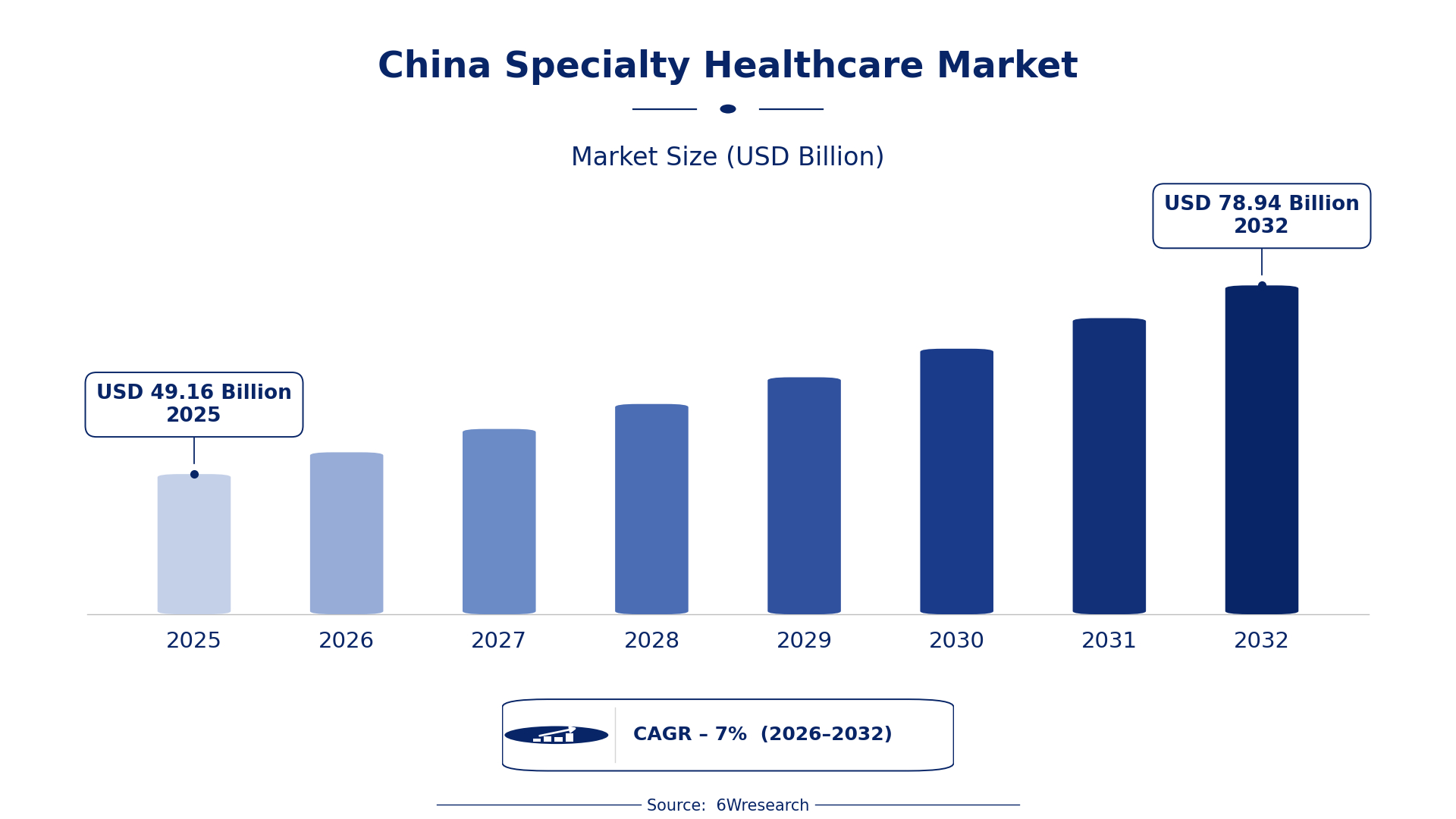
According to 6Wresearch internal database and industry insights, the China Specialty Healthcare Market was valued at USD 49.16 billion in 2025 and is projected to reach USD 78.94 billion by 2032, growing at a CAGR of approximately 7% during 2026–2032.
China Specialty Healthcare Market Highlights
| Report Metric | Details |
| Report Name | China Specialty Healthcare Market |
| Market Size 2025 | USD 49.16 billion |
| Market Size 2032 | USD 78.94 billion |
| Absolute Growth 2025–2032 | USD 29.78 billion |
| CAGR 2026–2032 | 7% |
| Peak Annual Growth | 9.8% in 2032 |
| Forecast Period | 2026–2032 |
| Historical Data | 2022–2025 |
| Base Year | 2025 |
| Leading Service Type, 2025 | Oncology Care (35% share) |
| Leading Disease Category, 2025 | Cancer (48% share) |
| Leading Delivery Model, 2025 | Outpatient Clinics (42% share) |
| Leading End User, 2025 | Hospitals & Specialists (45% share) |
| Fastest-Growing Service Type | Rare Disease Services (8.7% CAGR) |
| Fastest-Growing Disease Category | Genetic Disorders (9.8% CAGR) |
| Fastest-Growing Delivery Model | Virtual/In-Person (9.3% CAGR) |
| Fastest-Growing End User | Specialty Clinics (9.8% CAGR) |
| Growing Sector | Oncology Care |
| Key End Users | Hospitals, Outpatient Clinics, Specialty Clinics, Transplant Institutions |
China Specialty Healthcare Market Year-wise Growth Rate and Key Drivers (2022–2032)
This graph illustrates the annual growth rates of the market from 2022 to 2032, highlighting a steady upward trajectory and projected market expansion over the forecast period.
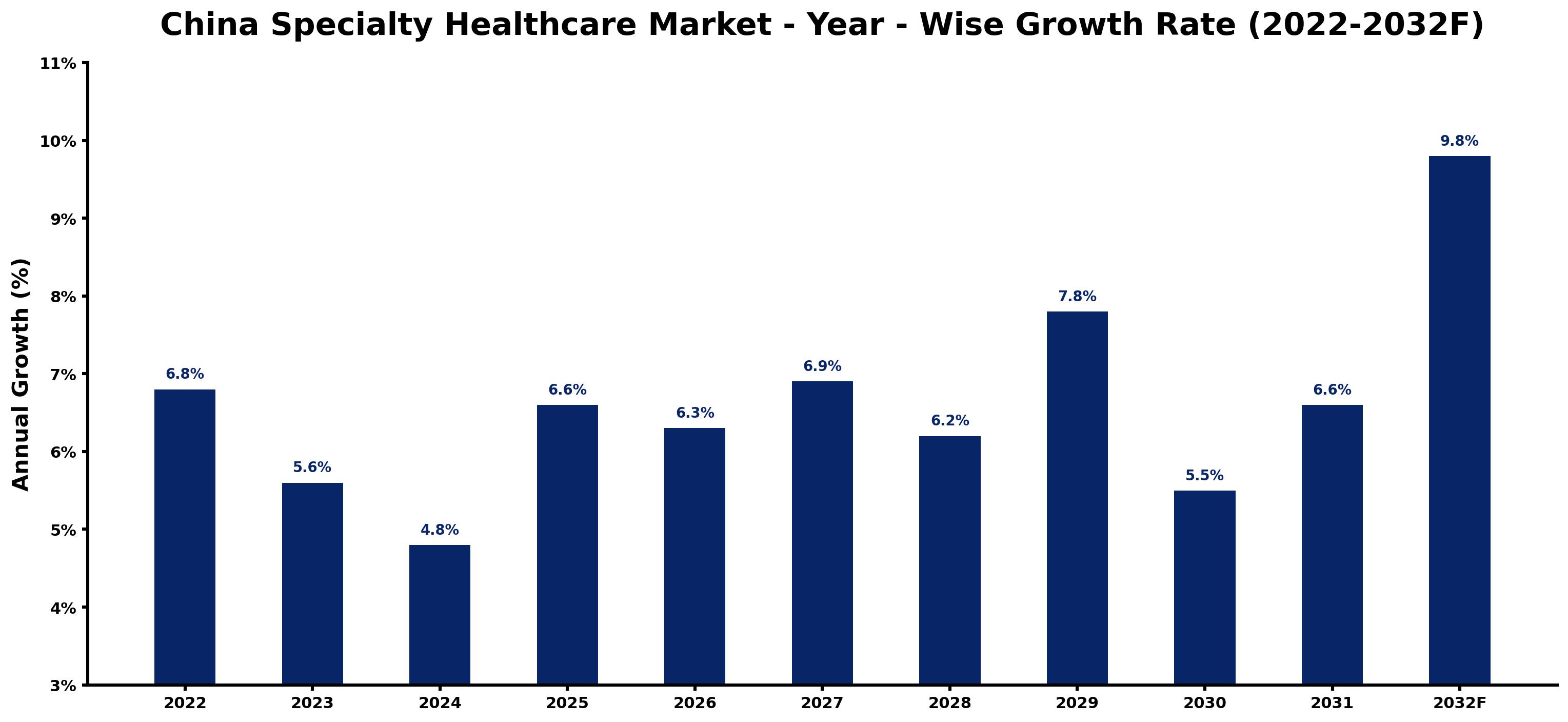
The following table presents the estimated annual growth rate for each year together with the principal factor influencing market performance.
| Year | Estimated Annual Growth (%) | Market Rationale |
| 2022 | 6.8 | The market experienced strong growth due to increased healthcare spending and demand for specialty services. |
| 2023 | 5.6 | Growth slowed as the market adjusted to new healthcare policies and patient needs. |
| 2024 | 4.8 | Demand continued to rise, but at a slower pace, influenced by ongoing healthcare reforms. |
| 2025 | 6.6 | The market rebounded with accelerated investments in specialty healthcare facilities and services. |
| 2026 | 6.3 | Growth slowed again as competition intensified among service providers in urban areas. |
| 2027 | 6.9 | A renewed focus on chronic disease management spurred demand for specialty services. |
| 2028 | 6.2 | Market growth decelerated as the sector faced regulatory adjustments and resource allocation issues. |
| 2029 | 7.8 | Demand surged with the implementation of new healthcare initiatives targeting specialty care. |
| 2030 | 5.5 | Growth slowed as the market stabilised following rapid expansions in previous years. |
| 2031 | 6.6 | A resurgence in patient referrals for specialty services boosted market performance. |
| 2032 | 9.8 | The market is expected to peak due to advancements in treatment technologies and increased patient access. |
Note: Market size estimations and growth projections presented in this report are based on 6Wresearch's proprietary forecasting methodology, utilizing the latest available industry data, government publications, and primary research inputs.
China Specialty Healthcare Market Synopsis
Specialty Healthcare in China includes advanced medical services tailored for specific diseases, such as oncology and chronic pain management. These services are provided through specialised clinics, hospitals, and outpatient centres. The China Specialty Healthcare Market is growing rapidly, driven by an ageing population and the increasing prevalence of chronic diseases. Initiatives and investments from the National Health Commission are improving service access, which is boosting patient demand. With over 4 million cancer patients reported in 2022, the market is set for ongoing growth.
Market Dynamics Impact Analysis (2026–2032)
| Factor | Type | Impact | Primary Segment Affected |
| Growing elderly population | Driver | High | Oncology Care |
| Increased prevalence of chronic diseases | Driver | High | Pain Management |
| Expansion of outpatient clinics | Opportunity | Medium | Outpatient Clinics |
| Rising demand for telemedicine | Opportunity | Medium | Virtual/In-Person |
| Limited access to specialty services in rural areas | Restraint | High | Rare Disease Services |
| High costs associated with advanced treatments | Restraint | Medium | Organ Transplant |
| Regulatory hurdles for new treatment approvals | Challenge | High | Chronic Pain |
| Competition among specialty clinics | Challenge | Medium | Specialty Clinics |
Evaluation of Drivers in China Specialty Healthcare Market (2026–2032)
The main growth drivers and the segments they affect most are set out below.
| Drivers | Primary Segment Affected | Why It Matters (Evidence) |
| Increased healthcare spending | Oncology Care | The National Health Commission reported a budget allocation of 10 billion CNY for cancer research and treatment initiatives. |
| Growing patient referrals for chronic disease management | Pain Management | Approximately 20% of the adult population in China suffers from chronic pain, driving demand for specialized services. |
| Expansion of outpatient clinics | Outpatient Clinics | The installed base of outpatient clinics increased by 15% from 2020 to 2023, enhancing service availability. |
| Adoption of telemedicine for consultations | Virtual/In-Person | In 2023, 70% of specialty clinics reported using telemedicine, improving patient access to care. |
| Government initiatives for rare diseases | Rare Disease Services | The 'Rare Disease Action Plan' launched in 2021 aims to improve patient access and treatment. |
Expansion of the Specialty Healthcare market in China is backed by increased healthcare spending, growing patient referrals for chronic disease management, and the expansion of outpatient clinics. Approximately 20% of the adult population suffers from chronic pain, driving demand for pain management services. The installed base of outpatient clinics has increased by 15% from 2020 to 2023, improving service availability. In 2023, 70% of specialty clinics reported using telemedicine, enhancing patient access to care.
Evaluation of Restraints in China Specialty Healthcare Market
The main factors holding the market back are set out below.
| Market Restraint | Primary Segment Affected | Why It Matters (Evidence) |
| Limited access to specialty services in rural areas | Rare Disease Services | Many rural areas lack specialty clinics, limiting patient access to necessary treatments. |
| High costs associated with advanced treatments | Organ Transplant | The average cost of organ transplant procedures can exceed 500,000 CNY, deterring patients. |
| Regulatory hurdles for new treatment approvals | Chronic Pain | New treatment protocols face lengthy approval processes, delaying patient access to therapies. |
| Intense competition among specialty clinics | Specialty Clinics | The growing number of clinics in urban areas leads to price competition, impacting profitability. |
| Limited patient awareness of available services | Oncology Care | Many patients are unaware of the full range of oncology services, affecting treatment uptake. |
China Specialty Healthcare Market Challenges
Buyers in the China specialty healthcare market face technology integration challenges, as many facilities struggle to adopt advanced telemedicine systems, leading to longer patient wait times and increased operational costs. Competition escalates among specialty providers, with 80% of major hospitals in urban areas offering oncology services, which can dilute the quality of care and pressure pricing for clinics. Regulatory hurdles emerge, as adapting to new healthcare standards can extend approval timelines for treatments, delaying access for patients. Rising costs in chronic pain management, affecting 20% of adults, strain budgets for hospitals, forcing them to limit service offerings.
Trends in the China Specialty Healthcare Market
Below mentioned are some of the trends shaping the China Specialty Healthcare Market growth.
- Shift towards Telemedicine: In 2023, 70% of specialty clinics reported using telemedicine for consultations, reflecting a shift in service delivery. This change improves patient access, particularly in urban areas, where demand for specialty care is high.
- Increase in Outpatient Services: The number of outpatient clinics has increased by 15% from 2020 to 2023, indicating a shift towards more accessible healthcare delivery. This trend is beneficial for patients requiring ongoing specialty care.
- Focus on Chronic Disease Management: The 'Chronic Disease Management Program' updated in 2022 aims to provide comprehensive care strategies. This initiative supports the growing need for specialised services among the ageing population.
- Rising Demand for Rare Disease Treatments: The 'Rare Disease Action Plan' launched in 2021 has increased awareness and treatment options for rare diseases. This initiative addresses the needs of patients with uncommon genetic disorders.
Investment Opportunities in the China Specialty Healthcare Market
Several openings in the China Specialty Healthcare Market merit attention from investors.
- Investment in Specialty Clinics: The growing demand for specialty healthcare presents an opportunity to invest in new specialty clinics. With over 2,500 clinics in China, expanding in urban areas can meet rising patient needs.
- Expansion of Telemedicine Services: With 70% of specialty clinics using telemedicine, there is an opportunity to improve virtual care services. Collaborating with healthcare providers can facilitate this expansion.
- Development of Chronic Pain Management Programs: The prevalence of chronic pain affects approximately 20% of the adult population, creating a gap in specialised services. Investing in comprehensive pain management programs can address this need.
- Enhancing Organ Transplant Services: With over 1,000 organ transplant centres, there is a growing opportunity to improve transplant services. Investing in training and resources can improve patient care and outcomes.
Government Initiatives in the China Specialty Healthcare Market
The 'National Health Plan 2021-2025' aims to improve specialty healthcare access and quality, overseen by the National Health Commission. This plan focuses on chronic disease management and improving patient outcomes through targeted initiatives. Additionally, the 'Cancer Prevention and Control Action Plan' initiated in 2021 with a budget of 5 billion CNY aims to reduce cancer incidence and improve treatment options for patients. These measures are important for expanding access to specialty healthcare services across the country.
The National Health Commission oversees the implementation of several key initiatives, including the 'Rare Disease Action Plan' launched in 2021. This plan improves diagnosis and treatment access for rare diseases, benefiting patients nationwide. The 'Transplantation Development Strategy' approved in 2022 enhances organ transplant services, focusing on ethical practices and patient care. These initiatives ensure that patients receive timely and effective specialty healthcare.
Future Insight of the China Specialty Healthcare Market
The specialty healthcare market in China will experience notable transformations by 2032, primarily due to the 'Healthy China 2030' initiative, which aims to enhance healthcare access and quality. By 2025, the number of organ transplant centres is projected to increase by 15%, improving patient access to essential services. The 'National Rare Disease Registry' will facilitate better patient tracking and care coordination. The widespread adoption of telemedicine in 70% of specialty clinics will likely streamline consultations, fostering improved patient engagement and satisfaction.
Market Segmentation Analysis
The analysis below covers each segmentation, its leading category in 2025 and its fastest-growing category through 2032.
By Service Type – Oncology Care Dominated, Rare Disease Services Expected to Grow Fastest
According to Summon Dutta, Assistant Manager at 6Wresearch, Oncology Care took a 35% share of service type in 2025, more than any other category. Oncology Care holds the largest market share because it addresses the needs of over 4 million cancer patients in China, making it essential for effective treatment. The extensive network of oncology services in urban hospitals and specialty clinics further solidifies its position in the market. Rare Disease Services are projected to grow fastest, at a CAGR of 8.7% during 2026–2032. Rare Disease Services is experiencing rapid growth, driven by government initiatives like the 'Rare Disease Action Plan' launched in 2021, which aims to improve patient access. This increased focus on genetic disorders is expected to significantly enhance its market share as awareness and resources expand. Suppliers should prioritise their oncology care offerings while also investing in the rapidly growing rare disease services segment.
By Disease Category – Cancer Dominated, Genetic Disorders Expected to Grow Fastest
With a 48% revenue share in 2025, Cancer was the largest disease category category. Cancer is the leading disease category in specialty healthcare, reflecting the urgent need for targeted treatment and management strategies across the country. The high incidence of cancer drives the demand for advanced medical services tailored to this patient population. Over 2026–2032, Genetic Disorders are expected to post the fastest growth, at a CAGR of 9.8%. Genetic Disorders are the fastest-growing category, propelled by heightened awareness and the introduction of more treatment options for rare diseases. The establishment of the 'National Rare Disease Registry' in 2020 has significantly improved support for patients, further driving this growth. Healthcare providers must enhance their capabilities to offer specialised care for genetic disorders to meet the rising demand.
By Delivery Model – Outpatient Clinics Dominated, Virtual/In-Person Expected to Grow Fastest
Outpatient Clinics held a 42% share of the China Specialty Healthcare Market by delivery model in 2025. Outpatient Clinics dominate the delivery model, serving as the primary point of care for specialty healthcare services. Their accessibility and convenience make them the preferred choice for patients seeking treatment. Virtual/In-Person is set to record the highest CAGR in this split, 9.3% over 2026–2032. The Virtual/In-Person model is growing rapidly, with 70% of specialty clinics using telemedicine for consultations in 2023. This shift reflects changing patient preferences and the need for flexible healthcare solutions. Providers should invest in virtual care technologies to remain competitive and meet patient expectations.
By End User – Hospitals & Specialists Dominated, Specialty Clinics Expected to Grow Fastest
The largest end user category in 2025 was Hospitals & Specialists, with a 45% share of total revenue. Hospitals & Specialists dominate the end user segment, as they are crucial in delivering a comprehensive range of specialty healthcare services necessary for effective patient treatment. Their established infrastructure is vital for the provision of advanced medical care tailored to specific conditions. The quickest growth will come from Specialty Clinics, forecast to expand at a CAGR of 9.8% between 2026 and 2032. Specialty Clinics are emerging as the fastest-growing end user group, focusing on specific disease management to cater to the increasing demand for tailored healthcare services. This trend indicates a shift towards more concentrated and specialised care solutions. Suppliers should explore partnerships with specialty clinics to broaden their market reach and enhance service offerings.
Key Attractiveness of the Report
- 10 Years of Market Numbers
- Historical Data Starting from 2022 to 2025
- Base Year 2025
- Forecast Data until 2032
- Key Performance Indicators Impacting the Market
- Major Upcoming Developments and Projects
Key Highlights of the Report:
- China Specialty Healthcare Market Outlook
- Market Size of China Specialty Healthcare Market, 2025
- Forecast of China Specialty Healthcare Market, 2032
- Historical Data and Forecast of China Specialty Healthcare Revenues & Volume for the Period 2022 - 2032F
- China Specialty Healthcare Market Trend Evolution
- China Specialty Healthcare Market Drivers and Challenges
- China Specialty Healthcare Price Trends
- China Specialty Healthcare Porter's Five Forces
- China Specialty Healthcare Industry Life Cycle
- Historical Data and Forecast of China Specialty Healthcare Market Revenues & Volume By Service Type for the Period 2022 - 2032F
- Historical Data and Forecast of China Specialty Healthcare Market Revenues & Volume By Oncology Care for the Period 2022 - 2032F
- Historical Data and Forecast of China Specialty Healthcare Market Revenues & Volume By Rare Disease Services for the Period 2022 - 2032F
- Historical Data and Forecast of China Specialty Healthcare Market Revenues & Volume By Organ Transplant for the Period 2022 - 2032F
- Historical Data and Forecast of China Specialty Healthcare Market Revenues & Volume By Pain Management for the Period 2022 - 2032F
- Historical Data and Forecast of China Specialty Healthcare Market Revenues & Volume By Disease Category for the Period 2022 - 2032F
- Historical Data and Forecast of China Specialty Healthcare Market Revenues & Volume By Cancer for the Period 2022 - 2032F
- Historical Data and Forecast of China Specialty Healthcare Market Revenues & Volume By Genetic Disorders for the Period 2022 - 2032F
- Historical Data and Forecast of China Specialty Healthcare Market Revenues & Volume By Chronic Organ Failures for the Period 2022 - 2032F
- Historical Data and Forecast of China Specialty Healthcare Market Revenues & Volume By Chronic Pain for the Period 2022 - 2032F
- Historical Data and Forecast of China Specialty Healthcare Market Revenues & Volume By Delivery Model for the Period 2022 - 2032F
- Historical Data and Forecast of China Specialty Healthcare Market Revenues & Volume By Outpatient Clinics for the Period 2022 - 2032F
- Historical Data and Forecast of China Specialty Healthcare Market Revenues & Volume By Virtual/In-Person for the Period 2022 - 2032F
- Historical Data and Forecast of China Specialty Healthcare Market Revenues & Volume By Surgical Center for the Period 2022 - 2032F
- Historical Data and Forecast of China Specialty Healthcare Market Revenues & Volume By Rehabilitation Centers for the Period 2022 - 2032F
- Historical Data and Forecast of China Specialty Healthcare Market Revenues & Volume By End User for the Period 2022 - 2032F
- Historical Data and Forecast of China Specialty Healthcare Market Revenues & Volume By Hospitals & Specialists for the Period 2022 - 2032F
- Historical Data and Forecast of China Specialty Healthcare Market Revenues & Volume By Specialty Clinics for the Period 2022 - 2032F
- Historical Data and Forecast of China Specialty Healthcare Market Revenues & Volume By Transplant Institutions for the Period 2022 - 2032F
- Historical Data and Forecast of China Specialty Healthcare Market Revenues & Volume By Multispecialty Hospitals for the Period 2022 - 2032F
- China Specialty Healthcare Import Export Trade Statistics
- Market Opportunity Assessment By Service Type
- Market Opportunity Assessment By Disease Category
- Market Opportunity Assessment By Delivery Model
- Market Opportunity Assessment By End User
- China Specialty Healthcare Top Companies Market Share
- China Specialty Healthcare Competitive Benchmarking By Technical and Operational Parameters
- China Specialty Healthcare Company Profiles
- China Specialty Healthcare Key Strategic Recommendations
Market Covered
This report examines the market across the segments below.
By Service Type
- Oncology Care
- Rare Disease Services
- Organ Transplant
- Pain Management
By Disease Category
- Cancer
- Genetic Disorders
- Chronic Organ Failures
- Chronic Pain
By Delivery Model
- Outpatient Clinics
- Virtual/In-Person
- Surgical Center
- Rehabilitation Centers
By End User
- Hospitals & Specialists
- Specialty Clinics
- Transplant Institutions
- Multispecialty Hospitals































