China Stem Cell Therapy for Immunodeficiencies Market Size & Growth Rate
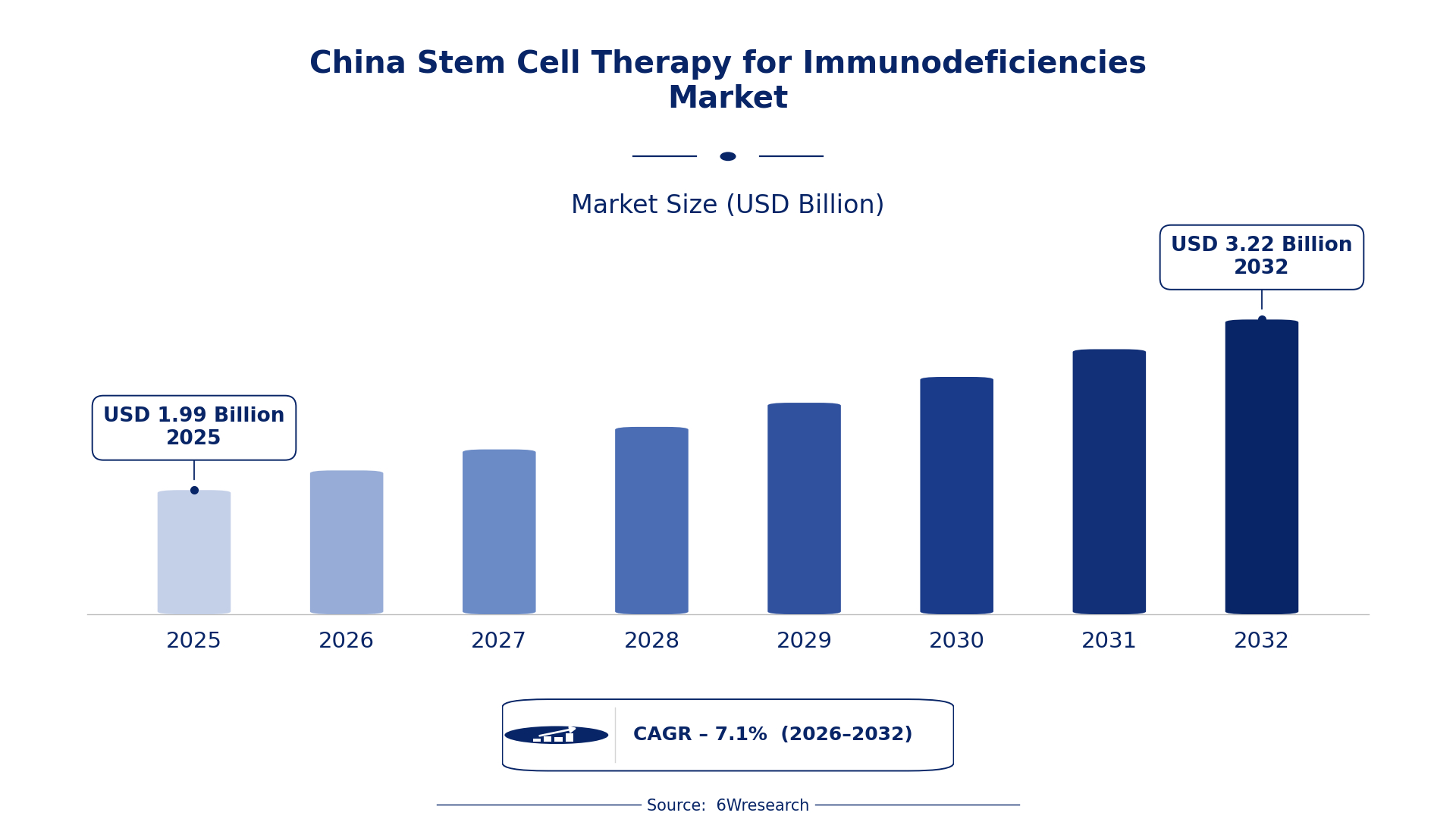
According to 6Wresearch internal database and industry insights, the China Stem Cell Therapy for Immunodeficiencies Market was valued at USD 1.99 billion in 2025 and is projected to reach USD 3.22 billion by 2032, growing at a CAGR of approximately 7.1% during 2026–2032.
China Stem Cell Therapy for Immunodeficiencies Market Highlights
| Report Metric | Details |
| Report Name | China Stem Cell Therapy for Immunodeficiencies Market |
| Market Size 2025 | USD 1.99 billion |
| Market Size 2032 | USD 3.22 billion |
| Absolute Growth 2025–2032 | USD 1.23 billion |
| CAGR 2026–2032 | 7.1% |
| Peak Annual Growth | 9.6% in 2026 |
| Forecast Period | 2026–2032 |
| Historical Data | 2022–2025 |
| Base Year | 2025 |
| Leading Therapy Type, 2025 | Allogeneic Transplant (46% share) |
| Leading Cell Source, 2025 | Donor Bone Marrow (43% share) |
| Leading Delivery Method, 2025 | Intravenous Injection (34% share) |
| Leading Target Disease, 2025 | Severe Combined Immunodeficiency (SCID) (41% share) |
| Fastest-Growing Therapy Type | Genetically Modified Stem Cells (9.2% CAGR) |
| Fastest-Growing Cell Source | Edited Stem Cells (8.5% CAGR) |
| Fastest-Growing Delivery Method | Targeted Delivery (8.7% CAGR) |
| Fastest-Growing Target Disease | Primary Immunodeficiency (9.8% CAGR) |
| Growing Sector | healthcare |
| Key End Users | hospitals, healthcare providers, research institutions |
China Stem Cell Therapy for Immunodeficiencies Market Year-wise Growth Rate and Key Drivers (2022–2032)
This graph illustrates the annual growth rates of the market from 2022 to 2032, highlighting a steady upward trajectory and projected market expansion over the forecast period.
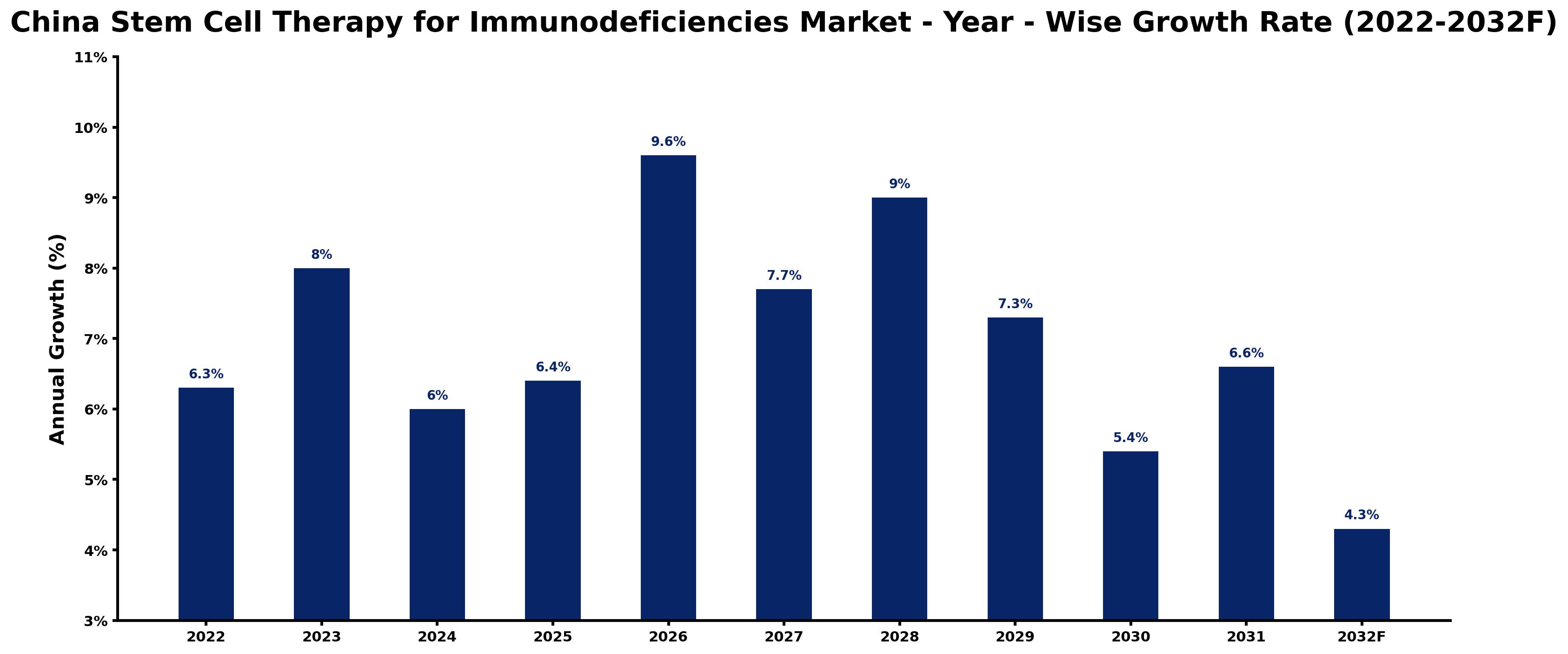
The following table presents the estimated annual growth rate for each year together with the principal factor influencing market performance.
| Year | Estimated Annual Growth (%) | Market Rationale |
| 2022 | 6.3 | The market showed steady growth with over 1,000 SCID cases treated, highlighting demand. |
| 2023 | 8.0 | Demand increased as the Ministry of Science and Technology allocated 500 million CNY for research initiatives. |
| 2024 | 6.0 | Growth slowed as clinical trials for ADA deficiency treatments expanded across provinces. |
| 2025 | 6.4 | Faster growth occurred with more accredited stem cell therapy centers opening in China. |
| 2026 | 9.6 | The market peaked as the National Health Commission updated regulations to improve safety. |
| 2027 | 7.7 | Growth slowed as the focus shifted to enhancing existing therapies and patient outcomes. |
| 2028 | 9.0 | Demand rose again due to advancements in targeted delivery methods for therapies. |
| 2029 | 7.3 | A slowdown occurred as the market adjusted to new regulatory standards and practices. |
| 2030 | 5.4 | Growth continued to slow as the market matured and competition increased. |
| 2031 | 6.6 | Demand picked up with rising awareness of immunodeficiency treatments among healthcare providers. |
| 2032 | 4.3 | The market is projected to grow slowly as new therapies are developed and approved. |
Note: Market size estimations and growth projections presented in this report are based on 6Wresearch's proprietary forecasting methodology, utilizing the latest available industry data, government publications, and primary research inputs.
China Stem Cell Therapy for Immunodeficiencies Market Synopsis
The China Stem Cell Therapy for Immunodeficiencies Market focuses on utilising stem cells to address various immune disorders. This therapy involves harvesting and modifying stem cells, particularly for conditions such as Severe Combined Immunodeficiency (SCID). The market is growing due to the rising number of immunodeficiency cases and government backing for research. In 2022, over 1,000 SCID cases were treated, underscoring the increasing demand from healthcare providers and hospitals. The rise in accredited therapy centres is also playing a role in market expansion.
Market Dynamics Impact Analysis (2026–2032)
| Factor | Type | Impact | Primary Segment Affected |
| Increasing cases of Severe Combined Immunodeficiency (SCID) drive demand for stem cell therapy. | Driver | High | Allogeneic Transplant |
| Government funding for stem cell research initiatives boosts development and application. | Driver | High | Cord Blood Transplant |
| The rise in clinical trials for ADA deficiency treatments creates new opportunities for therapies. | Opportunity | High | Autologous Transplant |
| The growing number of accredited therapy centers in China presents a chance for expansion. | Opportunity | Medium | Intravenous Injection |
| Regulatory challenges can delay the approval of new therapies and impact market entry. | Restraint | High | Genetically Modified Stem Cells |
| Limited public awareness of stem cell therapies may hinder patient adoption and treatment. | Restraint | Medium | Patient-Derived Cells |
| Competition among therapy centers can lead to price wars affecting profitability. | Challenge | High | Donor Bone Marrow |
| Technological limitations in stem cell modification may restrict therapy effectiveness. | Challenge | Medium | Edited Stem Cells |
Evaluation of Drivers in China Stem Cell Therapy for Immunodeficiencies Market (2026–2032)
Key forces behind demand, with the segment each one moves most, are listed below.
| Drivers | Primary Segment Affected | Why It Matters (Evidence) |
| Rising incidence of SCID cases increases the need for effective treatments. | Allogeneic Transplant | In 2022, over 1,000 SCID cases were treated, leading to higher demand for therapies. |
| Government funding for stem cell research encourages innovation and new therapies. | Cord Blood Transplant | The Ministry of Science and Technology allocated 300 million CNY for research initiatives. |
| Expansion of accredited therapy centers improves accessibility for patients. | Intravenous Injection | As of 2023, there are 25 accredited stem cell therapy centers across China. |
| Clinical trials for ADA deficiency treatments are increasing, driving research investment. | Autologous Transplant | Over 50 clinical trials for immunodeficiency treatments are registered in China. |
| Growing public interest in regenerative medicine stimulates demand for stem cell therapies. | Genetically Modified Stem Cells | The 'Healthy China 2030' initiative emphasizes advancements in regenerative medicine. |
In 2022, over 1,000 SCID cases were treated, raising demand for effective therapies. As of 2023, there are 25 accredited therapy centers, improving patient access to care. Over 50 clinical trials for immunodeficiency treatments are registered, further stimulating investment in this sector.
Evaluation of Restraints in China Stem Cell Therapy for Immunodeficiencies Market
The main factors holding the market back are set out below.
| Market Restraint | Primary Segment Affected | Why It Matters (Evidence) |
| Regulatory challenges can delay the approval of new therapies and impact market entry. | Genetically Modified Stem Cells | The National Health Commission's updated regulations can prolong the approval process. |
| Limited public awareness of stem cell therapies may hinder patient adoption and treatment. | Patient-Derived Cells | Many potential patients remain uninformed about the benefits and availability of therapies. |
| High operational costs for therapy centers can restrict service offerings. | Donor Bone Marrow | Maintaining accredited facilities requires substantial investment in technology and staff. |
| Competition among therapy centers can lead to price wars affecting profitability. | Allogeneic Transplant | Price reductions may compromise service quality and patient care standards. |
| Technological limitations in stem cell modification may restrict therapy effectiveness. | Edited Stem Cells | Research is still developing methods to improve the efficacy of modified cells. |
China Stem Cell Therapy for Immunodeficiencies Market Challenges
Buyers in the China stem cell therapy for immunodeficiencies market face exorbitant treatment costs, with expenses reaching up to 500,000 CNY per patient, which limits access for many families. Regulatory hurdles persist as the National Health Commission enforces stringent guidelines, causing therapy approvals to be delayed by several months, thereby affecting timely patient care. Compliance with ISO 9001 standards adds financial pressures on therapy centres, potentially increasing treatment prices for hospitals. Technological limitations in stem cell processing restrict the development of new therapies, resulting in fewer options for patients suffering from immunodeficiencies.
Trends in the China Stem Cell Therapy for Immunodeficiencies Market
Four trends stand out in the China Stem Cell Therapy for Immunodeficiencies Market.
- Shift towards Increased Clinical Trials: Healthcare providers are increasingly investing in clinical trials for ADA deficiency treatments. In 2023, over 50 clinical trials are registered, indicating a strong focus on developing effective therapies.
- Growing Focus on Cord Blood Transplants: There is a notable rise in the use of cord blood transplants for treating immunodeficiencies. In 2022, over 200 patients received these transplants, showcasing their importance in therapy.
- Emergence of Targeted Delivery Methods: Innovations in targeted delivery methods for stem cell therapies are gaining traction. The Shanghai region is leading these advancements, improving treatment precision and patient outcomes.
- Increased Government Support for Research: Government initiatives are prioritising stem cell research and application. The 'Stem Cell Research and Application Plan' launched in 2021 has allocated substantial funding to support innovative projects.
Investment Opportunities in the China Stem Cell Therapy for Immunodeficiencies Market
Below are the investment opportunities with the strongest case in the China Stem Cell Therapy for Immunodeficiencies Market.
- Rising Demand for Advanced Therapies: Now is a prime time to invest in advanced stem cell therapies due to increasing cases of immunodeficiencies. The Ministry of Science and Technology's 500 million CNY funding supports research and development.
- Expansion of Therapy Centers: The growing number of accredited therapy centers presents an opportunity for investment. In 2023, there are 25 centers, indicating a need for more services to meet patient demand.
- Focus on Regenerative Medicine: The emphasis on regenerative medicine under the 'Healthy China 2030' initiative creates opportunities for new therapies. Healthcare providers are seeking advanced treatments for immunodeficiencies.
- Advancements in Clinical Trials: With over 50 clinical trials registered, there is a significant opportunity to develop new stem cell therapies. Collaborating with research institutions can facilitate entry into this expanding market.
Government Initiatives in the China Stem Cell Therapy for Immunodeficiencies Market
In 2021, the Ministry of Science and Technology launched the 'Stem Cell Research and Application Plan' to promote safe and effective therapies. This initiative adds to the existing 'Regulations on the Administration of Human Cell Therapy Products' updated in 2020, improving safety and efficacy standards. The plan aims to streamline the approval process for new therapies and ensure compliance with international standards, benefiting both producers and patients.
The National Health Commission oversees the implementation of these regulations, ensuring that therapy centers adhere to safety protocols. The commission also funds various research projects to improve treatment methodologies. For instance, the 500 million CNY fund announced in 2022 supports stem cell research initiatives, allowing healthcare providers to explore new therapeutic options.
Future Insight of the China Stem Cell Therapy for Immunodeficiencies Market
By 2032, buyers and suppliers in the China stem cell therapy for immunodeficiencies market can expect substantial advancements driven by the 'Stem Cell Research and Application Plan', which aims to enhance treatment efficacy. Increased government funding, including 500 million CNY allocated for research initiatives, will support the development of new therapies and clinical trials. The establishment of advanced facilities in regions like Shanghai will improve access to innovative treatments. The 'Healthy China 2030' initiative will promote wider acceptance and integration of stem cell therapies into mainstream healthcare.
Market Segmentation Analysis
Each segment group is reviewed below, with the leader by share and the fastest grower by CAGR.
By Therapy Type – Allogeneic Transplant Dominated, Genetically Modified Stem Cells Expected to Grow Fastest
According to Summon Dutta, Assistant Manager at 6Wresearch, the largest therapy type category in 2025 was Allogeneic Transplant, with a 46% share of total revenue. Allogeneic Transplant holds the largest market share as it is the primary method for treating Severe Combined Immunodeficiency (SCID) and other immune disorders. With over 1,000 cases treated in 2022, this approach is crucial for addressing immunodeficiencies in China. Genetically Modified Stem Cells are projected to grow fastest, at a CAGR of 9.2% during 2026–2032. Genetically Modified Stem Cells are experiencing rapid growth due to the surge in clinical trials and research initiatives, particularly in the Shanghai region. The Chinese government's significant funding, including a 500 million CNY allocation for stem cell research, is propelling advancements in this area. Suppliers should focus on developing genetically modified therapies to meet the increasing demand for advanced treatment options.
By Cell Source – Donor Bone Marrow Dominated, Edited Stem Cells Expected to Grow Fastest
Donor Bone Marrow accounted for a 43% market share by cell source in 2025. Donor Bone Marrow is the leading source for stem cell transplants, widely used in clinical settings due to its established protocols and effectiveness. The existence of over 25 accredited therapy centres in China underscores its reliability and acceptance in the medical community. Edited Stem Cells are set to record the highest CAGR in this split, 8.5% over 2026–2032. Edited Stem Cells are rapidly emerging as a key focus in experimental therapies, attracting substantial research funding and attention. Support from institutions like the Chinese Academy of Medical Sciences is significantly driving this segment's growth. Buyers should seek collaborations with suppliers specialising in edited stem cells to access cutting-edge therapies.
By Delivery Method – Intravenous Injection Dominated, Targeted Delivery Expected to Grow Fastest
In 2025, Intravenous Injection led the delivery method split with a 34% share. Intravenous Injection dominates the market as it is the most common delivery method for stem cell therapies, ensuring efficient administration of treatments. Its established use in hospitals across China contributes to its leading market share. Over 2026–2032, Targeted Delivery is expected to post the fastest growth, at a CAGR of 8.7%. Targeted Delivery is emerging as the fastest-growing method, driven by advancements in precision medicine aimed at improving treatment outcomes for specific applications. As research progresses, this method is likely to gain traction among healthcare providers. Suppliers should invest in developing targeted delivery systems to meet the evolving preferences of healthcare professionals.
By Target Disease – Severe Combined Immunodeficiency (SCID) Dominated, Primary Immunodeficiency Expected to Grow Fastest
With a 41% revenue share in 2025, Severe Combined Immunodeficiency (SCID) was the largest target disease category. Severe Combined Immunodeficiency (SCID) is the primary target for stem cell therapy, commanding the largest market share due to the high incidence of this condition in China. The focus on SCID treatment aligns with national health initiatives aimed at improving patient outcomes. The quickest growth will come from Primary Immunodeficiency, forecast to expand at a CAGR of 9.8% between 2026 and 2032. Primary Immunodeficiency is the fastest-growing target area, reflecting a broader recognition of various immunodeficiency disorders and the need for effective treatments. The increasing number of clinical trials registered for these conditions indicates a growing market potential. Suppliers should diversify their offerings to include therapies for a wider range of immunodeficiencies to capture emerging market opportunities.
Key Attractiveness of the Report
- 10 Years of Market Numbers
- Historical Data Starting from 2022 to 2025
- Base Year 2025
- Forecast Data until 2032
- Key Performance Indicators Impacting the Market
- Major Upcoming Developments and Projects
Key Highlights of the Report:
- China Stem Cell Therapy for Immunodeficiencies Market Outlook
- Market Size of China Stem Cell Therapy for Immunodeficiencies Market, 2025
- Forecast of China Stem Cell Therapy for Immunodeficiencies Market, 2032
- Historical Data and Forecast of China Stem Cell Therapy for Immunodeficiencies Revenues & Volume for the Period 2022 - 2032F
- China Stem Cell Therapy for Immunodeficiencies Market Trend Evolution
- China Stem Cell Therapy for Immunodeficiencies Market Drivers and Challenges
- China Stem Cell Therapy for Immunodeficiencies Price Trends
- China Stem Cell Therapy for Immunodeficiencies Porter's Five Forces
- China Stem Cell Therapy for Immunodeficiencies Industry Life Cycle
- Historical Data and Forecast of China Stem Cell Therapy for Immunodeficiencies Market Revenues & Volume By Therapy Type for the Period 2022 - 2032F
- Historical Data and Forecast of China Stem Cell Therapy for Immunodeficiencies Market Revenues & Volume By Allogeneic Transplant for the Period 2022 - 2032F
- Historical Data and Forecast of China Stem Cell Therapy for Immunodeficiencies Market Revenues & Volume By Autologous Transplant for the Period 2022 - 2032F
- Historical Data and Forecast of China Stem Cell Therapy for Immunodeficiencies Market Revenues & Volume By Cord Blood Transplant for the Period 2022 - 2032F
- Historical Data and Forecast of China Stem Cell Therapy for Immunodeficiencies Market Revenues & Volume By Genetically Modified Stem Cells for the Period 2022 - 2032F
- Historical Data and Forecast of China Stem Cell Therapy for Immunodeficiencies Market Revenues & Volume By Cell Source for the Period 2022 - 2032F
- Historical Data and Forecast of China Stem Cell Therapy for Immunodeficiencies Market Revenues & Volume By Donor Bone Marrow for the Period 2022 - 2032F
- Historical Data and Forecast of China Stem Cell Therapy for Immunodeficiencies Market Revenues & Volume By Patient-Derived Cells for the Period 2022 - 2032F
- Historical Data and Forecast of China Stem Cell Therapy for Immunodeficiencies Market Revenues & Volume By Cord Blood Units for the Period 2022 - 2032F
- Historical Data and Forecast of China Stem Cell Therapy for Immunodeficiencies Market Revenues & Volume By Edited Stem Cells for the Period 2022 - 2032F
- Historical Data and Forecast of China Stem Cell Therapy for Immunodeficiencies Market Revenues & Volume By Delivery Method for the Period 2022 - 2032F
- Historical Data and Forecast of China Stem Cell Therapy for Immunodeficiencies Market Revenues & Volume By Intravenous Injection for the Period 2022 - 2032F
- Historical Data and Forecast of China Stem Cell Therapy for Immunodeficiencies Market Revenues & Volume By Infusion for the Period 2022 - 2032F
- Historical Data and Forecast of China Stem Cell Therapy for Immunodeficiencies Market Revenues & Volume By Central Line Delivery for the Period 2022 - 2032F
- Historical Data and Forecast of China Stem Cell Therapy for Immunodeficiencies Market Revenues & Volume By Targeted Delivery for the Period 2022 - 2032F
- Historical Data and Forecast of China Stem Cell Therapy for Immunodeficiencies Market Revenues & Volume By Target Disease for the Period 2022 - 2032F
- Historical Data and Forecast of China Stem Cell Therapy for Immunodeficiencies Market Revenues & Volume By Severe Combined Immunodeficiency (SCID) for the Period 2022 - 2032F
- Historical Data and Forecast of China Stem Cell Therapy for Immunodeficiencies Market Revenues & Volume By Primary Immunodeficiency for the Period 2022 - 2032F
- Historical Data and Forecast of China Stem Cell Therapy for Immunodeficiencies Market Revenues & Volume By Congenital Immune Disorders for the Period 2022 - 2032F
- Historical Data and Forecast of China Stem Cell Therapy for Immunodeficiencies Market Revenues & Volume By ADA Deficiency for the Period 2022 - 2032F
- China Stem Cell Therapy for Immunodeficiencies Import Export Trade Statistics
- Market Opportunity Assessment By Therapy Type
- Market Opportunity Assessment By Cell Source
- Market Opportunity Assessment By Delivery Method
- Market Opportunity Assessment By Target Disease
- China Stem Cell Therapy for Immunodeficiencies Top Companies Market Share
- China Stem Cell Therapy for Immunodeficiencies Competitive Benchmarking By Technical and Operational Parameters
- China Stem Cell Therapy for Immunodeficiencies Company Profiles
- China Stem Cell Therapy for Immunodeficiencies Key Strategic Recommendations
Market Covered
The report offers an extensive study of the following market segments.
By Therapy Type
- Allogeneic Transplant
- Autologous Transplant
- Cord Blood Transplant
- Genetically Modified Stem Cells
By Cell Source
- Donor Bone Marrow
- Patient-Derived Cells
- Cord Blood Units
- Edited Stem Cells
By Delivery Method
- Intravenous Injection
- Infusion
- Central Line Delivery
- Targeted Delivery
By Target Disease
- Severe Combined Immunodeficiency (SCID)
- Primary Immunodeficiency
- Congenital Immune Disorders
- ADA Deficiency































