China Sustainable Apparel Market Size & Growth Rate
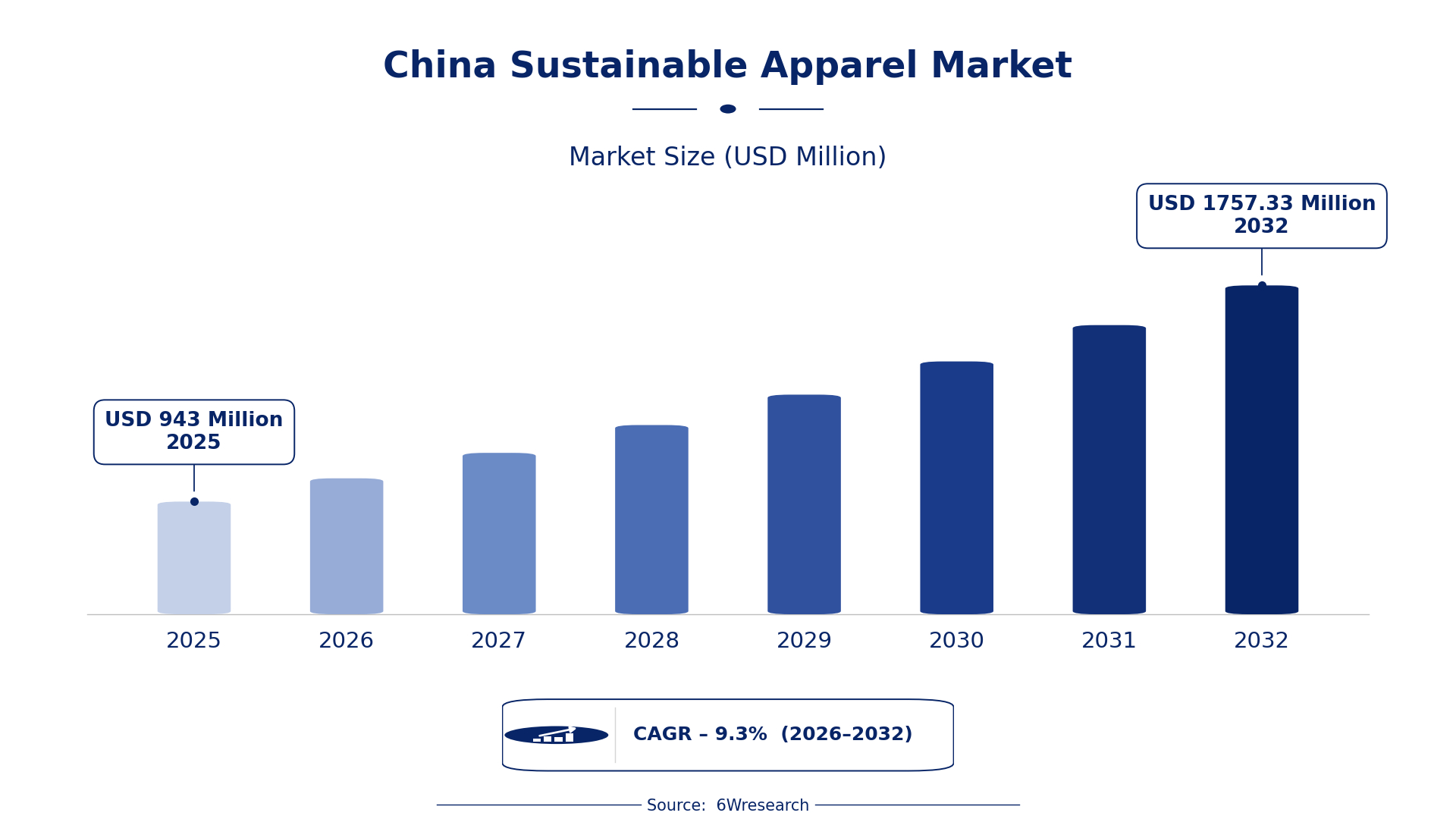
According to 6Wresearch internal database and industry insights, the China Sustainable Apparel Market was valued at USD 943.0 million in 2025 and is projected to reach USD 1,757.33 million by 2032, growing at a CAGR of approximately 9.3% during 2026–2032.
China Sustainable Apparel Market Highlights
| Report Metric | Details |
| Report Name | China Sustainable Apparel Market |
| Market Size 2025 | USD 943.0 million |
| Market Size 2032 | USD 1,757.33 million |
| Absolute Growth 2025–2032 | USD 814.33 million |
| CAGR 2026–2032 | 9.3% |
| Peak Annual Growth | 11.6% in 2030 |
| Forecast Period | 2026–2032 |
| Historical Data | 2022–2025 |
| Base Year | 2025 |
| Leading Apparel Type, 2025 | Organic Cotton Wear (48% share) |
| Leading Material Source, 2025 | GOTS Certified (51% share) |
| Leading Sustainability Focus, 2025 | Low Water Use (42% share) |
| Leading End User, 2025 | Eco-Friendly Brands (49% share) |
| Fastest-Growing Apparel Type | Recycled Polyester Gear (10.4% CAGR) |
| Fastest-Growing Sustainability Focus | Waste Reduction (11.9% CAGR) |
| Fastest-Growing End User | Activewear Companies (11.2% CAGR) |
| Growing Sector | Eco-Friendly Apparel |
| Key End Users | Eco-Friendly Brands, Activewear Companies, Sustainable Fashion Labels |
China Sustainable Apparel Market Year-wise Growth Rate and Key Drivers (2022–2032)
This graph illustrates the annual growth rates of the market from 2022 to 2032, highlighting a steady upward trajectory and projected market expansion over the forecast period.
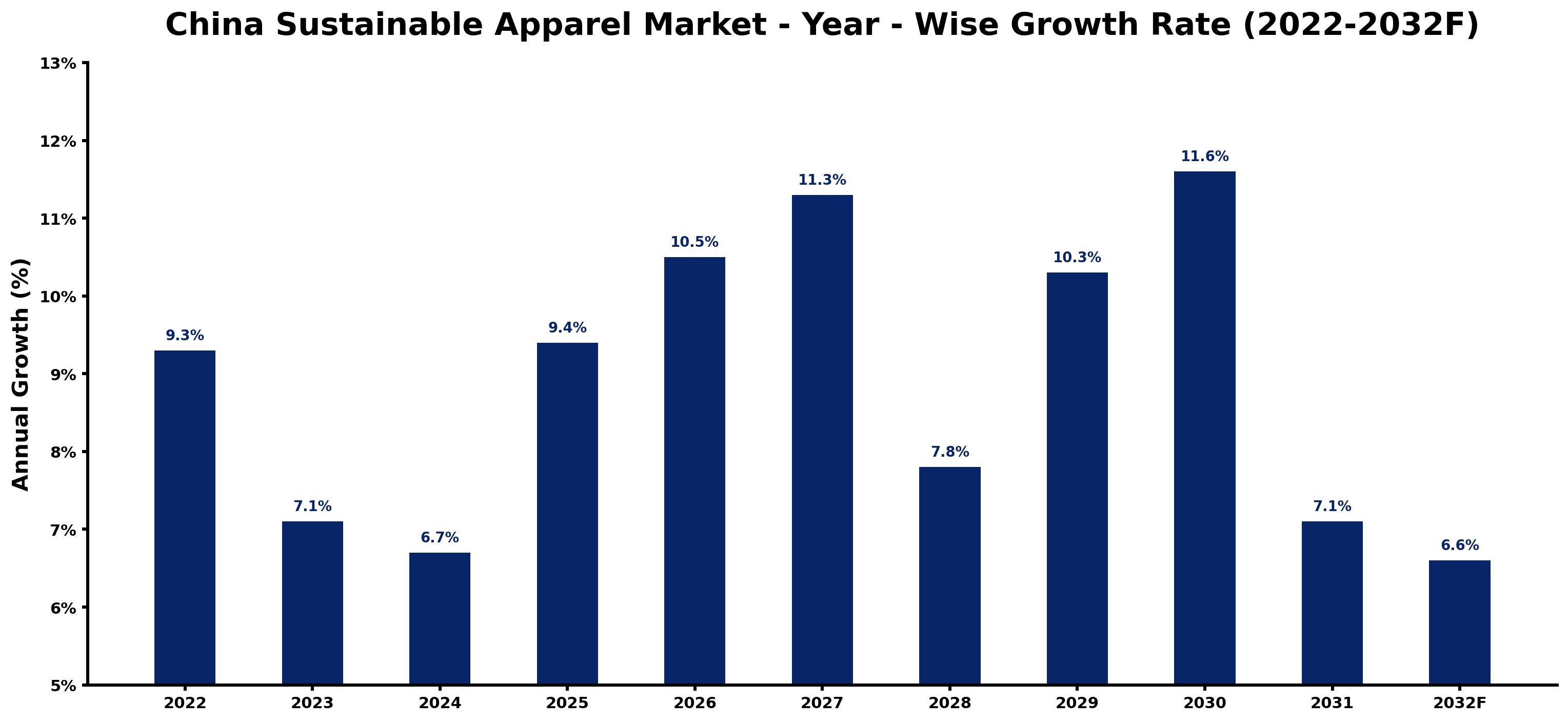
The following table presents the estimated annual growth rate for each year together with the principal factor influencing market performance.
| Year | Estimated Annual Growth (%) | Market Rationale |
| 2022 | 9.3 | The market demonstrated strong engagement from eco-conscious consumers and brands. |
| 2023 | 7.1 | Adoption of sustainable practices by 30% of apparel brands contributed to market activity. |
| 2024 | 6.7 | Sustainable practices continued to gain traction, although growth slowed slightly. |
| 2025 | 9.4 | The market experienced a resurgence in growth as awareness of sustainability increased. |
| 2026 | 10.5 | Investment in sustainable practices began to accelerate, driving demand further. |
| 2027 | 11.3 | The growing popularity of eco-friendly materials boosted market growth significantly. |
| 2028 | 7.8 | Growth slowed as the market matured, but demand remained strong. |
| 2029 | 10.3 | Renewed interest in sustainable apparel led to a resurgence in growth rates. |
| 2030 | 11.6 | The market peaked with heightened consumer awareness and demand for eco-friendly options. |
| 2031 | 7.1 | A slight slowdown occurred as the market began to stabilise after rapid growth. |
| 2032 | 6.6 | Sustainable apparel growth continued, driven by ongoing consumer interest. |
Note: Market size estimations and growth projections presented in this report are based on 6Wresearch's proprietary forecasting methodology, utilizing the latest available industry data, government publications, and primary research inputs.
China Sustainable Apparel Market Synopsis
Sustainable Apparel in China encompasses clothing made from environmentally friendly materials and processes, including organic farming and recycling techniques. The China Sustainable Apparel Market is growing as eco-conscious consumers and brands increasingly demand sustainable options. In 2022, 30% of apparel brands embraced sustainable practices, marking a notable shift. Government initiatives, such as the Green Supply Chain Initiative, bolster this trend and propel the market towards a more sustainable future.
Market Dynamics Impact Analysis (2026–2032)
| Factor | Type | Impact | Primary Segment Affected |
| Growing consumer demand for eco-friendly products | Driver | High | Eco-Friendly Brands |
| Increased adoption of sustainable practices by apparel brands | Driver | High | Sustainable Fashion Labels |
| Investment in sustainable textile innovation projects | Opportunity | High | Recycled Polyester Gear |
| Expansion of eco-friendly materials in production | Opportunity | High | Organic Cotton Wear |
| Challenges in sourcing sustainable materials | Restraint | Medium | Bamboo-Based Fabrics |
| Higher production costs associated with sustainable practices | Restraint | Medium | Hemp Clothing |
| Limited consumer awareness about sustainable options | Challenge | Medium | Niche Apparel Retailers |
| Competition from conventional apparel brands | Challenge | Medium | Activewear Companies |
Evaluation of Drivers in China Sustainable Apparel Market (2026–2032)
Below mentioned are some major drivers and their influence on market dynamics.
| Drivers | Primary Segment Affected | Why It Matters (Evidence) |
| Rising consumer interest in eco-friendly products | Eco-Friendly Brands | This interest drives brands to adopt sustainable practices, increasing purchases of sustainable apparel, with 30% of brands implementing these practices in 2022. |
| Government initiatives promoting sustainability | Sustainable Fashion Labels | Such initiatives encourage brands to invest in sustainable practices, boosting overall market demand for eco-friendly options, supported by the Green Supply Chain Initiative. |
| Growth in the recycling sector for textiles | Recycled Polyester Gear | As recycling becomes more prevalent, demand for recycled materials in apparel rises, attracting eco-conscious consumers, with a significant increase in recycled polyester apparel in 2023. |
| Increasing availability of sustainable materials | Organic Cotton Wear | The rise in organic cotton production supports brands in meeting consumer demand for eco-friendly apparel, with GOTS certified organic cotton leading the market. |
| Collaboration among brands for sustainable practices | Bamboo-Based Fabrics | Collaborative efforts improve resource sharing, leading to greater adoption of sustainable practices in apparel, as seen in the growing use of bamboo-based fabrics. |
In 2022, 30% of apparel brands adopted sustainable practices, reflecting a shift in consumer preferences. The increasing availability of sustainable materials, such as organic cotton, is meeting the growing demand. As brands collaborate on sustainable practices, the market is projected to see further growth driven by these factors, with eco-friendly brands expected to grow by 15% annually.
Evaluation of Restraints in China Sustainable Apparel Market
The main factors holding the market back are set out below.
| Market Restraint | Primary Segment Affected | Why It Matters (Evidence) |
| Challenges in sourcing sustainable materials | Bamboo-Based Fabrics | Sourcing sustainable materials remains difficult, affecting production timelines and costs for manufacturers. |
| Higher production costs associated with sustainable practices | Hemp Clothing | The increased costs can deter brands from fully committing to sustainable practices, impacting their competitiveness. |
| Limited consumer awareness about sustainable options | Niche Apparel Retailers | Low awareness restricts market growth as consumers may not actively seek sustainable alternatives. |
| Competition from conventional apparel brands | Activewear Companies | Conventional brands often have lower costs, making it challenging for sustainable brands to compete effectively. |
| Regulatory hurdles in sustainable production | Recycled Polyester Gear | Compliance with evolving regulations can delay product launches and increase costs for sustainable brands. |
China Sustainable Apparel Market Challenges
The China Sustainable Apparel Market faces a few practical problems, and the first is the limited adoption of sustainable practices among apparel brands, with only 30% implementing them in 2022. This low uptake restricts options for eco-conscious buyers, forcing them to settle for less sustainable choices. Regulatory challenges arise from the updated National Standard for Sustainable Textiles, which mandates compliance and can extend production timelines for producers by up to six months. Technology gaps further hinder progress, as many manufacturers lack access to advanced eco-friendly production methods, resulting in inflated costs of around 20% and diminished competitiveness. Competition from conventional apparel brands also persists, compelling sustainable producers to allocate substantial resources to marketing efforts to differentiate themselves, which can strain budgets.
Trends in the China Sustainable Apparel Market
Four trends stand out in the China Sustainable Apparel Market.
- Shift towards Organic Materials: Since 2021, there has been a marked shift towards organic materials in apparel production. The adoption of GOTS certified organic cotton has increased, with 51% of brands using it in 2025, reflecting a growing preference for eco-friendly fabrics.
- Rise of Waste Reduction Initiatives: The focus on waste reduction has intensified, particularly since 2023. The Waste Reduction segment is projected to grow at 11.9% annually, as brands seek to minimise their environmental footprint.
- Increase in Recycled Polyester Apparel: The market for recycled polyester apparel is expanding, driven by consumer demand for eco-friendly options. In 2023, this segment saw significant growth, aligning with the government's sustainability goals.
- Popularity of Bamboo-Based Fabrics: Bamboo-based fabrics are gaining traction for their biodegradability and comfort. This trend is expected to continue as more brands incorporate bamboo into their product lines.
Investment Opportunities in the China Sustainable Apparel Market
Investors looking at the China Sustainable Apparel Market should consider the following areas.
- Timing for Sustainable Investment: With 50% of textile production targeted to be sustainable by 2030, there is an opportunity for investment in eco-friendly materials. Eco-friendly brands are seeking reliable suppliers to meet this demand.
- Supply of Recycled Materials: The growing market for recycled polyester apparel presents opportunities for suppliers to provide high-quality recycled materials. Activewear companies are particularly interested in sourcing these sustainable options.
- Expansion of Eco-Friendly Brands: The rise of eco-friendly brands, projected to grow by 15% annually, creates a demand for sustainable apparel. Collaborating with local partners can facilitate market entry.
- Investment in Sustainable Technologies: Now is an opportune time to invest in sustainable textile innovation projects. The Green Technology Fund is available for projects that enhance sustainability in production.
Government Initiatives in the China Sustainable Apparel Market
The 'Circular Economy Promotion Law', revised in 2020, supports recycling and waste reduction in the apparel sector. This law encourages producers to adopt sustainable practices and reduce environmental impact. Following this, the 'Green Supply Chain Initiative' was launched by the Ministry of Ecology and Environment in 2021 to promote sustainable practices in the textile industry. This initiative has led to increased collaboration among brands and improved resource management. In 2022, the National Development and Reform Commission approved the 'Textile Industry Green Development Action Plan' to enhance sustainability efforts across the sector.
The Ministry of Industry and Information Technology initiated the 'Sustainable Textile Action Plan' in 2023, targeting a 50% reduction in water usage by 2030. This plan aims to improve sustainability efforts across the textile sector. Additionally, the government announced funding for sustainable textile innovation projects under the 'Green Technology Fund' in 2023, supporting brands in their transition to eco-friendly practices. These measures are designed to create a more sustainable textile industry in China.
Future Insight of the China Sustainable Apparel Market
The China Sustainable Apparel Market is poised for transformation by 2032, with a clear shift towards greater sustainability. The government's commitment to achieving 50% sustainable textile production by 2030 will catalyse innovation and compliance among producers. The market for recycled polyester apparel is expanding, reflecting heightened consumer demand for eco-friendly options, with eco-friendly brands expected to grow by 15% annually. Initiatives like the 'Green Supply Chain Initiative' and the updated 'Circular Economy Promotion Law' will further encourage sustainable practices, creating a more favourable environment for buyers and suppliers.
Market Segmentation Analysis
The analysis below covers each segmentation, its leading category in 2025 and its fastest-growing category through 2032.
By Apparel Type – Organic Cotton Wear Dominated, Recycled Polyester Gear Expected to Grow Fastest
According to Sumit Sagar, AM at 6Wresearch, Organic Cotton Wear took a 48% share of apparel type in 2025, more than any other category. Organic Cotton Wear holds a substantial share in the China Sustainable Apparel Market, primarily due to its widespread adoption by brands focused on eco-friendly practices. Events like Shanghai Fashion Week have showcased collections that prominently feature organic cotton, highlighting its appeal to environmentally conscious consumers. The quickest growth will come from Recycled Polyester Gear, forecast to expand at a CAGR of 10.4% between 2026 and 2032. Recycled Polyester Gear is experiencing remarkable growth, propelled by increasing consumer awareness regarding plastic waste and the demand for sustainable fashion solutions. This segment's expansion indicates a significant shift in consumer preferences towards eco-friendly apparel options, ensuring its continued rise in the market. For suppliers, this means a strategic focus on organic cotton and recycled polyester is essential to meet the growing demand for sustainable apparel.
By Material Source – GOTS Certified Dominated and Is Expected to Record the Fastest Growth
With a 51% revenue share in 2025, GOTS Certified was the largest material source category. GOTS Certified materials hold a leading position in the market share as they guarantee compliance with organic standards, appealing to environmentally conscious consumers. This certification is essential for brands looking to build trust and credibility in their sustainable apparel offerings. GOTS Certified is also forecast to expand faster than any other category, at a CAGR of 10.8% over 2026–2032. GOTS Certified materials are also the fastest-growing segment, as their role in ensuring organic standards resonates with an increasing number of brands adopting sustainable practices. This synergy between leadership and growth indicates that GOTS certification will remain a key focus for brands in the coming years. Suppliers must focus on GOTS Certified materials to meet the rising demand for verified sustainable products in the apparel market.
By Sustainability Focus – Low Water Use Dominated, Waste Reduction Expected to Grow Fastest
Low Water Use accounted for a 42% market share by sustainability focus in 2025. Low Water Use practices lead the market share as they are essential for sustainable production methods, appealing to brands committed to reducing their environmental footprint. This focus aligns with the broader industry trend towards sustainability and responsible resource management. Waste Reduction is set to record the highest CAGR in this split, 11.9% over 2026–2032. Waste Reduction is the fastest-growing focus area, driven by brands prioritising sustainable practices to minimise their impact. This segment's growth indicates a shift in consumer preferences towards brands that actively work to reduce waste in their production processes. Suppliers should adapt their strategies to incorporate waste reduction initiatives, aligning with the industry's shift towards sustainability.
By End User – Eco-Friendly Brands Dominated, Activewear Companies Expected to Grow Fastest
In 2025, Eco-Friendly Brands led the end user split with a 49% share. Eco-Friendly Brands represent the largest share in the market as they are the primary users of sustainable apparel, actively seeking materials that align with their ethical values. Their commitment to sustainability drives demand for eco-friendly products, shaping market trends. Activewear Companies are projected to grow fastest, at a CAGR of 11.2% during 2026–2032. Activewear Companies are the fastest-growing segment, reflecting a major focus on sustainability in their product lines. This growth is fueled by the increasing popularity of activewear among consumers who value both performance and eco-consciousness. Suppliers should target activewear companies to capitalise on the growing demand for sustainable apparel in this segment.
Key Attractiveness of the Report
- 10 Years of Market Numbers
- Historical Data Starting from 2022 to 2025
- Base Year 2025
- Forecast Data until 2032
- Key Performance Indicators Impacting the Market
- Major Upcoming Developments and Projects
Key Highlights of the Report:
- China Sustainable Apparel Market Outlook
- Market Size of China Sustainable Apparel Market, 2025
- Forecast of China Sustainable Apparel Market, 2032
- Historical Data and Forecast of China Sustainable Apparel Revenues & Volume for the Period 2022 - 2032F
- China Sustainable Apparel Market Trend Evolution
- China Sustainable Apparel Market Drivers and Challenges
- China Sustainable Apparel Price Trends
- China Sustainable Apparel Porter's Five Forces
- China Sustainable Apparel Industry Life Cycle
- Historical Data and Forecast of China Sustainable Apparel Market Revenues & Volume By Apparel Type for the Period 2022 - 2032F
- Historical Data and Forecast of China Sustainable Apparel Market Revenues & Volume By Organic Cotton Wear for the Period 2022 - 2032F
- Historical Data and Forecast of China Sustainable Apparel Market Revenues & Volume By Recycled Polyester Gear for the Period 2022 - 2032F
- Historical Data and Forecast of China Sustainable Apparel Market Revenues & Volume By Hemp Clothing for the Period 2022 - 2032F
- Historical Data and Forecast of China Sustainable Apparel Market Revenues & Volume By Bamboo-Based Fabrics for the Period 2022 - 2032F
- Historical Data and Forecast of China Sustainable Apparel Market Revenues & Volume By Material Source for the Period 2022 - 2032F
- Historical Data and Forecast of China Sustainable Apparel Market Revenues & Volume By GOTS Certified for the Period 2022 - 2032F
- Historical Data and Forecast of China Sustainable Apparel Market Revenues & Volume By PET Bottles for the Period 2022 - 2032F
- Historical Data and Forecast of China Sustainable Apparel Market Revenues & Volume By Natural Fiber for the Period 2022 - 2032F
- Historical Data and Forecast of China Sustainable Apparel Market Revenues & Volume By Renewable Resource for the Period 2022 - 2032F
- Historical Data and Forecast of China Sustainable Apparel Market Revenues & Volume By Sustainability Focus for the Period 2022 - 2032F
- Historical Data and Forecast of China Sustainable Apparel Market Revenues & Volume By Low Water Use for the Period 2022 - 2032F
- Historical Data and Forecast of China Sustainable Apparel Market Revenues & Volume By Waste Reduction for the Period 2022 - 2032F
- Historical Data and Forecast of China Sustainable Apparel Market Revenues & Volume By Biodegradable for the Period 2022 - 2032F
- Historical Data and Forecast of China Sustainable Apparel Market Revenues & Volume By Antimicrobial for the Period 2022 - 2032F
- Historical Data and Forecast of China Sustainable Apparel Market Revenues & Volume By End User for the Period 2022 - 2032F
- Historical Data and Forecast of China Sustainable Apparel Market Revenues & Volume By Eco-Friendly Brands for the Period 2022 - 2032F
- Historical Data and Forecast of China Sustainable Apparel Market Revenues & Volume By Activewear Companies for the Period 2022 - 2032F
- Historical Data and Forecast of China Sustainable Apparel Market Revenues & Volume By Niche Apparel Retailers for the Period 2022 - 2032F
- Historical Data and Forecast of China Sustainable Apparel Market Revenues & Volume By Sustainable Fashion Labels for the Period 2022 - 2032F
- China Sustainable Apparel Import Export Trade Statistics
- Market Opportunity Assessment By Apparel Type
- Market Opportunity Assessment By Material Source
- Market Opportunity Assessment By Sustainability Focus
- Market Opportunity Assessment By End User
- China Sustainable Apparel Top Companies Market Share
- China Sustainable Apparel Competitive Benchmarking By Technical and Operational Parameters
- China Sustainable Apparel Company Profiles
- China Sustainable Apparel Key Strategic Recommendations
Market Covered
This report examines the market across the segments below.
By Apparel Type
- Organic Cotton Wear
- Recycled Polyester Gear
- Hemp Clothing
- Bamboo-Based Fabrics
By Material Source
- GOTS Certified
- PET Bottles
- Natural Fiber
- Renewable Resource
By Sustainability Focus
- Low Water Use
- Waste Reduction
- Biodegradable
- Antimicrobial
By End User
- Eco-Friendly Brands
- Activewear Companies
- Niche Apparel Retailers
- Sustainable Fashion Labels































