China Sustainable Products Market Size & Growth Rate
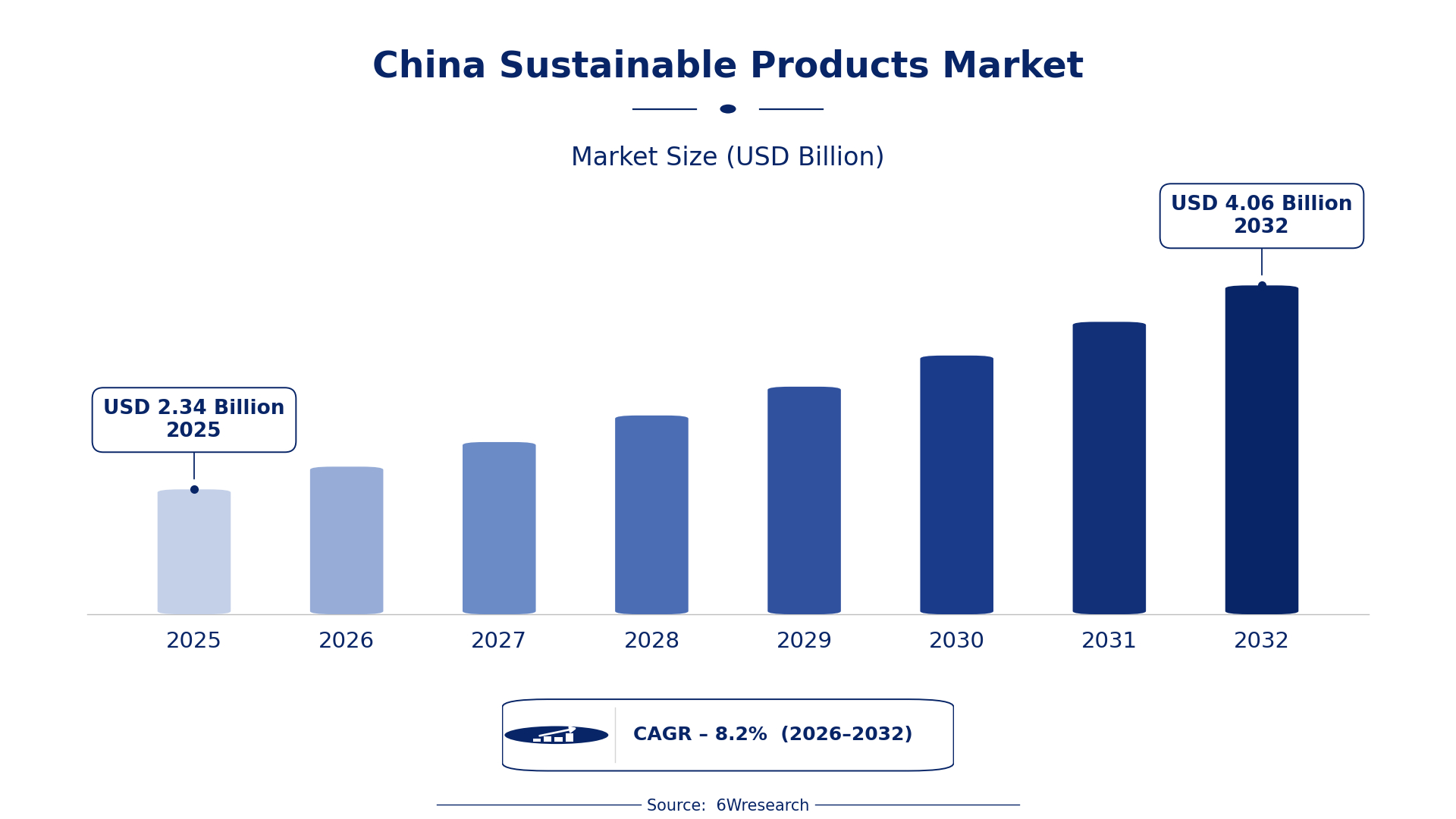
According to 6Wresearch internal database and industry insights, the China Sustainable Products Market was valued at USD 2.34 billion in 2025 and is projected to reach USD 4.06 billion by 2032, growing at a CAGR of approximately 8.2% during 2026–2032.
China Sustainable Products Market Highlights
| Report Metric | Details |
| Report Name | China Sustainable Products Market |
| Market Size 2025 | USD 2.34 billion |
| Market Size 2032 | USD 4.06 billion |
| Absolute Growth 2025–2032 | USD 1.72 billion |
| CAGR 2026–2032 | 8.2% |
| Peak Annual Growth | 10.6% in 2027 |
| Forecast Period | 2026–2032 |
| Historical Data | 2022–2025 |
| Base Year | 2025 |
| Leading Product Category, 2025 | Eco-Friendly Apparel (44% share) |
| Leading Core Attribute, 2025 | Recycled/Reclaimed Material (52% share) |
| Leading Packaging Type, 2025 | Paper or Bioplastic Wraps (37% share) |
| Leading End User, 2025 | Zero-Waste Retailers (52% share) |
| Fastest-Growing Product Category | Low-Waste Toiletries (10.2% CAGR) |
| Fastest-Growing Core Attribute | Natural/Organic Fibers (10.3% CAGR) |
| Fastest-Growing End User | Sustainable Fashion (9.7% CAGR) |
| Growing Sector | Eco-Friendly Apparel |
| Key End Users | Zero-Waste Retailers, Sustainable Fashion, Beauty Retailers, Consumer Tech Startups |
China Sustainable Products Market Year-wise Growth Rate and Key Drivers (2022–2032)
This graph illustrates the annual growth rates of the market from 2022 to 2032, highlighting a steady upward trajectory and projected market expansion over the forecast period.
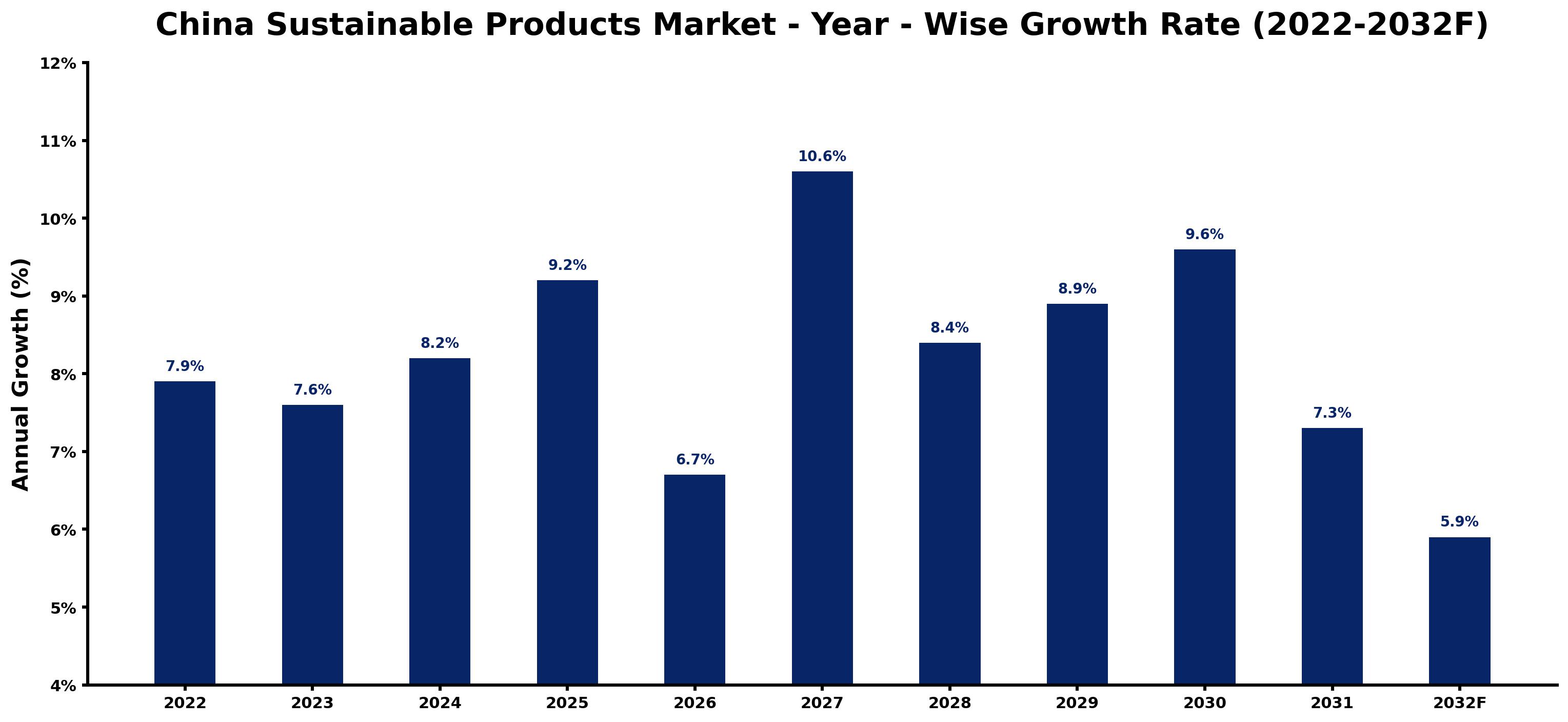
Each row of the following table gives one year's estimated growth and the event or demand shift that explains it.
| Year | Estimated Annual Growth (%) | Market Rationale |
| 2022 | 7.9 | The market showed steady growth, driven by the Green Consumption Promotion Plan encouraging sustainable purchases. |
| 2023 | 7.6 | Growth slowed slightly as urban consumers adjusted to new sustainable product options in major cities. |
| 2024 | 8.2 | Demand increased as more businesses adopted eco-friendly practices and the Circular Economy Development Strategy gained traction. |
| 2025 | 9.2 | The market peaked with heightened consumer interest in sustainable fashion and home goods during the Green Consumption Action Plan's implementation. |
| 2026 | 6.7 | Growth is expected to decelerate as competition intensifies among sustainable product manufacturers in urban markets. |
| 2027 | 10.6 | A surge in demand is projected due to the introduction of new eco-friendly certifications, boosting consumer trust. |
| 2028 | 8.4 | Growth is anticipated to slow again as consumers become more selective about sustainable choices amid rising competition. |
| 2029 | 8.9 | Demand is expected to pick up as urban areas embrace zero-waste initiatives and retailers expand their offerings. |
| 2030 | 9.6 | The market will continue to grow with increasing consumer focus on low-waste toiletries and eco-friendly personal care products. |
| 2031 | 7.3 | Growth is projected to slow as the market matures and competition for eco-friendly products intensifies in urban settings. |
| 2032 | 5.9 | The market is expected to stabilise as consumer preferences shift towards quality sustainable options and eco-friendly certifications. |
Note: Market size estimations and growth projections presented in this report are based on 6Wresearch's proprietary forecasting methodology, utilizing the latest available industry data, government publications, and primary research inputs.
China Sustainable Products Market Synopsis
Sustainable Products in China include a diverse range of eco-friendly goods designed to minimise environmental impact. These products often utilise recycled materials, organic fibres, or low-carbon technologies, serving purposes such as waste reduction and promoting sustainable living. The China Sustainable Products Market is expanding due to heightened consumer awareness and government initiatives that encourage sustainability. Key demand sources are urban centres like Beijing and Shanghai, while the Green Consumption Promotion Plan aims to boost eco-friendly purchases by 20% by 2025.
Market Dynamics Impact Analysis (2026–2032)
| Factor | Type | Impact | Primary Segment Affected |
| Rising consumer awareness of sustainability drives demand for eco-friendly products. | Driver | High | Eco-Friendly Apparel |
| The shift towards organic fibres in the textile industry supports sustainable fashion growth. | Driver | High | Eco-Friendly Apparel |
| Zero-waste retailers are expanding, creating a significant demand for sustainable products. | Opportunity | High | Zero-Waste Retailers |
| The market for low-waste toiletries is growing rapidly among urban consumers. | Opportunity | Medium | Low-Waste Toiletries |
| High competition among manufacturers can lead to price wars, affecting profitability. | Restraint | Medium | Reusable Home Goods |
| Consumer hesitance to switch from traditional products can limit market growth. | Restraint | High | Green Electronics |
| Supply chain disruptions can delay the availability of sustainable materials for production. | Challenge | High | Eco-Friendly Apparel |
| Regulatory compliance costs can burden small manufacturers, impacting their competitiveness. | Challenge | Medium | Low-Waste Toiletries |
Evaluation of Drivers in China Sustainable Products Market (2026–2032)
Below mentioned are some major drivers and their influence on market dynamics.
| Drivers | Primary Segment Affected | Why It Matters (Evidence) |
| Increased investment in sustainable practices by manufacturers boosts product availability. | Eco-Friendly Apparel | The textile industry aims for 30% organic fibre use by 2025, driving eco-friendly apparel demand. |
| The growing trend of urbanisation leads to higher demand for reusable home goods. | Reusable Home Goods | Urban areas like Beijing are expanding their markets for sustainable household items. |
| Government initiatives promote eco-friendly certifications, enhancing market credibility. | Green Electronics | The Green Product Certification Program encourages manufacturers to adopt sustainable practices. |
| Consumer demand for low-waste toiletries is rising due to health and environmental concerns. | Low-Waste Toiletries | Urban consumers are increasingly seeking personal care products with minimal environmental impact. |
| The rise of zero-waste retailers creates new channels for sustainable products. | Zero-Waste Retailers | The number of zero-waste retail stores in major cities has increased significantly. |
The textile industry is shifting towards organic fibres, targeting 30% by 2025, which fuels demand for eco-friendly apparel. Urbanisation is driving the market for reusable home goods, particularly in cities like Beijing. Rising consumer interest in low-waste toiletries is clear, with urban consumers actively seeking products that minimise environmental impact. The increase in zero-waste retailers is creating new channels for sustainable products, enabling consumers to make eco-friendly choices more easily.
Evaluation of Restraints in China Sustainable Products Market
Below mentioned are some major restraints and their influence on market dynamics.
| Market Restraint | Primary Segment Affected | Why It Matters (Evidence) |
| High competition can lead to price wars among manufacturers, impacting profit margins. | Reusable Home Goods | Increased competition has resulted in aggressive pricing strategies, affecting profitability. |
| Consumer reluctance to switch from conventional products hampers market expansion. | Green Electronics | Traditional electronics remain popular, slowing the adoption of sustainable alternatives. |
| Supply chain disruptions can delay the availability of sustainable materials for production. | Eco-Friendly Apparel | Logistical challenges can hinder timely access to organic fibres and recycled materials. |
| Regulatory compliance costs can burden small manufacturers, impacting their competitiveness. | Low-Waste Toiletries | Smaller firms may struggle to meet eco-certification requirements, limiting their market presence. |
| Limited consumer knowledge about sustainable products can restrict market growth. | Zero-Waste Retailers | Many consumers remain unaware of the benefits of zero-waste shopping options. |
China Sustainable Products Market Challenges
The China Sustainable Products Market still has to solve a few problems, and the first is technology limitations. Many producers struggle with outdated recycling processes, which delays the creation of high-quality sustainable goods and raises costs by approximately 15% for manufacturers. Regulatory hurdles also create challenges; evolving standards for eco-friendly materials require compliance, leading to operational costs that can increase by 10% for producers. A lack of skilled workers in sustainable practices restricts the workforce's ability to meet growing market demands, resulting in inefficiencies that can lower output by 20% for manufacturers. Buyers ultimately face higher prices for sustainable products, limiting their purchasing power and slowing overall market growth.
Trends in the China Sustainable Products Market
Below mentioned are some of the trends shaping the China Sustainable Products Market growth.
- Shift towards Organic Fibres in Textiles: Since 2021, China's textile industry has been increasingly adopting organic fibres, aiming for 30% usage by 2025. This shift is reflected in major cities, where sustainable fashion is gaining traction, resulting in a 25% increase in eco-friendly apparel sales.
- Expansion of Zero-Waste Retailers: The rise of zero-waste retailers has been notable since 2023, particularly in urban areas. With a reported increase of 20% in such stores, consumers are now more inclined to choose sustainable shopping options.
- Growth of Green Electronics: The Green Electronics Council has collaborated with manufacturers since 2022 to promote sustainable tech solutions. This initiative has led to a 15% increase in the adoption of eco-friendly electronics among consumers.
- Increase in Low-Waste Toiletries: The market for low-waste toiletries has seen significant growth since 2023, driven by urban consumers seeking eco-friendly personal care products. This segment has expanded, with a reported 25% increase in sales.
Investment Opportunities in the China Sustainable Products Market
The following opportunities in the China Sustainable Products Market pair current demand with a clear way in.
- Zero-Waste Retailers: Zero-waste retailers are expanding rapidly, creating a demand for sustainable products. With a 20% increase in such stores, suppliers can partner with these retailers to meet growing consumer needs.
- Timing for Sustainable Products: The current consumer shift towards sustainability presents a unique opportunity. With the market projected to reach USD 4.06 billion by 2032, suppliers can invest in eco-friendly goods to capture this growth.
- Supply of Low-Waste Toiletries: The demand for low-waste toiletries is rising, particularly in urban areas. Suppliers can target beauty retailers to meet this growing consumer preference, especially as urban markets expand.
- Investment in Eco-Friendly Packaging: The push for sustainable packaging is strong, with a 30% target reduction in plastic waste by 2025. Suppliers can focus on providing bioplastic wraps to meet this demand.
Government Initiatives in the China Sustainable Products Market
The Green Product Certification Program initiated by the Ministry of Ecology and Environment in 2022 impacts buyers significantly. This program encourages manufacturers to adopt sustainable practices, ensuring that products meet eco-friendly standards, thus enhancing consumer trust in sustainable goods. Additionally, the Circular Economy Development Strategy (2021-2025) aims to improve recycling practices, targeting a 30% reduction in plastic waste by 2025, which benefits both producers and consumers by increasing the availability of sustainable materials.
In 2023, the National Development and Reform Commission announced the Green Consumption Action Plan, aiming for a 20% increase in eco-friendly purchases by 2025. This initiative supports consumers in choosing sustainable products and promotes awareness of eco-friendly options. The Ministry of Commerce's Green Supply Chain Management initiative, launched in 2022, further encourages sustainable sourcing and production among manufacturers, ensuring that they align with national sustainability goals.
Future Insight of the China Sustainable Products Market
The China Sustainable Products Market will experience significant changes by 2032, primarily driven by the government's Circular Economy Development Strategy. This initiative will improve recycling capabilities, allowing producers to reduce costs and enhance product availability. The rise of zero-waste retail stores will serve urban consumers, creating new opportunities for buyers seeking eco-friendly options. The introduction of national standards for biodegradable materials will simplify production processes, benefiting both suppliers and consumers in the long run.
Market Segmentation Analysis
The report offers a comprehensive study of the following market segments and their leading categories in the market.
By Product Category – Eco-Friendly Apparel Dominated, Low-Waste Toiletries Expected to Grow Fastest
According to Sumit Sagar, AM at 6Wresearch, Eco-Friendly Apparel accounted for a 44% market share by product category in 2025. Eco-Friendly Apparel holds the largest share in the China Sustainable Products Market due to the increasing consumer demand for sustainable fashion choices. This segment is particularly popular among urban consumers who are increasingly aware of the environmental impact of their clothing purchases. Low-Waste Toiletries are set to record the highest CAGR in this split, 10.2% over 2026–2032. The Low-Waste Toiletries segment is experiencing rapid growth as consumers seek personal care products that minimise environmental impact. The rise in zero-waste retail stores in major cities like Beijing and Shanghai is a key driver of this trend. Suppliers should focus on expanding their eco-friendly apparel lines to meet growing consumer demand.
By Core Attribute – Recycled/Reclaimed Material Dominated, Natural/Organic Fibers Expected to Grow Fastest
The largest core attribute category in 2025 was Recycled/Reclaimed Material, with a 52% share of total revenue. Recycled/Reclaimed Material holds the largest share in the China Sustainable Products Market as it is essential for producing a variety of eco-friendly goods. This attribute appeals to consumers who are increasingly aware of sustainability and seek products that minimise ecological impact. The quickest growth will come from Natural/Organic Fibers, forecast to expand at a CAGR of 10.3% between 2026 and 2032. Natural/Organic Fibers are experiencing rapid growth, largely due to the textile industry's commitment to shifting towards 30% organic fiber usage by 2025. This trend is driven by consumer demand for sustainable apparel, which is expected to continue expanding. Suppliers should focus on developing products that incorporate recycled materials to meet the growing consumer demand for sustainability.
By Packaging Type – Paper or Bioplastic Wraps Dominated and Is Expected to Record the Fastest Growth
In 2025, Paper or Bioplastic Wraps led the packaging type split with a 37% share. Paper or Bioplastic Wraps dominate the market due to their effectiveness in replacing traditional plastic packaging. These materials are widely adopted by manufacturers aiming to reduce their ecological footprint and comply with government initiatives. The same category are also set to grow fastest, at a CAGR of 9.4% during 2026–2032. As the leader, Paper or Bioplastic Wraps also experience the fastest growth, reflecting a broader industry trend towards sustainable packaging solutions. This dual role reinforces their position in the market as consumer preferences shift towards eco-friendly options. Suppliers must invest in sustainable packaging solutions to remain competitive in the market.
By End User – Zero-Waste Retailers Dominated, Sustainable Fashion Expected to Grow Fastest
Zero-Waste Retailers held a 52% share of the China Sustainable Products Market by end user in 2025. Zero-Waste Retailers hold the largest share in the market as they effectively cater to consumers who prioritise sustainable living. Their presence in urban areas like Beijing and Shanghai aligns with government initiatives promoting eco-friendly consumption. Sustainable Fashion is projected to grow fastest, at a CAGR of 9.7% during 2026–2032. Sustainable Fashion is experiencing rapid growth due to heightened consumer awareness and a strong shift towards eco-friendly apparel. This segment's expansion is supported by government initiatives encouraging sustainable practices within the fashion industry. Suppliers should focus on partnerships with zero-waste retailers to tap into the growing demand for sustainable products.
Key Attractiveness of the Report
- 10 Years of Market Numbers
- Historical Data Starting from 2022 to 2025
- Base Year 2025
- Forecast Data until 2032
- Key Performance Indicators Impacting the Market
- Major Upcoming Developments and Projects
Key Highlights of the Report:
- China Sustainable Products Market Outlook
- Market Size of China Sustainable Products Market, 2025
- Forecast of China Sustainable Products Market, 2032
- Historical Data and Forecast of China Sustainable Products Revenues & Volume for the Period 2022 - 2032F
- China Sustainable Products Market Trend Evolution
- China Sustainable Products Market Drivers and Challenges
- China Sustainable Products Price Trends
- China Sustainable Products Porter's Five Forces
- China Sustainable Products Industry Life Cycle
- Historical Data and Forecast of China Sustainable Products Market Revenues & Volume By Product Category for the Period 2022 - 2032F
- Historical Data and Forecast of China Sustainable Products Market Revenues & Volume By Reusable Home Goods for the Period 2022 - 2032F
- Historical Data and Forecast of China Sustainable Products Market Revenues & Volume By Eco-Friendly Apparel for the Period 2022 - 2032F
- Historical Data and Forecast of China Sustainable Products Market Revenues & Volume By Low-Waste Toiletries for the Period 2022 - 2032F
- Historical Data and Forecast of China Sustainable Products Market Revenues & Volume By Green Electronics for the Period 2022 - 2032F
- Historical Data and Forecast of China Sustainable Products Market Revenues & Volume By Core Attribute for the Period 2022 - 2032F
- Historical Data and Forecast of China Sustainable Products Market Revenues & Volume By Recycled/Reclaimed Material for the Period 2022 - 2032F
- Historical Data and Forecast of China Sustainable Products Market Revenues & Volume By Natural/Organic Fibers for the Period 2022 - 2032F
- Historical Data and Forecast of China Sustainable Products Market Revenues & Volume By Solid Bar/Refill Formats for the Period 2022 - 2032F
- Historical Data and Forecast of China Sustainable Products Market Revenues & Volume By Low-Carbon Materials for the Period 2022 - 2032F
- Historical Data and Forecast of China Sustainable Products Market Revenues & Volume By Packaging Type for the Period 2022 - 2032F
- Historical Data and Forecast of China Sustainable Products Market Revenues & Volume By Paper or Bioplastic Wraps for the Period 2022 - 2032F
- Historical Data and Forecast of China Sustainable Products Market Revenues & Volume By Minimalist Tags for the Period 2022 - 2032F
- Historical Data and Forecast of China Sustainable Products Market Revenues & Volume By Tin/Glass Containers for the Period 2022 - 2032F
- Historical Data and Forecast of China Sustainable Products Market Revenues & Volume By FSC Box + Eco-Inks for the Period 2022 - 2032F
- Historical Data and Forecast of China Sustainable Products Market Revenues & Volume By End User for the Period 2022 - 2032F
- Historical Data and Forecast of China Sustainable Products Market Revenues & Volume By Zero-Waste Retailers for the Period 2022 - 2032F
- Historical Data and Forecast of China Sustainable Products Market Revenues & Volume By Sustainable Fashion for the Period 2022 - 2032F
- Historical Data and Forecast of China Sustainable Products Market Revenues & Volume By Beauty Retailers for the Period 2022 - 2032F
- Historical Data and Forecast of China Sustainable Products Market Revenues & Volume By Consumer Tech Startups for the Period 2022 - 2032F
- China Sustainable Products Import Export Trade Statistics
- Market Opportunity Assessment By Product Category
- Market Opportunity Assessment By Core Attribute
- Market Opportunity Assessment By Packaging Type
- Market Opportunity Assessment By End User
- China Sustainable Products Top Companies Market Share
- China Sustainable Products Competitive Benchmarking By Technical and Operational Parameters
- China Sustainable Products Company Profiles
- China Sustainable Products Key Strategic Recommendations
Market Covered
Segments analysed in this report are listed below.
By Product Category
- Reusable Home Goods
- Eco-Friendly Apparel
- Low-Waste Toiletries
- Green Electronics
By Core Attribute
- Recycled/Reclaimed Material
- Natural/Organic Fibers
- Solid Bar/Refill Formats
- Low-Carbon Materials
By Packaging Type
- Paper or Bioplastic Wraps
- Minimalist Tags
- Tin/Glass Containers
- FSC Box + Eco-Inks
By End User
- Zero-Waste Retailers
- Sustainable Fashion
- Beauty Retailers
- Consumer Tech Startups































