China Systemic Mycoses Market Size & Growth Rate
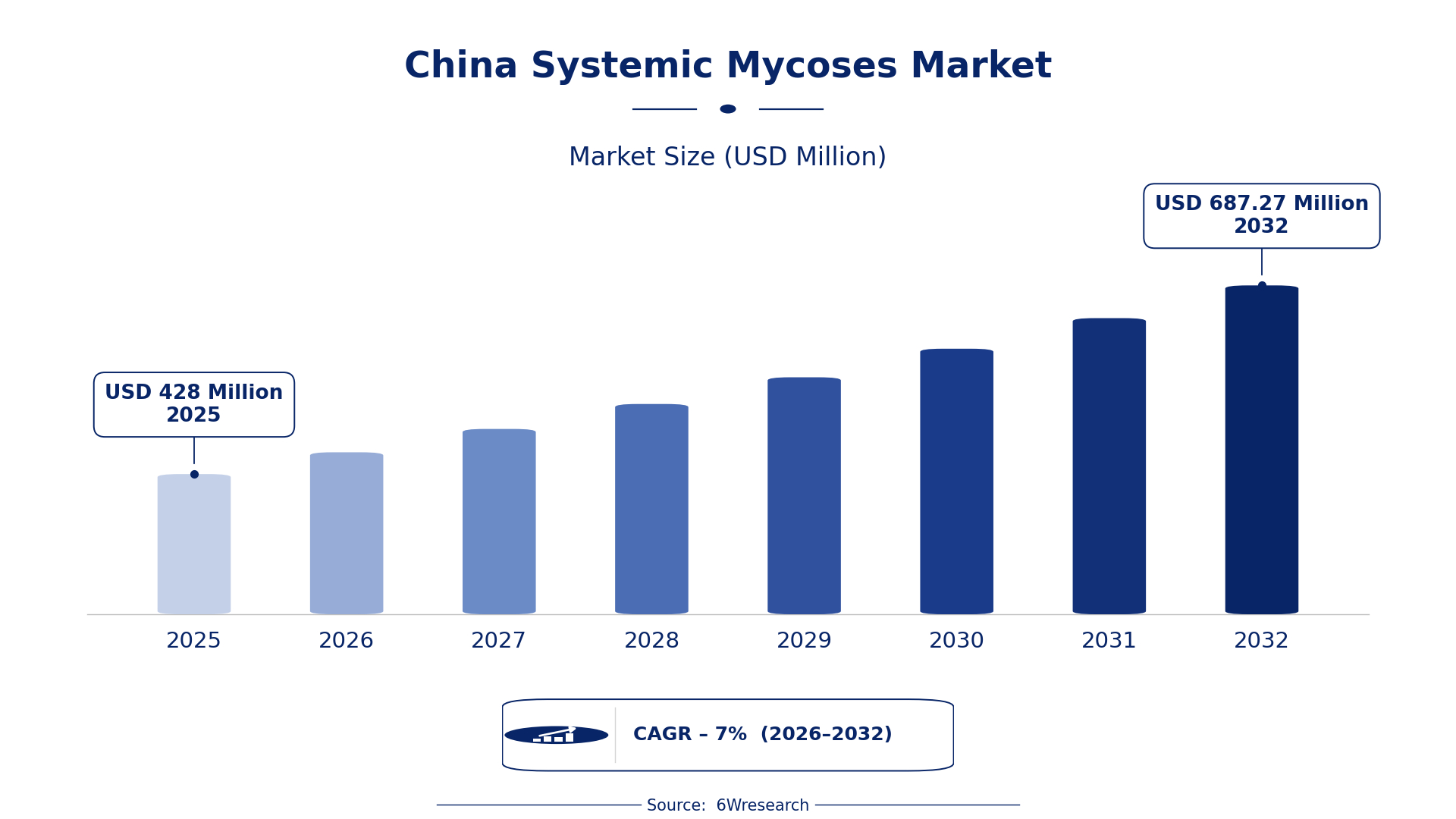
According to 6Wresearch internal database and industry insights, the China Systemic Mycoses Market was valued at USD 428.0 million in 2025 and is projected to reach USD 687.27 million by 2032, growing at a CAGR of approximately 7% during 2026–2032.
China Systemic Mycoses Market Highlights
| Report Metric | Details |
| Report Name | China Systemic Mycoses Market |
| Market Size 2025 | USD 428.0 million |
| Market Size 2032 | USD 687.27 million |
| Absolute Growth 2025–2032 | USD 259.27 million |
| CAGR 2026–2032 | 7% |
| Peak Annual Growth | 9.3% in 2030 |
| Forecast Period | 2026–2032 |
| Historical Data | 2022–2025 |
| Base Year | 2025 |
| Leading Systemic Mycoses, 2025 | Antifungal Injections (43% share) |
| Leading Product Type, 2025 | Amphotericin B (47% share) |
| Leading Antifungal Type, 2025 | Polyenes (37% share) |
| Leading Distribution Channel, 2025 | Hospital Pharmacies (39% share) |
| Leading End User Industry, 2025 | Infectious Disease Units (50% share) |
| Fastest-Growing Systemic Mycoses | Oral Antifungals (8.3% CAGR) |
| Fastest-Growing Product Type | Itraconazole (9.4% CAGR) |
| Fastest-Growing Antifungal Type | Azoles (8.4% CAGR) |
| Fastest-Growing Distribution Channel | Online Pharmacies (9.6% CAGR) |
| Fastest-Growing End User Industry | Outpatient Clinics (9.3% CAGR) |
| Growing Sector | Infectious Disease Units |
| Key End Users | Hospitals, Outpatient Clinics, Specialty Clinics, Pediatric Hospitals |
China Systemic Mycoses Market Year-wise Growth Rate and Key Drivers (2022–2032)
This graph illustrates the annual growth rates of the market from 2022 to 2032, highlighting a steady upward trajectory and projected market expansion over the forecast period.
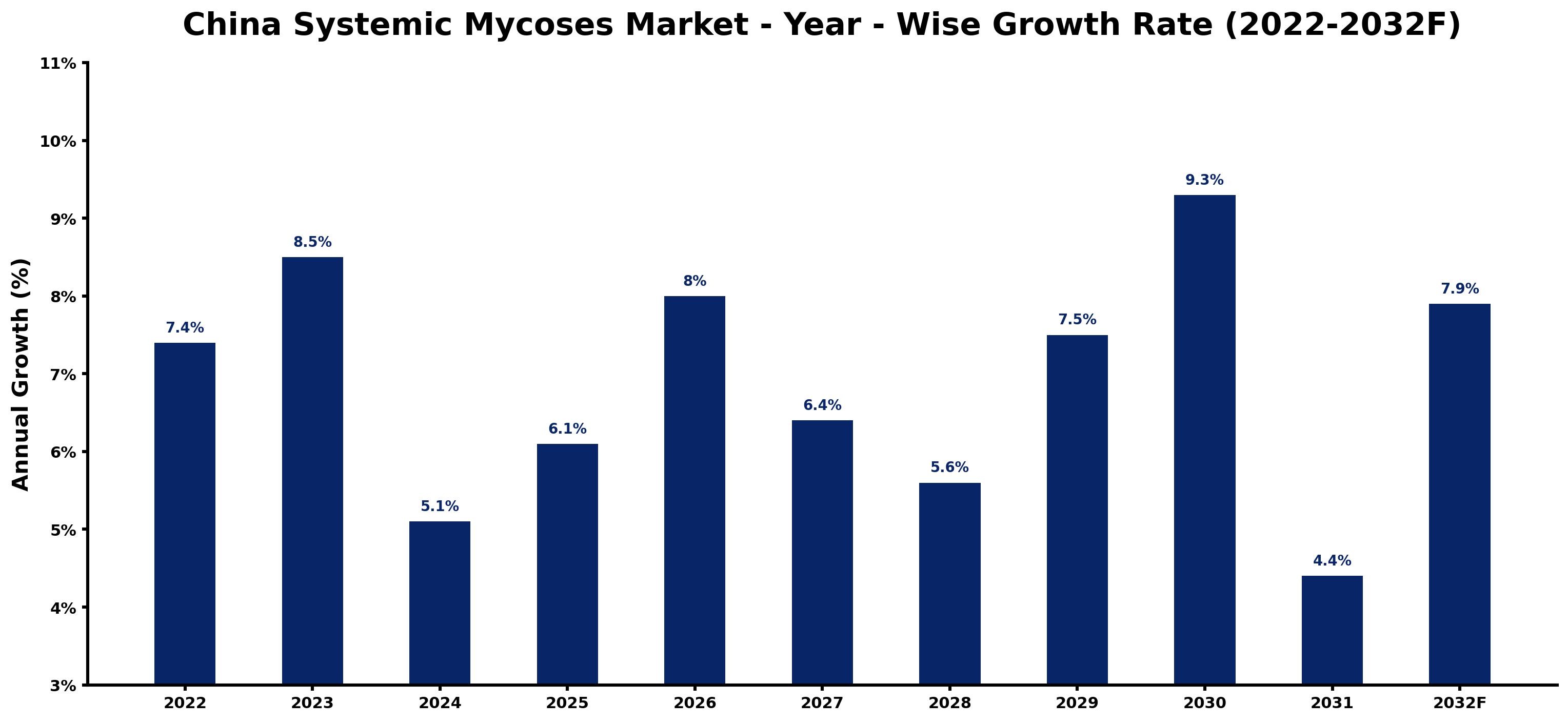
Each row of the following table gives one year's estimated growth and the event or demand shift that explains it.
| Year | Estimated Annual Growth (%) | Market Rationale |
| 2022 | 7.4 | The market showed strong growth due to increasing cases of systemic mycoses. |
| 2023 | 8.5 | Demand rose as antifungal prescriptions increased in urban infectious disease units. |
| 2024 | 5.1 | Growth slowed as the market adjusted to treatment protocols and supply chains. |
| 2025 | 6.1 | A slight recovery occurred as hospitals expanded antifungal treatment access. |
| 2026 | 8.0 | Demand surged with improved guidelines from the National Health Commission. |
| 2027 | 6.4 | Growth slowed again as competition among antifungal types intensified. |
| 2028 | 5.6 | The market experienced a further slowdown as treatment standardisation progressed. |
| 2029 | 7.5 | Demand increased as outpatient clinics expanded their antifungal offerings. |
| 2030 | 9.3 | The market peaked with a surge in antifungal prescriptions for immunocompromised patients. |
| 2031 | 4.4 | Growth slowed as the market stabilised after reaching a peak. |
| 2032 | 7.9 | Demand will rise as the population of immunocompromised patients continues to grow. |
Note: Market size estimations and growth projections presented in this report are based on 6Wresearch's proprietary forecasting methodology, utilizing the latest available industry data, government publications, and primary research inputs.
China Systemic Mycoses Market Synopsis
Systemic Mycoses in China refers to fungal infections affecting internal organs, treated with antifungal medications produced through fermentation or chemical synthesis. The primary uses include treating severe infections in immunocompromised patients. The China Systemic Mycoses Market is expanding due to increasing incidences of systemic fungal infections and improved access to treatments. Approximately 1.4 million cases were reported in 2022, creating substantial demand from hospitals and healthcare providers. The National Health Commission's guidelines and campaigns are driving a rise in antifungal prescriptions across the country.
Market Dynamics Impact Analysis (2026–2032)
| Factor | Type | Impact | Primary Segment Affected |
| Rising incidences of systemic fungal infections among immunocompromised patients | Driver | High | Infectious Disease Units |
| Increased access to antifungal treatments in hospitals | Driver | High | Hospital Pharmacies |
| Growing demand for antifungal treatments in outpatient settings | Opportunity | Medium | Outpatient Clinics |
| Expansion of online pharmacies for antifungal medications | Opportunity | Medium | Online Pharmacies |
| Limited awareness of antifungal stewardship in rural areas | Restraint | High | Pediatric Antifungals |
| Challenges in the approval process for new antifungal drugs | Restraint | High | Antifungal Injections |
| High production costs for antifungal medications | Challenge | High | Combination Therapy |
| Delays in implementing updated treatment guidelines | Challenge | Medium | Oral Antifungals |
Evaluation of Drivers in China Systemic Mycoses Market (2026–2032)
Below mentioned are some major drivers and their influence on market dynamics.
| Drivers | Primary Segment Affected | Why It Matters (Evidence) |
| Increased antifungal prescriptions in urban hospitals | Infectious Disease Units | Approximately 1.4 million cases of systemic mycoses drive demand for treatments in healthcare settings. |
| Expansion of treatment guidelines by the National Health Commission | Hospital Pharmacies | The guidelines have improved access to antifungal medications for patients in need of urgent care, enhancing treatment outcomes. |
| Growth in outpatient clinics offering antifungal therapies | Outpatient Clinics | The average annual treatment population is around 200,000 patients seeking antifungal treatments, increasing demand for services. |
| Rising sales through online pharmacies | Online Pharmacies | Online pharmacies have reported a 30% increase in antifungal sales, indicating changing purchasing behaviours among patients. |
| Increased funding for antifungal drug resistance research | Pediatric Antifungals | The government allocated 500 million CNY for research on antifungal drug resistance in 2023, supporting innovative solutions. |
Growth in the Systemic Mycoses market in China comes from rising incidences of systemic fungal infections, expanded treatment access, and increased prescriptions in outpatient settings. The National Health Commission's updated guidelines have improved access in hospitals, resulting in a treatment population of around 200,000 patients annually. Urban hospitals are experiencing a significant rise in antifungal prescriptions, driven by approximately 1.4 million reported cases in 2022. Increased funding for antifungal drug resistance research is expected to improve treatment options in the coming years, supporting healthcare providers in managing systemic mycoses effectively. Online pharmacies have also experienced a notable increase in sales, reflecting a shift in purchasing behaviour among patients seeking accessible treatments.
Evaluation of Restraints in China Systemic Mycoses Market
The table below lists the restraints and the evidence behind each.
| Market Restraint | Primary Segment Affected | Why It Matters (Evidence) |
| Limited awareness of antifungal stewardship in rural areas | Pediatric Antifungals | This lack of awareness affects treatment access for children, leading to delayed care. |
| Challenges in the approval process for new antifungal drugs | Antifungal Injections | Delays in approvals can hinder timely access to essential treatments for patients, impacting care. |
| High production costs for antifungal medications | Combination Therapy | These costs can limit the availability of effective treatments in hospitals, impacting patient care. |
| Inconsistent treatment protocols across healthcare facilities | Oral Antifungals | Variability in protocols can lead to suboptimal treatment outcomes for patients with systemic mycoses. |
| Rising incidence of antifungal resistance among pathogens | Amphotericin B | This resistance complicates treatment strategies and increases healthcare costs for providers, affecting patient management. |
China Systemic Mycoses Market Challenges
Buyers in the China Systemic Mycoses Market face intense competition among healthcare providers, which drives down prices and reduces profit margins for hospitals. Regulatory hurdles arise from the National Medical Products Administration's lengthy approval processes, causing delays in accessing new antifungal treatments and affecting timely patient care. Rising production costs, particularly from stringent quality compliance, strain budgets for hospitals, especially in rural areas where resources are limited. Supply chain disruptions persist, as dependence on imported specialised treatments can postpone availability, impacting care for approximately 200,000 patients each year.
Trends in the China Systemic Mycoses Market
Several trends are reshaping the China Systemic Mycoses Market; the most important are set out below.
- Increase in Antifungal Prescriptions: Infectious disease units have recorded a 15% increase in antifungal prescriptions since 2020, reflecting a growing recognition of systemic mycoses. This trend underscores the need for improved treatment protocols and access.
- Shift Towards Online Pharmacies: Online pharmacies are gaining popularity for antifungal medications, with a 30% increase in sales last year. This shift enables patients to access necessary treatments more easily, particularly in rural areas.
- Focus on Pediatric Antifungal Needs: The 'Pediatric Antifungal Initiative' launched in 2021 aims to address rising fungal infections in children. With 200 million CNY allocated for research, this initiative is crucial for enhancing pediatric care.
- Adoption of ISO 9001 Standards: China's adoption of ISO 9001 standards for pharmaceutical quality management in antifungal production improves safety and efficacy. This standardisation is important for maintaining high-quality treatment options.
Investment Opportunities in the China Systemic Mycoses Market
Below are the investment opportunities with the strongest case in the China Systemic Mycoses Market.
- Partnerships with Local Healthcare Providers: With a growing treatment population of around 200,000 patients annually, partnerships with local healthcare providers can improve access to antifungal medications. Collaborating with hospitals can facilitate better distribution.
- Investment in Online Pharmacy Platforms: The 30% increase in online pharmacy sales presents a notable opportunity for investment in digital platforms. Engaging with online pharmacies can enhance patient access to antifungal treatments.
- Expansion of Outpatient Clinics: The rising demand for antifungal treatments in outpatient clinics creates an opportunity for investment in these facilities. Establishing clinics in urban areas can cater to the increasing patient population.
- Research on Antifungal Drug Resistance: With government funding allocated for antifungal drug resistance research, there is an opportunity to invest in advanced treatment solutions. Collaborating with research institutions can lead to innovative therapies.
Government Initiatives in the China Systemic Mycoses Market
In 2022, the National Health Commission launched the 'National Antifungal Strategy' to improve treatment access and reduce resistance, with a budget of 500 million CNY. This initiative builds on the framework established by the 'Antifungal Drug Quality Improvement Plan' approved in 2021, which aimed at enhancing production standards and safety protocols for antifungal medications.
The National Medical Products Administration is responsible for approving new antifungal drugs and streamlining the approval process. In 2023, it updated regulations to reduce the time to market by 20%, facilitating quicker access to essential treatments.
Future Insight of the China Systemic Mycoses Market
The China Systemic Mycoses Market will undergo transformative changes by 2032, driven by the Ministry of Health's antifungal stewardship initiatives that will improve treatment protocols. The China Antifungal Resistance Surveillance Program will provide essential data to refine clinical practices. Advances in production technology will streamline antifungal drug manufacturing, benefiting hospitals nationwide. With government funding aimed at antifungal drug resistance research, healthcare providers will gain better tools to combat systemic mycoses, ultimately improving patient outcomes.
Market Segmentation Analysis
Each segment group is reviewed below, with the leader by share and the fastest grower by CAGR.
By Systemic Mycoses – Antifungal Injections Dominated, Oral Antifungals Expected to Grow Fastest
According to Sumit Sagar, AM at 6Wresearch, Antifungal Injections took a 43% share of systemic mycoses in 2025, more than any other category. Antifungal injections hold the largest share in the systemic mycoses market due to their critical role in treating severe infections, particularly in immunocompromised patients. With over 1.4 million reported cases annually, these injections are vital for managing life-threatening conditions effectively. Oral Antifungals are projected to grow fastest, at a CAGR of 8.3% during 2026–2032. Oral antifungals are experiencing rapid growth as they are increasingly prescribed for less severe cases and maintenance therapy. The 15% increase in antifungal prescriptions in urban infectious disease units since 2020 highlights the rising preference for these treatments. This trend indicates that suppliers must focus on expanding the availability of oral antifungals to meet the growing outpatient demand.
By Product Type – Amphotericin B Dominated, Itraconazole Expected to Grow Fastest
In 2025, Amphotericin B led the product type split with a 47% share. Amphotericin B dominates the market as a key treatment for serious fungal infections, particularly in immunocompromised patients. Its established use in hospitals makes it a preferred choice among healthcare providers. Over 2026–2032, Itraconazole is expected to post the fastest growth, at a CAGR of 9.4%. Itraconazole is the fastest-growing product type, widely used for various fungal infections, reflecting a shift towards more accessible treatment options. The increase in antifungal prescriptions indicates a rising acceptance of this medication. Providers should consider expanding their offerings of Itraconazole to cater to the increasing demand in outpatient care.
By Antifungal Type – Polyenes Dominated, Azoles Expected to Grow Fastest
With a 37% revenue share in 2025, Polyenes was the largest antifungal type category. Polyenes are the leading antifungal type in the market due to their effectiveness in treating systemic infections. Their established role in hospital protocols ensures a strong market share among healthcare providers. Azoles are set to record the highest CAGR in this split, 8.4% over 2026–2032. Azoles are the fastest-growing antifungal type, commonly used for a range of systemic infections, which reflects their versatility in treatment. The rising incidence of candidiasis among patients further supports this growth. Manufacturers should prioritise the development of azole formulations to align with the increasing treatment needs in hospitals.
By Distribution Channel – Hospital Pharmacies Dominated, Online Pharmacies Expected to Grow Fastest
The largest distribution channel category in 2025 was Hospital Pharmacies, with a 39% share of total revenue. Hospital pharmacies represent the leading distribution channel for antifungal treatments, ensuring primary access for healthcare professionals. Their established networks facilitate a consistent supply of essential medications to patients in need of urgent care. The quickest growth will come from Online Pharmacies, forecast to expand at a CAGR of 9.6% between 2026 and 2032. Online pharmacies are the fastest-growing distribution channel, providing patients with easier access to antifungal medications. The 30% increase in online antifungal sales over the past year signals a shift in consumer purchasing habits towards digital platforms. Suppliers should enhance their online distribution strategies to effectively cater to the increasing number of patients seeking antifungal treatments through digital channels.
By End User Industry – Infectious Disease Units Dominated, Outpatient Clinics Expected to Grow Fastest
Infectious Disease Units held a 50% share of the China Systemic Mycoses Market by end user industry in 2025. Infectious disease units are the largest end user in the systemic mycoses market, specialising in the treatment of severe infections. Their dedicated focus ensures a consistent demand for antifungal medications tailored to complex cases. Outpatient Clinics are projected to grow fastest, at a CAGR of 9.3% during 2026–2032. Outpatient clinics are the fastest-growing end user segment, often being the initial point of care for patients with fungal infections. The increasing incidence of systemic mycoses highlights the need for more treatment options in these facilities. Healthcare providers should strengthen collaborations with outpatient clinics to ensure timely access to antifungal therapies.
Key Attractiveness of the Report
- 10 Years of Market Numbers
- Historical Data Starting from 2022 to 2025
- Base Year 2025
- Forecast Data until 2032
- Key Performance Indicators Impacting the Market
- Major Upcoming Developments and Projects
Key Highlights of the Report:
- China Systemic Mycoses Market Outlook
- Market Size of China Systemic Mycoses Market, 2025
- Forecast of China Systemic Mycoses Market, 2032
- Historical Data and Forecast of China Systemic Mycoses Revenues & Volume for the Period 2022 - 2032F
- China Systemic Mycoses Market Trend Evolution
- China Systemic Mycoses Market Drivers and Challenges
- China Systemic Mycoses Price Trends
- China Systemic Mycoses Porter's Five Forces
- China Systemic Mycoses Industry Life Cycle
- Historical Data and Forecast of China Systemic Mycoses Market Revenues & Volume By Systemic Mycoses for the Period 2022 - 2032F
- Historical Data and Forecast of China Systemic Mycoses Market Revenues & Volume By Antifungal Injections for the Period 2022 - 2032F
- Historical Data and Forecast of China Systemic Mycoses Market Revenues & Volume By Oral Antifungals for the Period 2022 - 2032F
- Historical Data and Forecast of China Systemic Mycoses Market Revenues & Volume By Combination Therapy for the Period 2022 - 2032F
- Historical Data and Forecast of China Systemic Mycoses Market Revenues & Volume By Pediatric Antifungals for the Period 2022 - 2032F
- Historical Data and Forecast of China Systemic Mycoses Market Revenues & Volume By Product Type for the Period 2022 - 2032F
- Historical Data and Forecast of China Systemic Mycoses Market Revenues & Volume By Amphotericin B for the Period 2022 - 2032F
- Historical Data and Forecast of China Systemic Mycoses Market Revenues & Volume By Itraconazole for the Period 2022 - 2032F
- Historical Data and Forecast of China Systemic Mycoses Market Revenues & Volume By Dual Drug Regimen for the Period 2022 - 2032F
- Historical Data and Forecast of China Systemic Mycoses Market Revenues & Volume By Suspension Drugs for the Period 2022 - 2032F
- Historical Data and Forecast of China Systemic Mycoses Market Revenues & Volume By Antifungal Type for the Period 2022 - 2032F
- Historical Data and Forecast of China Systemic Mycoses Market Revenues & Volume By Polyenes for the Period 2022 - 2032F
- Historical Data and Forecast of China Systemic Mycoses Market Revenues & Volume By Azoles for the Period 2022 - 2032F
- Historical Data and Forecast of China Systemic Mycoses Market Revenues & Volume By Echinocandins + Azoles for the Period 2022 - 2032F
- Historical Data and Forecast of China Systemic Mycoses Market Revenues & Volume By Triazoles for the Period 2022 - 2032F
- Historical Data and Forecast of China Systemic Mycoses Market Revenues & Volume By Distribution Channel for the Period 2022 - 2032F
- Historical Data and Forecast of China Systemic Mycoses Market Revenues & Volume By Hospital Pharmacies for the Period 2022 - 2032F
- Historical Data and Forecast of China Systemic Mycoses Market Revenues & Volume By Online Pharmacies for the Period 2022 - 2032F
- Historical Data and Forecast of China Systemic Mycoses Market Revenues & Volume By Specialty Clinics for the Period 2022 - 2032F
- Historical Data and Forecast of China Systemic Mycoses Market Revenues & Volume By Retail Pharmacies for the Period 2022 - 2032F
- Historical Data and Forecast of China Systemic Mycoses Market Revenues & Volume By End User Industry for the Period 2022 - 2032F
- Historical Data and Forecast of China Systemic Mycoses Market Revenues & Volume By Infectious Disease Units for the Period 2022 - 2032F
- Historical Data and Forecast of China Systemic Mycoses Market Revenues & Volume By Outpatient Clinics for the Period 2022 - 2032F
- Historical Data and Forecast of China Systemic Mycoses Market Revenues & Volume By Oncology Hospitals for the Period 2022 - 2032F
- Historical Data and Forecast of China Systemic Mycoses Market Revenues & Volume By Pediatric Hospitals for the Period 2022 - 2032F
- China Systemic Mycoses Import Export Trade Statistics
- Market Opportunity Assessment By Systemic Mycoses
- Market Opportunity Assessment By Product Type
- Market Opportunity Assessment By Antifungal Type
- Market Opportunity Assessment By Distribution Channel
- Market Opportunity Assessment By End User Industry
- China Systemic Mycoses Top Companies Market Share
- China Systemic Mycoses Competitive Benchmarking By Technical and Operational Parameters
- China Systemic Mycoses Company Profiles
- China Systemic Mycoses Key Strategic Recommendations
Market Covered
The report offers an extensive study of the following market segments.
By Systemic Mycoses
- Antifungal Injections
- Oral Antifungals
- Combination Therapy
- Pediatric Antifungals
By Product Type
- Amphotericin B
- Itraconazole
- Dual Drug Regimen
- Suspension Drugs
By Antifungal Type
- Polyenes
- Azoles
- Echinocandins + Azoles
- Triazoles
By Distribution Channel
- Hospital Pharmacies
- Online Pharmacies
- Specialty Clinics
- Retail Pharmacies
By End User Industry
- Infectious Disease Units
- Outpatient Clinics
- Oncology Hospitals
- Pediatric Hospitals































