China Trauma Care Market Size & Growth Rate
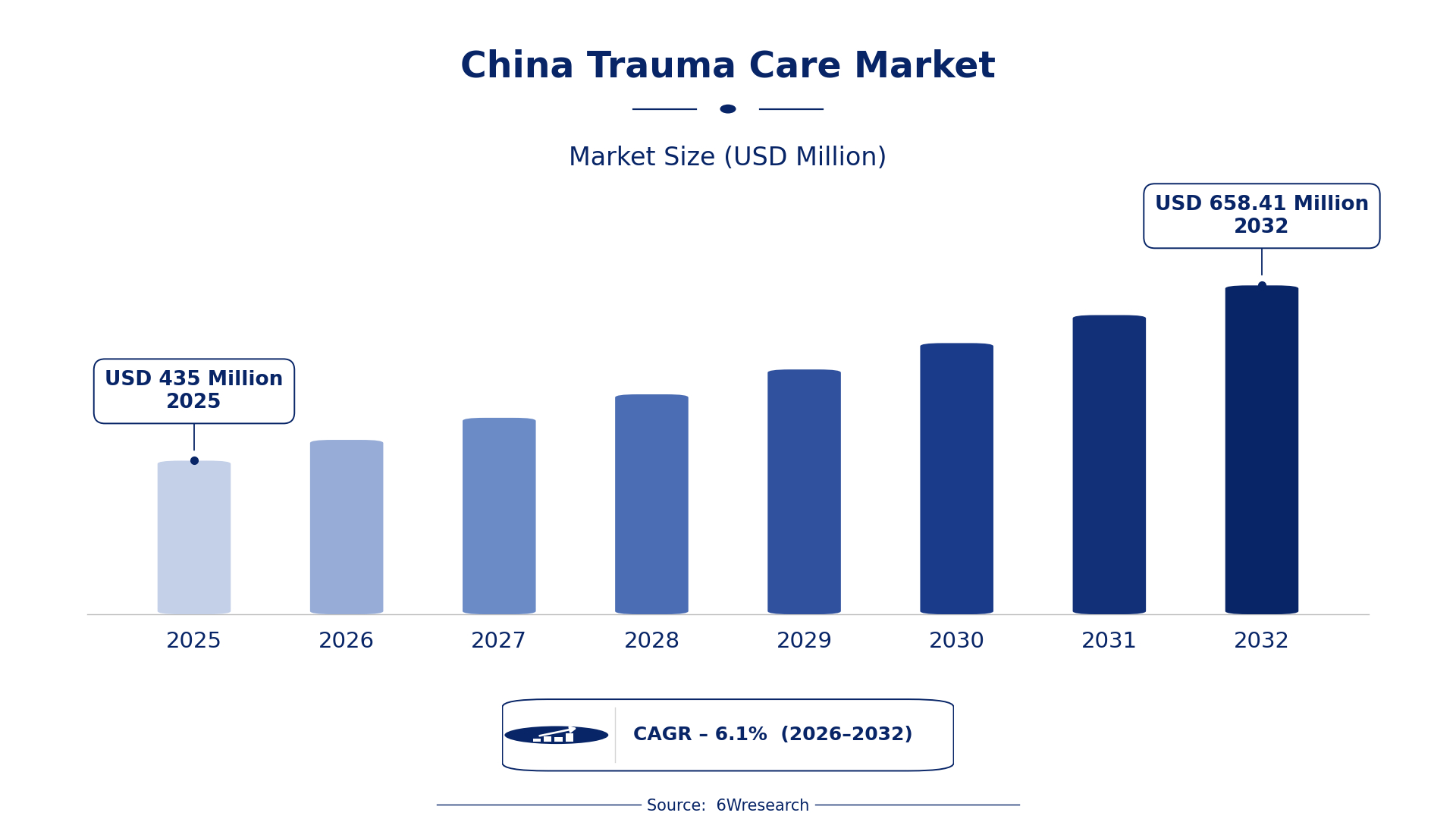
According to 6Wresearch internal database and industry insights, the China Trauma Care Market was valued at USD 435.0 million in 2025 and is projected to reach USD 658.41 million by 2032, growing at a CAGR of approximately 6.1% during 2026–2032.
China Trauma Care Market Highlights
| Report Metric | Details |
| Report Name | China Trauma Care Market |
| Market Size 2025 | USD 435.0 million |
| Market Size 2032 | USD 658.41 million |
| Absolute Growth 2025–2032 | USD 223.41 million |
| CAGR 2026–2032 | 6.1% |
| Peak Annual Growth | 8.3% in 2031 |
| Forecast Period | 2026–2032 |
| Historical Data | 2022–2025 |
| Base Year | 2025 |
| Leading Care Type, 2025 | Emergency Trauma Units (43% share) |
| Leading Service Provider, 2025 | Hospitals (39% share) |
| Leading Care Level, 2025 | Acute Response (41% share) |
| Leading End User, 2025 | Patients (42% share) |
| Fastest-Growing Care Type | Pre-Hospital Care (8.8% CAGR) |
| Fastest-Growing Service Provider | Ambulance Services (8.5% CAGR) |
| Fastest-Growing Care Level | On-Site Stabilization (8.1% CAGR) |
| Fastest-Growing End User | EMS Providers (8.7% CAGR) |
| Growing Sector | Emergency Medical Services |
| Key End Users | Hospitals, Rehabilitation Centers, Emergency Medical Services, Patients |
China Trauma Care Market Year-wise Growth Rate and Key Drivers (2022–2032)
This graph illustrates the annual growth rates of the market from 2022 to 2032, highlighting a steady upward trajectory and projected market expansion over the forecast period.
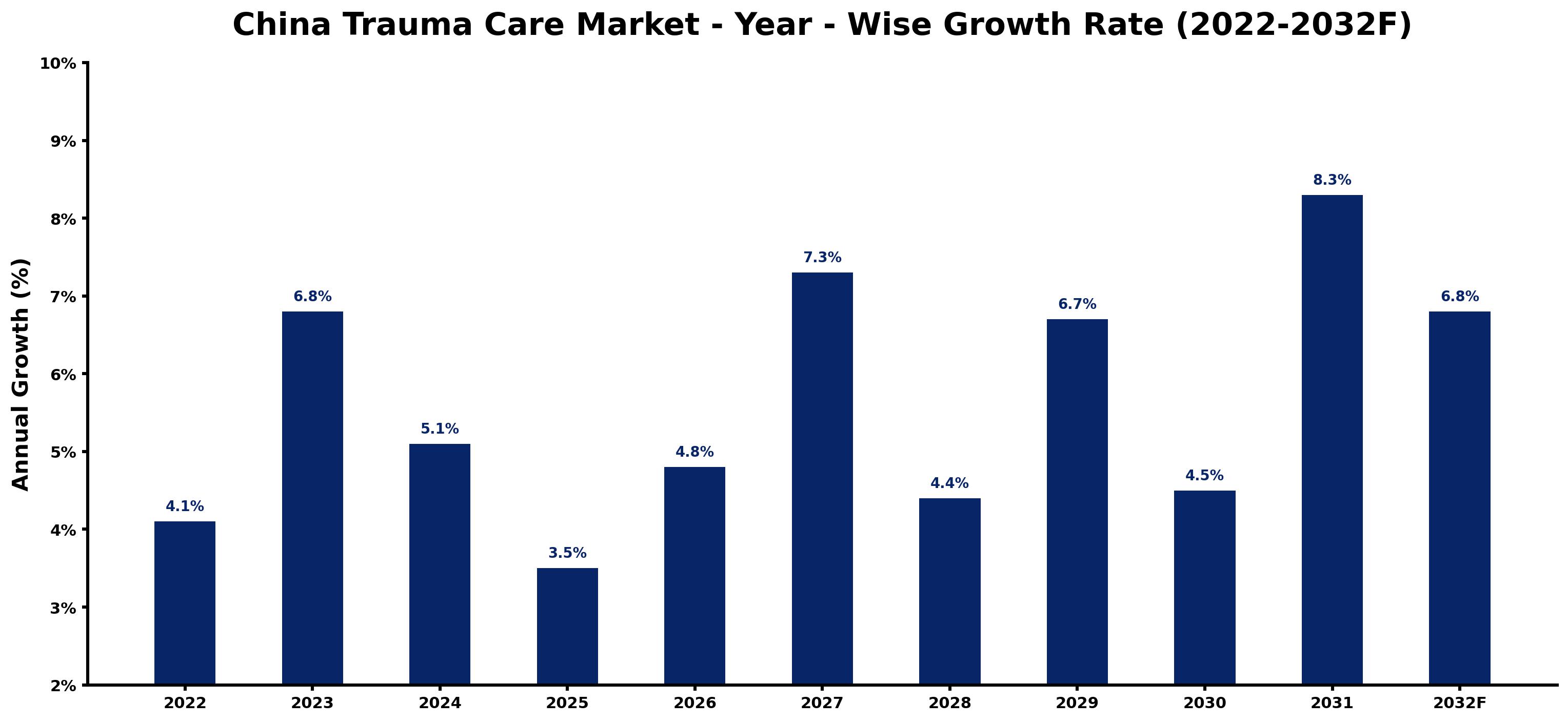
Each row of the following table gives one year's estimated growth and the event or demand shift that explains it.
| Year | Estimated Annual Growth (%) | Market Rationale |
| 2022 | 4.1 | The market experienced steady growth due to high accident rates and urbanisation, driven by the increasing number of trauma cases. |
| 2023 | 6.8 | Demand for trauma services surged as urban areas reported 1.5 million trauma cases annually, necessitating enhanced emergency response. |
| 2024 | 5.1 | A slowdown occurred as the market adjusted to previous high growth rates, reflecting the need for improved infrastructure. |
| 2025 | 3.5 | Growth continued to slow as the market stabilised after rapid expansion, with hospitals adapting to increased patient volumes. |
| 2026 | 4.8 | Improvements in emergency response protocols are expected to drive demand for trauma care services in urban centres. |
| 2027 | 7.3 | Investment in trauma infrastructure is projected to boost growth as new facilities come online, enhancing service delivery. |
| 2028 | 4.4 | The market is expected to slow again as demand stabilises after previous surges, reflecting a more mature service landscape. |
| 2029 | 6.7 | Urbanisation continues to drive growth as cities expand, increasing the need for trauma care services and facilities. |
| 2030 | 4.5 | A slowdown is anticipated as the market adjusts to the previous year's growth, with hospitals refining their service offerings. |
| 2031 | 8.3 | The market is projected to peak with significant investments in trauma care facilities, enhancing capacity and service quality. |
| 2032 | 6.8 | Growth is expected to slow as the market stabilises after reaching a peak, with ongoing improvements in trauma care delivery. |
Note: Market size estimations and growth projections presented in this report are based on 6Wresearch's proprietary forecasting methodology, utilizing the latest available industry data, government publications, and primary research inputs.
China Trauma Care Market Synopsis
The China Trauma Care Market includes medical services for individuals suffering from traumatic injuries, such as emergency response, surgical treatment, and rehabilitation. With over 1.5 million trauma cases reported each year, the market is crucial due to high accident rates and urbanisation. The China Trauma Care Market is expanding as domestic healthcare needs increase, driven by initiatives like the 'Emergency Medical Service System Plan' launched in 2021. Investment in trauma care infrastructure, with $200 million allocated in 2023, supports this growth and improves service delivery.
Market Dynamics Impact Analysis (2026–2032)
| Factor | Type | Impact | Primary Segment Affected |
| High accident rates drive demand for immediate trauma care services. | Driver | High | Emergency Trauma Units |
| Investment in trauma surgery centers enhances service capacity. | Driver | High | Trauma Surgery Centers |
| Growing urban population increases the need for trauma care services. | Opportunity | High | Hospitals |
| Integration of rehabilitation centers with trauma services creates new care pathways. | Opportunity | Medium | Rehabilitation Centers |
| Limited access to trauma care facilities in rural areas hinders service delivery. | Restraint | High | Pre-Hospital Care |
| High operational costs for trauma care services can restrict service expansion. | Restraint | Medium | Ambulance Services |
| Buyers face delays in accessing trauma care due to inadequate infrastructure. | Challenge | High | Trauma Surgery Centers |
| Suppliers struggle with the high costs of maintaining trauma care standards. | Challenge | Medium | Emergency Trauma Units |
Evaluation of Drivers in China Trauma Care Market (2026–2032)
The table below links each growth driver to the segment it affects and the evidence for it.
| Drivers | Primary Segment Affected | Why It Matters (Evidence) |
| Increasing trauma cases necessitate more emergency services. | Emergency Trauma Units | With 1.5 million trauma cases annually, cities like Beijing require more emergency units. |
| Investment in trauma surgery centers boosts surgical capacity. | Trauma Surgery Centers | The establishment of over 2,000 trauma surgery centers improves patient care. |
| Urbanisation leads to higher demand for trauma care facilities. | Pre-Hospital Care | China's urban population growth drives the need for more hospital services. |
| Government funding improves trauma care infrastructure. | Ambulance Services | The $200 million allocated in 2023 supports ambulance service improvements. |
| Integration of rehabilitation services improves patient recovery. | Rehabilitation Centers | Rehabilitation centers are increasingly integrated with urban hospital trauma services. |
The Trauma Care market in China is growing on the back of rising end-use demand, expanding infrastructure and increased investment in emergency services. Urbanisation contributes to this growth, with over 1.4 billion people requiring improved trauma care. The establishment of over 2,000 trauma surgery centers boosts surgical capacity, allowing hospitals to manage more cases effectively. This combination of factors is prompting hospitals and emergency services to expand their offerings to meet the growing demand for trauma care.
Evaluation of Restraints in China Trauma Care Market
The key brakes on demand, and where they bite hardest, are shown below.
| Market Restraint | Primary Segment Affected | Why It Matters (Evidence) |
| Limited access to trauma care in rural areas restricts service availability. | Pre-Hospital Care | Many rural areas lack adequate emergency services, affecting timely patient care. |
| High operational costs hinder the expansion of trauma care services. | Ambulance Services | Operational costs for maintaining ambulance fleets can be prohibitive for providers. |
| Insufficient training for emergency personnel affects service quality. | Emergency Trauma Units | Despite mandated training programs, gaps in skills can delay patient care. |
| Regulatory compliance can be burdensome for trauma facilities. | Trauma Surgery Centers | Facilities must meet rigorous standards, which can slow service delivery. |
| Limited funding for trauma care initiatives restricts growth. | Rehabilitation Centers | Budget constraints can limit the development of new rehabilitation services. |
China Trauma Care Market Challenges
In the China trauma care market, hospitals struggle with supply chain inefficiencies as over 2,000 trauma surgery centers rely on a limited number of suppliers for critical medical equipment, delaying treatment for trauma patients. High operational costs burden facilities since the average hospital stay for trauma patients lasts around 10 days, straining hospital budgets and resources. A shortage of skilled personnel persists because trauma care training programs for emergency medical staff were only mandated in 2020, leaving many facilities underprepared for current demands. Regulatory compliance adds complexity, as the National Health Commission enforces strict standards that can slow the implementation of new trauma care initiatives.
Trends in the China Trauma Care Market
The trends below show where the China Trauma Care Market is heading.
- Shift towards Integrated Trauma Care Services: In 2021, the 'Emergency Medical Service System Plan' initiated a shift towards integrated trauma care services, improving collaboration between hospitals and rehabilitation centres. This integration is expected to improve patient outcomes.
- Emergence of Telemedicine in Trauma Care: Since 2022, telemedicine has been increasingly adopted in trauma care, allowing remote consultations and follow-ups. This trend is particularly evident in urban areas, where access to specialists is essential.
- Growing Focus on Pre-Hospital Care: Since 2023, there has been a notable shift towards enhancing pre-hospital care services. This change is driven by the need for faster response times, with the average ambulance response time currently at 8 minutes.
- Increased Adoption of ISO 9001 Standards: Since 2020, trauma care facilities have increasingly adopted ISO 9001 standards for quality management. This shift ensures better service delivery and patient care across various facilities.
Investment Opportunities in the China Trauma Care Market
The following opportunities in the China Trauma Care Market pair current demand with a clear way in.
- Hospitals seeking to improve trauma care capabilities: With over 1.5 million trauma cases annually, hospitals are looking to improve their trauma care capabilities. Investing in advanced trauma surgery centres can meet this growing need.
- Urban areas require more ambulance services: The average response time of 8 minutes indicates a gap in ambulance services. Expanding ambulance fleets in major cities presents a lucrative opportunity for service providers.
- Rehabilitation centers integrating trauma services: With over 1,000 rehabilitation centres nationwide, there is a significant opportunity to invest in facilities that provide integrated trauma recovery services, improving patient care.
- Emergency medical personnel training programs: The mandated training programs for emergency personnel present an opportunity to invest in educational services, ensuring better preparedness for trauma care.
Government Initiatives in the China Trauma Care Market
The 'Emergency Medical Service System Plan' launched in 2021 mandates improved emergency response protocols, building on existing regulations to ensure trauma care facilities meet higher service standards. This plan aims to reduce trauma-related mortality by 20% by 2030, impacting patient outcomes across the country. The establishment of the China Trauma Care Association promotes best practices in trauma management, fostering a culture of continuous improvement within the sector. Additionally, the government allocated $200 million in 2023 to enhance trauma care infrastructure, particularly in urban areas, ensuring better service delivery.
The National Health Commission oversees the implementation of funding directed towards trauma care infrastructure. The $200 million investment in 2023 supports enhancements in ambulance services and trauma surgery centres. This funding also supports training programs for emergency medical personnel, ensuring that they are well-equipped to handle trauma cases. The China Trauma Care Association plays a vital role in promoting standards and guidelines, benefiting both producers and buyers in the trauma care market.
Future Insight of the China Trauma Care Market
The China trauma care market will undergo significant changes by 2032, driven by the government's commitment to the 'Healthy China 2030' initiative, which targets a 20% reduction in trauma-related mortality. By 2023, the government allocated $200 million to improve trauma care infrastructure, particularly in urban areas. The integration of rehabilitation services with trauma care will become common, enhancing recovery processes for patients. The adoption of ISO 9001 standards will also raise quality management practices across trauma care facilities, ensuring better service delivery.
Market Segmentation Analysis
The report offers a comprehensive study of the following market segments and their leading categories in the market.
By Care Type – Emergency Trauma Units Dominated, Pre-Hospital Care Expected to Grow Fastest
According to Vasudha, AM at 6Wresearch, Emergency Trauma Units held a 43% share of the China Trauma Care Market by care type in 2025. Emergency trauma units play a vital role in providing immediate care to trauma patients, particularly in urban areas with high accident rates. For instance, cities like Beijing and Shanghai have established these units to effectively manage the substantial volume of trauma cases reported annually. The quickest growth will come from Pre-Hospital Care, forecast to expand at a CAGR of 8.8% between 2026 and 2032. The surge in pre-hospital care is propelled by the pressing need for timely patient stabilization prior to hospital admission. The average ambulance response time of around 8 minutes highlights the importance of this service in the overall trauma care framework. Suppliers should enhance pre-hospital care offerings to meet the rising demand for efficient trauma management.
By Service Provider – Hospitals Dominated, Ambulance Services Expected to Grow Fastest
With a 39% revenue share in 2025, Hospitals was the largest service provider category. Hospitals dominate the trauma care market as they serve as the primary providers of comprehensive services, including emergency response and surgical treatment. With over 2,000 trauma surgery centers across China, hospitals are essential in managing trauma cases effectively. Ambulance Services are projected to grow fastest, at a CAGR of 8.5% during 2026–2032. Ambulance services are witnessing rapid growth due to their critical function in transporting trauma patients swiftly to hospitals. The recent allocation of $200 million by the government for trauma care infrastructure will further strengthen these services' capabilities. Buyers should seek partnerships with ambulance services to ensure prompt access to trauma care.
By Care Level – Acute Response Dominated, On-Site Stabilization Expected to Grow Fastest
The largest care level category in 2025 was Acute Response, with a 41% share of total revenue. Acute response holds the largest share in the trauma care market as it involves immediate intervention, which is vital for saving lives in critical situations. This is particularly relevant given the high volume of trauma cases reported annually in urban centres. On-Site Stabilization is set to record the highest CAGR in this split, 8.1% over 2026–2032. On-site stabilization is rapidly gaining traction as it is essential for managing patients effectively before they arrive at hospitals. The increasing standardisation of on-site care within emergency response protocols in urban hospitals is driving this growth. Suppliers must invest in training and resources for on-site stabilization to meet evolving market needs.
By End User – Patients Dominated, EMS Providers Expected to Grow Fastest
Patients took a 42% share of end user in 2025, more than any other category. Patients represent the largest segment in the trauma care market as they are the direct recipients of trauma services. With approximately 1.5 million trauma cases reported annually, the demand for effective care continues to rise significantly. Over 2026–2032, EMS Providers are expected to post the fastest growth, at a CAGR of 8.7%. EMS providers are the fastest-growing segment due to their crucial role in emergency medical services and the increasing recognition of their importance in trauma management. The implementation of mandatory trauma care training programs for emergency personnel since 2020 has greatly contributed to this segment's growth. Suppliers should focus on developing solutions tailored to the specific needs of EMS providers to capitalise on this expanding market.
Key Attractiveness of the Report
- 10 Years of Market Numbers
- Historical Data Starting from 2022 to 2025
- Base Year 2025
- Forecast Data until 2032
- Key Performance Indicators Impacting the Market
- Major Upcoming Developments and Projects
Key Highlights of the Report:
- China Trauma Care Market Outlook
- Market Size of China Trauma Care Market, 2025
- Forecast of China Trauma Care Market, 2032
- Historical Data and Forecast of China Trauma Care Revenues & Volume for the Period 2022 - 2032F
- China Trauma Care Market Trend Evolution
- China Trauma Care Market Drivers and Challenges
- China Trauma Care Price Trends
- China Trauma Care Porter's Five Forces
- China Trauma Care Industry Life Cycle
- Historical Data and Forecast of China Trauma Care Market Revenues & Volume By Care Type for the Period 2022 - 2032F
- Historical Data and Forecast of China Trauma Care Market Revenues & Volume By Emergency Trauma Units for the Period 2022 - 2032F
- Historical Data and Forecast of China Trauma Care Market Revenues & Volume By Pre-Hospital Care for the Period 2022 - 2032F
- Historical Data and Forecast of China Trauma Care Market Revenues & Volume By Trauma Surgery Centers for the Period 2022 - 2032F
- Historical Data and Forecast of China Trauma Care Market Revenues & Volume By Post-Trauma Rehab for the Period 2022 - 2032F
- Historical Data and Forecast of China Trauma Care Market Revenues & Volume By Service Provider for the Period 2022 - 2032F
- Historical Data and Forecast of China Trauma Care Market Revenues & Volume By Hospitals for the Period 2022 - 2032F
- Historical Data and Forecast of China Trauma Care Market Revenues & Volume By Ambulance Services for the Period 2022 - 2032F
- Historical Data and Forecast of China Trauma Care Market Revenues & Volume By Multispecialty Clinics for the Period 2022 - 2032F
- Historical Data and Forecast of China Trauma Care Market Revenues & Volume By Rehabilitation Centers for the Period 2022 - 2032F
- Historical Data and Forecast of China Trauma Care Market Revenues & Volume By Care Level for the Period 2022 - 2032F
- Historical Data and Forecast of China Trauma Care Market Revenues & Volume By Acute Response for the Period 2022 - 2032F
- Historical Data and Forecast of China Trauma Care Market Revenues & Volume By On-Site Stabilization for the Period 2022 - 2032F
- Historical Data and Forecast of China Trauma Care Market Revenues & Volume By Surgical Treatment for the Period 2022 - 2032F
- Historical Data and Forecast of China Trauma Care Market Revenues & Volume By Long-Term Care for the Period 2022 - 2032F
- Historical Data and Forecast of China Trauma Care Market Revenues & Volume By End User for the Period 2022 - 2032F
- Historical Data and Forecast of China Trauma Care Market Revenues & Volume By Patients for the Period 2022 - 2032F
- Historical Data and Forecast of China Trauma Care Market Revenues & Volume By EMS Providers for the Period 2022 - 2032F
- Historical Data and Forecast of China Trauma Care Market Revenues & Volume By Critical Injury Cases for the Period 2022 - 2032F
- Historical Data and Forecast of China Trauma Care Market Revenues & Volume By Recovery Patients for the Period 2022 - 2032F
- China Trauma Care Import Export Trade Statistics
- Market Opportunity Assessment By Care Type
- Market Opportunity Assessment By Service Provider
- Market Opportunity Assessment By Care Level
- Market Opportunity Assessment By End User
- China Trauma Care Top Companies Market Share
- China Trauma Care Competitive Benchmarking By Technical and Operational Parameters
- China Trauma Care Company Profiles
- China Trauma Care Key Strategic Recommendations
Market Covered
Segments analysed in this report are listed below.
By Care Type
- Emergency Trauma Units
- Pre-Hospital Care
- Trauma Surgery Centers
- Post-Trauma Rehab
By Service Provider
- Hospitals
- Ambulance Services
- Multispecialty Clinics
- Rehabilitation Centers
By Care Level
- Acute Response
- On-Site Stabilization
- Surgical Treatment
- Long-Term Care
By End User
- Patients
- EMS Providers
- Critical Injury Cases
- Recovery Patients































