China Vascular Disease Market Size & Growth Rate
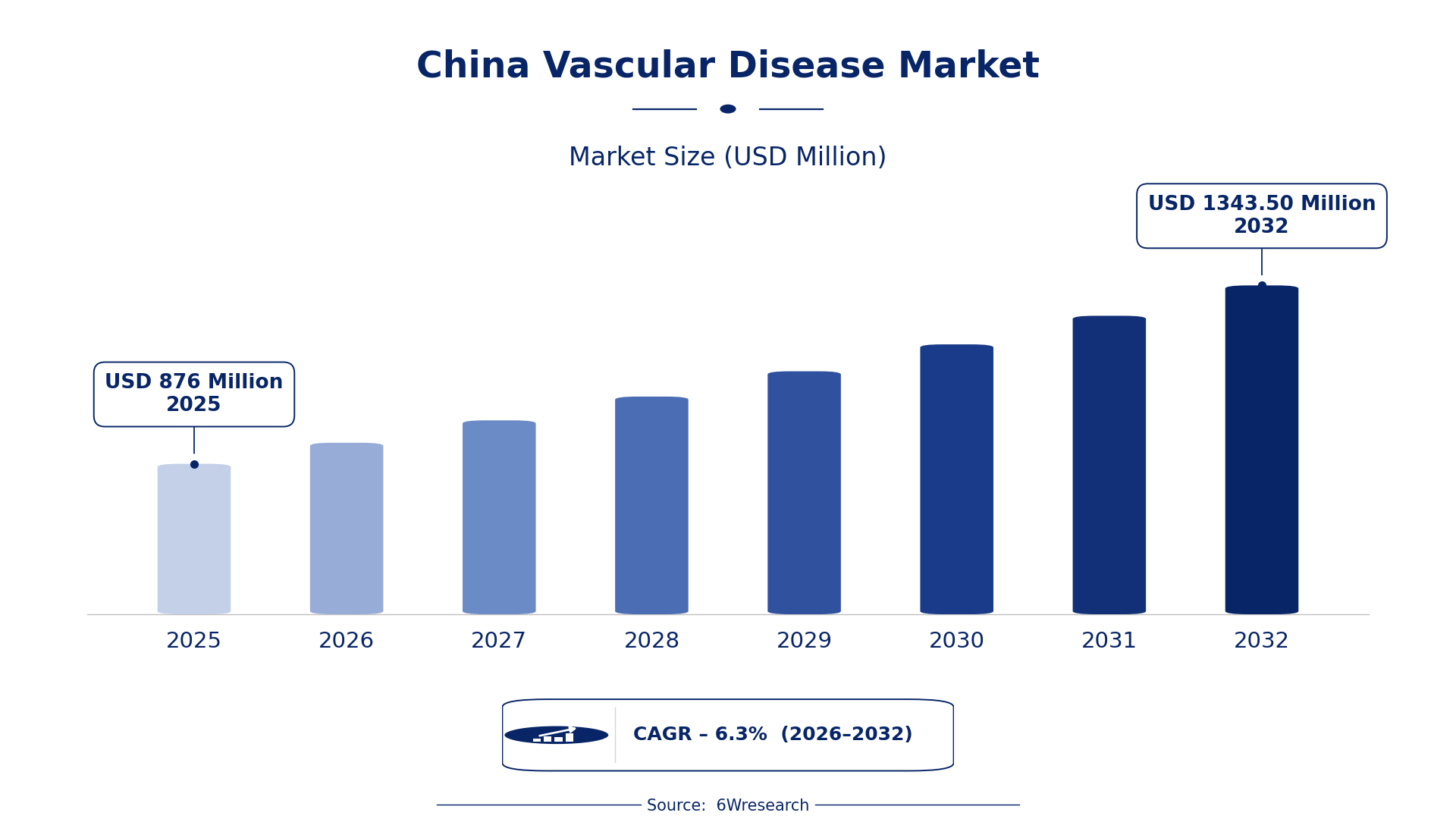
According to 6Wresearch internal database and industry insights, the China Vascular Disease Market was valued at USD 876.0 million in 2025 and is projected to reach USD 1,343.50 million by 2032, growing at a CAGR of approximately 6.3% during 2026–2032.
China Vascular Disease Market Highlights
| Report Metric | Details |
| Report Name | China Vascular Disease Market |
| Market Size 2025 | USD 876.0 million |
| Market Size 2032 | USD 1,343.50 million |
| Absolute Growth 2025–2032 | USD 467.50 million |
| CAGR 2026–2032 | 6.3% |
| Peak Annual Growth | 8.1% in 2028 |
| Forecast Period | 2026–2032 |
| Historical Data | 2022–2025 |
| Base Year | 2025 |
| Leading Disease Type, 2025 | Peripheral Artery Disease (48% share) |
| Leading Diagnosis Method, 2025 | CT/MRI (41% share) |
| Leading Treatment Approach, 2025 | Angioplasty/Stenting (33% share) |
| Leading End User, 2025 | Hospitals (38% share) |
| Fastest-Growing Disease Type | Aneurysms (7.5% CAGR) |
| Fastest-Growing Diagnosis Method | Doppler Ultrasound (8.6% CAGR) |
| Fastest-Growing Treatment Approach | Anticoagulation Therapy (8.6% CAGR) |
| Fastest-Growing End User | Cardiology Centers (7.3% CAGR) |
| Growing Sector | Cardiology Centers |
| Key End Users | Hospitals, Cardiology Centers, Surgical Units, Clinics |
China Vascular Disease Market Year-wise Growth Rate and Key Drivers (2022–2032)
This graph illustrates the annual growth rates of the market from 2022 to 2032, highlighting a steady upward trajectory and projected market expansion over the forecast period.
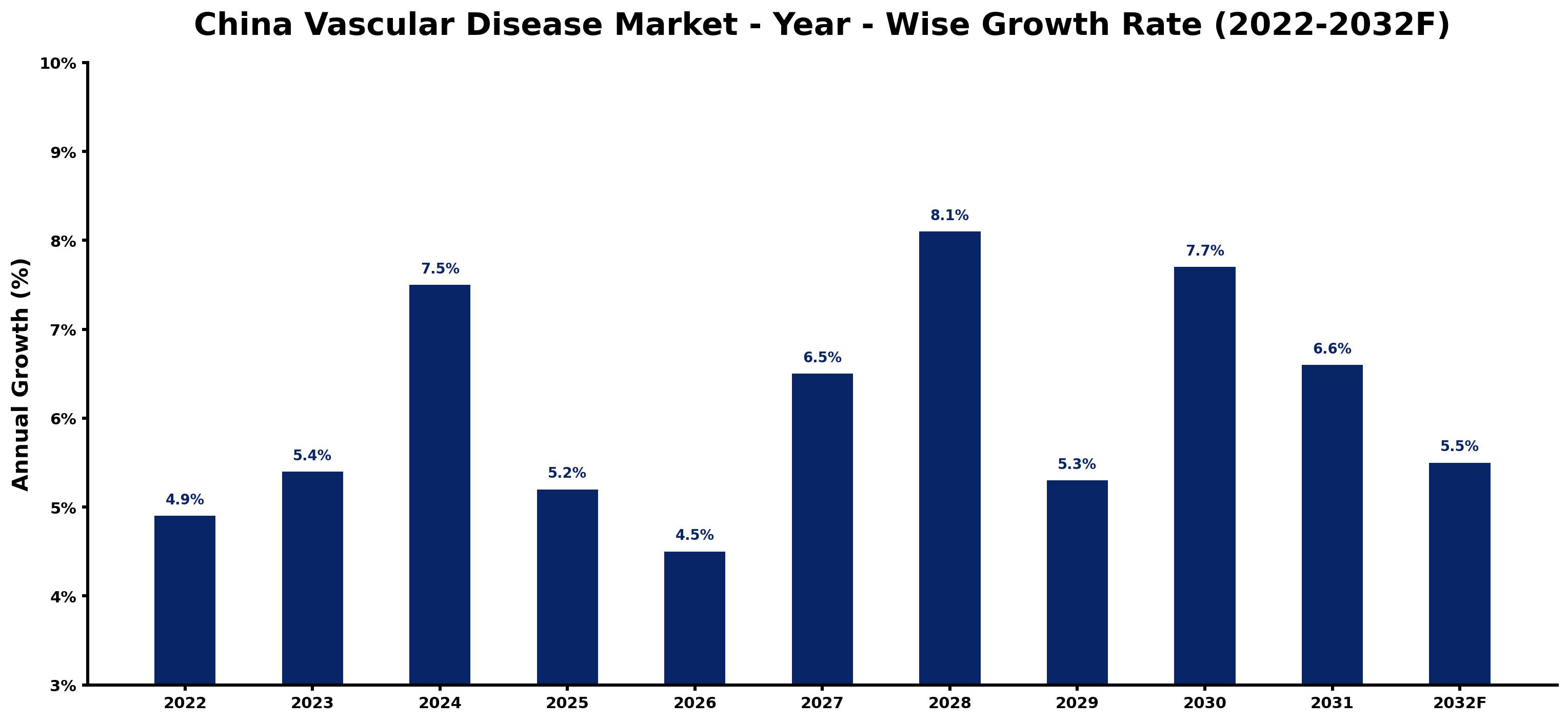
The following table presents the estimated annual growth rate for each year together with the principal factor influencing market performance.
| Year | Estimated Annual Growth (%) | Market Rationale |
| 2022 | 4.9 | The population faced significant health challenges, with a high prevalence of vascular diseases. |
| 2023 | 5.4 | The rise in lifestyle-related conditions increased the demand for vascular disease treatments. |
| 2024 | 7.5 | Growing awareness of cardiovascular health drove higher patient visits to healthcare facilities. |
| 2025 | 5.2 | A slowdown in growth occurred as hospitals adjusted to new treatment protocols and patient volumes. |
| 2026 | 4.5 | Healthcare providers continued to adapt to evolving treatment standards, impacting growth rates. |
| 2027 | 6.5 | The introduction of new diagnostic technologies boosted demand for vascular disease management. |
| 2028 | 8.1 | Increased funding for healthcare infrastructure led to a peak in treatment capabilities. |
| 2029 | 5.3 | A slowdown in growth was noted as the market stabilised after peak investments. |
| 2030 | 7.7 | The government's health initiatives spurred renewed interest in vascular disease treatments. |
| 2031 | 6.6 | A slowdown in growth reflected adjustments in healthcare delivery and patient management. |
| 2032 | 5.5 | Continued focus on improving healthcare access maintained steady growth in the market. |
Note: Market size estimations and growth projections presented in this report are based on 6Wresearch's proprietary forecasting methodology, utilizing the latest available industry data, government publications, and primary research inputs.
China Vascular Disease Market Synopsis
Vascular Disease in China includes conditions that affect blood vessels, diagnosed through imaging and treated with both surgical and non-surgical methods. The market is propelled by an ageing population and a surge in lifestyle-related health issues. Government initiatives like the "Healthy China 2030" programme focus on improving cardiovascular health and lowering mortality rates. These elements contribute to the growth of the vascular disease market in China.
Market Dynamics Impact Analysis (2026–2032)
| Factor | Type | Impact | Primary Segment Affected |
| Aging population increases the prevalence of vascular conditions requiring treatment. | Driver | High | Peripheral Artery Disease |
| Rising healthcare investments enhance treatment facilities and patient access. | Driver | High | Hospitals |
| The government initiative aims to improve healthcare access in rural areas. | Opportunity | High | Peripheral Artery Disease |
| Growing awareness of cardiovascular health drives demand for preventive measures. | Opportunity | Medium | Cardiology Centers |
| Limited access to advanced treatment options in rural areas hampers growth. | Restraint | High | Surgical Units |
| High costs associated with advanced vascular treatments deter some patients. | Restraint | Medium | Clinics |
| The vascular disease market in China faces challenges due to regulatory delays. | Challenge | High | Angioplasty/Stenting |
| Competition among healthcare providers can limit market share for some facilities. | Challenge | Medium | Cardiology Centers |
Evaluation of Drivers in China Vascular Disease Market (2026–2032)
The table below links each growth driver to the segment it affects and the evidence for it.
| Drivers | Primary Segment Affected | Why It Matters (Evidence) |
| Increasing prevalence of hypertension drives demand for vascular treatments. | Venous Thromboembolism | Around 27.9% of the population is affected by hypertension, increasing treatment needs. |
| Technological advancements in imaging improve diagnosis accuracy. | CT/MRI | The widespread use of CT/MRI enhances the ability to detect vascular diseases. |
| Government funding for healthcare facilities boosts treatment capacity. | Hospitals | Over 30,000 hospitals are equipped to handle vascular disease treatments. |
| Growing patient awareness leads to more diagnoses and treatments. | Peripheral Artery Disease | The average age of diagnosed patients is 65 years, highlighting the need for care. |
| Rising diabetes prevalence increases vascular disease risks. | Aneurysms | In 2023, diabetes prevalence reached 11.6%, contributing to vascular health issues. |
Growth across the Vascular Disease market in China is anchored in increasing prevalence of hypertension, rising healthcare investments, and technological advancements in diagnosis. Approximately 27.9% of the population suffers from hypertension, necessitating more vascular treatments. The healthcare capacity is expanding with over 30,000 hospitals equipped for vascular disease management. The average age of patients diagnosed with peripheral artery disease is 65 years, driving demand for specialised care. Additionally, diabetes prevalence reached 11.6% in 2023, increasing the urgency for effective vascular disease management.
Evaluation of Restraints in China Vascular Disease Market
The table below lists the restraints and the evidence behind each.
| Market Restraint | Primary Segment Affected | Why It Matters (Evidence) |
| Limited access to advanced treatment options in rural areas hampers growth. | Surgical Units | Many rural areas lack specialised surgical facilities, affecting patient outcomes. |
| High costs associated with advanced vascular treatments deter some patients. | Clinics | Patients may avoid necessary procedures due to financial constraints. |
| Regulatory delays can slow down the introduction of new treatments. | Angioplasty/Stenting | Approval processes can extend timelines for new medical technologies. |
| Intense competition among healthcare providers can limit market share for some facilities. | Cardiology Centers | Competition may lead to price wars, affecting profitability. |
| Insufficient training for healthcare professionals limits treatment effectiveness. | Hospitals | A lack of specialised training can hinder the quality of care provided. |
China Vascular Disease Market Challenges
In the China vascular disease market, producers face outdated technology, as many hospitals lack modern imaging equipment, leading to delayed diagnoses and extended treatment times for patients. Buyers struggle with high treatment costs, with vascular surgeries averaging 50,000 yuan, which can discourage patients from pursuing necessary interventions. Competition among over 30,000 hospitals intensifies, resulting in price wars that may compromise the quality of care provided to patients. Supply chain issues arise from limited access to essential medical supplies, causing treatment delays and increased wait times for patients needing urgent vascular care.
Trends in the China Vascular Disease Market
Buyers and suppliers in the China Vascular Disease Market are adjusting to the following trends.
- Shift Towards Advanced Imaging Techniques: Hospitals in China are increasingly adopting advanced imaging techniques like CT and MRI for vascular disease diagnosis. In 2023, over 1 million cardiac catheterization procedures were performed, reflecting a growing reliance on these technologies.
- Increased Focus on Preventive Care: The "Healthy China 2030" initiative, launched in 2023, promotes preventive measures for cardiovascular health. This programme aims to reduce cardiovascular disease mortality by 25%, encouraging healthcare providers to improve preventive services.
- Expansion of Rural Healthcare Facilities: Since 2023, the "Rural Health Improvement Program" has been upgrading vascular treatment facilities in underserved areas. This initiative aims to improve access to care for millions, addressing disparities in healthcare delivery.
- Rising Demand for Non-Surgical Treatments: With a growing preference for less invasive procedures, the market for anticoagulation therapy is expanding. Anticoagulation therapy is expected to grow at a CAGR of 8.6% from 2026 to 2032, reflecting changing patient preferences.
Investment Opportunities in the China Vascular Disease Market
Some of the investment opportunities in the China Vascular Disease Market are mentioned below.
- Healthcare Infrastructure Investment: Now is an opportune time for investment in healthcare infrastructure, with the government allocating funds for facility upgrades. The "Rural Health Improvement Program" aims to improve vascular treatment facilities in underserved areas.
- Partnerships with Local Healthcare Providers: Establishing joint ventures with local hospitals can facilitate market entry. Collaborating with hospitals, which hold a 38% market share, will improve access to patients in need of vascular treatments.
- Supply of Diagnostic Equipment: The demand for advanced diagnostic equipment is rising, particularly in imaging technologies. Hospitals are seeking suppliers for CT/MRI machines to improve diagnosis accuracy and treatment outcomes.
- Expansion of Treatment Options: With increasing patient numbers, there is a growing need for diverse treatment options. Investing in non-surgical treatments like anticoagulation therapy can effectively meet this demand.
Government Initiatives in the China Vascular Disease Market
The "Cardiovascular Disease Prevention and Treatment Plan" launched by the National Health Commission in 2021 impacts vascular disease management. This plan aims to improve healthcare access and treatment protocols for patients. It mandates regular updates to treatment guidelines, ensuring alignment with current medical standards. Additionally, the "National Health Insurance Plan" was updated in 2020 to expand coverage for vascular disease treatments, improving patient access to necessary care. This policy framework supports the ongoing development of healthcare services across the nation.
The Ministry of Health oversees the implementation of several key initiatives, including the "National Cardiovascular Disease Control Strategy" approved in 2022. This strategy targets a 20% reduction in cardiovascular disease mortality by 2030, guiding funding allocations for healthcare facilities. Furthermore, the "China Cardiovascular Health Initiative" established in 2022 promotes awareness and prevention, supporting educational programs for healthcare providers. These initiatives ensure that vascular disease patients receive timely and effective treatment, improving overall health outcomes.
Future Insight of the China Vascular Disease Market
By 2032, buyers and suppliers in the China vascular disease market can expect transformative changes driven by the "Healthy China 2030" initiative, which aims to reduce cardiovascular disease mortality by 25%. The introduction of advanced imaging technologies will facilitate faster diagnoses, improving patient outcomes. The government's subsidy program for vascular surgeries will enhance treatment affordability, motivating more patients to seek care. With over 1 million cardiac catheterization procedures performed in 2022, the demand for efficient healthcare solutions will continue to rise.
Market Segmentation Analysis
The report offers a comprehensive study of the following market segments and their leading categories in the market.
By Disease Type – Peripheral Artery Disease Dominated, Aneurysms Expected to Grow Fastest
According to Bhawna Singh, Assistant Manager at 6Wresearch, in 2025, Peripheral Artery Disease led the disease type split with a 48% share. Peripheral artery disease affects a large segment of China's aging population, necessitating specialised treatment. The extensive network of over 30,000 hospitals ensures that patients receive timely and effective care for this common condition. Aneurysms are set to record the highest CAGR in this split, 7.5% over 2026–2032. Aneurysms are becoming more frequently diagnosed due to improved imaging techniques and heightened public awareness, resulting in a notable increase in cases. This urgent condition requires immediate medical attention, which is driving its rapid growth in the market. Suppliers should focus on developing targeted therapies for aneurysms to meet the rising demand in the vascular disease market.
By Diagnosis Method – CT/MRI Dominated, Doppler Ultrasound Expected to Grow Fastest
CT/MRI held a 41% share of the China Vascular Disease Market by diagnosis method in 2025. CT/MRI is the preferred diagnostic method for vascular diseases in China, offering detailed imaging that is crucial for accurate diagnosis and treatment planning. Its extensive use across hospitals reinforces its dominant market share in the vascular disease sector. Doppler Ultrasound is projected to grow fastest, at a CAGR of 8.6% during 2026–2032. Doppler ultrasound is gaining traction due to its essential role in assessing blood flow, which is vital for timely diagnosis of vascular conditions. The increasing number of procedures performed is significantly contributing to its growth in the market. Healthcare providers must consider investing in advanced Doppler ultrasound technology to effectively address the growing demand for vascular disease diagnosis.
By Treatment Approach – Angioplasty/Stenting Dominated, Anticoagulation Therapy Expected to Grow Fastest
Angioplasty/Stenting took a 33% share of treatment approach in 2025, more than any other category. Angioplasty and stenting are the preferred treatment options for narrowed arteries in China, recognised for their effectiveness and minimal invasiveness. This approach is widely utilised in hospitals, which are the main facilities for vascular disease treatment. Over 2026–2032, Anticoagulation Therapy is expected to post the fastest growth, at a CAGR of 8.6%. Anticoagulation therapy is becoming increasingly essential for managing thromboembolic conditions, particularly as diabetes rates rise, heightening vascular disease risks. This growing necessity is driving rapid expansion in this treatment segment. Providers need to ensure a reliable supply of anticoagulation therapies to meet the surging demand stemming from rising vascular disease cases.
By End User – Hospitals Dominated, Cardiology Centers Expected to Grow Fastest
With a 38% revenue share in 2025, Hospitals was the largest end user category. Hospitals serve as the primary treatment centres for vascular diseases in China, equipped with the necessary resources and expertise to handle a significant volume of cases. Their established infrastructure plays a key role in maintaining their substantial market share. The quickest growth will come from Cardiology Centers, forecast to expand at a CAGR of 7.3% between 2026 and 2032. Cardiology centers are rapidly expanding as they focus on cardiovascular health, reflecting the rising incidence of vascular diseases. Their specialised approach to managing these conditions is propelling their market share upwards. Suppliers should direct their efforts towards cardiology centers with tailored solutions to capitalise on their growing role in vascular disease management.
Key Attractiveness of the Report
- 10 Years of Market Numbers
- Historical Data Starting from 2022 to 2025
- Base Year 2025
- Forecast Data until 2032
- Key Performance Indicators Impacting the Market
- Major Upcoming Developments and Projects
Key Highlights of the Report:
- China Vascular Disease Market Outlook
- Market Size of China Vascular Disease Market, 2025
- Forecast of China Vascular Disease Market, 2032
- Historical Data and Forecast of China Vascular Disease Revenues & Volume for the Period 2022 - 2032F
- China Vascular Disease Market Trend Evolution
- China Vascular Disease Market Drivers and Challenges
- China Vascular Disease Price Trends
- China Vascular Disease Porter's Five Forces
- China Vascular Disease Industry Life Cycle
- Historical Data and Forecast of China Vascular Disease Market Revenues & Volume By Disease Type for the Period 2022 - 2032F
- Historical Data and Forecast of China Vascular Disease Market Revenues & Volume By Peripheral Artery Disease for the Period 2022 - 2032F
- Historical Data and Forecast of China Vascular Disease Market Revenues & Volume By Aneurysms for the Period 2022 - 2032F
- Historical Data and Forecast of China Vascular Disease Market Revenues & Volume By Venous Thromboembolism for the Period 2022 - 2032F
- Historical Data and Forecast of China Vascular Disease Market Revenues & Volume By Carotid Artery Disease for the Period 2022 - 2032F
- Historical Data and Forecast of China Vascular Disease Market Revenues & Volume By Diagnosis Method for the Period 2022 - 2032F
- Historical Data and Forecast of China Vascular Disease Market Revenues & Volume By ABI/Ultrasound for the Period 2022 - 2032F
- Historical Data and Forecast of China Vascular Disease Market Revenues & Volume By CT/MRI for the Period 2022 - 2032F
- Historical Data and Forecast of China Vascular Disease Market Revenues & Volume By D-dimer Test for the Period 2022 - 2032F
- Historical Data and Forecast of China Vascular Disease Market Revenues & Volume By Doppler Ultrasound for the Period 2022 - 2032F
- Historical Data and Forecast of China Vascular Disease Market Revenues & Volume By Treatment Approach for the Period 2022 - 2032F
- Historical Data and Forecast of China Vascular Disease Market Revenues & Volume By Angioplasty/Stenting for the Period 2022 - 2032F
- Historical Data and Forecast of China Vascular Disease Market Revenues & Volume By Graft Implant for the Period 2022 - 2032F
- Historical Data and Forecast of China Vascular Disease Market Revenues & Volume By Anticoagulation Therapy for the Period 2022 - 2032F
- Historical Data and Forecast of China Vascular Disease Market Revenues & Volume By Endarterectomy/Stents for the Period 2022 - 2032F
- Historical Data and Forecast of China Vascular Disease Market Revenues & Volume By End User for the Period 2022 - 2032F
- Historical Data and Forecast of China Vascular Disease Market Revenues & Volume By Hospitals for the Period 2022 - 2032F
- Historical Data and Forecast of China Vascular Disease Market Revenues & Volume By Surgical Units for the Period 2022 - 2032F
- Historical Data and Forecast of China Vascular Disease Market Revenues & Volume By Clinics for the Period 2022 - 2032F
- Historical Data and Forecast of China Vascular Disease Market Revenues & Volume By Cardiology Centers for the Period 2022 - 2032F
- China Vascular Disease Import Export Trade Statistics
- Market Opportunity Assessment By Disease Type
- Market Opportunity Assessment By Diagnosis Method
- Market Opportunity Assessment By Treatment Approach
- Market Opportunity Assessment By End User
- China Vascular Disease Top Companies Market Share
- China Vascular Disease Competitive Benchmarking By Technical and Operational Parameters
- China Vascular Disease Company Profiles
- China Vascular Disease Key Strategic Recommendations
Market Covered
This report examines the market across the segments below.
By Disease Type
- Peripheral Artery Disease
- Aneurysms
- Venous Thromboembolism
- Carotid Artery Disease
By Diagnosis Method
- ABI/Ultrasound
- CT/MRI
- D-dimer Test
- Doppler Ultrasound
By Treatment Approach
- Angioplasty/Stenting
- Graft Implant
- Anticoagulation Therapy
- Endarterectomy/Stents
By End User
- Hospitals
- Surgical Units
- Clinics
- Cardiology Centers































