Colombia Physical Security Market Size & Growth Rate (2026-2032)
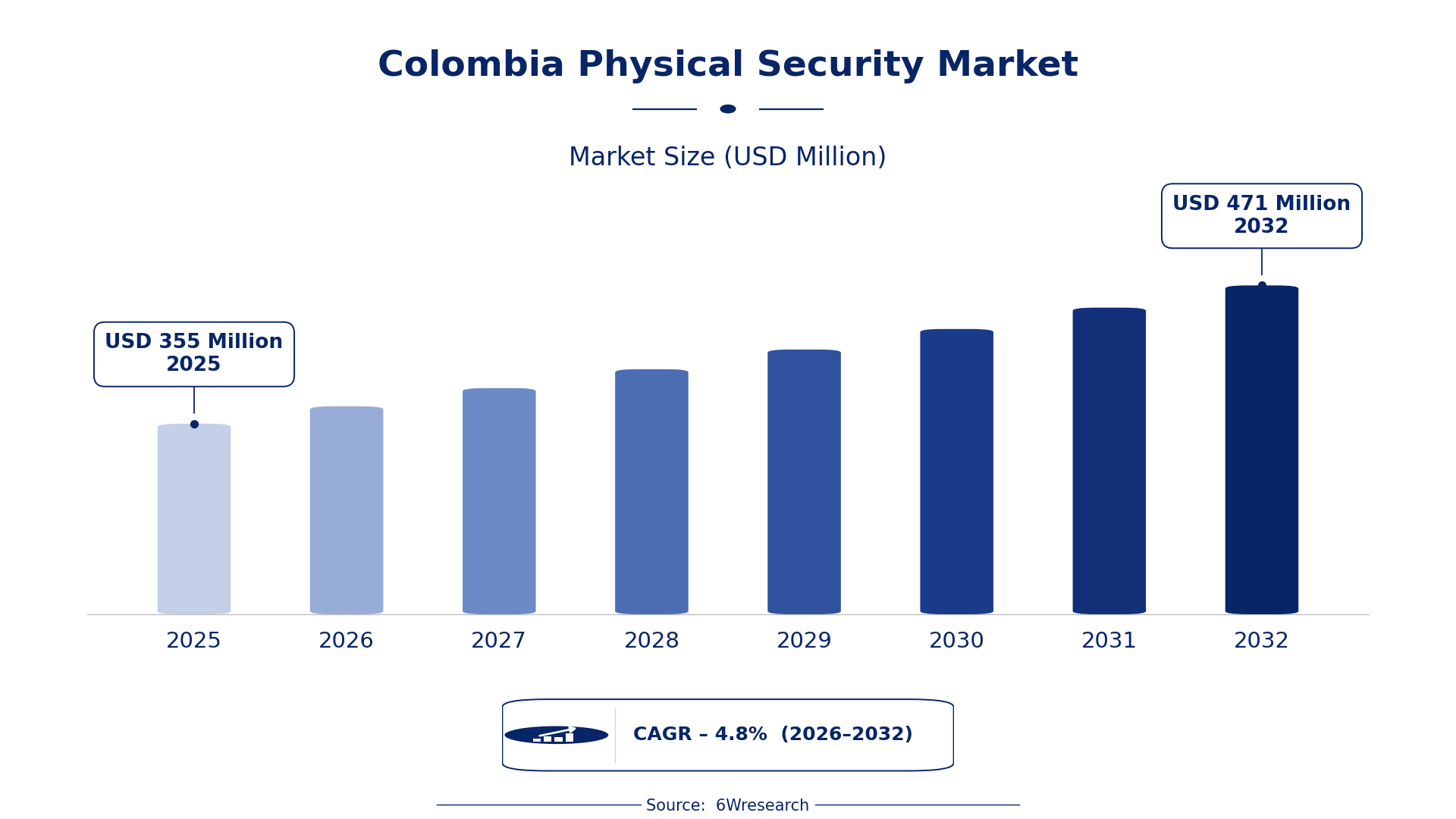
The Colombia Physical Security Market was estimated at USD 355 Million in 2025 and is projected to reach USD 471 Million by 2032, growing at a CAGR of 4.8% from 2026 to 2032.
Colombia Physical Security Market Synopsis
In recent years, the Colombia Physical Security Market has gained momentum, propelled by rising safety concerns among businesses and residents. Increasing crime rates and heightened awareness of security threats have catalyzed a shift towards investing in advanced security systems.
As the market evolves, technological advancements in surveillance and access control solutions are playing a crucial role in shaping its future. This trend indicates a strong demand for comprehensive security strategies that address both present and emerging threats, setting the stage for sustained growth.
Colombia Physical Security Market Year-wise Growth Rate and Key Drivers
This graph illustrates the annual growth rates of the Colombia Physical Security Market from 2021 to 2032, highlighting a steady upward trajectory and projected expansion over the forecast period.
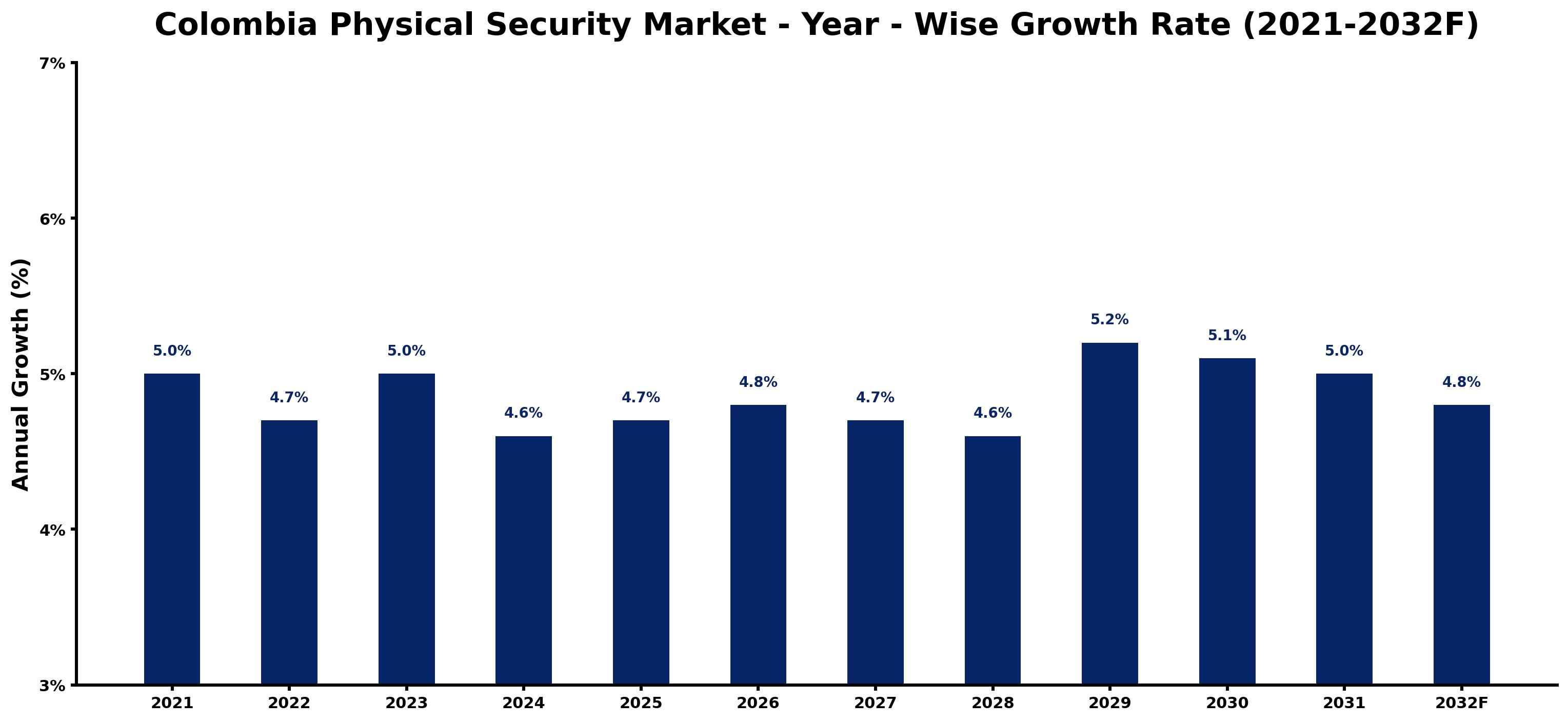
The table below presents the year‑wise growth rates along with the key drivers influencing the market
| Year | Growth Rate | Major Drivers |
| 2021 | 5.0% | Increased crime rates driving demand for security services. |
| 2022 | 4.7% | Government initiatives to enhance public safety measures. |
| 2023 | 5.0% | Growing concerns over personal safety in urban areas. |
| 2024 | 4.6% | Expanding investments in residential security systems. |
| 2025 | 4.7% | Rise in security technology adoption among businesses. |
| 2026 | 4.8% | Higher government spending on public security infrastructure. |
| 2027 | 4.7% | Increased corporate security budgets due to theft concerns. |
| 2028 | 4.6% | New regulations requiring improved workplace safety standards. |
| 2029 | 5.2% | Emerging technologies boosting physical surveillance capabilities. |
| 2030 | 5.1% | Increased public awareness of cybersecurity and physical threats. |
| 2031 | 5.0% | Rising foreign investment driving demand for secure facilities. |
| 2032 | 4.8% | Enhanced anti-terrorism measures promoting security system upgrades. |
Note: Market size estimations and growth projections presented in this report are based on 6Wresearch's proprietary forecasting methodology, utilizing the latest available industry data, government publications, and primary research inputs.
Colombia Physical Security Market Key Takeaways
Below are some of the specific key takeaways from the market, including:
- The increasing adoption of video surveillance systems is a primary driver of market growth.
- Government initiatives focusing on public safety are influencing investment in security solutions.
- Technological innovations, such as integration with AI, are enhancing security operations.
- Demand for mobile security solutions is growing, reflecting the need for flexibility in monitoring.
- Unique geographical challenges necessitate tailored security measures across different regions.
Evaluation of Restraints in Colombia Physical Security Market
One of the pressing constraints in the Colombia Physical Security Market stems from the high levels of crime and violence that necessitate substantial investment in security measures. The presence of organized crime groups and drug trafficking activities poses ongoing risks to both individuals and businesses. Additionally, Colombia’s diverse geography complicates the implementation of uniform security solutions. This variability requires a nuanced approach that accommodates local conditions, contributing to increased costs for security providers and clients alike. Regulatory complexities further challenge market participants as they strive to comply with local laws while delivering effective solutions.
Colombia Physical Security Market Trends
The Colombia Physical Security Market is witnessing a clear trend towards the adoption of cutting-edge technologies. Video surveillance and access control systems have become essential components of security strategies, as organizations prioritize the safety of their assets and personnel. The integration of artificial intelligence within security solutions is enhancing monitoring capabilities and response times.
Mobile security solutions and remote monitoring services are gaining traction, allowing businesses to adapt to evolving security needs with greater flexibility. As threats continue to evolve, the demand for interconnected security systems that can effectively manage various components of physical security is on the rise.
Colombia Physical Security Market Opportunities
Investment opportunities in the Colombia Physical Security Market are expanding as both public and private sectors respond to the rising need for advanced security measures. Key areas ripe for investment include video surveillance systems, access control technology, and integrated security management platforms.
The market’s growth is further driven by government initiatives aimed at enhancing public safety and infrastructure security. Strategic partnerships with local firms can facilitate the introduction of innovative security solutions tailored to Colombia’s specific requirements. The increasing demand for smart technologies also presents avenues for investors to develop cutting-edge solutions that meet market expectations.
Government Initiatives in the Colombia Physical Security Market
Government policies significantly influence the Colombia Physical Security Market, particularly in response to ongoing challenges related to crime and public safety. The establishment of specialized security forces and initiatives to modernize surveillance and border control systems underscores a commitment to enhancing overall security. Collaboration between the public and private sectors is being prioritized to effectively tackle security challenges.
- A national initiative launched in early 2025 aimed at modernizing surveillance systems across urban areas.
- Current efforts include the deployment of specialized security units by the National Police to address organized crime.
- Planned investments in a public-private partnership expected to enhance security infrastructure by 2028.
- The ongoing rollout of advanced biometric identification systems in government facilities, started in mid-2025, to improve access control.
- A recently completed regulatory framework aimed at improving transparency and compliance in security services.
Future Insights of the Colombia Physical Security Market
Looking ahead to 2026-2032, the Colombia Physical Security Market is set to witness substantial growth driven by continuous safety concerns and urbanization. Increased demand for security solutions is anticipated across commercial, residential, and governmental sectors.
Technological advancements, particularly in AI and cloud-based platforms, are expected to revolutionize how security measures are implemented and monitored. As businesses and individuals prioritize the importance of safety, the market will likely expand to accommodate a variety of innovative security solutions.
Colombia Physical Security Market Latest Developments
Over the past 12-14 months, the Colombia Physical Security Market has seen a flurry of activity, indicating a strong push towards enhanced security solutions. Companies are increasingly focused on integrating advanced technologies into their offerings to meet the rising security demands of various sectors.
- A major technology vendor announced a partnership in early 2025 to implement AI-driven surveillance systems in key urban areas.
- In late 2025, a leading regional operator completed a comprehensive upgrade of its access control systems to include biometric features.
- Current initiatives are underway to establish remote monitoring services aimed at businesses with limited on-site staff, initiated in Q1 2025.
- Upcoming plans for 2026 include a nationwide campaign to promote awareness about the importance of physical security in residential areas.
- A recently launched project aimed at enhancing collaboration between security agencies and local communities is currently in its pilot phase.
Colombia Physical Security Market - Key Attractiveness of the Report
- 10 Years of Market Numbers
- Historical Data Starting from 2022 to 2025
- Base Year: 2025
- Forecast Data until 2032
- Key Performance Indicators Impacting the Market
- Major Upcoming Developments and Projects
Key Highlights of the Report:
- Colombia Physical Security Market Outlook
- Market Size of Colombia Physical Security Market, 2025
- Forecast of Colombia Physical Security Market, 2032
- Historical Data and Forecast of Colombia Physical Security Revenues & Volume for the Period 2022-2032F
- Colombia Physical Security Market Trend Evolution
- Colombia Physical Security Market Drivers and Challenges
- Colombia Physical Security Price Trends
- Colombia Physical Security Porter's Five Forces
- Colombia Physical Security Industry Life Cycle
- Historical Data and Forecast of Colombia Physical Security Market Revenues & Volume By Component for the Period 2022-2032F
- Historical Data and Forecast of Colombia Physical Security Market Revenues & Volume By Systems (PACS, PSIM, PIAM, Video Surveillance, Fire and Life Safety) for the Period 2022-2032F
- Historical Data and Forecast of Colombia Physical Security Market Revenues & Volume By Services for the Period 2022-2032F
- Historical Data and Forecast of Colombia Physical Security Market Revenues & Volume By Vertical for the Period 2022-2032F
- Historical Data and Forecast of Colombia Physical Security Market Revenues & Volume By BFSI for the Period 2022-2032F
- Historical Data and Forecast of Colombia Physical Security Market Revenues & Volume By Government for the Period 2022-2032F
- Historical Data and Forecast of Colombia Physical Security Market Revenues & Volume By Retail for the Period 2022-2032F
- Historical Data and Forecast of Colombia Physical Security Market Revenues & Volume By Transportation for the Period 2022-2032F
- Historical Data and Forecast of Colombia Physical Security Market Revenues & Volume By Residential for the Period 2022-2032F
- Historical Data and Forecast of Colombia Physical Security Market Revenues & Volume By Telecom and IT for the Period 2022-2032F
- Historical Data and Forecast of Colombia Physical Security Market Revenues & Volume By Other Verticals (Healthcare, Manufacturing, Energy and Utilities, and Education). for the Period 2022-2032F
- Historical Data and Forecast of Colombia Physical Security Market Revenues & Volume By Organization Size for the Period 2022-2032F
- Historical Data and Forecast of Colombia Physical Security Market Revenues & Volume By SMEs for the Period 2022-2032F
- Historical Data and Forecast of Colombia Physical Security Market Revenues & Volume By Large Enterprises for the Period 2022-2032F
- Colombia Physical Security Import Export Trade Statistics
- Market Opportunity Assessment By Component
- Market Opportunity Assessment By Vertical
- Market Opportunity Assessment By Organization Size
- Colombia Physical Security Top Companies Market Share
- Colombia Physical Security Competitive Benchmarking By Technical and Operational Parameters
- Colombia Physical Security Company Profiles
- Colombia Physical Security Key Strategic Recommendations






































