Cyprus Caffeine Market Size (2020-2030)
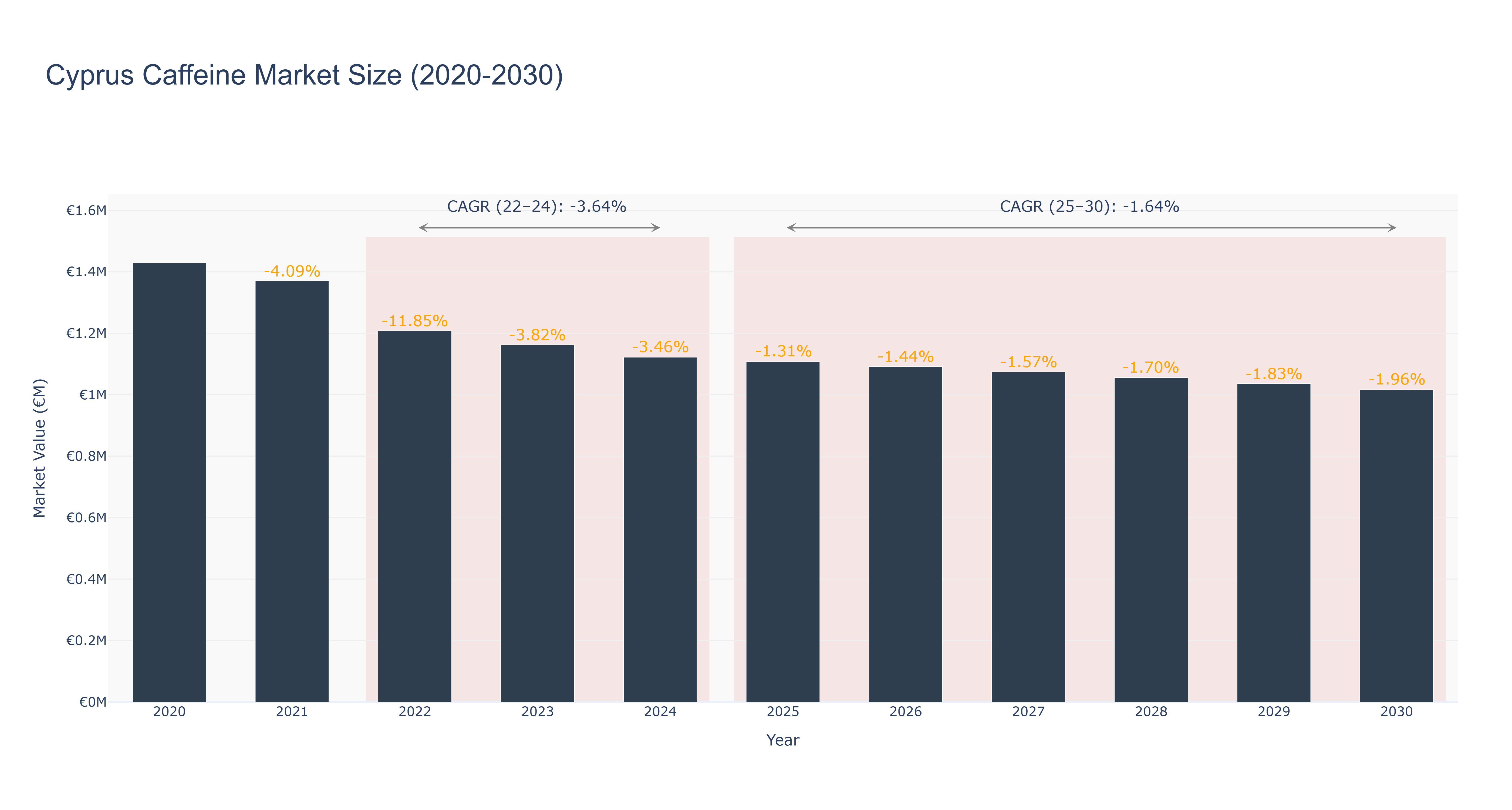
The Cyprus Caffeine Market experienced a peak market size of €1.43 million in 2020; however, it has since seen a decline, with actual market sizes shrinking to €1.12 million by 2024, reflecting a negative compound annual growth rate (CAGR) of -3.64% from 2022 to 2024. The market's contraction can be attributed to shifting consumer preferences towards healthier beverage options and increased awareness of caffeine's health effects. Looking ahead, the forecasted period from 2025 to 2030 anticipates a gradual decline in market size to €1.02 million, with a less steep CAGR of -1.64%. This outlook suggests a stabilization trend, influenced by potential innovations in caffeine products and increasing demand for functional beverages. As consumers continue to seek healthier alternatives, the market may see opportunities for growth through product diversification and reformulation efforts.
Cyprus Caffeine Market: Production & Trade Performance (2019-2025)
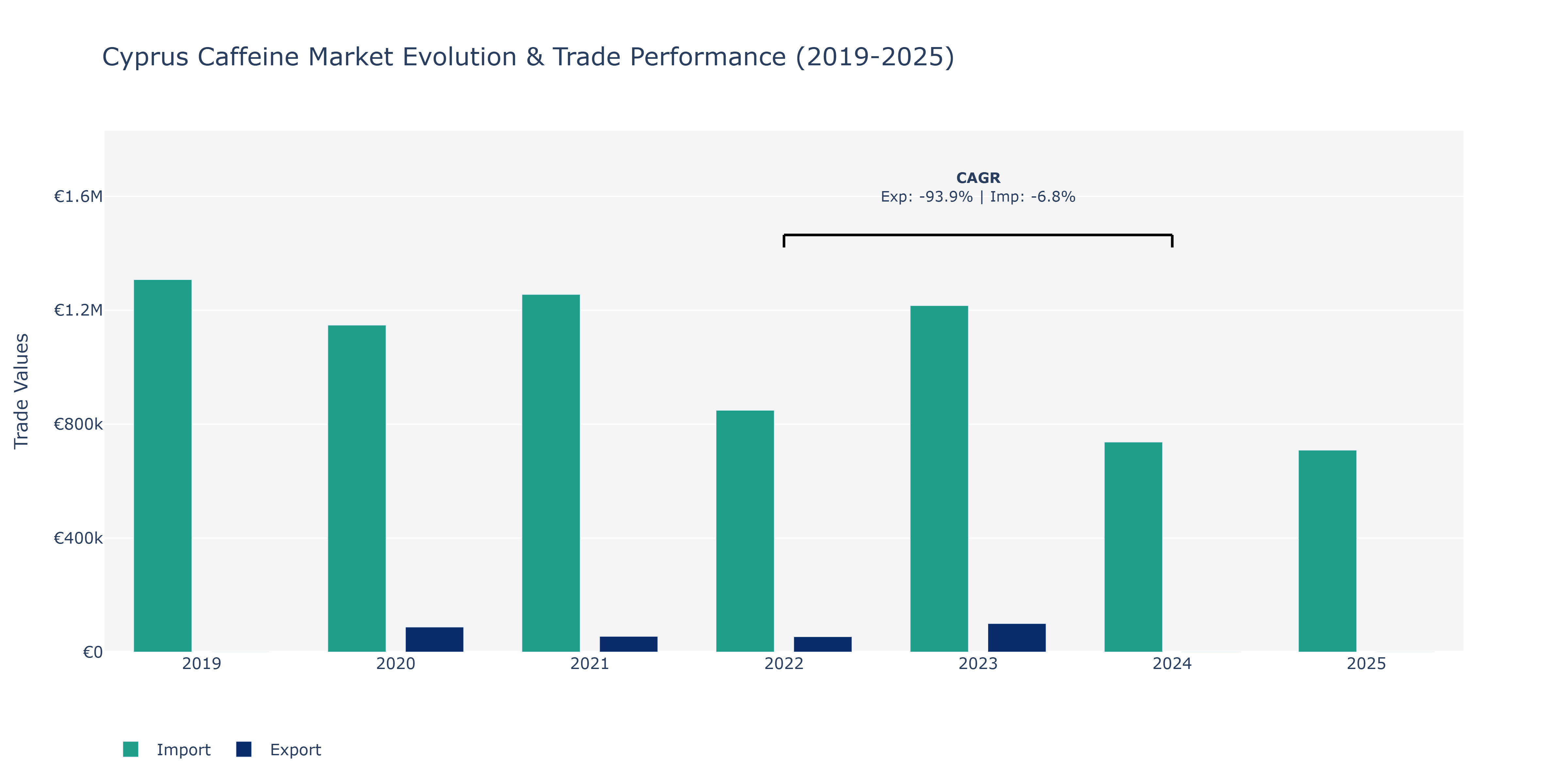
The Cyprus Caffeine Market saw a fluctuating trend in both Exports and Imports from 2019 to 2025. Exports experienced a notable decline from €87.73 million in 2020 to a low of €0.203 million in 2024, before slightly recovering to €0.153 million in 2025. In contrast, Imports fluctuated, with a peak of €1.256 billion in 2021 and dropping to €0.708 billion in 2025. The declining trend in Exports could be attributed to shifts in consumer preferences towards local products or increased competition. For Imports, the peak in 2021 might be explained by higher demand for foreign caffeine sources, driven by a growing coffee culture or changes in domestic production capacity. The market may benefit from strategic partnerships with international suppliers or focusing on product diversification to stabilize trade flows.
Cyprus Caffeine Market Overview
The caffeine market in Cyprus is driven by its widespread use in the food and beverage industry, particularly in the production of coffee, tea, energy drinks, and soft drinks. The growing demand for caffeinated products among consumers seeking energy-boosting beverages is fueling market growth.
Drivers of the market
The caffeine market in Cyprus is primarily driven by the increasing consumption of beverages such as coffee, tea, and energy drinks. As lifestyles become busier and consumers seek convenient energy-boosting options, demand for caffeine-containing products is rising. Additionally, the use of caffeine in pharmaceuticals and cosmetics is further fueling market growth.
Challenges of the market
The caffeine market in Cyprus is impacted by fluctuating global prices for raw coffee beans and tea, the primary sources of caffeine. Additionally, growing health concerns over caffeine consumption are shifting consumer preferences towards decaffeinated alternatives.
Government Policy of the market
The Cypriot caffeine market is influenced by food safety regulations that are governed by both national policies and EU directives. Government oversight ensures that caffeine-containing products, especially in beverages and supplements, meet safety and labeling standards. Cyprus encourages local production and importation that complies with health and consumer protection laws.
Key Highlights of the Report:
- Cyprus Caffeine Market Outlook
- Market Size of Cyprus Caffeine Market, 2024
- Forecast of Cyprus Caffeine Market, 2031
- Historical Data and Forecast of Cyprus Caffeine Revenues & Volume for the Period 2021-2031
- Cyprus Caffeine Market Trend Evolution
- Cyprus Caffeine Market Drivers and Challenges
- Cyprus Caffeine Price Trends
- Cyprus Caffeine Porter`s Five Forces
- Cyprus Caffeine Industry Life Cycle
- Historical Data and Forecast of Cyprus Caffeine Market Revenues & Volume By Type for the Period 2021-2031
- Historical Data and Forecast of Cyprus Caffeine Market Revenues & Volume By Natural Caffeine for the Period 2021-2031
- Historical Data and Forecast of Cyprus Caffeine Market Revenues & Volume By Synthetic Caffeine for the Period 2021-2031
- Historical Data and Forecast of Cyprus Caffeine Market Revenues & Volume By Applications for the Period 2021-2031
- Historical Data and Forecast of Cyprus Caffeine Market Revenues & Volume By Pharmaceuticals for the Period 2021-2031
- Historical Data and Forecast of Cyprus Caffeine Market Revenues & Volume By Food for the Period 2021-2031
- Historical Data and Forecast of Cyprus Caffeine Market Revenues & Volume By Beverages for the Period 2021-2031
- Historical Data and Forecast of Cyprus Caffeine Market Revenues & Volume By Flavors and Fragrances for the Period 2021-2031
- Cyprus Caffeine Import Export Trade Statistics
- Market Opportunity Assessment By Type
- Market Opportunity Assessment By Applications
- Cyprus Caffeine Top Companies Market Share
- Cyprus Caffeine Competitive Benchmarking By Technical and Operational Parameters
- Cyprus Caffeine Company Profiles
- Cyprus Caffeine Key Strategic Recommendations






































