El Salvador Castor Oil Market Year-wise Growth Rate (2021-2031F)
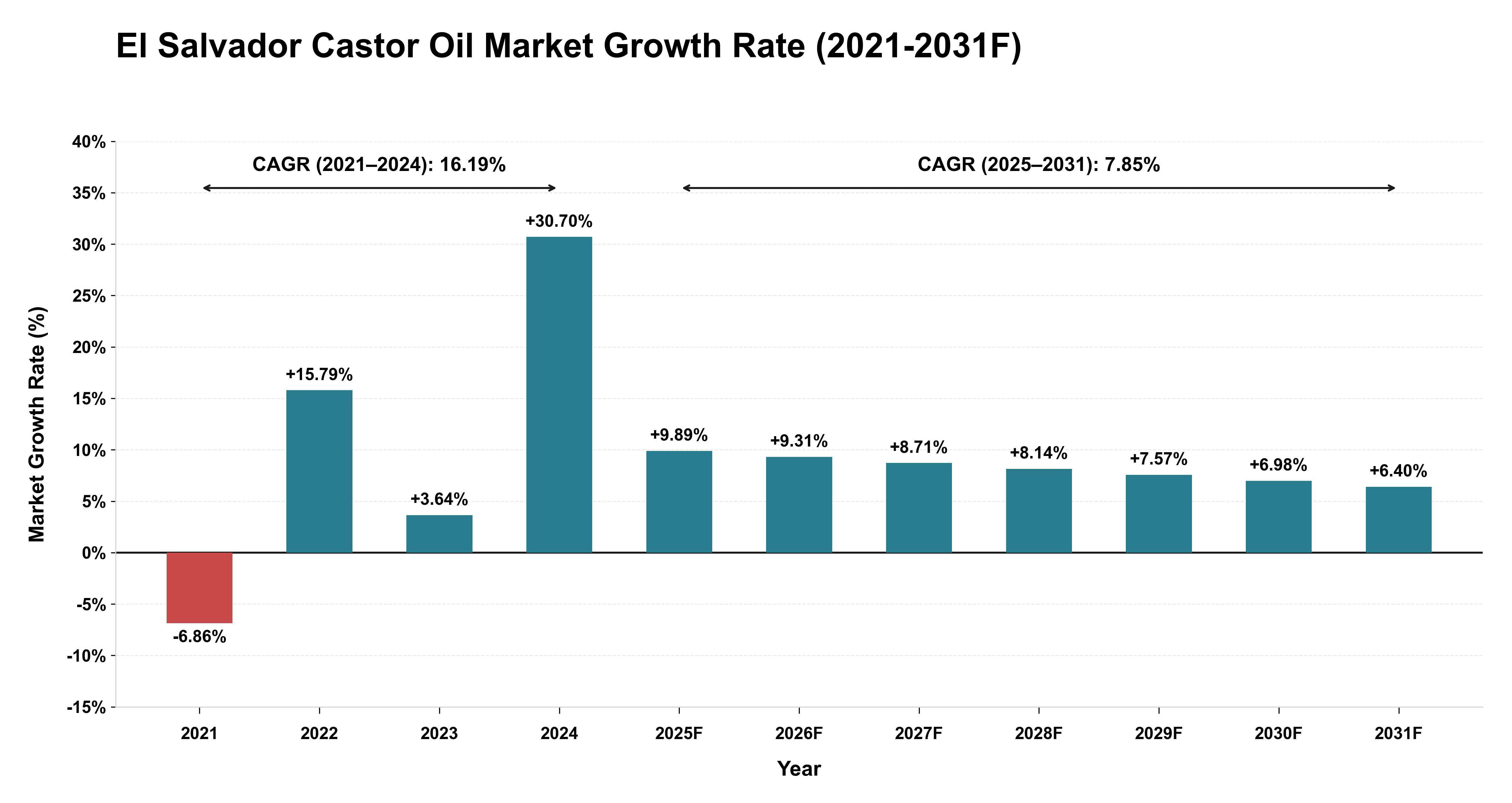
The El Salvador Castor Oil Market witnessed a tumultuous period from 2021 to 2024, marked by a significant downturn in 2021 with a -6.86% contraction, followed by a robust recovery in 2022 with a growth of 15.79%. This recovery momentum continued through 2024, culminating in a substantial growth of 30.70%, driven by increased demand from industries such as cosmetics, pharmaceuticals, and biodiesel production. Looking ahead to the forecast period of 2025-2031, the market is expected to stabilize with a more moderate annual growth rate of 7.85%, reflecting a maturing phase where the initial post-recovery surge tapers off. The deceleration in growth rates indicates a shift towards a more stable demand-supply equilibrium in the castor oil market, influenced by evolving consumer preferences and regulatory dynamics within El Salvador's economy.
El Salvador Castor Oil Market Overview
Castor oil is a versatile product used in a wide range of industries, including cosmetics, pharmaceuticals, and biofuels. The market for castor oil in El Salvador is expanding, driven by demand for natural ingredients in beauty and personal care products, as well as its use in industrial applications. With the rise of the natural and organic product movement, castor oil is becoming a key ingredient in hair care, skincare, and health supplements. The market for castor oil in El Salvador is also bolstered by its role in the production of biodiesel.
Drivers of the market
The castor oil market in El Salvador is experiencing growth due to the increasing use of castor oil in various industries, including cosmetics, pharmaceuticals, and manufacturing. Castor oils moisturizing, anti-inflammatory, and therapeutic properties make it a popular ingredient in beauty products and skin care. Additionally, the use of castor oil in the production of industrial lubricants and paints is driving market demand in the region.
Challenges of the market
Castor oil production faces challenges related to fluctuating raw material supply, limited processing infrastructure, and competition from other vegetable oils.
Government Policy of the market
In El Salvador, the castor oil market is shaped by agricultural policies that support the cultivation of castor beans and the processing of castor oil. Castor oil is used in a variety of industries, including pharmaceuticals, cosmetics, and biofuels. The government encourages the cultivation of castor plants through financial incentives and technical training for farmers. There are also regulations to ensure the quality and safety of castor oil, particularly in the pharmaceutical and cosmetic sectors. The government is also focused on improving the export potential of castor oil, ensuring that it meets international standards.
Key Highlights of the Report:
- El Salvador Castor Oil Market Outlook
- Market Size of El Salvador Castor Oil Market, 2024
- Forecast of El Salvador Castor Oil Market, 2031
- Historical Data and Forecast of El Salvador Castor Oil Revenues & Volume for the Period 2021-2031
- El Salvador Castor Oil Market Trend Evolution
- El Salvador Castor Oil Market Drivers and Challenges
- El Salvador Castor Oil Price Trends
- El Salvador Castor Oil Porter`s Five Forces
- El Salvador Castor Oil Industry Life Cycle
- Historical Data and Forecast of El Salvador Castor Oil Market Revenues & Volume By End Use for the Period 2021-2031
- Historical Data and Forecast of El Salvador Castor Oil Market Revenues & Volume By Pharmaceuticals for the Period 2021-2031
- Historical Data and Forecast of El Salvador Castor Oil Market Revenues & Volume By Lubricants for the Period 2021-2031
- Historical Data and Forecast of El Salvador Castor Oil Market Revenues & Volume By Paints for the Period 2021-2031
- Historical Data and Forecast of El Salvador Castor Oil Market Revenues & Volume By Soaps for the Period 2021-2031
- Historical Data and Forecast of El Salvador Castor Oil Market Revenues & Volume By Others for the Period 2021-2031
- El Salvador Castor Oil Import Export Trade Statistics
- Market Opportunity Assessment By End Use
- El Salvador Castor Oil Top Companies Market Share
- El Salvador Castor Oil Competitive Benchmarking By Technical and Operational Parameters
- El Salvador Castor Oil Company Profiles
- El Salvador Castor Oil Key Strategic Recommendations






































