Ghana Two Wheeler Market Summary
The ghana two wheeler market was estimated at USD 255 Million in 2025 and is projected to reach USD 337 Million by 2032, growing at a CAGR of 4.5% from 2026 to 2032.
Ghana Two Wheeler Market Year-wise Growth Rate and Key Drivers
This graph highlights how the Ghana Two Wheeler Market has steadily grown over the past five years, supported by major growth factors.
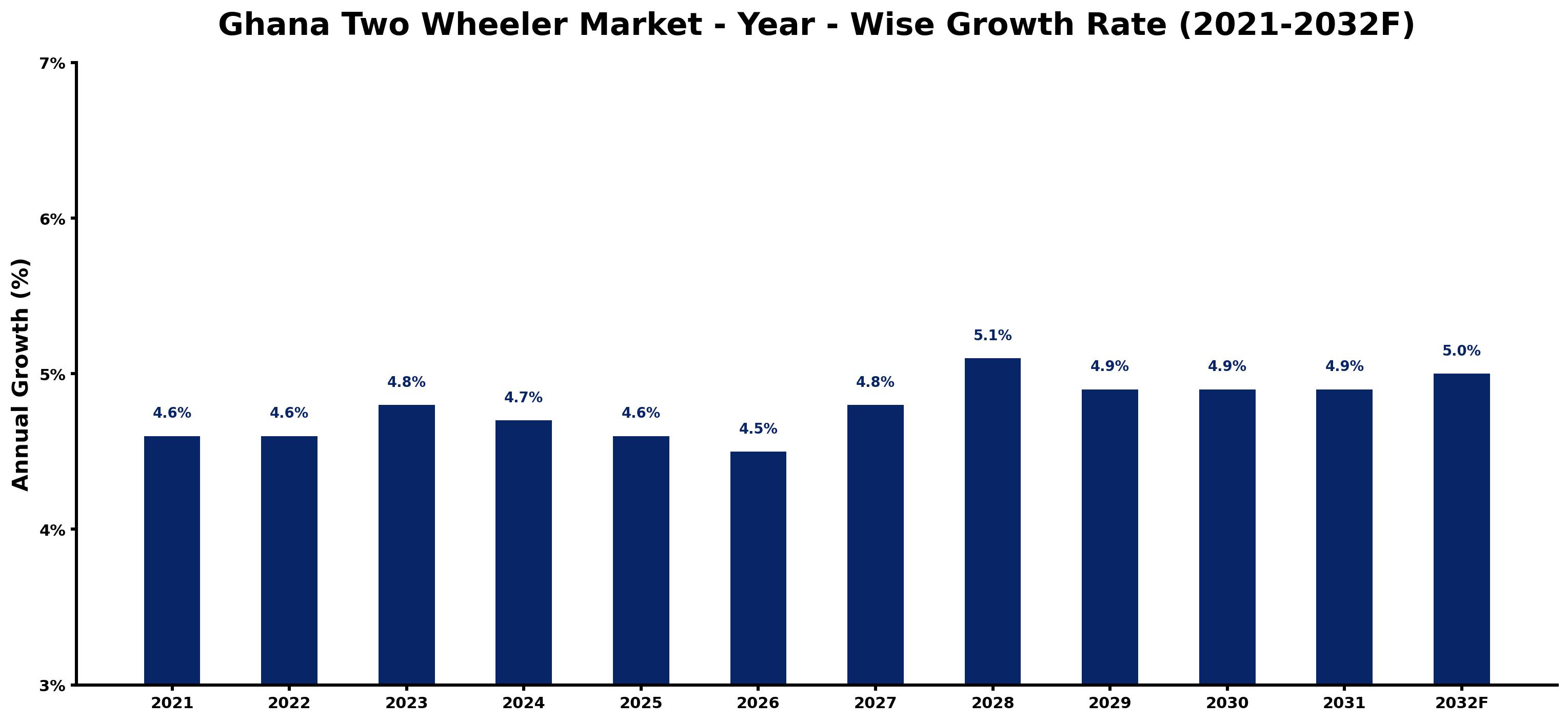
The table below presents the year wise growth rates along with the key drivers influencing the market
| Year | Growth Rate | Major Drivers |
| 2021 | 4.6% | The shift towards affordable transportation options remains highly relevant across urban centers. |
| 2022 | 4.6% | Increased availability of fuel-efficient models appeals to budget-conscious consumers significantly. |
| 2023 | 4.8% | Consumer interest in personal mobility options has surged amidst ongoing public transport challenges. |
| 2024 | 4.7% | Urbanization trends are placing more emphasis on compact and convenient transport solutions. |
| 2025 | 4.6% | Rising fuel costs motivate commuters to explore two-wheeler ownership as a cost-saving measure. |
| 2026 | 4.5% | Emerging middle-class demographics increasingly prioritize personal mobility over traditional public transport. |
| 2027 | 4.8% | Technological advancements in electric two-wheelers enhance appeal among environmentally conscious buyers. |
| 2028 | 5.1% | Competitive pricing strategies from local manufacturers create a favorable market landscape for growth. |
| 2029 | 4.9% | Expanding retail networks improve access to maintenance services, enhancing consumer confidence significantly. |
| 2030 | 4.9% | Local production initiatives reduce import costs, making two-wheelers more affordable for families. |
| 2031 | 4.9% | Growing interest in ride-sharing models paves the way for innovative ownership structures. |
| 2032 | 5.0% | Integration of smart technology into two-wheelers aligns with the region's digital transformation trends. |
Note - Market size estimations and growth projections presented in this report are based on 6Wresearch's advanced forecasting approach, validated with industry datasets as of June 2026.
Ghana Two Wheeler Market Synopsis
The Ghana Two Wheeler Market is projected to reach 4.5% and witness significant growth during the forecast period (2026-2032). This expansion is anticipated due to several factors, including rapid urbanization, an increase in disposable income among consumers, and a growing preference for two-wheelers as a practical mode of transport. As urban centers continue to expand, the convenience of two-wheelers in navigating congested city traffic becomes increasingly attractive. Moreover, innovative technologies, particularly in electric scooters and motorcycles, are poised to further bolster market demand, aligning with global trends towards sustainable transportation solutions.
Ghana Two Wheeler Market Growth Drivers
The Ghana two-wheeler market is driven by a multitude of factors that collectively enhance its growth potential. The following points elucidate these drivers:
- The rise in urbanization has led to larger populations in cities, increasing the demand for efficient and economical transportation solutions.
- Improved purchasing power among Ghanaian consumers is fostering a willingness to invest in two-wheelers, particularly as a cost-effective alternative to cars.
- A surge in the number of commuters opting for two-wheelers has been observed, reflecting changing preferences in mobility solutions.
- Technological advancements, including the introduction of electric vehicles, are attracting environmentally conscious consumers looking for sustainable transport options.
- Increased awareness about the advantages of two-wheelers, such as lower fuel costs and reduced travel time, is further supporting market growth.
Ghana Two Wheeler Market Trends and Opportunities
Key trends within the Ghana Two Wheeler Market indicate a shift towards modernization and sustainability. Noteworthy trends include:
- The growing popularity of electric two-wheelers aligns with global sustainability initiatives and offers significant opportunities for market expansion.
- Digital platforms are increasingly being utilized for sales and service delivery, enhancing consumer access and market penetration.
- Innovative financing options, including installment payments and leasing, are making two-wheelers more accessible to a broader audience.
- Urban infrastructure improvements, such as dedicated bike lanes, are facilitating safer and more attractive conditions for two-wheeler users.
- Government policies geared towards pollution reduction are likely to favor the adoption of electric scooters and motorcycles, creating a supportive environment for market growth.
Ghana Two Wheeler Market Challenges and Restraints
Despite the promising outlook, several challenges and restraints may impact the growth trajectory of the Ghana Two Wheeler Market:
- Inadequate road infrastructure in some regions poses a significant challenge to the effective utilization of two-wheelers.
- Concerns regarding safety and road traffic accidents remain prevalent, potentially deterring consumers from adopting two-wheelers as a primary mode of transport.
- Regulatory hurdles and inconsistent enforcement of traffic laws can complicate market dynamics and affect consumer confidence.
- Competition from alternative transport methods, including taxis and public transit, may limit market growth in certain urban areas.
- The fluctuating costs of raw materials and components may lead to volatility in pricing, affecting affordability for the end consumer.
Ghana Two Wheeler Market Government Investment and Initiatives
The Ghanaian government is actively involved in promoting the growth of the two-wheeler market through various initiatives and investments. Key initiatives include:
- Implementation of subsidies on the purchase of electric two-wheelers aims to encourage environmentally friendly transport solutions, reducing barriers to entry for consumers.
- Public awareness campaigns are being conducted to educate citizens about the benefits of two-wheelers, promoting their acceptance as a viable transport option.
- Investment in road infrastructure is vital to ensure safe and efficient travel for two-wheeler users, thereby encouraging greater usage.
- The introduction of incentives for manufacturers and distributors may lead to increased market activity and competition.
- Government collaborations with private entities to enhance service networks and after-sales services are expected to improve customer satisfaction and retention.
Ghana Two Wheeler Market Latest Developments (May 2025 - June 2026)
The period from May 2025 to June 2026 has witnessed significant developments in the Ghana Two Wheeler Market. Trends suggest a continued shift towards electric mobility, driven by enhancements in battery technology and increased public interest in sustainable transport solutions. Notably, several new models of electric scooters have entered the market, offering consumers a wider array of choices. Additionally, improvements in charging infrastructure are making it easier for consumers to adopt electric vehicles. Meanwhile, retail strategies such as online sales channels have gained traction, enhancing accessibility and convenience for buyers. Lastly, ongoing government support programs for electric vehicle adoption are set to further catalyze market growth.
Ghana Two Wheeler Market - Key Attractiveness of the Report
- 10 Years of Market Numbers
- Historical Data Starting from 2022 to 2025
- Base Year: 2025
- Forecast Data until 2032
- Key Performance Indicators Impacting the Market
- Major Upcoming Developments and Projects
Key Highlights of the Report:
- Ghana Two Wheeler Market Outlook
- Market Size of Ghana Two Wheeler Market, 2025
- Forecast of Ghana Two Wheeler Market, 2032F
- Historical Data and Forecast of Ghana Two Wheeler Revenues & Volume for the Period 2022-2032F
- Ghana Two Wheeler Market Trend Evolution
- Ghana Two Wheeler Market Drivers and Challenges
- Ghana Two Wheeler Price Trends
- Ghana Two Wheeler Porter's Five Forces
- Ghana Two Wheeler Industry Life Cycle
- Historical Data and Forecast of Ghana Two Wheeler Market Revenues & Volume By Vehicle Type for the Period 2022-2032F
- Historical Data and Forecast of Ghana Two Wheeler Market Revenues & Volume By Motorcycle for the Period 2022-2032F
- Historical Data and Forecast of Ghana Two Wheeler Market Revenues & Volume By Scooter/Moped for the Period 2022-2032F
- Historical Data and Forecast of Ghana Two Wheeler Market Revenues & Volume By Engine Capacity for the Period 2022-2032F
- Historical Data and Forecast of Ghana Two Wheeler Market Revenues & Volume By Up to 125cc for the Period 2022-2032F
- Historical Data and Forecast of Ghana Two Wheeler Market Revenues & Volume By 126-250cc for the Period 2022-2032F
- Historical Data and Forecast of Ghana Two Wheeler Market Revenues & Volume By 251-500cc for the Period 2022-2032F
- Historical Data and Forecast of Ghana Two Wheeler Market Revenues & Volume By Above 500cc for the Period 2022-2032F
- Ghana Two Wheeler Import Export Trade Statistics
- Market Opportunity Assessment By Vehicle Type
- Market Opportunity Assessment By Engine Capacity
- Ghana Two Wheeler Top Companies Market Share
- Ghana Two Wheeler Competitive Benchmarking By Technical and Operational Parameters
- Ghana Two Wheeler Company Profiles
- Ghana Two Wheeler Key Strategic Recommendations






































