India Agricultural Insecticides Market Size & Growth Rate
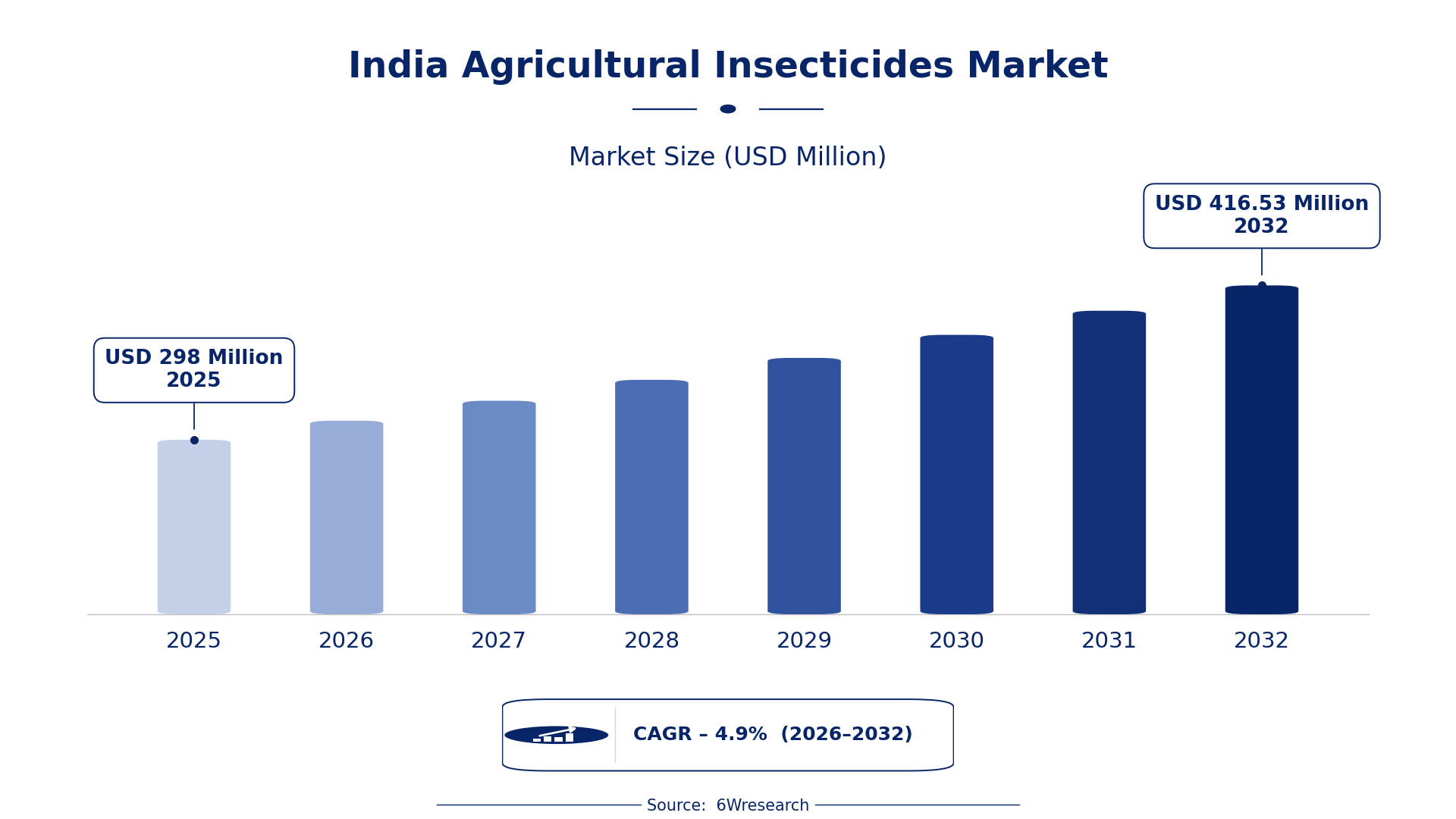
According to 6Wresearch internal database and industry insights, the India Agricultural Insecticides Market was valued at USD 298.0 million in 2025 and is projected to reach USD 416.53 million by 2032, growing at a CAGR of approximately 4.9% during 2026–2032.
India Agricultural Insecticides Market Highlights
| Report Metric | Details |
| Report Name | India Agricultural Insecticides Market |
| Market Size 2025 | USD 298.0 million |
| Market Size 2032 | USD 416.53 million |
| Absolute Growth 2025–2032 | USD 118.53 million |
| CAGR 2026–2032 | 4.9% |
| Peak Annual Growth | 7.2% in 2032 |
| Forecast Period | 2026–2032 |
| Historical Data | 2022–2025 |
| Base Year | 2025 |
| Leading Agricultural Insecticides Market, 2025 | Organophosphates (44% share) |
| Leading Product Type, 2025 | Leaf-Eating Insects (42% share) |
| Leading Target Insects, 2025 | Direct Sales (41% share) |
| Leading Distribution Channel, 2025 | Sugarcane Growers (34% share) |
| Fastest-Growing Agricultural Insecticides Market | Bio-Insecticides (7.1% CAGR) |
| Fastest-Growing Product Type | Eco-friendly Targets (7.0% CAGR) |
| Fastest-Growing Target Insects | Online Platforms (6.5% CAGR) |
| Fastest-Growing Distribution Channel | Organic Farms (7.6% CAGR) |
| Growing Sector | Organic Farms |
| Key End Users | Sugarcane Growers, Cotton Farmers, Fruit Growers, Organic Farms |
India Agricultural Insecticides Market Year-wise Growth Rate and Key Drivers (2022–2032)
This graph illustrates the annual growth rates of the market from 2022 to 2032, highlighting a steady upward trajectory and projected market expansion over the forecast period.
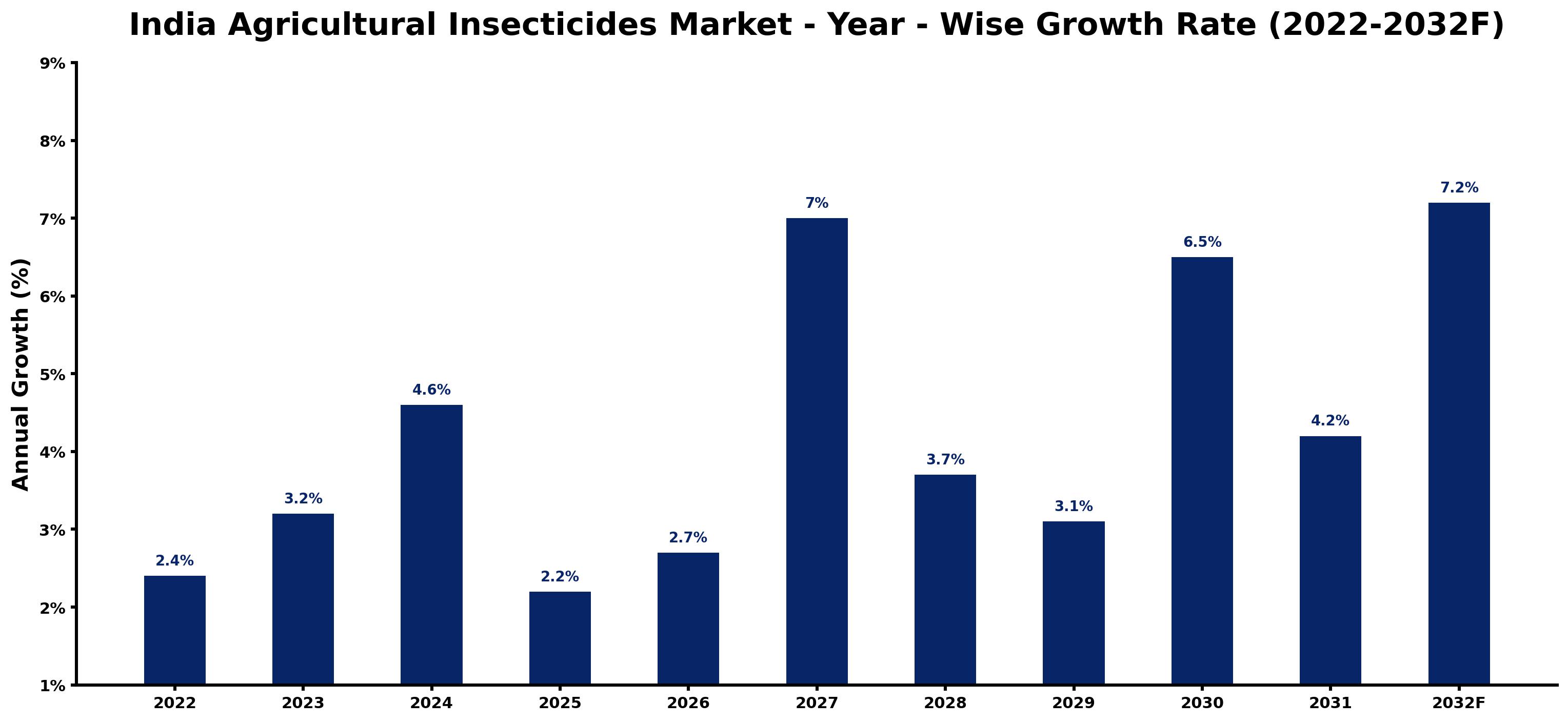
The table below sets out the estimated growth rate for each year and the main factor behind it.
| Year | Estimated Annual Growth (%) | Market Rationale |
| 2022 | 2.4 | The market showed steady growth due to consistent agricultural activities across major states. |
| 2023 | 3.2 | Increased pest pressures led to higher insecticide applications among farmers. |
| 2024 | 4.6 | The introduction of new products contributed to stronger market expansion. |
| 2025 | 2.2 | A slowdown occurred as farmers adjusted to fluctuating crop prices. |
| 2026 | 2.7 | The market rebounded as farmers increased spending on pest control measures. |
| 2027 | 7.0 | Demand surged due to heightened awareness of pest management strategies. |
| 2028 | 3.7 | Growth slowed as market saturation began to affect purchasing habits. |
| 2029 | 3.1 | A further slowdown was noted as competition intensified among suppliers. |
| 2030 | 6.5 | The market experienced a resurgence driven by new product innovations. |
| 2031 | 4.2 | Growth decelerated as regulatory changes impacted product availability. |
| 2032 | 7.2 | The market peaked as bio-insecticides gained significant traction among farmers. |
Note: Market size estimations and growth projections presented in this report are based on 6Wresearch's proprietary forecasting methodology, utilizing the latest available industry data, government publications, and primary research inputs.
India Agricultural Insecticides Market Synopsis
Agricultural Insecticides Market in India includes chemical substances designed to control pests that threaten crops. These insecticides are produced through chemical synthesis or natural extraction methods, ensuring effective crop protection and food security. The market is growing due to increasing demand from domestic users and exports, particularly in states like Punjab and Haryana. The government's commitment to sustainable agriculture, including the promotion of bio-pesticides, is further propelling this growth. With a market valued at approximately INR 4,000 crores, the sector is set for ongoing expansion as agricultural productivity remains a priority.
Market Dynamics Impact Analysis (2026–2032)
| Factor | Type | Impact | Primary Segment Affected |
| Increased investment in sustainable farming practices | Driver | High | Bio-Insecticides |
| Growing demand for effective pest control solutions | Driver | High | Organophosphates |
| Expansion of online sales channels for agricultural products | Opportunity | High | Online Platforms |
| Rising interest in eco-friendly pest management solutions | Opportunity | High | Eco-friendly Targets |
| Regulatory scrutiny on pesticide safety and usage | Restraint | High | Neonicotinoids |
| Limited awareness among farmers regarding new products | Restraint | Medium | Bio-Insecticides |
| Supply chain disruptions affecting product availability | Challenge | High | Organophosphates |
| Competition from alternative pest management methods | Challenge | Medium | Organophosphates |
Evaluation of Drivers in India Agricultural Insecticides Market (2026–2032)
The main growth drivers and the segments they affect most are set out below.
| Drivers | Primary Segment Affected | Why It Matters (Evidence) |
| Increased funding for sustainable agriculture initiatives | Bio-Insecticides | This funding encourages farmers to adopt eco-friendly pest control solutions, increasing demand for bio-insecticides, which account for about 10% of the market. |
| Rising crop pest infestations due to climate change | Organophosphates | Increased pest pressures lead farmers to rely more on effective insecticides like organophosphates, which are widely used for their effectiveness against various pests. |
| Growing online retail platforms for agricultural products | Direct Sales | The rise of online sales channels facilitates easier access for farmers, increasing the purchase of insecticides directly from suppliers. |
| Expansion of agricultural exports requiring pest control | Neonicotinoids | As exports grow, farmers are investing in neonicotinoids for effective pest management, particularly against sucking insects. |
| Government initiatives promoting bio-pesticides | Bio-Insecticides | These initiatives enhance the appeal of bio-insecticides, driving demand as farmers seek sustainable options. |
In 2022, the market was valued at approximately INR 4,000 crores, reflecting strong growth in the sector. The expansion of agricultural exports requiring pest control is pushing farmers to invest in effective insecticides, contributing to a vibrant market for agricultural insecticides in India.
Evaluation of Restraints in India Agricultural Insecticides Market
Below mentioned are some major restraints and their influence on market dynamics.
| Market Restraint | Primary Segment Affected | Why It Matters (Evidence) |
| Rising raw material prices | Organophosphates | Increased costs can raise operational expenses for producers by up to 20%, impacting pricing strategies. |
| Regulatory hurdles complicating market dynamics | Organophosphates | Compliance with quality standards set by the Indian Standards Institute can delay product launches by several months. |
| Intense competition among producers | Organophosphates | Aggressive pricing strategies among competitors can squeeze profit margins, affecting sustainability efforts. |
| Skills shortages in pest management | Cotton Farmers | Inadequate training in pest management can lower crop yields, threatening food security for farmers. |
| Limited adoption of eco-friendly practices | Bio-Insecticides | Despite government support, some farmers remain hesitant to switch to bio-insecticides due to perceived effectiveness concerns. |
India Agricultural Insecticides Market Challenges
Buyers in the India Agricultural Insecticides Market face rising raw material prices, which can increase their operational costs by up to 20%, squeezing their profit margins. Regulatory hurdles complicate market operations, as compliance with the Indian Standards Institute's quality standards for over 150 registered products can delay new product launches by several months, affecting suppliers' market presence. Competition among producers is intense, leading to aggressive pricing strategies that further reduce profit margins and challenge sustainability efforts. Skills shortages in pest management create inefficiencies, as inadequate training can lower crop yields and threaten food security for farmers in key agricultural states like Punjab and Haryana.
Trends in the India Agricultural Insecticides Market
Below mentioned are some of the trends shaping the India Agricultural Insecticides Market growth.
- Shift towards Eco-friendly Pest Management: Farmers are increasingly adopting bio-insecticides due to environmental concerns, with bio-insecticides accounting for about 10% of the market share. This shift is supported by the government's National Mission on Sustainable Agriculture, promoting sustainable practices.
- Expansion of Online Sales Channels: The rise of e-commerce platforms is transforming how farmers purchase insecticides, with online platforms expected to grow by 6.5% annually. This change offers convenience and wider access to products for farmers across India.
- Increased Focus on Integrated Pest Management: Farmers are embracing integrated pest management strategies to enhance crop yields. The National Centre for Integrated Pest Management provides guidelines that are increasingly adopted, reflecting a shift towards more sustainable practices.
- Growth of Organic Insecticides: The market for organic insecticides is projected to grow by 15% annually, driven by rising consumer demand for organic produce. This trend aligns with the government's efforts to promote sustainable agriculture.
Investment Opportunities in the India Agricultural Insecticides Market
Some of the investment opportunities in the India Agricultural Insecticides Market are mentioned below.
- Investment in Bio-Insecticides Production Facilities: With bio-insecticides gaining popularity, there is a significant opportunity for investment in production facilities. The market for bio-insecticides is expected to grow, supported by initiatives like the National Mission on Sustainable Agriculture.
- Expansion of Online Retail for Agricultural Products: The growing trend of online shopping presents an opportunity to supply insecticides through digital platforms. Farmers are increasingly using online channels, creating a demand for convenient purchasing options.
- Development of Eco-friendly Insecticide Products: As environmental concerns rise, there is a gap in the market for eco-friendly insecticides. Targeting farmers in regions like Punjab and Haryana can facilitate entry into this growing segment.
- Support for Integrated Pest Management Strategies: The Soil Health Card Scheme encourages farmers to adopt integrated pest management practices. This presents an opportunity to supply complementary products and services to enhance pest management.
Government Initiatives in the India Agricultural Insecticides Market
The 'National Mission on Sustainable Agriculture' launched by the Ministry of Agriculture in 2021 aims to promote bio-pesticides, improving sustainable practices in farming. The 'Pesticide Management Bill' introduced in 2022 regulates pesticide use to ensure safety, overseen by the Ministry of Agriculture. These measures require producers to adhere to strict safety standards and reporting protocols, impacting product formulation and marketing strategies.
The Soil Health Card Scheme promotes integrated pest management practices among farmers. This initiative, initiated by the Ministry of Agriculture in 2020, provides farmers with tailored advice on pest management. The 'Pradhan Mantri Krishi Sinchai Yojana' supports irrigation and pest management strategies, improving crop productivity. These schemes help farmers access necessary resources and knowledge to enhance their pest control methods.
Future Insight of the India Agricultural Insecticides Market
The India Agricultural Insecticides Market will experience transformative changes by 2032, driven by the anticipated 15% annual growth of organic insecticides. Government initiatives to promote bio-pesticides under the National Mission on Sustainable Agriculture will encourage environmentally friendly practices among farmers. Enhanced pest management guidelines from the National Centre for Integrated Pest Management will improve the effectiveness of insecticide applications. Advances in chemical synthesis methods will enable the development of more efficient insecticides, creating new opportunities for both buyers and suppliers in the market.
Market Segmentation Analysis
The analysis below covers each segmentation, its leading category in 2025 and its fastest-growing category through 2032.
By Agricultural Insecticides Market – Organophosphates Dominated, Bio-Insecticides Expected to Grow Fastest
According to Ravi Bhandari, Research Head at 6Wresearch, in 2025, Organophosphates led the agricultural insecticides market split with a 44% share. Organophosphates dominate the market share as they are widely used for their effectiveness against various pests, particularly in states like Punjab and Haryana where agricultural output is high. Their established presence and extensive application in major crops like cotton and sugarcane solidify their leading position. The quickest growth will come from Bio-Insecticides, forecast to expand at a CAGR of 7.1% between 2026 and 2032. Bio-insecticides are experiencing rapid growth due to their eco-friendly nature, appealing to a market increasingly concerned with sustainable practices. The government's promotion of bio-pesticides under the National Mission on Sustainable Agriculture further fuels this segment's expansion. Suppliers should focus on developing eco-friendly products to meet the rising demand for sustainable agricultural practices.
By Product Type – Leaf-Eating Insects Dominated, Eco-friendly Targets Expected to Grow Fastest
Leaf-Eating Insects took a 42% share of product type in 2025, more than any other category. Leaf-eating insects command the largest market share due to their significant impact on crop yields, necessitating targeted insecticide applications. This trend is particularly pronounced in high agricultural output regions like Punjab and Haryana, where these pests are a major concern for farmers. Eco-friendly Targets are set to record the highest CAGR in this split, 7.0% over 2026–2032. Eco-friendly targets are witnessing rapid growth as farmers increasingly prioritise sustainable pest management methods, influenced by heightened consumer awareness and supportive government policies. The Indian government's promotion of bio-pesticides under the National Mission on Sustainable Agriculture is a key factor in this shift. Suppliers need to adjust their product lines to cater to the growing demand for eco-friendly insecticides, aligning with sustainable agricultural practices.
By Target Insects – Direct Sales Dominated, Online Platforms Expected to Grow Fastest
Direct Sales accounted for a 41% market share by target insects in 2025. Direct sales represent the largest market share as they provide farmers with immediate access to essential insecticides for effective pest control. This channel strengthens relationships between suppliers and farmers, ensuring consistent demand and loyalty within the agricultural sector. Online Platforms are projected to grow fastest, at a CAGR of 6.5% during 2026–2032. Online platforms are rapidly emerging as the fastest-growing distribution channel for insecticides, offering convenience and wider access for farmers. The increasing digital connectivity in rural areas significantly facilitates this trend, allowing farmers to procure products more easily. Suppliers should focus on enhancing their online presence to effectively connect with the growing number of farmers who prefer purchasing insecticides through digital channels.
By Distribution Channel – Sugarcane Growers Dominated, Organic Farms Expected to Grow Fastest
Sugarcane Growers held a 34% share of the India Agricultural Insecticides Market by distribution channel in 2025. Sugarcane growers account for the largest share in the distribution channel due to their ongoing pest challenges in sugarcane cultivation, which necessitate regular insecticide applications. This concentrated demand encourages suppliers to focus their efforts on meeting the needs of this critical agricultural segment. Over 2026–2032, Organic Farms are expected to post the fastest growth, at a CAGR of 7.6%. Organic farms are emerging as the fastest-growing distribution channel, driven by the increasing popularity of organic farming practices. This growth reflects a broader consumer shift towards organic produce, creating opportunities for suppliers to cater to this expanding market. Suppliers should consider forming partnerships with organic farms to capitalise on the rising demand for organic insecticides in the agricultural market.
Key Attractiveness of the Report
- 10 Years of Market Numbers
- Historical Data Starting from 2022 to 2025
- Base Year 2025
- Forecast Data until 2032
- Key Performance Indicators Impacting the Market
- Major Upcoming Developments and Projects
Key Highlights of the Report:
- India Agricultural Insecticides Market Outlook
- Market Size of India Agricultural Insecticides Market, 2025
- Forecast of India Agricultural Insecticides Market, 2032
- Historical Data and Forecast of India Agricultural Insecticides Revenues & Volume for the Period 2022 - 2032F
- India Agricultural Insecticides Market Trend Evolution
- India Agricultural Insecticides Market Drivers and Challenges
- India Agricultural Insecticides Price Trends
- India Agricultural Insecticides Porter's Five Forces
- India Agricultural Insecticides Industry Life Cycle
- Historical Data and Forecast of India Agricultural Insecticides Market Revenues & Volume By Agricultural Insecticides Market for the Period 2022 - 2032F
- Historical Data and Forecast of India Agricultural Insecticides Market Revenues & Volume By Organophosphates for the Period 2022 - 2032F
- Historical Data and Forecast of India Agricultural Insecticides Market Revenues & Volume By Pyrethroids for the Period 2022 - 2032F
- Historical Data and Forecast of India Agricultural Insecticides Market Revenues & Volume By Neonicotinoids for the Period 2022 - 2032F
- Historical Data and Forecast of India Agricultural Insecticides Market Revenues & Volume By Bio-Insecticides for the Period 2022 - 2032F
- Historical Data and Forecast of India Agricultural Insecticides Market Revenues & Volume By Product Type for the Period 2022 - 2032F
- Historical Data and Forecast of India Agricultural Insecticides Market Revenues & Volume By Leaf-Eating Insects for the Period 2022 - 2032F
- Historical Data and Forecast of India Agricultural Insecticides Market Revenues & Volume By Flying Insects for the Period 2022 - 2032F
- Historical Data and Forecast of India Agricultural Insecticides Market Revenues & Volume By Sap-Sucking Insects for the Period 2022 - 2032F
- Historical Data and Forecast of India Agricultural Insecticides Market Revenues & Volume By Eco-friendly Targets for the Period 2022 - 2032F
- Historical Data and Forecast of India Agricultural Insecticides Market Revenues & Volume By Target Insects for the Period 2022 - 2032F
- Historical Data and Forecast of India Agricultural Insecticides Market Revenues & Volume By Direct Sales for the Period 2022 - 2032F
- Historical Data and Forecast of India Agricultural Insecticides Market Revenues & Volume By Agri Shops for the Period 2022 - 2032F
- Historical Data and Forecast of India Agricultural Insecticides Market Revenues & Volume By Online Platforms for the Period 2022 - 2032F
- Historical Data and Forecast of India Agricultural Insecticides Market Revenues & Volume By Specialty Stores for the Period 2022 - 2032F
- Historical Data and Forecast of India Agricultural Insecticides Market Revenues & Volume By Distribution Channel for the Period 2022 - 2032F
- Historical Data and Forecast of India Agricultural Insecticides Market Revenues & Volume By Sugarcane Growers for the Period 2022 - 2032F
- Historical Data and Forecast of India Agricultural Insecticides Market Revenues & Volume By Cotton Farmers for the Period 2022 - 2032F
- Historical Data and Forecast of India Agricultural Insecticides Market Revenues & Volume By Fruit Growers for the Period 2022 - 2032F
- Historical Data and Forecast of India Agricultural Insecticides Market Revenues & Volume By Organic Farms for the Period 2022 - 2032F
- India Agricultural Insecticides Import Export Trade Statistics
- Market Opportunity Assessment By Agricultural Insecticides Market
- Market Opportunity Assessment By Product Type
- Market Opportunity Assessment By Target Insects
- Market Opportunity Assessment By Distribution Channel
- India Agricultural Insecticides Top Companies Market Share
- India Agricultural Insecticides Competitive Benchmarking By Technical and Operational Parameters
- India Agricultural Insecticides Company Profiles
- India Agricultural Insecticides Key Strategic Recommendations
Market Covered
Segments analysed in this report are listed below.
By Agricultural Insecticides Market
- Organophosphates
- Pyrethroids
- Neonicotinoids
- Bio-Insecticides
By Product Type
- Leaf-Eating Insects
- Flying Insects
- Sap-Sucking Insects
- Eco-friendly Targets
By Target Insects
- Direct Sales
- Agri Shops
- Online Platforms
- Specialty Stores
By Distribution Channel
- Sugarcane Growers
- Cotton Farmers
- Fruit Growers
- Organic Farms































