India Immunomodulator Therapy Market Size & Growth Rate
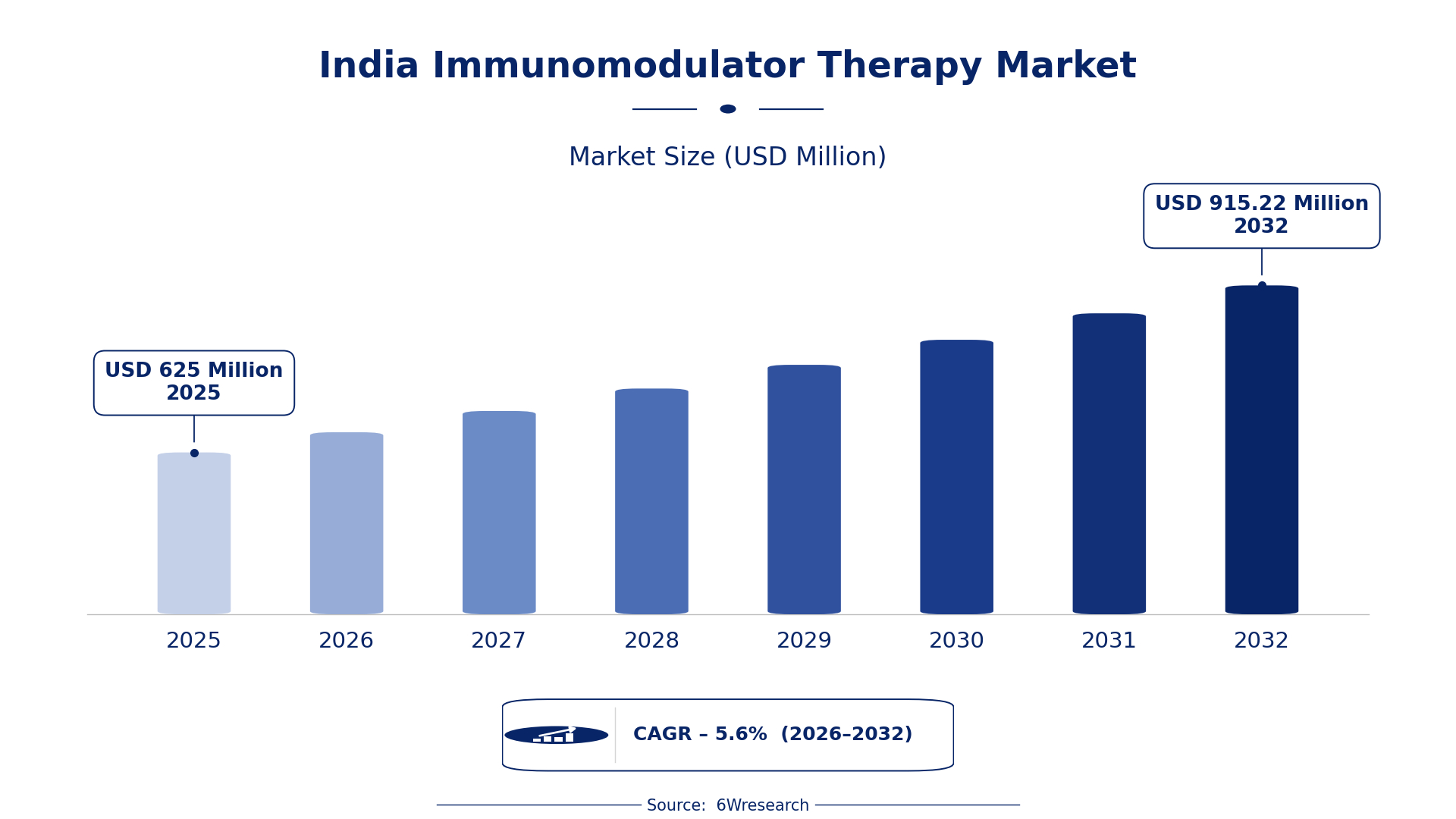
According to 6Wresearch internal database and industry insights, the India Immunomodulator Therapy Market was valued at USD 625.0 million in 2025 and is projected to reach USD 915.22 million by 2032, growing at a CAGR of approximately 5.6% during 2026–2032.
India Immunomodulator Therapy Market Highlights
| Report Metric | Details |
| Report Name | India Immunomodulator Therapy Market |
| Market Size 2025 | USD 625.0 million |
| Market Size 2032 | USD 915.22 million |
| Absolute Growth 2025–2032 | USD 290.22 million |
| CAGR 2026–2032 | 5.6% |
| Peak Annual Growth | 8.2% in 2030 |
| Forecast Period | 2026–2032 |
| Historical Data | 2022–2025 |
| Base Year | 2025 |
| Leading Modulator Type, 2025 | Immunosuppressants (36% share) |
| Leading Effect on Immune System, 2025 | Immune Suppression (44% share) |
| Leading Use Case, 2025 | Cancer (34% share) |
| Leading End User, 2025 | Hospitals (40% share) |
| Fastest-Growing Modulator Type | Biologic Modulators (7.4% CAGR) |
| Fastest-Growing Effect on Immune System | Cytokine Targeted (7.3% CAGR) |
| Fastest-Growing Use Case | Autoimmune (7.6% CAGR) |
| Fastest-Growing End User | Rheumatology Centers (6.9% CAGR) |
| Growing Sector | Oncology Departments |
| Key End Users | Hospitals, Oncology Departments, Rheumatology Centers, Research Hospitals |
India Immunomodulator Therapy Market Year-wise Growth Rate and Key Drivers (2022–2032)
This graph illustrates the annual growth rates of the market from 2022 to 2032, highlighting a steady upward trajectory and projected market expansion over the forecast period.
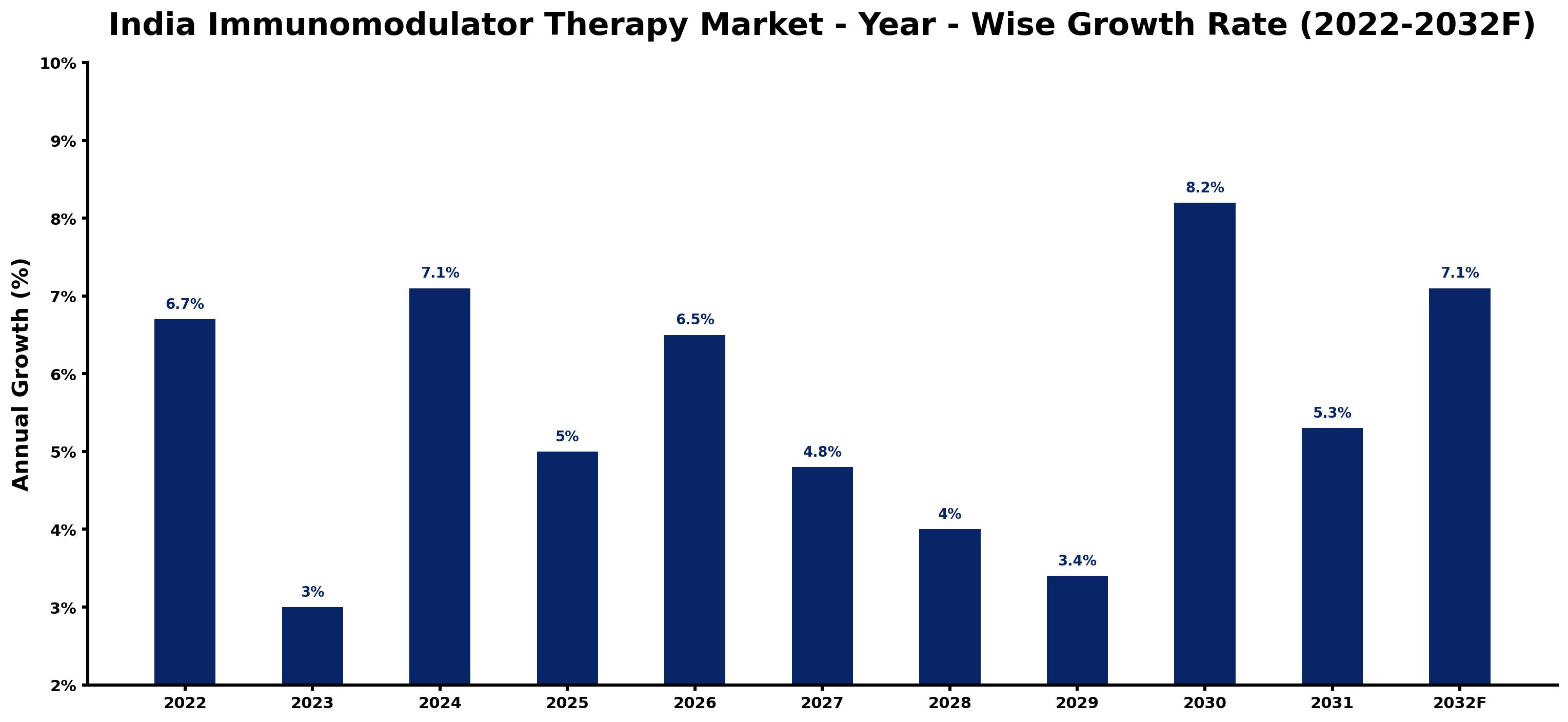
The table below sets out the estimated growth rate for each year and the main factor behind it.
| Year | Estimated Annual Growth (%) | Market Rationale |
| 2022 | 6.7 | The market showed strong demand from hospitals and oncology departments. |
| 2023 | 3.0 | Growth slowed due to a temporary reduction in clinical trial approvals. |
| 2024 | 7.1 | Increased adoption of immunomodulators in cancer treatment boosted growth. |
| 2025 | 5.0 | Market growth slowed as manufacturers faced supply chain challenges. |
| 2026 | 6.5 | A rise in investment in biotechnology research is expected to improve market conditions. |
| 2027 | 4.8 | Demand growth slowed as competition in the market intensified. |
| 2028 | 4.0 | The market faced slower growth due to regulatory delays in approvals. |
| 2029 | 3.4 | A slowdown in new product launches contributed to slower growth. |
| 2030 | 8.2 | The peak growth year is driven by rising needs for cancer treatment and support from the National Health Mission. |
| 2031 | 5.3 | Growth slowed as the National Health Policy 2020 improved healthcare access. |
| 2032 | 7.1 | The market sees renewed growth due to advancements in gene-based therapies supported by the Department of Biotechnology. |
Note: Market size estimations and growth projections presented in this report are based on 6Wresearch's proprietary forecasting methodology, utilizing the latest available industry data, government publications, and primary research inputs.
India Immunomodulator Therapy Market Synopsis
Immunomodulator Therapy in India encompasses treatments that adjust the immune response, developed through biotechnological methods. These therapies primarily target autoimmune diseases, cancers, and organ transplant rejection prevention. The India Immunomodulator Therapy Market is expanding due to heightened demand from hospitals and oncology departments. The National Health Mission advocates for immunotherapy in cancer treatment, while the Indian pharmaceutical market is anticipated to reach USD 625.0 million by 2025. With a population nearing 1.4 billion, the need for effective immunomodulatory treatments is on the rise.
Market Dynamics Impact Analysis (2026–2032)
| Factor | Type | Impact | Primary Segment Affected |
| Growing demand for cancer treatments drives the need for immunomodulators. | Driver | High | Cancer |
| Increased investment in biotechnology enhances production capabilities. | Driver | High | Immunosuppressants |
| Rising healthcare expenditure creates opportunities for new therapies. | Opportunity | High | Biologic Modulators |
| The need for improved access to treatments opens market potential. | Opportunity | High | Hospitals |
| Regulatory delays in approvals hinder market growth. | Restraint | High | Gene-Based Therapies |
| High production costs limit the availability of immunomodulators. | Restraint | Medium | Immunostimulants |
| Supply chain disruptions affect timely delivery of products. | Challenge | High | Cytokine Targeted |
| Intense competition among manufacturers pressures pricing strategies. | Challenge | Medium | Biologic Modulators |
Evaluation of Drivers in India Immunomodulator Therapy Market (2026–2032)
Key forces behind demand, with the segment each one moves most, are listed below.
| Drivers | Primary Segment Affected | Why It Matters (Evidence) |
| Increased cancer cases drive demand for immunomodulators. | Cancer | In India, approximately 1.4 million new cancer cases are reported annually. |
| Investment in biotechnology boosts production capabilities. | Immunosuppressants | The Biotechnology Innovation Fund supports research with a budget of ₹500 crores. |
| Growing healthcare expenditure boosts immunomodulator purchases. | Biologic Modulators | The National Health Policy 2020 aims to improve healthcare access across India. |
| Rising awareness of immunotherapy benefits increases demand. | Immunostimulants | The National Health Mission promotes immunotherapy for cancer treatment across various states. |
| Clinical trials for new therapies expand market offerings. | Gene-Based Therapies | Numerous ongoing clinical trials in research hospitals are evaluating new treatment options. |
Growth across the Immunomodulator Therapy market in India is anchored in rising end-use demand from hospitals and oncology departments, alongside a strong supply response from biotechnology investments. Approximately 1.4 million new cancer cases reported annually drive demand for immunomodulators. The ongoing clinical trials in research hospitals are expanding the range of available therapies, encouraging healthcare facilities to adopt new treatments. The Biotechnology Innovation Fund's budget of ₹500 crores is enhancing production capabilities, leading to a more diverse market offering.
Evaluation of Restraints in India Immunomodulator Therapy Market
The following restraints limit how fast demand can grow.
| Market Restraint | Primary Segment Affected | Why It Matters (Evidence) |
| Regulatory delays in approvals hinder market growth. | Gene-Based Therapies | The Central Drugs Standard Control Organization's approval processes can extend timelines. |
| High production costs limit the availability of immunomodulators. | Immunostimulants | Manufacturers face rising costs for raw materials and compliance with ISO 9001 standards. |
| Limited awareness among patients affects adoption rates. | Biologic Modulators | Patients may be unaware of the benefits of immunomodulatory therapies. |
| Supply chain disruptions affect timely delivery of products. | Cytokine Targeted | Global supply chain issues have delayed the distribution of essential components. |
| Intense competition among manufacturers pressures pricing strategies. | Immunosuppressants | Price wars among manufacturers can lead to reduced profit margins. |
India Immunomodulator Therapy Market Challenges
The India Immunomodulator Therapy Market encounters rising production costs, as adherence to ISO 9001 standards leads to a 15% price increase for healthcare providers. Skills shortages in biotechnological methods impede the development of new therapies, delaying product availability and affecting hospitals that depend on timely access to treatments. Slow technological progress in clinical trials for new immunomodulators extends timelines, costing research hospitals valuable resources and limiting patient options. Increased competition from emerging markets pressures local suppliers to reduce prices, which compromises profit margins and sustainability for producers in the long term.
Trends in the India Immunomodulator Therapy Market
Several trends are reshaping the India Immunomodulator Therapy Market; the most important are set out below.
- National Health Mission Promoting Immunotherapy: The National Health Mission is actively promoting immunotherapy for cancer treatment across various states, aiming to improve patient access. This initiative is expected to increase the adoption of immunomodulators, with over 100 hospitals utilising these therapies.
- Shift Towards Biologic Modulators: There is a noticeable shift towards biologic modulators in treatment protocols, particularly for autoimmune diseases. With a projected CAGR of 7.4% from 2026 to 2032, this trend reflects the growing recognition of targeted therapies in managing complex conditions.
- Increase in Clinical Trials for New Therapies: Clinical trials for new immunomodulatory therapies are increasing, particularly in research hospitals. This growth is supported by ongoing research initiatives, with numerous trials currently underway to evaluate innovative treatment options.
- Focus on Enhanced Access to Treatments: The Ministry of Health's recent initiatives aim to improve access to immunomodulatory treatments across India. This focus is expected to drive demand, particularly in rural areas, where healthcare access has historically been limited.
Investment Opportunities in the India Immunomodulator Therapy Market
Several openings in the India Immunomodulator Therapy Market merit attention from investors.
- Hospitals Seeking Advanced Immunotherapy Options: Hospitals are increasingly seeking advanced immunotherapy options to treat cancer. Collaborating with local manufacturers can facilitate access to these therapies, with over 100 hospitals actively utilising immunomodulators.
- Growing Demand for Biologic Modulators: With a projected increase in demand, there is a strong opportunity to supply biologic modulators. Engaging with rheumatology centres can improve market entry and distribution.
- Investment in Gene-Based Therapies: The launch of the gene-based therapies program creates a timely opportunity for investment in innovative treatments. Research hospitals are key buyers, and partnerships can accelerate product development.
- Rising Need for Immunostimulants: As infections rise, the demand for immunostimulants is increasing. The National Health Mission's focus on immunotherapy provides an avenue for suppliers to meet this growing need.
Government Initiatives in the India Immunomodulator Therapy Market
The Central Drugs Standard Control Organization regulates the approval of immunomodulatory therapies, ensuring safety and efficacy. This agency has updated approval pathways for gene-based therapies, streamlining the process for new treatments. Furthermore, the National Institute of Immunology conducts research on immunomodulatory drugs, supporting innovation in this field. These efforts facilitate the introduction of new therapies and improve patient access to effective treatments.
The Department of Biotechnology supports research in immunomodulatory therapies through the Biotechnology Innovation Fund, which has a budget of ₹500 crores. This funding aids in the development and approval of new treatments, improving the overall market conditions. Additionally, the National Health Policy 2020 aims to increase access to immunomodulatory treatments across India, focusing on rural healthcare. These measures collectively enhance the availability of therapies for patients.
Future Insight of the India Immunomodulator Therapy Market
The India Immunomodulator Therapy Market is set to evolve by 2032, driven by the National Health Mission's initiatives to improve access to immunotherapy. The Department of Biotechnology's new gene-based therapy program will stimulate innovation in the sector. Collaboration between research institutions and healthcare providers will enhance the availability of advanced therapies, particularly in over 100 hospitals currently utilising immunomodulators. By 2025, demand is projected to rise sharply, with an estimated 30% increase in immunomodulator usage among domestic users.
Market Segmentation Analysis
The analysis below covers each segmentation, its leading category in 2025 and its fastest-growing category through 2032.
By Modulator Type – Immunosuppressants Dominated, Biologic Modulators Expected to Grow Fastest
According to Sachin Kumar Rai, Senior Research Analyst at 6Wresearch, with a 36% revenue share in 2025, Immunosuppressants was the largest modulator type category. Immunosuppressants hold the largest share in the India Immunomodulator Therapy Market as they are crucial for preventing organ rejection in transplant procedures. Their widespread use in numerous healthcare facilities underscores their essential role in successful transplant outcomes. Over 2026–2032, Biologic Modulators are expected to post the fastest growth, at a CAGR of 7.4%. Biologic Modulators are experiencing rapid growth due to their increasing application in targeted therapies for autoimmune diseases, which are on the rise. The ongoing clinical trials validating their effectiveness are further accelerating this segment's expansion. Suppliers should focus on developing biologic modulators to meet the growing demand from healthcare providers.
By Effect on Immune System – Immune Suppression Dominated, Cytokine Targeted Expected to Grow Fastest
Immune Suppression accounted for a 44% market share by effect on immune system in 2025. Immune Suppression leads the market as it is essential for managing autoimmune diseases and facilitating successful transplants. The growing patient population requiring these therapies ensures a steady demand across various healthcare settings in India. Cytokine Targeted is set to record the highest CAGR in this split, 7.3% over 2026–2032. Cytokine Targeted therapies are experiencing rapid growth due to their proven effectiveness in addressing specific immune conditions, a need that is increasingly acknowledged in clinical practice. The rising incidence of autoimmune diseases is driving this segment's expansion as more targeted treatments are introduced. Buyers can expect an expanded range of cytokine-targeted therapies as suppliers respond to the heightened demand for specialised treatments.
By Use Case – Cancer Dominated, Autoimmune Expected to Grow Fastest
Cancer held a 34% share of the India Immunomodulator Therapy Market by use case in 2025. Cancer is the dominant use case for immunomodulators, with oncology departments in over 100 hospitals actively utilising these therapies. The focus on cancer treatment drives a substantial share of the market, reflecting the critical need for effective therapies. The quickest growth will come from Autoimmune, forecast to expand at a CAGR of 7.6% between 2026 and 2032. Autoimmune diseases are the fastest-growing use case as awareness and diagnosis of these conditions improve, leading to increased treatment demand. The advocacy from medical societies further fuels this growth, highlighting the importance of immunomodulators in managing these diseases. Healthcare providers should prepare for an uptick in demand for therapies targeting autoimmune diseases as awareness and treatment options expand.
By End User – Hospitals Dominated, Rheumatology Centers Expected to Grow Fastest
Hospitals took a 40% share of end user in 2025, more than any other category. Hospitals account for the largest share of immunomodulator usage, providing a wide range of treatments across various departments. This broad application ensures a steady demand for immunomodulatory therapies within the healthcare system. Rheumatology Centers are projected to grow fastest, at a CAGR of 6.9% during 2026–2032. Rheumatology Centers are expanding quickly as they concentrate on autoimmune diseases that require specific immunomodulatory treatments. The integration of these therapies in more centres positions this segment for substantial growth. Suppliers should consider partnerships with rheumatology centres to capitalise on the increasing demand for specialised immunomodulatory treatments.
Key Attractiveness of the Report
- 10 Years of Market Numbers
- Historical Data Starting from 2022 to 2025
- Base Year 2025
- Forecast Data until 2032
- Key Performance Indicators Impacting the Market
- Major Upcoming Developments and Projects
Key Highlights of the Report:
- India Immunomodulator Therapy Market Outlook
- Market Size of India Immunomodulator Therapy Market, 2025
- Forecast of India Immunomodulator Therapy Market, 2032
- Historical Data and Forecast of India Immunomodulator Therapy Revenues & Volume for the Period 2022 - 2032F
- India Immunomodulator Therapy Market Trend Evolution
- India Immunomodulator Therapy Market Drivers and Challenges
- India Immunomodulator Therapy Price Trends
- India Immunomodulator Therapy Porter's Five Forces
- India Immunomodulator Therapy Industry Life Cycle
- Historical Data and Forecast of India Immunomodulator Therapy Market Revenues & Volume By Modulator Type for the Period 2022 - 2032F
- Historical Data and Forecast of India Immunomodulator Therapy Market Revenues & Volume By Immunostimulants for the Period 2022 - 2032F
- Historical Data and Forecast of India Immunomodulator Therapy Market Revenues & Volume By Immunosuppressants for the Period 2022 - 2032F
- Historical Data and Forecast of India Immunomodulator Therapy Market Revenues & Volume By Biologic Modulators for the Period 2022 - 2032F
- Historical Data and Forecast of India Immunomodulator Therapy Market Revenues & Volume By Gene-Based Therapies for the Period 2022 - 2032F
- Historical Data and Forecast of India Immunomodulator Therapy Market Revenues & Volume By Effect on Immune System for the Period 2022 - 2032F
- Historical Data and Forecast of India Immunomodulator Therapy Market Revenues & Volume By Immune Boost for the Period 2022 - 2032F
- Historical Data and Forecast of India Immunomodulator Therapy Market Revenues & Volume By Immune Suppression for the Period 2022 - 2032F
- Historical Data and Forecast of India Immunomodulator Therapy Market Revenues & Volume By Cytokine Targeted for the Period 2022 - 2032F
- Historical Data and Forecast of India Immunomodulator Therapy Market Revenues & Volume By Genetically Altered Cells for the Period 2022 - 2032F
- Historical Data and Forecast of India Immunomodulator Therapy Market Revenues & Volume By Use Case for the Period 2022 - 2032F
- Historical Data and Forecast of India Immunomodulator Therapy Market Revenues & Volume By Cancer, Infections for the Period 2022 - 2032F
- Historical Data and Forecast of India Immunomodulator Therapy Market Revenues & Volume By Autoimmune, Transplants for the Period 2022 - 2032F
- Historical Data and Forecast of India Immunomodulator Therapy Market Revenues & Volume By RA, Lupus, Psoriasis for the Period 2022 - 2032F
- Historical Data and Forecast of India Immunomodulator Therapy Market Revenues & Volume By Experimental Use for the Period 2022 - 2032F
- Historical Data and Forecast of India Immunomodulator Therapy Market Revenues & Volume By End User for the Period 2022 - 2032F
- Historical Data and Forecast of India Immunomodulator Therapy Market Revenues & Volume By Oncology Departments for the Period 2022 - 2032F
- Historical Data and Forecast of India Immunomodulator Therapy Market Revenues & Volume By Hospitals for the Period 2022 - 2032F
- Historical Data and Forecast of India Immunomodulator Therapy Market Revenues & Volume By Rheumatology Centers for the Period 2022 - 2032F
- Historical Data and Forecast of India Immunomodulator Therapy Market Revenues & Volume By Research Hospitals for the Period 2022 - 2032F
- India Immunomodulator Therapy Import Export Trade Statistics
- Market Opportunity Assessment By Modulator Type
- Market Opportunity Assessment By Effect on Immune System
- Market Opportunity Assessment By Use Case
- Market Opportunity Assessment By End User
- India Immunomodulator Therapy Top Companies Market Share
- India Immunomodulator Therapy Competitive Benchmarking By Technical and Operational Parameters
- India Immunomodulator Therapy Company Profiles
- India Immunomodulator Therapy Key Strategic Recommendations
Market Covered
Segments analysed in this report are listed below.
By Modulator Type
- Immunostimulants
- Immunosuppressants
- Biologic Modulators
- Gene-Based Therapies
By Effect on Immune System
- Immune Boost
- Immune Suppression
- Cytokine Targeted
- Genetically Altered Cells
By Use Case
- Cancer
- Infections
- Autoimmune
- Transplants
- RA
- Lupus
- Psoriasis
- Experimental Use
By End User
- Oncology Departments
- Hospitals
- Rheumatology Centers
- Research Hospitals































