China Immunomodulator Therapy Market Size & Growth Rate
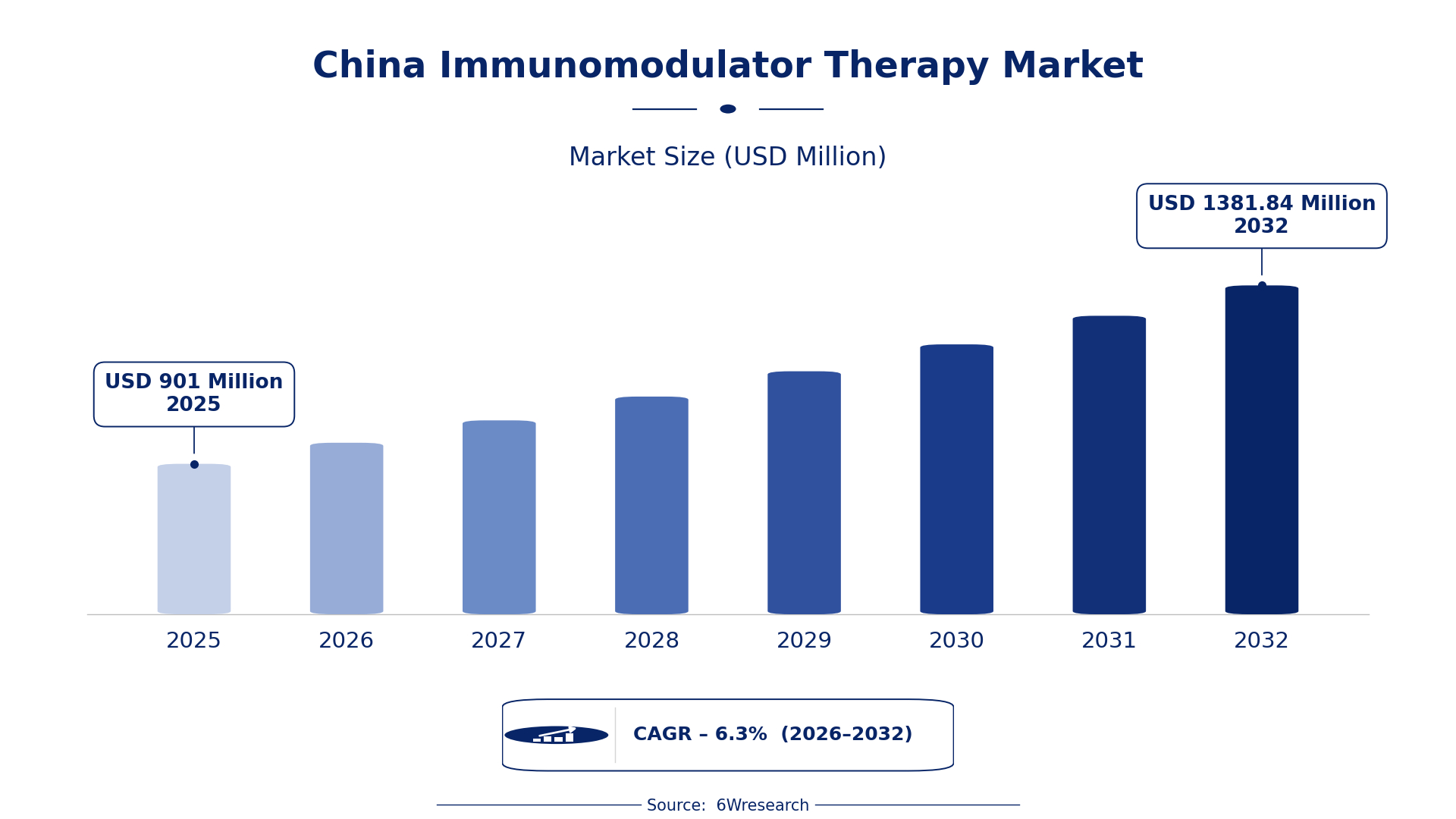
According to 6Wresearch internal database and industry insights, the China Immunomodulator Therapy Market was valued at USD 901.0 million in 2025 and is projected to reach USD 1,381.84 million by 2032, growing at a CAGR of approximately 6.3% during 2026–2032.
China Immunomodulator Therapy Market Highlights
| Report Metric | Details |
| Report Name | China Immunomodulator Therapy Market |
| Market Size 2025 | USD 901.0 million |
| Market Size 2032 | USD 1,381.84 million |
| Absolute Growth 2025–2032 | USD 480.84 million |
| CAGR 2026–2032 | 6.3% |
| Peak Annual Growth | 8.5% in 2032 |
| Forecast Period | 2026–2032 |
| Historical Data | 2022–2025 |
| Base Year | 2025 |
| Leading Modulator Type, 2025 | Immunostimulants (49% share) |
| Leading Effect on Immune System, 2025 | Immune Boost (51% share) |
| Leading Use Case, 2025 | Cancer (35% share) |
| Leading End User, 2025 | Oncology Departments (55% share) |
| Fastest-Growing Modulator Type | Gene-Based Therapies (8.7% CAGR) |
| Fastest-Growing Effect on Immune System | Cytokine Targeted (7.6% CAGR) |
| Fastest-Growing Use Case | Autoimmune (8.1% CAGR) |
| Fastest-Growing End User | Research Hospitals (7.5% CAGR) |
| Growing Sector | Oncology |
| Key End Users | Hospitals, Research Hospitals, Oncology Departments, Rheumatology Centers |
China Immunomodulator Therapy Market Year-wise Growth Rate and Key Drivers (2022–2032)
This graph illustrates the annual growth rates of the market from 2022 to 2032, highlighting a steady upward trajectory and projected market expansion over the forecast period.
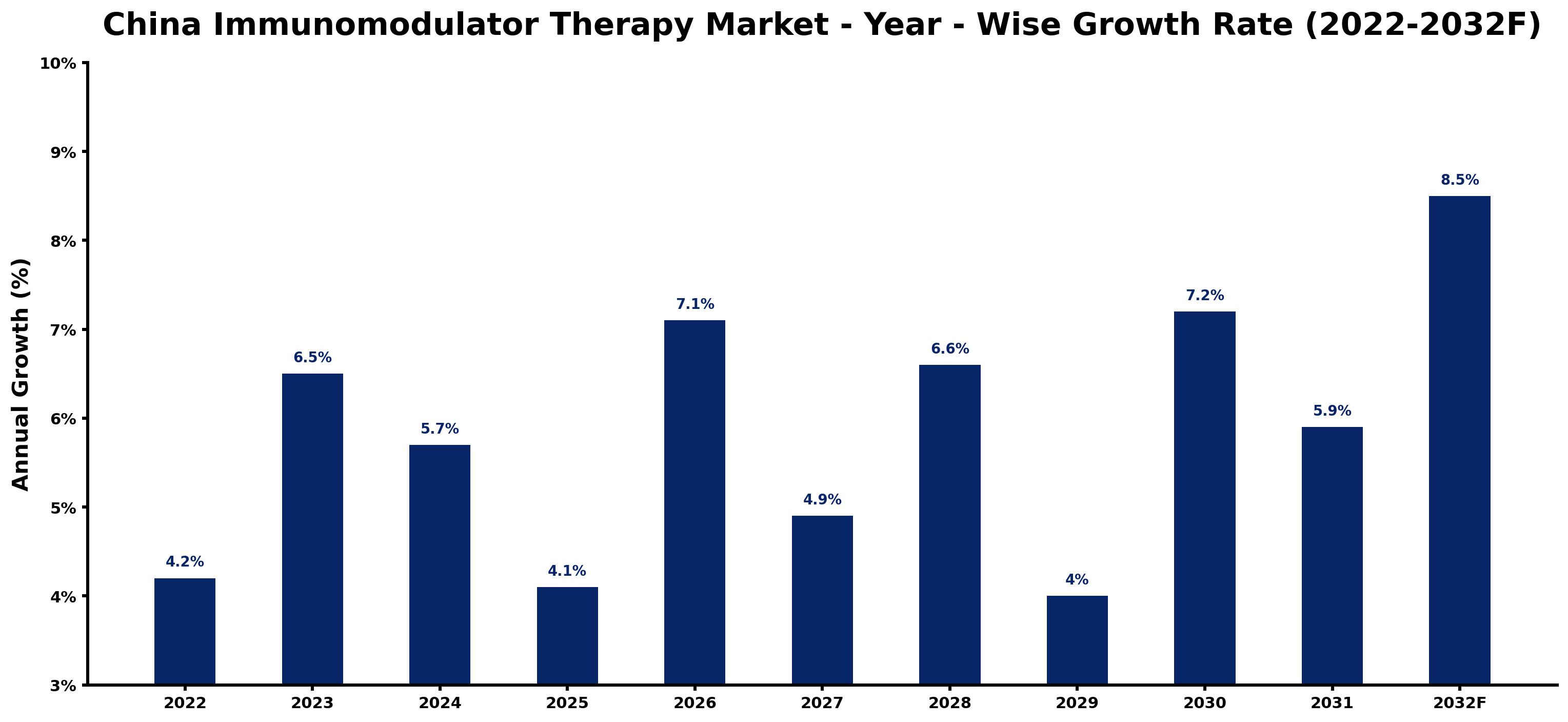
Below, each year's estimated growth is shown next to the factor that most influenced it.
| Year | Estimated Annual Growth (%) | Market Rationale |
| 2022 | 4.2 | The market experienced steady demand from hospitals treating autoimmune diseases. |
| 2023 | 6.5 | Growth accelerated due to increased funding for immunotherapy research and development. |
| 2024 | 5.7 | Demand slowed as hospitals adjusted to new treatment protocols and guidelines. |
| 2025 | 4.1 | A further slowdown occurred as competition among therapies intensified. |
| 2026 | 7.1 | Growth rebounded with new gene-based therapies entering the market. |
| 2027 | 4.9 | Demand growth slowed as healthcare providers focused on established therapies. |
| 2028 | 6.6 | The market saw renewed interest from research hospitals conducting clinical trials. |
| 2029 | 4.0 | Growth decelerated as regulatory processes for new therapies became more stringent. |
| 2030 | 7.2 | Demand surged with the launch of new immunomodulators in oncology. |
| 2031 | 5.9 | Growth slowed as market saturation began to affect new therapy uptake. |
| 2032 | 8.5 | The market peaked as advanced therapies gained widespread acceptance. |
Note: Market size estimations and growth projections presented in this report are based on 6Wresearch's proprietary forecasting methodology, utilizing the latest available industry data, government publications, and primary research inputs.
China Immunomodulator Therapy Market Synopsis
Immunomodulator Therapy in China includes treatments that modify the immune response, developed through biotechnological methods such as recombinant DNA technology. These therapies primarily target autoimmune diseases, cancers, and infections. The China Immunomodulator Therapy Market is expanding due to a rise in patient numbers and increased government support for research and development. In 2023, the government allocated 1 billion CNY for immunotherapy initiatives, which is driving demand from hospitals and research institutions. The Beijing-Tianjin-Hebei region serves as a major hub for production, contributing to the market's growth.
Market Dynamics Impact Analysis (2026–2032)
| Factor | Type | Impact | Primary Segment Affected |
| Increasing patient numbers with autoimmune diseases drive demand for therapies. | Driver | High | Immunostimulants |
| Government funding for immunotherapy research enhances development capabilities. | Driver | High | Gene-Based Therapies |
| The growing number of oncology departments creates a need for advanced therapies. | Opportunity | High | Cancer |
| Emerging gene-based therapies present new treatment options for patients. | Opportunity | Medium | Gene-Based Therapies |
| Regulatory hurdles can delay the approval of new therapies. | Restraint | High | RA |
| Competition among therapies can limit market share for new entrants. | Restraint | Medium | Biologic Modulators |
| The complex approval process for new therapies can slow market entry. | Challenge | High | Gene-Based Therapies |
| Limited awareness among healthcare providers can hinder therapy adoption. | Challenge | Medium | Immunosuppressants |
Evaluation of Drivers in China Immunomodulator Therapy Market (2026–2032)
Key forces behind demand, with the segment each one moves most, are listed below.
| Drivers | Primary Segment Affected | Why It Matters (Evidence) |
| Rising prevalence of autoimmune diseases increases demand for immunomodulators. | Immunostimulants | Over 10 million patients with autoimmune diseases in 2022 drive purchases from hospitals. |
| Government funding for immunotherapy research boosts development of new therapies. | Gene-Based Therapies | 1 billion CNY allocated in 2023 enhances research capabilities and attracts investments. |
| Growing number of oncology departments expands the market for cancer therapies. | Cancer | China has over 1,000 hospitals with dedicated oncology departments, increasing therapy usage. |
| Emerging gene-based therapies offer innovative treatment options for patients. | Gene-Based Therapies | The first gene-based therapy approved in 2020 marked a milestone in treatment. |
| Clinical trials for new immunomodulators are ongoing in numerous research hospitals. | Research Hospitals | Over 200 research hospitals are conducting trials, creating demand for innovative therapies. |
In 2022, over 10 million patients with autoimmune diseases created demand for therapies. China has over 1,000 hospitals with dedicated oncology departments, which drives the adoption of immunomodulators. Ongoing clinical trials in over 200 research hospitals are creating demand for innovative therapies to enter the market.
Evaluation of Restraints in China Immunomodulator Therapy Market
Below mentioned are some major restraints and their influence on market dynamics.
| Market Restraint | Primary Segment Affected | Why It Matters (Evidence) |
| Regulatory processes can delay the approval of new therapies, affecting market entry. | Gene-Based Therapies | The complex approval process can take several years, limiting timely access for patients. |
| Intense competition among therapies can restrict market share for new entrants. | Biologic Modulators | Established therapies dominate the market, making it challenging for newcomers to gain traction. |
| Limited awareness among healthcare providers can hinder the adoption of new therapies. | Immunosuppressants | Healthcare providers may prefer established treatments, delaying the uptake of newer options. |
| High development costs for new therapies can deter investment in the market. | RA | The average cost of developing a new therapy can exceed 1 billion CNY, limiting funding. |
| Market saturation may slow growth as existing therapies meet demand. | Cancer | With approximately 30% of cancer patients receiving immunomodulator therapy, new entries face challenges. |
China Immunomodulator Therapy Market Challenges
In the China Immunomodulator Therapy Market, over 10 million patients with autoimmune diseases create a supply challenge for producers, as demand for effective therapies exceeds current production capabilities. A lack of skilled professionals in biotechnological methods results in skills shortages, hindering producers' capacity to innovate and develop new therapies, which delays treatment options for patients. Rising research and development costs, projected at 1 billion CNY in 2023, burden importers and distributors, limiting their ability to introduce new therapies to the market. Regulatory requirements from the China National Medical Products Administration lead to lengthy approval processes, causing delays for hospitals in accessing timely immunomodulator therapies.
Trends in the China Immunomodulator Therapy Market
Four trends stand out in the China Immunomodulator Therapy Market.
- Expansion of Gene-Based Therapies: China is experiencing a shift towards gene-based therapies, particularly since the approval of the first gene-based therapy in 2020. This change is reflected in an expected CAGR of 8.7% for gene-based therapies from 2026 to 2032, indicating growing interest among healthcare providers.
- Government Focus on Immunotherapy: The Chinese government launched the 'Healthy China 2030' initiative to improve access to advanced therapies, including immunotherapy. This initiative aims to support treatment options for over 10 million patients with autoimmune diseases, driving demand for immunomodulators.
- Increase in Oncology Departments: The number of oncology departments in China is increasing, with over 1,000 hospitals now offering specialised services. This growth supports a market for immunomodulator therapies, particularly in cancer treatment, which accounted for 35% of use cases in 2025.
- Growth in Clinical Trials: Clinical trials for new immunomodulators are expanding across China, with over 200 research hospitals involved. This trend is important for developing new therapies, as it encourages collaboration between researchers and healthcare providers.
Investment Opportunities in the China Immunomodulator Therapy Market
Several openings in the China Immunomodulator Therapy Market merit attention from investors.
- Investment in Research Hospitals: With over 200 research hospitals conducting clinical trials, there is an opportunity to invest in new immunomodulator therapies. The growing demand for advanced treatments in these facilities presents a market for suppliers.
- Collaborations with Oncology Departments: The increasing number of oncology departments in China offers an opportunity to supply immunomodulators. Collaborating with these departments can facilitate access to a large patient base, particularly as cancer treatment evolves.
- Focus on Gene-Based Therapies: The projected CAGR of 8.7% for gene-based therapies indicates a ripe opportunity for investment. Engaging with research institutions can help navigate the approval process and establish a presence in this growing segment.
- Expansion into Rural Healthcare: The '14th Five-Year Plan' includes objectives for expanding access to immunotherapies in rural areas. This initiative creates a pathway for suppliers to enter underserved markets and meet increasing healthcare demands.
Government Initiatives in the China Immunomodulator Therapy Market
The 'Immunotherapy Development Plan' launched by the National Health Commission in 2021 aims to boost research funding and infrastructure for immunomodulators. This plan prioritises the development of therapies and encourages collaboration between research institutions and healthcare providers. The initiative has allocated substantial resources to improve treatment access for patients with autoimmune diseases, creating a supportive environment for therapy development. Additionally, the 'Biotechnology Innovation Strategy' established in 2022 promotes domestic production of biologic drugs, including immunomodulators, ensuring a steady supply chain for these therapies.
The National Medical Products Administration oversees the approval of new immunomodulator therapies, ensuring compliance with safety and efficacy standards. This agency updated the 'Guidelines for the Clinical Application of Immunomodulators' in 2023 to streamline the approval process for new therapies. By simplifying these guidelines, the agency aims to expedite access to new treatments for patients. Furthermore, the Ministry of Science and Technology's 'National Key Research and Development Program' initiated in 2022 focuses on innovative immunotherapy solutions, providing funding to support research initiatives.
Future Insight of the China Immunomodulator Therapy Market
The China Immunomodulator Therapy Market is set for notable changes by 2032, driven by the government's 'Healthy China 2030' initiative, which aims to improve access to advanced therapies. Increased funding for immunotherapy research will result in a broader range of treatment options for patients. The approval of new gene-based therapies will indicate a shift towards more advanced solutions in the market. With clinical trials ongoing in over 200 research facilities, suppliers will have the opportunity to offer a more diverse selection of immunomodulator therapies to buyers.
Market Segmentation Analysis
Each segment group is reviewed below, with the leader by share and the fastest grower by CAGR.
By Modulator Type – Immunostimulants Dominated, Gene-Based Therapies Expected to Grow Fastest
According to Sachin Kumar Rai, Senior Research Analyst at 6Wresearch, the largest modulator type category in 2025 was Immunostimulants, with a 49% share of total revenue. Immunostimulants hold the largest market share in China due to their widespread application in enhancing immune responses across various conditions. The substantial prevalence of autoimmune diseases, with over 10 million patients reported, significantly fuels the demand for these therapies. Over 2026–2032, Gene-Based Therapies are expected to post the fastest growth, at a CAGR of 8.7%. Gene-Based Therapies are experiencing rapid growth as they offer advanced treatment options for genetic disorders and cancers, bolstered by the government's 1 billion CNY investment in immunotherapy research. This focus on innovative therapies will likely allow immunostimulants to maintain their leading position. Suppliers should enhance their immunostimulant offerings while exploring gene-based therapies to meet the rising demand.
By Effect on Immune System – Immune Boost Dominated, Cytokine Targeted Expected to Grow Fastest
Immune Boost accounted for a 51% market share by effect on immune system in 2025. The Immune Boost segment captures a significant market share as it directly targets overall immune function, appealing to a wide range of patients. This focus aligns with China's ongoing health improvement initiatives, highlighting the importance of effective therapies. Cytokine Targeted is set to record the highest CAGR in this split, 7.6% over 2026–2032. Cytokine Targeted therapies are rapidly gaining traction due to their precise targeting of specific immune pathways, essential for treating complex diseases. This targeted approach is reinforced by the Ministry of Health's emphasis on immunotherapy in cancer treatment, driving further growth. Buyers should be aware of the increasing availability of cytokine targeted therapies, which may provide more effective treatment options for specific health conditions.
By Use Case – Cancer Dominated, Autoimmune Expected to Grow Fastest
With a 35% revenue share in 2025, Cancer was the largest use case category. Cancer is the primary use case for immunomodulator therapies, with approximately 30% of cancer patients in China receiving these treatments. The presence of over 1,000 dedicated oncology departments supports the sustained demand for therapies aimed at cancer care. Autoimmune is projected to grow fastest, at a CAGR of 8.1% during 2026–2032. Autoimmune disorders represent the fastest-growing use case, driven by a large patient population in rheumatology centers exceeding 100,000 annually. As awareness and diagnosis of these conditions improve, the demand for effective treatments is expected to rise significantly. Suppliers should prioritise the development of targeted therapies for autoimmune conditions to capitalise on this expanding market segment.
By End User – Oncology Departments Dominated, Research Hospitals Expected to Grow Fastest
Oncology Departments held a 55% share of the China Immunomodulator Therapy Market by end user in 2025. Oncology Departments dominate the market share as the primary users of immunomodulators, reflecting the critical role these therapies play in cancer treatment. The high volume of patients receiving immunomodulator therapy in these departments underscores their importance in the healthcare system. The quickest growth will come from Research Hospitals, forecast to expand at a CAGR of 7.5% between 2026 and 2032. Research Hospitals are witnessing the fastest growth due to their involvement in ongoing clinical trials for new immunomodulators, with over 200 institutions engaged in research. This focus on innovation positions research hospitals as key players in the market. Suppliers should collaborate with research hospitals to align their product offerings with the latest advancements and clinical requirements.
Key Attractiveness of the Report
- 10 Years of Market Numbers
- Historical Data Starting from 2022 to 2025
- Base Year 2025
- Forecast Data until 2032
- Key Performance Indicators Impacting the Market
- Major Upcoming Developments and Projects
Key Highlights of the Report:
- China Immunomodulator Therapy Market Outlook
- Market Size of China Immunomodulator Therapy Market, 2025
- Forecast of China Immunomodulator Therapy Market, 2032
- Historical Data and Forecast of China Immunomodulator Therapy Revenues & Volume for the Period 2022 - 2032F
- China Immunomodulator Therapy Market Trend Evolution
- China Immunomodulator Therapy Market Drivers and Challenges
- China Immunomodulator Therapy Price Trends
- China Immunomodulator Therapy Porter's Five Forces
- China Immunomodulator Therapy Industry Life Cycle
- Historical Data and Forecast of China Immunomodulator Therapy Market Revenues & Volume By Modulator Type for the Period 2022 - 2032F
- Historical Data and Forecast of China Immunomodulator Therapy Market Revenues & Volume By Immunostimulants for the Period 2022 - 2032F
- Historical Data and Forecast of China Immunomodulator Therapy Market Revenues & Volume By Immunosuppressants for the Period 2022 - 2032F
- Historical Data and Forecast of China Immunomodulator Therapy Market Revenues & Volume By Biologic Modulators for the Period 2022 - 2032F
- Historical Data and Forecast of China Immunomodulator Therapy Market Revenues & Volume By Gene-Based Therapies for the Period 2022 - 2032F
- Historical Data and Forecast of China Immunomodulator Therapy Market Revenues & Volume By Effect on Immune System for the Period 2022 - 2032F
- Historical Data and Forecast of China Immunomodulator Therapy Market Revenues & Volume By Immune Boost for the Period 2022 - 2032F
- Historical Data and Forecast of China Immunomodulator Therapy Market Revenues & Volume By Immune Suppression for the Period 2022 - 2032F
- Historical Data and Forecast of China Immunomodulator Therapy Market Revenues & Volume By Cytokine Targeted for the Period 2022 - 2032F
- Historical Data and Forecast of China Immunomodulator Therapy Market Revenues & Volume By Genetically Altered Cells for the Period 2022 - 2032F
- Historical Data and Forecast of China Immunomodulator Therapy Market Revenues & Volume By Use Case for the Period 2022 - 2032F
- Historical Data and Forecast of China Immunomodulator Therapy Market Revenues & Volume By Cancer, Infections for the Period 2022 - 2032F
- Historical Data and Forecast of China Immunomodulator Therapy Market Revenues & Volume By Autoimmune, Transplants for the Period 2022 - 2032F
- Historical Data and Forecast of China Immunomodulator Therapy Market Revenues & Volume By RA, Lupus, Psoriasis for the Period 2022 - 2032F
- Historical Data and Forecast of China Immunomodulator Therapy Market Revenues & Volume By Experimental Use for the Period 2022 - 2032F
- Historical Data and Forecast of China Immunomodulator Therapy Market Revenues & Volume By End User for the Period 2022 - 2032F
- Historical Data and Forecast of China Immunomodulator Therapy Market Revenues & Volume By Oncology Departments for the Period 2022 - 2032F
- Historical Data and Forecast of China Immunomodulator Therapy Market Revenues & Volume By Hospitals for the Period 2022 - 2032F
- Historical Data and Forecast of China Immunomodulator Therapy Market Revenues & Volume By Rheumatology Centers for the Period 2022 - 2032F
- Historical Data and Forecast of China Immunomodulator Therapy Market Revenues & Volume By Research Hospitals for the Period 2022 - 2032F
- China Immunomodulator Therapy Import Export Trade Statistics
- Market Opportunity Assessment By Modulator Type
- Market Opportunity Assessment By Effect on Immune System
- Market Opportunity Assessment By Use Case
- Market Opportunity Assessment By End User
- China Immunomodulator Therapy Top Companies Market Share
- China Immunomodulator Therapy Competitive Benchmarking By Technical and Operational Parameters
- China Immunomodulator Therapy Company Profiles
- China Immunomodulator Therapy Key Strategic Recommendations
Market Covered
The report offers an extensive study of the following market segments.
By Modulator Type
- Immunostimulants
- Immunosuppressants
- Biologic Modulators
- Gene-Based Therapies
By Effect on Immune System
- Immune Boost
- Immune Suppression
- Cytokine Targeted
- Genetically Altered Cells
By Use Case
- Cancer
- Infections
- Autoimmune
- Transplants
- RA
- Lupus
- Psoriasis
- Experimental Use
By End User
- Oncology Departments
- Hospitals
- Rheumatology Centers
- Research Hospitals































