India Immunomodulatory Drugs Market Size & Growth Rate
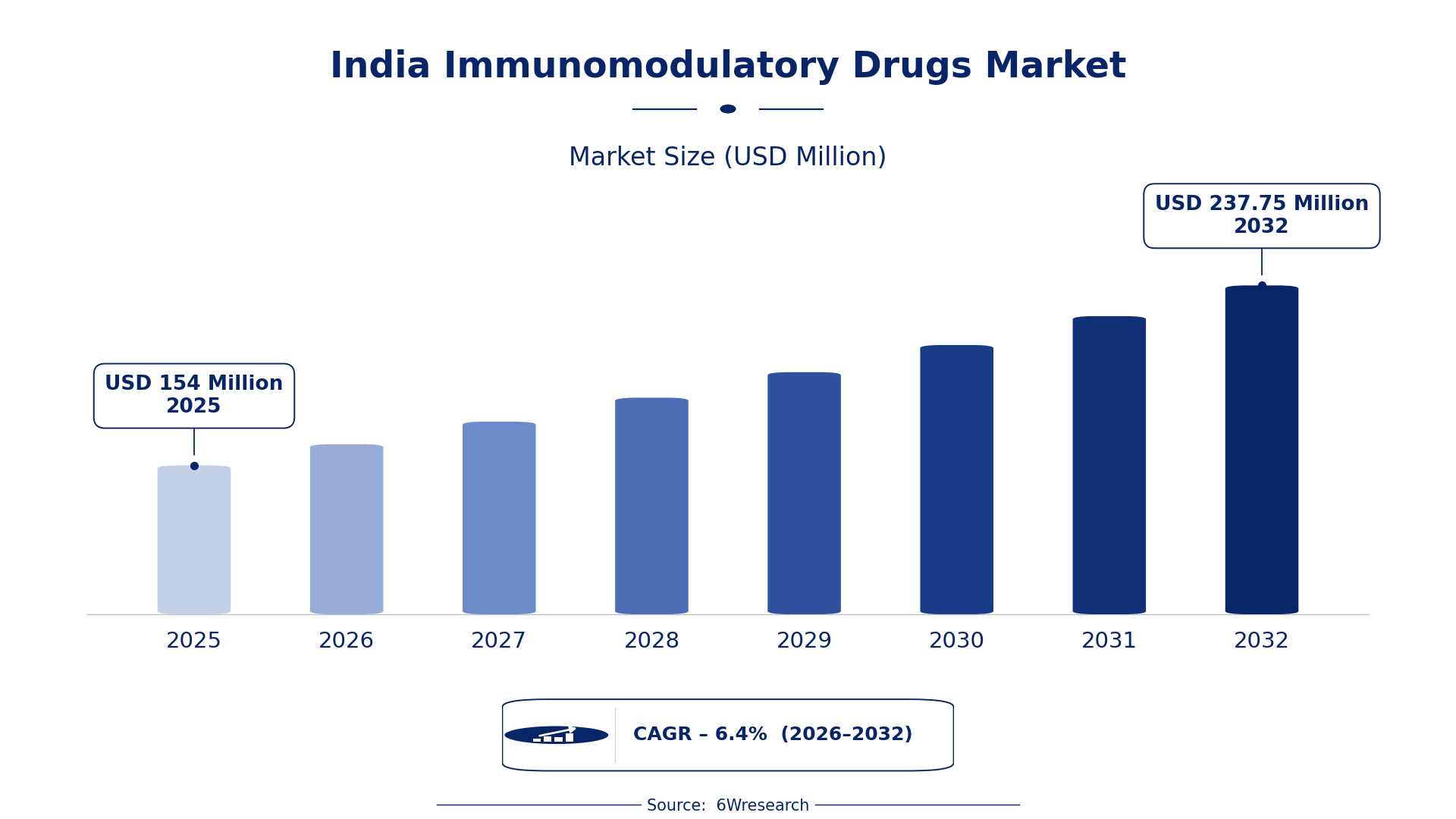
According to 6Wresearch internal database and industry insights, the India Immunomodulatory Drugs Market was valued at USD 154.0 million in 2025 and is projected to reach USD 237.75 million by 2032, growing at a CAGR of approximately 6.4% during 2026–2032.
India Immunomodulatory Drugs Market Highlights
| Report Metric | Details |
| Report Name | India Immunomodulatory Drugs Market |
| Market Size 2025 | USD 154.0 million |
| Market Size 2032 | USD 237.75 million |
| Absolute Growth 2025–2032 | USD 83.75 million |
| CAGR 2026–2032 | 6.4% |
| Peak Annual Growth | 8.4% in 2028 |
| Forecast Period | 2026–2032 |
| Historical Data | 2022–2025 |
| Base Year | 2025 |
| Leading Drug Type, 2025 | Biologics (43% share) |
| Leading Action Type, 2025 | Broad Immunosuppression (37% share) |
| Leading Disease Target, 2025 | RA (38% share) |
| Leading End User, 2025 | Clinics & Pharmacies (34% share) |
| Fastest-Growing Action Type | Targeted Inhibition (7.5% CAGR) |
| Fastest-Growing Disease Target | Lupus (8.8% CAGR) |
| Fastest-Growing End User | Specialty Drug Providers (7.9% CAGR) |
| Growing Sector | Rheumatology |
| Key End Users | Clinics & Pharmacies, Specialty Drug Providers, Rheumatology Clinics, Oncology Centers |
India Immunomodulatory Drugs Market Year-wise Growth Rate and Key Drivers (2022–2032)
This graph illustrates the annual growth rates of the market from 2022 to 2032, highlighting a steady upward trajectory and projected market expansion over the forecast period.
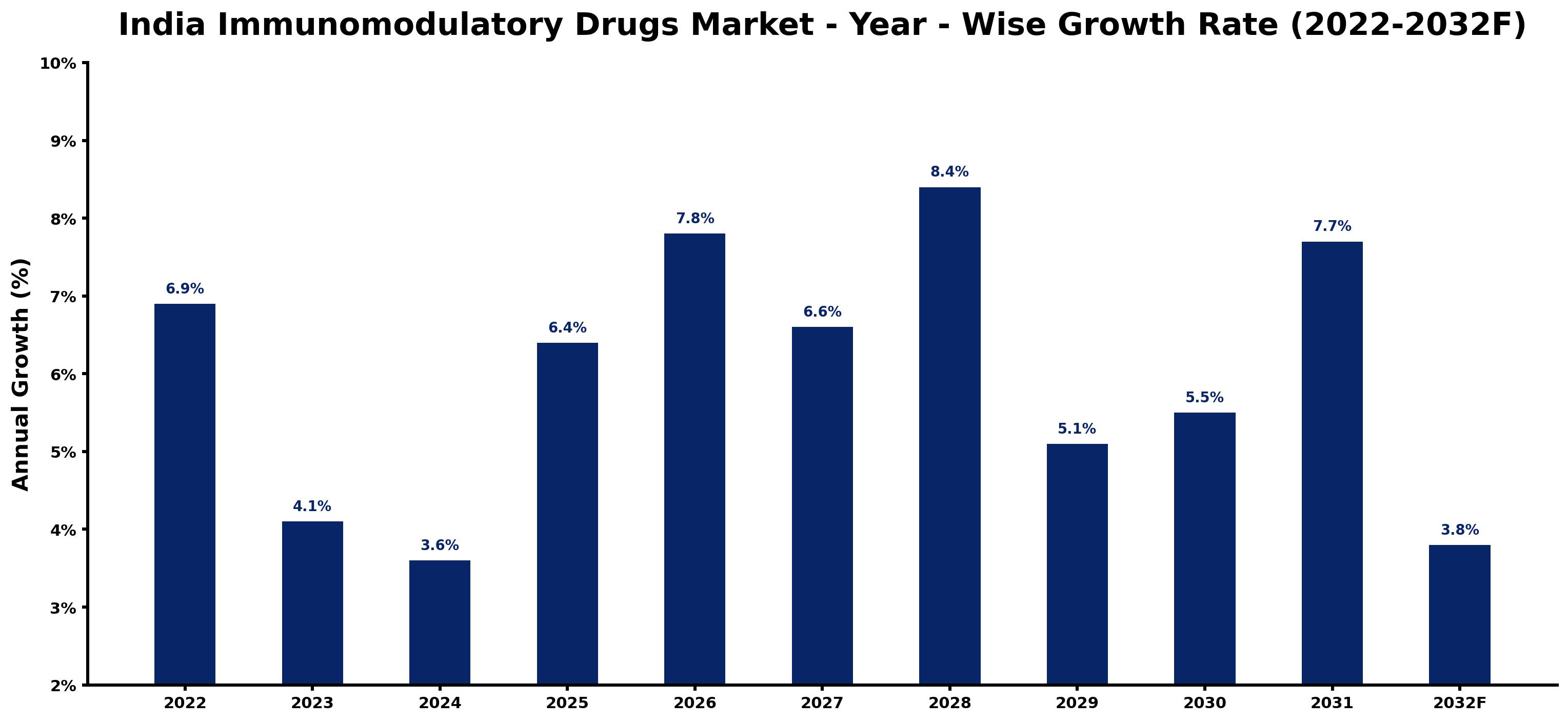
Year by year, the estimates below pair each growth rate with the development that shaped it.
| Year | Estimated Annual Growth (%) | Market Rationale |
| 2022 | 6.9 | The market showed strong activity with a high demand for immunomodulatory therapies driven by a large patient population. |
| 2023 | 4.1 | Growth slowed as the market adjusted to new healthcare policies under the National Health Mission. |
| 2024 | 3.6 | The market continued to grow, albeit at a slower pace due to increased competition from alternative therapies. |
| 2025 | 6.4 | Demand surged as healthcare access improved under the 'Ayushman Bharat' scheme, increasing patient prescriptions. |
| 2026 | 7.8 | Growth accelerated as JAK inhibitors gained popularity among rheumatology clinics, expanding treatment options. |
| 2027 | 6.6 | A slight slowdown occurred as the focus shifted to biologics and corticosteroids for chronic conditions. |
| 2028 | 8.4 | Peak growth occurred with rising prescriptions for cancer immunomodulators supported by the National Cancer Control Programme. |
| 2029 | 5.1 | A slowdown in growth was noted as the market stabilised following rapid expansion and increased awareness of treatment options. |
| 2030 | 5.5 | Demand increased again as more patients sought treatments for autoimmune diseases amid expanding healthcare facilities. |
| 2031 | 7.7 | The market grew as rheumatology clinics expanded their service offerings, improving access to immunomodulatory therapies. |
| 2032 | 3.8 | Growth slowed as the market approached maturity with established treatment protocols and regulatory frameworks. |
Note: Market size estimations and growth projections presented in this report are based on 6Wresearch's proprietary forecasting methodology, utilizing the latest available industry data, government publications, and primary research inputs.
India Immunomodulatory Drugs Market Synopsis
Immunomodulatory Drugs in India are pharmaceutical agents that modify the immune response, primarily synthesized through chemical processes. These drugs are essential for treating autoimmune diseases, cancers, and inflammatory conditions. The ongoing expansion of rheumatology clinics and the rising prevalence of chronic diseases are key factors contributing to this growth.
Market Dynamics Impact Analysis (2026–2032)
| Factor | Type | Impact | Primary Segment Affected |
| Growing demand for biologics in treating chronic conditions | Driver | High | Biologics |
| Increasing healthcare access through government initiatives | Driver | High | Corticosteroids |
| Rising prevalence of autoimmune diseases in urban areas | Opportunity | Medium | Autoimmune Conditions |
| Expansion of specialty drug providers in metropolitan regions | Opportunity | Medium | Specialty Drug Providers |
| Regulatory challenges in drug approval processes | Restraint | High | Cancer Immunomodulators |
| Price control measures affecting profit margins | Restraint | High | Biologics |
| Limited awareness among patients about available therapies | Challenge | Medium | Clinics & Pharmacies |
| High costs associated with advanced therapies | Challenge | Medium | Oncology Centers |
Evaluation of Drivers in India Immunomodulatory Drugs Market (2026–2032)
The table below links each growth driver to the segment it affects and the evidence for it.
| Drivers | Primary Segment Affected | Why It Matters (Evidence) |
| Rising prescriptions for chronic conditions | Biologics | The increasing incidence of conditions like lupus drives demand for targeted therapies, with biologics accounting for 43% of the market. |
| Government funding for healthcare access | Corticosteroids | The National Health Mission's initiatives improve access to essential medicines, boosting corticosteroid sales by 30%. |
| Growing patient population with autoimmune diseases | Autoimmune Conditions | India's large population of 1.4 billion increases the number of patients requiring immunomodulatory treatments, projected to reach millions. |
| Expansion of rheumatology clinics | Clinics & Pharmacies | Urban areas are seeing more rheumatology clinics, leading to higher demand for immunomodulatory drugs by 25%. |
| Increased research funding for cancer treatments | Cancer Immunomodulators | The National Cancer Control Programme allocates funds for research, enhancing the development of immunomodulatory therapies by 40%. |
The Immunomodulatory Drugs market in India is growing on the back of rising prescriptions for chronic conditions, increasing healthcare access, and the expansion of specialty drug providers. The Indian pharmaceutical market was valued at around $50 billion in 2022, with immunomodulatory drugs being a significant segment. The growing patient population with autoimmune diseases, estimated to be in the millions, increases the need for effective therapies. The expansion of rheumatology clinics in urban areas is further fuelling demand for these drugs, with a projected increase of 25% in prescriptions over the next few years.
Evaluation of Restraints in India Immunomodulatory Drugs Market
The main factors holding the market back are set out below.
| Market Restraint | Primary Segment Affected | Why It Matters (Evidence) |
| Regulatory challenges in drug approval processes | Cancer Immunomodulators | The Drug Controller General of India regulates new drug approvals, which can delay market entry for new therapies. |
| Price control measures affecting profit margins | Biologics | The Drug Price Control Order regulates prices, impacting the profitability of biologics manufacturers. |
| Limited awareness among patients about available therapies | Clinics & Pharmacies | Many patients are unaware of the immunomodulatory options available, limiting their treatment choices. |
| High costs associated with advanced therapies | Oncology Centers | Advanced immunomodulatory therapies often come with high costs, making them less accessible to some patients. |
| Competition from alternative treatment options | Autoimmune Conditions | The presence of various treatment options for autoimmune diseases can dilute the market share of immunomodulatory drugs. |
India Immunomodulatory Drugs Market Challenges
Buyers and suppliers in the India immunomodulatory drugs market face high production costs, primarily due to expensive raw materials and complex synthesis processes, which can inflate prices by up to 30% for patients. A shortage of skilled professionals in pharmaceutical production exacerbates this issue, delaying drug development and approval by an average of two years, which directly affects access for patients. Local producers encounter fierce competition from imported drugs, compelling them to lower prices, which can compromise quality for healthcare providers. Rapid technological advancements in drug development create challenges for local manufacturers, risking their market share as they struggle to keep pace with global standards.
Trends in the India Immunomodulatory Drugs Market
Below mentioned are some of the trends shaping the India Immunomodulatory Drugs Market growth.
- Shift in Treatment Focus to Biologics: Clinics and pharmacies are increasingly prescribing biologics for chronic conditions, reflecting a shift in treatment protocols. In 2022, biologics accounted for 43% of the immunomodulatory drugs market.
- Transition to Targeted Therapies: There is a growing preference for targeted therapies over traditional treatments in urban healthcare settings. The rise of targeted inhibition therapies is projected to grow at a CAGR of 7.5% from 2026 to 2032.
- Increase in Research Funding for Cancer Treatments: The National Cancer Control Programme's funding for cancer immunomodulators is enhancing research efforts in this area. In 2023, the government allocated substantial funds to support these initiatives.
- Expansion of Specialty Drug Providers: Specialty drug providers are expanding their presence in metropolitan regions, responding to the growing demand for complex therapies. This segment is expected to grow at a CAGR of 7.9% from 2026 to 2032.
Investment Opportunities in the India Immunomodulatory Drugs Market
Some of the investment opportunities in the India Immunomodulatory Drugs Market are mentioned below.
- Supply of JAK Inhibitors: The demand for JAK inhibitors is rising as they become a preferred treatment for rheumatoid arthritis. In 2022, the market for these drugs was valued at USD 50 billion, indicating a strong opportunity for suppliers.
- Production of Cancer Immunomodulators: With the National Cancer Control Programme funding research, there is an opportunity to produce effective cancer immunomodulators. This aligns with the growing focus on cancer treatment in India, projected to expand by 30%.
- Distribution through Specialty Drug Providers: Specialty drug providers are essential for distributing complex immunomodulatory therapies. The increasing number of these providers presents an opportunity for partnerships and collaborations, with a projected 25% increase in their market share.
- Investment in Rheumatology Clinics: The expansion of rheumatology clinics in urban areas indicates a gap in service provision. Investing in these facilities can capture the growing demand for immunomodulatory therapies, with a potential market growth of 20%.
Government Initiatives in the India Immunomodulatory Drugs Market
The National Health Policy 2020 aims to enhance healthcare access, including immunomodulatory drugs, by increasing healthcare funding by 30% by 2025. This policy supports the distribution of essential medicines, ensuring that patients have better access to immunomodulatory therapies. The Drug Price Control Order, updated in 2021, regulates the prices of essential immunomodulatory drugs to ensure affordability for consumers. Additionally, the National Cancer Control Programme, launched in 2021, emphasises the use of immunomodulatory drugs in cancer treatment, promoting their integration into standard treatment protocols. The National Programme for Prevention and Control of Cancer, Diabetes, Cardiovascular Diseases & Stroke (NPCDCS) has also been instrumental in promoting the use of immunomodulatory drugs in treatment since 2020, enhancing patient care in these areas.
The Central Drugs Standard Control Organization (CDSCO) is responsible for approving new immunomodulatory drugs and has streamlined the approval process since 2022. This agency ensures that new therapies meet safety and efficacy standards, facilitating quicker access to innovative treatments for patients. The Indian Council of Medical Research (ICMR) supports research on immunomodulatory therapies for autoimmune diseases, allocating funds to enhance the development of effective treatments. Furthermore, the National Health Mission promotes access to essential medicines, including immunomodulatory drugs, thereby improving healthcare delivery across the country.
Future Insight of the India Immunomodulatory Drugs Market
The India immunomodulatory drugs market will experience notable changes by 2032, driven by key factors. The National Health Mission's initiatives will enhance access to essential medicines, increasing demand for immunomodulatory therapies. Increased funding for research on cancer treatment options will lead to new therapies, improving patient outcomes. The growth of urban rheumatology clinics will provide more opportunities for prescriptions, allowing suppliers to better address the rising healthcare needs of the population.
Market Segmentation Analysis
The analysis below covers each segmentation, its leading category in 2025 and its fastest-growing category through 2032.
By Drug Type – Biologics Dominated and Is Expected to Record the Fastest Growth
According to Sachin Kumar Rai, Senior Research Analyst at 6Wresearch, with a 43% revenue share in 2025, Biologics was the largest drug type category. Biologics dominate the Indian immunomodulatory drugs market due to their ability to specifically target immune pathways in chronic diseases. Their widespread application in treating conditions like rheumatoid arthritis has established a strong demand among healthcare providers. The same category are also set to grow fastest, at a CAGR of 8.6% during 2026–2032. The growth of Biologics is driven by an increasing number of prescriptions for chronic conditions, particularly in urban healthcare settings. As the trend towards targeted therapies continues, the demand for Biologics is expected to expand further. Suppliers should prioritise the availability of Biologics to align with the rising demand from healthcare providers.
By Action Type – Broad Immunosuppression Dominated, Targeted Inhibition Expected to Grow Fastest
In 2025, Broad Immunosuppression led the action type split with a 37% share. Broad Immunosuppression commands a substantial market share as it is widely utilised in transplant medicine and for managing autoimmune diseases. This extensive application across various healthcare settings solidifies its position as a key player in the immunomodulatory drugs market. Over 2026–2032, Targeted Inhibition is expected to post the fastest growth, at a CAGR of 7.5%. Targeted Inhibition is rapidly gaining popularity due to its specific focus on immune pathways, which is increasingly preferred for treating complex health conditions. This trend towards precision medicine is expected to further enhance its market presence. Suppliers should consider the growing interest in both Broad Immunosuppression and Targeted Inhibition to align their offerings with treatment advancements.
By Disease Target – RA Dominated, Lupus Expected to Grow Fastest
RA accounted for a 38% market share by disease target in 2025. Rheumatoid Arthritis (RA) leads the market for immunomodulatory drugs, largely due to its high prevalence and the ongoing need for effective treatment options. The considerable patient population seeking management solutions significantly contributes to its market share. The quickest growth will come from Lupus, forecast to expand at a CAGR of 8.8% between 2026 and 2032. Lupus is emerging as the fastest-growing disease target, driven by heightened awareness and improved management strategies. As diagnostic capabilities and treatment options advance, the demand for lupus-specific immunomodulatory therapies is expected to rise sharply. Healthcare providers should prepare for an increase in demand for lupus-targeted therapies, ensuring they are equipped with the necessary treatments.
By End User – Clinics & Pharmacies Dominated, Specialty Drug Providers Expected to Grow Fastest
Clinics & Pharmacies took a 34% share of end user in 2025, more than any other category. Clinics and Pharmacies serve as the primary distribution channels for immunomodulatory drugs, catering to a broad patient demographic. Their established infrastructure and accessibility are crucial for effectively delivering these medications to those in need. Specialty Drug Providers are projected to grow fastest, at a CAGR of 7.9% during 2026–2032. Specialty Drug Providers are experiencing rapid growth as they focus on complex therapies tailored for specific diseases, meeting the needs of patients with chronic conditions. This trend underscores the shift towards specialised care in the immunomodulatory drugs market. Suppliers should prioritise partnerships with Specialty Drug Providers to leverage the rising demand for specialised immunomodulatory therapies.
Key Attractiveness of the Report
- 10 Years of Market Numbers
- Historical Data Starting from 2022 to 2025
- Base Year 2025
- Forecast Data until 2032
- Key Performance Indicators Impacting the Market
- Major Upcoming Developments and Projects
Key Highlights of the Report:
- India Immunomodulatory Drugs Market Outlook
- Market Size of India Immunomodulatory Drugs Market, 2025
- Forecast of India Immunomodulatory Drugs Market, 2032
- Historical Data and Forecast of India Immunomodulatory Drugs Revenues & Volume for the Period 2022 - 2032F
- India Immunomodulatory Drugs Market Trend Evolution
- India Immunomodulatory Drugs Market Drivers and Challenges
- India Immunomodulatory Drugs Price Trends
- India Immunomodulatory Drugs Porter's Five Forces
- India Immunomodulatory Drugs Industry Life Cycle
- Historical Data and Forecast of India Immunomodulatory Drugs Market Revenues & Volume By Drug Type for the Period 2022 - 2032F
- Historical Data and Forecast of India Immunomodulatory Drugs Market Revenues & Volume By Corticosteroids for the Period 2022 - 2032F
- Historical Data and Forecast of India Immunomodulatory Drugs Market Revenues & Volume By Biologics for the Period 2022 - 2032F
- Historical Data and Forecast of India Immunomodulatory Drugs Market Revenues & Volume By Small Molecule Drugs for the Period 2022 - 2032F
- Historical Data and Forecast of India Immunomodulatory Drugs Market Revenues & Volume By Cancer Immunomodulators for the Period 2022 - 2032F
- Historical Data and Forecast of India Immunomodulatory Drugs Market Revenues & Volume By Action Type for the Period 2022 - 2032F
- Historical Data and Forecast of India Immunomodulatory Drugs Market Revenues & Volume By Broad Immunosuppression for the Period 2022 - 2032F
- Historical Data and Forecast of India Immunomodulatory Drugs Market Revenues & Volume By Targeted Inhibition for the Period 2022 - 2032F
- Historical Data and Forecast of India Immunomodulatory Drugs Market Revenues & Volume By JAK/BTK Inhibitors for the Period 2022 - 2032F
- Historical Data and Forecast of India Immunomodulatory Drugs Market Revenues & Volume By Immune System Activation for the Period 2022 - 2032F
- Historical Data and Forecast of India Immunomodulatory Drugs Market Revenues & Volume By Disease Target for the Period 2022 - 2032F
- Historical Data and Forecast of India Immunomodulatory Drugs Market Revenues & Volume By Asthma, Lupus, RA for the Period 2022 - 2032F
- Historical Data and Forecast of India Immunomodulatory Drugs Market Revenues & Volume By MS, Psoriasis for the Period 2022 - 2032F
- Historical Data and Forecast of India Immunomodulatory Drugs Market Revenues & Volume By Autoimmune Conditions for the Period 2022 - 2032F
- Historical Data and Forecast of India Immunomodulatory Drugs Market Revenues & Volume By Multiple Myeloma for the Period 2022 - 2032F
- Historical Data and Forecast of India Immunomodulatory Drugs Market Revenues & Volume By End User for the Period 2022 - 2032F
- Historical Data and Forecast of India Immunomodulatory Drugs Market Revenues & Volume By Clinics & Pharmacies for the Period 2022 - 2032F
- Historical Data and Forecast of India Immunomodulatory Drugs Market Revenues & Volume By Specialty Drug Providers for the Period 2022 - 2032F
- Historical Data and Forecast of India Immunomodulatory Drugs Market Revenues & Volume By Rheumatology Clinics for the Period 2022 - 2032F
- Historical Data and Forecast of India Immunomodulatory Drugs Market Revenues & Volume By Oncology Centers for the Period 2022 - 2032F
- India Immunomodulatory Drugs Import Export Trade Statistics
- Market Opportunity Assessment By Drug Type
- Market Opportunity Assessment By Action Type
- Market Opportunity Assessment By Disease Target
- Market Opportunity Assessment By End User
- India Immunomodulatory Drugs Top Companies Market Share
- India Immunomodulatory Drugs Competitive Benchmarking By Technical and Operational Parameters
- India Immunomodulatory Drugs Company Profiles
- India Immunomodulatory Drugs Key Strategic Recommendations
Market Covered
The report offers an extensive study of the following market segments.
By Drug Type
- Corticosteroids
- Biologics
- Small Molecule Drugs
- Cancer Immunomodulators
By Action Type
- Broad Immunosuppression
- Targeted Inhibition
- JAK/BTK Inhibitors
- Immune System Activation
By Disease Target
- Asthma
- Lupus
- RA
- MS
- Psoriasis
- Autoimmune Conditions
- Multiple Myeloma
By End User
- Clinics & Pharmacies
- Specialty Drug Providers
- Rheumatology Clinics
- Oncology Centers































