India Immunosuppressive Drugs Market Size & Growth Rate
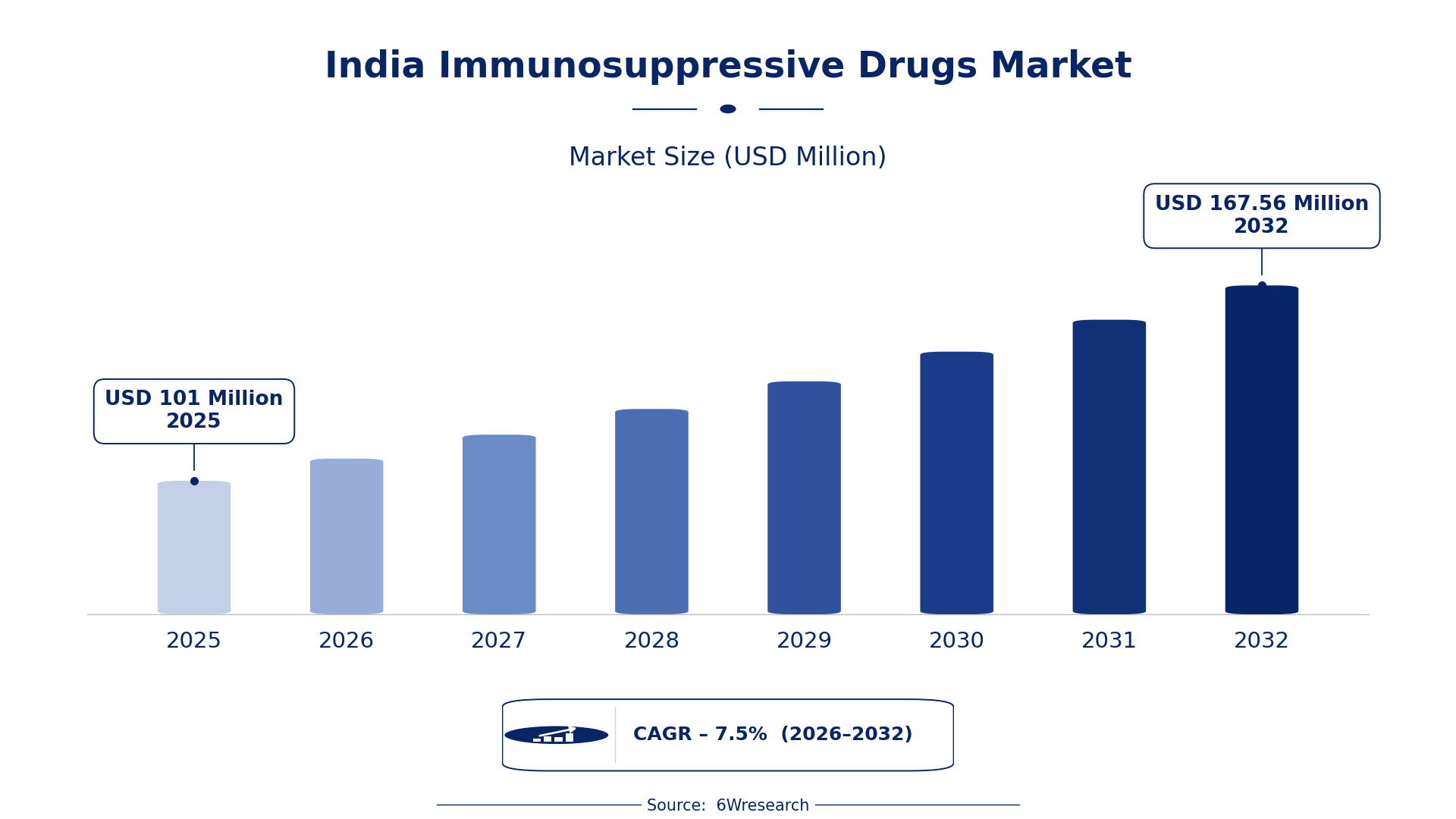
According to 6Wresearch internal database and industry insights, the India Immunosuppressive Drugs Market was valued at USD 101.0 million in 2025 and is projected to reach USD 167.56 million by 2032, growing at a CAGR of approximately 7.5% during 2026–2032.
India Immunosuppressive Drugs Market Highlights
| Report Metric | Details |
| Report Name | India Immunosuppressive Drugs Market |
| Market Size 2025 | USD 101.0 million |
| Market Size 2032 | USD 167.56 million |
| Absolute Growth 2025–2032 | USD 66.56 million |
| CAGR 2026–2032 | 7.5% |
| Peak Annual Growth | 10.0% in 2032 |
| Forecast Period | 2026–2032 |
| Historical Data | 2022–2025 |
| Base Year | 2025 |
| Leading Drug Category, 2025 | Long-Term Immunosuppressants (38% share) |
| Leading Duration of Therapy, 2025 | Chronic Use (45% share) |
| Leading Formulation Type, 2025 | Injectable/Oral (40% share) |
| Leading End User, 2025 | Transplant Centers (39% share) |
| Fastest-Growing Drug Category | Biologic-Based (10.1% CAGR) |
| Fastest-Growing Duration of Therapy | Multi-Drug Regimens (9.7% CAGR) |
| Fastest-Growing Formulation Type | Subcutaneous Injection (8.7% CAGR) |
| Fastest-Growing End User | Specialty Drug Clinics (9.8% CAGR) |
| Growing Sector | Transplant Services |
| Key End Users | Hospitals, Specialty Clinics, Transplant Centers, Autoimmune Disease Clinics |
India Immunosuppressive Drugs Market Year-wise Growth Rate and Key Drivers (2022–2032)
This graph illustrates the annual growth rates of the market from 2022 to 2032, highlighting a steady upward trajectory and projected market expansion over the forecast period.
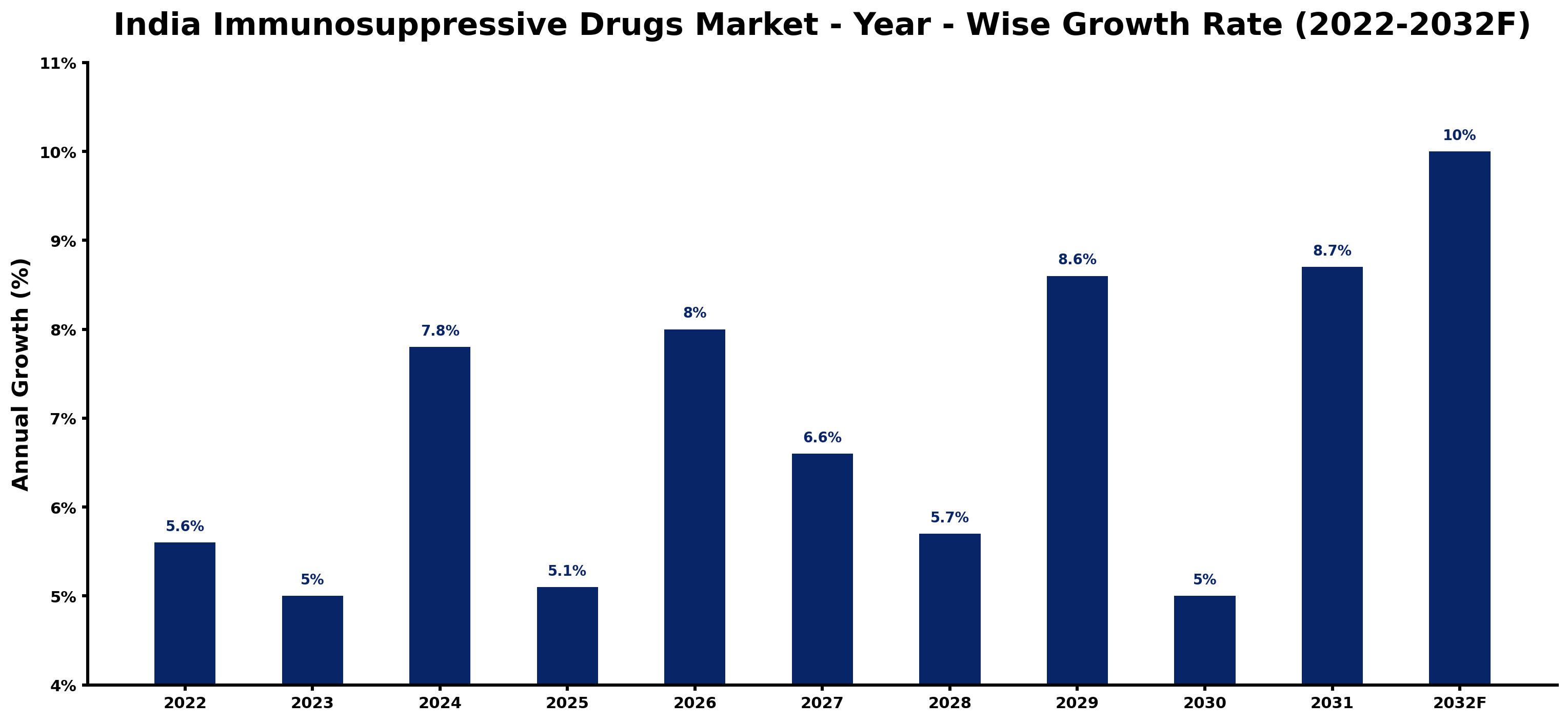
Annual growth estimates for each year appear below with the principal reason behind them, explaining the shifts that set the pace of the market.
| Year | Estimated Annual Growth (%) | Market Rationale |
| 2022 | 5.6 | The market experienced steady growth, driven by increased healthcare access and transplant procedures. |
| 2023 | 5.0 | Demand growth slowed slightly due to market adjustments and evolving healthcare policies. |
| 2024 | 7.8 | A surge in kidney transplants boosted demand for immunosuppressive drugs significantly. |
| 2025 | 5.1 | Growth slowed again as market dynamics stabilised following previous peaks. |
| 2026 | 8.0 | Investment in healthcare infrastructure led to a rebound in drug demand. |
| 2027 | 6.6 | The market saw a slowdown as growth rates normalised after previous highs. |
| 2028 | 5.7 | Demand continued to slow, reflecting a stabilisation in transplant rates. |
| 2029 | 8.6 | An increase in autoimmune disease diagnoses spurred renewed demand for therapies. |
| 2030 | 5.0 | Growth slowed again, reflecting adjustments in healthcare spending and priorities. |
| 2031 | 8.7 | The market rebounded with rising investment in immunosuppressive therapies. |
| 2032 | 10.0 | A peak in growth is anticipated as new therapies enter the market. |
Note: Market size estimations and growth projections presented in this report are based on 6Wresearch's proprietary forecasting methodology, utilizing the latest available industry data, government publications, and primary research inputs.
India Immunosuppressive Drugs Market Synopsis
Immunosuppressive Drugs in India encompass pharmaceutical agents that inhibit immune system activity, primarily used to prevent organ rejection and treat autoimmune diseases. The market is driven by a large population exceeding 1.3 billion, leading to significant demand for these drugs. In 2022, approximately 7,000 kidney transplants were performed, highlighting the need for effective immunosuppressive therapies. Investment in healthcare infrastructure and initiatives such as the National Health Mission further enhance access to these essential medicines. Overall, the market is expected to grow due to increasing healthcare access and advancements in treatment options.
Market Dynamics Impact Analysis (2026–2032)
| Factor | Type | Impact | Primary Segment Affected |
| Increasing number of kidney transplants drives demand for immunosuppressive drugs. | Driver | High | Long-Term Immunosuppressants |
| Rising prevalence of autoimmune diseases creates a larger patient base. | Driver | High | Chronic Use |
| Growth in healthcare infrastructure investment opens new markets for drug distribution. | Opportunity | High | Biologic-Based |
| Expanding transplant centres increase the need for immunosuppressive therapies. | Opportunity | High | Transplant Centers |
| Regulatory hurdles can delay the introduction of new therapies. | Restraint | Medium | Long-Term Immunosuppressants |
| Price controls under the Drug Price Control Order limit profit margins for manufacturers. | Restraint | Medium | Biologic-Based |
| Supply chain disruptions affect the availability of essential drugs. | Challenge | High | Chronic Use |
| Competition among manufacturers can lead to price wars, affecting profitability. | Challenge | Medium | Transplant Centers |
Evaluation of Drivers in India Immunosuppressive Drugs Market (2026–2032)
The table below links each growth driver to the segment it affects and the evidence for it.
| Drivers | Primary Segment Affected | Why It Matters (Evidence) |
| Increased healthcare access improves patient treatment options. | Long-Term Immunosuppressants | In 2022, the National Health Mission improved access to essential medicines, driving demand. |
| Rising autoimmune disease prevalence increases drug consumption. | Chronic Use | With 3-5% of the population affected, demand for treatments is significant. |
| Investment in healthcare infrastructure expands distribution channels. | Biologic-Based | The establishment of new healthcare facilities boosts drug availability. |
| Growing number of transplant centres increases patient referrals. | Transplant Centers | In 2022, approximately 7,000 kidney transplants were performed, driving demand. |
| Technological advancements in drug formulations improve treatment effectiveness. | Biologic-Based | New biologic therapies are being developed to target specific immune responses. |
Market growth for Immunosuppressive Drugs in India is underpinned by increased healthcare access, rising autoimmune disease prevalence, and investment in healthcare infrastructure. In 2022, the National Health Mission improved access to essential medicines, driving demand for immunosuppressive therapies. Approximately 7,000 kidney transplants were performed that year, boosting demand for long-term immunosuppressants. The establishment of new transplant centres further fuels the need for these drugs, as more patients seek treatment. Advancements in drug formulations are improving treatment outcomes, encouraging more patients to seek therapies and increasing overall consumption.
Evaluation of Restraints in India Immunosuppressive Drugs Market
The key brakes on demand, and where they bite hardest, are shown below.
| Market Restraint | Primary Segment Affected | Why It Matters (Evidence) |
| Regulatory hurdles delay new drug approvals, impacting market growth. | Long-Term Immunosuppressants | The Drug Controller General of India oversees approvals, which can prolong market entry. |
| Price controls limit manufacturers' ability to set competitive pricing. | Biologic-Based | The Drug Price Control Order restricts pricing, affecting profitability for producers. |
| Supply chain disruptions can lead to drug shortages. | Chronic Use | Logistics and distribution issues affect the availability of essential immunosuppressants. |
| Limited awareness among patients can hinder treatment adoption. | Transplant Centers | Many patients are unaware of available therapies, reducing demand. |
| Intense competition among manufacturers may lead to price wars, affecting margins. | Biologic-Based | Competition can drive prices down, impacting profitability for suppliers. |
India Immunosuppressive Drugs Market Challenges
In India, suppliers of immunosuppressive drugs struggle with a shortage of skilled professionals, which hampers production efficiency and delays drug availability for hospitals. The absence of advanced manufacturing technology leads to inconsistent quality, causing regulatory hurdles that can postpone new drug approvals by up to six months. Supply chain disruptions create stock shortages, making it difficult for clinics to maintain adequate inventories for patients requiring immediate treatment. High production costs stemming from strict compliance with ISO 9001:2015 standards inflate prices, ultimately impacting affordability for buyers in the healthcare sector.
Trends in the India Immunosuppressive Drugs Market
Buyers and suppliers in the India Immunosuppressive Drugs Market are adjusting to the following trends.
- Shift towards Biologic-Based Therapies: The market is experiencing a shift towards biologic-based therapies, which are gaining popularity for their targeted action. In 2026, the biologic segment is projected to grow at a CAGR of 10.1%, reflecting increased investment in research and development.
- Growing Focus on Chronic Disease Management: There is a growing emphasis on chronic disease management, particularly in autoimmune conditions. The National Policy for Rare Diseases introduced in 2021 supports this trend, with an estimated 3-5% of the population affected by such diseases.
- Increase in Transplant Centres: The establishment of new transplant centres is expanding access to organ transplants. In 2022, approximately 7,000 kidney transplants were performed, indicating a rising trend in transplant surgeries across India.
- Adoption of ISO Standards in Manufacturing: Pharmaceutical manufacturers are increasingly adopting ISO 9001:2015 standards to ensure quality. This trend is vital for maintaining high standards in drug production, affecting the overall market quality.
Investment Opportunities in the India Immunosuppressive Drugs Market
Several openings in the India Immunosuppressive Drugs Market merit attention from investors.
- Joint Ventures for Drug Development: Establishing joint ventures with local manufacturers can facilitate market entry. The growing demand for immunosuppressive drugs is clear, with the market projected to reach USD 101 million by 2025.
- Investment in Specialty Clinics: Specialty drug clinics are expanding their services, creating a need for targeted therapies. The rise of autoimmune disease clinics presents an opportunity for suppliers to meet this demand.
- Supply Chain Enhancements: Improving supply chain logistics can address current shortages. The market's projected growth to USD 167.56 million by 2032 highlights the necessity for efficient distribution channels.
- Regulatory Approvals for New Drugs: Investing in regulatory pathways for new drug approvals can yield substantial returns. The approval of 15 new immunosuppressive drugs in 2021 demonstrates the potential for market expansion.
Government Initiatives in the India Immunosuppressive Drugs Market
The Drug Price Control Order, updated in 2021, regulates the pricing of essential medicines, ensuring they remain affordable for consumers. This regulation is important for maintaining access to necessary therapies. The National Health Mission, launched in 2013, continues to improve healthcare access and affordability for essential medicines as of 2022. This initiative aims to enhance the availability of necessary treatments across India, benefiting millions of patients. Additionally, the National Organ and Tissue Transplant Organization, established in 2020, promotes organ donation and improves transplant services, further supporting the market for immunosuppressive drugs.
The National Organ and Tissue Transplant Organization oversees organ donation initiatives, which enhance transplant services and access to immunosuppressive drugs. The Indian Pharmacopoeia sets quality standards for immunosuppressive drugs, ensuring that manufacturers adhere to safety and efficacy guidelines. These measures create a more accessible market environment for producers and buyers, improving the overall quality of available therapies. The Ayushman Bharat scheme provides health insurance coverage for immunosuppressive treatments for eligible patients, enabling them to access necessary therapies without financial burden.
Future Insight of the India Immunosuppressive Drugs Market
The immunosuppressive drugs market in India is set to evolve by 2032, driven by advancements in biotechnological processes and increased government initiatives like the Pradhan Mantri Jan Arogya Yojana. The approval of 15 new immunosuppressive drugs in 2021 will expand treatment options for patients, particularly those undergoing kidney transplants. Research initiatives by the National Institute of Immunology will improve therapeutic efficacy, while the adoption of new manufacturing technologies is expected to reduce production costs by 20%. These elements will create a more accessible and efficient market for both buyers and suppliers.
Market Segmentation Analysis
The report offers a comprehensive study of the following market segments and their leading categories in the market.
By Drug Category – Long-Term Immunosuppressants Dominated, Biologic-Based Expected to Grow Fastest
According to Sachin Kumar Rai, Senior Research Analyst at 6Wresearch, Long-Term Immunosuppressants took a 38% share of drug category in 2025, more than any other category. Long-Term Immunosuppressants hold the largest share due to their critical role in managing chronic diseases and preventing organ rejection in transplant patients. With approximately 7,000 kidney transplants performed in 2022, their importance in healthcare settings across India is clear. Over 2026–2032, Biologic-Based is expected to post the fastest growth, at a CAGR of 10.1%. The Biologic-Based segment is experiencing rapid growth as these therapies offer targeted solutions for specific immune responses in chronic conditions. The rising prevalence of autoimmune diseases, estimated at 3-5% of the Indian population, significantly contributes to this segment's expansion. Suppliers should prioritise the development of biologic-based therapies to capture the expanding market share.
By Duration of Therapy – Chronic Use Dominated, Multi-Drug Regimens Expected to Grow Fastest
The largest duration of therapy category in 2025 was Chronic Use, with a 45% share of total revenue. Chronic Use leads in market share due to its necessity for the long-term management of conditions like lupus and rheumatoid arthritis. The ongoing requirement for sustained treatment in these chronic cases ensures a consistent demand for these medications throughout India. Multi-Drug Regimens are projected to grow fastest, at a CAGR of 9.7% during 2026–2032. Multi-Drug Regimens are experiencing swift growth as they are increasingly employed in complex cases that require a combination of therapies. This trend highlights the demand for personalised treatment approaches in managing multifaceted health conditions. Buyers will gain from an expanded range of multi-drug options, improving treatment efficacy for complex health issues.
By Formulation Type – Injectable/Oral Dominated, Subcutaneous Injection Expected to Grow Fastest
In 2025, Injectable/Oral led the formulation type split with a 40% share. Injectable/Oral formulations dominate market share because they are the preferred routes of administration for various treatments. Their widespread use in healthcare settings ensures consistent availability for patients requiring immunosuppressive therapies, reinforcing their leading position. Subcutaneous Injection is set to record the highest CAGR in this split, 8.7% over 2026–2032. Subcutaneous Injection is the fastest-growing formulation type, particularly for certain biologic therapies that require specific administration routes. This growth reflects a trend towards more patient-friendly methods of drug delivery, enhancing treatment adherence. Suppliers should focus on developing subcutaneous injection options to align with the increasing demand in the market.
By End User – Transplant Centers Dominated, Specialty Drug Clinics Expected to Grow Fastest
With a 39% revenue share in 2025, Transplant Centers was the largest end user category. Transplant Centers account for the largest share as they are the primary users of immunosuppressive drugs for organ transplant patients. The concentration of transplant surgeries within these facilities significantly drives the demand for these essential medications, solidifying their market position. The quickest growth will come from Specialty Drug Clinics, forecast to expand at a CAGR of 9.8% between 2026 and 2032. Specialty Drug Clinics are experiencing the fastest growth as they provide targeted therapies for complex cases, indicating a rising need for specialised treatment options. This trend highlights a shift towards more personalised healthcare solutions in the market, enhancing their relevance. Suppliers must strengthen partnerships with specialty clinics to enhance their market presence and address evolving treatment needs.
Key Attractiveness of the Report
- 10 Years of Market Numbers
- Historical Data Starting from 2022 to 2025
- Base Year 2025
- Forecast Data until 2032
- Key Performance Indicators Impacting the Market
- Major Upcoming Developments and Projects
Key Highlights of the Report:
- India Immunosuppressive Drugs Market Outlook
- Market Size of India Immunosuppressive Drugs Market, 2025
- Forecast of India Immunosuppressive Drugs Market, 2032
- Historical Data and Forecast of India Immunosuppressive Drugs Revenues & Volume for the Period 2022 - 2032F
- India Immunosuppressive Drugs Market Trend Evolution
- India Immunosuppressive Drugs Market Drivers and Challenges
- India Immunosuppressive Drugs Price Trends
- India Immunosuppressive Drugs Porter's Five Forces
- India Immunosuppressive Drugs Industry Life Cycle
- Historical Data and Forecast of India Immunosuppressive Drugs Market Revenues & Volume By Drug Category for the Period 2022 - 2032F
- Historical Data and Forecast of India Immunosuppressive Drugs Market Revenues & Volume By Short-Term Steroids for the Period 2022 - 2032F
- Historical Data and Forecast of India Immunosuppressive Drugs Market Revenues & Volume By Long-Term Immunosuppressants for the Period 2022 - 2032F
- Historical Data and Forecast of India Immunosuppressive Drugs Market Revenues & Volume By Combination Therapy for the Period 2022 - 2032F
- Historical Data and Forecast of India Immunosuppressive Drugs Market Revenues & Volume By Biologic-Based for the Period 2022 - 2032F
- Historical Data and Forecast of India Immunosuppressive Drugs Market Revenues & Volume By Duration of Therapy for the Period 2022 - 2032F
- Historical Data and Forecast of India Immunosuppressive Drugs Market Revenues & Volume By Acute Flare-Ups for the Period 2022 - 2032F
- Historical Data and Forecast of India Immunosuppressive Drugs Market Revenues & Volume By Chronic Use for the Period 2022 - 2032F
- Historical Data and Forecast of India Immunosuppressive Drugs Market Revenues & Volume By Multi-Drug Regimens for the Period 2022 - 2032F
- Historical Data and Forecast of India Immunosuppressive Drugs Market Revenues & Volume By Selective Immune Modulation for the Period 2022 - 2032F
- Historical Data and Forecast of India Immunosuppressive Drugs Market Revenues & Volume By Formulation Type for the Period 2022 - 2032F
- Historical Data and Forecast of India Immunosuppressive Drugs Market Revenues & Volume By Injectable/Oral for the Period 2022 - 2032F
- Historical Data and Forecast of India Immunosuppressive Drugs Market Revenues & Volume By Extended-Release Tablets for the Period 2022 - 2032F
- Historical Data and Forecast of India Immunosuppressive Drugs Market Revenues & Volume By Fixed Dose Combinations for the Period 2022 - 2032F
- Historical Data and Forecast of India Immunosuppressive Drugs Market Revenues & Volume By Subcutaneous Injection for the Period 2022 - 2032F
- Historical Data and Forecast of India Immunosuppressive Drugs Market Revenues & Volume By End User for the Period 2022 - 2032F
- Historical Data and Forecast of India Immunosuppressive Drugs Market Revenues & Volume By Emergency Care Units for the Period 2022 - 2032F
- Historical Data and Forecast of India Immunosuppressive Drugs Market Revenues & Volume By Transplant Centers for the Period 2022 - 2032F
- Historical Data and Forecast of India Immunosuppressive Drugs Market Revenues & Volume By Autoimmune Disease Clinics for the Period 2022 - 2032F
- Historical Data and Forecast of India Immunosuppressive Drugs Market Revenues & Volume By Specialty Drug Clinics for the Period 2022 - 2032F
- India Immunosuppressive Drugs Import Export Trade Statistics
- Market Opportunity Assessment By Drug Category
- Market Opportunity Assessment By Duration of Therapy
- Market Opportunity Assessment By Formulation Type
- Market Opportunity Assessment By End User
- India Immunosuppressive Drugs Top Companies Market Share
- India Immunosuppressive Drugs Competitive Benchmarking By Technical and Operational Parameters
- India Immunosuppressive Drugs Company Profiles
- India Immunosuppressive Drugs Key Strategic Recommendations
Market Covered
This report examines the market across the segments below.
By Drug Category
- Short-Term Steroids
- Long-Term Immunosuppressants
- Combination Therapy
- Biologic-Based
By Duration of Therapy
- Acute Flare-Ups
- Chronic Use
- Multi-Drug Regimens
- Selective Immune Modulation
By Formulation Type
- Injectable/Oral
- Extended-Release Tablets
- Fixed Dose Combinations
- Subcutaneous Injection
By End User
- Emergency Care Units
- Transplant Centers
- Autoimmune Disease Clinics
- Specialty Drug Clinics































