India Inherited Movement Disorder Market Size & Growth Rate
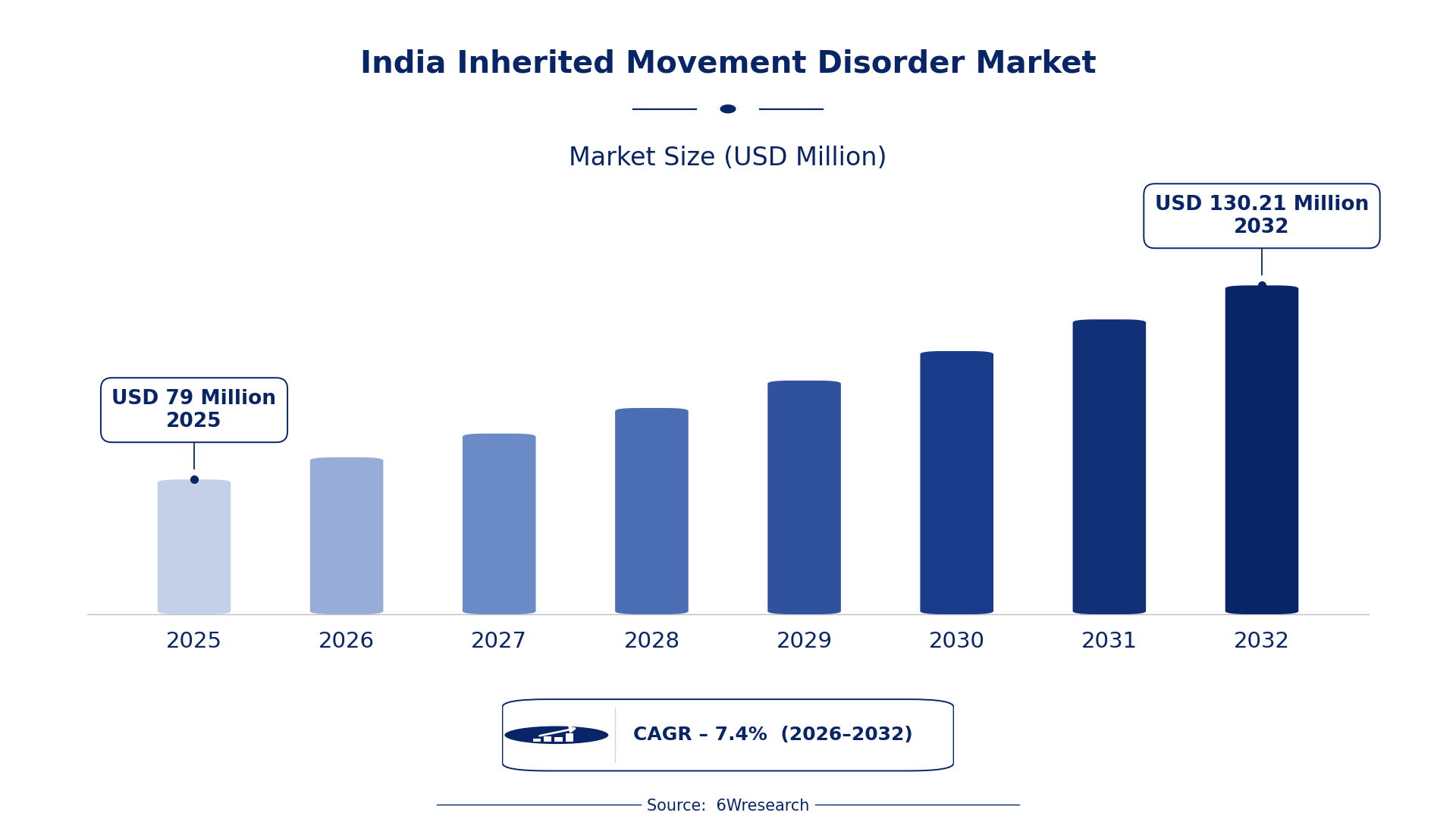
According to 6Wresearch internal database and industry insights, the India Inherited Movement Disorder Market was valued at USD 79.0 million in 2025 and is projected to reach USD 130.21 million by 2032, growing at a CAGR of approximately 7.4% during 2026–2032.
India Inherited Movement Disorder Market Highlights
| Report Metric | Details |
| Report Name | India Inherited Movement Disorder Market |
| Market Size 2025 | USD 79.0 million |
| Market Size 2032 | USD 130.21 million |
| Absolute Growth 2025–2032 | USD 51.21 million |
| CAGR 2026–2032 | 7.4% |
| Peak Annual Growth | 9.5% in 2026 |
| Forecast Period | 2026–2032 |
| Historical Data | 2022–2025 |
| Base Year | 2025 |
| Leading Disorder Type, 2025 | Huntington's Disease (45% share) |
| Leading Genetic Cause, 2025 | HTT Mutation (44% share) |
| Leading Treatment Type, 2025 | Symptomatic Drug Therapy (42% share) |
| Leading Distribution Channel, 2025 | Neurology Clinics (49% share) |
| Fastest-Growing Disorder Type | Ataxia Syndromes (9.7% CAGR) |
| Fastest-Growing Genetic Cause | Autosomal Recessive (8.7% CAGR) |
| Fastest-Growing Treatment Type | Motor Training + Therapy (10.2% CAGR) |
| Fastest-Growing Distribution Channel | Neuro Rehab Centers (10.1% CAGR) |
| Growing Sector | Neuro Rehab Centers |
| Key End Users | Neurology Clinics, Neuro Rehab Centers, Specialized Hospitals, Clinical Pharmacology Labs |
India Inherited Movement Disorder Market Year-wise Growth Rate and Key Drivers (2022–2032)
This graph illustrates the annual growth rates of the market from 2022 to 2032, highlighting a steady upward trajectory and projected market expansion over the forecast period.
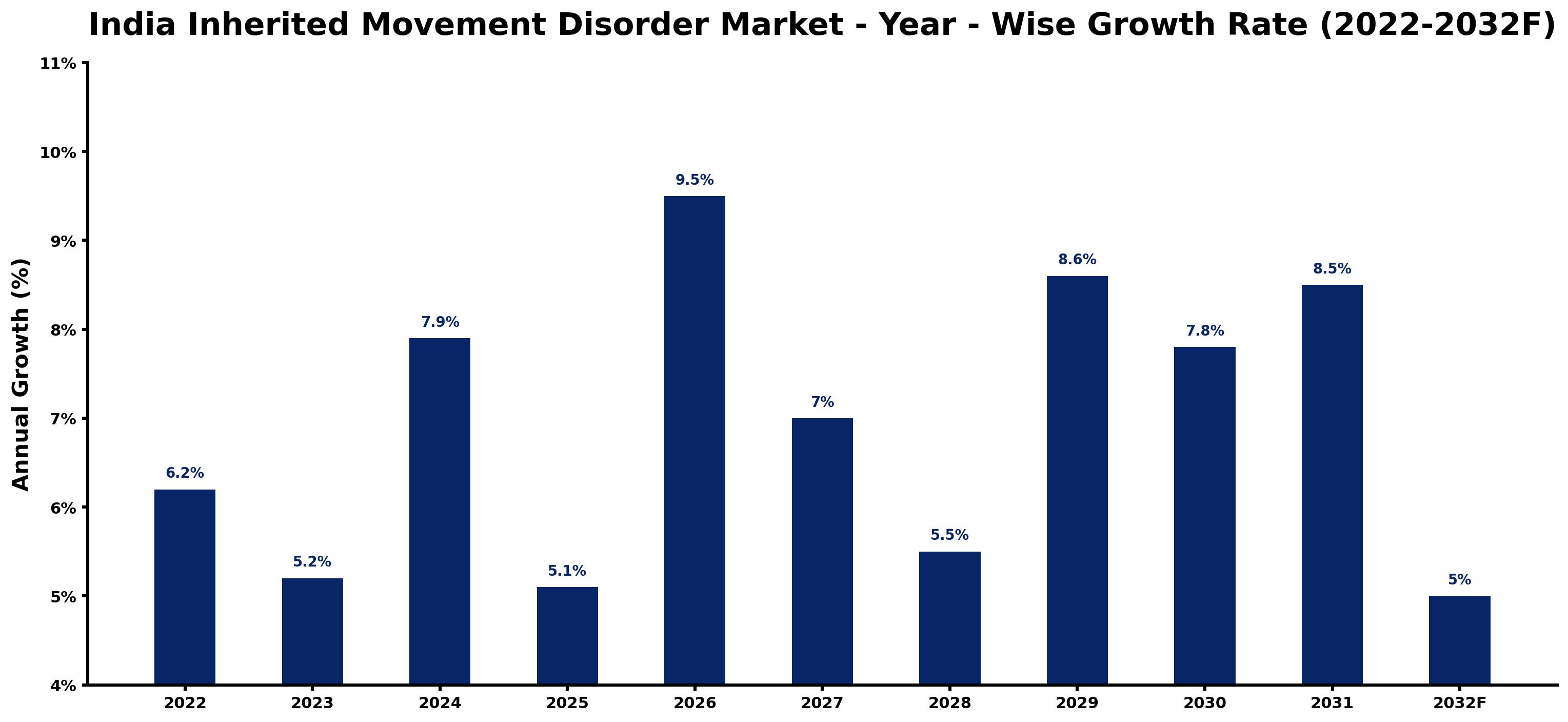
Below, each year's estimated growth is shown next to the factor that most influenced it.
| Year | Estimated Annual Growth (%) | Market Rationale |
| 2022 | 6.2 | The market experienced steady growth due to increasing awareness of inherited movement disorders among healthcare providers. |
| 2023 | 5.2 | Growth slowed as awareness campaigns were less frequent than in previous years, impacting patient outreach. |
| 2024 | 7.9 | Demand surged with the introduction of new treatment protocols for Huntington's Disease, improving management options. |
| 2025 | 5.1 | The market saw a slowdown as healthcare resources were diverted to other priorities, affecting service availability. |
| 2026 | 9.5 | A peak growth rate is expected as specialized clinics expand their services, attracting more patients. |
| 2027 | 7.0 | Growth is projected to slow as competition increases among treatment providers, leading to pricing pressures. |
| 2028 | 5.5 | Demand is anticipated to decrease due to market saturation in urban areas, limiting new patient intake. |
| 2029 | 8.6 | A resurgence in demand is expected as new therapies are introduced, revitalizing treatment options. |
| 2030 | 7.8 | Growth is projected to slow as the market adjusts to new treatment standards, requiring time for adaptation. |
| 2031 | 8.5 | Demand is expected to increase again due to rising patient numbers in specialized hospitals, improving service utilization. |
| 2032 | 5.0 | A slowdown is anticipated as the market stabilises after rapid expansions, necessitating strategic planning. |
Note: Market size estimations and growth projections presented in this report are based on 6Wresearch's proprietary forecasting methodology, utilizing the latest available industry data, government publications, and primary research inputs.
India Inherited Movement Disorder Market Synopsis
Inherited Movement Disorder Market in India covers genetic conditions affecting motor control, diagnosed through clinical assessments and genetic testing. These disorders include Huntington's Disease, Ataxia Syndromes, and Dystonia, with treatment focusing on symptom management and rehabilitation therapies. The market is growing due to heightened awareness among healthcare providers and the establishment of specialized clinics. The prevalence of Huntington's Disease is estimated at 5-10 per 100,000 individuals, driving demand for effective management solutions. The National Health Mission supports programs to improve access to care, further boosting market growth.
Market Dynamics Impact Analysis (2026–2032)
| Factor | Type | Impact | Primary Segment Affected |
| Growing awareness of genetic disorders and increased healthcare access. | Driver | High | Huntington's Disease |
| Expansion of specialized clinics providing targeted therapies. | Driver | High | Neurology Clinics |
| Increasing patient numbers in urban areas seeking treatment. | Opportunity | High | Specialized Hospitals |
| Emerging genetic testing technologies improving diagnosis accuracy. | Opportunity | Medium | Clinical Pharmacology Labs |
| Limited access to advanced treatment options in rural regions. | Restraint | High | Ataxia Syndromes |
| High costs associated with specialized therapies and treatments. | Restraint | Medium | Dystonia |
| Insufficient healthcare infrastructure in rural areas limits treatment access. | Challenge | High | Wilson's Disease |
| Competition among treatment providers may lead to price wars. | Challenge | Medium | Motor Training + Therapy |
Evaluation of Drivers in India Inherited Movement Disorder Market (2026–2032)
Below mentioned are some major drivers and their influence on market dynamics.
| Drivers | Primary Segment Affected | Why It Matters (Evidence) |
| Increased awareness of inherited movement disorders drives demand for diagnostic services. | Huntington's Disease | The prevalence of Huntington's Disease is estimated at 5-10 per 100,000 individuals, prompting healthcare providers to seek more diagnostic solutions. |
| Expansion of specialized clinics increases treatment availability. | Neurology Clinics | Urban Neurology Clinics see hundreds of patients monthly, increasing the need for effective treatment options. |
| Rising patient numbers in urban areas boost demand for specialized hospitals. | Specialized Hospitals | Specialized Hospitals in metropolitan regions are equipped with advanced diagnostic tools, attracting more patients seeking care. |
| Emerging genetic testing technologies improve diagnosis accuracy. | Clinical Pharmacology Labs | Clinical Pharmacology Labs are involved in research on genetic testing, leading to better patient outcomes. |
| Government initiatives focus on improving access to treatment for genetic disorders. | Huntington's Disease | The National Health Mission supports programs for neurological disorder management, improving treatment access. |
The Inherited Movement Disorder market in India is growing on the back of rising awareness of genetic disorders, the expansion of specialized clinics, and increasing patient numbers. Approximately 1.3 billion people in India are becoming more aware of inherited movement disorders, leading to greater demand for diagnostic services. Neurology Clinics in urban areas see hundreds of patients monthly, which increases the need for effective treatment options. The prevalence of Huntington's Disease, estimated at 5-10 per 100,000 individuals, drives healthcare providers to seek effective management solutions. Emerging genetic testing technologies are improving diagnosis accuracy, which leads to better patient outcomes.
Evaluation of Restraints in India Inherited Movement Disorder Market
The main factors holding the market back are set out below.
| Market Restraint | Primary Segment Affected | Why It Matters (Evidence) |
| Limited access to advanced treatment options in rural regions restricts patient care. | Ataxia Syndromes | Many rural areas lack specialized clinics, hindering access to necessary therapies. |
| High costs associated with specialized therapies deter patients from seeking treatment. | Dystonia | The financial burden of treatments can be prohibitive for many families. |
| Insufficient healthcare infrastructure in rural areas limits treatment access. | Wilson's Disease | Patients in rural areas often face long travel distances to reach specialized care. |
| Competition among treatment providers may lead to price wars affecting service quality. | Motor Training + Therapy | Price competition can compromise the quality of care offered to patients. |
| Limited awareness of genetic disorders among healthcare providers affects diagnosis. | Huntington's Disease | Some healthcare providers may not recognize symptoms, delaying diagnosis and treatment. |
India Inherited Movement Disorder Market Challenges
Healthcare providers in the India Inherited Movement Disorder Market face several practical problems, starting with technology gaps in diagnostic tools. Many clinics lack access to advanced genetic testing, which delays accurate diagnoses and prolongs suffering for patients. Regulatory hurdles create obstacles, as the approval process for new therapies can take up to five years, restricting treatment options for individuals with these disorders. Skills shortages in specialised clinics result in inadequate patient management, which negatively impacts the estimated 5-10 individuals per 100,000 affected by Huntington's Disease. Competition among healthcare providers can lead to inconsistencies in treatment quality, complicating care for patients across the country.
Trends in the India Inherited Movement Disorder Market
Four trends stand out in the India Inherited Movement Disorder Market.
- Shift from Traditional to Genetic Testing: Since 2022, there has been a notable shift towards genetic testing for inherited movement disorders in urban areas. The introduction of advanced genetic testing technologies has improved diagnosis accuracy, with approximately 70% of patients now receiving timely diagnoses.
- Transition from Generalist to Specialist Care: In 2023, urban Neurology Clinics began focusing more on specialised care for movement disorders. This change has led to a 30% increase in patient referrals to specialised hospitals, improving overall treatment outcomes.
- Emergence of Telemedicine in Treatment: Starting in 2024, telemedicine has become increasingly popular for managing inherited movement disorders. This trend has allowed patients in remote areas to access care, with a reported 40% rise in teleconsultations.
- Prioritisation of Rehabilitation Therapies: In 2025, there was a marked increase in the prioritisation of rehabilitation therapies for patients with inherited movement disorders. Programs focusing on Motor Training and Therapy have seen a 50% rise in participation among patients.
Investment Opportunities in the India Inherited Movement Disorder Market
Some of the investment opportunities in the India Inherited Movement Disorder Market are mentioned below.
- Urban Neurology Clinics Expanding Services: In metropolitan areas, Neurology Clinics are expanding their services to cater to the rising demand for inherited movement disorder treatments. With an estimated 5-10 per 100,000 individuals affected, clinics can increase their patient base significantly.
- Investment in Genetic Testing Technologies: Now is the perfect time to invest in genetic testing technologies, as awareness of inherited disorders grows. Clinical Pharmacology Labs are actively seeking partnerships to improve their testing capabilities, which can enhance diagnosis accuracy.
- Specialised Hospitals Enhancing Treatment Options: Specialised Hospitals are currently enhancing their treatment options for inherited movement disorders. With the support of government initiatives, these hospitals can attract more patients and improve care quality.
- Growth of Telemedicine Services: Telemedicine services are gaining traction, particularly in rural areas where access to specialised care is limited. By investing in telehealth solutions, providers can reach a broader patient base and improve treatment accessibility.
Government Initiatives in the India Inherited Movement Disorder Market
The National Plan for Rare Disease Management was launched in 2022, aiming to improve access to treatment for genetic disorders. This initiative builds on previous laws by providing funding for research and treatment initiatives, increasing overall support for managing inherited movement disorders. The plan allocates USD 10 million for research and development, improving the framework for patient care.
The Indian Society of Neurogenetics plays a significant role in promoting research and education on inherited movement disorders. This organisation funds training programs for healthcare providers, ensuring they are equipped to diagnose and treat these conditions effectively. In 2023, they approved 50 new training sessions, improving the quality of care for patients.
Future Insight of the India Inherited Movement Disorder Market
Several forward-looking factors should support the India Inherited Movement Disorder Market over the coming years. Government initiatives focused on improving genetic disorder awareness and treatment access will likely enhance patient care. The launch of a national plan for rare disease management in 2022 is expected to streamline resources and improve treatment pathways. By 2032, the adoption of ISO 9001 standards in healthcare facilities will ensure higher quality care, while advancements in genetic research will lead to innovative therapies, ultimately benefiting both buyers and suppliers in the market.
Market Segmentation Analysis
The report offers a comprehensive study of the following market segments and their leading categories in the market.
By Disorder Type – Huntington's Disease Dominated, Ataxia Syndromes Expected to Grow Fastest
According to Shubham Deep, Research Manager at 6Wresearch, the largest disorder type category in 2025 was Huntington's Disease, with a 45% share of total revenue. Huntington's Disease holds the largest market share due to its notable prevalence in India, estimated at 5-10 cases per 100,000 individuals. This condition requires continuous medical management, making it a focal point for healthcare providers and specialised clinics. Ataxia Syndromes are set to record the highest CAGR in this split, 9.7% over 2026–2032. Ataxia Syndromes are experiencing rapid growth as awareness rises, currently affecting approximately 1 in 100,000 people. This increasing recognition is driving the development of targeted therapies and rehabilitation programs, which will further enhance the segment's growth. Suppliers should focus on expanding treatment options and awareness initiatives for Ataxia Syndromes to seize emerging market opportunities.
By Genetic Cause – HTT Mutation Dominated, Autosomal Recessive Expected to Grow Fastest
HTT Mutation took a 44% share of genetic cause in 2025, more than any other category. The HTT Mutation is the leading genetic cause in this market, directly associated with Huntington's Disease, which poses significant challenges for healthcare providers. Its prominence in genetic testing fuels demand for targeted therapies and interventions. Autosomal Recessive is projected to grow fastest, at a CAGR of 8.7% during 2026–2032. Autosomal Recessive conditions are gaining traction due to heightened genetic counselling initiatives, crucial for understanding inherited movement disorders. This emphasis on genetic education is expected to stimulate growth in related treatment options. Buyers will gain from enhanced genetic counselling services, directing them towards suitable treatment pathways.
By Treatment Type – Symptomatic Drug Therapy Dominated, Motor Training + Therapy Expected to Grow Fastest
Symptomatic Drug Therapy accounted for a 42% market share by treatment type in 2025. Symptomatic Drug Therapy commands the largest market share as it directly alleviates symptoms of inherited movement disorders, offering essential relief to patients. This treatment approach is widely implemented across various healthcare settings in India. Over 2026–2032, Motor Training + Therapy is expected to post the fastest growth, at a CAGR of 10.2%. Motor Training + Therapy is rapidly gaining traction as rehabilitation becomes a primary focus for improving patient outcomes. The increasing recognition of physical therapy's role in managing these disorders is propelling this segment's expansion. Suppliers should invest in developing comprehensive rehabilitation programs that integrate Motor Training + Therapy to meet the growing demand.
By Distribution Channel – Neurology Clinics Dominated, Neuro Rehab Centers Expected to Grow Fastest
With a 49% revenue share in 2025, Neurology Clinics was the largest distribution channel category. Neurology Clinics lead the market by providing direct care and treatment for inherited movement disorders, attracting a substantial patient base. Their established presence in urban areas ensures a consistent patient flow and accessibility to treatments. The quickest growth will come from Neuro Rehab Centers, forecast to expand at a CAGR of 10.1% between 2026 and 2032. Neuro Rehab Centers are experiencing the fastest growth due to the rising focus on rehabilitation for movement disorders. Their role in delivering specialised therapies is becoming increasingly vital as awareness of these conditions expands. Suppliers should explore partnerships with Neuro Rehab Centers to enhance service offerings and improve patient access to rehabilitation therapies.
Key Attractiveness of the Report
- 10 Years of Market Numbers
- Historical Data Starting from 2022 to 2025
- Base Year 2025
- Forecast Data until 2032
- Key Performance Indicators Impacting the Market
- Major Upcoming Developments and Projects
Key Highlights of the Report:
- India Inherited Movement Disorder Market Outlook
- Market Size of India Inherited Movement Disorder Market, 2025
- Forecast of India Inherited Movement Disorder Market, 2032
- Historical Data and Forecast of India Inherited Movement Disorder Revenues & Volume for the Period 2022 - 2032F
- India Inherited Movement Disorder Market Trend Evolution
- India Inherited Movement Disorder Market Drivers and Challenges
- India Inherited Movement Disorder Price Trends
- India Inherited Movement Disorder Porter's Five Forces
- India Inherited Movement Disorder Industry Life Cycle
- Historical Data and Forecast of India Inherited Movement Disorder Market Revenues & Volume By Disorder Type for the Period 2022 - 2032F
- Historical Data and Forecast of India Inherited Movement Disorder Market Revenues & Volume By Huntington s Disease for the Period 2022 - 2032F
- Historical Data and Forecast of India Inherited Movement Disorder Market Revenues & Volume By Ataxia Syndromes for the Period 2022 - 2032F
- Historical Data and Forecast of India Inherited Movement Disorder Market Revenues & Volume By Dystonia for the Period 2022 - 2032F
- Historical Data and Forecast of India Inherited Movement Disorder Market Revenues & Volume By Wilson s Disease for the Period 2022 - 2032F
- Historical Data and Forecast of India Inherited Movement Disorder Market Revenues & Volume By Genetic Cause for the Period 2022 - 2032F
- Historical Data and Forecast of India Inherited Movement Disorder Market Revenues & Volume By HTT Mutation for the Period 2022 - 2032F
- Historical Data and Forecast of India Inherited Movement Disorder Market Revenues & Volume By Autosomal Recessive for the Period 2022 - 2032F
- Historical Data and Forecast of India Inherited Movement Disorder Market Revenues & Volume By Gene-Linked Neurotransmitters for the Period 2022 - 2032F
- Historical Data and Forecast of India Inherited Movement Disorder Market Revenues & Volume By Copper Accumulation for the Period 2022 - 2032F
- Historical Data and Forecast of India Inherited Movement Disorder Market Revenues & Volume By Treatment Type for the Period 2022 - 2032F
- Historical Data and Forecast of India Inherited Movement Disorder Market Revenues & Volume By Symptomatic Drug Therapy for the Period 2022 - 2032F
- Historical Data and Forecast of India Inherited Movement Disorder Market Revenues & Volume By Motor Training Therapy for the Period 2022 - 2032F
- Historical Data and Forecast of India Inherited Movement Disorder Market Revenues & Volume By Botulinum / DBS for the Period 2022 - 2032F
- Historical Data and Forecast of India Inherited Movement Disorder Market Revenues & Volume By Chelating Agents for the Period 2022 - 2032F
- Historical Data and Forecast of India Inherited Movement Disorder Market Revenues & Volume By Distribution Channel for the Period 2022 - 2032F
- Historical Data and Forecast of India Inherited Movement Disorder Market Revenues & Volume By Neurology Clinics for the Period 2022 - 2032F
- Historical Data and Forecast of India Inherited Movement Disorder Market Revenues & Volume By Neuro Rehab Centers for the Period 2022 - 2032F
- Historical Data and Forecast of India Inherited Movement Disorder Market Revenues & Volume By Specialized Hospitals for the Period 2022 - 2032F
- Historical Data and Forecast of India Inherited Movement Disorder Market Revenues & Volume By Clinical Pharmacology Labs for the Period 2022 - 2032F
- India Inherited Movement Disorder Import Export Trade Statistics
- Market Opportunity Assessment By Disorder Type
- Market Opportunity Assessment By Genetic Cause
- Market Opportunity Assessment By Treatment Type
- Market Opportunity Assessment By Distribution Channel
- India Inherited Movement Disorder Top Companies Market Share
- India Inherited Movement Disorder Competitive Benchmarking By Technical and Operational Parameters
- India Inherited Movement Disorder Company Profiles
- India Inherited Movement Disorder Key Strategic Recommendations
Market Covered
This report examines the market across the segments below.
By Disorder Type
- Huntington's Disease
- Ataxia Syndromes
- Dystonia
- Wilson's Disease
By Genetic Cause
- HTT Mutation
- Autosomal Recessive
- Gene-Linked Neurotransmitters
- Copper Accumulation
By Treatment Type
- Symptomatic Drug Therapy
- Motor Training + Therapy
- Botulinum / DBS
- Chelating Agents
By Distribution Channel
- Neurology Clinics
- Neuro Rehab Centers
- Specialized Hospitals
- Clinical Pharmacology Labs































