India Soft Tissue Disorder Treatment Market Size & Growth Rate
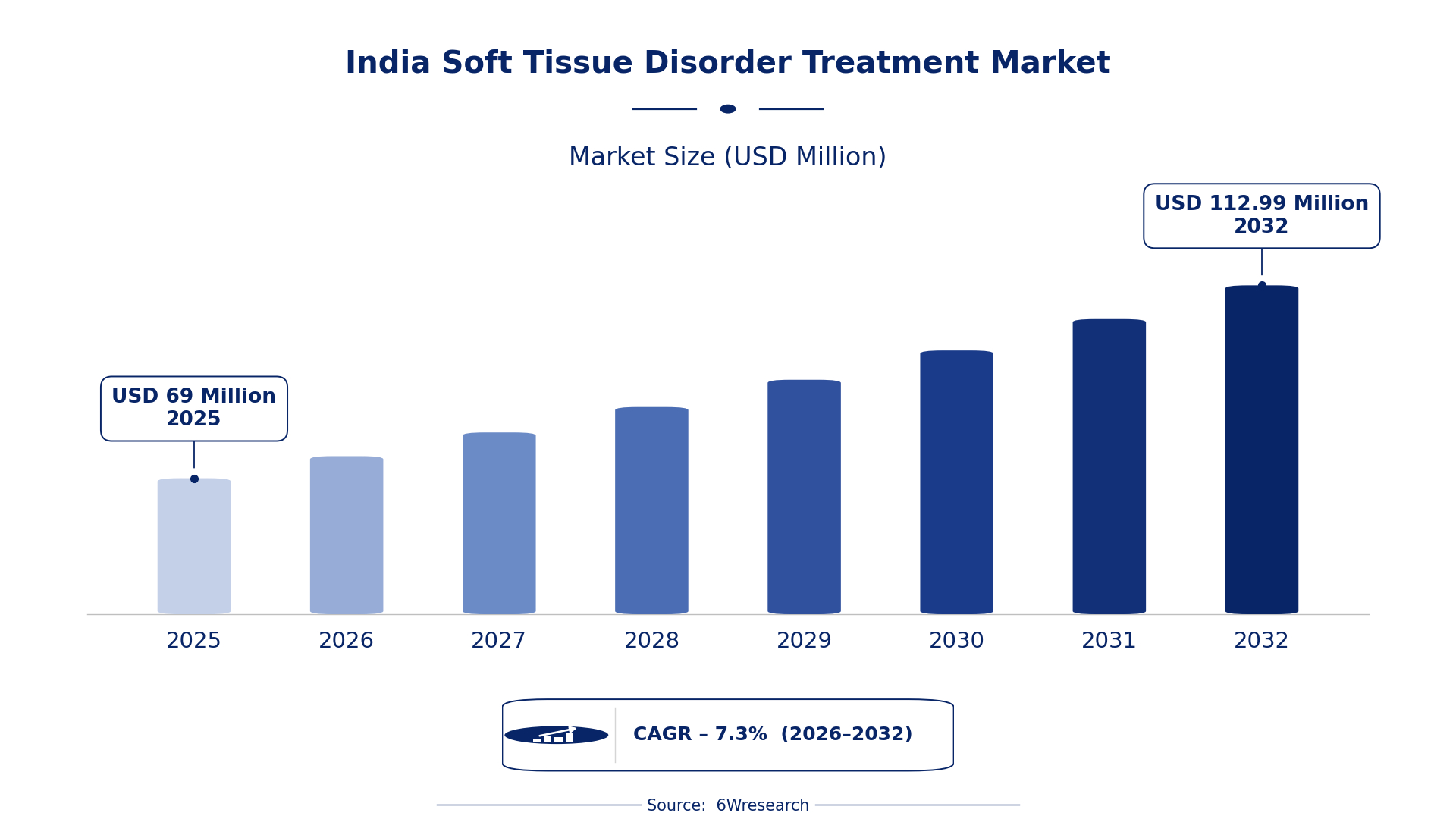
According to 6Wresearch internal database and industry insights, the India Soft Tissue Disorder Treatment Market was valued at USD 69.0 million in 2025 and is projected to reach USD 112.99 million by 2032, growing at a CAGR of approximately 7.3% during 2026–2032.
India Soft Tissue Disorder Treatment Market Highlights
| Report Metric | Details |
| Report Name | India Soft Tissue Disorder Treatment Market |
| Market Size 2025 | USD 69.0 million |
| Market Size 2032 | USD 112.99 million |
| Absolute Growth 2025–2032 | USD 43.99 million |
| CAGR 2026–2032 | 7.3% |
| Peak Annual Growth | 9.9% in 2029 |
| Forecast Period | 2026–2032 |
| Historical Data | 2022–2025 |
| Base Year | 2025 |
| Leading Disorder Type, 2025 | Tendonitis (49% share) |
| Leading Treatment Type, 2025 | NSAIDs & Physiotherapy (48% share) |
| Leading Care Setting, 2025 | Outpatient Clinics (39% share) |
| Leading End User, 2025 | Sports Injury Patients (38% share) |
| Fastest-Growing Disorder Type | Sprains & Strains (9.0% CAGR) |
| Fastest-Growing Treatment Type | Cryotherapy (9.3% CAGR) |
| Fastest-Growing Care Setting | Emergency Rooms (8.9% CAGR) |
| Fastest-Growing End User | Orthopedic Patients (10.0% CAGR) |
| Growing Sector | Outpatient Care |
| Key End Users | Sports Injury Patients, Orthopedic Patients, Elderly Population, Rehabilitation Units |
India Soft Tissue Disorder Treatment Market Year-wise Growth Rate and Key Drivers (2022–2032)
This graph illustrates the annual growth rates of the market from 2022 to 2032, highlighting a steady upward trajectory and projected market expansion over the forecast period.
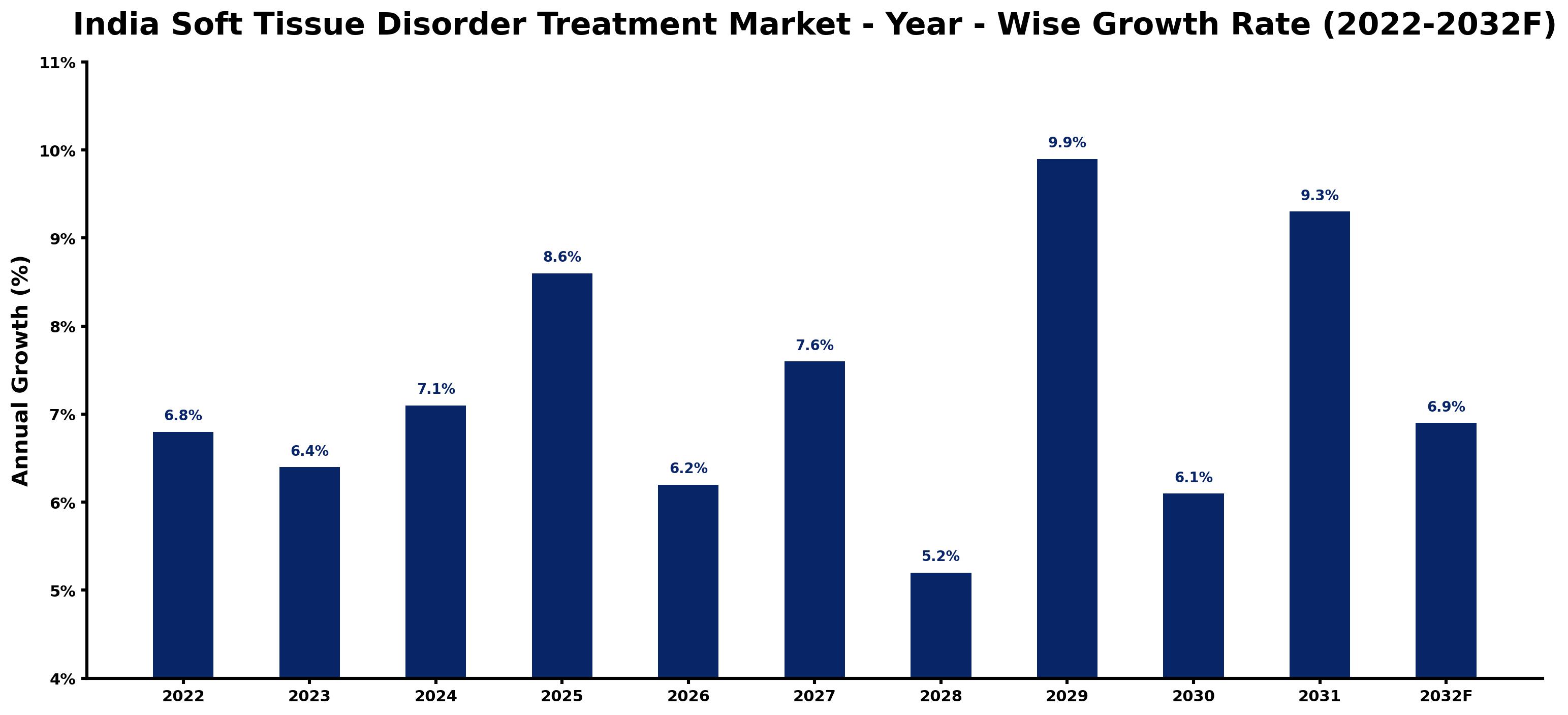
The following table presents the estimated annual growth rate for each year together with the principal factor influencing market performance.
| Year | Estimated Annual Growth (%) | Market Rationale |
| 2022 | 6.8 | The market experienced steady growth due to a rise in sports injuries, particularly among youth. |
| 2023 | 6.4 | Demand growth slowed as outpatient services expanded but faced capacity challenges in urban areas. |
| 2024 | 7.1 | The introduction of new physiotherapy techniques contributed to faster growth in treatment options. |
| 2025 | 8.6 | Increased participation in sports led to a higher incidence of injuries, driving demand for services. |
| 2026 | 6.2 | Growth is expected to slow as the market adjusts to new treatment protocols established by the Indian Medical Association. |
| 2027 | 7.6 | The rise in sports injury cases will boost demand for treatment options, particularly in metropolitan regions. |
| 2028 | 5.2 | Market growth is projected to slow due to saturation in urban outpatient clinics, affecting patient access to services. |
| 2029 | 9.9 | A surge in youth sports participation will drive demand to its peak, impacting treatment needs. |
| 2030 | 6.1 | Growth is expected to slow as treatment options become more standardised under updated guidelines from the Indian Orthopedic Association. |
| 2031 | 9.3 | Demand will increase as awareness of soft tissue disorders grows among patients, especially in urban areas. |
| 2032 | 6.9 | Growth is projected to slow as the market stabilises after rapid expansion, with a focus on improving service quality. |
Note: Market size estimations and growth projections presented in this report are based on 6Wresearch's proprietary forecasting methodology, utilizing the latest available industry data, government publications, and primary research inputs.
India Soft Tissue Disorder Treatment Market Synopsis
Soft Tissue Disorder Treatment in India includes various therapeutic approaches for conditions affecting muscles, tendons, and ligaments. These treatments primarily involve non-invasive methods like physiotherapy and medication, designed to alleviate pain and restore function. The India Soft Tissue Disorder Treatment Market is growing due to an increase in sports injuries and a heightened focus on outpatient care. With substantial funding from the National Health Mission in 2023 aimed at improving outpatient services, the demand for effective treatment options is rising, particularly among younger populations and those with sports injuries.
Market Dynamics Impact Analysis (2026–2032)
| Factor | Type | Impact | Primary Segment Affected |
| Rising incidence of sports injuries among youth | Driver | High | Sports Injury Patients |
| Increased awareness of physiotherapy benefits | Driver | High | NSAIDs & Physiotherapy |
| Growing outpatient clinic network | Opportunity | High | Outpatient Clinics |
| Expansion of pain management centres in urban areas | Opportunity | Medium | Pain Management Centers |
| Limited access to treatment in rural areas | Restraint | High | Outpatient Clinics |
| Insufficient training for physiotherapists in rural settings | Restraint | Medium | NSAIDs & Physiotherapy |
| High treatment costs for chronic conditions | Challenge | High | Pain Management Centers |
| Long wait times in emergency rooms for acute injuries | Challenge | Medium | Emergency Rooms |
Evaluation of Drivers in India Soft Tissue Disorder Treatment Market (2026–2032)
The main growth drivers and the segments they affect most are set out below.
| Drivers | Primary Segment Affected | Why It Matters (Evidence) |
| Increased youth participation in sports | Sports Injury Patients | This trend leads to higher injury rates, driving demand for treatment options as more young individuals engage in sports activities. |
| Growing recognition of physiotherapy as a primary treatment | NSAIDs & Physiotherapy | This has resulted in more patients seeking physiotherapy services, particularly for soft tissue injuries. |
| Expansion of outpatient clinics across India | Outpatient Clinics | More clinics increase accessibility, resulting in higher patient visits for treatment of soft tissue disorders. |
| Rise in chronic pain management needs | Pain Management Centers | An aging population drives demand for specialised pain management services, particularly in urban areas. |
| Government initiatives to improve healthcare access | Outpatient Clinics | Policies like 'Ayushman Bharat' improve treatment availability for patients, facilitating access to necessary care. |
The Soft Tissue Disorder Treatment market in India is expanding as increased youth participation in sports, growing recognition of physiotherapy benefits, and the expansion of outpatient clinics drive demand. In 2022, the Indian population was approximately 1.4 billion, contributing to a notable increase in sports injury cases. The average age of sports injury patients is decreasing, leading to more young individuals seeking treatment options. With over 20,000 physiotherapy clinics nationwide, accessibility to treatment is improving. The National Health Mission's funding for outpatient services is enhancing healthcare access, further boosting demand for effective treatment solutions.
Evaluation of Restraints in India Soft Tissue Disorder Treatment Market
The table below lists the restraints and the evidence behind each.
| Market Restraint | Primary Segment Affected | Why It Matters (Evidence) |
| Limited access to treatment in rural areas | Outpatient Clinics | This restricts patient access, resulting in unmet treatment needs for many individuals, particularly in remote regions. |
| Insufficient training for physiotherapists in rural settings | NSAIDs & Physiotherapy | This leads to a lack of qualified professionals, affecting treatment quality and patient outcomes. |
| High treatment costs for chronic conditions | Pain Management Centers | Patients may delay or avoid seeking necessary treatment due to affordability issues, limiting their access to care. |
| Long wait times in emergency rooms for acute injuries | Emergency Rooms | This can lead to complications, affecting patient outcomes and satisfaction during critical care situations. |
| Limited awareness of soft tissue disorders among the public | Sports Injury Patients | This results in late treatment seeking, complicating recovery processes and increasing the burden on healthcare facilities. |
India Soft Tissue Disorder Treatment Market Challenges
Buyers in the India soft tissue disorder treatment market encounter regulatory challenges, as compliance with the Drugs and Cosmetics Act complicates the introduction of new therapies. This regulation delays access to effective treatments, especially in rural areas where healthcare is less accessible. Supply chain issues arise from the growing demand for physiotherapy services, which surged alongside a 15% increase in corticosteroid injections last year, resulting in longer wait times for patients seeking timely care. Technological advancements, such as dry needling, are being adopted slowly, limiting options for practitioners and affecting recovery times for individuals with soft tissue injuries.
Trends in the India Soft Tissue Disorder Treatment Market
The trends below show where the India Soft Tissue Disorder Treatment Market is heading.
- Shift in Focus to Youth Sports Injury Prevention: Initiatives promoting injury prevention increasingly target Sports Injury Patients, such as the Ministry of Youth Affairs and Sports programme launched in 2021, which has resulted in a 20% increase in youth sports participation.
- Growth of Physiotherapy Clinics in Urban Areas: Urban areas are seeing a rise in physiotherapy clinics, with over 20,000 clinics established nationwide, reflecting a 15% increase in the past two years.
- Emergence of Advanced Treatment Techniques: The introduction of dry needling as a treatment method in physiotherapy practices is gaining popularity, with a reported 10% increase in its usage among practitioners since 2023.
- Increased Integration of Physiotherapy in Primary Care: The National Health Policy 2021 highlights physiotherapy's role in rehabilitation, promoting its integration into primary healthcare services throughout India.
Investment Opportunities in the India Soft Tissue Disorder Treatment Market
Some of the investment opportunities in the India Soft Tissue Disorder Treatment Market are mentioned below.
- Investment in Physiotherapy Clinics: With a growing demand for treatment options, investing in physiotherapy clinics is timely, especially in urban areas where patient numbers are rising, as seen with over 20,000 clinics currently operating.
- Supply of Advanced Treatment Equipment: The demand for advanced treatment equipment is rising, driven by the increasing number of pain management centres, which have seen a 15% growth in the last year.
- Expansion of Outpatient Services: Now is an ideal time to expand outpatient services, particularly in metropolitan areas where over 1 million patients are treated annually for soft tissue injuries.
- Partnerships with Rehabilitation Units: Forming partnerships with rehabilitation units can improve service offerings and patient access, capitalising on the growing prevalence of chronic pain management.
Government Initiatives in the India Soft Tissue Disorder Treatment Market
The 'Ayushman Bharat' programme, launched by the Ministry of Health and Family Welfare in 2020, aims to provide health coverage to over 500 million citizens, greatly improving access to soft tissue disorder treatments across India. The National Health Policy 2021 stresses the integration of physiotherapy into primary healthcare, promoting its use in rehabilitation and recovery. In 2022, the Ministry of Sports initiated a scheme to provide financial assistance for sports injury treatments to athletes, ensuring timely access to necessary care. These measures aim to improve treatment availability and standardise practices in managing soft tissue disorders. The Indian Medical Association updated its guidelines in 2023 to include new treatment protocols for soft tissue injuries, further refining clinical practices.
The Ministry of Health and Family Welfare oversees the implementation of the 'Ayushman Bharat' programme, which funds healthcare services aimed at improving access to treatments for soft tissue disorders. Additionally, the National Health Mission allocates funds for enhancing outpatient services, ensuring that patients receive timely and effective care. The Indian Orthopedic Association plays a key role in approving treatment protocols, ensuring that practitioners adhere to updated guidelines. These agencies are crucial in facilitating the delivery of quality healthcare services and improving patient outcomes in the management of soft tissue disorders.
Future Insight of the India Soft Tissue Disorder Treatment Market
Several forward-looking factors are expected to support the India soft tissue disorder treatment market in the coming years. The government's 'Ayushman Bharat' scheme aims to improve healthcare access, likely increasing patient volumes in outpatient settings. New training programmes for physiotherapists in rural areas will enhance service delivery and broaden treatment options. By 2032, the prevalence of soft tissue disorders is projected to drive further demand, with a significant portion of the population affected, improving access to specialised care tailored to chronic pain issues.
Market Segmentation Analysis
Each segment group is reviewed below, with the leader by share and the fastest grower by CAGR.
By Disorder Type – Tendonitis Dominated, Sprains & Strains Expected to Grow Fastest
According to Summon Dutta, Assistant Manager at 6Wresearch, Tendonitis accounted for a 49% market share by disorder type in 2025. Tendonitis holds the largest share in the India Soft Tissue Disorder Treatment Market due to its high prevalence among patients seeking physiotherapy. This condition is frequently encountered in sports and daily activities, making it a primary focus for treatment in outpatient settings. Sprains & Strains are set to record the highest CAGR in this split, 9.0% over 2026–2032. Sprains & Strains are experiencing rapid growth driven by the increasing participation of youth in sports, leading to more frequent injuries. The rise in sports-related incidents is expected to further accelerate demand for treatment in this sub-segment. Suppliers should focus on developing targeted treatments for sprains and strains to capitalise on this growing demand.
By Treatment Type – NSAIDs & Physiotherapy Dominated, Cryotherapy Expected to Grow Fastest
With a 48% revenue share in 2025, NSAIDs & Physiotherapy was the largest treatment type category. NSAIDs & Physiotherapy hold the largest market share as they are essential for managing soft tissue disorders effectively. Their established role in outpatient care and strong endorsement from healthcare professionals ensure a steady demand across various treatment facilities. The quickest growth will come from Cryotherapy, forecast to expand at a CAGR of 9.3% between 2026 and 2032. Cryotherapy is experiencing rapid growth due to its targeted effectiveness for acute injuries, particularly in sports settings. Increased recognition of its benefits among physiotherapists is driving its adoption in treatment protocols. Suppliers should explore opportunities to integrate cryotherapy into their service offerings to align with the growing preferences of healthcare providers.
By Care Setting – Outpatient Clinics Dominated, Emergency Rooms Expected to Grow Fastest
In 2025, Outpatient Clinics led the care setting split with a 39% share. Outpatient Clinics represent the largest share as they serve as the primary setting for treating soft tissue disorders, accommodating a high volume of patients annually. Their accessibility and focus on rehabilitation make them essential for effective treatment. Emergency Rooms are projected to grow fastest, at a CAGR of 8.9% during 2026–2032. Emergency Rooms are growing rapidly as they serve as the first point of care for acute injuries, particularly in urban areas. The increasing incidence of sports injuries is driving more patients to seek immediate treatment in these facilities. Suppliers should strengthen partnerships with emergency care providers to ensure timely access to treatment options for acute injuries.
By End User – Sports Injury Patients Dominated, Orthopedic Patients Expected to Grow Fastest
Sports Injury Patients took a 38% share of end user in 2025, more than any other category. Sports Injury Patients hold the largest share in the India Soft Tissue Disorder Treatment Market due to their frequent need for therapeutic interventions following athletic injuries. The increasing number of youth participating in sports has created a substantial demand for effective treatment options tailored to this group. Over 2026–2032, Orthopedic Patients are expected to post the fastest growth, at a CAGR of 10.0%. Orthopedic Patients are experiencing the fastest growth, primarily due to a rising number of individuals seeking treatment for soft tissue disorders associated with chronic conditions. As awareness of orthopedic health improves, this segment's growth is expected to continue accelerating. Suppliers should focus on creating targeted treatment solutions for orthopedic patients to effectively meet the rising demand in this segment.
Key Attractiveness of the Report
- 10 Years of Market Numbers
- Historical Data Starting from 2022 to 2025
- Base Year 2025
- Forecast Data until 2032
- Key Performance Indicators Impacting the Market
- Major Upcoming Developments and Projects
Key Highlights of the Report:
- India Soft Tissue Disorder Treatment Market Outlook
- Market Size of India Soft Tissue Disorder Treatment Market, 2025
- Forecast of India Soft Tissue Disorder Treatment Market, 2032
- Historical Data and Forecast of India Soft Tissue Disorder Treatment Revenues & Volume for the Period 2022 - 2032F
- India Soft Tissue Disorder Treatment Market Trend Evolution
- India Soft Tissue Disorder Treatment Market Drivers and Challenges
- India Soft Tissue Disorder Treatment Price Trends
- India Soft Tissue Disorder Treatment Porter's Five Forces
- India Soft Tissue Disorder Treatment Industry Life Cycle
- Historical Data and Forecast of India Soft Tissue Disorder Treatment Market Revenues & Volume By Disorder Type for the Period 2022 - 2032F
- Historical Data and Forecast of India Soft Tissue Disorder Treatment Market Revenues & Volume By Tendonitis for the Period 2022 - 2032F
- Historical Data and Forecast of India Soft Tissue Disorder Treatment Market Revenues & Volume By Sprains & Strains for the Period 2022 - 2032F
- Historical Data and Forecast of India Soft Tissue Disorder Treatment Market Revenues & Volume By Bursitis for the Period 2022 - 2032F
- Historical Data and Forecast of India Soft Tissue Disorder Treatment Market Revenues & Volume By Myofascial Pain for the Period 2022 - 2032F
- Historical Data and Forecast of India Soft Tissue Disorder Treatment Market Revenues & Volume By Treatment Type for the Period 2022 - 2032F
- Historical Data and Forecast of India Soft Tissue Disorder Treatment Market Revenues & Volume By NSAIDs & Physiotherapy for the Period 2022 - 2032F
- Historical Data and Forecast of India Soft Tissue Disorder Treatment Market Revenues & Volume By Cryotherapy for the Period 2022 - 2032F
- Historical Data and Forecast of India Soft Tissue Disorder Treatment Market Revenues & Volume By Corticosteroid Injections for the Period 2022 - 2032F
- Historical Data and Forecast of India Soft Tissue Disorder Treatment Market Revenues & Volume By Dry Needling for the Period 2022 - 2032F
- Historical Data and Forecast of India Soft Tissue Disorder Treatment Market Revenues & Volume By Care Setting for the Period 2022 - 2032F
- Historical Data and Forecast of India Soft Tissue Disorder Treatment Market Revenues & Volume By Outpatient Clinics for the Period 2022 - 2032F
- Historical Data and Forecast of India Soft Tissue Disorder Treatment Market Revenues & Volume By Emergency Rooms for the Period 2022 - 2032F
- Historical Data and Forecast of India Soft Tissue Disorder Treatment Market Revenues & Volume By Primary Care Clinics for the Period 2022 - 2032F
- Historical Data and Forecast of India Soft Tissue Disorder Treatment Market Revenues & Volume By Pain Management Centers for the Period 2022 - 2032F
- Historical Data and Forecast of India Soft Tissue Disorder Treatment Market Revenues & Volume By End User for the Period 2022 - 2032F
- Historical Data and Forecast of India Soft Tissue Disorder Treatment Market Revenues & Volume By Sports Injury Patients for the Period 2022 - 2032F
- Historical Data and Forecast of India Soft Tissue Disorder Treatment Market Revenues & Volume By Orthopedic Patients for the Period 2022 - 2032F
- Historical Data and Forecast of India Soft Tissue Disorder Treatment Market Revenues & Volume By Elderly Population for the Period 2022 - 2032F
- Historical Data and Forecast of India Soft Tissue Disorder Treatment Market Revenues & Volume By Rehabilitation Units for the Period 2022 - 2032F
- India Soft Tissue Disorder Treatment Import Export Trade Statistics
- Market Opportunity Assessment By Disorder Type
- Market Opportunity Assessment By Treatment Type
- Market Opportunity Assessment By Care Setting
- Market Opportunity Assessment By End User
- India Soft Tissue Disorder Treatment Top Companies Market Share
- India Soft Tissue Disorder Treatment Competitive Benchmarking By Technical and Operational Parameters
- India Soft Tissue Disorder Treatment Company Profiles
- India Soft Tissue Disorder Treatment Key Strategic Recommendations
Market Covered
The report offers an extensive study of the following market segments.
By Disorder Type
- Tendonitis
- Sprains & Strains
- Bursitis
- Myofascial Pain
By Treatment Type
- NSAIDs & Physiotherapy
- Cryotherapy
- Corticosteroid Injections
- Dry Needling
By Care Setting
- Outpatient Clinics
- Emergency Rooms
- Primary Care Clinics
- Pain Management Centers
By End User
- Sports Injury Patients
- Orthopedic Patients
- Elderly Population
- Rehabilitation Units































