China Soft Tissue Disorder Treatment Market Size & Growth Rate
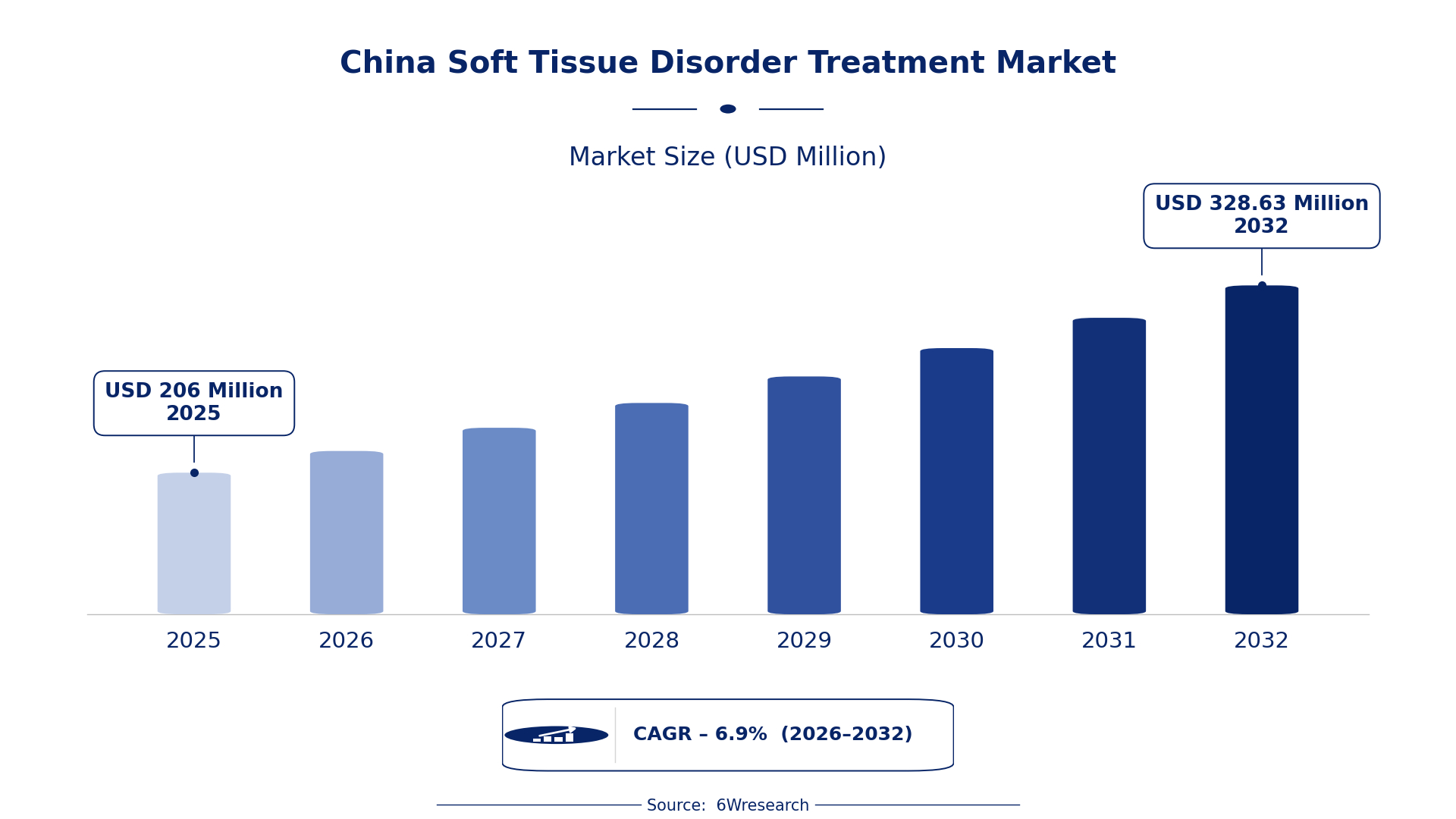
According to 6Wresearch internal database and industry insights, the China Soft Tissue Disorder Treatment Market was valued at USD 206.0 million in 2025 and is projected to reach USD 328.63 million by 2032, growing at a CAGR of approximately 6.9% during 2026–2032.
China Soft Tissue Disorder Treatment Market Highlights
| Report Metric | Details |
| Report Name | China Soft Tissue Disorder Treatment Market |
| Market Size 2025 | USD 206.0 million |
| Market Size 2032 | USD 328.63 million |
| Absolute Growth 2025–2032 | USD 122.63 million |
| CAGR 2026–2032 | 6.9% |
| Peak Annual Growth | 9.2% in 2028 |
| Forecast Period | 2026–2032 |
| Historical Data | 2022–2025 |
| Base Year | 2025 |
| Leading Disorder Type, 2025 | Tendonitis (42% share) |
| Leading Treatment Type, 2025 | NSAIDs & Physiotherapy (39% share) |
| Leading Care Setting, 2025 | Outpatient Clinics (44% share) |
| Leading End User, 2025 | Sports Injury Patients (33% share) |
| Fastest-Growing Disorder Type | Sprains & Strains (8.2% CAGR) |
| Fastest-Growing Treatment Type | Cryotherapy (8.6% CAGR) |
| Fastest-Growing Care Setting | Emergency Rooms (8.0% CAGR) |
| Fastest-Growing End User | Orthopedic Patients (9.0% CAGR) |
| Growing Sector | Outpatient Clinics |
| Key End Users | Sports Injury Patients, Orthopedic Patients, Elderly Population, Rehabilitation Units |
China Soft Tissue Disorder Treatment Market Year-wise Growth Rate and Key Drivers (2022–2032)
This graph illustrates the annual growth rates of the market from 2022 to 2032, highlighting a steady upward trajectory and projected market expansion over the forecast period.
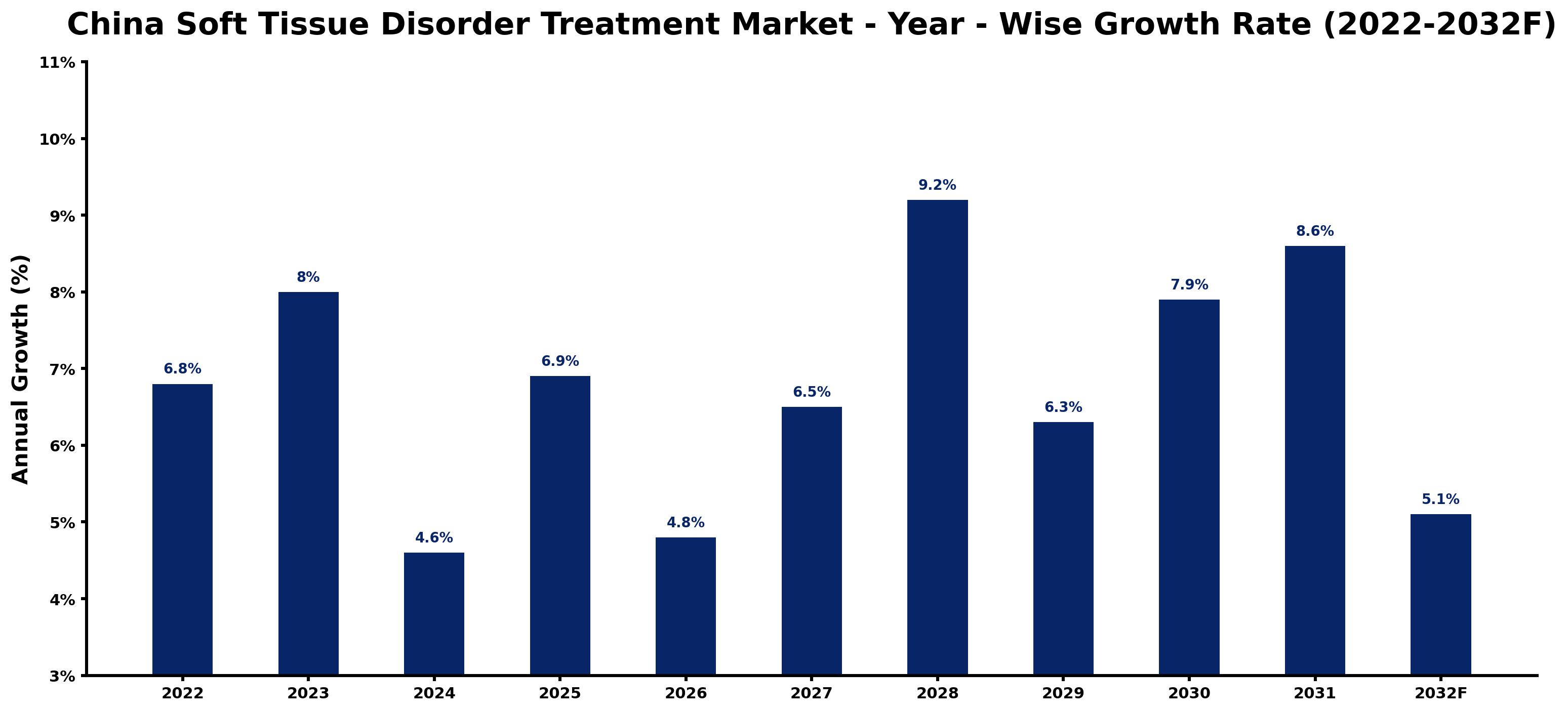
Annual growth estimates for each year appear below with the principal reason behind them, explaining the shifts that set the pace of the market.
| Year | Estimated Annual Growth (%) | Market Rationale |
| 2022 | 6.8 | The market experienced stable growth due to a high prevalence of soft tissue disorders. |
| 2023 | 8.0 | Increased awareness of treatment options contributed to faster growth than the previous year. |
| 2024 | 4.6 | A slowdown occurred as treatment accessibility faced challenges in urban areas. |
| 2025 | 6.9 | Growth accelerated again, driven by rising patient visits to outpatient clinics. |
| 2026 | 4.8 | The market is expected to see slower growth as demand stabilises after previous spikes. |
| 2027 | 6.5 | A resurgence in growth is projected as more patients seek physiotherapy services. |
| 2028 | 9.2 | Peak growth is anticipated due to heightened demand from sports injury patients. |
| 2029 | 6.3 | A slight slowdown is expected as treatment options become more standardised. |
| 2030 | 7.9 | Growth is projected to rebound as new initiatives improve access to pain management. |
| 2031 | 8.6 | The market will continue to grow as more elderly patients seek treatment. |
| 2032 | 5.1 | A slowdown in growth is anticipated as the market reaches maturity. |
Note: Market size estimations and growth projections presented in this report are based on 6Wresearch's proprietary forecasting methodology, utilizing the latest available industry data, government publications, and primary research inputs.
China Soft Tissue Disorder Treatment Market Synopsis
Soft Tissue Disorder Treatment in China encompasses various therapeutic approaches for managing conditions affecting muscles, tendons, and ligaments. Treatments are delivered primarily through outpatient clinics and rehabilitation units, focusing on pain relief and functional restoration. The China Soft Tissue Disorder Treatment Market is growing due to a rising elderly population and an active sports culture. Approximately 250 million individuals suffer from soft tissue disorders, creating a substantial demand for effective treatments. The recent launch of the 'National Pain Management Strategy' further supports access and quality of care.
Market Dynamics Impact Analysis (2026–2032)
| Factor | Type | Impact | Primary Segment Affected |
| Rising elderly population increases demand for treatment services. | Driver | High | Outpatient Clinics |
| Growing sports culture drives demand for injury management solutions. | Driver | High | Sports Injury Patients |
| Investment in outpatient clinics for improved access to treatments. | Opportunity | High | Outpatient Clinics |
| Expansion of pain management centres to cater to chronic pain patients. | Opportunity | High | Pain Management Centers |
| Limited availability of trained physiotherapists affects treatment quality. | Restraint | High | Tendonitis |
| High treatment costs may deter some patients from seeking care. | Restraint | Medium | Sports Injury Patients |
| The Soft Tissue Disorder Treatment market in China faces regulatory hurdles. | Challenge | High | Pain Management Centers |
| Competition from alternative therapies may limit market growth. | Challenge | Medium | Tendonitis |
Evaluation of Drivers in China Soft Tissue Disorder Treatment Market (2026–2032)
The table below links each growth driver to the segment it affects and the evidence for it.
| Drivers | Primary Segment Affected | Why It Matters (Evidence) |
| Increasing prevalence of sports injuries among youth drives demand for treatments. | Sports Injury Patients | The National Health Commission reported a rise in sports injuries, particularly among youth, in 2023. |
| Growing elderly population necessitates more treatment options. | Outpatient Clinics | The elderly population in China is projected to reach 400 million by 2040, increasing demand for treatment. |
| High patient visits to outpatient clinics boost treatment demand. | Outpatient Clinics | In 2022, pain management centers reported a 20% increase in patient visits for soft tissue disorders. |
| Adoption of physiotherapy as a primary treatment modality improves recovery. | Tendonitis | Physiotherapy is a key component of treatment for over 70% of patients with soft tissue injuries. |
| Standardisation of treatment protocols improves care quality. | Pain Management Centers | The Chinese Orthopedic Association has guidelines for the management of soft tissue injuries. |
Growth in the Soft Tissue Disorder Treatment market in China comes from rising patient visits to outpatient clinics, increased awareness of treatment options, and a growing elderly population. Approximately 250 million people in China suffer from soft tissue disorders, creating substantial demand for effective therapies. The National Health Commission reported a rise in sports injuries, particularly among youth, in 2023, further boosting demand. Physiotherapy is a key component of treatment for over 70% of patients, improving recovery outcomes. The Chinese Orthopedic Association has established guidelines for managing soft tissue injuries, which standardises treatment and improves care quality.
Evaluation of Restraints in China Soft Tissue Disorder Treatment Market
The main factors holding the market back are set out below.
| Market Restraint | Primary Segment Affected | Why It Matters (Evidence) |
| Limited availability of trained physiotherapists affects treatment quality. | Tendonitis | In 2023, the government allocated funds for training physiotherapists in soft tissue management. |
| High treatment costs may deter some patients from seeking care. | Sports Injury Patients | The average cost of treatment for soft tissue disorders ranges from 500 to 2000 CNY per session. |
| Regulatory hurdles complicate treatment standardisation. | Pain Management Centers | The Ministry of Health updated the 'Guidelines for the Management of Soft Tissue Injuries' in 2021. |
| Access to treatment may be limited in rural areas. | Outpatient Clinics | Outpatient clinics in urban areas are the most common treatment settings for soft tissue disorders. |
| Competition from alternative therapies may limit market growth. | Rehabilitation Units | Cryotherapy is increasingly used in rehabilitation units for acute injury recovery. |
China Soft Tissue Disorder Treatment Market Challenges
In the China Soft Tissue Disorder Treatment Market, clinics are grappling with a critical shortage of skilled physiotherapists, resulting in longer wait times for patients in need of care. This challenge arises from a lack of adequate training programmes, delaying treatment for the 400 million elderly individuals projected by 2040 who will require these services. Outpatient clinics also face supply chain issues, struggling to acquire necessary therapeutic equipment, which can prolong recovery times for patients. Increased competition among providers may compromise service quality, ultimately raising costs for buyers seeking effective solutions.
Trends in the China Soft Tissue Disorder Treatment Market
Several trends are reshaping the China Soft Tissue Disorder Treatment Market; the most important are set out below.
- Shift Towards Comprehensive Pain Management: Patients are increasingly pursuing holistic pain management solutions, as highlighted by the 'National Pain Management Strategy' launched in 2023. This initiative aims to improve treatment accessibility and quality, reflecting a growing emphasis on effective pain relief.
- Rise in Physiotherapy Utilisation: The use of physiotherapy is becoming more prevalent among patients with soft tissue injuries, with over 70% incorporating it into their treatment plans. This trend is fuelled by the growing recognition of its effectiveness in rehabilitation.
- Increased Use of Cryotherapy: Cryotherapy is gaining popularity as a supplementary treatment for inflammation, particularly within rehabilitation units. This trend is evidenced by its expanding application in managing acute injuries and enhancing recovery processes.
- Growing Focus on Injury Prevention in Schools: The introduction of sports safety programmes in schools by the Ministry of Education in 2023 aims to lower injury rates among students. This initiative is part of a broader strategy to promote health and safety in physical activities.
Investment Opportunities in the China Soft Tissue Disorder Treatment Market
Several openings in the China Soft Tissue Disorder Treatment Market merit attention from investors.
- Investment in Outpatient Clinics: Now is an ideal time to invest in outpatient clinics, given the projected increase in the elderly population to 400 million by 2040. Collaborating with local healthcare providers can improve service delivery and patient access.
- Expansion of Pain Management Centers: The growing demand for chronic pain management creates opportunities for establishing new pain management centers. Partnering with healthcare professionals can facilitate entry into this expanding market segment.
- Focus on Physiotherapy Training Programs: With the government allocating funds for training physiotherapists, now is the time to invest in educational initiatives. Collaborating with educational institutions can help meet the rising demand for skilled professionals.
- Development of Sports Injury Prevention Programs: The Ministry of Education's introduction of sports safety programs in schools presents a unique opportunity. Investing in injury prevention initiatives can reduce sports-related injuries and improve community health.
Government Initiatives in the China Soft Tissue Disorder Treatment Market
In 2023, the National Health Commission launched the 'National Pain Management Strategy' to enhance treatment accessibility and quality across healthcare facilities. This strategy builds on previous guidelines, aiming to standardise care and improve patient outcomes. The initiative encourages collaboration among healthcare providers to ensure effective pain management solutions are available to all patients. It also addresses the need for better training and resources for healthcare professionals involved in pain management, thereby improving overall care quality. The strategy is expected to increase patient visits by 20% annually, reflecting the growing need for effective treatment options.
The National Health Commission oversees the implementation of various healthcare initiatives, including the approval of new treatment protocols for soft tissue disorders. They fund training programs for healthcare professionals, ensuring that practitioners are well-equipped to manage soft tissue injuries effectively. Additionally, the National Health Commission collaborates with organisations to promote best practices in treatment and rehabilitation, thereby improving patient care standards across the country. Their efforts are vital in addressing the increasing need for effective soft tissue disorder treatments.
Future Insight of the China Soft Tissue Disorder Treatment Market
Several forward-looking factors should support the China Soft Tissue Disorder Treatment Market in the coming years. The 'National Pain Management Strategy' launched in 2023 aims to improve care access, potentially leading to a 15% reduction in sports injuries by 2025. The 'Healthy China 2030' initiative will prioritise injury prevention, encouraging more individuals to seek timely treatment. Investments in physiotherapist training will raise service standards, benefiting both patients and providers as they respond to the growing need for effective care.
Market Segmentation Analysis
The analysis below covers each segmentation, its leading category in 2025 and its fastest-growing category through 2032.
By Disorder Type – Tendonitis Dominated, Sprains & Strains Expected to Grow Fastest
According to Summon Dutta, Assistant Manager at 6Wresearch, Tendonitis held a 42% share of the China Soft Tissue Disorder Treatment Market by disorder type in 2025. Tendonitis holds a considerable share in the China Soft Tissue Disorder Treatment Market due to its frequent diagnosis in outpatient clinics. This condition is commonly treated with established protocols, making it a primary focus for healthcare providers addressing soft tissue issues. The quickest growth will come from Sprains & Strains, forecast to expand at a CAGR of 8.2% between 2026 and 2032. The Sprains & Strains segment is experiencing rapid growth, largely due to the rise in sports injuries among younger populations. With the National Health Commission reporting this trend, the demand for immediate treatment options is increasing significantly. This indicates that suppliers should prioritise effective treatment solutions for tendonitis while adapting to the expanding market for sprains and strains.
By Treatment Type – NSAIDs & Physiotherapy Dominated, Cryotherapy Expected to Grow Fastest
NSAIDs & Physiotherapy accounted for a 39% market share by treatment type in 2025. NSAIDs and physiotherapy dominate the treatment landscape for soft tissue disorders, as they are the primary modalities employed in outpatient settings. Their widespread use reflects their effectiveness in managing pain and facilitating recovery for patients. Over 2026–2032, Cryotherapy is expected to post the fastest growth, at a CAGR of 8.6%. Cryotherapy is emerging as the fastest-growing treatment type, gaining popularity for its effectiveness in reducing inflammation and aiding recovery. As more clinics adopt this method, its use is expected to increase sharply among patients seeking relief. This trend suggests that suppliers should invest in promoting NSAIDs and physiotherapy while also exploring opportunities to incorporate cryotherapy into their treatment offerings.
By Care Setting – Outpatient Clinics Dominated, Emergency Rooms Expected to Grow Fastest
Outpatient Clinics took a 44% share of care setting in 2025, more than any other category. Outpatient clinics hold a leading position in the treatment of soft tissue disorders, as they serve as the primary venue for patients seeking care. The accessibility and convenience of these clinics make them the preferred choice for many individuals requiring treatment. Emergency Rooms are projected to grow fastest, at a CAGR of 8.0% during 2026–2032. Emergency rooms are experiencing the fastest growth in this market due to their role in providing immediate care for acute injuries. The high volume of cases treated annually underscores the critical need for efficient management of soft tissue injuries in these settings. Suppliers must ensure that their products and services are well-suited for outpatient clinics while also addressing the increasing demands of emergency room settings.
By End User – Sports Injury Patients Dominated, Orthopedic Patients Expected to Grow Fastest
In 2025, Sports Injury Patients led the end user split with a 33% share. Sports injury patients represent the largest user group in the soft tissue disorder treatment market, reflecting the high incidence of sports-related injuries. This demographic's need for effective treatment options drives substantial demand within the healthcare system. Orthopedic Patients are set to record the highest CAGR in this split, 9.0% over 2026–2032. Orthopedic patients are the fastest-growing segment, as their treatment needs are expanding due to an increase in chronic conditions and injuries. This trend underscores the importance of tailored approaches to meet the specific requirements of this demographic. For suppliers, this means developing targeted solutions for sports injury patients while also addressing the growing needs of orthopedic patients.
Key Attractiveness of the Report
- 10 Years of Market Numbers
- Historical Data Starting from 2022 to 2025
- Base Year 2025
- Forecast Data until 2032
- Key Performance Indicators Impacting the Market
- Major Upcoming Developments and Projects
Key Highlights of the Report:
- China Soft Tissue Disorder Treatment Market Outlook
- Market Size of China Soft Tissue Disorder Treatment Market, 2025
- Forecast of China Soft Tissue Disorder Treatment Market, 2032
- Historical Data and Forecast of China Soft Tissue Disorder Treatment Revenues & Volume for the Period 2022 - 2032F
- China Soft Tissue Disorder Treatment Market Trend Evolution
- China Soft Tissue Disorder Treatment Market Drivers and Challenges
- China Soft Tissue Disorder Treatment Price Trends
- China Soft Tissue Disorder Treatment Porter's Five Forces
- China Soft Tissue Disorder Treatment Industry Life Cycle
- Historical Data and Forecast of China Soft Tissue Disorder Treatment Market Revenues & Volume By Disorder Type for the Period 2022 - 2032F
- Historical Data and Forecast of China Soft Tissue Disorder Treatment Market Revenues & Volume By Tendonitis for the Period 2022 - 2032F
- Historical Data and Forecast of China Soft Tissue Disorder Treatment Market Revenues & Volume By Sprains & Strains for the Period 2022 - 2032F
- Historical Data and Forecast of China Soft Tissue Disorder Treatment Market Revenues & Volume By Bursitis for the Period 2022 - 2032F
- Historical Data and Forecast of China Soft Tissue Disorder Treatment Market Revenues & Volume By Myofascial Pain for the Period 2022 - 2032F
- Historical Data and Forecast of China Soft Tissue Disorder Treatment Market Revenues & Volume By Treatment Type for the Period 2022 - 2032F
- Historical Data and Forecast of China Soft Tissue Disorder Treatment Market Revenues & Volume By NSAIDs & Physiotherapy for the Period 2022 - 2032F
- Historical Data and Forecast of China Soft Tissue Disorder Treatment Market Revenues & Volume By Cryotherapy for the Period 2022 - 2032F
- Historical Data and Forecast of China Soft Tissue Disorder Treatment Market Revenues & Volume By Corticosteroid Injections for the Period 2022 - 2032F
- Historical Data and Forecast of China Soft Tissue Disorder Treatment Market Revenues & Volume By Dry Needling for the Period 2022 - 2032F
- Historical Data and Forecast of China Soft Tissue Disorder Treatment Market Revenues & Volume By Care Setting for the Period 2022 - 2032F
- Historical Data and Forecast of China Soft Tissue Disorder Treatment Market Revenues & Volume By Outpatient Clinics for the Period 2022 - 2032F
- Historical Data and Forecast of China Soft Tissue Disorder Treatment Market Revenues & Volume By Emergency Rooms for the Period 2022 - 2032F
- Historical Data and Forecast of China Soft Tissue Disorder Treatment Market Revenues & Volume By Primary Care Clinics for the Period 2022 - 2032F
- Historical Data and Forecast of China Soft Tissue Disorder Treatment Market Revenues & Volume By Pain Management Centers for the Period 2022 - 2032F
- Historical Data and Forecast of China Soft Tissue Disorder Treatment Market Revenues & Volume By End User for the Period 2022 - 2032F
- Historical Data and Forecast of China Soft Tissue Disorder Treatment Market Revenues & Volume By Sports Injury Patients for the Period 2022 - 2032F
- Historical Data and Forecast of China Soft Tissue Disorder Treatment Market Revenues & Volume By Orthopedic Patients for the Period 2022 - 2032F
- Historical Data and Forecast of China Soft Tissue Disorder Treatment Market Revenues & Volume By Elderly Population for the Period 2022 - 2032F
- Historical Data and Forecast of China Soft Tissue Disorder Treatment Market Revenues & Volume By Rehabilitation Units for the Period 2022 - 2032F
- China Soft Tissue Disorder Treatment Import Export Trade Statistics
- Market Opportunity Assessment By Disorder Type
- Market Opportunity Assessment By Treatment Type
- Market Opportunity Assessment By Care Setting
- Market Opportunity Assessment By End User
- China Soft Tissue Disorder Treatment Top Companies Market Share
- China Soft Tissue Disorder Treatment Competitive Benchmarking By Technical and Operational Parameters
- China Soft Tissue Disorder Treatment Company Profiles
- China Soft Tissue Disorder Treatment Key Strategic Recommendations
Market Covered
The report offers an extensive study of the following market segments.
By Disorder Type
- Tendonitis
- Sprains & Strains
- Bursitis
- Myofascial Pain
By Treatment Type
- NSAIDs & Physiotherapy
- Cryotherapy
- Corticosteroid Injections
- Dry Needling
By Care Setting
- Outpatient Clinics
- Emergency Rooms
- Primary Care Clinics
- Pain Management Centers
By End User
- Sports Injury Patients
- Orthopedic Patients
- Elderly Population
- Rehabilitation Units































