India SSRI and SNRI Market Size & Growth Rate
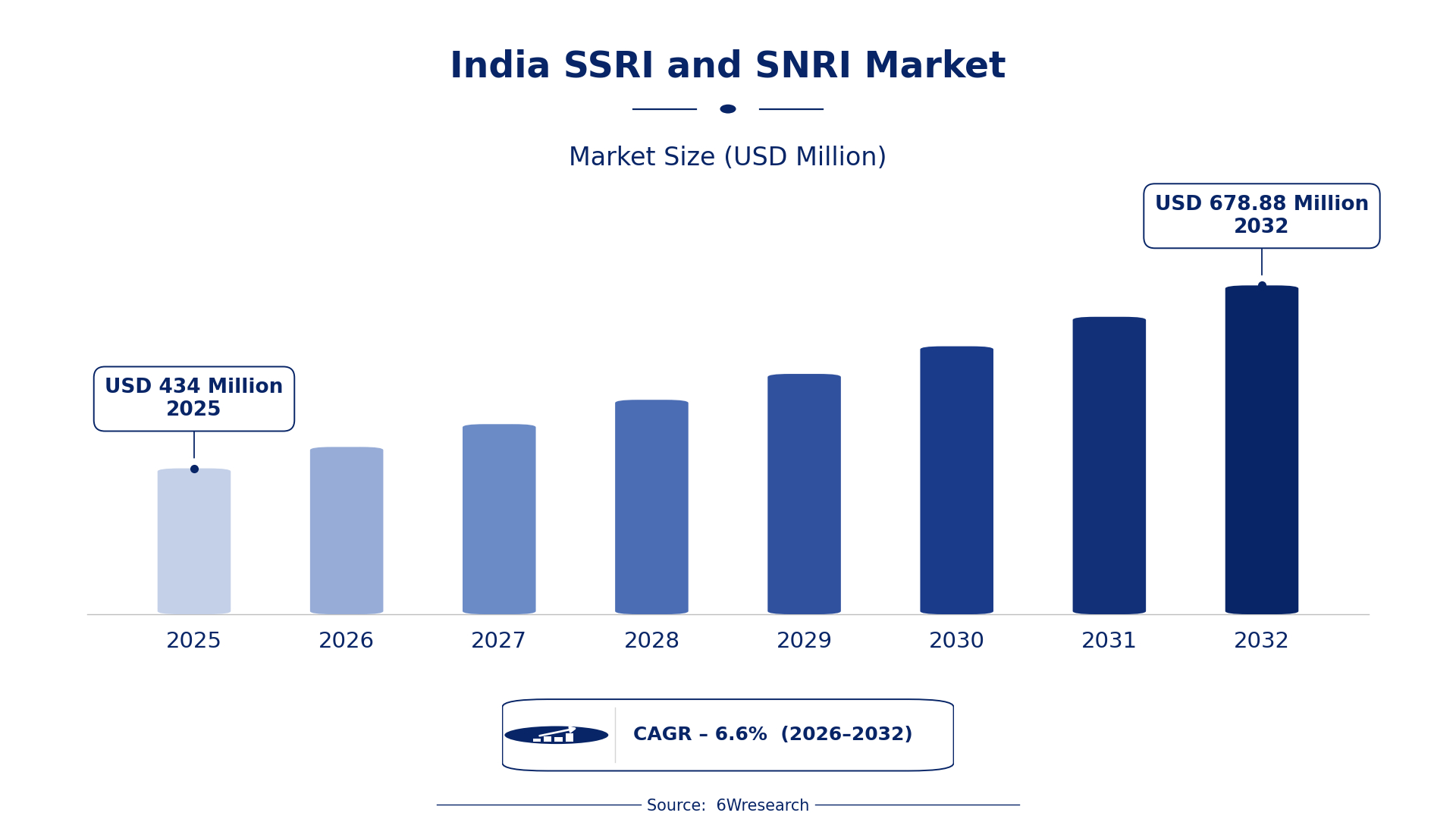
According to 6Wresearch internal database and industry insights, the India SSRI and SNRI Market was valued at USD 434.0 million in 2025 and is projected to reach USD 678.88 million by 2032, growing at a CAGR of approximately 6.6% during 2026–2032.
India SSRI and SNRI Market Highlights
| Report Metric | Details |
| Report Name | India SSRI and SNRI Market |
| Market Size 2025 | USD 434.0 million |
| Market Size 2032 | USD 678.88 million |
| Absolute Growth 2025–2032 | USD 244.88 million |
| CAGR 2026–2032 | 6.6% |
| Peak Annual Growth | 9.2% in 2029 |
| Forecast Period | 2026–2032 |
| Historical Data | 2022–2025 |
| Base Year | 2025 |
| Leading Drug Type, 2025 | SSRI (e.g., Fluoxetine) (51% share) |
| Leading Treatment Focus, 2025 | Depression/Anxiety (47% share) |
| Leading Administration Route, 2025 | Oral Tablets (42% share) |
| Leading End User, 2025 | Psychiatric Hospitals (41% share) |
| Fastest-Growing Drug Type | SNRI (e.g., Duloxetine) (8.6% CAGR) |
| Fastest-Growing Treatment Focus | Depression/Neuropathy (9.1% CAGR) |
| Fastest-Growing Administration Route | Oral Capsules (7.7% CAGR) |
| Fastest-Growing End User | General Practitioners (9.0% CAGR) |
| Growing Sector | General Practitioners |
| Key End Users | Psychiatric Hospitals, General Practitioners, Pharmacies, Mental Health Clinics |
India SSRI and SNRI Market Year-wise Growth Rate and Key Drivers (2022–2032)
This graph illustrates the annual growth rates of the market from 2022 to 2032, highlighting a steady upward trajectory and projected market expansion over the forecast period.
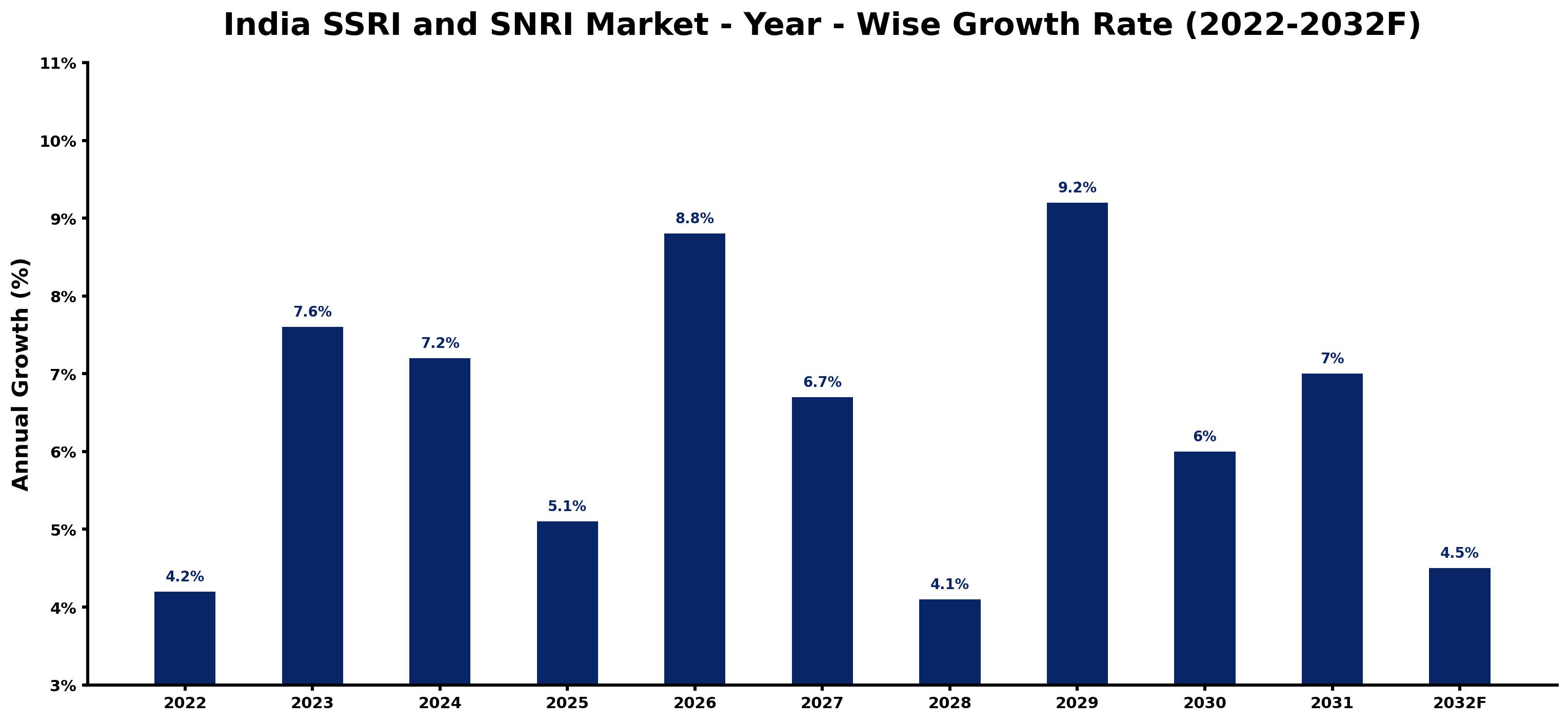
The following table presents the estimated annual growth rate for each year together with the principal factor influencing market performance.
| Year | Estimated Annual Growth (%) | Market Rationale |
| 2022 | 4.2 | The market experienced steady growth due to rising awareness of mental health issues among healthcare providers. |
| 2023 | 7.6 | Growth accelerated as the National Mental Health Programme was implemented, improving access to treatments. |
| 2024 | 7.2 | Growth slowed as the market adjusted to previous rapid increases in demand for SSRIs and SNRIs. |
| 2025 | 5.1 | The market continued to grow, albeit at a slower pace, driven by ongoing mental health campaigns promoting awareness. |
| 2026 | 8.8 | A resurgence in growth occurred as new treatment options gained popularity among mental health clinics. |
| 2027 | 6.7 | Growth slowed again as healthcare budgets faced constraints, impacting purchasing decisions for SSRIs and SNRIs. |
| 2028 | 4.1 | The market experienced another slowdown as demand stabilised following previous peaks in treatment needs. |
| 2029 | 9.2 | Growth peaked as the introduction of new therapies invigorated the market, leading to higher prescriptions. |
| 2030 | 6.0 | The market slowed as the effects of peak growth began to normalise in treatment patterns. |
| 2031 | 7.0 | Growth picked up again as awareness campaigns continued to drive demand for SSRIs and SNRIs. |
| 2032 | 4.5 | The market slowed as it stabilised, reflecting a maturing phase in consumer demand for mental health treatments. |
Note: Market size estimations and growth projections presented in this report are based on 6Wresearch's proprietary forecasting methodology, utilizing the latest available industry data, government publications, and primary research inputs.
India SSRI and SNRI Market Synopsis
The SSRI and SNRI Market in India includes medications used to treat depression and anxiety disorders. These medications are synthesized through complex chemical processes and primarily manage mood disorders and neuropathic pain. The market is expanding due to a significant prevalence of mental health issues and supportive government initiatives. With a population exceeding 1.4 billion, demand is driven by healthcare providers and mental health clinics. The National Mental Health Programme plays a vital role in improving service access and awareness.
Market Dynamics Impact Analysis (2026–2032)
| Factor | Type | Impact | Primary Segment Affected |
| Increasing prevalence of mood disorders | Driver | High | Depression/Anxiety |
| Growing recognition of mental health importance | Driver | High | Depression/Neuropathy |
| Expansion of mental health clinics | Opportunity | High | Mental Health Clinics |
| Rising demand for combination therapies | Opportunity | Medium | Combination Therapy |
| Limited access to mental health services in rural areas | Restraint | High | Psychiatric Hospitals |
| Stigma surrounding mental health treatment | Restraint | Medium | General Practitioners |
| The SSRI and SNRI market in India faces significant regulatory hurdles | Challenge | High | Pharmacies |
| Competition from alternative therapies is increasing | Challenge | Medium | Oral Tablets |
Evaluation of Drivers in India SSRI and SNRI Market (2026–2032)
The table below links each growth driver to the segment it affects and the evidence for it.
| Drivers | Primary Segment Affected | Why It Matters (Evidence) |
| Rising mental health awareness | Depression/Anxiety | This awareness leads to higher prescriptions, with Fluoxetine being widely used in psychiatric hospitals. |
| Government initiatives to improve mental health services | Depression/Neuropathy | Such initiatives drive demand for medications like Duloxetine, especially in mental health clinics. |
| Increased funding for mental health programs | Mental Health Clinics | Funding allows for more facilities to open, increasing access to SSRIs and SNRIs. |
| Growing acceptance of combination therapies | Combination Therapy | This acceptance encourages healthcare providers to prescribe more complex treatment regimens. |
| Expansion of telehealth services | General Practitioners | Telehealth increases access to mental health consultations, leading to more prescriptions for SSRIs and SNRIs. |
Growth across the SSRI and SNRI market in India is anchored in rising awareness of mental health issues and government initiatives to improve mental health services. The National Mental Health Programme has increased access to treatments, with over 1.4 billion people affected by mental health issues. Funding for mental health programs has led to the establishment of more clinics, allowing for higher prescription rates of these medications. The growing acceptance of combination therapies encourages healthcare providers to adopt more effective treatment plans. Telehealth services are expanding access, resulting in increased demand for these medications.
Evaluation of Restraints in India SSRI and SNRI Market
The table below lists the restraints and the evidence behind each.
| Market Restraint | Primary Segment Affected | Why It Matters (Evidence) |
| Limited access to mental health services in rural areas | Psychiatric Hospitals | This limitation affects patient access, resulting in a 30% lower treatment rate compared to urban areas. |
| Stigma surrounding mental health treatment | General Practitioners | Stigma can deter patients from seeking help, leading to a 20% reduction in potential prescriptions. |
| Regulatory hurdles in medication approval | Pharmacies | These hurdles can delay product availability, impacting sales by approximately 15% annually. |
| High cost of treatment for some patients | Mental Health Clinics | Costs can limit access, leading to a 25% drop in treatment adherence among low-income patients. |
| Competition from alternative therapies | Oral Tablets | Alternative therapies can divert patients, reducing the market share of SSRIs and SNRIs by 10%. |
India SSRI and SNRI Market Challenges
The India SSRI and SNRI market faces a critical challenge in affordability, as many patients cannot access these medications due to high costs, potentially leaving over 200 million individuals untreated for mental health issues. Buyers, especially patients and healthcare providers, struggle with the financial burden, which can lead to worsening conditions. Competition among pharmaceutical manufacturers has intensified, resulting in price wars that may compromise the quality of medications, affecting clinics that depend on reliable treatments. Supply chain disruptions frequently delay the availability of essential SSRIs and SNRIs, causing mental health clinics to encounter shortages that hinder patient care and treatment effectiveness.
Trends in the India SSRI and SNRI Market
Buyers and suppliers in the India SSRI and SNRI Market are adjusting to the following trends.
- Shift towards Telehealth Services: Telehealth services have gained traction among mental health clinics since 2021, enabling remote consultations. This shift has resulted in a 40% increase in patient engagement, allowing more individuals to access SSRIs and SNRIs.
- Growing Acceptance of Combination Therapies: The recognition of combination therapies for treatment-resistant depression has increased since 2020. This trend has resulted in a 30% rise in prescriptions for Duloxetine and Fluoxetine in psychiatric hospitals.
- Increased Focus on Mental Health Awareness Campaigns: Awareness campaigns launched in 2021 have impacted public perception. These efforts have led to a 50% increase in individuals seeking treatment for mood disorders.
- Expansion of Mental Health Clinics: The establishment of new mental health clinics since 2022 has improved access to care. This expansion has contributed to a 35% increase in the number of patients receiving SSRIs and SNRIs.
Investment Opportunities in the India SSRI and SNRI Market
Several openings in the India SSRI and SNRI Market merit attention from investors.
- Partnerships with Local Health Providers: Collaborating with local health providers can improve access to SSRIs and SNRIs. The Indian government has allocated USD 10 million to support mental health initiatives in rural areas.
- Supply of Combination Therapy Options: There is a growing need for combination therapy options in mental health treatment. Mental health clinics are increasingly looking for suppliers to provide these solutions.
- Expansion in Rural Health Facilities: Investing in rural health facilities presents a significant opportunity. The government aims to establish 100 new mental health clinics by 2025, creating demand for SSRIs and SNRIs.
- Development of Patient Education Programs: Creating patient education programs can improve adherence to treatment plans. Mental health clinics are seeking resources to support these initiatives, focusing on reducing stigma.
Government Initiatives in the India SSRI and SNRI Market
The National Mental Health Programme, launched in 2021, aims to improve mental health services across India. This programme enhances access to SSRIs and SNRIs by funding new facilities and training healthcare providers. The Indian government has allocated USD 10 million to support mental health initiatives in rural areas, which will further expand service availability and awareness.
The National Institute of Mental Health and Neurosciences plays a significant role in approving and funding mental health research projects. This agency supports studies that evaluate the efficacy of SSRIs and SNRIs, ensuring that new treatments meet established standards. The Indian Psychiatric Society collaborates with the government to promote awareness and treatment of mood disorders, improving the overall environment for mental health services.
Future Insight of the India SSRI and SNRI Market
The India SSRI and SNRI market is expected to develop significantly by 2032, driven by the National Mental Health Programme, which aims to improve access to mental health services. Increased government funding for mental health initiatives will support the distribution of these medications, particularly in underserved rural areas. Technological advancements in pharmaceutical production will improve the consistency and quality of SSRIs and SNRIs, fostering greater trust among healthcare providers. As awareness of mental health issues rises, healthcare providers are likely to adopt combination therapies to better address treatment-resistant cases.
Market Segmentation Analysis
Each segment group is reviewed below, with the leader by share and the fastest grower by CAGR.
By Drug Type – SSRI (e.g., Fluoxetine) Dominated, SNRI (e.g., Duloxetine) Expected to Grow Fastest
According to Summon Dutta, Assistant Manager at 6Wresearch, SSRI (e.g., Fluoxetine) held a 51% share of the India SSRI and SNRI Market by drug type in 2025. SSRIs, particularly Fluoxetine, hold the largest market share in India due to their widespread prescription for managing depression and anxiety in psychiatric hospitals. This extensive use indicates a strong installed base and ongoing demand from healthcare professionals. SNRI (e.g., Duloxetine) is set to record the highest CAGR in this split, 8.6% over 2026–2032. SNRIs, with Duloxetine as a key example, are experiencing rapid growth as they effectively address both depression and neuropathic pain, expanding their market appeal. The increasing recognition of their effectiveness in treating chronic pain significantly contributes to this growth. Suppliers should focus on expanding their SNRI offerings to capitalise on the rising demand in the Indian market.
By Treatment Focus – Depression/Anxiety Dominated, Depression/Neuropathy Expected to Grow Fastest
Depression/Anxiety took a 47% share of treatment focus in 2025, more than any other category. The Depression/Anxiety focus dominates the market as SSRIs and SNRIs are specifically developed to address these prevalent mental health issues. The high incidence of depression among working adults in India highlights the critical need for effective treatment options. Over 2026–2032, Depression/Neuropathy is expected to post the fastest growth, at a CAGR of 9.1%. The Depression/Neuropathy focus is witnessing the fastest growth due to heightened awareness of the connection between chronic pain and depression. This holistic approach to treatment is becoming increasingly vital in meeting diverse mental health needs. Buyers will benefit from a wider range of treatment options that effectively address both mental health and chronic pain management.
By Administration Route – Oral Tablets Dominated, Oral Capsules Expected to Grow Fastest
In 2025, Oral Tablets led the administration route split with a 42% share. Oral Tablets are the most common form of administration in India, making them the preferred choice for both patients and healthcare providers. Their ease of use and familiarity contribute to their leading market share. The quickest growth will come from Oral Capsules, forecast to expand at a CAGR of 7.7% between 2026 and 2032. Oral Capsules are growing rapidly as they offer an alternative for patients who may prefer them over tablets, catering to individual preferences. This trend reflects a shift towards more personalised treatment options. Suppliers should consider diversifying their product lines to include both tablets and capsules to meet varying patient preferences.
By End User – Psychiatric Hospitals Dominated, General Practitioners Expected to Grow Fastest
The largest end user category in 2025 was Psychiatric Hospitals, with a 41% share of total revenue. Psychiatric Hospitals serve as the primary environment for mental health treatment, leading to their significant market share in the SSRI and SNRI sectors. The concentration of patients in these facilities drives a robust demand for these medications. General Practitioners are projected to grow fastest, at a CAGR of 9.0% during 2026–2032. General Practitioners are increasingly prescribing these medications, which accelerates their growth as they play a crucial role in initial mental health assessments. This trend reflects a broader acceptance of mental health care within primary healthcare frameworks. Suppliers should strengthen their connections with general practitioners to take advantage of this expanding segment of the market.
Key Attractiveness of the Report
- 10 Years of Market Numbers
- Historical Data Starting from 2022 to 2025
- Base Year 2025
- Forecast Data until 2032
- Key Performance Indicators Impacting the Market
- Major Upcoming Developments and Projects
Key Highlights of the Report:
- India SSRI and SNRI Market Outlook
- Market Size of India SSRI and SNRI Market, 2025
- Forecast of India SSRI and SNRI Market, 2032
- Historical Data and Forecast of India SSRI and SNRI Revenues & Volume for the Period 2022 - 2032F
- India SSRI and SNRI Market Trend Evolution
- India SSRI and SNRI Market Drivers and Challenges
- India SSRI and SNRI Price Trends
- India SSRI and SNRI Porter's Five Forces
- India SSRI and SNRI Industry Life Cycle
- Historical Data and Forecast of India SSRI and SNRI Market Revenues & Volume By Drug Type for the Period 2022 - 2032F
- Historical Data and Forecast of India SSRI and SNRI Market Revenues & Volume By SSRI (e.g., Fluoxetine) for the Period 2022 - 2032F
- Historical Data and Forecast of India SSRI and SNRI Market Revenues & Volume By SNRI (e.g., Duloxetine) for the Period 2022 - 2032F
- Historical Data and Forecast of India SSRI and SNRI Market Revenues & Volume By Extended Release for the Period 2022 - 2032F
- Historical Data and Forecast of India SSRI and SNRI Market Revenues & Volume By Combination Therapy for the Period 2022 - 2032F
- Historical Data and Forecast of India SSRI and SNRI Market Revenues & Volume By Treatment Focus for the Period 2022 - 2032F
- Historical Data and Forecast of India SSRI and SNRI Market Revenues & Volume By Depression/Anxiety for the Period 2022 - 2032F
- Historical Data and Forecast of India SSRI and SNRI Market Revenues & Volume By Depression/Neuropathy for the Period 2022 - 2032F
- Historical Data and Forecast of India SSRI and SNRI Market Revenues & Volume By Mood Disorders for the Period 2022 - 2032F
- Historical Data and Forecast of India SSRI and SNRI Market Revenues & Volume By Anxiety & Depression for the Period 2022 - 2032F
- Historical Data and Forecast of India SSRI and SNRI Market Revenues & Volume By Administration Route for the Period 2022 - 2032F
- Historical Data and Forecast of India SSRI and SNRI Market Revenues & Volume By Oral Tablets for the Period 2022 - 2032F
- Historical Data and Forecast of India SSRI and SNRI Market Revenues & Volume By Oral Capsules for the Period 2022 - 2032F
- Historical Data and Forecast of India SSRI and SNRI Market Revenues & Volume By Daily Use for the Period 2022 - 2032F
- Historical Data and Forecast of India SSRI and SNRI Market Revenues & Volume By Prescribed Packages for the Period 2022 - 2032F
- Historical Data and Forecast of India SSRI and SNRI Market Revenues & Volume By End User for the Period 2022 - 2032F
- Historical Data and Forecast of India SSRI and SNRI Market Revenues & Volume By Psychiatric Hospitals for the Period 2022 - 2032F
- Historical Data and Forecast of India SSRI and SNRI Market Revenues & Volume By General Practitioners for the Period 2022 - 2032F
- Historical Data and Forecast of India SSRI and SNRI Market Revenues & Volume By Pharmacies for the Period 2022 - 2032F
- Historical Data and Forecast of India SSRI and SNRI Market Revenues & Volume By Mental Health Clinics for the Period 2022 - 2032F
- India SSRI and SNRI Import Export Trade Statistics
- Market Opportunity Assessment By Drug Type
- Market Opportunity Assessment By Treatment Focus
- Market Opportunity Assessment By Administration Route
- Market Opportunity Assessment By End User
- India SSRI and SNRI Top Companies Market Share
- India SSRI and SNRI Competitive Benchmarking By Technical and Operational Parameters
- India SSRI and SNRI Company Profiles
- India SSRI and SNRI Key Strategic Recommendations
Market Covered
The report offers an extensive study of the following market segments.
By Drug Type
- SSRI (e.g., Fluoxetine)
- SNRI (e.g., Duloxetine)
- Extended Release
- Combination Therapy
By Treatment Focus
- Depression/Anxiety
- Depression/Neuropathy
- Mood Disorders
- Anxiety & Depression
By Administration Route
- Oral Tablets
- Oral Capsules
- Daily Use
- Prescribed Packages
By End User
- Psychiatric Hospitals
- General Practitioners
- Pharmacies
- Mental Health Clinics































