China SSRI and SNRI Market Size & Growth Rate
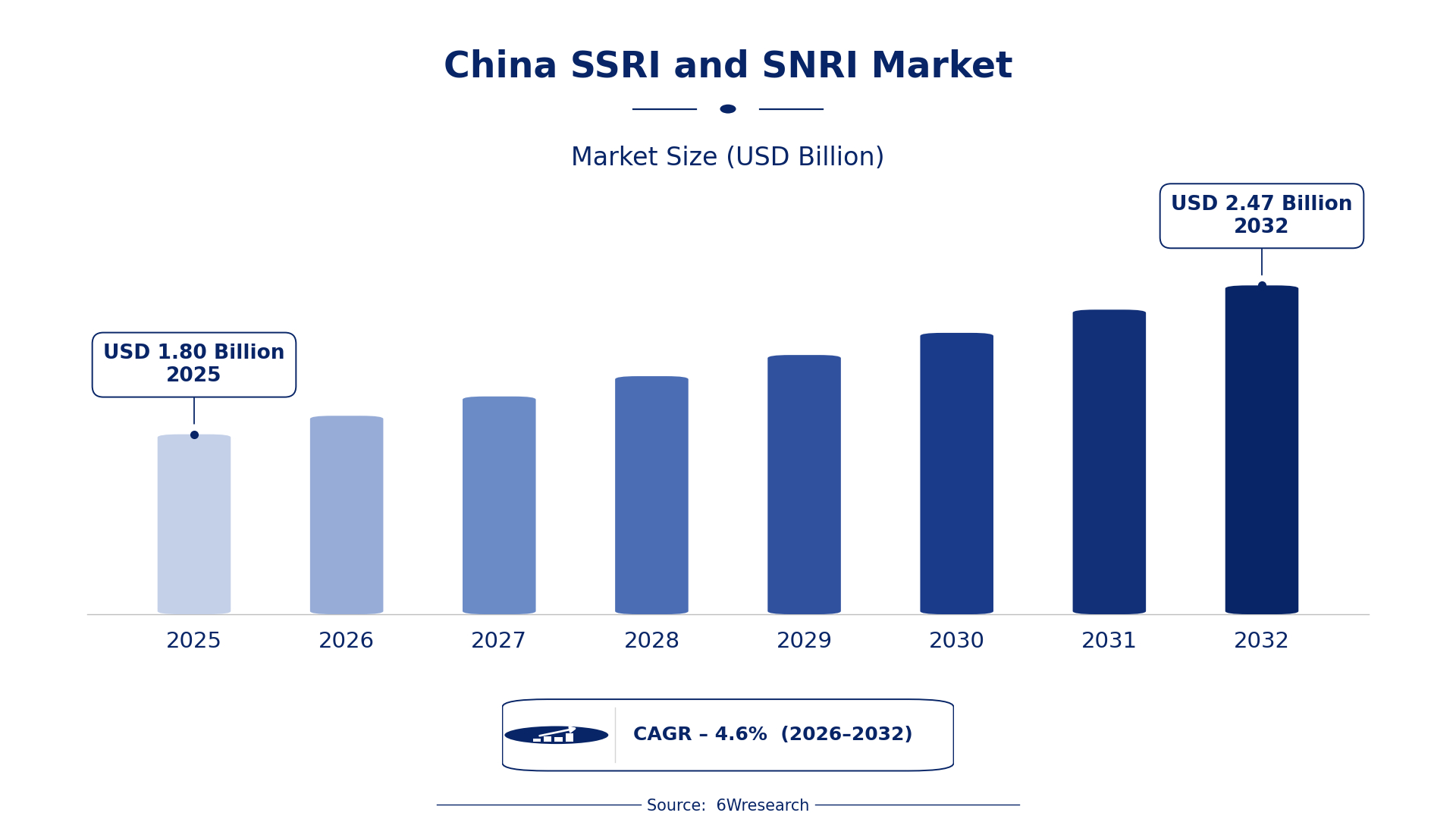
According to 6Wresearch internal database and industry insights, the China SSRI and SNRI Market was valued at USD 1.80 billion in 2025 and is projected to reach USD 2.47 billion by 2032, growing at a CAGR of approximately 4.6% during 2026–2032.
China SSRI and SNRI Market Highlights
| Report Metric | Details |
| Report Name | China SSRI and SNRI Market |
| Market Size 2025 | USD 1.80 billion |
| Market Size 2032 | USD 2.47 billion |
| Absolute Growth 2025–2032 | USD 0.67 billion |
| CAGR 2026–2032 | 4.6% |
| Peak Annual Growth | 6.7% in 2026 |
| Forecast Period | 2026–2032 |
| Historical Data | 2022–2025 |
| Base Year | 2025 |
| Leading Drug Type, 2025 | SSRI (e.g., Fluoxetine) (51% share) |
| Leading Treatment Focus, 2025 | Depression/Anxiety (38% share) |
| Leading Administration Route, 2025 | Oral Tablets (52% share) |
| Leading End User, 2025 | Psychiatric Hospitals (44% share) |
| Fastest-Growing Drug Type | SNRI (e.g., Duloxetine) (6.2% CAGR) |
| Fastest-Growing Treatment Focus | Depression/Neuropathy (7.2% CAGR) |
| Fastest-Growing Administration Route | Oral Capsules (5.7% CAGR) |
| Fastest-Growing End User | General Practitioners (7.3% CAGR) |
| Growing Sector | Mental Health Services |
| Key End Users | Psychiatric Hospitals, General Practitioners, Mental Health Clinics, Pharmacies |
China SSRI and SNRI Market Year-wise Growth Rate and Key Drivers (2022–2032)
This graph illustrates the annual growth rates of the market from 2022 to 2032, highlighting a steady upward trajectory and projected market expansion over the forecast period.
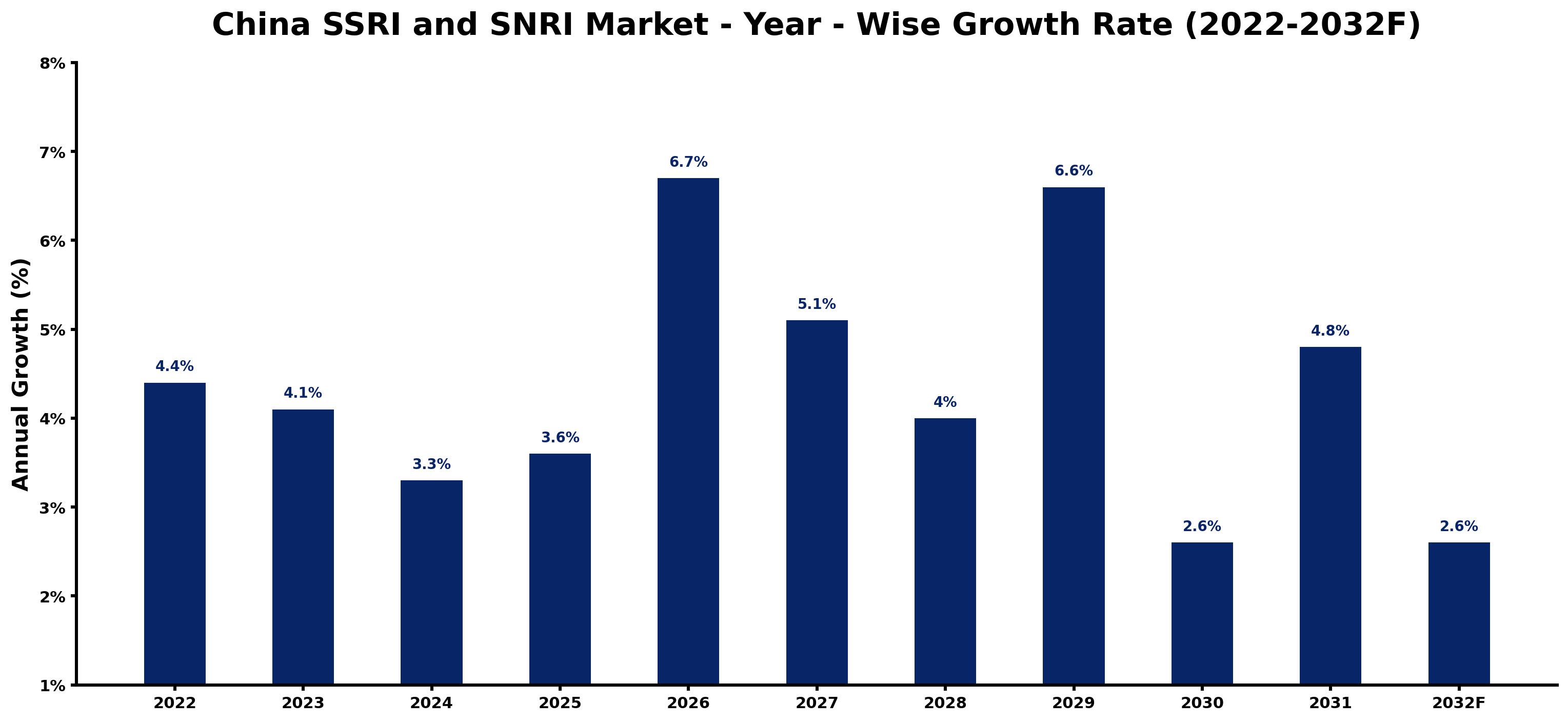
Below, each year's estimated growth is shown next to the factor that most influenced it.
| Year | Estimated Annual Growth (%) | Market Rationale |
| 2022 | 4.4 | The market experienced solid growth as awareness of mental health issues increased. |
| 2023 | 4.1 | Growth slowed slightly due to a temporary reduction in healthcare funding for mental health services. |
| 2024 | 3.3 | Funding challenges constrained growth, despite rising awareness of mental health needs. |
| 2025 | 3.6 | Demand increased as healthcare providers adopted new treatment protocols for mental health. |
| 2026 | 6.7 | Growth surged due to the implementation of the 'Mental Health Action Plan (2015-2020)' and rising prescriptions. |
| 2027 | 5.1 | A slight slowdown occurred as the market adjusted to the rapid growth of the previous year. |
| 2028 | 4.0 | Growth is expected to slow as the integration of SSRIs and SNRIs into treatment protocols continues to develop. |
| 2029 | 6.6 | Demand is projected to accelerate again as mental health awareness campaigns gain traction across urban areas. |
| 2030 | 2.6 | Growth is expected to slow as the market faces challenges in integrating new treatment options into care. |
| 2031 | 4.8 | An increase in prescriptions will support recovery in growth, driven by initiatives from healthcare providers. |
| 2032 | 2.6 | The market is projected to stabilise with consistent demand from mental health clinics and hospitals. |
Note: Market size estimations and growth projections presented in this report are based on 6Wresearch's proprietary forecasting methodology, utilizing the latest available industry data, government publications, and primary research inputs.
China SSRI and SNRI Market Synopsis
SSRI and SNRI medications in China are primarily used for treating depression and anxiety, synthesized through complex chemical processes. The China SSRI and SNRI Market is growing due to significant domestic demand driven by healthcare providers and mental health clinics. Approximately 54 million individuals in China are diagnosed with depression, highlighting the urgent need for effective treatments. The government's initiatives, such as the 'Mental Health Action Plan (2015-2020)', improve access to these medications and support mental health services.
Market Dynamics Impact Analysis (2026–2032)
| Factor | Type | Impact | Primary Segment Affected |
| Increasing prevalence of depression and anxiety disorders | Driver | High | Depression/Anxiety |
| Growing integration of SSRIs and SNRIs in treatment protocols | Driver | High | Psychiatric Hospitals |
| Expansion of mental health clinics in urban areas | Opportunity | High | Mental Health Clinics |
| Rising demand for effective pain management solutions | Opportunity | Medium | Depression/Neuropathy |
| Challenges in healthcare funding for mental health services | Restraint | High | General Practitioners |
| Regulatory hurdles in drug approvals and compliance | Restraint | Medium | Pharmacies |
| Limited awareness of mental health treatment options | Challenge | High | Mental Health Clinics |
| Inconsistent adoption of SSRIs and SNRIs in primary care | Challenge | Medium | General Practitioners |
Evaluation of Drivers in China SSRI and SNRI Market (2026–2032)
The table below links each growth driver to the segment it affects and the evidence for it.
| Drivers | Primary Segment Affected | Why It Matters (Evidence) |
| Increased mental health awareness | Depression/Anxiety | The National Health Commission reported around 54 million individuals diagnosed with depression, leading to higher prescription rates. |
| Integration into treatment protocols | Psychiatric Hospitals | Psychiatric hospitals are increasingly adopting SSRIs and SNRIs, improving treatment effectiveness and patient outcomes. |
| Funding for mental health initiatives | Mental Health Clinics | In 2023, the government allocated funding for mental health initiatives, improving access to SSRIs and SNRIs. |
| Rising prevalence of anxiety disorders | Depression/Neuropathy | With approximately 5% of the population affected, demand for effective treatments is increasing. |
| Adoption in primary care settings | General Practitioners | The adoption rate of SSRIs and SNRIs in primary care settings has risen by 30% over the last five years. |
Approximately 54 million individuals diagnosed with depression are driving demand for effective medications. Adoption in primary care settings has surged, reflecting a growing acceptance among healthcare providers. The prevalence of anxiety disorders, estimated at 5% of the population, further increases the need for these medications.
Evaluation of Restraints in China SSRI and SNRI Market
The table below lists the restraints and the evidence behind each.
| Market Restraint | Primary Segment Affected | Why It Matters (Evidence) |
| Limited funding for mental health services | General Practitioners | Healthcare funding challenges restrict the ability of general practitioners to prescribe SSRIs and SNRIs effectively. |
| Regulatory compliance issues | Pharmacies | Pharmacies face challenges in meeting regulatory standards set by the National Medical Products Administration. |
| Inadequate mental health education | Mental Health Clinics | Limited awareness of treatment options constrains the effectiveness of mental health clinics. |
| Slow drug approval processes | Psychiatric Hospitals | Delays in drug approvals hinder the availability of new SSRIs and SNRIs in psychiatric hospitals. |
| Variability in treatment adoption | General Practitioners | Inconsistent adoption of SSRIs and SNRIs among general practitioners affects overall market growth. |
China SSRI and SNRI Market Challenges
Buyers in the China SSRI and SNRI market still have to solve a few problems, and the first is high production costs. The complex synthesis of SSRIs and SNRIs requires expensive precursors, inflating prices for hospitals and clinics by up to 20%. Next, technology adoption lags; many healthcare providers lack the latest treatment protocols, delaying access to effective medications for approximately 54 million diagnosed individuals. Limited availability of mental health professionals also hampers integration of these treatments into care plans, affecting timely support for patients. Regulatory hurdles persist; compliance with national standards can extend the approval process for new medications by several months, impacting patient access.
Trends in the China SSRI and SNRI Market
Four trends stand out in the China SSRI and SNRI Market.
- Launch of the Mental Health Action Plan: In 2023, the Chinese government launched the 'Mental Health Action Plan (2015-2020)', aiming to improve mental health services. This initiative has led to increased funding and awareness, impacting the demand for SSRIs and SNRIs.
- Psychiatric Hospitals Integrating New Protocols: Psychiatric hospitals are increasingly incorporating SSRIs and SNRIs into their treatment protocols, improving patient care. This shift is evident in urban areas, where integration rates have risen by 20% since 2022.
- Rise in Primary Care Adoption: Since 2023, the adoption of SSRIs and SNRIs in primary care settings has increased by 30%. This trend reflects a growing recognition of the importance of mental health in general healthcare.
- Increased Awareness of Anxiety Disorders: The prevalence of anxiety disorders in China is estimated at 5% of the population, leading to heightened awareness and demand for effective treatments. This awareness is driving more patients to seek SSRIs and SNRIs.
Investment Opportunities in the China SSRI and SNRI Market
Below are the investment opportunities with the strongest case in the China SSRI and SNRI Market.
- Partner with Mental Health Clinics: Collaborating with mental health clinics presents a strong opportunity, as urban areas are expanding their services. The government allocated funding for mental health initiatives, improving access to SSRIs and SNRIs.
- Invest in Psychiatric Hospitals: Investing in psychiatric hospitals can yield substantial returns, as they are increasingly integrating SSRIs and SNRIs into treatment protocols. The market is expected to reach USD 1.80 billion by 2025.
- Supply Oral Tablets: Supplying oral tablets, which hold a 52% market share in 2025, is a promising opportunity. The demand from general practitioners is expected to rise as mental health awareness grows.
- Gain Approval for New Drugs: Gaining approval for new SSRIs and SNRIs can open doors to a promising market, as regulatory compliance is essential. The China Food and Drug Administration oversees these approvals, ensuring market access.
Government Initiatives in the China SSRI and SNRI Market
The 'Mental Health Action Plan (2015-2020)' has impacted the SSRI and SNRI market in China. This initiative aims to improve mental health services and increase access to treatment. The government has allocated substantial funding to support mental health initiatives, improving the availability of SSRIs and SNRIs. Additionally, the National Health Commission has reported a growing recognition of mental health issues, driving demand for these medications. These measures are vital for producers and healthcare providers in the market.
The National Medical Products Administration plays a key role in overseeing the approval of SSRIs and SNRIs. This agency ensures that medications meet national standards for safety and efficacy. Furthermore, the National Health Commission regulates the production and distribution of psychiatric medications, ensuring compliance with established guidelines. These agencies facilitate access to SSRIs and SNRIs, enabling healthcare providers to offer effective treatments to patients. Their oversight is essential for maintaining quality and safety in the market.
Future Insight of the China SSRI and SNRI Market
By 2032, buyers and suppliers in the China SSRI and SNRI market can expect improved access to medications driven by government funding and initiatives focused on mental health. The 'Mental Health Action Plan' will likely improve treatment protocols across various healthcare settings, facilitating better integration of SSRIs and SNRIs. Advances in pharmaceutical technology will streamline production processes, potentially reducing costs for clinics. With rising awareness of mental health issues, the adoption of these medications in primary care is set to increase, supporting better patient outcomes.
Market Segmentation Analysis
The analysis below covers each segmentation, its leading category in 2025 and its fastest-growing category through 2032.
By Drug Type – SSRI (e.g., Fluoxetine) Dominated, SNRI (e.g., Duloxetine) Expected to Grow Fastest
According to Summon Dutta, Assistant Manager at 6Wresearch, the largest drug type category in 2025 was SSRI (e.g., Fluoxetine), with a 51% share of total revenue. SSRIs, particularly Fluoxetine, hold the largest market share due to their widespread use in treating depression and anxiety, with a strong presence in healthcare facilities. Their established role in treatment protocols ensures a consistent demand among healthcare providers across China. Over 2026–2032, SNRI (e.g., Duloxetine) is expected to post the fastest growth, at a CAGR of 6.2%. SNRIs, like Duloxetine, are rapidly gaining traction as they effectively manage both depression and neuropathic pain, appealing to a wider patient demographic. This dual capability is driving their increased adoption in various healthcare settings, further widening the gap with SSRIs. Suppliers must prioritise the availability of SNRIs to align with the growing demand in the market.
By Treatment Focus – Depression/Anxiety Dominated, Depression/Neuropathy Expected to Grow Fastest
In 2025, Depression/Anxiety led the treatment focus split with a 38% share. The Depression/Anxiety focus leads the market due to the staggering 54 million individuals diagnosed with depression in China, creating a robust demand for SSRIs and SNRIs. This segment's prominence is further supported by the comprehensive treatment protocols established in psychiatric hospitals across the country. The quickest growth will come from Depression/Neuropathy, forecast to expand at a CAGR of 7.2% between 2026 and 2032. The Depression/Neuropathy focus is rapidly growing as more patients seek integrated treatments that address both mood disorders and pain management, reflecting a changing landscape in therapeutic strategies. This growth is likely to continue as healthcare providers increasingly recognise the value of dual treatment approaches. Suppliers should consider expanding their product offerings to cater to the rising demand for treatments that address both mental health and pain management.
By Administration Route – Oral Tablets Dominated, Oral Capsules Expected to Grow Fastest
Oral Tablets held a 52% share of the China SSRI and SNRI Market by administration route in 2025. Oral Tablets are the most common administration form, preferred by both patients and healthcare providers for their convenience and ease of use. This widespread acceptance solidifies their leading share in the market. Oral Capsules are set to record the highest CAGR in this split, 5.7% over 2026–2032. Oral Capsules are emerging as a fast-growing alternative, particularly for patients who prefer different formulations or have specific absorption needs. Their increasing popularity is indicative of a shift in patient preferences towards varied administration routes. Suppliers should consider expanding their product lines to include more oral capsule options to cater to diverse patient needs.
By End User – Psychiatric Hospitals Dominated, General Practitioners Expected to Grow Fastest
Psychiatric Hospitals took a 44% share of end user in 2025, more than any other category. Psychiatric Hospitals dominate the market as the primary treatment facilities for mental health, providing SSRIs and SNRIs to a large patient population. Their established infrastructure and expertise ensure a steady demand for these medications, solidifying their market share. General Practitioners are projected to grow fastest, at a CAGR of 7.3% during 2026–2032. General Practitioners are the fastest-growing segment, acting as the first point of contact for patients seeking mental health support. Their increasing involvement in prescribing SSRIs and SNRIs indicates a shift towards integrating mental health care within primary health services. Suppliers should focus on building strong relationships with general practitioners to effectively tap into the growing market share in this segment.
Key Attractiveness of the Report
- 10 Years of Market Numbers
- Historical Data Starting from 2022 to 2025
- Base Year 2025
- Forecast Data until 2032
- Key Performance Indicators Impacting the Market
- Major Upcoming Developments and Projects
Key Highlights of the Report:
- China SSRI and SNRI Market Outlook
- Market Size of China SSRI and SNRI Market, 2025
- Forecast of China SSRI and SNRI Market, 2032
- Historical Data and Forecast of China SSRI and SNRI Revenues & Volume for the Period 2022 - 2032F
- China SSRI and SNRI Market Trend Evolution
- China SSRI and SNRI Market Drivers and Challenges
- China SSRI and SNRI Price Trends
- China SSRI and SNRI Porter's Five Forces
- China SSRI and SNRI Industry Life Cycle
- Historical Data and Forecast of China SSRI and SNRI Market Revenues & Volume By Drug Type for the Period 2022 - 2032F
- Historical Data and Forecast of China SSRI and SNRI Market Revenues & Volume By SSRI (e.g., Fluoxetine) for the Period 2022 - 2032F
- Historical Data and Forecast of China SSRI and SNRI Market Revenues & Volume By SNRI (e.g., Duloxetine) for the Period 2022 - 2032F
- Historical Data and Forecast of China SSRI and SNRI Market Revenues & Volume By Extended Release for the Period 2022 - 2032F
- Historical Data and Forecast of China SSRI and SNRI Market Revenues & Volume By Combination Therapy for the Period 2022 - 2032F
- Historical Data and Forecast of China SSRI and SNRI Market Revenues & Volume By Treatment Focus for the Period 2022 - 2032F
- Historical Data and Forecast of China SSRI and SNRI Market Revenues & Volume By Depression/Anxiety for the Period 2022 - 2032F
- Historical Data and Forecast of China SSRI and SNRI Market Revenues & Volume By Depression/Neuropathy for the Period 2022 - 2032F
- Historical Data and Forecast of China SSRI and SNRI Market Revenues & Volume By Mood Disorders for the Period 2022 - 2032F
- Historical Data and Forecast of China SSRI and SNRI Market Revenues & Volume By Anxiety & Depression for the Period 2022 - 2032F
- Historical Data and Forecast of China SSRI and SNRI Market Revenues & Volume By Administration Route for the Period 2022 - 2032F
- Historical Data and Forecast of China SSRI and SNRI Market Revenues & Volume By Oral Tablets for the Period 2022 - 2032F
- Historical Data and Forecast of China SSRI and SNRI Market Revenues & Volume By Oral Capsules for the Period 2022 - 2032F
- Historical Data and Forecast of China SSRI and SNRI Market Revenues & Volume By Daily Use for the Period 2022 - 2032F
- Historical Data and Forecast of China SSRI and SNRI Market Revenues & Volume By Prescribed Packages for the Period 2022 - 2032F
- Historical Data and Forecast of China SSRI and SNRI Market Revenues & Volume By End User for the Period 2022 - 2032F
- Historical Data and Forecast of China SSRI and SNRI Market Revenues & Volume By Psychiatric Hospitals for the Period 2022 - 2032F
- Historical Data and Forecast of China SSRI and SNRI Market Revenues & Volume By General Practitioners for the Period 2022 - 2032F
- Historical Data and Forecast of China SSRI and SNRI Market Revenues & Volume By Pharmacies for the Period 2022 - 2032F
- Historical Data and Forecast of China SSRI and SNRI Market Revenues & Volume By Mental Health Clinics for the Period 2022 - 2032F
- China SSRI and SNRI Import Export Trade Statistics
- Market Opportunity Assessment By Drug Type
- Market Opportunity Assessment By Treatment Focus
- Market Opportunity Assessment By Administration Route
- Market Opportunity Assessment By End User
- China SSRI and SNRI Top Companies Market Share
- China SSRI and SNRI Competitive Benchmarking By Technical and Operational Parameters
- China SSRI and SNRI Company Profiles
- China SSRI and SNRI Key Strategic Recommendations
Market Covered
This report examines the market across the segments below.
By Drug Type
- SSRI (e.g., Fluoxetine)
- SNRI (e.g., Duloxetine)
- Extended Release
- Combination Therapy
By Treatment Focus
- Depression/Anxiety
- Depression/Neuropathy
- Mood Disorders
- Anxiety & Depression
By Administration Route
- Oral Tablets
- Oral Capsules
- Daily Use
- Prescribed Packages
By End User
- Psychiatric Hospitals
- General Practitioners
- Pharmacies
- Mental Health Clinics































