India Transplant Rejection Therapies Market Size & Growth Rate
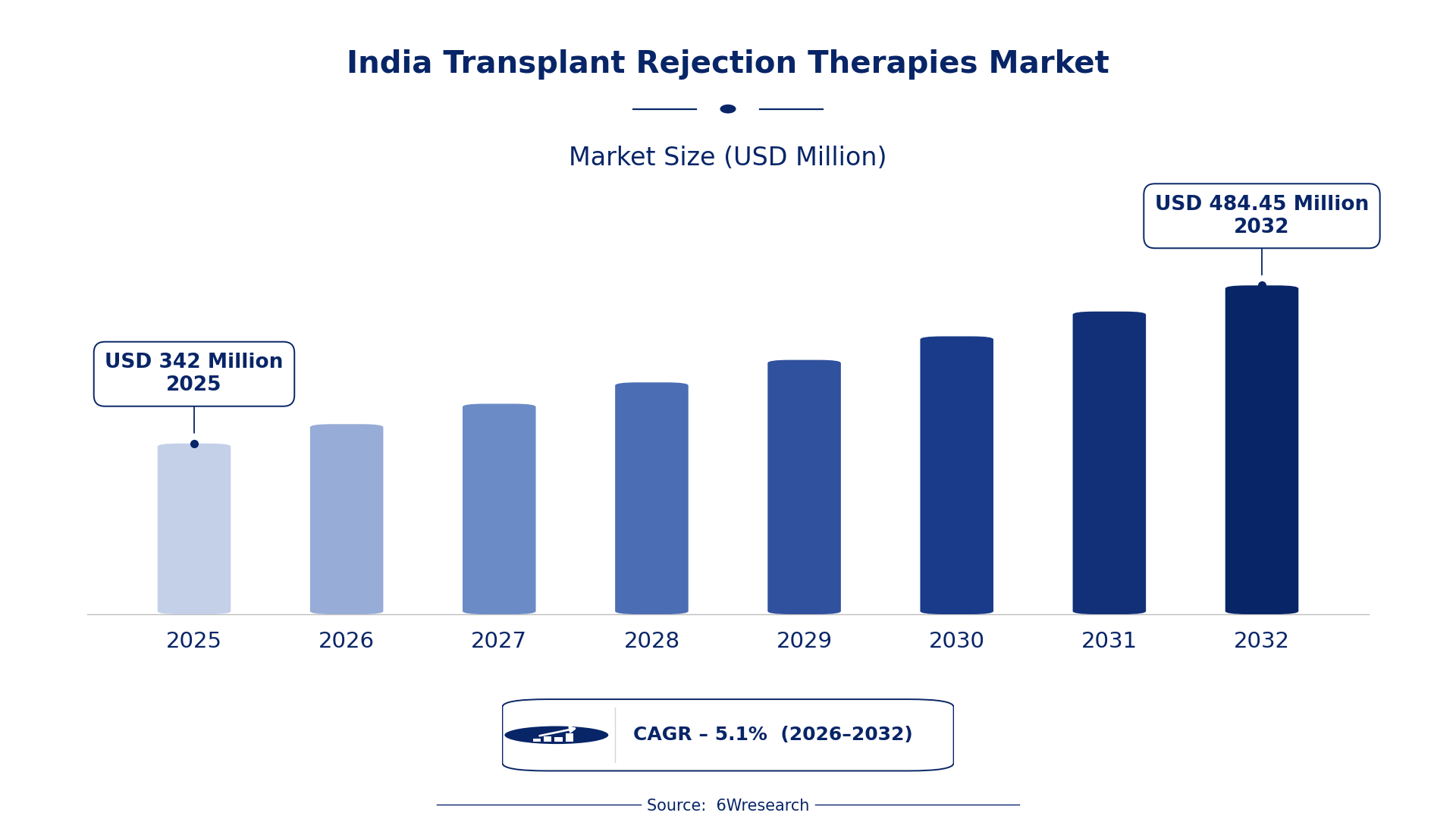
According to 6Wresearch internal database and industry insights, the India Transplant Rejection Therapies Market was valued at USD 342.0 million in 2025 and is projected to reach USD 484.45 million by 2032, growing at a CAGR of approximately 5.1% during 2026–2032.
India Transplant Rejection Therapies Market Highlights
| Report Metric | Details |
| Report Name | India Transplant Rejection Therapies Market |
| Market Size 2025 | USD 342.0 million |
| Market Size 2032 | USD 484.45 million |
| Absolute Growth 2025–2032 | USD 142.45 million |
| CAGR 2026–2032 | 5.1% |
| Peak Annual Growth | 7.4% in 2030 |
| Forecast Period | 2026–2032 |
| Historical Data | 2022–2025 |
| Base Year | 2025 |
| Leading Therapy Type, 2025 | Acute Rejection Drugs (45% share) |
| Leading Mechanism, 2025 | Cytokine Inhibitors (37% share) |
| Leading Phase of Rejection, 2025 | Immediate Response (38% share) |
| Leading End User, 2025 | Transplant Hospitals (45% share) |
| Fastest-Growing Therapy Type | Desensitization Therapies (7.7% CAGR) |
| Fastest-Growing Phase of Rejection | Long-Term Prevention (7.5% CAGR) |
| Fastest-Growing End User | ICU Units (7.8% CAGR) |
| Growing Sector | Transplant Hospitals |
| Key End Users | Transplant Hospitals, ICU Units, Specialty Hospitals |
India Transplant Rejection Therapies Market Year-wise Growth Rate and Key Drivers (2022–2032)
This graph illustrates the annual growth rates of the market from 2022 to 2032, highlighting a steady upward trajectory and projected market expansion over the forecast period.
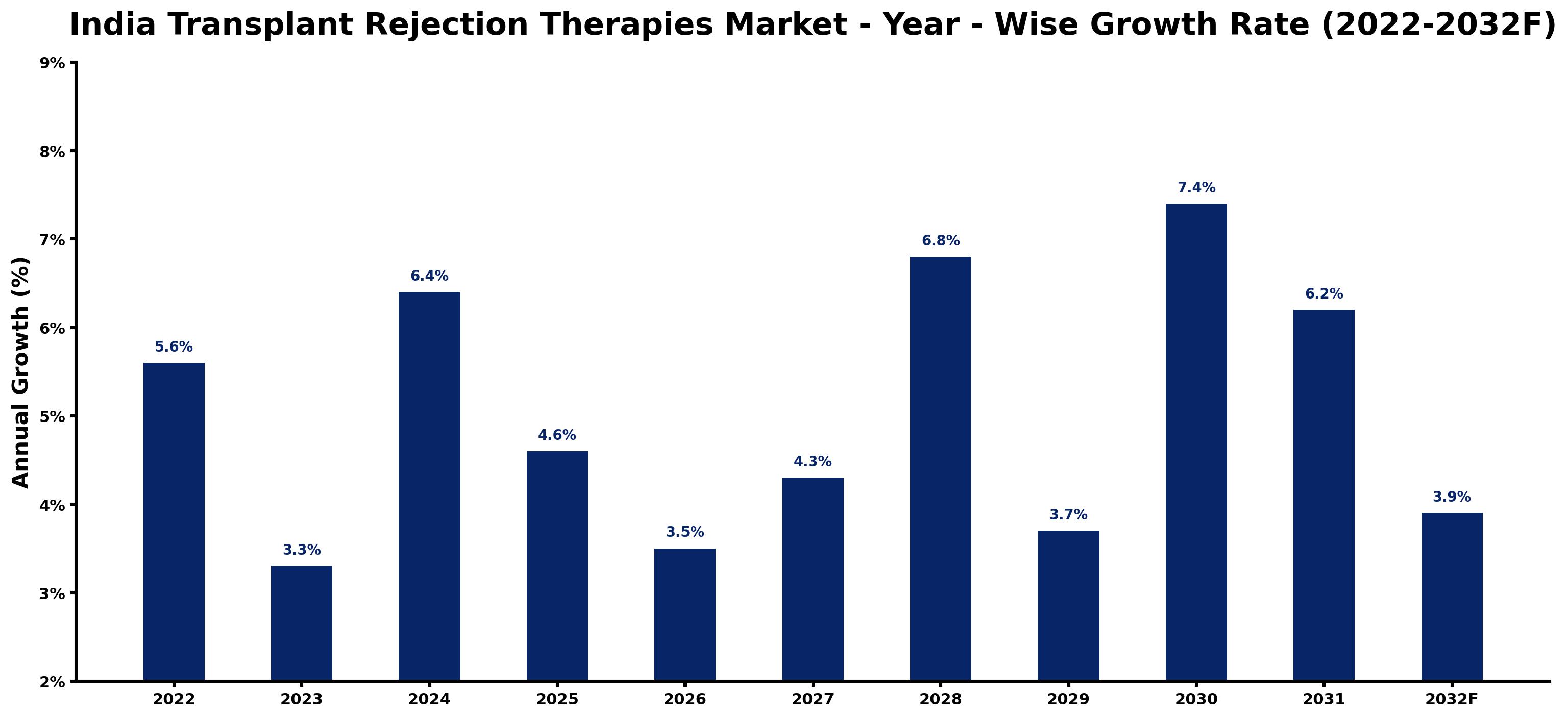
Annual growth estimates for each year appear below with the principal reason behind them, explaining the shifts that set the pace of the market.
| Year | Estimated Annual Growth (%) | Market Rationale |
| 2022 | 5.6 | The market experienced steady demand from transplant hospitals and clinics, reflecting the growing need for organ transplants. |
| 2023 | 3.3 | Growth slowed due to challenges in organ donor availability and awareness, impacting transplant procedures. |
| 2024 | 6.4 | Demand surged with increased organ transplant procedures across major cities, particularly in Delhi and Mumbai. |
| 2025 | 4.6 | Growth decelerated as the market adjusted to supply chain constraints affecting therapy availability. |
| 2026 | 3.5 | Demand growth is expected to slow as hospitals face regulatory hurdles in procurement processes, complicating access to therapies. |
| 2027 | 4.3 | Increased funding for transplant facilities, supported by the National Health Mission, is projected to spur demand recovery. |
| 2028 | 6.8 | Higher adoption of desensitization therapies will drive market growth, particularly among sensitized patients. |
| 2029 | 3.7 | Growth is expected to slow as competition among hospitals intensifies, leading to pricing pressures on therapies. |
| 2030 | 7.4 | Demand is projected to peak with new strategies improving organ donation rates, supported by public awareness campaigns. |
| 2031 | 6.2 | Growth will decelerate as hospitals adjust to evolving patient needs and treatment protocols. |
| 2032 | 3.9 | Market growth is expected to slow as donor shortages continue to challenge supply, impacting transplant rates. |
Note: Market size estimations and growth projections presented in this report are based on 6Wresearch's proprietary forecasting methodology, utilizing the latest available industry data, government publications, and primary research inputs.
India Transplant Rejection Therapies Market Synopsis
Transplant Rejection Therapies in India are medical treatments designed to prevent organ transplant rejection using immunosuppressive agents. These therapies are vital for maintaining organ viability post-transplant and managing immune responses. The India Transplant Rejection Therapies Market is expanding, driven by a patient population of approximately 200,000 individuals needing transplants annually. The launch of the National Organ and Tissue Transplantation Program in 2022 has stimulated demand by improving organ donation rates and increasing awareness among the public.
Market Dynamics Impact Analysis (2026–2032)
| Factor | Type | Impact | Primary Segment Affected |
| Increasing investment in transplant facilities and technologies | Driver | High | Transplant Hospitals |
| Rising demand for desensitization therapies among sensitized patients | Driver | High | Desensitization Therapies |
| Growing patient population needing organ transplants | Opportunity | High | Transplant Hospitals |
| Expansion of transplant hospitals in major cities | Opportunity | Medium | Transplant Hospitals |
| Limited organ donor availability affecting transplant rates | Restraint | High | Transplant Hospitals |
| Regulatory hurdles in organ procurement processes | Restraint | Medium | Transplant Hospitals |
| Shortage of trained medical professionals in transplant procedures | Challenge | High | Transplant Hospitals |
| High costs associated with advanced transplant therapies | Challenge | Medium | Transplant Hospitals |
Evaluation of Drivers in India Transplant Rejection Therapies Market (2026–2032)
The main growth drivers and the segments they affect most are set out below.
| Drivers | Primary Segment Affected | Why It Matters (Evidence) |
| Increased funding for transplant facilities | Transplant Hospitals | The National Health Mission allocated ₹500 crores in 2023 to improve transplant services in public hospitals. |
| Rising number of organ transplant procedures | Transplant Hospitals | Approximately 15,000 kidney transplants are performed annually, driving demand for effective therapies and interventions. |
| Growing awareness of organ donation | Transplant Hospitals | Public campaigns initiated in 2023 have increased the number of registered donors, expanding the donor pool. |
| Adoption of desensitization therapies | Desensitization Therapies | The rise in sensitized patients has led to a notable increase in therapy usage, reflecting new treatment strategies. |
| Advancements in immunosuppressive agents | Cytokine Inhibitors | Cytokine Inhibitors are projected to grow at 7.0% due to their effectiveness in managing transplant rejection. |
Growth in the Transplant Rejection Therapies market in India comes from increased funding for transplant facilities, which has led to improved service delivery. The National Health Mission allocated ₹500 crores in 2023 to support transplant capabilities in public hospitals. The rising number of organ transplant procedures, with approximately 15,000 kidney transplants performed annually, drives demand for effective therapies. Public campaigns have increased awareness of organ donation, resulting in a higher number of registered donors. The adoption of desensitization therapies is also rising, particularly among sensitized patients, reflecting a shift in treatment approaches.
Evaluation of Restraints in India Transplant Rejection Therapies Market
The following restraints limit how fast demand can grow.
| Market Restraint | Primary Segment Affected | Why It Matters (Evidence) |
| Limited organ donor availability impacting transplant rates | Transplant Hospitals | The average wait time for a kidney transplant is around 3-5 years due to donor shortages. |
| Regulatory hurdles complicating procurement processes | Transplant Hospitals | Amendments to the Transplantation of Human Organs Act have introduced new compliance requirements, affecting procurement timelines. |
| Shortage of trained medical professionals in transplant procedures | Transplant Hospitals | The demand for skilled personnel exceeds the current supply, delaying procedures and impacting patient care. |
| High costs associated with advanced transplant therapies | Transplant Hospitals | Rising therapy costs limit access for many patients, affecting overall treatment rates and adherence. |
| Inconsistent quality of care across facilities | Transplant Hospitals | ISO 9001 certification is not uniformly adopted, leading to variable standards in treatment quality. |
India Transplant Rejection Therapies Market Challenges
The India Transplant Rejection Therapies Market still has to solve a few problems, and the first is supply chain inefficiencies that raise costs for hospitals. With over 200,000 patients needing organ transplants annually, the shortage of donor organs results in an average wait time of 3-5 years, delaying treatments and increasing operational expenses for healthcare providers. A lack of skilled professionals in transplant procedures limits the capacity of hospitals to perform surgeries, impacting patient care and outcomes. Outdated technology in some facilities restricts the adoption of advanced treatment methods, making it challenging for buyers to access effective options.
Trends in the India Transplant Rejection Therapies Market
Four trends stand out in the India Transplant Rejection Therapies Market.
- Shift towards Improved Organ Donation Awareness: Public awareness campaigns have improved organ donation rates, with a notable rise in registered donors since 2023. The National Organ and Tissue Transplantation Program has played a significant role in this shift, resulting in more successful transplants.
- Growth in Desensitization Therapies Adoption: Desensitization therapies are increasingly being utilised for sensitized patients, with a 7.7% growth rate projected from 2026 to 2032. This trend reflects a broader acceptance of tailored transplant approaches, improving patient outcomes.
- Expansion of Transplant Facilities in Major Cities: New transplant hospitals are being established in major cities like Delhi and Mumbai to meet the growing demand for organ transplants. Over 30 transplant hospitals are currently operational across India, improving access to therapies.
- Increased Focus on Long-Term Prevention Strategies: Long-term prevention strategies are gaining traction, particularly in managing chronic rejection. This shift is evident in the growing adoption of therapies aimed at long-term patient outcomes, improving overall transplant success rates.
Investment Opportunities in the India Transplant Rejection Therapies Market
The following opportunities in the India Transplant Rejection Therapies Market pair current demand with a clear way in.
- Transplant Hospitals Seeking Advanced Therapies: With an estimated 200,000 individuals needing transplants annually, there is a strong demand for advanced transplant rejection therapies. Collaborating with local hospitals can facilitate market entry.
- Investment in Public Awareness Campaigns: Now is a prime time to invest in public awareness campaigns about organ donation, as government initiatives are gaining momentum. Partnering with NGOs can improve outreach efforts and increase donor registrations.
- Development of Specialty Transplant Facilities: The establishment of specialty hospitals focusing on complex transplant cases is rising. Investing in these facilities can meet the increasing demand for advanced therapies and improve patient care.
- Collaboration with Regulatory Agencies: Engaging with regulatory agencies can streamline the approval process for new therapies. This is important as the market evolves and adapts to new standards, ensuring timely access to necessary treatments.
Government Initiatives in the India Transplant Rejection Therapies Market
The National Organ and Tissue Transplantation Program, launched in 2022, has improved organ donation rates and transplant outcomes. This initiative builds on the Transplantation of Human Organs Act, amended in 2021, which streamlined organ donation processes and enhanced regulatory oversight. These measures aim to create a more efficient framework for organ procurement and transplantation, benefiting both producers and patients.
In 2023, the National Health Mission allocated ₹500 crores to improve transplant facilities in government hospitals. The Indian Council of Medical Research oversees regulatory compliance and has issued new guidelines for ethical organ procurement. These initiatives support the growth of transplant services and ensure that patients receive quality care.
Future Insight of the India Transplant Rejection Therapies Market
The India Transplant Rejection Therapies Market is set for transformation by 2032, driven by several key developments. The National Organ and Tissue Transplantation Program, launched in 2022, is expected to increase organ donation rates, improving the availability of organs for transplant. The Ministry of Health's new strategy to improve access to transplant therapies will enhance patient outcomes. As more hospitals adopt advanced treatment options, a greater number of sensitized patients will receive effective care. With around 15,000 kidney transplants performed annually, demand for innovative therapies will likely increase.
Market Segmentation Analysis
The analysis below covers each segmentation, its leading category in 2025 and its fastest-growing category through 2032.
By Therapy Type – Acute Rejection Drugs Dominated, Desensitization Therapies Expected to Grow Fastest
According to Vasudha, AM at 6Wresearch, in 2025, Acute Rejection Drugs led the therapy type split with a 45% share. Acute rejection drugs maintain the largest share in the India transplant rejection therapies market because they are crucial for managing immediate rejection episodes. With around 15,000 kidney transplants performed annually, these drugs are vital for patient survival during acute crises. The quickest growth will come from Desensitization Therapies, forecast to expand at a CAGR of 7.7% between 2026 and 2032. Desensitization therapies are witnessing rapid growth as they effectively address the needs of sensitized patients, significantly enhancing transplant success rates. The rising adoption of these therapies indicates a shift towards more tailored approaches in transplant medicine. Suppliers should focus on expanding their desensitization therapy offerings to meet the increasing demand from healthcare providers.
By Mechanism – Cytokine Inhibitors Dominated and Is Expected to Record the Fastest Growth
The largest mechanism category in 2025 was Cytokine Inhibitors, with a 37% share of total revenue. Cytokine inhibitors command a significant market share as they effectively modulate the immune response, making them a preferred choice in transplant rejection therapies. Their extensive use in hospitals across India underscores their importance in achieving successful transplant outcomes. Its lead should widen, with a projected CAGR of 7.0% during 2026–2032, the highest in this split. Cytokine inhibitors are also the fastest-growing segment, driven by advancements in immunotherapy techniques that enhance their effectiveness. As more transplant centres integrate these agents into their protocols, their market share is set to expand further. Suppliers must prioritise research and development to innovate and improve cytokine inhibitor formulations to stay competitive.
By Phase of Rejection – Immediate Response Dominated, Long-Term Prevention Expected to Grow Fastest
Immediate Response took a 38% share of phase of rejection in 2025, more than any other category. Immediate response therapies capture the largest market share due to their necessity for urgent intervention during acute rejection episodes. Their essential role in transplant hospitals across India makes them indispensable for effective patient management. Over 2026–2032, Long-Term Prevention is expected to post the fastest growth, at a CAGR of 7.5%. Long-term prevention strategies are gaining momentum as they are crucial for ensuring transplant success and improving patient survival rates. With healthcare providers increasingly recognising the need for sustained therapy, this segment is poised for significant growth. Buyers should emphasise long-term prevention therapies to enhance patient outcomes and mitigate the risk of transplant failure.
By End User – Transplant Hospitals Dominated, ICU Units Expected to Grow Fastest
With a 45% revenue share in 2025, Transplant Hospitals was the largest end user category. Transplant hospitals dominate the market share as they are the primary facilities for conducting transplant procedures and managing rejection. With over 30 transplant hospitals located in major Indian cities, their specialised services are critical for patient care. ICU Units are set to record the highest CAGR in this split, 7.8% over 2026–2032. ICU units represent the fastest-growing segment due to their vital role in monitoring and managing transplant patients post-surgery. The increasing number of transplants performed annually necessitates enhanced ICU capabilities for effective patient management. Suppliers should develop tailored solutions for ICU units to address the growing demand for transplant patient care.
Key Attractiveness of the Report
- 10 Years of Market Numbers
- Historical Data Starting from 2022 to 2025
- Base Year 2025
- Forecast Data until 2032
- Key Performance Indicators Impacting the Market
- Major Upcoming Developments and Projects
Key Highlights of the Report:
- India Transplant Rejection Therapies Market Outlook
- Market Size of India Transplant Rejection Therapies Market, 2025
- Forecast of India Transplant Rejection Therapies Market, 2032
- Historical Data and Forecast of India Transplant Rejection Therapies Revenues & Volume for the Period 2022 - 2032F
- India Transplant Rejection Therapies Market Trend Evolution
- India Transplant Rejection Therapies Market Drivers and Challenges
- India Transplant Rejection Therapies Price Trends
- India Transplant Rejection Therapies Porter's Five Forces
- India Transplant Rejection Therapies Industry Life Cycle
- Historical Data and Forecast of India Transplant Rejection Therapies Market Revenues & Volume By Therapy Type for the Period 2022 - 2032F
- Historical Data and Forecast of India Transplant Rejection Therapies Market Revenues & Volume By Acute Rejection Drugs for the Period 2022 - 2032F
- Historical Data and Forecast of India Transplant Rejection Therapies Market Revenues & Volume By Chronic Rejection Drugs for the Period 2022 - 2032F
- Historical Data and Forecast of India Transplant Rejection Therapies Market Revenues & Volume By Desensitization Therapies for the Period 2022 - 2032F
- Historical Data and Forecast of India Transplant Rejection Therapies Market Revenues & Volume By T-Cell Targeted Therapies for the Period 2022 - 2032F
- Historical Data and Forecast of India Transplant Rejection Therapies Market Revenues & Volume By Mechanism for the Period 2022 - 2032F
- Historical Data and Forecast of India Transplant Rejection Therapies Market Revenues & Volume By Cytokine Inhibitors for the Period 2022 - 2032F
- Historical Data and Forecast of India Transplant Rejection Therapies Market Revenues & Volume By Anti-Fibrotic Agents for the Period 2022 - 2032F
- Historical Data and Forecast of India Transplant Rejection Therapies Market Revenues & Volume By Antibody Reduction for the Period 2022 - 2032F
- Historical Data and Forecast of India Transplant Rejection Therapies Market Revenues & Volume By Immuno-Checkpoint for the Period 2022 - 2032F
- Historical Data and Forecast of India Transplant Rejection Therapies Market Revenues & Volume By Phase of Rejection for the Period 2022 - 2032F
- Historical Data and Forecast of India Transplant Rejection Therapies Market Revenues & Volume By Immediate Response for the Period 2022 - 2032F
- Historical Data and Forecast of India Transplant Rejection Therapies Market Revenues & Volume By Long-Term Prevention for the Period 2022 - 2032F
- Historical Data and Forecast of India Transplant Rejection Therapies Market Revenues & Volume By Before Surgery for the Period 2022 - 2032F
- Historical Data and Forecast of India Transplant Rejection Therapies Market Revenues & Volume By Post-Transplant for the Period 2022 - 2032F
- Historical Data and Forecast of India Transplant Rejection Therapies Market Revenues & Volume By End User for the Period 2022 - 2032F
- Historical Data and Forecast of India Transplant Rejection Therapies Market Revenues & Volume By ICU Units for the Period 2022 - 2032F
- Historical Data and Forecast of India Transplant Rejection Therapies Market Revenues & Volume By Transplant Hospitals for the Period 2022 - 2032F
- Historical Data and Forecast of India Transplant Rejection Therapies Market Revenues & Volume By Immunology Clinics for the Period 2022 - 2032F
- Historical Data and Forecast of India Transplant Rejection Therapies Market Revenues & Volume By Specialty Hospitals for the Period 2022 - 2032F
- India Transplant Rejection Therapies Import Export Trade Statistics
- Market Opportunity Assessment By Therapy Type
- Market Opportunity Assessment By Mechanism
- Market Opportunity Assessment By Phase of Rejection
- Market Opportunity Assessment By End User
- India Transplant Rejection Therapies Top Companies Market Share
- India Transplant Rejection Therapies Competitive Benchmarking By Technical and Operational Parameters
- India Transplant Rejection Therapies Company Profiles
- India Transplant Rejection Therapies Key Strategic Recommendations
Market Covered
This report examines the market across the segments below.
By Therapy Type
- Acute Rejection Drugs
- Chronic Rejection Drugs
- Desensitization Therapies
- T-Cell Targeted Therapies
By Mechanism
- Cytokine Inhibitors
- Anti-Fibrotic Agents
- Antibody Reduction
- Immuno-Checkpoint
By Phase of Rejection
- Immediate Response
- Long-Term Prevention
- Before Surgery
- Post-Transplant
By End User
- ICU Units
- Transplant Hospitals
- Immunology Clinics
- Specialty Hospitals































