China Transplant Rejection Therapies Market Size & Growth Rate
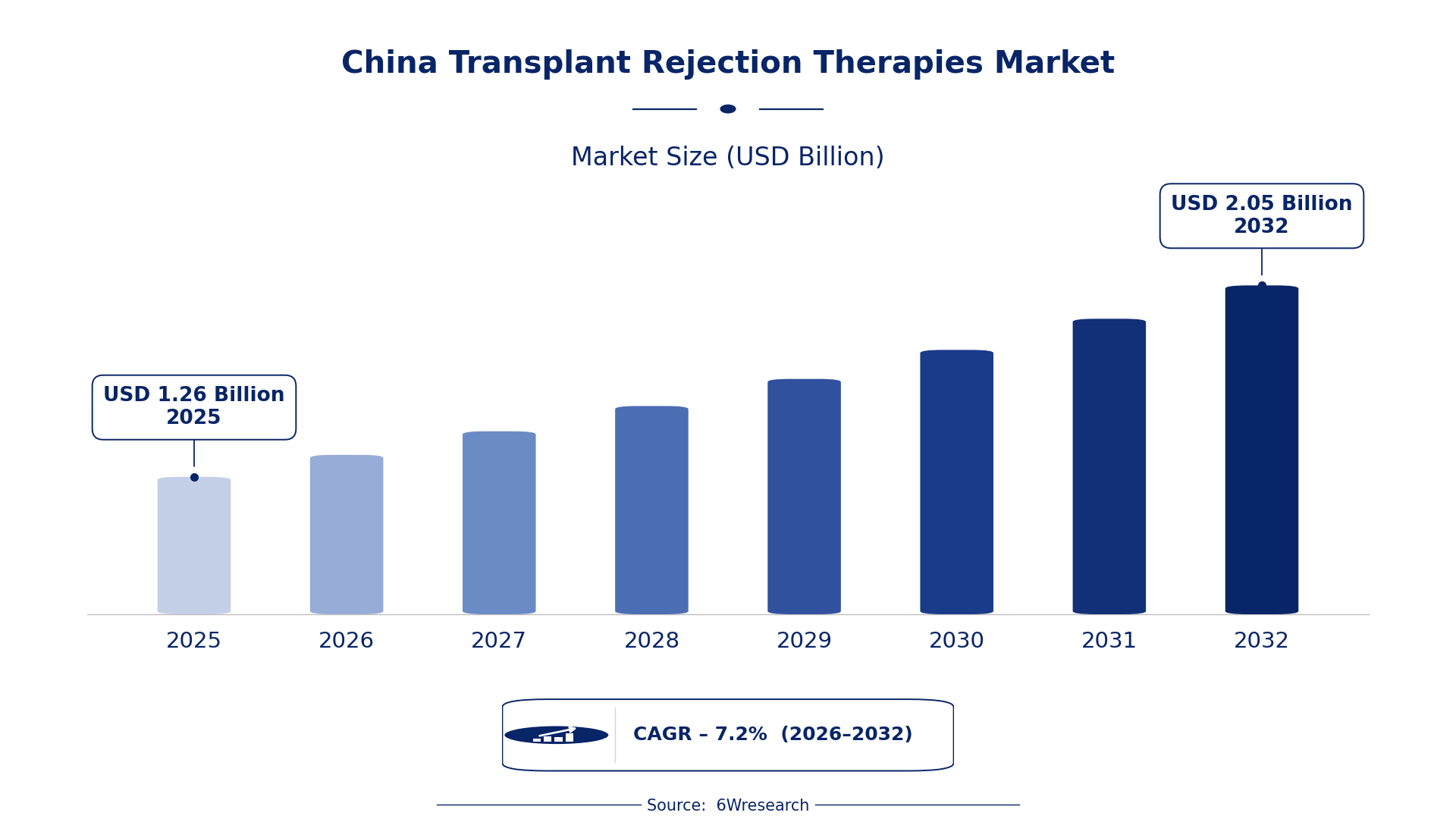
According to 6Wresearch internal database and industry insights, the China Transplant Rejection Therapies Market was valued at USD 1.26 billion in 2025 and is projected to reach USD 2.05 billion by 2032, growing at a CAGR of approximately 7.2% during 2026–2032.
China Transplant Rejection Therapies Market Highlights
| Report Metric | Details |
| Report Name | China Transplant Rejection Therapies Market |
| Market Size 2025 | USD 1.26 billion |
| Market Size 2032 | USD 2.05 billion |
| Absolute Growth 2025–2032 | USD 0.79 billion |
| CAGR 2026–2032 | 7.2% |
| Peak Annual Growth | 9.9% in 2032 |
| Forecast Period | 2026–2032 |
| Historical Data | 2022–2025 |
| Base Year | 2025 |
| Leading Therapy Type, 2025 | Acute Rejection Drugs (37% share) |
| Leading Mechanism, 2025 | Cytokine Inhibitors (34% share) |
| Leading Phase of Rejection, 2025 | Immediate Response (46% share) |
| Leading End User, 2025 | Transplant Hospitals (38% share) |
| Fastest-Growing Therapy Type | Desensitization Therapies (9.4% CAGR) |
| Fastest-Growing Phase of Rejection | Long-Term Prevention (9.6% CAGR) |
| Fastest-Growing End User | Immunology Clinics (9.5% CAGR) |
| Growing Sector | Transplant Hospitals |
| Key End Users | Transplant Hospitals, ICU Units, Immunology Clinics, Specialty Hospitals |
China Transplant Rejection Therapies Market Year-wise Growth Rate and Key Drivers (2022–2032)
This graph illustrates the annual growth rates of the market from 2022 to 2032, highlighting a steady upward trajectory and projected market expansion over the forecast period.
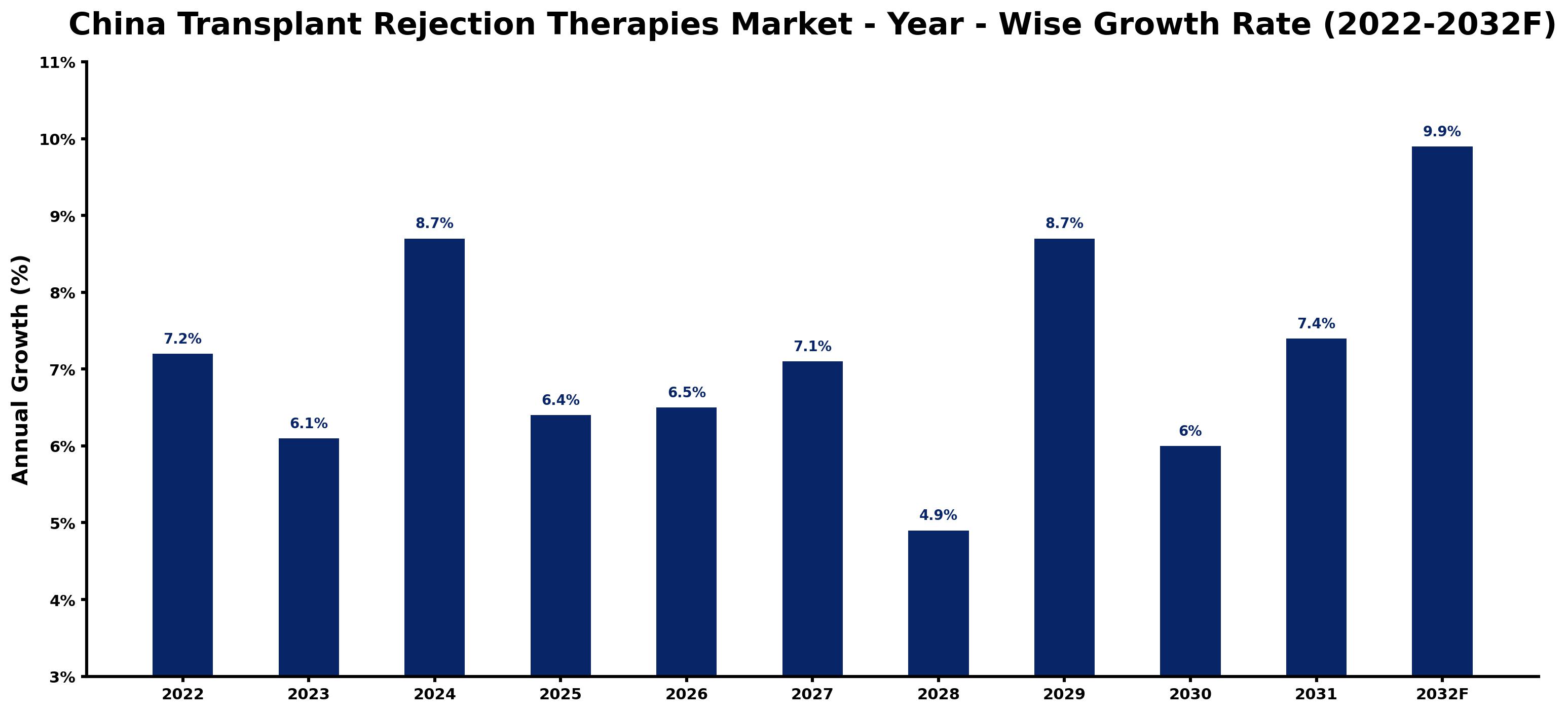
The following table presents the estimated annual growth rate for each year together with the principal factor influencing market performance.
| Year | Estimated Annual Growth (%) | Market Rationale |
| 2022 | 7.2 | The market experienced steady growth due to increased organ transplant procedures, with over 30,000 transplants performed. |
| 2023 | 6.1 | Growth slowed as the market adjusted to the National Health Commission's new healthcare standards and protocols. |
| 2024 | 8.7 | Demand surged with advancements in acute rejection drug therapies and improved patient care protocols. |
| 2025 | 6.4 | Growth decelerated due to temporary supply chain challenges in transplant medications. |
| 2026 | 6.5 | The market is expected to rebound as new desensitization therapies enter clinical trials across various provinces. |
| 2027 | 7.1 | Demand is projected to increase with rising kidney transplant numbers and healthcare investments in urban areas. |
| 2028 | 4.9 | Growth is anticipated to slow as the market faces regulatory adjustments and standard implementations from the Ministry of Health. |
| 2029 | 8.7 | A surge in long-term prevention therapies is expected to drive demand higher once again, particularly in transplant hospitals. |
| 2030 | 6.0 | Growth will decelerate as the market stabilises after rapid expansions in previous years, particularly in major cities. |
| 2031 | 7.4 | Increased investments in transplant hospitals will contribute to a rise in demand for therapies and medications. |
| 2032 | 9.9 | The market is projected to peak with advancements in transplant rejection therapies and improved treatment protocols. |
Note: Market size estimations and growth projections presented in this report are based on 6Wresearch's proprietary forecasting methodology, utilizing the latest available industry data, government publications, and primary research inputs.
China Transplant Rejection Therapies Market Synopsis
Transplant Rejection Therapies in China encompass medications and treatments aimed at preventing organ rejection. These therapies involve monoclonal antibodies and various chemical processes, primarily utilised in kidney, liver, and heart transplants. The China Transplant Rejection Therapies Market is growing due to an increasing number of organ transplants, with over 30,000 procedures conducted in 2022. Rising investments in healthcare facilities and advancements in treatment protocols are propelling demand. Initiatives from the National Health Commission, such as the 'Transplant Rejection Prevention Strategy,' are further supporting market expansion.
Market Dynamics Impact Analysis (2026–2032)
| Factor | Type | Impact | Primary Segment Affected |
| Increasing organ transplant procedures drive demand for acute rejection drugs. | Driver | High | Acute Rejection Drugs |
| Growing adoption of advanced therapies enhances treatment options for patients. | Driver | High | Desensitization Therapies |
| Investment in transplant hospitals creates opportunities for innovative therapies. | Opportunity | High | Transplant Hospitals |
| Rising healthcare funding supports research initiatives in transplant therapies. | Opportunity | High | Acute Rejection Drugs |
| Regulatory challenges can delay the approval of new therapies. | Restraint | Medium | Cytokine Inhibitors |
| Limited access to advanced therapies in rural areas restricts patient options. | Restraint | Medium | Transplant Hospitals |
| High costs of advanced therapies can limit patient access. | Challenge | High | Desensitization Therapies |
| Complex regulatory frameworks can hinder timely product launches. | Challenge | Medium | Acute Rejection Drugs |
Evaluation of Drivers in China Transplant Rejection Therapies Market (2026–2032)
Below mentioned are some major drivers and their influence on market dynamics.
| Drivers | Primary Segment Affected | Why It Matters (Evidence) |
| Increased organ transplant procedures drive demand for acute rejection drugs. | Acute Rejection Drugs | Over 30,000 organ transplants were performed in 2022, leading to a higher need for immediate rejection therapies. |
| Growing healthcare investments boost the adoption of advanced therapies. | Desensitization Therapies | The government allocated 500 million CNY for transplant research initiatives in 2023, supporting therapy development. |
| Rising patient populations create demand for long-term management therapies. | Chronic Rejection Drugs | With approximately 1.5 million transplant patients in China, there is a significant need for ongoing treatment. |
| Advancements in medical technology improve treatment efficacy. | T-Cell Targeted Therapies | Clinical trials for new therapies are ongoing, providing more options for transplant patients. |
| Increased awareness of transplant rejection therapies among healthcare providers. | Cytokine Inhibitors | ISO 9001 standards are being adopted, ensuring quality management in transplant facilities. |
Growth across the Transplant Rejection Therapies market in China is anchored in increased organ transplant procedures, growing healthcare investments, and rising patient populations. In 2022, over 30,000 organ transplants were performed, driving demand for acute rejection drugs. With approximately 1.5 million patients requiring ongoing management, chronic rejection drugs are increasingly sought after. The adoption of ISO 9001 standards ensures quality management in transplant facilities, improving treatment outcomes.
Evaluation of Restraints in China Transplant Rejection Therapies Market
The table below lists the restraints and the evidence behind each.
| Market Restraint | Primary Segment Affected | Why It Matters (Evidence) |
| High costs of advanced therapies limit patient access. | Desensitization Therapies | The average cost of advanced therapies can exceed 100,000 CNY, making them unaffordable for many patients. |
| Regulatory challenges delay new therapy approvals. | Cytokine Inhibitors | Complex regulatory frameworks can extend approval timelines by several months, affecting market entry. |
| Limited access to therapies in rural areas restricts patient options. | Transplant Hospitals | Patients in rural regions may have to travel long distances to access specialized transplant facilities. |
| Insufficient training for healthcare providers affects therapy implementation. | Acute Rejection Drugs | A lack of trained professionals in some regions can lead to suboptimal treatment outcomes. |
| Market fragmentation leads to inconsistent therapy availability. | Chronic Rejection Drugs | Variability in local healthcare policies can affect the distribution of chronic rejection therapies. |
China Transplant Rejection Therapies Market Challenges
The China Transplant Rejection Therapies Market faces several practical problems, with high costs for buyers being a primary concern. Many hospitals struggle to afford the latest therapies, which can exceed 100,000 CNY per patient, limiting access for numerous transplant recipients. Technology adoption presents another challenge; while major cities have advanced protocols, smaller facilities often lack the necessary equipment, delaying treatment for patients. Regulatory hurdles also exist, as the National Medical Products Administration's lengthy approval processes can take over a year, hindering timely access to new medications. Rising research costs, with 500 million CNY allocated in 2023, strain budgets for many transplant hospitals, impacting their ability to invest in new treatments.
Trends in the China Transplant Rejection Therapies Market
The trends below show where the China Transplant Rejection Therapies Market is heading.
- Shift Towards Advanced Desensitization Therapies: China is increasingly focusing on advanced desensitization therapies to improve transplant outcomes. Clinical trials for new therapies are ongoing, with a projected budget of 300 million CNY from the Transplant Therapy Research Fund.
- Transition to Quality Management Standards: Transplant facilities in China are adopting ISO 9001 standards to improve quality management. This trend is expected to enhance patient safety and treatment efficacy across major cities.
- Growing Demand for Long-Term Prevention Therapies: Healthcare providers are prioritising long-term prevention therapies to improve patient outcomes post-transplant. The National Health Commission's initiatives are driving this shift, with a 10% increase in kidney transplants reported in 2023.
- Increased Focus on Patient-Centric Care: There is a growing emphasis on patient-centric care in transplant hospitals. This change is reflected in the establishment of advanced protocols in ICU units across major cities.
Investment Opportunities in the China Transplant Rejection Therapies Market
Below are the investment opportunities with the strongest case in the China Transplant Rejection Therapies Market.
- Current Investment in Research Initiatives: The Chinese government has allocated 500 million CNY for transplant research initiatives, creating opportunities for new therapies. This funding supports research in transplant hospitals, enhancing treatment options for patients.
- Growing Need for Advanced Therapies: With over 1.5 million patients in need of transplant care, there is a significant opportunity to supply advanced therapies. Collaboration with transplant hospitals can facilitate access to these treatments.
- Expansion of Transplant Facilities: The demand for transplant rejection therapies is driving the expansion of transplant hospitals in urban areas. Investing in facility upgrades and training can improve service delivery and patient outcomes.
- Emerging Market for Long-Term Care Solutions: As the population of transplant recipients grows, there is a rising need for long-term care solutions. Focusing on chronic rejection drugs can effectively meet this demand.
Government Initiatives in the China Transplant Rejection Therapies Market
In 2021, the National Health Commission launched the 'Transplant Rejection Prevention Strategy' to improve patient outcomes and reduce rejection rates. This measure complements the 'National Organ Transplant Plan 2022-2025' approved by the Ministry of Health, which focuses on improving transplant rejection therapies. These initiatives aim to standardise treatment protocols and ensure better management of transplant patients. The government allocated 500 million CNY for research initiatives, supporting the development of new therapies and enhancing patient care.
In 2023, the National Medical Products Administration updated regulations for expedited approval of transplant therapies. This agency oversees the approval process, ensuring that new therapies meet safety and efficacy standards. The 'Transplant Therapy Research Fund' initiated by the Chinese Society of Transplantation in 2022, with a budget of 300 million CNY, supports research and development in this area, enabling faster access to innovative treatments for patients.
Future Insight of the China Transplant Rejection Therapies Market
The China Transplant Rejection Therapies Market is poised for transformation by 2032, driven by several key factors. Ongoing clinical trials for new desensitization therapies will likely yield more effective treatment options for patients. The adoption of ISO 9001 standards across transplant facilities will enhance quality management and patient outcomes. Increased government funding for transplant research initiatives will stimulate innovation in treatments, while the establishment of national standards will streamline regulatory processes. These developments will improve access to advanced transplant rejection therapies for hospitals and patients.
Market Segmentation Analysis
Each segment group is reviewed below, with the leader by share and the fastest grower by CAGR.
By Therapy Type – Acute Rejection Drugs Dominated, Desensitization Therapies Expected to Grow Fastest
According to Vasudha, AM at 6Wresearch, Acute Rejection Drugs accounted for a 37% market share by therapy type in 2025. Acute Rejection Drugs dominate the market share due to their critical role in immediate post-transplant care, ensuring patients do not experience acute rejection episodes. With over 30,000 organ transplants performed in China in 2022, the demand for these therapies is substantial. Over 2026–2032, Desensitization Therapies are expected to post the fastest growth, at a CAGR of 9.4%. Desensitization Therapies are experiencing rapid growth as they address the needs of patients with high antibody levels, which can complicate transplantation. The 10% increase in kidney transplants in 2023 highlights the urgency for effective desensitization solutions. Suppliers should focus on developing and promoting desensitization therapies to meet the growing demand in the transplant rejection therapies market.
By Mechanism – Cytokine Inhibitors Dominated and Is Expected to Record the Fastest Growth
The largest mechanism category in 2025 was Cytokine Inhibitors, with a 34% share of total revenue. Cytokine Inhibitors hold the largest market share due to their essential role in blocking immune signals that lead to organ rejection. Their widespread application in major transplant hospitals, particularly in Beijing and Shanghai, reinforces their dominant position in the market. Cytokine Inhibitors are also forecast to expand faster than any other category, at a CAGR of 9.8% over 2026–2032. Cytokine Inhibitors are experiencing the fastest growth, spurred by ongoing clinical trials that aim to improve their efficacy in transplant care. As they continue to lead the market, their growth is likely to accelerate further, widening their share. This indicates that suppliers should focus on advancing cytokine inhibitors to capitalise on their strong market presence and growth potential.
By Phase of Rejection – Immediate Response Dominated, Long-Term Prevention Expected to Grow Fastest
With a 46% revenue share in 2025, Immediate Response was the largest phase of rejection category. Immediate Response therapies capture the largest share as they are vital for managing acute rejection episodes right after transplantation. Their critical nature in the first days post-surgery ensures high demand from transplant hospitals. Long-Term Prevention is set to record the highest CAGR in this split, 9.6% over 2026–2032. Long-Term Prevention therapies are growing rapidly as they are essential for the ongoing care of transplant patients, ensuring their long-term health and organ viability. This focus on long-term outcomes is increasingly recognised in clinical settings. Buyers should prioritise long-term prevention strategies to improve patient outcomes and reduce the risk of organ rejection over time.
By End User – Transplant Hospitals Dominated, Immunology Clinics Expected to Grow Fastest
Transplant Hospitals took a 38% share of end user in 2025, more than any other category. Transplant Hospitals capture the largest market share as they are specialised facilities designed to manage the complexities of organ transplantation and related therapies. Their advanced infrastructure and expertise position them as the primary consumers of transplant rejection therapies. Immunology Clinics are projected to grow fastest, at a CAGR of 9.5% during 2026–2032. Immunology Clinics are experiencing the fastest growth due to their focus on immune-related therapies, which address a specific and growing patient demographic. The rising awareness of the importance of immune management in transplantation fuels this expansion. Suppliers should focus on reaching out to immunology clinics to meet the increasing demand for specialised transplant rejection therapies.
Key Attractiveness of the Report
- 10 Years of Market Numbers
- Historical Data Starting from 2022 to 2025
- Base Year 2025
- Forecast Data until 2032
- Key Performance Indicators Impacting the Market
- Major Upcoming Developments and Projects
Key Highlights of the Report:
- China Transplant Rejection Therapies Market Outlook
- Market Size of China Transplant Rejection Therapies Market, 2025
- Forecast of China Transplant Rejection Therapies Market, 2032
- Historical Data and Forecast of China Transplant Rejection Therapies Revenues & Volume for the Period 2022 - 2032F
- China Transplant Rejection Therapies Market Trend Evolution
- China Transplant Rejection Therapies Market Drivers and Challenges
- China Transplant Rejection Therapies Price Trends
- China Transplant Rejection Therapies Porter's Five Forces
- China Transplant Rejection Therapies Industry Life Cycle
- Historical Data and Forecast of China Transplant Rejection Therapies Market Revenues & Volume By Therapy Type for the Period 2022 - 2032F
- Historical Data and Forecast of China Transplant Rejection Therapies Market Revenues & Volume By Acute Rejection Drugs for the Period 2022 - 2032F
- Historical Data and Forecast of China Transplant Rejection Therapies Market Revenues & Volume By Chronic Rejection Drugs for the Period 2022 - 2032F
- Historical Data and Forecast of China Transplant Rejection Therapies Market Revenues & Volume By Desensitization Therapies for the Period 2022 - 2032F
- Historical Data and Forecast of China Transplant Rejection Therapies Market Revenues & Volume By T-Cell Targeted Therapies for the Period 2022 - 2032F
- Historical Data and Forecast of China Transplant Rejection Therapies Market Revenues & Volume By Mechanism for the Period 2022 - 2032F
- Historical Data and Forecast of China Transplant Rejection Therapies Market Revenues & Volume By Cytokine Inhibitors for the Period 2022 - 2032F
- Historical Data and Forecast of China Transplant Rejection Therapies Market Revenues & Volume By Anti-Fibrotic Agents for the Period 2022 - 2032F
- Historical Data and Forecast of China Transplant Rejection Therapies Market Revenues & Volume By Antibody Reduction for the Period 2022 - 2032F
- Historical Data and Forecast of China Transplant Rejection Therapies Market Revenues & Volume By Immuno-Checkpoint for the Period 2022 - 2032F
- Historical Data and Forecast of China Transplant Rejection Therapies Market Revenues & Volume By Phase of Rejection for the Period 2022 - 2032F
- Historical Data and Forecast of China Transplant Rejection Therapies Market Revenues & Volume By Immediate Response for the Period 2022 - 2032F
- Historical Data and Forecast of China Transplant Rejection Therapies Market Revenues & Volume By Long-Term Prevention for the Period 2022 - 2032F
- Historical Data and Forecast of China Transplant Rejection Therapies Market Revenues & Volume By Before Surgery for the Period 2022 - 2032F
- Historical Data and Forecast of China Transplant Rejection Therapies Market Revenues & Volume By Post-Transplant for the Period 2022 - 2032F
- Historical Data and Forecast of China Transplant Rejection Therapies Market Revenues & Volume By End User for the Period 2022 - 2032F
- Historical Data and Forecast of China Transplant Rejection Therapies Market Revenues & Volume By ICU Units for the Period 2022 - 2032F
- Historical Data and Forecast of China Transplant Rejection Therapies Market Revenues & Volume By Transplant Hospitals for the Period 2022 - 2032F
- Historical Data and Forecast of China Transplant Rejection Therapies Market Revenues & Volume By Immunology Clinics for the Period 2022 - 2032F
- Historical Data and Forecast of China Transplant Rejection Therapies Market Revenues & Volume By Specialty Hospitals for the Period 2022 - 2032F
- China Transplant Rejection Therapies Import Export Trade Statistics
- Market Opportunity Assessment By Therapy Type
- Market Opportunity Assessment By Mechanism
- Market Opportunity Assessment By Phase of Rejection
- Market Opportunity Assessment By End User
- China Transplant Rejection Therapies Top Companies Market Share
- China Transplant Rejection Therapies Competitive Benchmarking By Technical and Operational Parameters
- China Transplant Rejection Therapies Company Profiles
- China Transplant Rejection Therapies Key Strategic Recommendations
Market Covered
Segments analysed in this report are listed below.
By Therapy Type
- Acute Rejection Drugs
- Chronic Rejection Drugs
- Desensitization Therapies
- T-Cell Targeted Therapies
By Mechanism
- Cytokine Inhibitors
- Anti-Fibrotic Agents
- Antibody Reduction
- Immuno-Checkpoint
By Phase of Rejection
- Immediate Response
- Long-Term Prevention
- Before Surgery
- Post-Transplant
By End User
- ICU Units
- Transplant Hospitals
- Immunology Clinics
- Specialty Hospitals































