India Two-Wheeler Sharing Market Size & Growth Rate
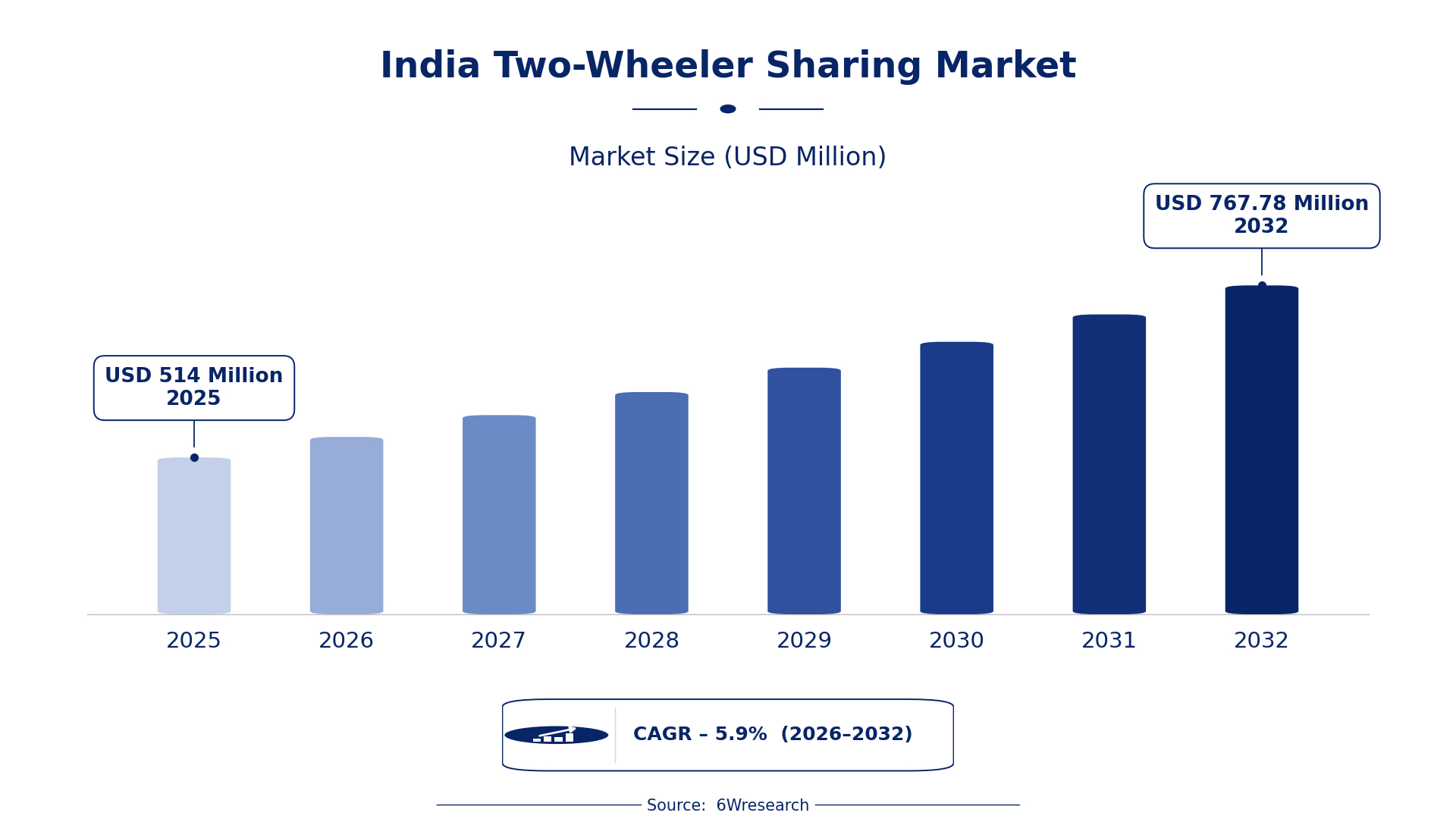
According to 6Wresearch internal database and industry insights, the India Two-Wheeler Sharing Market was valued at USD 514.0 million in 2025 and is projected to reach USD 767.78 million by 2032, growing at a CAGR of approximately 5.9% during 2026–2032.
India Two-Wheeler Sharing Market Highlights
| Report Metric | Details |
| Report Name | India Two-Wheeler Sharing Market |
| Market Size 2025 | USD 514.0 million |
| Market Size 2032 | USD 767.78 million |
| Absolute Growth 2025–2032 | USD 253.78 million |
| CAGR 2026–2032 | 5.9% |
| Peak Annual Growth | 8.3% in 2031 |
| Forecast Period | 2026–2032 |
| Historical Data | 2022–2025 |
| Base Year | 2025 |
| Leading Sharing Type, 2025 | Dockless Scooters (48% share) |
| Leading Power Source, 2025 | Electric (56% share) |
| Leading Distribution Channel, 2025 | Mobile App Platforms (39% share) |
| Leading End User Industry, 2025 | Commuters (48% share) |
| Fastest-Growing Sharing Type | Kick-Scooters (7.6% CAGR) |
| Fastest-Growing Distribution Channel | City Mobility Agencies (7.5% CAGR) |
| Fastest-Growing End User Industry | Students/Urban Users (7.4% CAGR) |
| Growing Sector | urban commuting |
| Key End Users | commuters, students, fleet operators |
India Two-Wheeler Sharing Market Year-wise Growth Rate and Key Drivers (2022–2032)
This graph illustrates the annual growth rates of the market from 2022 to 2032, highlighting a steady upward trajectory and projected market expansion over the forecast period.
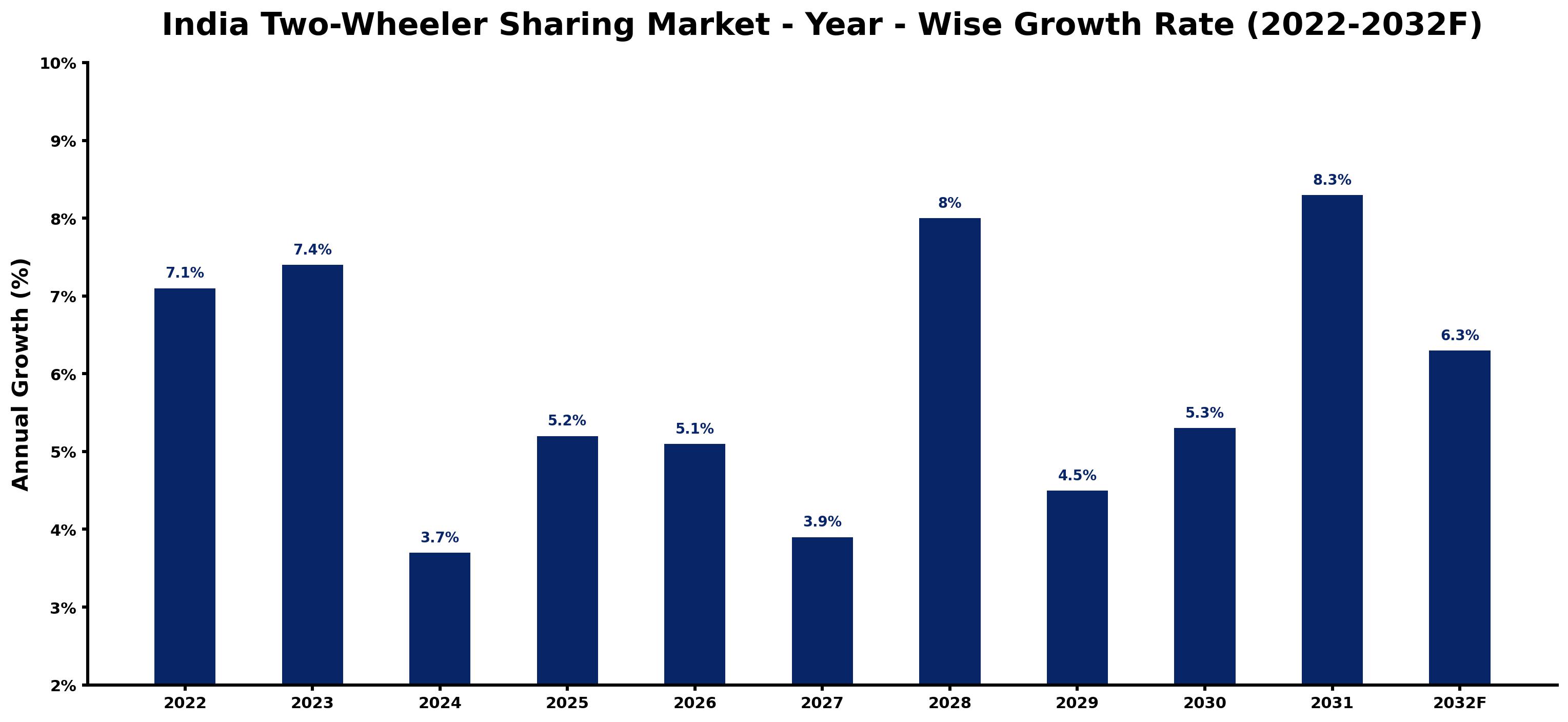
Annual growth estimates for each year appear below with the principal reason behind them, explaining the shifts that set the pace of the market.
| Year | Estimated Annual Growth (%) | Market Rationale |
| 2022 | 7.1 | The market experienced steady demand from urban commuters and students in major cities. |
| 2023 | 7.4 | Increased adoption of electric scooters under the Delhi EV Policy boosted market growth. |
| 2024 | 3.7 | Demand growth slowed as the National Electric Mobility Mission Plan stabilised the market after rapid adoption. |
| 2025 | 5.2 | The introduction of new electric vehicle subsidies under the Delhi EV Policy spurred renewed interest in sharing services. |
| 2026 | 5.1 | Demand growth is expected to slow as user habits stabilise following previous expansions. |
| 2027 | 3.9 | Urban mobility needs will continue to support growth, despite slowing rates. |
| 2028 | 8.0 | A surge in electric vehicle adoption is projected to accelerate growth this year, driven by government incentives. |
| 2029 | 4.5 | Growth is expected to slow again as the market begins to stabilise following previous peaks. |
| 2030 | 5.3 | Demand will increase as urban commuters seek affordable transport options, supported by local initiatives. |
| 2031 | 8.3 | The market is projected to peak this year as electric vehicle initiatives gain traction through government support. |
| 2032 | 6.3 | Growth is expected to slow as the market matures, yet demand remains strong among urban users. |
Note: Market size estimations and growth projections presented in this report are based on 6Wresearch's proprietary forecasting methodology, utilizing the latest available industry data, government publications, and primary research inputs.
India Two-Wheeler Sharing Market Synopsis
The India Two-Wheeler Sharing Market involves renting scooters and bikes for short durations, primarily accessed via mobile applications. These vehicles, both electric and fuel-powered, cater to urban commuting needs, reducing traffic congestion. The market is projected to grow as India's urban population reached 471 million in 2023, supported by government initiatives promoting shared mobility. The average fare for two-wheeler sharing is approximately ₹10 per kilometre, making it an affordable transportation option for many users. Increased demand from urban commuters and students is driving this growth, particularly in major cities like Bangalore.
Market Dynamics Impact Analysis (2026–2032)
| Factor | Type | Impact | Primary Segment Affected |
| Urban population growth drives demand for affordable transportation options. | Driver | High | Commuters |
| Government incentives for electric vehicles boost adoption rates. | Driver | High | Electric |
| Growing urbanisation creates a need for efficient mobility solutions. | Opportunity | High | Kick-Scooters |
| The rise of mobile apps facilitates easy access to sharing services. | Opportunity | Medium | Mobile App Platforms |
| Infrastructure challenges limit the expansion of sharing services in some regions. | Restraint | High | Dockless Scooters |
| Regulatory hurdles can slow the introduction of new sharing models. | Restraint | Medium | e-Vehicles for Staff |
| Competition from traditional transport services poses challenges for market players. | Challenge | High | Fleet Operators |
| User reluctance to switch from personal vehicles can hinder growth. | Challenge | Medium | Students/Urban Users |
Evaluation of Drivers in India Two-Wheeler Sharing Market (2026–2032)
The main growth drivers and the segments they affect most are set out below.
| Drivers | Primary Segment Affected | Why It Matters (Evidence) |
| Urban population growth increases demand for two-wheeler sharing services. | Commuters | India's urban population reached 471 million in 2023, driving more users to seek shared mobility options. |
| Government subsidies for electric scooters encourage adoption. | Electric | The Delhi EV Policy implemented a subsidy scheme for electric scooters, promoting their use in shared services. |
| Mobile applications streamline the rental process for users. | Mobile App Platforms | With over 1 million registered users in Bangalore, mobile platforms are essential for managing rentals. |
| Environmental concerns drive demand for electric vehicles in sharing. | Kick-Scooters | The Indian government aims to reduce carbon emissions by 33-35% by 2030, boosting electric vehicle adoption. |
| Increased interest in sustainable transport solutions supports market growth. | Dockless Scooters | The National Electric Mobility Mission Plan aims for a 30% increase in electric vehicle adoption by 2030. |
The Two-Wheeler Sharing market in India is growing on the back of rising urban population, increasing demand for affordable transport, and incentives for electric vehicles. In 2023, urban mobility needs are driving more users to seek shared mobility options. Mobile platforms are essential for managing rentals, with over 1 million registered users in Bangalore.
Evaluation of Restraints in India Two-Wheeler Sharing Market
Below mentioned are some major restraints and their influence on market dynamics.
| Market Restraint | Primary Segment Affected | Why It Matters (Evidence) |
| Limited charging infrastructure hampers electric vehicle adoption. | Electric | Inadequate charging stations can deter users from opting for electric two-wheeler sharing services. |
| Regulatory challenges can slow the introduction of new business models. | Dockless Scooters | Complex regulations surrounding shared mobility can delay service launches in new areas. |
| Competition from traditional transport options affects market share. | Fleet Operators | Users may prefer familiar modes of transport over newer sharing services, limiting growth. |
| High operational costs can impact profitability for providers. | Mobile App Platforms | Maintaining fleets and technology can strain resources, especially for smaller operators. |
| User reluctance to switch from personal vehicles can hinder growth. | Students/Urban Users | Many potential users prefer personal vehicles for convenience, limiting shared service uptake. |
India Two-Wheeler Sharing Market Challenges
Buyers and suppliers in the India two-wheeler sharing market encounter significant regulatory hurdles, particularly with compliance to the Bureau of Indian Standards for electric vehicle safety, which can delay vehicle deployment and increase operational costs for providers. Competition from traditional transport modes, like auto-rickshaws and taxis, creates pricing pressure, making it challenging for two-wheeler services to attract users in densely populated urban areas. Supply chain constraints arise from the limited availability of shared scooters, leading to longer wait times for consumers and potential revenue losses for operators. Buyers also face fluctuating fare structures, with the average fare at ₹10 per kilometer, which can discourage consistent usage among urban commuters and students.
Trends in the India Two-Wheeler Sharing Market
Several trends are reshaping the India Two-Wheeler Sharing Market; the most important are set out below.
- Shift from Personal Vehicles to Shared Mobility: Urban commuters are increasingly opting for two-wheeler sharing services over personal vehicles, particularly in Bangalore, which has over 1 million registered users. This trend reflects a growing preference for affordable and convenient transport options.
- Transition to Electric Vehicles: Since 2020, there has been a strong push towards electric two-wheelers in urban areas, supported by government initiatives. The FAME II scheme, allocating ₹10,000 crore, promotes sustainability in shared mobility.
- Emergence of Mobile App Platforms: The rise of mobile app platforms has transformed how users access two-wheeler sharing services. In 2023, mobile apps accounted for 39% of the distribution channel, streamlining rentals and improving user experience.
- Increased Adoption of Kick-Scooters: Kick-scooters have gained popularity among students and young professionals since 2022, with a CAGR of 7.6%. This shift highlights the demand for quick and convenient commuting solutions in urban settings.
Investment Opportunities in the India Two-Wheeler Sharing Market
The following opportunities in the India Two-Wheeler Sharing Market pair current demand with a clear way in.
- Investment in Electric Vehicle Infrastructure: With the government allocating ₹10,000 crore for electric vehicle infrastructure, there is a notable opportunity for investment in charging stations. Urban areas like Delhi are prime locations for such developments, increasing the viability of electric two-wheeler sharing.
- Expansion of Mobile App Platforms: The increasing reliance on technology presents an opportunity to enhance mobile app platforms. Urban centres like Bangalore can benefit from improved app functionalities, attracting more users to two-wheeler sharing services.
- Development of Corporate Sharing Programs: As companies seek sustainable transport solutions for employees, there is a growing opportunity in B2B sharing platforms. Corporate clients in metropolitan areas are looking for efficient transport options for staff.
- Enhancement of Subsidy Programs for Users: The Delhi EV Policy's subsidy scheme for electric scooters opens avenues for expanding user incentives. This initiative can attract more commuters to two-wheeler sharing services in urban regions.
Government Initiatives in the India Two-Wheeler Sharing Market
The 'FAME II' scheme, launched by the Ministry of Heavy Industries in 2021, allocates ₹10,000 crore to promote electric vehicles and charging infrastructure. This measure builds on previous efforts by providing substantial funding for the development of electric vehicle ecosystems, encouraging more users to adopt electric two-wheelers for sharing services. The scheme aims to increase the number of electric vehicles on the road, aligning with national sustainability goals.
The Ministry of Road Transport and Highways oversees the implementation of various initiatives, including the 'Smart Cities Mission'. This programme funds urban mobility projects, including two-wheeler sharing services, ensuring cities adopt sustainable transport solutions. Additionally, the ministry approves guidelines for the registration and operation of electric scooters, facilitating smoother integration of these vehicles into the sharing market.
Future Insight of the India Two-Wheeler Sharing Market
The India two-wheeler sharing market is set for transformative changes by 2032, driven by the National Electric Mobility Mission Plan aiming for a 30% increase in electric vehicle adoption. Government initiatives will enhance infrastructure, streamlining operations for providers and improving user experience. The Smart Cities Mission will boost urban mobility, making two-wheeler sharing more accessible to a wider audience. Incentives under the FAME India scheme will encourage consumer adoption, fostering a dynamic environment for both buyers and suppliers.
Market Segmentation Analysis
The analysis below covers each segmentation, its leading category in 2025 and its fastest-growing category through 2032.
By Sharing Type – Dockless Scooters Dominated, Kick-Scooters Expected to Grow Fastest
According to Vasudha, AM at 6Wresearch, the largest sharing type category in 2025 was Dockless Scooters, with a 48% share of total revenue. Dockless scooters command the largest market share due to their convenience for short urban trips. The extensive user base in cities like Bangalore, with over 1 million registered users, highlights their appeal to commuters seeking quick transport solutions. Kick-Scooters are projected to grow fastest, at a CAGR of 7.6% during 2026–2032. Kick-scooters are rapidly gaining traction, especially among students and young professionals who appreciate their affordability for quick commutes. This demographic shift towards efficient transport options is propelling the segment's growth. Suppliers should focus on enhancing the features and availability of kick-scooters to attract a younger audience.
By Power Source – Electric Dominated and Is Expected to Record the Fastest Growth
In 2025, Electric led the power source split with a 56% share. Electric vehicles dominate the market share, aligning with India's sustainability goals, as a significant portion of the fleet consists of electric models. Government initiatives, such as the National Electric Mobility Mission Plan, are encouraging this shift towards greener options. Electric is also forecast to expand faster than any other category, at a CAGR of 7.7% over 2026–2032. The electric segment is also the fastest-growing, driven by government incentives and subsidies that encourage users to opt for electric two-wheelers. The FAME India scheme is crucial in stimulating demand among consumers and manufacturers alike. Buyers will increasingly prefer electric options, prompting suppliers to expand their electric vehicle offerings.
By Distribution Channel – Mobile App Platforms Dominated, City Mobility Agencies Expected to Grow Fastest
Mobile App Platforms held a 39% share of the India Two-Wheeler Sharing Market by distribution channel in 2025. Mobile app platforms lead the distribution channel, providing essential access for users to manage their rentals efficiently. The convenience of booking through these applications has made them the preferred choice for urban commuters looking for quick transport solutions. City Mobility Agencies are set to record the highest CAGR in this split, 7.5% over 2026–2032. City mobility agencies are the fastest-growing channel, as they play a crucial role in planning and regulating shared mobility solutions. Their involvement in urban transport initiatives is fostering greater collaboration with sharing platforms. Suppliers should consider partnerships with city mobility agencies to enhance service reach and ensure compliance with local regulations.
By End User Industry – Commuters Dominated, Students/Urban Users Expected to Grow Fastest
With a 48% revenue share in 2025, Commuters was the largest end user industry category. Commuters represent the largest user group for two-wheeler sharing services, primarily utilising these vehicles for daily travel in urban settings. Their consistent demand for affordable transport options solidifies their market share. Over 2026–2032, Students/Urban Users are expected to post the fastest growth, at a CAGR of 7.4%. Students and urban users are the fastest-growing demographic, as their need for economical and flexible transportation solutions fuels this segment's growth. The average age of users between 18-35 years indicates a strong preference for shared mobility among younger populations. Suppliers should tailor marketing strategies to appeal to students and urban users, capitalising on their rising demand for shared mobility solutions.
Key Attractiveness of the Report
- 10 Years of Market Numbers
- Historical Data Starting from 2022 to 2025
- Base Year 2025
- Forecast Data until 2032
- Key Performance Indicators Impacting the Market
- Major Upcoming Developments and Projects
Key Highlights of the Report:
- India Two-Wheeler Sharing Market Outlook
- Market Size of India Two-Wheeler Sharing Market, 2025
- Forecast of India Two-Wheeler Sharing Market, 2032
- Historical Data and Forecast of India Two-Wheeler Sharing Revenues & Volume for the Period 2022 - 2032F
- India Two-Wheeler Sharing Market Trend Evolution
- India Two-Wheeler Sharing Market Drivers and Challenges
- India Two-Wheeler Sharing Price Trends
- India Two-Wheeler Sharing Porter's Five Forces
- India Two-Wheeler Sharing Industry Life Cycle
- Historical Data and Forecast of India Two-Wheeler Sharing Market Revenues & Volume By Sharing Type for the Period 2022 - 2032F
- Historical Data and Forecast of India Two-Wheeler Sharing Market Revenues & Volume By Dockless Scooters for the Period 2022 - 2032F
- Historical Data and Forecast of India Two-Wheeler Sharing Market Revenues & Volume By Kick-Scooters for the Period 2022 - 2032F
- Historical Data and Forecast of India Two-Wheeler Sharing Market Revenues & Volume By Monthly Plans for the Period 2022 - 2032F
- Historical Data and Forecast of India Two-Wheeler Sharing Market Revenues & Volume By e-Vehicles for Staff for the Period 2022 - 2032F
- Historical Data and Forecast of India Two-Wheeler Sharing Market Revenues & Volume By Power Source for the Period 2022 - 2032F
- Historical Data and Forecast of India Two-Wheeler Sharing Market Revenues & Volume By Electric for the Period 2022 - 2032F
- Historical Data and Forecast of India Two-Wheeler Sharing Market Revenues & Volume By Commuter E-Bikes for the Period 2022 - 2032F
- Historical Data and Forecast of India Two-Wheeler Sharing Market Revenues & Volume By Electric for the Period 2022 - 2032F
- Historical Data and Forecast of India Two-Wheeler Sharing Market Revenues & Volume By Electric for the Period 2022 - 2032F
- Historical Data and Forecast of India Two-Wheeler Sharing Market Revenues & Volume By Distribution Channel for the Period 2022 - 2032F
- Historical Data and Forecast of India Two-Wheeler Sharing Market Revenues & Volume By Mobile App Platforms for the Period 2022 - 2032F
- Historical Data and Forecast of India Two-Wheeler Sharing Market Revenues & Volume By City Mobility Agencies for the Period 2022 - 2032F
- Historical Data and Forecast of India Two-Wheeler Sharing Market Revenues & Volume By Fleet Operators for the Period 2022 - 2032F
- Historical Data and Forecast of India Two-Wheeler Sharing Market Revenues & Volume By B2B Sharing Platforms for the Period 2022 - 2032F
- Historical Data and Forecast of India Two-Wheeler Sharing Market Revenues & Volume By End User Industry for the Period 2022 - 2032F
- Historical Data and Forecast of India Two-Wheeler Sharing Market Revenues & Volume By Commuters for the Period 2022 - 2032F
- Historical Data and Forecast of India Two-Wheeler Sharing Market Revenues & Volume By Students/Urban Users for the Period 2022 - 2032F
- Historical Data and Forecast of India Two-Wheeler Sharing Market Revenues & Volume By Short Trip Users for the Period 2022 - 2032F
- Historical Data and Forecast of India Two-Wheeler Sharing Market Revenues & Volume By Corporate Clients for the Period 2022 - 2032F
- India Two-Wheeler Sharing Import Export Trade Statistics
- Market Opportunity Assessment By Sharing Type
- Market Opportunity Assessment By Power Source
- Market Opportunity Assessment By Distribution Channel
- Market Opportunity Assessment By End User Industry
- India Two-Wheeler Sharing Top Companies Market Share
- India Two-Wheeler Sharing Competitive Benchmarking By Technical and Operational Parameters
- India Two-Wheeler Sharing Company Profiles
- India Two-Wheeler Sharing Key Strategic Recommendations
Market Covered
The report offers an extensive study of the following market segments.
By Sharing Type
- Dockless Scooters
- Kick-Scooters
- Monthly Plans
- e-Vehicles for Staff
By Power Source
- Electric
- Commuter E-Bikes
By Distribution Channel
- Mobile App Platforms
- City Mobility Agencies
- Fleet Operators
- B2B Sharing Platforms
By End User Industry
- Commuters
- Students/Urban Users
- Short Trip Users
- Corporate Clients































