Indonesia Electronic Components Market Summary
The indonesia electronic components market was estimated at USD 239 Million in 2025 and is projected to reach USD 316 Million by 2032, growing at a CAGR of 5.5% from 2026 to 2032.
Indonesia Electronic Components Market Year-wise Growth Rate and Key Drivers
This graph highlights how the Indonesia Electronic Components Market has steadily grown over the past five years, supported by major growth factors.
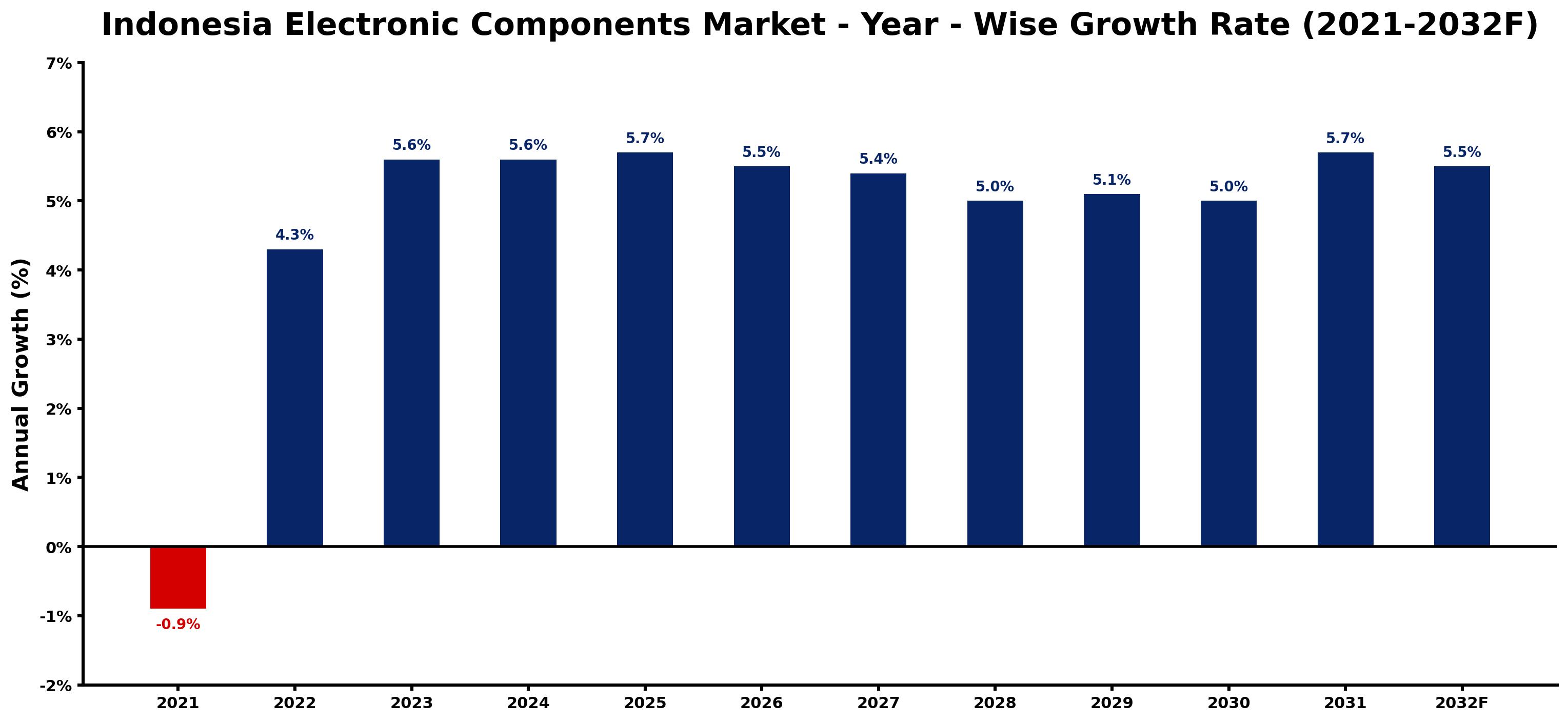
The table below presents the year wise growth rates along with the key drivers influencing the market
| Year | Growth Rate | Major Drivers |
| 2021 | -0.9% | Supply chain disruptions stemming from the pandemic hindered production capabilities and delayed product availability in the market. |
| 2022 | 4.3% | Supply chain disruptions prompted local manufacturing initiatives to enhance self-sufficiency. |
| 2023 | 5.6% | Emerging technology sectors, particularly IoT, expanded the market's growth potential significantly. |
| 2024 | 5.6% | The automotive industry's electronic transformation attracted substantial investment in components. |
| 2025 | 5.7% | Local startups began leveraging advanced technologies, stimulating competition among suppliers. |
| 2026 | 5.5% | Increased smartphone penetration resulted in higher demand for diverse electronic components. |
| 2027 | 5.4% | Digital transformation initiatives across industries highlighted the importance of reliable components. |
| 2028 | 5.0% | Collaboration between tech firms and universities fueled innovation in component design. |
| 2029 | 5.1% | Growing consumer awareness of smart home solutions drove demand for advanced sensors. |
| 2030 | 5.0% | Regional trade agreements helped reduce tariffs on imported electronic components. |
| 2031 | 5.7% | Sustainability trends encouraged manufacturers to explore eco-friendly, recyclable components. |
| 2032 | 5.5% | Integration of AI in manufacturing processes optimized production efficiency and reduced costs. |
Note - Market size estimations and growth projections presented in this report are based on 6Wresearch's advanced forecasting approach, validated with industry datasets as of June 2026.
Indonesia Electronic Components Market Synopsis
The Indonesia Electronic Components Market is projected to reach 5.5% and witness significant growth during the forecast period (2026-2032). This growth trajectory is primarily driven by the rising demand from the automotive sector and an increasing appetite for consumer electronics among Indonesian consumers. As disposable incomes rise and the population expands, the sales of electronic devices are poised to surge, presenting substantial opportunities for manufacturers to enhance their production capabilities. Furthermore, supportive government policies, including tax exemptions on imports of essential raw materials for industrial equipment, are fostering a more favorable investment climate in this sector.
Indonesia Electronic Components Market Growth Drivers
The Indonesian electronic components market is experiencing robust growth, propelled by several key factors:
- Firstly, the automotive industry is witnessing a considerable uptrend, with increasing wage levels and improved economic conditions across various regions. This surge leads to higher demand for quality electronic components essential for modern vehicles.
- Secondly, the booming consumer electronics market in Indonesia is further augmented by the country's youthful demographic, which drives demand for smartphones, laptops, and other electronic devices.
- Additionally, an expanding middle class, fueled by rising disposable incomes, is contributing to the enhanced purchasing power and increased consumption of electronic goods.
- Moreover, advancements in technology, such as the rapid evolution of Internet of Things (IoT) applications, are creating new avenues for electronic component manufacturers to explore innovative and sophisticated products.
- Lastly, the entry of various international suppliers into the market is intensifying competition and encouraging local companies to innovate and improve their offerings.
Indonesia Electronic Components Market Challenges and Restraints
Despite the growth potential, the Indonesia Electronic Components Market faces several challenges that could impede progress:
- One of the primary challenges is the implementation of import duties and tariffs aimed at protecting domestic industries. These regulations can hinder foreign manufacturers from entering the market, as they must navigate complex tax frameworks specific to Indonesia.
- Fluctuations in currency values, often influenced by geopolitical events and trade tensions, can significantly impact the pricing of imported goods, making them less competitive against local alternatives.
- Infrastructure deficiencies also pose a challenge, as inadequate logistics and transportation networks can disrupt the supply chain and lead to inefficiencies in distribution processes.
- Moreover, fluctuating market demands can create uncertainty for producers, as rapid shifts in consumer preferences necessitate agile production capabilities to keep pace with the latest trends.
- Finally, the evolving regulatory environment can introduce unexpected operational complexities for businesses, requiring them to stay vigilant and adaptable to remain compliant and competitive.
Indonesia Electronic Components Market Government Investment and Initiatives
The Indonesian government is actively fostering the electronic components sector through various investment initiatives and policies:
- The government has introduced tax incentives for manufacturers in the electronic components industry, including exemptions on import duties for key raw materials, motivating local and foreign investments.
- Additionally, national development plans prioritize infrastructure improvements crucial for supporting the electronic manufacturing sector, enhancing connectivity and logistics.
- Public spending in research and development is being promoted, leading to innovation and modernization within the industry.
- The government is also encouraging public-private partnerships to facilitate knowledge sharing and access to advanced technologies that can bolster local manufacturing capabilities.
- Finally, educational initiatives aimed at upskilling the workforce in electronic engineering and technology are being implemented, ensuring a well-prepared labor pool to support industry growth.
Indonesia Electronic Components Market Latest Developments (May 2025 - June 2026)
Recent developments in the Indonesia Electronic Components Market indicate a dynamic shift toward innovation and technological advancement. Over the specified period, there has been a noticeable increase in collaborations between local manufacturers and international firms, aimed at enhancing product quality and diversifying offerings. The government has also reinforced its commitment to supporting the industry through continued investment in infrastructure, which is essential for boosting production efficiency. Moreover, rising consumer demand for smart devices has prompted manufacturers to focus on sustainable and high-performance electronic components, reflecting a growing trend toward environmentally-conscious production practices. This evolving landscape sets the stage for a lively and competitive market environment moving forward.
Indonesia Electronic Components Market - Key Attractiveness of the Report
- 10 Years of Market Numbers
- Historical Data Starting from 2022 to 2025
- Base Year: 2025
- Forecast Data until 2032
- Key Performance Indicators Impacting the Market
- Major Upcoming Developments and Projects
Key Highlights of the Report:
- Indonesia Electronic Components Market Outlook
- Market Size of Indonesia Electronic Components Market, 2025
- Forecast of Indonesia Electronic Components Market, 2032F
- Historical Data and Forecast of Indonesia Electronic Components Revenues & Volume for the Period 2022-2032F
- Indonesia Electronic Components Market Trend Evolution
- Indonesia Electronic Components Market Drivers and Challenges
- Indonesia Electronic Components Price Trends
- Indonesia Electronic Components Porter's Five Forces
- Indonesia Electronic Components Industry Life Cycle
- Historical Data and Forecast of Indonesia Electronic Components Market Revenues & Volume By Types for the Period 2022-2032F
- Historical Data and Forecast of Indonesia Electronic Components Market Revenues & Volume By Passive for the Period 2022-2032F
- Historical Data and Forecast of Indonesia Electronic Components Market Revenues & Volume By Active for the Period 2022-2032F
- Historical Data and Forecast of Indonesia Electronic Components Market Revenues & Volume By Electro Mechanic for the Period 2022-2032F
- Historical Data and Forecast of Indonesia Electronic Components Market Revenues & Volume By Applications for the Period 2022-2032F
- Historical Data and Forecast of Indonesia Electronic Components Market Revenues & Volume By Automotive for the Period 2022-2032F
- Historical Data and Forecast of Indonesia Electronic Components Market Revenues & Volume By Communications for the Period 2022-2032F
- Historical Data and Forecast of Indonesia Electronic Components Market Revenues & Volume By Industrial for the Period 2022-2032F
- Historical Data and Forecast of Indonesia Electronic Components Market Revenues & Volume By Computing Applications for the Period 2022-2032F
- Historical Data and Forecast of Indonesia Electronic Components Market Revenues & Volume By Others for the Period 2022-2032F
- Indonesia Electronic Components Import Export Trade Statistics
- Market Opportunity Assessment By Types
- Market Opportunity Assessment By Applications
- Indonesia Electronic Components Top Companies Market Share
- Indonesia Electronic Components Competitive Benchmarking By Technical and Operational Parameters
- Indonesia Electronic Components Company Profiles
- Indonesia Electronic Components Key Strategic Recommendations






































