Indonesia Wood Based Fibers Market Growth Rate Analysis (2025 - 2031)
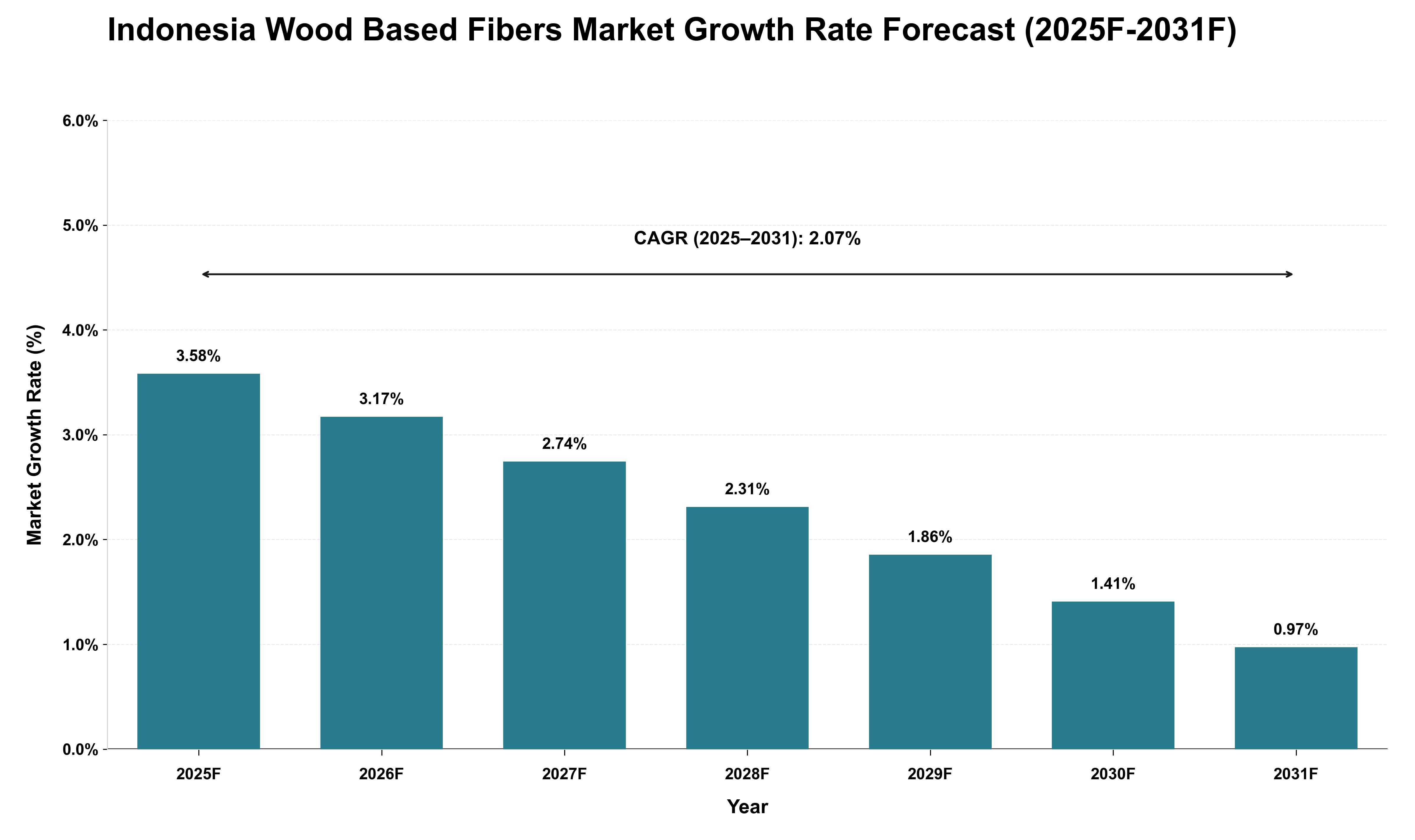
The projected compound annual growth rate of 2.07% for the Indonesia wood-based fibers market will reflect a nuanced competitive landscape influenced by both domestic production capabilities and import dependencies. As annual growth rates decline from 3.58% in 2025 to 0.97% by 2031, this trend indicates a gradual adjustment in supply dynamics, likely driven by increasing competition from alternative materials and evolving consumer preferences towards sustainability. The initial robust growth may stem from heightened demand in construction and furniture sectors, but as the market progresses, cyclical trends will likely emerge, characterized by fluctuations in raw material costs and regulatory changes impacting production practices. Import dependencies may also play a critical role, as shifts in global supply chains could affect pricing strategies and availability of wood-based fibers, ultimately shaping the competitive environment throughout this forecast period.
Key Highlights of the Report:
- Indonesia Wood-Based Fibers Market Outlook
- Market Size of Indonesia Wood-Based Fibers Market,2024
- Forecast of Indonesia Wood-Based Fibers Market, 2031
- Historical Data and Forecast of Indonesia Wood-Based Fibers Revenues & Volume for the Period 2021-2031
- Indonesia Wood-Based Fibers Market Trend Evolution
- Indonesia Wood-Based Fibers Market Drivers and Challenges
- Indonesia Wood-Based Fibers Price Trends
- Indonesia Wood-Based Fibers Porter's Five Forces
- Indonesia Wood-Based Fibers Industry Life Cycle
- Historical Data and Forecast of Indonesia Wood-Based Fibers Market Revenues & Volume By Type for the Period 2021-2031
- Historical Data and Forecast of Indonesia Wood-Based Fibers Market Revenues & Volume By Viscose for the Period 2021-2031
- Historical Data and Forecast of Indonesia Wood-Based Fibers Market Revenues & Volume By Modal for the Period 2021-2031
- Historical Data and Forecast of Indonesia Wood-Based Fibers Market Revenues & Volume By Lyocell for the Period 2021-2031
- Historical Data and Forecast of Indonesia Wood-Based Fibers Market Revenues & Volume By Cupro for the Period 2021-2031
- Historical Data and Forecast of Indonesia Wood-Based Fibers Market Revenues & Volume By Other Types for the Period 2021 - 2029
- Historical Data and Forecast of Indonesia Wood-Based Fibers Market Revenues & Volume By Application for the Period 2021-2031
- Historical Data and Forecast of Indonesia Wood-Based Fibers Market Revenues & Volume By Apparel & Textile for the Period 2021-2031
- Historical Data and Forecast of Indonesia Wood-Based Fibers Market Revenues & Volume By Healthcare (Including Personal Care) for the Period 2021-2031
- Historical Data and Forecast of Indonesia Wood-Based Fibers Market Revenues & Volume By Automotive & Transportation for the Period 2021-2031
- Historical Data and Forecast of Indonesia Wood-Based Fibers Market Revenues & Volume By Other Applications for the Period 2021-2031
- Indonesia Wood-Based Fibers Import Export Trade Statistics
- Market Opportunity Assessment By Type
- Market Opportunity Assessment By Application
- Indonesia Wood-Based Fibers Top Companies Market Share
- Indonesia Wood-Based Fibers Competitive Benchmarking By Technical and Operational Parameters
- Indonesia Wood-Based Fibers Company Profiles
- Indonesia Wood-Based Fibers Key Strategic Recommendations






































