Iraq Nuclear Fuel Market Size, Share & Growth Rate
The Iraq Nuclear Fuel Market was estimated at USD 259 Million in 2025 and is projected to reach USD 342 Million by 2032, growing at a CAGR of 4.1% from 2026 to 2032. This growth trajectory is primarily fueled by Iraq's strategic initiatives to diversify its energy sources and enhance energy security. The increasing demand for electricity alongside ongoing investments in nuclear infrastructure underscores a shift towards sustainable energy solutions.
Iraq Nuclear Fuel Market Year-wise Growth Rate and Key Drivers
This graph highlights how the Iraq Nuclear Fuel Market has steadily grown over the years, supported by major growth factors.
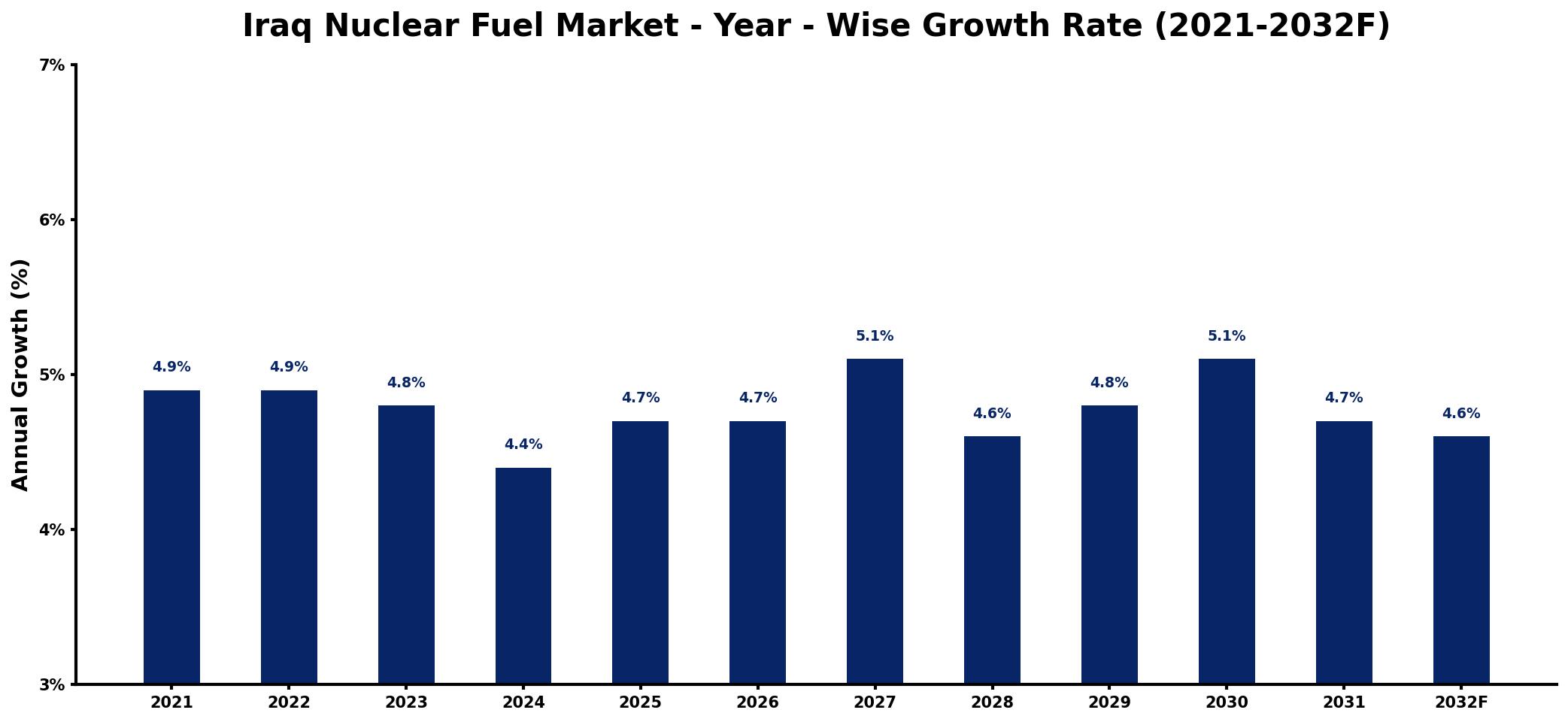
The table below presents the year‑wise growth rates along with the key drivers influencing the market
| Year | Growth Rate | Major Drivers |
| 2021 | 4.9% | Increased energy sector investments |
| 2022 | 4.9% | Rising demand for clean energy |
| 2023 | 4.8% | Technological advancements in reactors |
| 2024 | 4.4% | Growing interest in alternative sources |
| 2025 | 4.7% | growing commercial sector adoption |
| 2026 | 4.7% | Expansion of research initiatives |
| 2027 | 5.1% | Surge in educational programs |
| 2028 | 4.6% | Enhanced regulatory frameworks established |
| 2029 | 4.8% | Improved public awareness campaigns |
| 2030 | 5.1% | Emerging market opportunities identified |
| 2031 | 4.7% | Development of new infrastructures |
| 2032 | 4.6% | Increased focus on sustainability practices |
Note: Market size estimations and growth projections presented in this report are based on 6Wresearch's proprietary forecasting methodology, utilizing the latest available industry data, government publications, and primary research inputs.
Iraq Nuclear Fuel Market Synopsis
The Iraq Nuclear Fuel Market is witnessing a critical juncture as it transitions from a nascent stage towards a more established nuclear energy framework. Driven by government support and international collaborations, the market is poised for expansion despite existing challenges.
As Iraq continues to seek ways to reduce its dependence on traditional fossil fuels, the nuclear fuel sector presents a viable alternative for sustainable energy generation. Future developments hinge on overcoming regulatory uncertainties and enhancing domestic capabilities to support this burgeoning industry.
Iraq Nuclear Fuel Market Key Takeaways
- The market is driven by government initiatives aimed at achieving energy diversification and security.
- International partnerships will play a pivotal role in developing the nuclear fuel infrastructure.
- Investment opportunities exist in uranium mining and nuclear power plant construction.
- Political and security challenges remain significant constraints on market growth.
- The market is projected to grow steadily, with notable shifts towards sustainable energy practices.
Evaluation of Restraints in Iraq Nuclear Fuel Market
The growth of the Iraq Nuclear Fuel Market is hampered by a complex interplay of factors. Political instability, deeply rooted security concerns, and regulatory uncertainties inhibit long-term investments. The lack of domestic expertise and infrastructure compounds these challenges, stifling the market's potential. Navigating regulatory frameworks poses additional hurdles, necessitating a carefully coordinated approach to establish a sustainable nuclear energy sector. These factors create a cautious environment for investors and stakeholders looking to engage in the nuclear fuel landscape.
Iraq Nuclear Fuel Market Trends
The Iraq Nuclear Fuel Market is seeing several emerging trends that are shaping both demand and technological advancements. The governments proactive stance on energy security is driving interest in nuclear energy as a clean alternative. Furthermore, collaboration with international organizations is fostering technology transfer, enhancing local capabilities in uranium mining and fuel fabrication. As Iraq invests in modernizing its power infrastructure, interest in advanced nuclear reactor technologies and sustainable fuel cycle management practices continues to grow.
Iraq Nuclear Fuel Market Opportunities
Significant investment opportunities abound within the Iraq Nuclear Fuel Market. The country's potential uranium reserves make it an attractive prospect for mining and exploration. Additionally, there exists a pressing need for developing nuclear power plants and related infrastructure. These ventures not only represent financial prospects but also contribute to Iraq's overarching energy strategy. Engaging with established nuclear fuel suppliers is also critical for mitigating risks associated with geopolitical tensions and regulatory challenges.
Government Initiatives in the Iraq Nuclear Fuel Market
Government policies play a crucial role in shaping the Iraq Nuclear Fuel Market. The Iraqi government prioritizes transparency and international cooperation to ensure the responsible development of nuclear energy for peaceful purposes. As a signatory to the Treaty on the Non-Proliferation of Nuclear Weapons (NPT), Iraq is committed to adhering to international safeguards and regulatory frameworks. The Iraqi Nuclear Regulatory Authority (INRA) oversees nuclear activities, establishing guidelines for licensing and monitoring to ensure safety and compliance.
Future Insights of the Iraq Nuclear Fuel Market
Looking ahead to the period from 2026 to 2032, the Iraq Nuclear Fuel Market is expected to navigate significant challenges while seeking opportunities for growth. The successful establishment of regulatory frameworks and increased political stability will be pivotal for market expansion. As investments in nuclear energy infrastructure continue, there is potential for the development of a robust nuclear power sector that could fundamentally alter Iraq's energy landscape. The next few years will be critical in determining the trajectory of nuclear energy in the country.
Iraq Nuclear Fuel Market Latest Developments (2025 - 2026)
Recent developments indicate a strengthening focus on nuclear energy as Iraq actively engages with international stakeholders. There are ongoing discussions about partnerships aimed at enhancing technical capabilities and ensuring regulatory compliance. Additionally, infrastructure projects are being evaluated to lay the groundwork for future nuclear power plants, emphasizing a commitment to sustainable energy development in the region.
Iraq Nuclear Fuel Market - Key Attractiveness of the Report
- 10 Years of Market Numbers
- Historical Data Starting from 2022 to 2025
- Base Year: 2025
- Forecast Data until 2032
- Key Performance Indicators Impacting the Market
- Major Upcoming Developments and Projects
Key Highlights of the Report:
- Iraq Nuclear Fuel Market Outlook
- Market Size of Iraq Nuclear Fuel Market, 2025
- Forecast of Iraq Nuclear Fuel Market, 2032
- Historical Data and Forecast of Iraq Nuclear Fuel Revenues & Volume for the Period 2022-2032F
- Iraq Nuclear Fuel Market Trend Evolution
- Iraq Nuclear Fuel Market Drivers and Challenges
- Iraq Nuclear Fuel Price Trends
- Iraq Nuclear Fuel Porter's Five Forces
- Iraq Nuclear Fuel Industry Life Cycle
- Historical Data and Forecast of Iraq Nuclear Fuel Market Revenues & Volume By Fuel Type for the Period 2022-2032F
- Historical Data and Forecast of Iraq Nuclear Fuel Market Revenues & Volume By Uranium Fuel for the Period 2022-2032F
- Historical Data and Forecast of Iraq Nuclear Fuel Market Revenues & Volume By Mixed Oxidenuclear Fuel for the Period 2022-2032F
- Historical Data and Forecast of Iraq Nuclear Fuel Market Revenues & Volume By Reactor Type for the Period 2022-2032F
- Historical Data and Forecast of Iraq Nuclear Fuel Market Revenues & Volume By Boiling Water Reactor for the Period 2022-2032F
- Historical Data and Forecast of Iraq Nuclear Fuel Market Revenues & Volume By Pressurized Water Reactor for the Period 2022-2032F
- Iraq Nuclear Fuel Import Export Trade Statistics
- Market Opportunity Assessment By Fuel Type
- Market Opportunity Assessment By Reactor Type
- Iraq Nuclear Fuel Top Companies Market Share
- Iraq Nuclear Fuel Competitive Benchmarking By Technical and Operational Parameters
- Iraq Nuclear Fuel Company Profiles
- Iraq Nuclear Fuel Key Strategic Recommendations






































