Italy Vetiver Oil Market: Import Trend Analysis
In 2024, Italy experienced a steady increase in imports of vetiver oil, driven by growing demand from the fragrance and cosmetics industries. The trend reflected a shift towards natural and sustainable ingredients in Italian products.
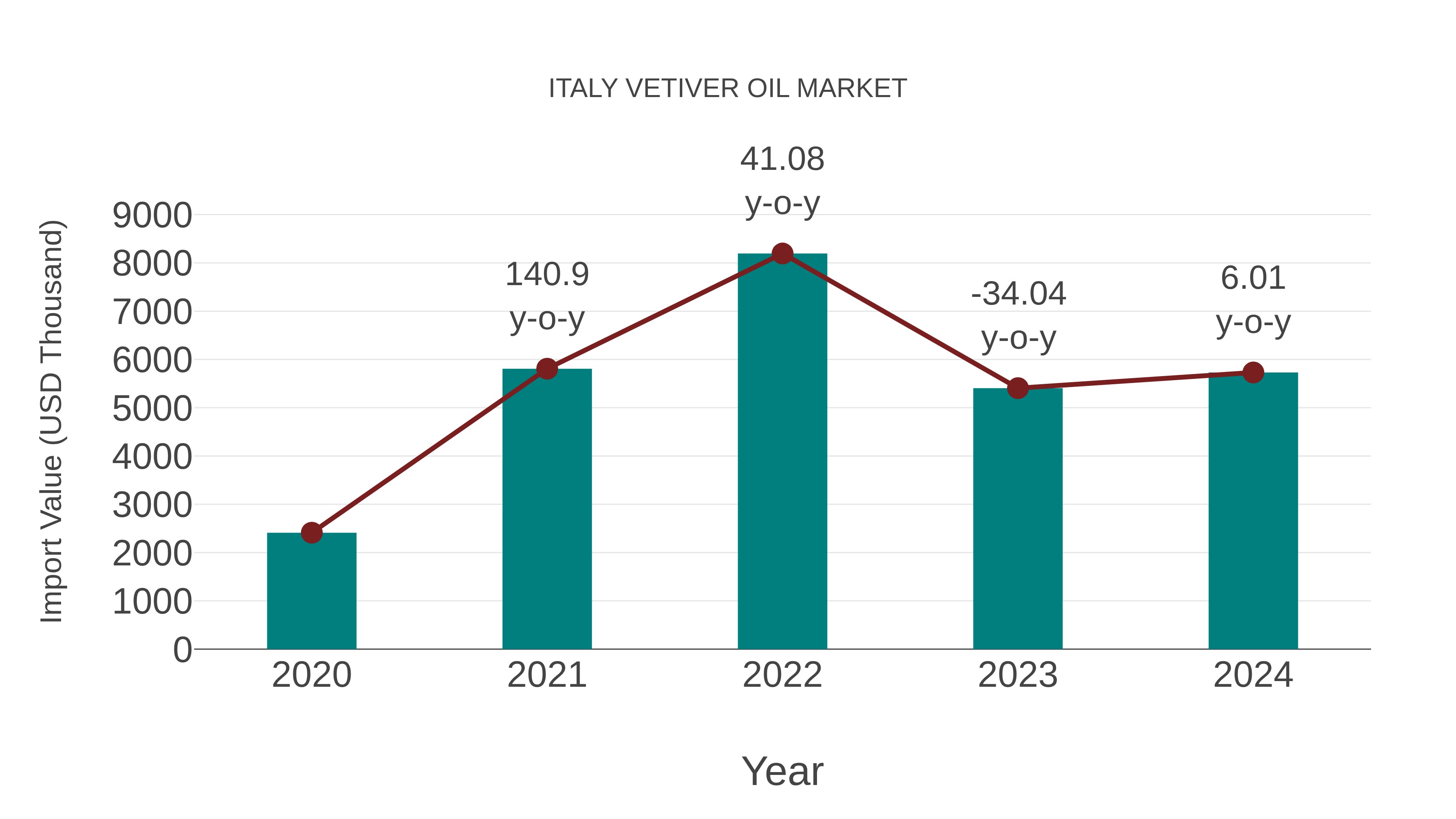
Italy Vetiver Oil Market Synopsis
Valued for its aromatic and therapeutic properties, Italy vetiver oil market supplies essential oil extracted from the roots of vetiver grass. Vetiver oil is used in perfumery, aromatherapy, and skincare products, offering a rich and earthy fragrance with calming and grounding effects.
Drivers of the market
The Vetiver Oil Market in Italy is driven by the demand for natural and aromatic essential oils used in perfumes, cosmetics, and aromatherapy. Vetiver oil is valued for its calming and grounding properties. The growth in the personal care industry and the trend towards natural products support market demand.
Challenges of the market
Challenges in Italy vetiver oil market include sustainable sourcing, supply chain transparency, and market demand fluctuations. As vetiver oil finds applications in perfumery, aromatherapy, and cosmetics, manufacturers must prioritize ethical sourcing practices and environmental stewardship. Issues include promoting fair trade partnerships, supporting local communities, and combating illegal harvesting practices. Moreover, addressing concerns over product quality and volatile market prices poses challenges for vetiver oil producers and distributors in Italy.
Government Policy of the market
Government policies in the vetiver oil market may focus on promoting sustainable agriculture practices, supporting rural livelihoods, and conserving natural resources. Regulatory agencies may set standards for vetiver oil production and processing, establish guidelines for sustainable farming practices and land management, and develop regulatory frameworks to govern the trade and export of vetiver oil. Government initiatives may include funding for vetiver cultivation and processing technologies, incentives for farmers to adopt agroforestry practices, and regulatory measures to ensure compliance with environmental protection laws and fair trade principles.
Key Highlights of the Report:
- Italy Vetiver Oil Market Outlook
- Market Size of Italy Vetiver Oil Market, 2025
- Forecast of Italy Vetiver Oil Market, 2032
- Historical Data and Forecast of Italy Vetiver Oil Revenues & Volume for the Period 2022-2032F
- Italy Vetiver Oil Market Trend Evolution
- Italy Vetiver Oil Market Drivers and Challenges
- Italy Vetiver Oil Price Trends
- Italy Vetiver Oil Porter's Five Forces
- Italy Vetiver Oil Industry Life Cycle
- Historical Data and Forecast of Italy Vetiver Oil Market Revenues & Volume By Application for the Period 2022-2032F
- Historical Data and Forecast of Italy Vetiver Oil Market Revenues & Volume By Medical for the Period 2022-2032F
- Historical Data and Forecast of Italy Vetiver Oil Market Revenues & Volume By Food & Beverage for the Period 2022-2032F
- Historical Data and Forecast of Italy Vetiver Oil Market Revenues & Volume By Spa & Relaxation for the Period 2022-2032F
- Italy Vetiver Oil Import Export Trade Statistics
- Market Opportunity Assessment By Application
- Italy Vetiver Oil Top Companies Market Share
- Italy Vetiver Oil Competitive Benchmarking By Technical and Operational Parameters
- Italy Vetiver Oil Company Profiles
- Italy Vetiver Oil Key Strategic Recommendations






































