Japan Absorbable Sutures Market Size & Growth Rate
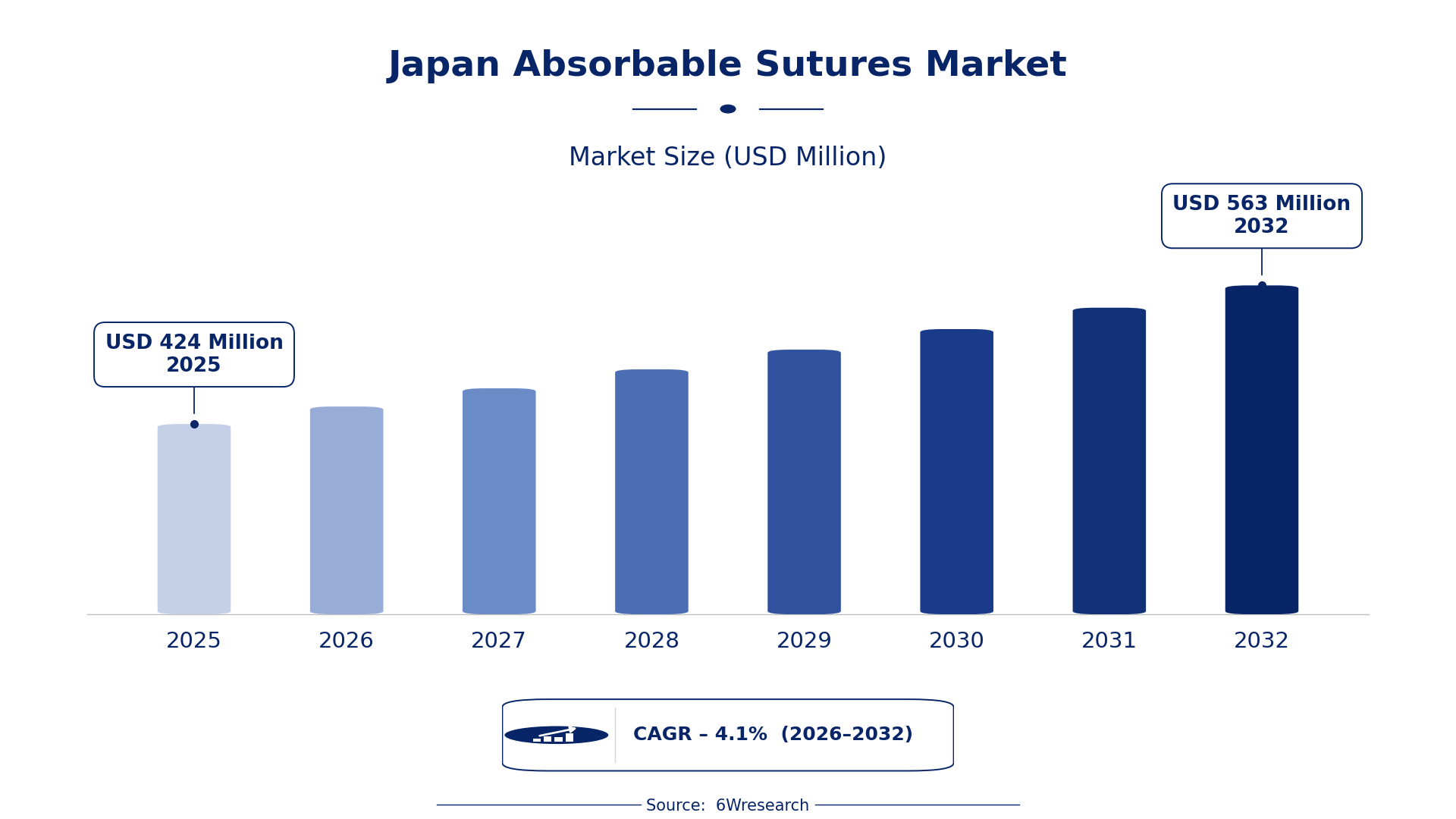
According to 6Wresearch internal database and industry insights, the Japan Absorbable Sutures Market was valued at USD 424 Million in 2025 and is projected to reach USD 563 Million by 2032, growing at a CAGR of approximately 4.1% during 2026–2032.
Japan Absorbable Sutures Market Highlights
| Report Metric | Details |
| Report Name | Japan Absorbable Sutures Market (2026-2032) |
| Market Size 2025 | USD 424 Million |
| Market Size 2032 | USD 563 Million |
| Absolute Growth 2025–2032 | USD 139 Million |
| CAGR 2026–2032 | 4.1% |
| Peak Annual Growth | 4.8% in 2027 |
| Forecast Period | 2026–2032 |
| Historical Data | 2022–2025 |
| Base Year | 2025 |
| Leading Suture Type, 2025 | Synthetic Absorbable (50% share) |
| Leading Material Type, 2025 | Polyglycolic Acid (49% share) |
| Leading Distribution Channel, 2025 | Hospital Supply Chains (46% share) |
| Leading End User, 2025 | Hospitals (43% share) |
| Fastest-Growing Suture Type | Natural Absorbable (5.7% CAGR) |
| Fastest-Growing Material Type | Catgut (5.6% CAGR) |
| Fastest-Growing Distribution Channel | Direct Sales (5.2% CAGR) |
| Fastest-Growing End User | Surgical Centers (5.1% CAGR) |
| Growing Sector | surgical procedures |
| Key End Users | hospitals, surgical centers, emergency services |
Japan Absorbable Sutures Market Year-wise Growth Rate and Key Drivers (2022–2032)
This graph illustrates the annual growth rates of the market from 2022 to 2032, highlighting a steady upward trajectory and projected market expansion over the forecast period.
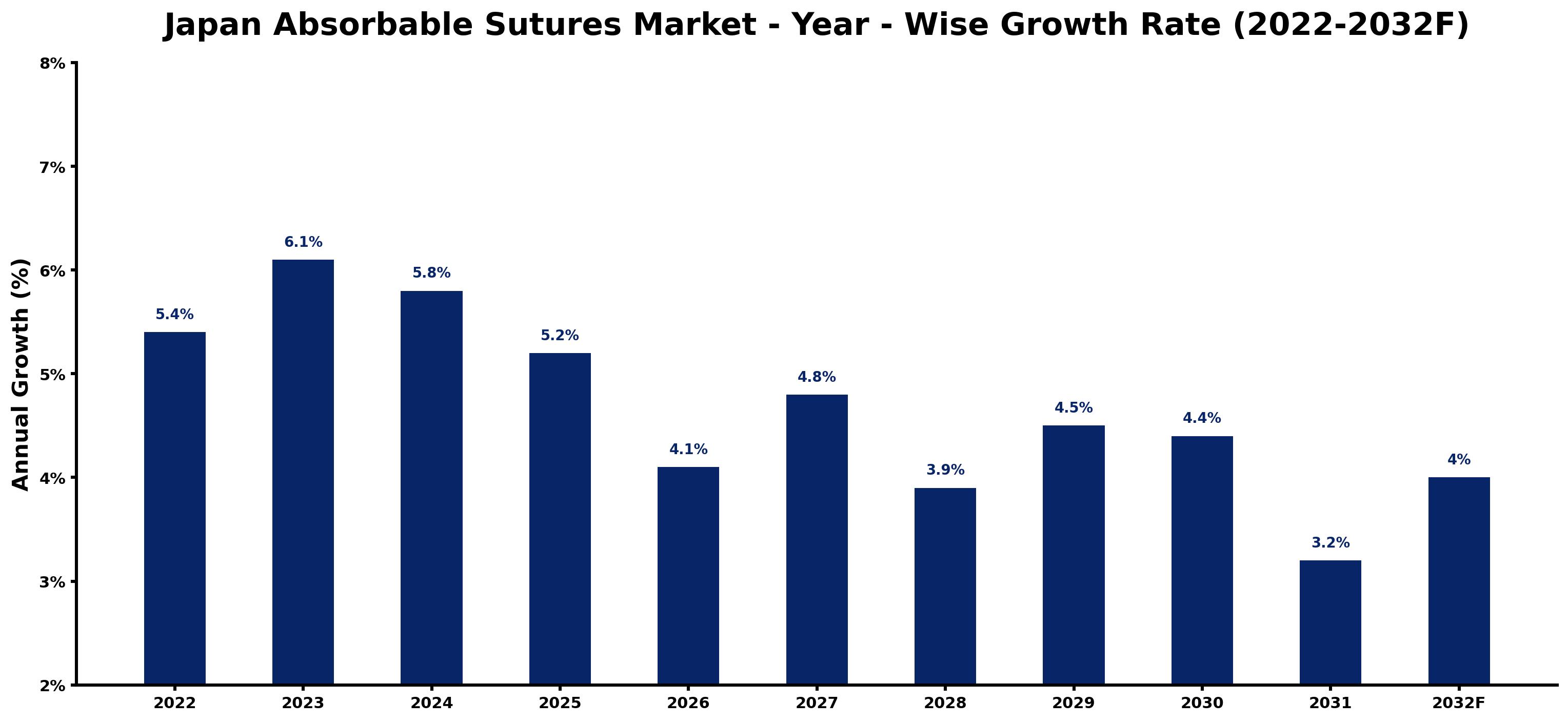
The table below sets out the estimated growth rate for each year and the main factor behind it.
| Year | Estimated Annual Growth (%) | Market Rationale |
| 2022 | 5.4 | The market exhibited steady growth due to ongoing surgical procedures and hospital demand. |
| 2023 | 6.1 | Growth accelerated as hospitals increased their adoption of absorbable sutures for various surgeries. |
| 2024 | 5.8 | The market adjusted to previous high adoption rates, leading to a slowdown in growth. |
| 2025 | 5.2 | Continued growth reflects maturation in surgical practices and inventory management. |
| 2026 | 4.1 | Further slowing is anticipated as hospitals optimise their inventory management of sutures. |
| 2027 | 4.8 | Demand is expected to rebound as surgical centres expand their offerings, driving higher consumption of sutures. |
| 2028 | 3.9 | Deceleration in growth will occur as market saturation influences purchasing decisions. |
| 2029 | 4.5 | An increase in outpatient surgeries will revitalise demand for absorbable sutures in surgical centres. |
| 2030 | 4.4 | Growth is projected to slow as hospitals focus on cost management and efficiency in procurement. |
| 2031 | 3.2 | Demand will continue to slow as the market stabilises, reflecting a mature healthcare environment. |
| 2032 | 4.0 | Growth is expected to pick up as more hospitals adopt advanced surgical techniques requiring absorbable sutures. |
Note: Market size estimations and growth projections presented in this report are based on 6Wresearch's proprietary forecasting methodology, utilizing the latest available industry data, government publications, and primary research inputs.
Japan Absorbable Sutures Market Synopsis
Absorbable sutures are materials that the body gradually absorbs, made from synthetic or natural sources. They are essential for closing wounds and facilitating healing in various surgical procedures. The Japan Absorbable Sutures Market is expanding, driven by a healthcare system with over 8,000 hospitals and a growing emphasis on outpatient surgeries. Healthcare expenditure reached approximately 42 trillion yen in 2023, alongside the adoption of advanced surgical materials, propelling market growth.
Market Dynamics Impact Analysis (2026–2032)
| Factor | Type | Impact | Primary Segment Affected |
| Rising healthcare expenditure supports surgical advancements and increases demand for absorbable sutures. | Driver | High | Synthetic Absorbable |
| The growing number of outpatient surgeries drives the need for efficient wound closure solutions. | Driver | High | Surgical Centers |
| The shift towards minimally invasive surgeries creates demand for faster-absorbing sutures. | Opportunity | Medium | Fast Absorption Sutures |
| The increasing focus on infection control boosts the adoption of antibacterial sutures. | Opportunity | Medium | Antibacterial Sutures |
| High competition among suppliers may lead to price wars affecting profit margins. | Restraint | High | Natural Absorbable |
| Limited awareness of newer suture materials could hinder market penetration in rural areas. | Restraint | Medium | Coated Material |
| The high cost of advanced sutures can deter smaller healthcare facilities from adoption. | Challenge | High | Polyglycolic Acid |
| Supply chain disruptions can delay the availability of essential sutures in hospitals. | Challenge | Medium | Hospital Supply Chains |
Evaluation of Drivers in Japan Absorbable Sutures Market (2026–2032)
The main growth drivers and the segments they affect most are set out below.
| Drivers | Primary Segment Affected | Why It Matters (Evidence) |
| Increased healthcare expenditure drives demand for surgical materials. | Synthetic Absorbable | In 2023, Japan's healthcare expenditure reached approximately 42 trillion yen, resulting in higher purchases of absorbable sutures. |
| The rise in outpatient surgeries boosts the need for efficient suturing solutions. | Surgical Centers | The surgical center segment is expected to grow due to increased outpatient surgeries, resulting in greater demand for absorbable sutures. |
| The adoption of advanced surgical techniques necessitates reliable sutures. | Fast Absorption Sutures | With around 10 million surgeries performed annually, demand for fast absorption sutures is increasing as healthcare providers seek efficient solutions. |
| Growing concerns about infection control increase the demand for antibacterial sutures. | Antibacterial Sutures | Infection-prone surgeries are increasingly adopting antibacterial sutures to reduce postoperative complications. |
| The expansion of urban hospitals leads to higher adoption rates of absorbable sutures. | Polyglycolic Acid | Hospitals in urban areas show higher adoption rates, driving demand for polyglycolic acid sutures. |
Japan's healthcare expenditure reached approximately 42 trillion yen in 2023, leading to increased purchases of absorbable sutures. Surgical centres are expected to grow due to a rise in outpatient surgeries, resulting in a greater need for these sutures. With around 10 million surgeries performed annually, demand for fast absorption sutures is increasing as healthcare providers seek efficient solutions. Infection-prone surgeries are increasingly adopting antibacterial sutures to minimise postoperative complications, while urban hospitals show higher adoption rates, further driving demand for polyglycolic acid sutures.
Evaluation of Restraints in Japan Absorbable Sutures Market
These are the pressures that could keep growth below its potential.
| Market Restraint | Primary Segment Affected | Why It Matters (Evidence) |
| High competition among suppliers may lead to price wars affecting profit margins. | Natural Absorbable | The presence of numerous suppliers in the market creates price pressure, impacting profitability. |
| Limited awareness of newer suture materials could hinder market penetration in rural areas. | Coated Material | Healthcare facilities in rural areas may lack knowledge about advanced sutures, limiting their adoption. |
| The high cost of advanced sutures can deter smaller healthcare facilities from adoption. | Polyglycolic Acid | Smaller facilities may struggle with the investment required for advanced suture materials. |
| Supply chain disruptions can delay the availability of essential sutures in hospitals. | Hospital Supply Chains | Disruptions in the supply chain can lead to shortages, affecting surgical procedures. |
| Regulatory hurdles can slow the introduction of new suture materials into the market. | Antibacterial Sutures | Compliance with stringent regulations can delay product launches, affecting availability. |
Japan Absorbable Sutures Market Challenges
High costs of absorbable sutures strain hospitals' budgets, as healthcare expenditure in Japan reached approximately 42 trillion yen in 2023. Stringent regulations from the Ministry of Health, Labour and Welfare delay product approvals, causing suppliers to face lead times that can extend by up to six months. Limited training in advanced surgical techniques hampers the effective use of absorbable sutures, especially in rural facilities, resulting in underutilisation. Supply chain disruptions can lead to inconsistent availability, compelling hospitals to stockpile sutures and significantly increasing their operational costs.
Trends in the Japan Absorbable Sutures Market
Below are the shifts with the largest effect on the Japan Absorbable Sutures Market.
- Shift towards Antibacterial Sutures: In 2023, the adoption of antibacterial sutures increased in infection-prone surgeries, reflecting a growing focus on patient safety. This trend is expected to boost the market for these sutures.
- Transition to Fast Absorption Sutures: The trend towards fast absorption sutures began in 2023 as hospitals sought quicker healing solutions. This shift is seen in surgical centres, which are increasingly adopting these sutures to improve patient outcomes.
- Emergence of Online Medical Stores: Online medical stores are becoming a minor distribution channel for absorbable sutures, with a growing trend observed in urban areas. This shift reflects changing purchasing behaviours among healthcare providers.
- Increased Focus on Surgical Safety Standards: The government’s program to enhance surgical safety standards by 2025 is driving the demand for advanced sutures. This initiative aims to improve patient outcomes and reduce complications.
Investment Opportunities in the Japan Absorbable Sutures Market
The following opportunities in the Japan Absorbable Sutures Market pair current demand with a clear way in.
- Partner with Surgical Centres: Surgical centres are increasingly seeking reliable absorbable sutures, with a projected growth in demand. Collaborating with these centres can improve market presence and sales.
- Invest in Antibacterial Sutures: The growing concern for infection control creates an opportunity for suppliers of antibacterial sutures. The rising number of surgeries in Japan supports this demand.
- Expand Distribution Channels: With a 46% share in 2025, Hospital Supply Chains represent a significant opportunity for suppliers. Establishing partnerships with these chains can facilitate market entry.
- Supply Fast Absorption Sutures: The demand for fast absorption sutures is on the rise, driven by the need for quicker healing. Suppliers should focus on this product type to meet market needs.
Government Initiatives in the Japan Absorbable Sutures Market
The PMD Act regulates the approval, manufacture, and quality of absorbable sutures, ensuring that producers meet stringent safety standards. Compliance with this act is essential for manufacturers to operate in the Japanese market and assures buyers of product reliability.
The Ministry of Health, Labour and Welfare oversees the approval of new surgical materials, funding research and development initiatives. This agency plays an important role in ensuring the safety and efficacy of absorbable sutures in Japan.
Future Insight of the Japan Absorbable Sutures Market
A policy-driven shift towards enhanced surgical safety standards will reshape the absorbable sutures market by 2032, prompting suppliers to innovate. Increased outpatient surgeries will drive demand in surgical centers, necessitating more efficient suturing solutions. The use of advanced materials is expected to rise, particularly with polyglycolic acid sutures becoming more prevalent. Initiatives by the Japanese Society of Surgery will promote the adoption of cutting-edge surgical materials, ultimately improving patient outcomes.
Market Segmentation Analysis
Japan Absorbable Sutures Market report covers a detailed analysis of the following market segments:
By Suture Type – Synthetic Absorbable Leads, Natural Absorbable Expected to Grow Fastest
According to Saurav Kr Singh, Senior Research Analyst at 6Wresearch, Synthetic Absorbable held 50% of the Japan Absorbable Sutures Market by suture type in 2025. Synthetic absorbable sutures hold the largest share due to their extensive application across various surgical procedures in hospitals. Their established presence in over 8,000 hospitals in Japan underscores their critical role in modern surgical practices. Natural Absorbable is set to record the highest CAGR in this split, 5.7% over 2026–2032. Natural absorbable sutures are growing rapidly as they gain traction in paediatric surgeries, where their biocompatibility is essential. This growth is expected to accelerate as more healthcare professionals recognise their advantages in specific surgical contexts. Suppliers should prioritise the promotion of natural absorbable sutures to align with the increasing demand in specialised surgical areas.
By Material Type – Polyglycolic Acid Leads, Catgut Expected to Grow Fastest
With 49% of material type revenue in 2025, Polyglycolic Acid was the largest category. Polyglycolic acid sutures are the leading material type owing to their consistent absorption rate and effectiveness in a range of surgical applications. Their widespread use in hospitals ensures a reliable demand from healthcare providers across Japan. The quickest growth will come from Catgut, forecast to expand at a CAGR of 5.6% between 2026 and 2032. Catgut sutures are experiencing the fastest growth as they are being reconsidered for specific traditional surgical practices, particularly in niche areas. This renewed interest may lead to increased adoption among surgeons seeking alternative solutions. Buyers should consider catgut sutures as a practical option for particular surgical scenarios where traditional materials are preferred.
By Distribution Channel – Hospital Supply Chains Lead, Direct Sales Expected to Grow Fastest
The largest distribution channel category in 2025 was Hospital Supply Chains, at 46% of revenue. Hospital supply chains are the primary distribution channel for absorbable sutures, providing a consistent and reliable source for hospitals across Japan. This established network ensures that healthcare facilities have immediate access to necessary surgical materials. Direct Sales is projected to grow fastest, at a CAGR of 5.2% during 2026–2032. Direct sales are growing rapidly as they cater to specific cases where hospitals seek tailored solutions for their surgical needs. This channel's expansion indicates a shift towards more personalised procurement strategies. Suppliers should consider strengthening their direct sales strategies to capture this growing segment.
By End User – Hospitals Lead, Surgical Centers Expected to Grow Fastest
Hospitals took 43% of end user revenue in 2025, more than any other category. Hospitals are the primary end users of absorbable sutures, utilising them extensively in various surgical procedures across the country. Their substantial involvement is underscored by the over 8,000 hospitals in Japan that employ these sutures to ensure effective wound closure and healing. Over 2026–2032, Surgical Centers are expected to post the fastest growth, at a CAGR of 5.1%. Surgical centers are experiencing rapid growth as they increasingly adopt absorbable sutures for outpatient surgeries, reflecting a broader trend towards minimally invasive procedures. This growth is expected to continue as surgical centres adapt to changing patient care models and preferences. This trend indicates that suppliers should focus on enhancing their relationships with surgical centers to meet the rising demand for absorbable sutures in outpatient settings.
Key Attractiveness of the Report
- 10 Years of Market Numbers
- Historical Data Starting from 2022 to 2025
- Base Year 2025
- Forecast Data until 2032
- Key Performance Indicators Impacting the Market
- Major Upcoming Developments and Projects
Key Highlights of the Report:
- Japan Absorbable Sutures Market Outlook
- Market Size of Japan Absorbable Sutures Market, 2025
- Forecast of Japan Absorbable Sutures Market, 2032
- Historical Data and Forecast of Japan Absorbable Sutures Revenues & Volume for the Period 2022-2032F
- Japan Absorbable Sutures Market Trend Evolution
- Japan Absorbable Sutures Market Drivers and Challenges
- Japan Absorbable Sutures Price Trends
- Japan Absorbable Sutures Porter's Five Forces
- Japan Absorbable Sutures Industry Life Cycle
- Historical Data and Forecast of Japan Absorbable Sutures Market Revenues & Volume By Suture Type for the Period 2022-2032F
- Historical Data and Forecast of Japan Absorbable Sutures Market Revenues & Volume By Synthetic Absorbable for the Period 2022-2032F
- Historical Data and Forecast of Japan Absorbable Sutures Market Revenues & Volume By Natural Absorbable for the Period 2022-2032F
- Historical Data and Forecast of Japan Absorbable Sutures Market Revenues & Volume By Antibacterial Sutures for the Period 2022-2032F
- Historical Data and Forecast of Japan Absorbable Sutures Market Revenues & Volume By Fast Absorption Sutures for the Period 2022-2032F
- Historical Data and Forecast of Japan Absorbable Sutures Market Revenues & Volume By Material Type for the Period 2022-2032F
- Historical Data and Forecast of Japan Absorbable Sutures Market Revenues & Volume By Polyglycolic Acid for the Period 2022-2032F
- Historical Data and Forecast of Japan Absorbable Sutures Market Revenues & Volume By Catgut for the Period 2022-2032F
- Historical Data and Forecast of Japan Absorbable Sutures Market Revenues & Volume By Coated Material for the Period 2022-2032F
- Historical Data and Forecast of Japan Absorbable Sutures Market Revenues & Volume By Polyglactin 910 for the Period 2022-2032F
- Historical Data and Forecast of Japan Absorbable Sutures Market Revenues & Volume By Distribution Channel for the Period 2022-2032F
- Historical Data and Forecast of Japan Absorbable Sutures Market Revenues & Volume By Hospital Supply Chains for the Period 2022-2032F
- Historical Data and Forecast of Japan Absorbable Sutures Market Revenues & Volume By Direct Sales for the Period 2022-2032F
- Historical Data and Forecast of Japan Absorbable Sutures Market Revenues & Volume By Online Medical Stores for the Period 2022-2032F
- Historical Data and Forecast of Japan Absorbable Sutures Market Revenues & Volume By Distributors for the Period 2022-2032F
- Historical Data and Forecast of Japan Absorbable Sutures Market Revenues & Volume By End User for the Period 2022-2032F
- Historical Data and Forecast of Japan Absorbable Sutures Market Revenues & Volume By Hospitals for the Period 2022-2032F
- Historical Data and Forecast of Japan Absorbable Sutures Market Revenues & Volume By Surgical Centers for the Period 2022-2032F
- Historical Data and Forecast of Japan Absorbable Sutures Market Revenues & Volume By Clinics for the Period 2022-2032F
- Historical Data and Forecast of Japan Absorbable Sutures Market Revenues & Volume By Emergency Services for the Period 2022-2032F
- Japan Absorbable Sutures Import Export Trade Statistics
- Market Opportunity Assessment By Suture Type
- Market Opportunity Assessment By Material Type
- Market Opportunity Assessment By Distribution Channel
- Market Opportunity Assessment By End User
- Japan Absorbable Sutures Top Companies Market Share
- Japan Absorbable Sutures Competitive Benchmarking By Technical and Operational Parameters
- Japan Absorbable Sutures Company Profiles
- Japan Absorbable Sutures Key Strategic Recommendations
Market Covered
The following segment groups are covered in the report.
By Suture Type
- Synthetic Absorbable
- Natural Absorbable
- Antibacterial Sutures
- Fast Absorption Sutures
By Material Type
- Polyglycolic Acid
- Catgut
- Coated Material
- Polyglactin 910
By Distribution Channel
- Hospital Supply Chains
- Direct Sales
- Online Medical Stores
- Distributors
By End User
- Hospitals
- Surgical Centers
- Clinics
- Emergency Services































