Japan ACD Blood Collection Market Size & Growth Rate
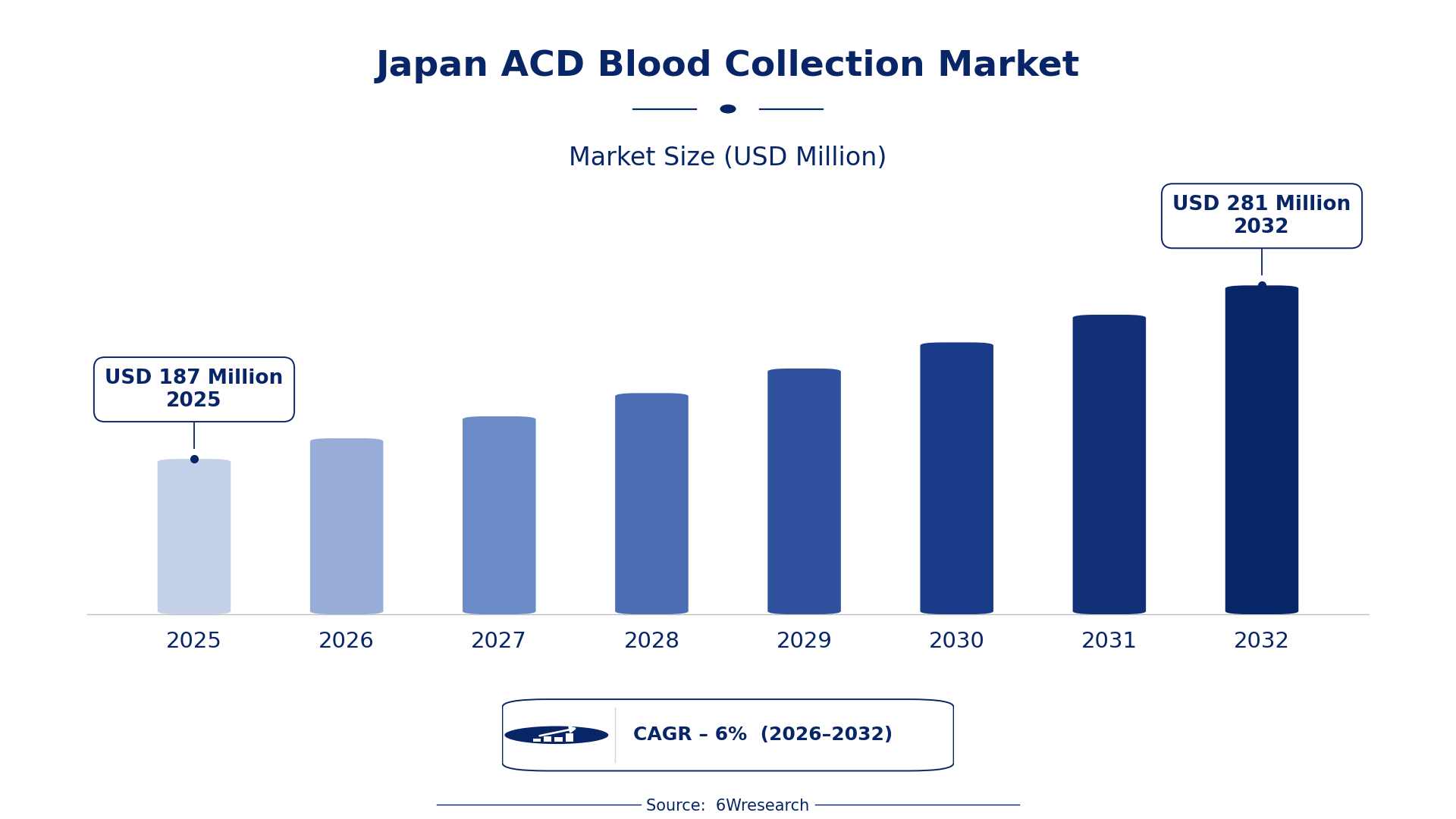
According to 6Wresearch internal database and industry insights, the Japan ACD Blood Collection Market was valued at USD 187 Million in 2025 and is projected to reach USD 281 Million by 2032, growing at a CAGR of approximately 6% during 2026–2032.
Japan ACD Blood Collection Market Highlights
| Report Metric | Details |
| Report Name | Japan ACD Blood Collection Market (2026-2032) |
| Market Size 2025 | USD 187 Million |
| Market Size 2032 | USD 281 Million |
| Absolute Growth 2025–2032 | USD 94 Million |
| CAGR 2026–2032 | 6% |
| Peak Annual Growth | 6.5% in 2032 |
| Forecast Period | 2026–2032 |
| Historical Data | 2022–2025 |
| Base Year | 2025 |
| Leading Product Type, 2025 | ACD-A Tubes (45% share) |
| Leading Tube Size, 2025 | 8 ml (42% share) |
| Leading Application Area, 2025 | Blood Banking (47% share) |
| Leading End User, 2025 | Hospitals (41% share) |
| Leading Distribution Channel, 2025 | Medical Suppliers (53% share) |
| Fastest-Growing Product Type | ACD-B Tubes (8.5% CAGR) |
| Fastest-Growing Tube Size | 6 ml (7.9% CAGR) |
| Fastest-Growing Application Area | Genetic Testing (7.5% CAGR) |
| Fastest-Growing End User | Diagnostic Labs (7.8% CAGR) |
| Fastest-Growing Distribution Channel | Direct Sales (8.0% CAGR) |
| Growing Sector | Blood Banking |
| Key End Users | Hospitals, Diagnostic Labs, Blood Donation Camps |
Japan ACD Blood Collection Market Year-wise Growth Rate and Key Drivers (2022–2032)
This graph illustrates the annual growth rates of the market from 2022 to 2032, highlighting a steady upward trajectory and projected market expansion over the forecast period.
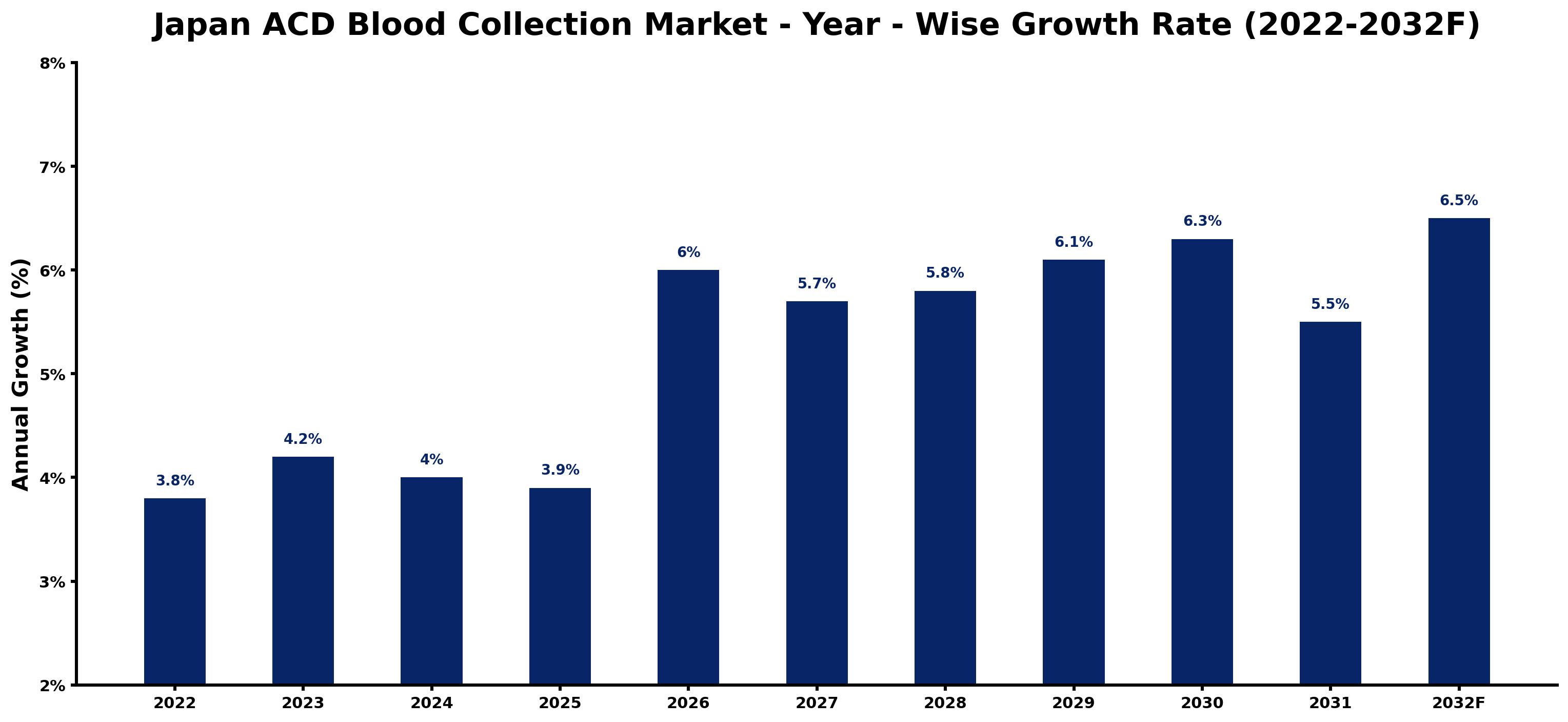
For each year, the table pairs the estimated growth rate with the leading influence on demand, showing how the drivers changed across the period.
| Year | Estimated Annual Growth (%) | Market Rationale |
| 2022 | 3.8 | The market experienced steady demand from hospitals and diagnostic labs. |
| 2023 | 4.2 | Growth accelerated due to increased awareness of blood donation initiatives. |
| 2024 | 4.0 | Demand growth slowed as hospitals adjusted to supply chain challenges. |
| 2025 | 3.9 | Market expansion continued, influenced by rising blood donation camp activities. |
| 2026 | 6.0 | Growth will accelerate as investments in advanced diagnostic tools increase. |
| 2027 | 5.7 | A slight slowdown is anticipated as hospitals optimize their collection processes. |
| 2028 | 5.8 | Demand is projected to rise as blood collection training programs become more widespread. |
| 2029 | 6.1 | Growth will be driven by an increase in genetic testing applications. |
| 2030 | 6.3 | The market is expected to continue expanding with rising healthcare investments. |
| 2031 | 5.5 | Growth will slow as the market matures and competition intensifies. |
| 2032 | 6.5 | Demand is projected to peak due to heightened focus on blood safety programs. |
Note: Market size estimations and growth projections presented in this report are based on 6Wresearch's proprietary forecasting methodology, utilizing the latest available industry data, government publications, and primary research inputs.
Japan ACD Blood Collection Market Synopsis
ACD Blood Collection utilises anticoagulant citrate dextrose to preserve blood samples for laboratory analysis. The market is driven by over 8,000 hospitals and a 15% increase in blood donation camps since 2022. The Japan Medical Association supports this growth, while advancements in diagnostic tools further stimulate demand for reliable blood collection solutions. With the healthcare sector investing heavily in advanced technologies, the market is poised for sustained growth.
Market Dynamics Impact Analysis (2026–2032)
| Factor | Type | Impact | Primary Segment Affected |
| Increasing blood donation awareness campaigns are boosting collection rates. | Driver | High | Blood Banking |
| The rise in genetic testing applications is creating new demand for blood samples. | Driver | High | Genetic Testing |
| Growing urban blood donation camps present opportunities for suppliers. | Opportunity | High | Blood Donation Camps |
| Investment in advanced diagnostic tools is expanding the market for blood collection products. | Opportunity | High | Diagnostic Labs |
| Supply chain challenges may hinder timely delivery of blood collection products. | Restraint | Medium | Medical Suppliers |
| High competition among suppliers may affect pricing strategies. | Restraint | Medium | Healthcare Distributors |
| Regulatory compliance can delay product approvals for new entrants. | Challenge | High | Healthcare Distributors |
| Limited awareness of blood donation benefits can restrict participation. | Challenge | Medium | Blood Donation Camps |
Evaluation of Drivers in Japan ACD Blood Collection Market (2026–2032)
The main growth drivers and the segments they affect most are set out below.
| Drivers | Primary Segment Affected | Why It Matters (Evidence) |
| Increased blood donation awareness campaigns boost collection rates. | Blood Banking | Blood donation camps have increased by 15% since 2022, leading hospitals to purchase more collection products. |
| The rise in genetic testing applications creates new demand for blood samples. | Genetic Testing | Diagnostic labs perform millions of tests annually, driving hospitals to invest in ACD blood collection products. |
| Healthcare sector investments in advanced diagnostic tools raise blood collection needs. | Diagnostic Labs | The healthcare sector is projected to invest 500 million yen in advanced diagnostic tools, increasing demand for blood collection products. |
| The growing population in urban areas raises blood collection requirements. | Blood Donation Camps | Tokyo and Osaka are major demand centers, influencing hospitals to expand their blood collection capabilities. |
| Compliance with ISO 15189 standards encourages quality in blood collection practices. | Clinical Collection | Laboratories using ACD blood collection must adhere to ISO standards, prompting them to procure reliable collection products. |
Spending rises because blood donation camps have increased by 15% since 2022, leading hospitals to purchase more collection products. The healthcare sector is projected to invest 500 million yen in advanced diagnostic tools, which will increase demand for blood collection solutions. Compliance with ISO standards ensures quality in blood collection practices, prompting laboratories to procure reliable products. Diagnostic labs perform millions of tests annually, driving hospitals to invest in ACD blood collection solutions. Urban areas are major demand centers, influencing hospitals to enhance their blood collection capabilities.
Evaluation of Restraints in Japan ACD Blood Collection Market
The table below lists the restraints and the evidence behind each.
| Market Restraint | Primary Segment Affected | Why It Matters (Evidence) |
| Supply chain challenges may hinder timely delivery of blood collection products. | Medical Suppliers | Disruptions in logistics can delay product availability, affecting hospitals' operations. |
| High competition among suppliers may affect pricing strategies. | Healthcare Distributors | Intense competition can lead to price wars, impacting profit margins for distributors. |
| Regulatory compliance can delay product approvals for new entrants. | Healthcare Distributors | New suppliers may face lengthy approval processes, limiting their market entry. |
| Limited awareness of blood donation benefits can restrict participation. | Blood Donation Camps | A lack of public knowledge about blood donation can reduce donor turnout, affecting supply. |
| Variability in product quality may deter hospitals from switching suppliers. | Blood Banking | Inconsistent product performance can lead to reluctance in adopting new brands. |
Japan ACD Blood Collection Market Challenges
Strict regulations surrounding blood collection products create delays for producers, as compliance with ISO 15189 and JIS standards necessitates extensive documentation and testing. This can extend product development timelines by up to six months, affecting supply availability for hospitals. Increased competition among suppliers has driven down prices, resulting in tighter margins for producers, which can lead to reduced investment in quality improvements. Rising costs associated with training healthcare professionals in blood collection techniques can strain budgets for hospitals, limiting their ability to expand services and meet growing demand from diagnostic labs.
Trends in the Japan ACD Blood Collection Market
Four trends stand out in the Japan ACD Blood Collection Market.
- Shift towards Greater Blood Donation Awareness: Blood donation awareness campaigns have intensified, particularly in urban areas, leading to a 15% increase in blood donation camps since 2022. This shift encourages hospitals to invest more in ACD blood collection products.
- Transition from Traditional to Advanced Diagnostic Tools: The healthcare sector is increasingly adopting advanced diagnostic tools, with investments expected to reach 500 million yen in the coming years. This transition will drive demand for ACD blood collection products, ensuring quality and reliability in testing.
- Emergence of Genetic Testing as a Key Application: Genetic testing is becoming a prominent application area for blood collection, with a projected growth rate of 7.5% from 2026 to 2032. This trend is prompting diagnostic labs to enhance their blood collection capabilities.
- Prioritisation of Compliance with ISO Standards: Compliance with ISO standards is becoming essential for laboratories using ACD blood collection. This prioritisation ensures quality and safety in testing, influencing hospitals to procure certified collection products.
Investment Opportunities in the Japan ACD Blood Collection Market
The following areas offer the clearest openings for investors and suppliers in the Japan ACD Blood Collection Market.
- Hospitals seeking reliable blood collection solutions: With over 8,000 hospitals in Japan, there is a growing need for reliable blood collection products. Suppliers can enter the market through partnerships with healthcare distributors to meet this demand.
- Urban blood donation camps expanding rapidly: The increase in blood donation camps in urban areas presents an opportunity for suppliers. Investing in marketing and partnerships with local health authorities can facilitate access to this growing market.
- Investment in advanced diagnostic tools by healthcare providers: Healthcare providers are projected to invest heavily in advanced diagnostic tools, creating demand for ACD blood collection products. Suppliers can collaborate with hospitals to provide tailored solutions.
- Entry through compliance with JIS standards: Compliance with JIS standards is essential for medical devices, including blood collection tubes. Suppliers can gain market access by ensuring their products meet these regulations.
Government Initiatives in the Japan ACD Blood Collection Market
The NHI drug price standard, revised regularly, influences pricing strategies for blood collection products, ensuring that hospitals can access affordable solutions. Additionally, the Medical Care Act establishes standards for hospitals, ensuring they meet necessary requirements for effective blood collection practices.
The Japan Medical Association promotes blood donation initiatives, benefiting hospitals and diagnostic labs. In 2023, the government allocated 500 million yen for blood safety programs, improving the infrastructure for blood collection and ensuring compliance with safety standards.
Future Insight of the Japan ACD Blood Collection Market
Hospitals will adopt advanced diagnostic tools by 2032, driven by significant investments in healthcare technology. The government’s allocation of 500 million yen for blood safety programs will enhance collection processes and safety standards. Blood donation awareness initiatives will likely boost participation rates, increasing the average blood collection volume per donation to around 460 ml. Online sales of medical supplies will expand, providing suppliers with new channels to reach buyers and streamline distribution.
Market Segmentation Analysis
Japan ACD Blood Collection Market report covers a detailed analysis of the following market segments:
By Product Type – ACD-A Tubes Lead, ACD-B Tubes Expected to Grow Fastest
According to Saurav Kr Singh, Senior Research Analyst at 6Wresearch, ACD-A Tubes accounted for 45% of the market by product type in 2025. ACD-A Tubes dominate the market as they are widely used in hospitals for routine blood tests, crucial for preserving blood samples. Their extensive adoption in over 8,000 hospitals highlights their importance in the blood collection landscape. ACD-B Tubes are projected to grow fastest, at a CAGR of 8.5% during 2026–2032. The rapid growth of ACD-B Tubes is due to their specific application in specialised testing, increasingly favoured in diagnostic labs. As healthcare facilities invest in advanced diagnostic tools, demand for ACD-B Tubes is set to rise further. Suppliers should focus on enhancing the availability of ACD-B Tubes to meet the growing demand in specialised testing.
By Tube Size – 8 ml Leads, 6 ml Expected to Grow Fastest
8 ml held 42% of the Japan ACD Blood Collection Market by tube size in 2025. The 8 ml tube size is widely regarded as the standard for blood collection procedures, making it the preferred choice among hospitals for routine testing. Its established use across numerous facilities solidifies its leading position in the market. Over 2026–2032, 6 ml is expected to post the fastest growth, at a CAGR of 7.9%. The 6 ml tube is gaining traction due to its suitability for specific tests, which are becoming more prevalent in diagnostic settings. As healthcare providers seek to streamline their processes, the adoption of 6 ml tubes is likely to accelerate. Suppliers must ensure adequate stock of 6 ml tubes to cater to the increasing demand from diagnostic labs.
By Application Area – Blood Banking Leads, Genetic Testing Expected to Grow Fastest
Blood Banking took 47% of application area revenue in 2025, more than any other category. Blood banking is the leading application area as it is essential for preserving blood for transfusions, a critical service in hospitals. The extensive network of blood banks in Japan underscores the importance of this application in the healthcare system. Genetic Testing is set to record the highest CAGR in this split, 7.5% over 2026–2032. The rise in genetic testing is being fuelled by advancements in medical research and increasing public interest in genetic health, leading to a surge in sample collection. This trend is expected to continue as genetic analysis becomes more integrated into routine healthcare. Suppliers should consider expanding their product offerings to support the growing genetic testing market.
By End User – Hospitals Lead, Diagnostic Labs Expected to Grow Fastest
In 2025, Hospitals led the end user split with a 41% share. Hospitals are the primary end users of blood collection products, utilising them extensively for various medical procedures. With a large installed base of blood collection devices, hospitals represent a significant portion of the market. The quickest growth will come from Diagnostic Labs, forecast to expand at a CAGR of 7.8% between 2026 and 2032. Diagnostic labs are experiencing rapid growth due to the increasing volume of tests performed annually, necessitating more blood collection products. As healthcare demands rise, the role of diagnostic labs in the market will continue to expand. Suppliers should target diagnostic labs to capitalise on their growing need for blood collection products.
By Distribution Channel – Medical Suppliers Lead, Direct Sales Expected to Grow Fastest
The largest distribution channel category in 2025 was Medical Suppliers, at 53% of revenue. Medical suppliers are the main distributors of blood collection products, ensuring consistent availability across hospitals and labs. Their established relationships with healthcare facilities make them a critical channel for product distribution. Direct Sales is projected to grow fastest, at a CAGR of 8.0% during 2026–2032. Direct sales are becoming more popular as suppliers seek to establish closer relationships with end users, particularly in specialized sectors. This trend indicates a shift towards more personalised service in the distribution of blood collection products. Suppliers may need to adapt their sales strategies to include direct sales approaches to meet changing market preferences.
Key Attractiveness of the Report
- 10 Years of Market Numbers
- Historical Data Starting from 2022 to 2025
- Base Year 2025
- Forecast Data until 2032
- Key Performance Indicators Impacting the Market
- Major Upcoming Developments and Projects
Key Highlights of the Report:
- Japan ACD Blood Collection Market Outlook
- Market Size of Japan ACD Blood Collection Market, 2025
- Forecast of Japan ACD Blood Collection Market, 2032
- Historical Data and Forecast of Japan ACD Blood Collection Revenues & Volume for the Period 2022-2032F
- Japan ACD Blood Collection Market Trend Evolution
- Japan ACD Blood Collection Market Drivers and Challenges
- Japan ACD Blood Collection Price Trends
- Japan ACD Blood Collection Porter's Five Forces
- Japan ACD Blood Collection Industry Life Cycle
- Historical Data and Forecast of Japan ACD Blood Collection Market Revenues & Volume By Product Type for the Period 2022-2032F
- Historical Data and Forecast of Japan ACD Blood Collection Market Revenues & Volume By ACD-A Tubes for the Period 2022-2032F
- Historical Data and Forecast of Japan ACD Blood Collection Market Revenues & Volume By ACD-B Tubes for the Period 2022-2032F
- Historical Data and Forecast of Japan ACD Blood Collection Market Revenues & Volume By Sterile Vials for the Period 2022-2032F
- Historical Data and Forecast of Japan ACD Blood Collection Market Revenues & Volume By Disposable Syringes for the Period 2022-2032F
- Historical Data and Forecast of Japan ACD Blood Collection Market Revenues & Volume By Tube Size for the Period 2022-2032F
- Historical Data and Forecast of Japan ACD Blood Collection Market Revenues & Volume By 8 ml for the Period 2022-2032F
- Historical Data and Forecast of Japan ACD Blood Collection Market Revenues & Volume By 6 ml for the Period 2022-2032F
- Historical Data and Forecast of Japan ACD Blood Collection Market Revenues & Volume By Variable Sizes for the Period 2022-2032F
- Historical Data and Forecast of Japan ACD Blood Collection Market Revenues & Volume By 5-10 ml for the Period 2022-2032F
- Historical Data and Forecast of Japan ACD Blood Collection Market Revenues & Volume By Application Area for the Period 2022-2032F
- Historical Data and Forecast of Japan ACD Blood Collection Market Revenues & Volume By Blood Banking for the Period 2022-2032F
- Historical Data and Forecast of Japan ACD Blood Collection Market Revenues & Volume By Genetic Testing for the Period 2022-2032F
- Historical Data and Forecast of Japan ACD Blood Collection Market Revenues & Volume By Transfusion Services for the Period 2022-2032F
- Historical Data and Forecast of Japan ACD Blood Collection Market Revenues & Volume By Clinical Collection for the Period 2022-2032F
- Historical Data and Forecast of Japan ACD Blood Collection Market Revenues & Volume By End User for the Period 2022-2032F
- Historical Data and Forecast of Japan ACD Blood Collection Market Revenues & Volume By Hospitals for the Period 2022-2032F
- Historical Data and Forecast of Japan ACD Blood Collection Market Revenues & Volume By Diagnostic Labs for the Period 2022-2032F
- Historical Data and Forecast of Japan ACD Blood Collection Market Revenues & Volume By Blood Donation Camps for the Period 2022-2032F
- Historical Data and Forecast of Japan ACD Blood Collection Market Revenues & Volume By Clinics for the Period 2022-2032F
- Historical Data and Forecast of Japan ACD Blood Collection Market Revenues & Volume By Distribution Channel for the Period 2022-2032F
- Historical Data and Forecast of Japan ACD Blood Collection Market Revenues & Volume By Medical Suppliers for the Period 2022-2032F
- Historical Data and Forecast of Japan ACD Blood Collection Market Revenues & Volume By Direct Sales for the Period 2022-2032F
- Historical Data and Forecast of Japan ACD Blood Collection Market Revenues & Volume By Online Platforms for the Period 2022-2032F
- Historical Data and Forecast of Japan ACD Blood Collection Market Revenues & Volume By Healthcare Distributors for the Period 2022-2032F
- Japan ACD Blood Collection Import Export Trade Statistics
- Market Opportunity Assessment By Product Type
- Market Opportunity Assessment By Tube Size
- Market Opportunity Assessment By Application Area
- Market Opportunity Assessment By End User
- Market Opportunity Assessment By Distribution Channel
- Japan ACD Blood Collection Top Companies Market Share
- Japan ACD Blood Collection Competitive Benchmarking By Technical and Operational Parameters
- Japan ACD Blood Collection Company Profiles
- Japan ACD Blood Collection Key Strategic Recommendations
Market Covered
Segments analysed in this report are listed below.
By Product Type
- ACD-A Tubes
- ACD-B Tubes
- Sterile Vials
- Disposable Syringes
By Tube Size
- 8 ml
- 6 ml
- Variable Sizes
- 5-10 ml
By Application Area
- Blood Banking
- Genetic Testing
- Transfusion Services
- Clinical Collection
By End User
- Hospitals
- Diagnostic Labs
- Blood Donation Camps
- Clinics
By Distribution Channel
- Medical Suppliers
- Direct Sales
- Online Platforms
- Healthcare Distributors































