Japan ACE Inhibitors Market Size & Growth Rate
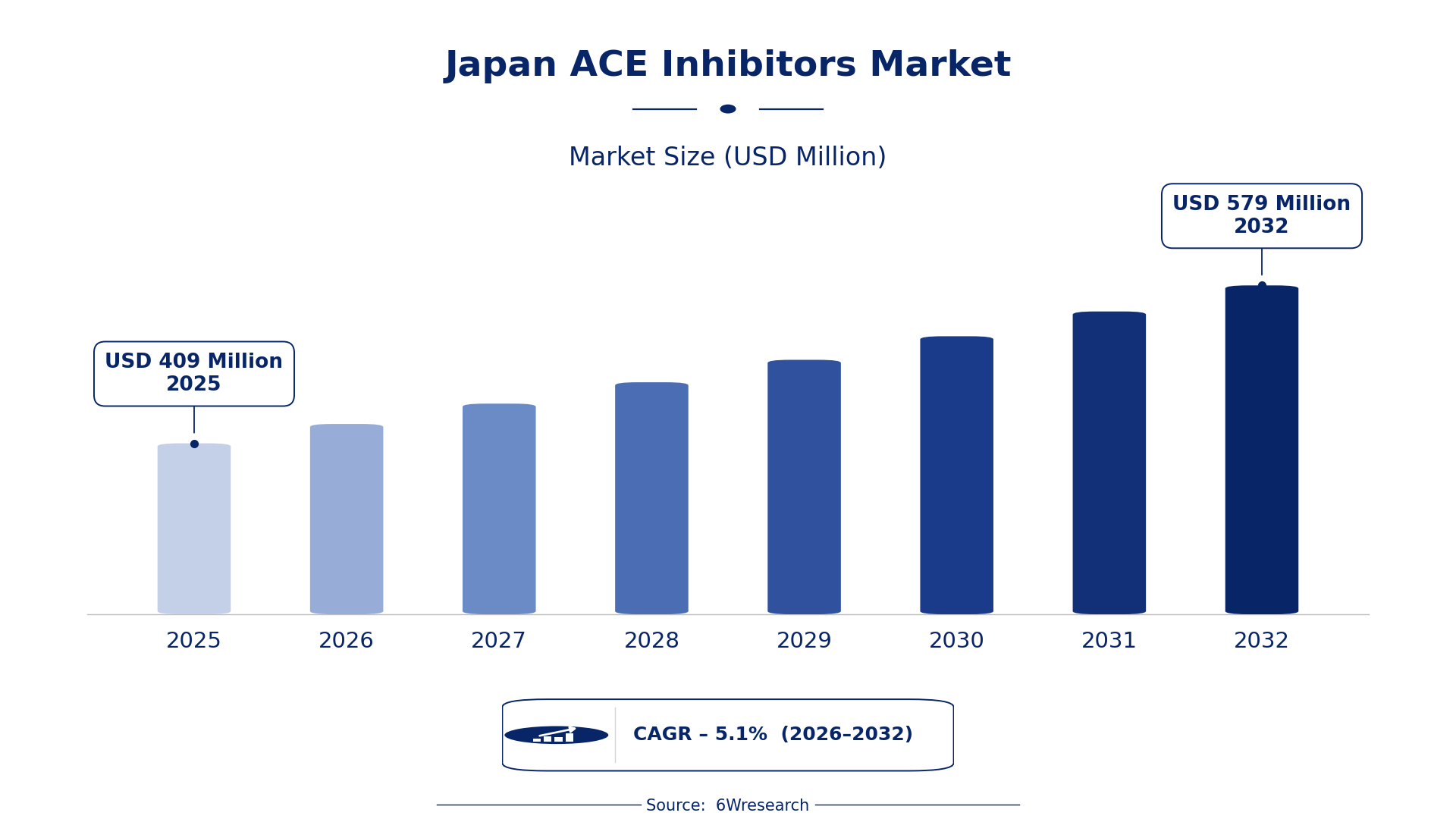
According to 6Wresearch internal database and industry insights, the Japan ACE Inhibitors Market was valued at USD 409 Million in 2025 and is projected to reach USD 579 Million by 2032, growing at a CAGR of approximately 5.1% during 2026–2032.
Japan ACE Inhibitors Market Highlights
| Report Metric | Details |
| Report Name | Japan ACE Inhibitors Market (2026-2032) |
| Market Size 2025 | USD 409 Million |
| Market Size 2032 | USD 579 Million |
| Absolute Growth 2025–2032 | USD 170 Million |
| CAGR 2026–2032 | 5.1% |
| Peak Annual Growth | 5.9% in 2026 |
| Forecast Period | 2026–2032 |
| Historical Data | 2022–2025 |
| Base Year | 2025 |
| Leading Drug Type, 2025 | Lisinopril (41% share) |
| Leading Route of Administration, 2025 | Oral (50% share) |
| Leading Application Area, 2025 | Hypertension (37% share) |
| Leading End User, 2025 | Hospitals (45% share) |
| Leading Distribution Channel, 2025 | Pharmaceutical Distributors (49% share) |
| Fastest-Growing Drug Type | Ramipril (7.1% CAGR) |
| Fastest-Growing Route of Administration | Capsule (6.6% CAGR) |
| Fastest-Growing Application Area | Chronic Kidney Disease (6.1% CAGR) |
| Fastest-Growing End User | Clinics (6.5% CAGR) |
| Fastest-Growing Distribution Channel | Online Pharmacies (7.0% CAGR) |
| Growing Sector | Healthcare |
| Key End Users | Hospitals, Clinics, Pharmacies |
Japan ACE Inhibitors Market Year-wise Growth Rate and Key Drivers (2022–2032)
This graph illustrates the annual growth rates of the market from 2022 to 2032, highlighting a steady upward trajectory and projected market expansion over the forecast period.
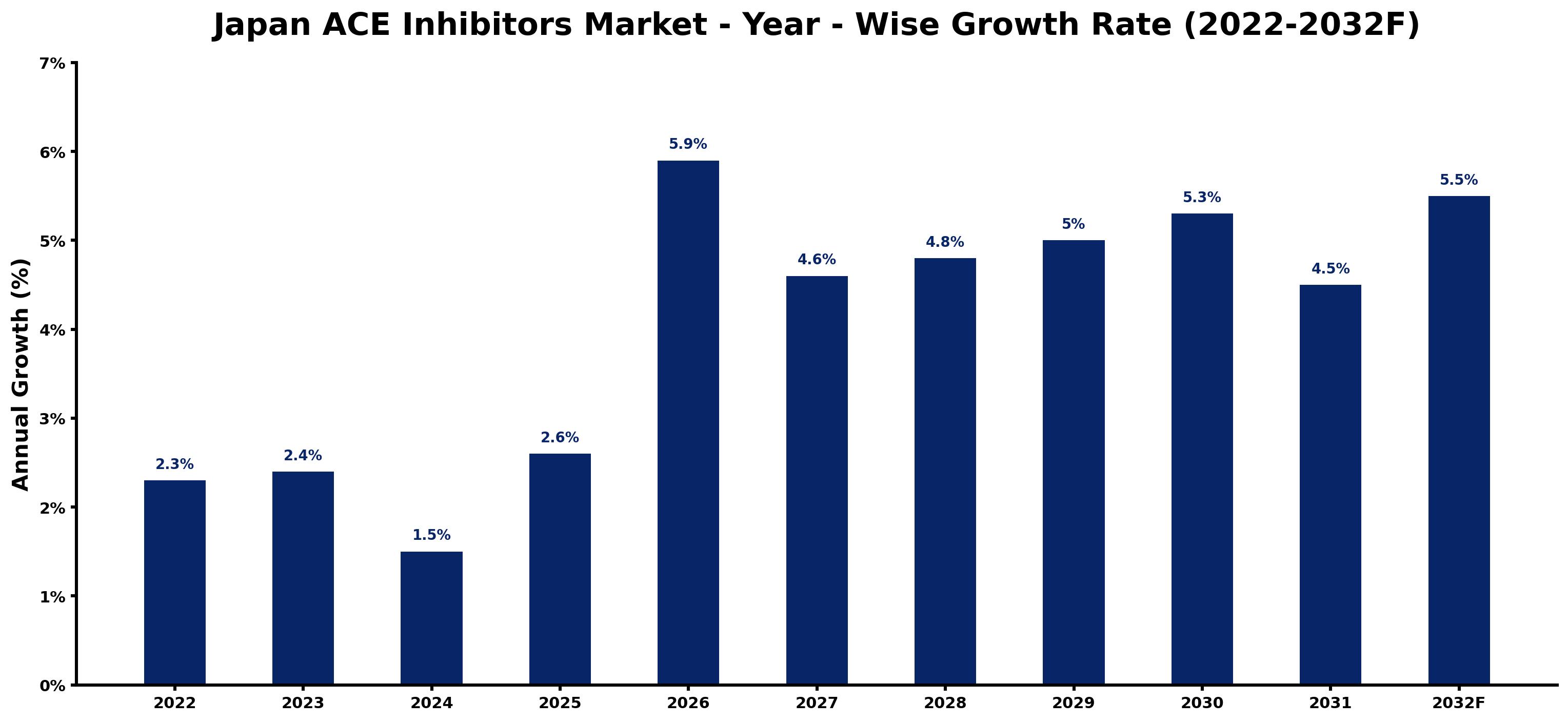
Annual growth estimates for each year appear below with the principal reason behind them, explaining the shifts that set the pace of the market.
| Year | Estimated Annual Growth (%) | Market Rationale |
| 2022 | 2.3 | The prevalence of hypertension among adults drove initial demand for ACE Inhibitors. |
| 2023 | 2.4 | Increased awareness of hypertension management contributed to higher sales of ACE Inhibitors. |
| 2024 | 1.5 | A slight slowdown in growth occurred as competition intensified in the market. |
| 2025 | 2.6 | The introduction of new treatment guidelines boosted the demand for ACE Inhibitors. |
| 2026 | 5.9 | A peak growth rate was reached due to heightened healthcare spending and awareness campaigns. |
| 2027 | 4.6 | Growth slowed as market saturation began to affect new prescriptions for ACE Inhibitors. |
| 2028 | 4.8 | An increase in chronic kidney disease cases led to renewed interest in ACE Inhibitors. |
| 2029 | 5.0 | Demand rose as healthcare providers expanded their treatment options for hypertension. |
| 2030 | 5.3 | The growing elderly population further supported the need for effective hypertension treatments. |
| 2031 | 4.5 | Market growth slowed as the focus shifted to alternative therapies in some cases. |
| 2032 | 5.5 | A resurgence in demand is expected as new guidelines promote ACE Inhibitors for various conditions. |
Note: Market size estimations and growth projections presented in this report are based on 6Wresearch's proprietary forecasting methodology, utilizing the latest available industry data, government publications, and primary research inputs.
Japan ACE Inhibitors Market Synopsis
ACE Inhibitors are medications primarily used to treat hypertension and heart failure by inhibiting the enzyme that converts angiotensin I to angiotensin II. In Japan, the market thrives on a high prevalence of hypertension, with approximately 43% of adults affected. The healthcare sector, particularly hospitals, serves as the main buyer group, while increased awareness campaigns and updated clinical guidelines further drive market growth. The annual healthcare budget exceeds 42 trillion yen, facilitating ongoing investments in hypertension management.
Market Dynamics Impact Analysis (2026–2032)
| Factor | Type | Impact | Primary Segment Affected |
| High prevalence of hypertension among adults drives demand for ACE Inhibitors. | Driver | High | Hypertension |
| Increased healthcare spending enhances access to ACE Inhibitors. | Driver | High | Hospitals |
| Growing elderly population creates a larger patient base for hypertension treatment. | Opportunity | High | Clinics |
| Rising awareness of chronic kidney disease management presents new market avenues. | Opportunity | High | Chronic Kidney Disease |
| Intense competition from alternative therapies may limit market share. | Restraint | Medium | Hypertension |
| Regulatory changes may affect pricing and reimbursement for ACE Inhibitors. | Restraint | Medium | Pharmaceutical Distributors |
| High costs of research and development can delay new product introductions. | Challenge | High | Lisinopril |
| Market saturation may hinder growth for existing ACE Inhibitors. | Challenge | Medium | Hypertension |
Evaluation of Drivers in Japan ACE Inhibitors Market (2026–2032)
Key forces behind demand, with the segment each one moves most, are listed below.
| Drivers | Primary Segment Affected | Why It Matters (Evidence) |
| High prevalence of hypertension leads to increased prescriptions of ACE Inhibitors. | Hypertension | Approximately 43% of adults in Japan are affected by hypertension, driving demand for effective treatments. |
| Rising healthcare expenditure allows for better access to medications. | Hospitals | The annual healthcare budget in Japan exceeds 42 trillion yen, facilitating the purchase of ACE Inhibitors. |
| Awareness campaigns improve understanding of hypertension management. | Clinics | In 2023, a government campaign aimed to improve hypertension awareness among the population. |
| Updated clinical guidelines promote ACE Inhibitors for heart failure management. | Heart Failure | Regular updates by medical associations ensure that ACE Inhibitors remain a recommended treatment option. |
| Increased focus on chronic kidney disease expands the market for ACE Inhibitors. | Chronic Kidney Disease | Diabetic nephropathy affects about 30% of diabetic patients in Japan, creating demand for effective treatments. |
The strongest pull on demand comes from the high prevalence of hypertension, affecting approximately 43% of adults in Japan. This patient base drives healthcare providers to prescribe ACE Inhibitors more frequently. Rising healthcare expenditure, exceeding 42 trillion yen annually, allows better access to these medications in hospitals. Updated clinical guidelines regularly reinforce the importance of ACE Inhibitors in managing heart failure, while the growing focus on chronic kidney disease creates additional opportunities for these medications.
Evaluation of Restraints in Japan ACE Inhibitors Market
These restraints slow adoption and weigh on supplier margins.
| Market Restraint | Primary Segment Affected | Why It Matters (Evidence) |
| Intense competition from alternative therapies limits market share for ACE Inhibitors. | Hypertension | As new treatments emerge, healthcare providers may opt for alternatives, impacting ACE Inhibitor sales. |
| Regulatory changes can affect pricing and reimbursement processes. | Pharmaceutical Distributors | Changes in the NHI drug price standard may lead to reduced profitability for ACE Inhibitors. |
| High costs associated with research and development delay new product introductions. | Lisinopril | Development timelines can hinder the launch of new ACE Inhibitors in the market. |
| Market saturation may limit growth opportunities for existing ACE Inhibitors. | Hypertension | As more patients are treated, the demand for new prescriptions may decline. |
| Increasing focus on alternative treatment options may divert attention from ACE Inhibitors. | Heart Failure | Healthcare providers may explore newer therapies, impacting the growth of ACE Inhibitors. |
Japan ACE Inhibitors Market Challenges
Producers in Japan encounter supply chain disruptions due to reliance on specific raw materials for ACE Inhibitors, resulting in potential delays in medication availability for 43% of adults with hypertension. Technology limitations impede the efficient synthesis of these drugs, causing longer lead times for over 8,000 hospitals needing timely treatment options. Buyers face increased costs as the average price of ACE Inhibitors has risen by 15% over the past three years, straining budgets for essential medications. Skills shortages within the pharmaceutical sector limit innovation and production capacity, delaying the introduction of new treatment options for heart failure patients.
Trends in the Japan ACE Inhibitors Market
Below are the shifts with the largest effect on the Japan ACE Inhibitors Market.
- Launch of National Hypertension Awareness Campaign: In 2023, Japan initiated a campaign to raise awareness about hypertension, targeting the 43% of adults affected. This effort is likely to increase the demand for ACE Inhibitors, as more individuals seek treatment.
- Shift Towards Chronic Kidney Disease Management: The focus on chronic kidney disease management is growing, particularly with diabetic nephropathy affecting about 30% of diabetic patients. This trend will boost the use of ACE Inhibitors in treatment protocols.
- Increased Use of Online Pharmacies: Online pharmacies are becoming more popular for dispensing ACE Inhibitors, with a projected growth rate of 7.0% from 2026 to 2032. This shift allows for greater accessibility for patients seeking these medications.
- Expansion of Clinical Guidelines for Heart Failure: Regular updates to clinical guidelines for heart failure treatment are reinforcing the role of ACE Inhibitors. This ongoing evolution is expected to sustain demand among healthcare providers.
Investment Opportunities in the Japan ACE Inhibitors Market
Where to invest in the Japan ACE Inhibitors Market: the main openings are set out below.
- Growing Demand for Hypertension Treatments: With approximately 43% of adults affected by hypertension, the demand for ACE Inhibitors is substantial. Investing in marketing strategies targeting hospitals can capture this market effectively.
- Expansion in Chronic Kidney Disease Treatment: The increasing prevalence of chronic kidney disease presents a market opportunity for ACE Inhibitors. Collaborating with nephrology clinics in urban areas can facilitate access to this growing patient base.
- Rising Online Pharmacy Market: The online pharmacy sector is expanding rapidly, with a growth rate of 7.0%. Establishing partnerships with online platforms can enhance distribution channels for ACE Inhibitors.
- Emphasis on Patient Education: The growing emphasis on patient education regarding hypertension management creates opportunities for ACE Inhibitors. Engaging with healthcare providers to develop educational materials can drive demand.
Government Initiatives in the Japan ACE Inhibitors Market
The regulatory framework for ACE Inhibitors in Japan is shaped by several key laws, including the Medical Care Act of 1948, which establishes standards for hospitals and clinics, and the NHI drug price standard, which is revised regularly to set reimbursement prices for medications. These laws ensure that ACE Inhibitors are accessible and affordable for patients, facilitating their use in clinical practice.
Healthcare providers benefit from the Clinical Trials Act, which governs the conduct of clinical research and ensures transparency. The PMDA oversees the review of pharmaceuticals, including ACE Inhibitors, ensuring they meet safety and efficacy standards before reaching the market. This regulatory oversight builds confidence among healthcare providers and patients in the use of these medications.
Future Insight of the Japan ACE Inhibitors Market
By 2032, healthcare providers will experience improved access to ACE Inhibitors as advancements in production technology streamline manufacturing processes. Awareness campaigns will drive a 20% increase in hypertension diagnosis, leading to higher demand for effective treatments. The implementation of ISO 9001 standards will ensure better quality control, benefiting suppliers and healthcare providers alike. Collaborative programmes between medical associations and pharmaceutical companies will facilitate the development of new ACE Inhibitors, addressing the specific needs of patients with chronic conditions.
Market Segmentation Analysis
Japan ACE Inhibitors Market report covers a detailed analysis of the following market segments:
By Drug Type – Lisinopril Leads, Ramipril Expected to Grow Fastest
According to Saurav Kr Singh, Senior Research Analyst at 6Wresearch, Lisinopril held 41% of the Japan ACE Inhibitors Market by drug type in 2025. Lisinopril holds the largest share due to its extensive prescription for hypertension treatment, making it a fundamental part of many treatment regimens. Its established presence in both outpatient and inpatient care reinforces its dominant position in the market. Over 2026–2032, Ramipril is expected to post the fastest growth, at a CAGR of 7.1%. Ramipril is experiencing rapid growth thanks to its recognised efficacy in managing chronic kidney disease, which affects a significant portion of the population. The increasing focus on kidney health among healthcare providers is driving its adoption in treatment protocols. Suppliers should focus on promoting Ramipril to capitalise on its rising acceptance in medical practices.
By Route of Administration – Oral Leads, Capsule Expected to Grow Fastest
In 2025, Oral led the route of administration split with a 50% share. The oral route is the primary method for administering ACE Inhibitors, as it is convenient and widely accepted by patients and healthcare providers alike. This method's popularity ensures that oral formulations dominate the market. Capsule is set to record the highest CAGR in this split, 6.6% over 2026–2032. Capsules are gaining traction as a preferred alternative due to their ease of swallowing and patient compliance, particularly among those who may have difficulty with tablets. This trend indicates a shift in patient preferences. Suppliers may need to diversify their product offerings to include capsule formulations to meet changing consumer demands.
By Application Area – Hypertension Leads, Chronic Kidney Disease Expected to Grow Fastest
The largest application area category in 2025 was Hypertension, at 37% of revenue. Hypertension is the leading application area for ACE Inhibitors, driven by the high prevalence of the condition among adults in Japan. The strong focus on hypertension management by healthcare providers solidifies its market dominance. The quickest growth will come from Chronic Kidney Disease, forecast to expand at a CAGR of 6.1% between 2026 and 2032. Chronic kidney disease is emerging as a key area of growth, with increasing recognition of the importance of managing this condition in conjunction with hypertension. This growing focus will likely expand the market for related treatments. Suppliers should consider developing targeted marketing strategies for chronic kidney disease management to tap into this expanding segment.
By End User – Hospitals Lead, Clinics Expected to Grow Fastest
Hospitals took 45% of end user revenue in 2025, more than any other category. Hospitals are the leading end-users of ACE Inhibitors, primarily due to their critical role in treating patients with hypertension and related conditions. The high volume of prescriptions issued in hospital settings underscores their importance in the overall market. Clinics are projected to grow fastest, at a CAGR of 6.5% during 2026–2032. Clinics are rapidly becoming a significant channel for ACE Inhibitors, propelled by the growing emphasis on outpatient care. This shift reflects a broader trend towards more accessible healthcare delivery that prioritises patient convenience. Suppliers need to enhance their distribution strategies to ensure ACE Inhibitors are readily available in clinics, meeting the increasing demand for outpatient treatments.
By Distribution Channel – Pharmaceutical Distributors Lead, Online Pharmacies Expected to Grow Fastest
Pharmaceutical Distributors accounted for 49% of the market by distribution channel in 2025. Pharmaceutical distributors play a crucial role in the supply chain, ensuring that ACE Inhibitors reach healthcare providers efficiently. Their established networks facilitate widespread availability across various healthcare facilities, ensuring consistent access to these essential medications. Over 2026–2032, Online Pharmacies are expected to post the fastest growth, at a CAGR of 7.0%. Online pharmacies are witnessing increased usage as patients seek convenient access to their medications, particularly with the rise of digital health initiatives. This trend indicates a shift in consumer purchasing behaviours towards more accessible channels. Suppliers must adapt their strategies to address the growing importance of online pharmacies, enhancing their digital presence to align with changing consumer preferences.
Key Attractiveness of the Report
- 10 Years of Market Numbers
- Historical Data Starting from 2022 to 2025
- Base Year 2025
- Forecast Data until 2032
- Key Performance Indicators Impacting the Market
- Major Upcoming Developments and Projects
Key Highlights of the Report:
- Japan ACE Inhibitors Market Outlook
- Market Size of Japan ACE Inhibitors Market, 2025
- Forecast of Japan ACE Inhibitors Market, 2032
- Historical Data and Forecast of Japan ACE Inhibitors Revenues & Volume for the Period 2022-2032F
- Japan ACE Inhibitors Market Trend Evolution
- Japan ACE Inhibitors Market Drivers and Challenges
- Japan ACE Inhibitors Price Trends
- Japan ACE Inhibitors Porter's Five Forces
- Japan ACE Inhibitors Industry Life Cycle
- Historical Data and Forecast of Japan ACE Inhibitors Market Revenues & Volume By Drug Type for the Period 2022-2032F
- Historical Data and Forecast of Japan ACE Inhibitors Market Revenues & Volume By Lisinopril for the Period 2022-2032F
- Historical Data and Forecast of Japan ACE Inhibitors Market Revenues & Volume By Enalapril for the Period 2022-2032F
- Historical Data and Forecast of Japan ACE Inhibitors Market Revenues & Volume By Ramipril for the Period 2022-2032F
- Historical Data and Forecast of Japan ACE Inhibitors Market Revenues & Volume By Benazepril for the Period 2022-2032F
- Historical Data and Forecast of Japan ACE Inhibitors Market Revenues & Volume By Route of Administration for the Period 2022-2032F
- Historical Data and Forecast of Japan ACE Inhibitors Market Revenues & Volume By Oral for the Period 2022-2032F
- Historical Data and Forecast of Japan ACE Inhibitors Market Revenues & Volume By Tablet for the Period 2022-2032F
- Historical Data and Forecast of Japan ACE Inhibitors Market Revenues & Volume By Capsule for the Period 2022-2032F
- Historical Data and Forecast of Japan ACE Inhibitors Market Revenues & Volume By Oral for the Period 2022-2032F
- Historical Data and Forecast of Japan ACE Inhibitors Market Revenues & Volume By Application Area for the Period 2022-2032F
- Historical Data and Forecast of Japan ACE Inhibitors Market Revenues & Volume By Hypertension for the Period 2022-2032F
- Historical Data and Forecast of Japan ACE Inhibitors Market Revenues & Volume By Heart Failure for the Period 2022-2032F
- Historical Data and Forecast of Japan ACE Inhibitors Market Revenues & Volume By Chronic Kidney Disease for the Period 2022-2032F
- Historical Data and Forecast of Japan ACE Inhibitors Market Revenues & Volume By Diabetic Nephropathy for the Period 2022-2032F
- Historical Data and Forecast of Japan ACE Inhibitors Market Revenues & Volume By End User for the Period 2022-2032F
- Historical Data and Forecast of Japan ACE Inhibitors Market Revenues & Volume By Hospitals for the Period 2022-2032F
- Historical Data and Forecast of Japan ACE Inhibitors Market Revenues & Volume By Clinics for the Period 2022-2032F
- Historical Data and Forecast of Japan ACE Inhibitors Market Revenues & Volume By Pharmacies for the Period 2022-2032F
- Historical Data and Forecast of Japan ACE Inhibitors Market Revenues & Volume By Cardiology Centers for the Period 2022-2032F
- Historical Data and Forecast of Japan ACE Inhibitors Market Revenues & Volume By Distribution Channel for the Period 2022-2032F
- Historical Data and Forecast of Japan ACE Inhibitors Market Revenues & Volume By Pharmaceutical Distributors for the Period 2022-2032F
- Historical Data and Forecast of Japan ACE Inhibitors Market Revenues & Volume By Direct Sales for the Period 2022-2032F
- Historical Data and Forecast of Japan ACE Inhibitors Market Revenues & Volume By Online Pharmacies for the Period 2022-2032F
- Historical Data and Forecast of Japan ACE Inhibitors Market Revenues & Volume By Retail Stores for the Period 2022-2032F
- Japan ACE Inhibitors Import Export Trade Statistics
- Market Opportunity Assessment By Drug Type
- Market Opportunity Assessment By Route of Administration
- Market Opportunity Assessment By Application Area
- Market Opportunity Assessment By End User
- Market Opportunity Assessment By Distribution Channel
- Japan ACE Inhibitors Top Companies Market Share
- Japan ACE Inhibitors Competitive Benchmarking By Technical and Operational Parameters
- Japan ACE Inhibitors Company Profiles
- Japan ACE Inhibitors Key Strategic Recommendations
Market Covered
Coverage by segment is as follows.
By Drug Type
- Lisinopril
- Enalapril
- Ramipril
- Benazepril
By Route of Administration
- Oral
- Tablet
- Capsule
By Application Area
- Hypertension
- Heart Failure
- Chronic Kidney Disease
- Diabetic Nephropathy
By End User
- Hospitals
- Clinics
- Pharmacies
- Cardiology Centers
By Distribution Channel
- Pharmaceutical Distributors
- Direct Sales
- Online Pharmacies
- Retail Stores































