Japan Acoustic Glazing Market Size & Growth Rate
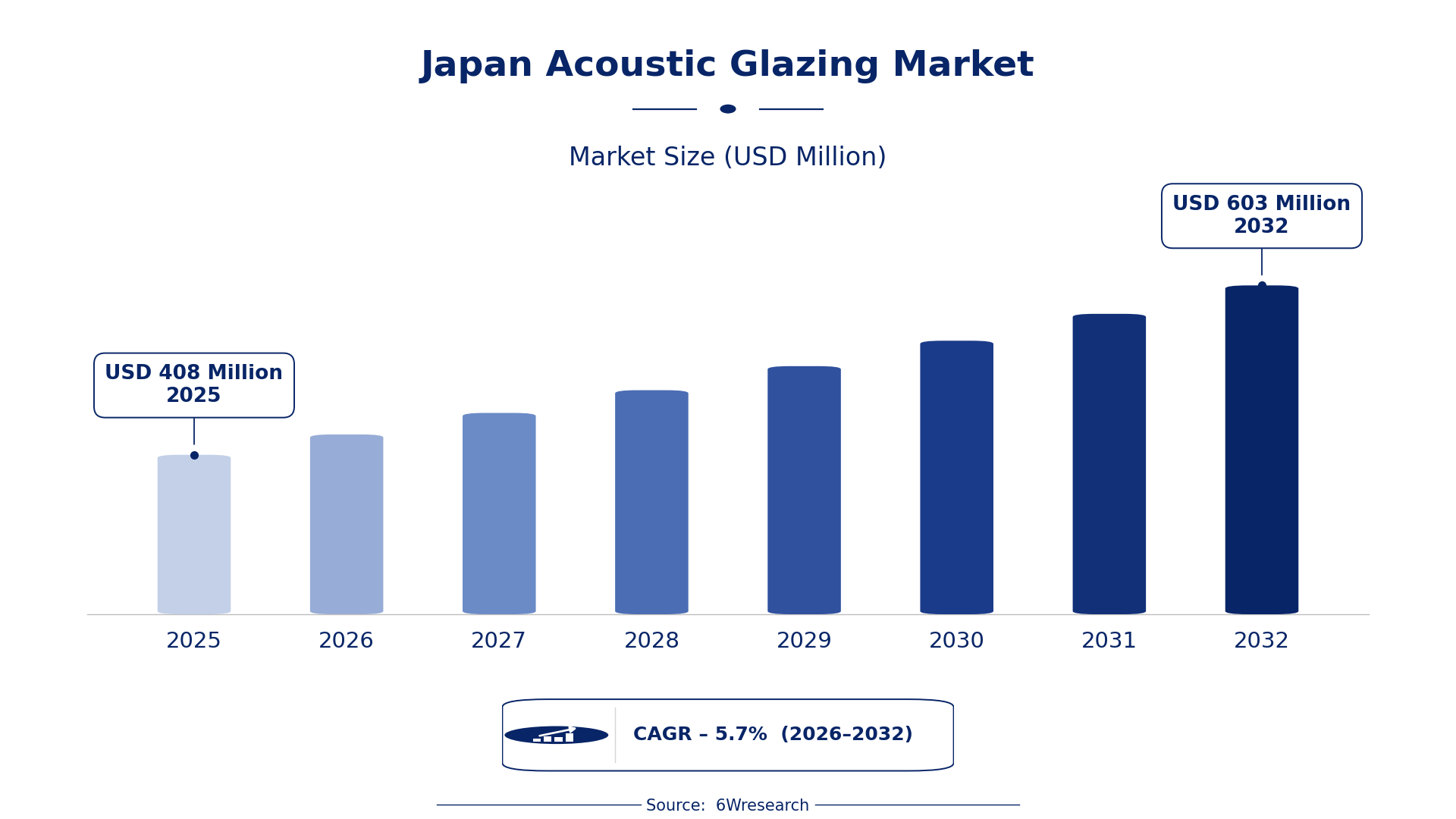
According to 6Wresearch internal database and industry insights, the Japan Acoustic Glazing Market was valued at USD 408 Million in 2025 and is projected to reach USD 603 Million by 2032, growing at a CAGR of approximately 5.7% during 2026–2032.
Japan Acoustic Glazing Market Highlights
| Report Metric | Details |
| Report Name | Japan Acoustic Glazing Market (2026-2032) |
| Market Size 2025 | USD 408 Million |
| Market Size 2032 | USD 603 Million |
| Absolute Growth 2025–2032 | USD 195 Million |
| CAGR 2026–2032 | 5.7% |
| Peak Annual Growth | 7.0% in 2032 |
| Forecast Period | 2026–2032 |
| Historical Data | 2022–2025 |
| Base Year | 2025 |
| Leading Product Type, 2025 | Secondary Glazing (46% share) |
| Leading Glazing Type, 2025 | Single Glazing (53% share) |
| Leading Distribution Channel, 2025 | Direct Sales (38% share) |
| Leading End User Industry, 2025 | Real Estate Developers (38% share) |
| Fastest-Growing Product Type | Triple Glazing (8.1% CAGR) |
| Fastest-Growing Glazing Type | Multi-Layer Glazing (8.2% CAGR) |
| Fastest-Growing Distribution Channel | Online Platforms (7.7% CAGR) |
| Fastest-Growing End User Industry | Commercial Buildings (7.4% CAGR) |
| Growing Sector | Residential and Commercial Construction |
| Key End Users | Real Estate Developers, Hospitality Industry, Commercial Buildings, Office Infrastructure |
Japan Acoustic Glazing Market Year-wise Growth Rate and Key Drivers (2022–2032)
This graph illustrates the annual growth rates of the market from 2022 to 2032, highlighting a steady upward trajectory and projected market expansion over the forecast period.
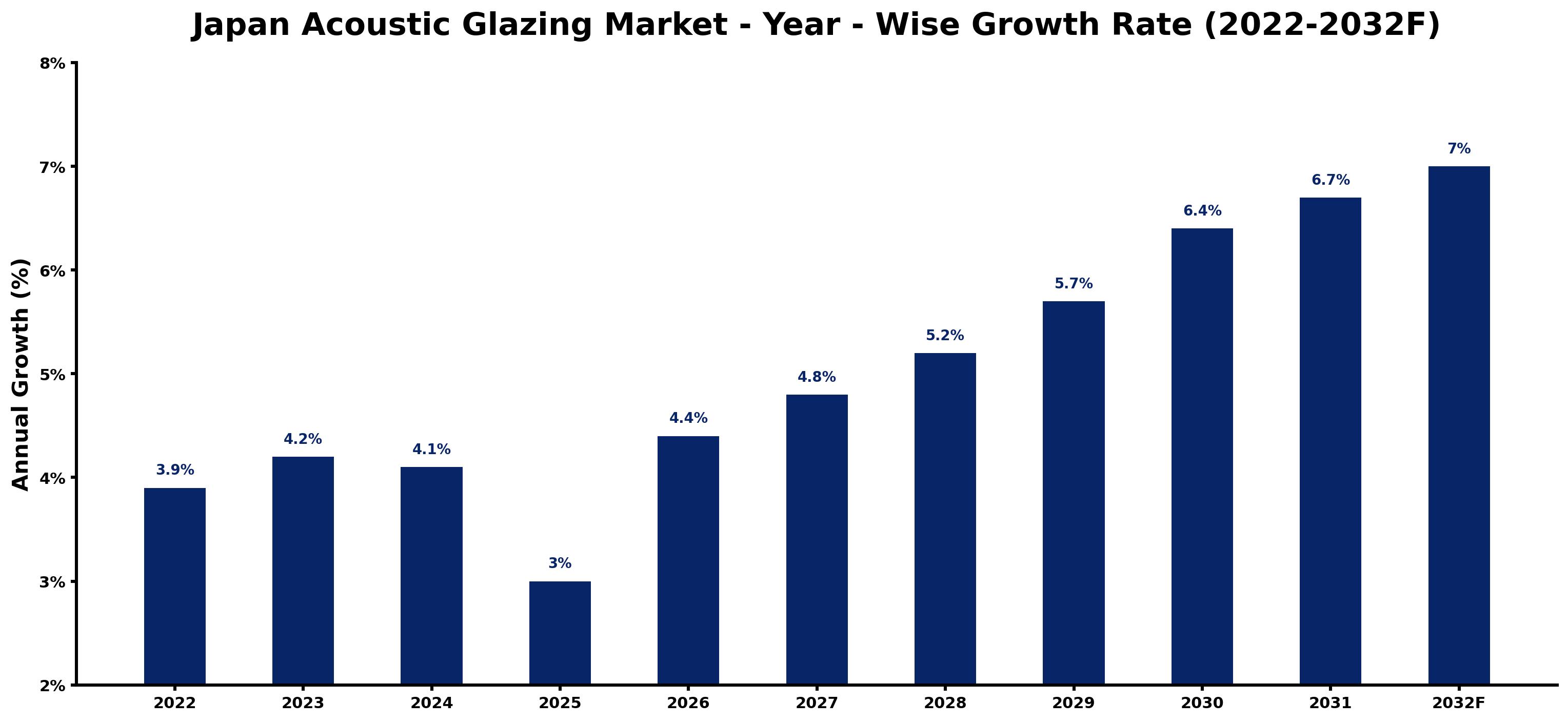
Annual growth estimates for each year appear below with the principal reason behind them, explaining the shifts that set the pace of the market.
| Year | Estimated Annual Growth (%) | Market Rationale |
| 2022 | 3.9 | The market experienced steady growth due to increased urban construction activity. |
| 2023 | 4.2 | Demand accelerated as 60% of new commercial buildings incorporated acoustic glazing. |
| 2024 | 4.1 | Growth slowed slightly as projects faced delays in urban areas. |
| 2025 | 3.0 | Market growth continued to decelerate amid rising material costs. |
| 2026 | 4.4 | Demand is projected to rise with the introduction of new soundproofing standards. |
| 2027 | 4.8 | Growth will increase as luxury apartments adopt triple glazing for enhanced performance. |
| 2028 | 5.2 | The market will maintain momentum with heightened urbanisation and construction. |
| 2029 | 5.7 | Demand is expected to rise as hospitality investments in acoustic solutions grow. |
| 2030 | 6.4 | Growth will strengthen as energy efficiency standards become more stringent. |
| 2031 | 6.7 | The market is expected to expand further with ongoing urban development projects. |
| 2032 | 7.0 | Demand will peak as the market adapts to evolving acoustic regulations. |
Note: Market size estimations and growth projections presented in this report are based on 6Wresearch's proprietary forecasting methodology, utilizing the latest available industry data, government publications, and primary research inputs.
Japan Acoustic Glazing Market Synopsis
Acoustic glazing is a type of glass engineered to reduce noise transmission, typically created by layering different materials. In Japan, this product is prevalent in urban construction, particularly in high-rise buildings. The Japan Acoustic Glazing Market is growing due to rising urban population density, which exceeds 6,000 people per km², alongside government initiatives that promote soundproofing in urban planning, such as measures from the Tokyo Metropolitan Government. Real estate developers are embracing advanced glazing solutions to improve property value and tenant comfort, which is driving market expansion.
Market Dynamics Impact Analysis (2026–2032)
| Factor | Type | Impact | Primary Segment Affected |
| Increased urbanization and high population density drive demand for soundproofing solutions. | Driver | High | Laminated Glazing |
| Growing investments in luxury residential projects create opportunities for advanced glazing solutions. | Opportunity | High | Triple Glazing |
| Rising construction costs may limit the affordability of acoustic glazing installations. | Restraint | High | Insulated Glazing Units |
| The hospitality industry's focus on enhancing guest experiences boosts demand for acoustic solutions. | Driver | Medium | Acoustic Coated |
| Limited awareness of the benefits of acoustic glazing may hinder market growth. | Restraint | Medium | Multi-Layer Glazing |
| Technological advancements in glazing materials present new market opportunities. | Opportunity | Medium | Secondary Glazing |
| Competition from alternative soundproofing materials may challenge market growth. | Challenge | High | Single Glazing |
| Delays in regulatory approvals can slow down project timelines for acoustic installations. | Challenge | Medium | Triple Glazing |
Evaluation of Drivers in Japan Acoustic Glazing Market (2026–2032)
The factors lifting demand, and the evidence behind each, are summarised below.
| Drivers | Primary Segment Affected | Why It Matters (Evidence) |
| Rising urban population density increases demand for effective soundproofing solutions. | Laminated Glazing | In urban areas, demand for noise reduction is critical due to high population density, with over 6,000 people per km². |
| Growing investments in luxury residential projects drive the adoption of advanced glazing solutions. | Triple Glazing | Real estate developers are increasingly incorporating triple glazing to improve property value, particularly in luxury apartments. |
| Government initiatives promoting soundproofing in urban planning stimulate market growth. | Insulated Glazing Units | Local measures encourage the integration of acoustic solutions in new buildings, enhancing compliance with noise regulations. |
| The hospitality industry's focus on creating quiet environments boosts demand for acoustic solutions. | Acoustic Coated | Hotels and restaurants are investing in soundproofing to improve guest experiences, reflecting a growing trend. |
| Technological advancements in glazing materials improve performance and attract buyers. | Multi-Layer Glazing | Innovations in glazing technology lead to better sound insulation and energy efficiency, appealing to various buyers. |
The strongest pull on demand comes from rising urban population density, necessitating effective soundproofing solutions in residential and commercial buildings. In 2022, 60% of new commercial buildings incorporated acoustic glazing, reflecting a growing trend among real estate developers to improve property value. The hospitality industry is increasingly investing in acoustic solutions to create quiet environments for guests, while technological advancements in glazing materials improve performance and attract buyers. These factors collectively contribute to a strong demand for acoustic glazing in Japan's urban environments, particularly in Tokyo and other densely populated areas.
Evaluation of Restraints in Japan Acoustic Glazing Market
The key brakes on demand, and where they bite hardest, are shown below.
| Market Restraint | Primary Segment Affected | Why It Matters (Evidence) |
| Rising construction costs may limit the affordability of acoustic glazing installations. | Insulated Glazing Units | Increased material prices can deter developers from investing in acoustic solutions, raising project costs. |
| Limited awareness of the benefits of acoustic glazing may hinder market growth. | Multi-Layer Glazing | Many potential buyers remain unaware of the advantages of advanced glazing technologies, affecting adoption rates. |
| Competition from alternative soundproofing materials may challenge market growth. | Single Glazing | Alternative solutions may offer lower costs, affecting the adoption of acoustic glazing in various projects. |
| Delays in regulatory approvals can slow down project timelines for acoustic installations. | Triple Glazing | Prolonged approval processes can lead to project delays, impacting demand for acoustic solutions. |
| Economic fluctuations may affect construction budgets and investments in acoustic solutions. | Laminated Glazing | Budget constraints during economic downturns can limit spending on soundproofing measures. |
Japan Acoustic Glazing Market Challenges
Regulatory requirements for acoustic glazing are strict due to urban noise reduction policies, causing project approval delays that cost real estate developers an average of 15% in additional time for new constructions. Supply chain issues arise from reliance on specific materials, particularly laminated glass, which can postpone installations by up to three months for contractors. Rising raw material costs, influenced by global market trends, can inflate project budgets by 10% for builders. Skills shortages in specialised installation techniques hinder progress, leading to a 20% increase in labour costs for contractors.
Trends in the Japan Acoustic Glazing Market
Below are the shifts with the largest effect on the Japan Acoustic Glazing Market.
- Shift in Urban Construction Practices: The Tokyo Metropolitan Government's promotion of soundproofing measures is transforming urban construction, with 60% of new commercial buildings now featuring acoustic glazing. This trend reflects a growing awareness of the necessity for noise control in urban settings.
- Rising Adoption of Triple Glazing: In 2023, real estate developers are increasingly opting for triple glazing in luxury apartments, indicating a shift towards superior thermal and acoustic performance. This segment is expected to expand as demand for high-end residential solutions grows.
- Increased Investment in Hospitality Soundproofing: The hospitality sector is making substantial investments in acoustic solutions to enhance guest experiences, with numerous significant projects underway in urban locations. This trend is apparent as hotels and restaurants focus on soundproofing to draw in more customers and improve overall satisfaction.
- Growing Demand for Multi-Layer Glazing: Multi-layer glazing is becoming more popular in urban areas, driven by the need for effective noise reduction in densely populated locations. This trend is likely to persist as urbanisation continues, leading to heightened demand for advanced glazing solutions.
Investment Opportunities in the Japan Acoustic Glazing Market
The openings below show where demand in the Japan Acoustic Glazing Market is visible and how suppliers can enter.
- Investment in Acoustic Coated Solutions: Acoustic coated products represent a promising opportunity, with the hospitality industry increasingly pursuing soundproofing solutions. In 2023, investments in this sector are anticipated to increase as hotels strive to enhance guest comfort and satisfaction.
- Supply of Triple Glazing for Luxury Developments: There is a rising opportunity to supply triple glazing for luxury residential projects. Real estate developers are actively seeking advanced solutions to satisfy high-end market demands, particularly in urban settings.
- Expansion of Secondary Glazing for Retrofitting: Secondary glazing is being more frequently used for retrofitting existing windows, creating a market gap. The ageing building stock in urban areas offers a prime opportunity for suppliers to effectively address sound insulation requirements.
- Partnerships in Commercial Building Projects: Collaborating with construction firms on commercial building projects provides a pathway to enter the market. The average installed base of acoustic glazing in commercial buildings is estimated at 30%, indicating considerable potential for growth.
Government Initiatives in the Japan Acoustic Glazing Market
The latest measure, the Building Energy Efficiency Act (2015, amended 2022), requires that all new buildings comply with energy standards starting April 2025, supporting the acoustic glazing market by ensuring adherence to soundproofing regulations. This builds on earlier legislation that promoted energy efficiency and noise reduction in construction, improving overall building performance.
Real estate developers are leveraging the Digital Agency's initiatives to expedite project approvals, ensuring compliance with soundproofing standards. This agency manages the implementation of digital transformation in government processes, facilitating smoother interactions for buyers in the acoustic glazing market, with an emphasis on reducing approval times.
Future Insight of the Japan Acoustic Glazing Market
New soundproofing initiatives for public buildings are set to emerge by 2032, backed by government funding. The Tokyo Metropolitan Government's urban planning will integrate advanced acoustic solutions to enhance residential comfort. By 2032, the average installed base of acoustic glazing in commercial buildings is projected to reach 30% in urban areas, as the demand for effective noise reduction increases in densely populated environments. Real estate developers will continue to adopt innovative glazing technologies to address evolving market needs.
Market Segmentation Analysis
Japan Acoustic Glazing Market report covers a detailed analysis of the following market segments:
By Product Type – Secondary Glazing Leads, Triple Glazing Expected to Grow Fastest
According to Saurav Kr Singh, Senior Research Analyst at 6Wresearch, Secondary Glazing accounted for 46% of the market by product type in 2025. Secondary glazing commands the largest share due to its prevalent use in retrofitting existing windows, particularly in urban areas where noise pollution is a concern. This method is often employed by developers looking to enhance sound insulation in older buildings, especially in high-density regions like Tokyo. Over 2026–2032, Triple Glazing is expected to post the fastest growth, at a CAGR of 8.1%. Triple glazing is rapidly gaining traction as it offers superior thermal and acoustic performance, making it highly desirable for new construction projects. The government's support for soundproofing initiatives, especially in luxury residential developments, is a significant driver of this growth. Suppliers should focus on expanding their triple glazing product lines to meet the rising demand in the market.
By Glazing Type – Single Glazing Leads, Multi-Layer Glazing Expected to Grow Fastest
With 53% of glazing type revenue in 2025, Single Glazing was the largest category. Single glazing retains a notable share, primarily due to its historical usage, despite its limited sound insulation effectiveness. It remains in use in certain older buildings where upgrades are not feasible, particularly in less densely populated areas. The quickest growth will come from Multi-Layer Glazing, forecast to expand at a CAGR of 8.2% between 2026 and 2032. Multi-layer glazing is witnessing swift growth as it effectively reduces noise in urban environments, where the demand for soundproofing is critical. The increasing population density in cities necessitates enhanced acoustic solutions, propelling this segment's expansion. Buyers should consider multi-layer glazing to significantly improve soundproofing in urban developments.
By Distribution Channel – Direct Sales Leads, Online Platforms Expected to Grow Fastest
Direct Sales held 38% of the Japan Acoustic Glazing Market by distribution channel in 2025. Direct sales are the leading distribution channel, serving as a vital link to construction firms and developers who require customised solutions for their projects. This approach is crucial for suppliers aiming to establish strong connections within the industry. Online Platforms are set to record the highest CAGR in this split, 7.7% over 2026–2032. Online platforms are becoming more popular as they provide a convenient purchasing option for consumers, although their application remains limited for larger projects. The shift towards digital purchasing is expected to continue as consumers seek easier access to products. Suppliers should enhance their online presence to capture the growing consumer market.
By End User Industry – Real Estate Developers Lead, Commercial Buildings Expected to Grow Fastest
Real Estate Developers took 38% of end user industry revenue in 2025, more than any other category. Real estate developers represent the largest segment as they are the primary consumers of acoustic glazing in new construction projects. Their focus on soundproofing in both residential and commercial developments drives substantial demand for these products. Commercial Buildings are projected to grow fastest, at a CAGR of 7.4% during 2026–2032. Commercial buildings are experiencing the fastest growth in acoustic glazing adoption, largely due to the increasing need for noise reduction in office spaces. The demand for quieter work environments is propelling this segment's advancement. Suppliers should target commercial building projects to capitalise on this growing demand.
Key Attractiveness of the Report
- 10 Years of Market Numbers
- Historical Data Starting from 2022 to 2025
- Base Year 2025
- Forecast Data until 2032
- Key Performance Indicators Impacting the Market
- Major Upcoming Developments and Projects
Key Highlights of the Report:
- Japan Acoustic Glazing Market Outlook
- Market Size of Japan Acoustic Glazing Market, 2025
- Forecast of Japan Acoustic Glazing Market, 2032
- Historical Data and Forecast of Japan Acoustic Glazing Revenues & Volume for the Period 2022-2032F
- Japan Acoustic Glazing Market Trend Evolution
- Japan Acoustic Glazing Market Drivers and Challenges
- Japan Acoustic Glazing Price Trends
- Japan Acoustic Glazing Porter's Five Forces
- Japan Acoustic Glazing Industry Life Cycle
- Historical Data and Forecast of Japan Acoustic Glazing Market Revenues & Volume By Product Type for the Period 2022-2032F
- Historical Data and Forecast of Japan Acoustic Glazing Market Revenues & Volume By Secondary Glazing for the Period 2022-2032F
- Historical Data and Forecast of Japan Acoustic Glazing Market Revenues & Volume By Triple Glazing for the Period 2022-2032F
- Historical Data and Forecast of Japan Acoustic Glazing Market Revenues & Volume By Laminated Glazing for the Period 2022-2032F
- Historical Data and Forecast of Japan Acoustic Glazing Market Revenues & Volume By Insulated Glazing Units for the Period 2022-2032F
- Historical Data and Forecast of Japan Acoustic Glazing Market Revenues & Volume By Glazing Type for the Period 2022-2032F
- Historical Data and Forecast of Japan Acoustic Glazing Market Revenues & Volume By Single Glazing for the Period 2022-2032F
- Historical Data and Forecast of Japan Acoustic Glazing Market Revenues & Volume By Multi-Layer Glazing for the Period 2022-2032F
- Historical Data and Forecast of Japan Acoustic Glazing Market Revenues & Volume By Low-E Glass for the Period 2022-2032F
- Historical Data and Forecast of Japan Acoustic Glazing Market Revenues & Volume By Acoustic Coated for the Period 2022-2032F
- Historical Data and Forecast of Japan Acoustic Glazing Market Revenues & Volume By Distribution Channel for the Period 2022-2032F
- Historical Data and Forecast of Japan Acoustic Glazing Market Revenues & Volume By Direct Sales for the Period 2022-2032F
- Historical Data and Forecast of Japan Acoustic Glazing Market Revenues & Volume By Online Platforms for the Period 2022-2032F
- Historical Data and Forecast of Japan Acoustic Glazing Market Revenues & Volume By Industrial Suppliers for the Period 2022-2032F
- Historical Data and Forecast of Japan Acoustic Glazing Market Revenues & Volume By Specialty Stores for the Period 2022-2032F
- Historical Data and Forecast of Japan Acoustic Glazing Market Revenues & Volume By End User Industry for the Period 2022-2032F
- Historical Data and Forecast of Japan Acoustic Glazing Market Revenues & Volume By Real Estate Developers for the Period 2022-2032F
- Historical Data and Forecast of Japan Acoustic Glazing Market Revenues & Volume By Commercial Buildings for the Period 2022-2032F
- Historical Data and Forecast of Japan Acoustic Glazing Market Revenues & Volume By Office Infrastructure for the Period 2022-2032F
- Historical Data and Forecast of Japan Acoustic Glazing Market Revenues & Volume By Hospitality Industry for the Period 2022-2032F
- Japan Acoustic Glazing Import Export Trade Statistics
- Market Opportunity Assessment By Product Type
- Market Opportunity Assessment By Glazing Type
- Market Opportunity Assessment By Distribution Channel
- Market Opportunity Assessment By End User Industry
- Japan Acoustic Glazing Top Companies Market Share
- Japan Acoustic Glazing Competitive Benchmarking By Technical and Operational Parameters
- Japan Acoustic Glazing Company Profiles
- Japan Acoustic Glazing Key Strategic Recommendations
Market Covered
The study includes the following segmentation.
By Product Type
- Secondary Glazing
- Triple Glazing
- Laminated Glazing
- Insulated Glazing Units
By Glazing Type
- Single Glazing
- Multi-Layer Glazing
- Low-E Glass
- Acoustic Coated
By Distribution Channel
- Direct Sales
- Online Platforms
- Industrial Suppliers
- Specialty Stores
By End User Industry
- Real Estate Developers
- Commercial Buildings
- Office Infrastructure
- Hospitality Industry































