Japan Agricultural Antibiotics Alternatives Market Size & Growth Rate
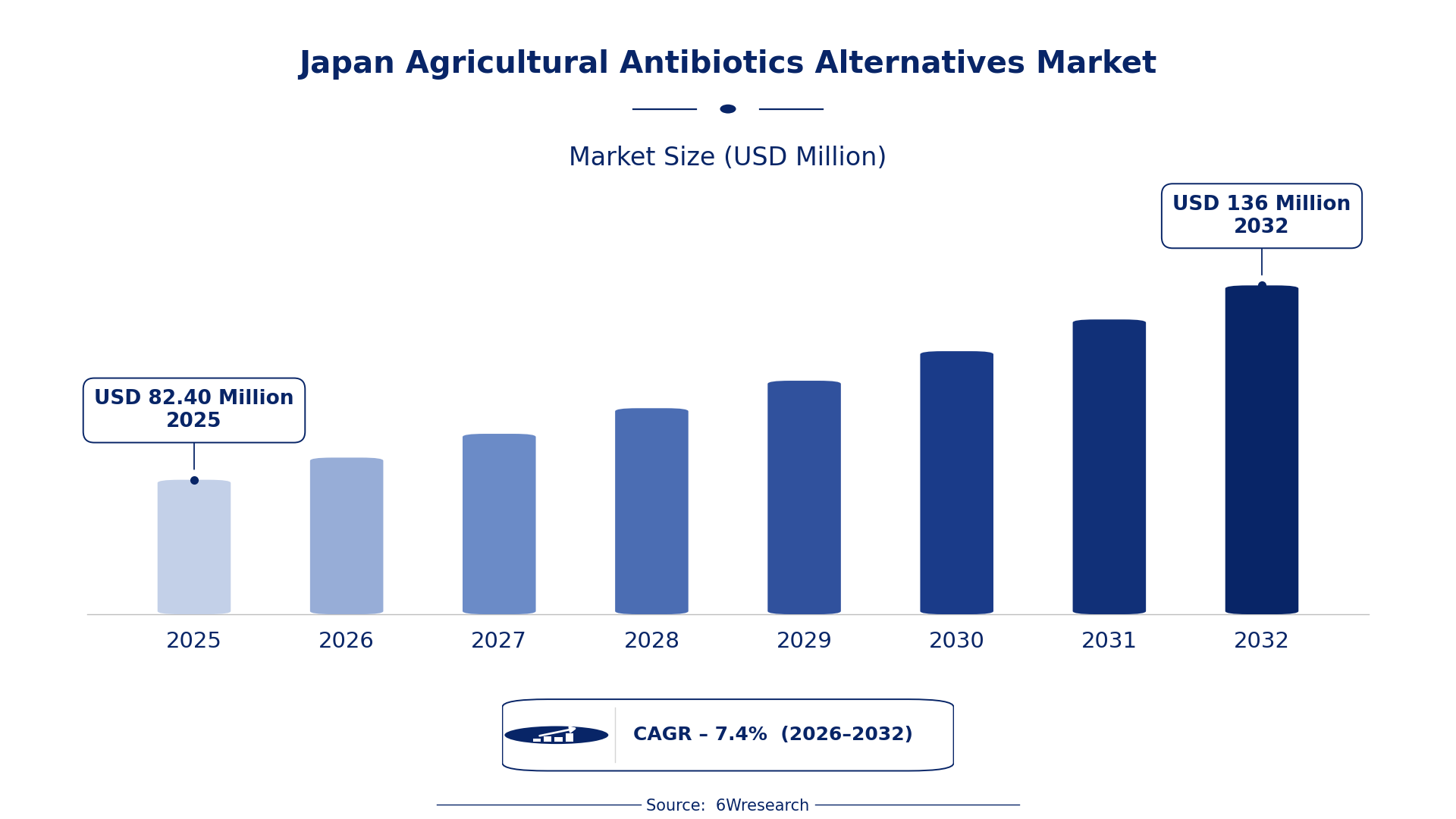
According to 6Wresearch internal database and industry insights, the Japan Agricultural Antibiotics Alternatives Market was valued at USD 82.40 Million in 2025 and is projected to reach USD 136 Million by 2032, growing at a CAGR of approximately 7.4% during 2026–2032.
Japan Agricultural Antibiotics Alternatives Market Highlights
| Report Metric | Details |
| Report Name | Japan Agricultural Antibiotics Alternatives Market (2026-2032) |
| Market Size 2025 | USD 82.40 Million |
| Market Size 2032 | USD 136 Million |
| Absolute Growth 2025–2032 | USD 53.60 Million |
| CAGR 2026–2032 | 7.4% |
| Peak Annual Growth | 8.2% in 2028 |
| Forecast Period | 2026–2032 |
| Historical Data | 2022–2025 |
| Base Year | 2025 |
| Leading Agricultural Antibiotics Alternatives Market, 2025 | Probiotics (55% share) |
| Leading Product Type, 2025 | Poultry (37% share) |
| Leading Livestock Type, 2025 | Direct Sales (44% share) |
| Leading Distribution Channel, 2025 | Livestock Farmers (40% share) |
| Fastest-Growing Agricultural Antibiotics Alternatives Market | Phytogenic Feed Additives (10.0% CAGR) |
| Fastest-Growing Product Type | Cattle (10.3% CAGR) |
| Fastest-Growing Livestock Type | Veterinary Suppliers (10.7% CAGR) |
| Fastest-Growing Distribution Channel | Animal Health Clinics (9.2% CAGR) |
| Growing Sector | aquaculture |
| Key End Users | livestock farmers, veterinary suppliers, animal health clinics |
Japan Agricultural Antibiotics Alternatives Market Year-wise Growth Rate and Key Drivers (2022–2032)
This graph illustrates the annual growth rates of the market from 2022 to 2032, highlighting a steady upward trajectory and projected market expansion over the forecast period.
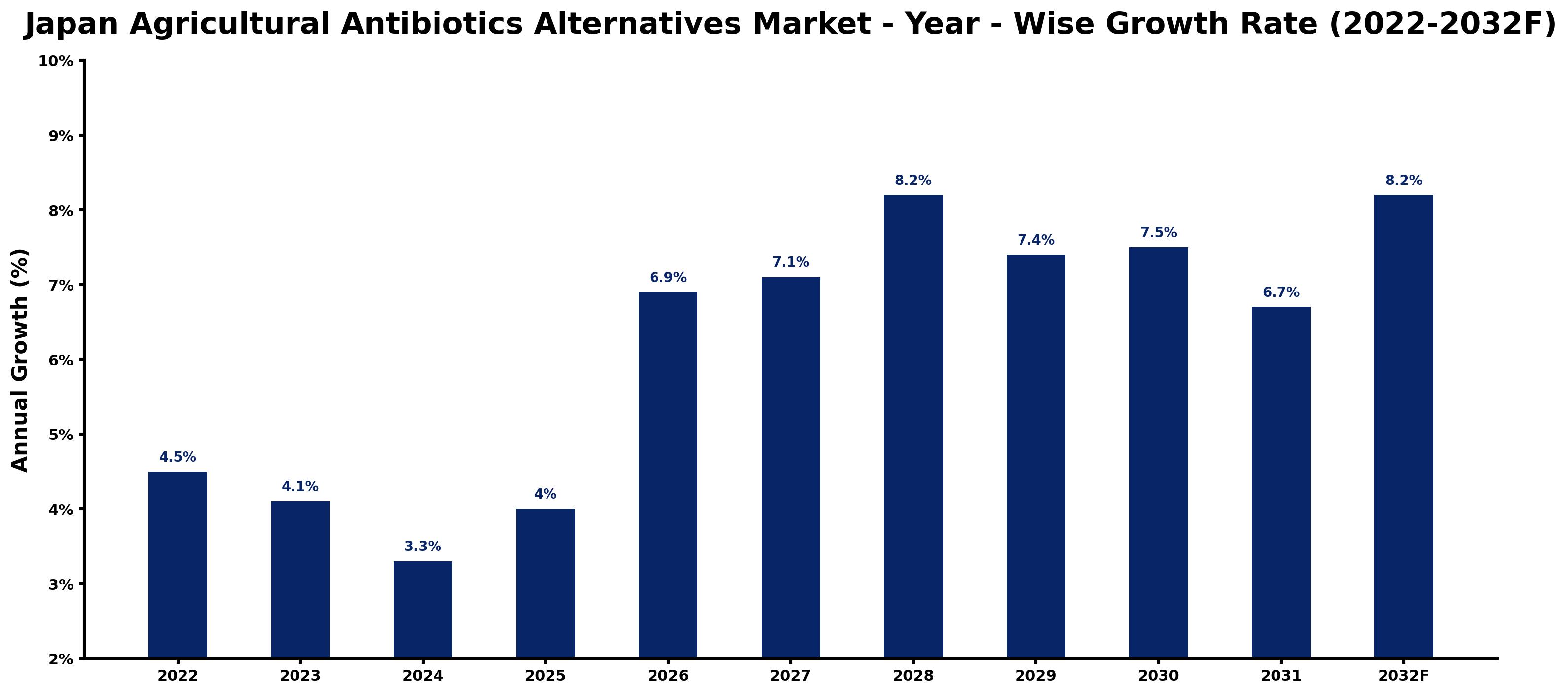
For each year, the table pairs the estimated growth rate with the leading influence on demand, showing how the drivers changed across the period.
| Year | Estimated Annual Growth (%) | Market Rationale |
| 2022 | 4.5 | The market experienced strong growth due to increased awareness of antibiotic resistance among farmers. |
| 2023 | 4.1 | Growth slowed as producers adjusted to new regulations in livestock management practices. |
| 2024 | 3.3 | The market continued to slow as farmers sought more cost-effective alternatives for livestock health. |
| 2025 | 4.0 | Demand increased as poultry production expanded significantly in Japan, reaching 1.5 million tons. |
| 2026 | 6.9 | Growth is expected to accelerate with rising investments in sustainable farming practices and technologies. |
| 2027 | 7.1 | The market will grow further as more livestock farmers adopt alternatives for better health outcomes. |
| 2028 | 8.2 | The peak growth will be driven by heightened awareness of animal health and welfare standards. |
| 2029 | 7.4 | Growth is projected to slow as market saturation begins to affect demand levels for alternatives. |
| 2030 | 7.5 | Demand will increase again as technological advancements improve the efficacy of alternatives. |
| 2031 | 6.7 | The market will experience a slowdown as competition intensifies among suppliers of alternatives. |
| 2032 | 8.2 | Growth is expected to accelerate again with renewed focus on sustainable aquaculture practices and regulations. |
Note: Market size estimations and growth projections presented in this report are based on 6Wresearch's proprietary forecasting methodology, utilizing the latest available industry data, government publications, and primary research inputs.
Japan Agricultural Antibiotics Alternatives Market Synopsis
Agricultural Antibiotics Alternatives consist of natural substances sourced from plants and microorganisms that promote animal health and growth while decreasing dependence on traditional antibiotics. The Japan Agricultural Antibiotics Alternatives Market is experiencing growth, propelled by poultry production of 1.5 million tons in 2022 and a burgeoning aquaculture sector that produced 600,000 tons of seafood. This expansion is attributed to the rising adoption of probiotics, with a 30% increase in usage reported by animal health clinics over the past five years, alongside a commitment to sustainable farming practices.
Market Dynamics Impact Analysis (2026–2032)
| Factor | Type | Impact | Primary Segment Affected |
| Rising poultry production drives demand for alternatives in feed. | Driver | High | Poultry |
| Growing awareness of antibiotic resistance boosts the use of probiotics. | Driver | High | Probiotics |
| Increasing demand for sustainable practices creates opportunities for phytogenic additives. | Opportunity | High | Phytogenic Feed Additives |
| The aquaculture sector's growth presents a need for organic acids. | Opportunity | Medium | Organic Acids |
| High costs of alternatives may limit farmer adoption rates. | Restraint | High | Enzymes & Bacteriophages |
| Limited awareness of benefits restricts market growth in certain regions. | Restraint | Medium | Probiotics |
| Competition from traditional antibiotics poses a challenge for alternatives. | Challenge | High | Livestock Farmers |
| Regulatory hurdles can delay product approvals and market entry. | Challenge | Medium | Veterinary Suppliers |
Evaluation of Drivers in Japan Agricultural Antibiotics Alternatives Market (2026–2032)
Demand rests on the following drivers, each shown with the segment it touches most.
| Drivers | Primary Segment Affected | Why It Matters (Evidence) |
| Increased poultry production drives demand for alternatives in feed. | Poultry | Japan's poultry production reached 1.5 million tons in 2022, leading to higher purchases of alternatives. |
| Growing awareness of antibiotic resistance boosts the use of probiotics. | Probiotics | Probiotics are utilized in over 70% of livestock farms, increasing their demand. |
| The aquaculture sector's growth enhances the need for organic acids. | Organic Acids | The aquaculture sector produced 600,000 tons of seafood in 2022, driving demand for alternatives. |
| Rising investments in sustainable farming practices support market growth. | Phytogenic Feed Additives | The market for phytogenic feed additives is projected to grow by 15% by 2025. |
| Animal health clinics report increased usage of alternatives. | Enzymes & Bacteriophages | A 30% increase in the use of alternatives has been reported by animal health clinics. |
Buyers are adding capacity as Japan's poultry production reached 1.5 million tons in 2022, which leads to increased purchases of Agricultural Antibiotics Alternatives. The aquaculture sector's growth, producing 600,000 tons of seafood, drives the need for organic acids in feed. Investments in sustainable farming practices support the market for phytogenic feed additives, projected to grow by 15% by 2025. Animal health clinics report a notable increase in the use of alternatives, encouraging livestock farmers to adopt these products for better health outcomes and productivity.
Evaluation of Restraints in Japan Agricultural Antibiotics Alternatives Market
Below are the constraints most often cited by buyers and suppliers, with the segment each affects.
| Market Restraint | Primary Segment Affected | Why It Matters (Evidence) |
| High costs of alternatives may limit farmer adoption rates. | Enzymes & Bacteriophages | The livestock feed industry is valued at ¥1 trillion, making alternatives a considerable investment for farmers. |
| Limited awareness of benefits restricts market growth in certain regions. | Probiotics | Many farmers are unaware of the advantages of using alternatives, hindering their adoption rates. |
| Competition from traditional antibiotics poses a challenge for alternatives. | Livestock Farmers | Traditional antibiotics remain cheaper and more familiar to many farmers, affecting their choices. |
| Regulatory hurdles can delay product approvals and market entry. | Veterinary Suppliers | Strict regulations can prolong the time it takes to bring new alternatives to market, impacting supply. |
| Market saturation may slow growth as more producers enter the field. | Phytogenic Feed Additives | As more companies offer alternatives, competition increases, affecting pricing and margins for suppliers. |
Japan Agricultural Antibiotics Alternatives Market Challenges
The primary challenge in the Agricultural Antibiotics Alternatives market is the slow adoption of new technologies. Many livestock farms continue to rely on traditional methods, hindering the integration of effective solutions. High production costs also limit widespread adoption; alternatives can be 20% more expensive than conventional additives, affecting farmers' profitability. Intense competition from established antibiotics creates hesitation among producers to switch, as they fear losing market share. Regulatory hurdles complicate the process, with strict guidelines on product approval resulting in delays of up to two years for new solutions, impacting suppliers' ability to meet market demand.
Trends in the Japan Agricultural Antibiotics Alternatives Market
Four trends stand out in the Japan Agricultural Antibiotics Alternatives Market.
- Shift towards Sustainable Aquaculture Practices: Japan's aquaculture sector is increasingly embracing alternatives to reduce antibiotic use, in line with government policies. In 2022, the sector produced 600,000 tons of seafood, highlighting this movement towards sustainability.
- Growing Use of Probiotics in Livestock: Probiotics are becoming standard in livestock health management, with over 70% of farms incorporating them. This trend promotes better gut health and productivity in livestock, improving overall farm efficiency.
- Increased Adoption of Phytogenic Feed Additives: The market for phytogenic feed additives is gaining momentum, with a projected growth of 15% by 2025. This trend is apparent among livestock farmers seeking sustainable feed options to enhance animal health.
- Rising Demand for Organic Acids in Aquaculture: Organic acids are increasingly employed in aquaculture for disease control and preservation. This trend is driven by the need for sustainable practices in fish farming, promoting healthier seafood production.
Investment Opportunities in the Japan Agricultural Antibiotics Alternatives Market
Below are the investment opportunities with the strongest case in the Japan Agricultural Antibiotics Alternatives Market.
- Growing Demand for Probiotics: With over 70% of livestock farms utilising probiotics, there is an opportunity to expand offerings in this segment. The livestock feed industry, valued at ¥1 trillion, indicates substantial market potential for suppliers.
- Investment in Phytogenic Feed Additives: The anticipated 15% growth in phytogenic feed additives presents an opportunity for suppliers to meet rising demand. Livestock farmers are increasingly seeking these alternatives to improve feed quality.
- Expansion in Aquaculture Alternatives: The aquaculture sector's production of 600,000 tons of seafood in 2022 generates a need for organic acids. Suppliers can penetrate this market by collaborating with local fisheries to provide effective solutions.
- Veterinary Suppliers Expanding Offerings: Veterinary suppliers are responding to farmer demand for alternatives, with a 30% increase in usage reported. This creates an opportunity for new product development and distribution in the livestock sector.
Government Initiatives in the Japan Agricultural Antibiotics Alternatives Market
The Organic JAS certification standard encourages organic farming practices and builds on previous laws aimed at enhancing agricultural sustainability. This initiative motivates more farmers to adopt Agricultural Antibiotics Alternatives, improving their credibility and market acceptance.
The Japan Agency for Medical Research and Development (AMED) allocates ¥500 million in 2023 for research on feed alternatives, supporting innovation in the sector and ensuring quality standards for Agricultural Antibiotics Alternatives.
Future Insight of the Japan Agricultural Antibiotics Alternatives Market
The launch of government-funded research programmes will stimulate the development of feed alternatives by 2032. The Ministry of Agriculture, Forestry and Fisheries has allocated ¥500 million for research in 2023, promoting innovation in this sector. The implementation of the Organic JAS certification standard will encourage more farmers to transition to organic options. As the livestock feed industry expands, buyers will benefit from improved animal productivity and health outcomes, with probiotics used in over 70% of livestock farms enhancing gut health.
Market Segmentation Analysis
Japan Agricultural Antibiotics Alternatives Market report covers a detailed analysis of the following market segments:
By Agricultural Antibiotics Alternatives Market – Probiotics Lead, Phytogenic Feed Additives Expected to Grow Fastest
According to Vasu Joshi, Associate Consultant at 6Wresearch, Probiotics took 55% of agricultural antibiotics alternatives market revenue in 2025, more than any other category. Probiotics dominate the market due to their use in over 70% of livestock farms in Japan, highlighting their essential role in promoting animal health. This widespread adoption is particularly evident in poultry and cattle farming, where gut health is crucial for productivity. Over 2026–2032, Phytogenic Feed Additives are expected to post the fastest growth, at a CAGR of 10.0%. Phytogenic feed additives are projected to grow at a rapid pace, with a 15% increase expected by 2025 as farmers increasingly recognise the benefits of sustainable practices. Their plant-based nature enhances feed quality, making them an attractive option for those seeking natural solutions. Suppliers must develop effective phytogenic solutions to leverage this growth opportunity.
By Product Type – Poultry Leads, Cattle Expected to Grow Fastest
The largest product type category in 2025 was Poultry, at 37% of revenue. Poultry represents the largest segment, with production reaching 1.5 million tons in 2022, indicating a strong demand for alternatives in this sector. This high production volume underscores the market's reliance on agricultural antibiotics alternatives tailored for poultry. Cattle is projected to grow fastest, at a CAGR of 10.3% during 2026–2032. Cattle is the fastest-growing segment, driven by the increasing incorporation of alternatives in cattle feed, supported by a livestock population of around 4 million. As farmers strive for improved productivity, demand for these alternatives in cattle is set to rise significantly. Suppliers should focus on innovations in cattle feed alternatives to address the growing market demand.
By Livestock Type – Direct Sales Leads, Veterinary Suppliers Expected to Grow Fastest
Direct Sales accounted for 44% of the market by livestock type in 2025. Direct sales lead the market as the primary purchasing channel for farmers seeking agricultural antibiotics alternatives. This direct engagement enables farmers to access tailored solutions that effectively address their livestock health needs. Veterinary Suppliers are set to record the highest CAGR in this split, 10.7% over 2026–2032. Veterinary suppliers are witnessing the fastest growth, providing essential products directly to livestock owners and meeting the rising demand for alternatives. Their expertise and product availability play a crucial role in supporting farmers and expanding market reach. Suppliers should strengthen partnerships with veterinary suppliers to improve distribution and access more livestock owners.
By Distribution Channel – Livestock Farmers Lead, Animal Health Clinics Expected to Grow Fastest
With 40% of distribution channel revenue in 2025, Livestock Farmers was the largest category. Livestock farmers are the primary users of agricultural antibiotics alternatives, directly influencing the market's largest share. Their commitment to sustainable practices and animal health drives the demand for these products in their operations. The quickest growth will come from Animal Health Clinics, forecast to expand at a CAGR of 9.2% between 2026 and 2032. Animal health clinics are growing rapidly as they play a supportive role in livestock health, facilitating the adoption of alternatives among farmers. Their increasing involvement reflects a shift towards integrated health management practices in livestock farming. Suppliers should engage with animal health clinics to promote their products and educate farmers on the benefits of alternatives.
Key Attractiveness of the Report
- 10 Years of Market Numbers
- Historical Data Starting from 2022 to 2025
- Base Year 2025
- Forecast Data until 2032
- Key Performance Indicators Impacting the Market
- Major Upcoming Developments and Projects
Key Highlights of the Report:
- Japan Agricultural Antibiotics Alternatives Market Outlook
- Market Size of Japan Agricultural Antibiotics Alternatives Market, 2025
- Forecast of Japan Agricultural Antibiotics Alternatives Market, 2032
- Historical Data and Forecast of Japan Agricultural Antibiotics Alternatives Revenues & Volume for the Period 2022-2032F
- Japan Agricultural Antibiotics Alternatives Market Trend Evolution
- Japan Agricultural Antibiotics Alternatives Market Drivers and Challenges
- Japan Agricultural Antibiotics Alternatives Price Trends
- Japan Agricultural Antibiotics Alternatives Porter's Five Forces
- Japan Agricultural Antibiotics Alternatives Industry Life Cycle
- Historical Data and Forecast of Japan Agricultural Antibiotics Alternatives Market Revenues & Volume By Agricultural Antibiotics Alternatives Market for the Period 2022-2032F
- Historical Data and Forecast of Japan Agricultural Antibiotics Alternatives Market Revenues & Volume By Probiotics for the Period 2022-2032F
- Historical Data and Forecast of Japan Agricultural Antibiotics Alternatives Market Revenues & Volume By Phytogenic Feed Additives for the Period 2022-2032F
- Historical Data and Forecast of Japan Agricultural Antibiotics Alternatives Market Revenues & Volume By Organic Acids for the Period 2022-2032F
- Historical Data and Forecast of Japan Agricultural Antibiotics Alternatives Market Revenues & Volume By Enzymes & Bacteriophages for the Period 2022-2032F
- Historical Data and Forecast of Japan Agricultural Antibiotics Alternatives Market Revenues & Volume By Product Type for the Period 2022-2032F
- Historical Data and Forecast of Japan Agricultural Antibiotics Alternatives Market Revenues & Volume By Poultry for the Period 2022-2032F
- Historical Data and Forecast of Japan Agricultural Antibiotics Alternatives Market Revenues & Volume By Cattle for the Period 2022-2032F
- Historical Data and Forecast of Japan Agricultural Antibiotics Alternatives Market Revenues & Volume By Swine for the Period 2022-2032F
- Historical Data and Forecast of Japan Agricultural Antibiotics Alternatives Market Revenues & Volume By Aquaculture for the Period 2022-2032F
- Historical Data and Forecast of Japan Agricultural Antibiotics Alternatives Market Revenues & Volume By Livestock Type for the Period 2022-2032F
- Historical Data and Forecast of Japan Agricultural Antibiotics Alternatives Market Revenues & Volume By Direct Sales for the Period 2022-2032F
- Historical Data and Forecast of Japan Agricultural Antibiotics Alternatives Market Revenues & Volume By Veterinary Suppliers for the Period 2022-2032F
- Historical Data and Forecast of Japan Agricultural Antibiotics Alternatives Market Revenues & Volume By Online Platforms for the Period 2022-2032F
- Historical Data and Forecast of Japan Agricultural Antibiotics Alternatives Market Revenues & Volume By Distributors for the Period 2022-2032F
- Historical Data and Forecast of Japan Agricultural Antibiotics Alternatives Market Revenues & Volume By Distribution Channel for the Period 2022-2032F
- Historical Data and Forecast of Japan Agricultural Antibiotics Alternatives Market Revenues & Volume By Livestock Farmers for the Period 2022-2032F
- Historical Data and Forecast of Japan Agricultural Antibiotics Alternatives Market Revenues & Volume By Animal Health Clinics for the Period 2022-2032F
- Historical Data and Forecast of Japan Agricultural Antibiotics Alternatives Market Revenues & Volume By Animal Husbandry Farms for the Period 2022-2032F
- Historical Data and Forecast of Japan Agricultural Antibiotics Alternatives Market Revenues & Volume By Commercial Fisheries for the Period 2022-2032F
- Japan Agricultural Antibiotics Alternatives Import Export Trade Statistics
- Market Opportunity Assessment By Agricultural Antibiotics Alternatives Market
- Market Opportunity Assessment By Product Type
- Market Opportunity Assessment By Livestock Type
- Market Opportunity Assessment By Distribution Channel
- Japan Agricultural Antibiotics Alternatives Top Companies Market Share
- Japan Agricultural Antibiotics Alternatives Competitive Benchmarking By Technical and Operational Parameters
- Japan Agricultural Antibiotics Alternatives Company Profiles
- Japan Agricultural Antibiotics Alternatives Key Strategic Recommendations
Market Covered
The study includes the following segmentation.
By Agricultural Antibiotics Alternatives Market
- Probiotics
- Phytogenic Feed Additives
- Organic Acids
- Enzymes & Bacteriophages
By Product Type
- Poultry
- Cattle
- Swine
- Aquaculture
By Livestock Type
- Direct Sales
- Veterinary Suppliers
- Online Platforms
- Distributors
By Distribution Channel
- Livestock Farmers
- Animal Health Clinics
- Animal Husbandry Farms
- Commercial Fisheries































