Japan Agricultural Biostimulants Market Size & Growth Rate
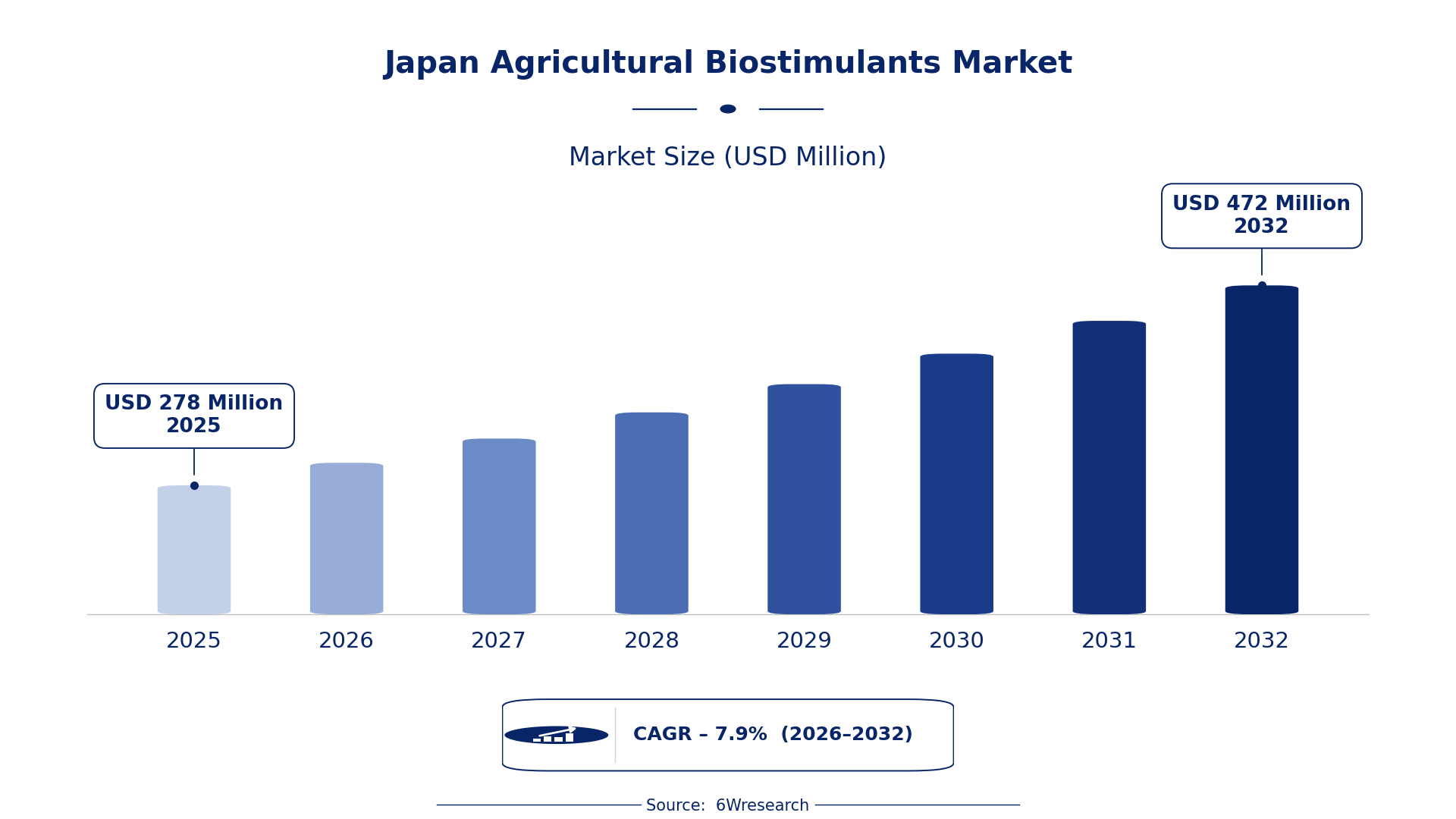
According to 6Wresearch internal database and industry insights, the Japan Agricultural Biostimulants Market was valued at USD 278 Million in 2025 and is projected to reach USD 472 Million by 2032, growing at a CAGR of approximately 7.9% during 2026–2032.
Japan Agricultural Biostimulants Market Highlights
| Report Metric | Details |
| Report Name | Japan Agricultural Biostimulants Market (2026-2032) |
| Market Size 2025 | USD 278 Million |
| Market Size 2032 | USD 472 Million |
| Absolute Growth 2025–2032 | USD 194 Million |
| CAGR 2026–2032 | 7.9% |
| Peak Annual Growth | 9.0% in 2028 |
| Forecast Period | 2026–2032 |
| Historical Data | 2022–2025 |
| Base Year | 2025 |
| Leading Agricultural Biostimulants Market, 2025 | Humic Substances (42% share) |
| Leading Product Type, 2025 | Pulses (50% share) |
| Leading Crop Type, 2025 | Direct Sales (43% share) |
| Leading Distribution Channel, 2025 | Agri Distributors (37% share) |
| Fastest-Growing Agricultural Biostimulants Market | Amino Acids (10.7% CAGR) |
| Fastest-Growing Product Type | Fruits (10.9% CAGR) |
| Fastest-Growing Crop Type | Online Platforms (11.4% CAGR) |
| Fastest-Growing Distribution Channel | Organic Farmers (10.1% CAGR) |
| Growing Sector | Organic farming |
| Key End Users | Commercial growers, Organic farmers, Agri cooperatives, Agri distributors |
Japan Agricultural Biostimulants Market Year-wise Growth Rate and Key Drivers (2022–2032)
This graph illustrates the annual growth rates of the market from 2022 to 2032, highlighting a steady upward trajectory and projected market expansion over the forecast period.
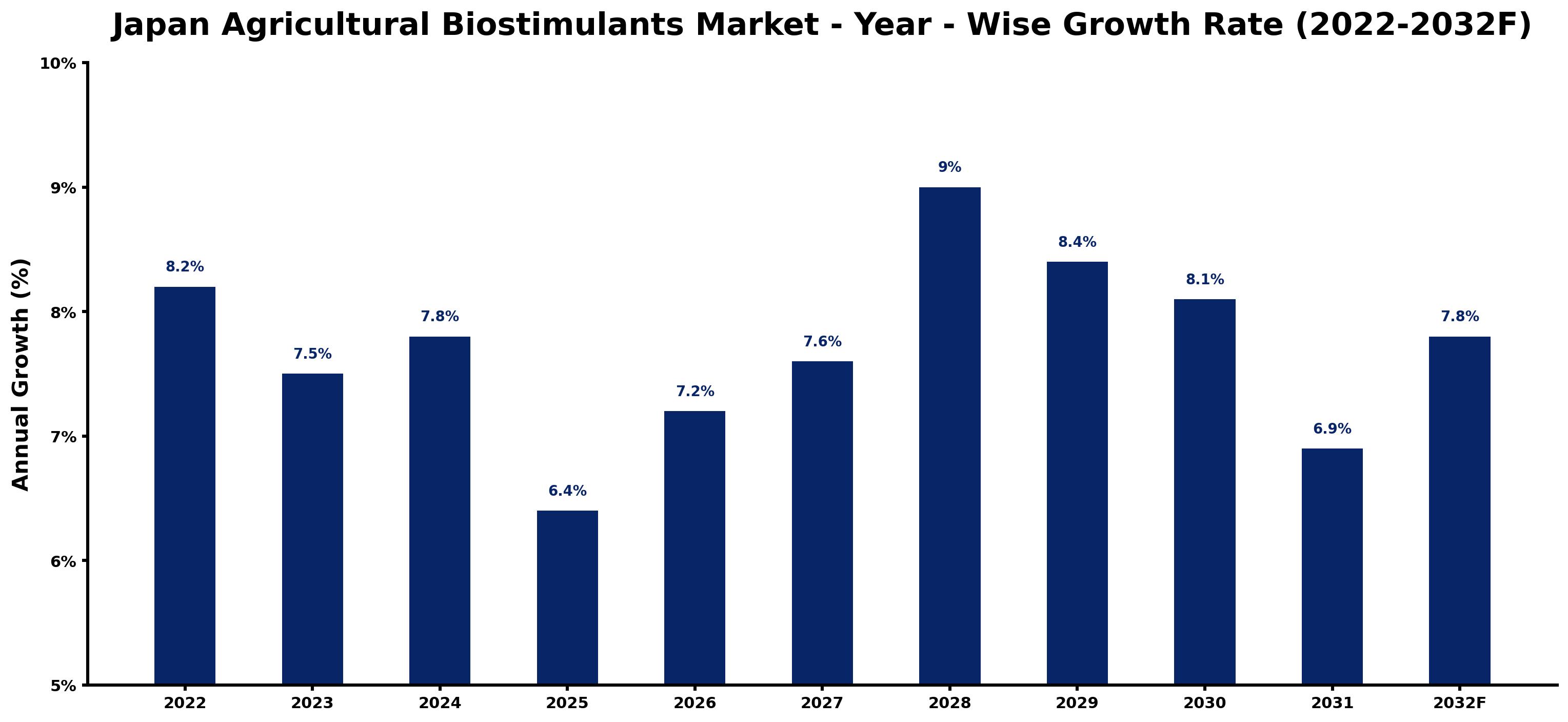
For each year, the table pairs the estimated growth rate with the leading influence on demand, showing how the drivers changed across the period.
| Year | Estimated Annual Growth (%) | Market Rationale |
| 2022 | 8.2 | The market experienced strong growth due to increasing awareness of sustainable agriculture practices. |
| 2023 | 7.5 | Growth slowed as some farmers faced challenges in adopting new biostimulant technologies and practices. |
| 2024 | 7.8 | Demand rose again as more farmers recognised the benefits of biostimulants for improving crop yield. |
| 2025 | 6.4 | Growth slowed further as competition among suppliers intensified, impacting pricing strategies and market dynamics. |
| 2026 | 7.2 | Demand is expected to rise as more commercial growers incorporate biostimulants into their farming practices. |
| 2027 | 7.6 | The market will see increased growth as organic farming practices gain popularity among various farmer groups. |
| 2028 | 9.0 | Growth will peak as new biostimulant formulations become widely available to growers, enhancing their effectiveness. |
| 2029 | 8.4 | A slowdown is anticipated as market saturation begins to affect new customer acquisition and product differentiation. |
| 2030 | 8.1 | Growth will slow further as established users optimise their biostimulant applications and refine their strategies. |
| 2031 | 6.9 | The market is expected to grow at a slower rate as competition stabilises and market dynamics evolve. |
| 2032 | 7.8 | Demand will increase again as new agricultural technologies are introduced to enhance productivity and efficiency. |
Note: Market size estimations and growth projections presented in this report are based on 6Wresearch's proprietary forecasting methodology, utilizing the latest available industry data, government publications, and primary research inputs.
Japan Agricultural Biostimulants Market Synopsis
Agricultural biostimulants are substances that support plant growth and development through natural processes, typically derived from organic materials such as seaweed and humic substances. The Japan Agricultural Biostimulants Market is valued at approximately 200 million USD, driven by the increasing adoption of sustainable farming practices among various agricultural sectors. Demand is rising as farmers focus on organic farming, with over 4 million hectares of farmland dedicated to fruit and vegetable production, creating substantial opportunities for biostimulant suppliers.
Market Dynamics Impact Analysis (2026–2032)
| Factor | Type | Impact | Primary Segment Affected |
| Increasing adoption of organic farming practices | Driver | High | Amino Acids |
| Rising demand for sustainable agricultural solutions | Driver | High | Seaweed Extracts |
| Growing interest in soil health improvement | Opportunity | Medium | Humic Substances |
| Expanding market for greenhouse vegetable production | Opportunity | Medium | Microbial Biostimulants |
| Limited awareness among traditional farmers | Restraint | High | Amino Acids |
| High costs associated with biostimulant products | Restraint | Medium | Seaweed Extracts |
| Competition from cheaper chemical alternatives | Challenge | High | Humic Substances |
| Slow regulatory approval processes for new products | Challenge | Medium | Microbial Biostimulants |
Evaluation of Drivers in Japan Agricultural Biostimulants Market (2026–2032)
Key forces behind demand, with the segment each one moves most, are listed below.
| Drivers | Primary Segment Affected | Why It Matters (Evidence) |
| Increased investment in organic farming initiatives | Amino Acids | This investment encourages farmers to adopt biostimulants, with an estimated 30% adoption rate among commercial growers. |
| Rising consumer demand for organic produce | Seaweed Extracts | Consumer preferences for organic options lead farmers to use biostimulants to improve crop quality, particularly in the Kanto region. |
| Government support for sustainable agricultural practices | Humic Substances | The Ministry of Agriculture, Forestry and Fisheries promotes biostimulants, leading to greater usage in rice cultivation across various prefectures, impacting over 4 million hectares of farmland. |
| Technological advancements in biostimulant formulations | Microbial Biostimulants | Innovations in formulations improve effectiveness, prompting farmers to adopt these products to enhance soil health. |
| Growing awareness of environmental benefits | Amino Acids | Farmers are increasingly recognising the role of biostimulants in reducing chemical inputs and improving soil health. |
Consumer demand for organic produce drives farmers to utilise seaweed extracts, which provide essential nutrients and growth hormones. Support for sustainable agricultural practices promotes the use of humic substances, particularly in rice cultivation across various prefectures. Technological advancements in biostimulant formulations improve their effectiveness, attracting more growers. Awareness of environmental benefits motivates farmers to reduce chemical inputs and improve soil health, further boosting demand for agricultural biostimulants.
Evaluation of Restraints in Japan Agricultural Biostimulants Market
The table below lists the restraints and the evidence behind each.
| Market Restraint | Primary Segment Affected | Why It Matters (Evidence) |
| Limited awareness among traditional farmers about biostimulants | Amino Acids | Many traditional farmers lack knowledge of biostimulants, resulting in lower adoption rates and missed opportunities for yield improvement. |
| High costs associated with biostimulant products | Seaweed Extracts | The premium pricing of biostimulants can deter small-scale farmers from making purchases, limiting market growth. |
| Competition from cheaper chemical alternatives | Humic Substances | The availability of less expensive chemical inputs can restrict the market share of biostimulants and hinder adoption. |
| Slow regulatory approval processes for new products | Microbial Biostimulants | Lengthy approval timelines can delay market entry for new biostimulant solutions, affecting supplier capabilities. |
| Variable effectiveness of biostimulants under different conditions | Amino Acids | Inconsistent results may lead to scepticism among farmers regarding the efficacy of biostimulants. |
Japan Agricultural Biostimulants Market Challenges
High prices for agricultural biostimulants deter buyers, limiting their ability to adopt these products and potentially reducing crop yields. Supply chain disruptions often delay deliveries, forcing farmers to postpone planting and risking lower harvests. Limited awareness about the benefits of biostimulants restricts technology adoption, costing producers potential yield increases of 20%. Regulatory hurdles complicate the approval process for new biostimulants, extending timelines for market entry and impacting suppliers' responsiveness to rising demand, which can delay product availability for up to six months.
Trends in the Japan Agricultural Biostimulants Market
Below are the shifts with the largest effect on the Japan Agricultural Biostimulants Market.
- Shift towards Organic Farming Practices: The trend towards organic farming practices has gained momentum since 2023, with the government launching a program to support organic farming, including biostimulants. This initiative has led to a notable increase in the adoption of biostimulants among farmers, particularly in fruit and vegetable production.
- Transition from Chemical Inputs to Biostimulants: Since 2023, farmers have been increasingly transitioning from chemical inputs to biostimulants, driven by consumer demand for organic produce. This shift is evident as the adoption rate of biostimulants among commercial growers reaches 30%, reflecting changing agricultural practices.
- Emergence of New Biostimulant Formulations: The emergence of new biostimulant formulations began in 2023, improving their effectiveness and appeal to farmers. As a result, the market for microbial biostimulants is expected to grow, with a focus on enhancing soil health and productivity.
- Growing Popularity of Seaweed Extracts: Since 2023, seaweed extracts have gained popularity among organic farmers for their natural growth-promoting properties. This trend is reflected in the increasing demand for seaweed-based biostimulants, particularly in regions known for high-quality fruit production.
Investment Opportunities in the Japan Agricultural Biostimulants Market
Investors looking at the Japan Agricultural Biostimulants Market should consider the following areas.
- Partner with Local Agri Cooperatives: Local agri cooperatives are seeking reliable suppliers of biostimulants to meet farmer demand. With an estimated 50 million JPY allocated for agricultural innovation programs in 2023, this is an ideal time to establish partnerships with these cooperatives.
- Supply Effective Biostimulant Formulations: There is a growing opportunity to supply effective biostimulant formulations that improve crop yield. The increasing focus on greenhouse vegetable production presents a market for suppliers looking to cater to this demand.
- Target Organic Farmers: Organic farmers are increasingly utilising biostimulants for sustainable practices. With the adoption rate expected to rise, suppliers can enter this market by providing tailored solutions and support to meet their specific needs.
- Invest in Research and Development: Investing in R&D for biostimulants is timely, as the government encourages research through agricultural research institutes. This investment will help meet the increasing demand for effective biostimulants in the market.
Government Initiatives in the Japan Agricultural Biostimulants Market
The agricultural biostimulants market is influenced by various laws, including the ISO 22000 standard for food safety management adopted in 2023. The Ministry of Agriculture, Forestry and Fisheries promotes sustainable agricultural practices that encourage the use of biostimulants, ensuring compliance with safety standards and supporting market growth.
The Ministry of Agriculture, Forestry and Fisheries oversees the approval of biostimulant products, funding agricultural innovation programs with a budget of 50 million JPY in 2023. This funding supports research and development initiatives aimed at improving biostimulant formulations and increasing their adoption among farmers.
Future Insight of the Japan Agricultural Biostimulants Market
A new organic farming support programme will launch by 2025, facilitating the use of biostimulants among farmers. By 2032, advancements in formulation technology will improve nutrient uptake and environmental stress resistance. The introduction of ISO 22000 standards will ensure higher safety and quality in agricultural products, boosting buyer confidence. Increased funding of 50 million JPY for agricultural research will drive the development of tailored biostimulant solutions, allowing suppliers to meet specific crop needs more effectively.
Market Segmentation Analysis
Japan Agricultural Biostimulants Market report covers a detailed analysis of the following market segments:
By Agricultural Biostimulants Market – Humic Substances Lead, Amino Acids Expected to Grow Fastest
According to Saurav Kr Singh, Senior Research Analyst at 6Wresearch, with 42% of agricultural biostimulants market revenue in 2025, Humic Substances was the largest category. Humic substances are essential for improving soil health and nutrient availability, making them indispensable for farmers focused on enhancing crop yield. Their widespread use in rice cultivation across various prefectures underscores their importance in Japan's agricultural sector. Amino Acids are projected to grow fastest, at a CAGR of 10.7% during 2026–2032. The increasing adoption of amino acids is attributed to their effectiveness in enhancing plant metabolism and growth, particularly in greenhouse vegetable production. As more growers recognise the benefits of amino acids for optimising crop performance, this trend is likely to accelerate. Suppliers should highlight the benefits of amino acids to capitalise on the growing interest among farmers.
By Product Type – Pulses Lead, Fruits Expected to Grow Fastest
Pulses accounted for 50% of the market by product type in 2025. Pulses play a significant role in crop rotation, which is vital for maintaining soil health and fertility, thus securing a prominent share in the market. Their indirect application in biostimulant usage ensures they remain a key component of agricultural practices. The quickest growth will come from Fruits, forecast to expand at a CAGR of 10.9% between 2026 and 2032. Fruits are increasingly reliant on biostimulants for yield enhancement, especially in regions known for high-quality production. This dependence is expected to propel growth as farmers aim to maximise their fruit yields. Buyers should prioritise biostimulant solutions that specifically target fruit production to achieve optimal results.
By Crop Type – Direct Sales Leads, Online Platforms Expected to Grow Fastest
In 2025, Direct Sales led the crop type split with a 43% share. Direct sales serve as the primary channel for connecting with farmers, enabling suppliers to build strong relationships and address their specific needs. This approach ensures that farmers receive customised solutions for their biostimulant requirements. Online Platforms are set to record the highest CAGR in this split, 11.4% over 2026–2032. Online platforms are increasingly becoming a popular sales channel, propelled by the growing digitalisation of agricultural practices. As more farmers adapt to online purchasing, this segment is anticipated to expand rapidly. Suppliers need to strengthen their online presence to capture the rising segment of farmers engaging in digital purchasing.
By Distribution Channel – Agri Distributors Lead, Organic Farmers Expected to Grow Fastest
Agri Distributors took 37% of distribution channel revenue in 2025, more than any other category. Agri distributors are crucial in the distribution of biostimulants, acting as essential intermediaries between manufacturers and farmers. Their established networks ensure the effective delivery of biostimulants to a wide array of agricultural users. Over 2026–2032, Organic Farmers are expected to post the fastest growth, at a CAGR of 10.1%. Organic farmers are increasingly incorporating biostimulants to meet the demands of sustainable farming practices, signalling a shift towards environmentally conscious solutions. This trend is anticipated to gain momentum as organic farming continues to expand. Suppliers should tailor biostimulant products to meet the specific needs of organic farmers.
Key Attractiveness of the Report
- 10 Years of Market Numbers
- Historical Data Starting from 2022 to 2025
- Base Year 2025
- Forecast Data until 2032
- Key Performance Indicators Impacting the Market
- Major Upcoming Developments and Projects
Key Highlights of the Report:
- Japan Agricultural Biostimulants Market Outlook
- Market Size of Japan Agricultural Biostimulants Market, 2025
- Forecast of Japan Agricultural Biostimulants Market, 2032
- Historical Data and Forecast of Japan Agricultural Biostimulants Revenues & Volume for the Period 2022-2032F
- Japan Agricultural Biostimulants Market Trend Evolution
- Japan Agricultural Biostimulants Market Drivers and Challenges
- Japan Agricultural Biostimulants Price Trends
- Japan Agricultural Biostimulants Porter's Five Forces
- Japan Agricultural Biostimulants Industry Life Cycle
- Historical Data and Forecast of Japan Agricultural Biostimulants Market Revenues & Volume By Agricultural Biostimulants Market for the Period 2022-2032F
- Historical Data and Forecast of Japan Agricultural Biostimulants Market Revenues & Volume By Humic Substances for the Period 2022-2032F
- Historical Data and Forecast of Japan Agricultural Biostimulants Market Revenues & Volume By Amino Acids for the Period 2022-2032F
- Historical Data and Forecast of Japan Agricultural Biostimulants Market Revenues & Volume By Seaweed Extracts for the Period 2022-2032F
- Historical Data and Forecast of Japan Agricultural Biostimulants Market Revenues & Volume By Microbial Biostimulants for the Period 2022-2032F
- Historical Data and Forecast of Japan Agricultural Biostimulants Market Revenues & Volume By Product Type for the Period 2022-2032F
- Historical Data and Forecast of Japan Agricultural Biostimulants Market Revenues & Volume By Pulses for the Period 2022-2032F
- Historical Data and Forecast of Japan Agricultural Biostimulants Market Revenues & Volume By Fruits for the Period 2022-2032F
- Historical Data and Forecast of Japan Agricultural Biostimulants Market Revenues & Volume By Vegetables for the Period 2022-2032F
- Historical Data and Forecast of Japan Agricultural Biostimulants Market Revenues & Volume By Grains for the Period 2022-2032F
- Historical Data and Forecast of Japan Agricultural Biostimulants Market Revenues & Volume By Crop Type for the Period 2022-2032F
- Historical Data and Forecast of Japan Agricultural Biostimulants Market Revenues & Volume By Direct Sales for the Period 2022-2032F
- Historical Data and Forecast of Japan Agricultural Biostimulants Market Revenues & Volume By Online Platforms for the Period 2022-2032F
- Historical Data and Forecast of Japan Agricultural Biostimulants Market Revenues & Volume By Local Retailers for the Period 2022-2032F
- Historical Data and Forecast of Japan Agricultural Biostimulants Market Revenues & Volume By Specialty Stores for the Period 2022-2032F
- Historical Data and Forecast of Japan Agricultural Biostimulants Market Revenues & Volume By Distribution Channel for the Period 2022-2032F
- Historical Data and Forecast of Japan Agricultural Biostimulants Market Revenues & Volume By Agri Distributors for the Period 2022-2032F
- Historical Data and Forecast of Japan Agricultural Biostimulants Market Revenues & Volume By Organic Farmers for the Period 2022-2032F
- Historical Data and Forecast of Japan Agricultural Biostimulants Market Revenues & Volume By Agri Cooperatives for the Period 2022-2032F
- Historical Data and Forecast of Japan Agricultural Biostimulants Market Revenues & Volume By Commercial Growers for the Period 2022-2032F
- Japan Agricultural Biostimulants Import Export Trade Statistics
- Market Opportunity Assessment By Agricultural Biostimulants Market
- Market Opportunity Assessment By Product Type
- Market Opportunity Assessment By Crop Type
- Market Opportunity Assessment By Distribution Channel
- Japan Agricultural Biostimulants Top Companies Market Share
- Japan Agricultural Biostimulants Competitive Benchmarking By Technical and Operational Parameters
- Japan Agricultural Biostimulants Company Profiles
- Japan Agricultural Biostimulants Key Strategic Recommendations
Market Covered
Segments analysed in this report are listed below.
By Agricultural Biostimulants Market
- Humic Substances
- Amino Acids
- Seaweed Extracts
- Microbial Biostimulants
By Product Type
- Pulses
- Fruits
- Vegetables
- Grains
By Crop Type
- Direct Sales
- Online Platforms
- Local Retailers
- Specialty Stores
By Distribution Channel
- Agri Distributors
- Organic Farmers
- Agri Cooperatives
- Commercial Growers































