Japan Brugada Syndrome Market Size & Growth Rate
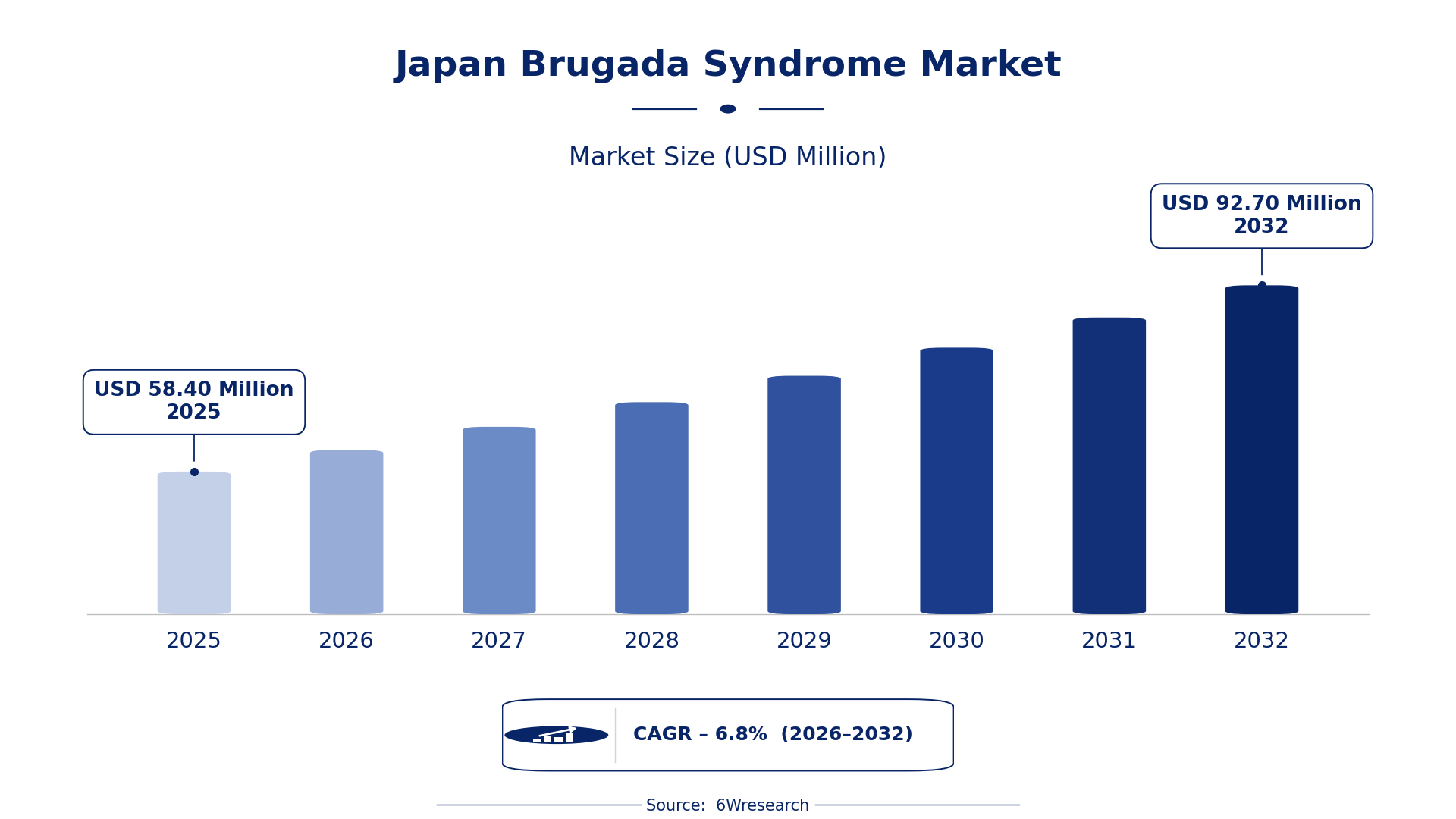
According to 6Wresearch internal database and industry insights, the Japan Brugada Syndrome Market was valued at USD 58.40 Million in 2025 and is projected to reach USD 92.70 Million by 2032, growing at a CAGR of approximately 6.8% during 2026–2032.
Japan Brugada Syndrome Market Highlights
| Report Metric | Details |
| Report Name | Japan Brugada Syndrome Market (2026-2032) |
| Market Size 2025 | USD 58.40 Million |
| Market Size 2032 | USD 92.70 Million |
| Absolute Growth 2025–2032 | USD 34.30 Million |
| CAGR 2026–2032 | 6.8% |
| Peak Annual Growth | 7.6% in 2031 |
| Forecast Period | 2026–2032 |
| Historical Data | 2022–2025 |
| Base Year | 2025 |
| Leading Diagnosis, 2025 | ElectrocardiogramElectrocardiogram (54% share) |
| Leading Treatment, 2025 | Implantable Cardioverter-Defibrillator (62% share) |
| Leading End-Users, 2025 | Hospitals and Clinics (52% share) |
| Fastest-Growing Diagnosis | Electrophysiology (EP) Test (9.0% CAGR) |
| Fastest-Growing Treatment | Drug Therapy (8.4% CAGR) |
| Fastest-Growing End-Users | Surgical Centers (8.6% CAGR) |
| Growing Sector | Healthcare |
| Key End Users | Hospitals, Clinics, Diagnostic Centers, Surgical Centers |
Japan Brugada Syndrome Market Year-wise Growth Rate and Key Drivers (2022–2032)
This graph illustrates the annual growth rates of the market from 2022 to 2032, highlighting a steady upward trajectory and projected market expansion over the forecast period.
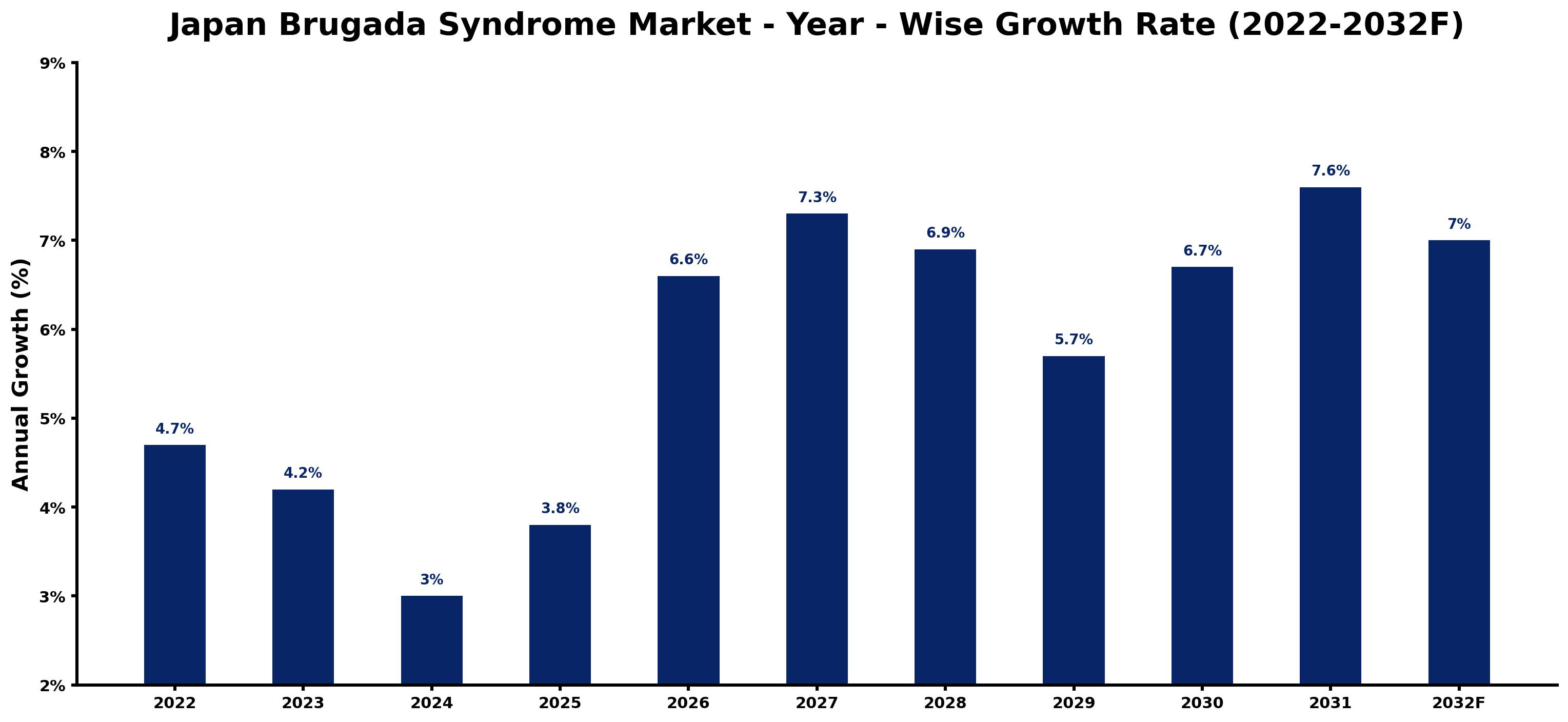
Below, each year's estimated growth is shown next to the factor that most influenced it.
| Year | Estimated Annual Growth (%) | Market Rationale |
| 2022 | 4.7 | The market experienced steady growth due to increased awareness of Brugada Syndrome. |
| 2023 | 4.2 | Growth slowed as advancements in diagnosis began to normalise market expectations. |
| 2024 | 3.0 | The market continued to grow, driven by improvements in diagnostic technologies and patient outreach. |
| 2025 | 3.8 | Growth accelerated as hospitals expanded their cardiac care capabilities and services. |
| 2026 | 6.6 | Demand is expected to surge due to rising patient awareness and advancements in treatment options. |
| 2027 | 7.3 | Growth will remain strong as more patients receive timely diagnoses and treatments. |
| 2028 | 6.9 | The market is projected to see a slowdown as growth stabilises after rapid expansions. |
| 2029 | 5.7 | Demand will continue to grow, supported by increased healthcare funding and resources. |
| 2030 | 6.7 | Growth is expected to pick up again as new technologies improve patient outcomes and care. |
| 2031 | 7.6 | The market will peak with advancements in treatment and patient management. |
| 2032 | 7.0 | Growth is projected to slow slightly as the market stabilises after reaching peak levels. |
Note: Market size estimations and growth projections presented in this report are based on 6Wresearch's proprietary forecasting methodology, utilizing the latest available industry data, government publications, and primary research inputs.
Japan Brugada Syndrome Market Synopsis
Brugada Syndrome is a genetic heart condition identified through abnormal ECG findings and specialized tests. The Japan Brugada Syndrome Market is growing due to rising demand from healthcare providers, advancements in diagnostic technologies, and a national health initiative focusing on genetic heart diseases. In 2023, over 3,000 new cases were reported annually, highlighting the urgency for effective diagnosis and treatment options.
Market Dynamics Impact Analysis (2026–2032)
| Factor | Type | Impact | Primary Segment Affected |
| Rising prevalence of Brugada Syndrome | Driver | High | ElectrocardiogramElectrocardiogram |
| Advancements in electrophysiology testing | Driver | High | ElectrocardiogramElectrocardiogram |
| Increased funding for cardiac care | Opportunity | High | ElectrocardiogramElectrocardiogram |
| Growing awareness of genetic heart conditions | Opportunity | Medium | ElectrocardiogramElectrocardiogram |
| Limited access to specialized diagnostic centers | Restraint | High | Diagnostic Centers |
| High costs associated with treatment options | Restraint | Medium | ElectrocardiogramElectrocardiogram |
| Shortage of trained healthcare professionals | Challenge | High | ElectrocardiogramElectrocardiogram |
| Regulatory compliance for new treatments | Challenge | Medium | ElectrocardiogramElectrocardiogram |
Evaluation of Drivers in Japan Brugada Syndrome Market (2026–2032)
Key forces behind demand, with the segment each one moves most, are listed below.
| Drivers | Primary Segment Affected | Why It Matters (Evidence) |
| Increased diagnosis of Brugada Syndrome | ElectrocardiogramElectrocardiogram | Approximately 3,000 new cases are reported annually, driving demand for diagnostic tests. |
| Growth in electrophysiology tests | Electrophysiology (EP) Test | Over 200 hospitals perform these tests, improving patient assessment capabilities. |
| Expansion of implantable cardioverter-defibrillator installations | Implantable Cardioverter-Defibrillator | In 2023, over 1,500 devices were installed, indicating rising treatment adoption. |
| National health insurance coverage for genetic testing | Genetic Testing | This coverage supports wider access to essential genetic assessments, facilitating timely diagnosis. |
| Rising patient awareness of heart conditions | ElectrocardiogramElectrocardiogram | The average age of diagnosis is around 40, prompting earlier interventions and increasing demand for effective treatments. |
Spending rises because of the increasing diagnosis of Brugada Syndrome, with approximately 3,000 new cases reported annually. The growth in electrophysiology tests, performed in over 200 hospitals, enhances patient assessment capabilities. In 2023, over 1,500 implantable cardioverter-defibrillators were installed, reflecting rising treatment adoption. Coverage for genetic testing supports wider access to essential assessments, allowing for timely interventions. The average age of diagnosis is around 40, which prompts earlier treatment and increases demand for effective solutions.
Evaluation of Restraints in Japan Brugada Syndrome Market
The following restraints limit how fast demand can grow.
| Market Restraint | Primary Segment Affected | Why It Matters (Evidence) |
| Limited access to specialized diagnostic centers | Diagnostic Centers | The Tokyo region has the highest concentration of diagnostic centers, with only a few available in rural areas. |
| High costs associated with treatment options | ElectrocardiogramElectrocardiogram | The average treatment costs can be prohibitive for some patients, limiting access to necessary care. |
| Shortage of trained healthcare professionals | ElectrocardiogramElectrocardiogram | The demand for specialists exceeds the supply, affecting patient care and leading to longer wait times. |
| Regulatory hurdles for new treatments | ElectrocardiogramElectrocardiogram | Compliance with strict standards can delay the introduction of innovations, impacting patient access. |
| Inconsistent patient follow-up care | ElectrocardiogramElectrocardiogram | Patients often miss follow-up appointments, impacting treatment efficacy and overall health outcomes. |
Japan Brugada Syndrome Market Challenges
Delays in diagnosing Brugada Syndrome cost hospitals valuable time, as a shortage of skilled technicians for electrophysiology tests leads to longer patient wait times. Producers face competition from alternative cardiac treatments, which pressures pricing strategies and can decrease market share for hospitals. High costs of advanced diagnostic equipment hinder technology adoption, limiting access for clinics and delaying patient care for those at risk. Supply chain disruptions in antiarrhythmic medications create treatment delays for patients, increasing the burden on healthcare providers and potentially raising healthcare costs.
Trends in the Japan Brugada Syndrome Market
These developments are changing demand patterns in the Japan Brugada Syndrome Market.
- Shift in Diagnostic Approaches since 2023: A shift towards more extensive genetic testing protocols for Brugada Syndrome has improved early detection. In 2023, the Japanese Society of Cardiology updated guidelines, enhancing diagnostic accuracy for patients.
- Increased Adoption of Implantable Devices since 2023: The use of implantable cardioverter-defibrillators has surged, with over 1,500 installations in 2023. This trend reflects a growing commitment to cardiac care among healthcare providers.
- Growing Focus on Genetic Heart Diseases since 2023: The Japanese government launched a heart health initiative in 2023, focusing on genetic heart diseases. This initiative aims to improve awareness and funding for research, addressing urgent healthcare needs.
- Expansion of Electrophysiology Testing Facilities since 2023: The number of hospitals performing electrophysiology tests has increased significantly. In 2023, over 200 hospitals provided these critical assessments, improving patient outcomes and diagnostic accuracy.
Investment Opportunities in the Japan Brugada Syndrome Market
The following opportunities in the Japan Brugada Syndrome Market pair current demand with a clear way in.
- Hospitals and Clinics needing advanced diagnostic tools: Healthcare facilities are increasingly seeking advanced diagnostic tools for Brugada Syndrome. The Tokyo region, with its high case concentration, presents a prime market for new technologies that improve patient care.
- Diagnostic Centers in urban areas: Urban diagnostic centers are expanding their services to include comprehensive genetic testing. With over 3,000 new cases annually, demand for these services is high, creating opportunities for suppliers.
- Current focus on genetic heart diseases: The ongoing national health initiative focusing on genetic heart diseases creates a timely opportunity for investment in related technologies. Stakeholders can enter through partnerships with local healthcare providers to improve service offerings.
- Entry through certification for medical devices: New medical devices for Brugada Syndrome treatment can gain market access through compliance with JIS Z 8201 standards. This certification ensures quality and safety, appealing to healthcare providers and building patient trust.
Government Initiatives in the Japan Brugada Syndrome Market
The National Health Insurance (NHI) drug price standard, revised regularly, establishes reimbursement prices for medications, ensuring patients have access to necessary treatments for Brugada Syndrome. This measure improves treatment affordability and encourages healthcare providers to offer these essential services, benefiting thousands of patients annually.
The Medical Care Act sets standards for hospitals and clinics, including staffing and facilities. This law ensures that patients receive quality care in accredited institutions, directly benefiting those diagnosed with Brugada Syndrome and improving overall healthcare quality.
Future Insight of the Japan Brugada Syndrome Market
Hospitals will see improved diagnostic capabilities by 2032, driven by advancements in genetic testing technologies that enhance patient outcomes. The heart health initiative will promote early detection of Brugada Syndrome, benefiting both patients and healthcare providers. New standards for electrophysiology tests will streamline the diagnostic process, significantly reducing wait times. With over 1,500 implantable cardioverter-defibrillators installed for Brugada patients in 2023, proactive treatment strategies will become increasingly important to ensure effective management of the condition.
Market Segmentation Analysis
Japan Brugada Syndrome Market report covers a detailed analysis of the following market segments:
By Diagnosis – ElectrocardiogramElectrocardiogram Leads, Electrophysiology (EP) Test Expected to Grow Fastest
According to Sumit Sagar, AM at 6Wresearch, with 54% of diagnosis revenue in 2025, ElectrocardiogramElectrocardiogram was the largest category. The electrocardiogram is a fundamental tool for diagnosing Brugada Syndrome, widely utilised across Japan's healthcare facilities. Its importance is highlighted by the fact that over 3,000 new cases are identified each year, showcasing its critical role in patient care. The quickest growth will come from Electrophysiology (EP) Test, forecast to expand at a CAGR of 9.0% between 2026 and 2032. Electrophysiology tests are gaining traction in more than 200 hospitals, spurred by technological advancements and heightened awareness of cardiac health. This trend is expected to persist as medical guidelines increasingly prioritise precise evaluations for affected individuals. Suppliers must ensure the availability of advanced electrophysiology testing solutions to cater to the growing demand in the market.
By Treatment – Implantable Cardioverter-Defibrillator Leads, Drug Therapy Expected to Grow Fastest
Implantable Cardioverter-Defibrillator held 62% of the Japan Brugada Syndrome Market by treatment in 2025. The implantable cardioverter-defibrillator is the primary treatment for high-risk Brugada patients, with over 1,500 devices installed in 2023. This established standard of care is supported by guidelines from the Japanese Society of Cardiology, ensuring its leading position in the treatment segment. Drug Therapy is projected to grow fastest, at a CAGR of 8.4% during 2026–2032. Drug therapy is gaining traction as a supplementary treatment option, particularly with the approval of antiarrhythmic medications by the Ministry of Health. The government's heart health initiative launched in 2023 is likely to further encourage the adoption of drug therapies for managing Brugada Syndrome. Providers of drug therapies should prepare for increased demand as awareness and treatment options expand.
By End-Users – Hospitals and Clinics Lead, Surgical Centers Expected to Grow Fastest
Hospitals and Clinics accounted for 52% of the market by end-users in 2025. Hospitals and clinics are the main facilities providing care for Brugada Syndrome, as they are equipped with the necessary diagnostic and treatment capabilities. Their central role is underscored by the high number of electrophysiology tests and implantable devices being utilised. Surgical Centers are set to record the highest CAGR in this split, 8.6% over 2026–2032. Surgical centers are becoming more involved in procedures related to Brugada Syndrome, reflecting a shift towards specialised care. This trend is likely to accelerate as the healthcare system adapts to new treatment protocols and patient needs. Suppliers should consider partnerships with surgical centers to expand their reach in the treatment of Brugada Syndrome.
Key Attractiveness of the Report
- 10 Years of Market Numbers
- Historical Data Starting from 2022 to 2025
- Base Year 2025
- Forecast Data until 2032
- Key Performance Indicators Impacting the Market
- Major Upcoming Developments and Projects
Key Highlights of the Report:
- Japan Brugada Syndrome Market Outlook
- Market Size of Japan Brugada Syndrome Market, 2025
- Forecast of Japan Brugada Syndrome Market, 2032
- Historical Data and Forecast of Japan Brugada Syndrome Revenues & Volume for the Period 2022-2032
- Japan Brugada Syndrome Market Trend Evolution
- Japan Brugada Syndrome Market Drivers and Challenges
- Japan Brugada Syndrome Price Trends
- Japan Brugada Syndrome Porter's Five Forces
- Japan Brugada Syndrome Industry Life Cycle
- Historical Data and Forecast of Japan Brugada Syndrome Market Revenues & Volume By Diagnosis for the Period 2022-2032
- Historical Data and Forecast of Japan Brugada Syndrome Market Revenues & Volume By ElectrocardiogramElectrocardiogram for the Period 2022-2032
- Historical Data and Forecast of Japan Brugada Syndrome Market Revenues & Volume By Electrophysiology (EP) Test for the Period 2022-2032
- Historical Data and Forecast of Japan Brugada Syndrome Market Revenues & Volume By Genetic Testing for the Period 2022-2032
- Historical Data and Forecast of Japan Brugada Syndrome Market Revenues & Volume By Treatment for the Period 2022-2032
- Historical Data and Forecast of Japan Brugada Syndrome Market Revenues & Volume By Implantable Cardioverter-Defibrillator for the Period 2022-2032
- Historical Data and Forecast of Japan Brugada Syndrome Market Revenues & Volume By Drug Therapy for the Period 2022-2032
- Historical Data and Forecast of Japan Brugada Syndrome Market Revenues & Volume By End-Users for the Period 2022-2032
- Historical Data and Forecast of Japan Brugada Syndrome Market Revenues & Volume By Hospitals and Clinics for the Period 2022-2032
- Historical Data and Forecast of Japan Brugada Syndrome Market Revenues & Volume By Surgical Centers for the Period 2022-2032
- Historical Data and Forecast of Japan Brugada Syndrome Market Revenues & Volume By Diagnostic Centers for the Period 2022-2032
- Japan Brugada Syndrome Import Export Trade Statistics
- Market Opportunity Assessment By Diagnosis
- Market Opportunity Assessment By Treatment
- Market Opportunity Assessment By End-Users
- Japan Brugada Syndrome Top Companies Market Share
- Japan Brugada Syndrome Competitive Benchmarking By Technical and Operational Parameters
- Japan Brugada Syndrome Company Profiles
- Japan Brugada Syndrome Key Strategic Recommendations
Market Covered
Segments analysed in this report are listed below.
By Diagnosis
- ElectrocardiogramElectrocardiogram
- Electrophysiology (EP) Test
- Genetic Testing
By Treatment
- Implantable Cardioverter-Defibrillator
- Drug Therapy
By End-Users
- Hospitals and Clinics
- Surgical Centers
- Diagnostic Centers































