Japan Converter Transformer Market Size & Growth Rate
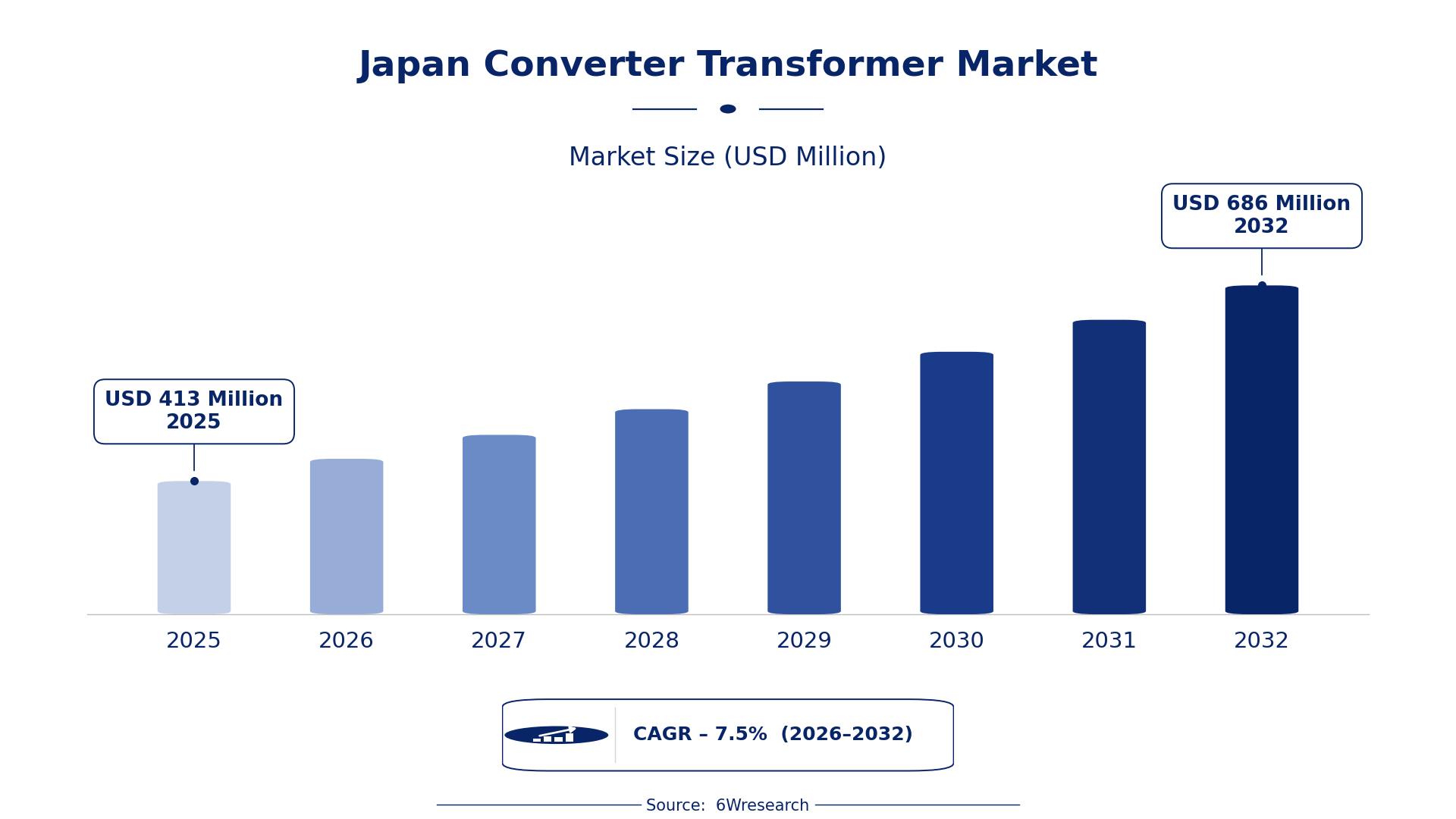
According to 6Wresearch internal database and industry insights, the Japan Converter Transformer Market was valued at USD 413 Million in 2025 and is projected to reach USD 686 Million by 2032, growing at a CAGR of approximately 7.5% during 2026–2032.
Japan Converter Transformer Market Highlights
| Report Metric | Details |
| Report Name | Japan Converter Transformer Market (2026-2032) |
| Market Size 2025 | USD 413 Million |
| Market Size 2032 | USD 686 Million |
| Absolute Growth 2025–2032 | USD 273 Million |
| CAGR 2026–2032 | 7.5% |
| Peak Annual Growth | 8.2% in 2031 |
| Forecast Period | 2026–2032 |
| Historical Data | 2022–2025 |
| Base Year | 2025 |
| Leading Configuration, 2025 | Bipolar (43% share) |
| Leading Application, 2025 | Grid interconnections (53% share) |
| Fastest-Growing Configuration | Back-to-Back (9.4% CAGR) |
| Fastest-Growing Application | Windfarms (9.7% CAGR) |
| Growing Sector | Renewable Energy |
| Key End Users | Energy producers, utility companies, grid operators |
Japan Converter Transformer Market Year-wise Growth Rate and Key Drivers (2022–2032)
This graph illustrates the annual growth rates of the market from 2022 to 2032, highlighting a steady upward trajectory and projected market expansion over the forecast period.
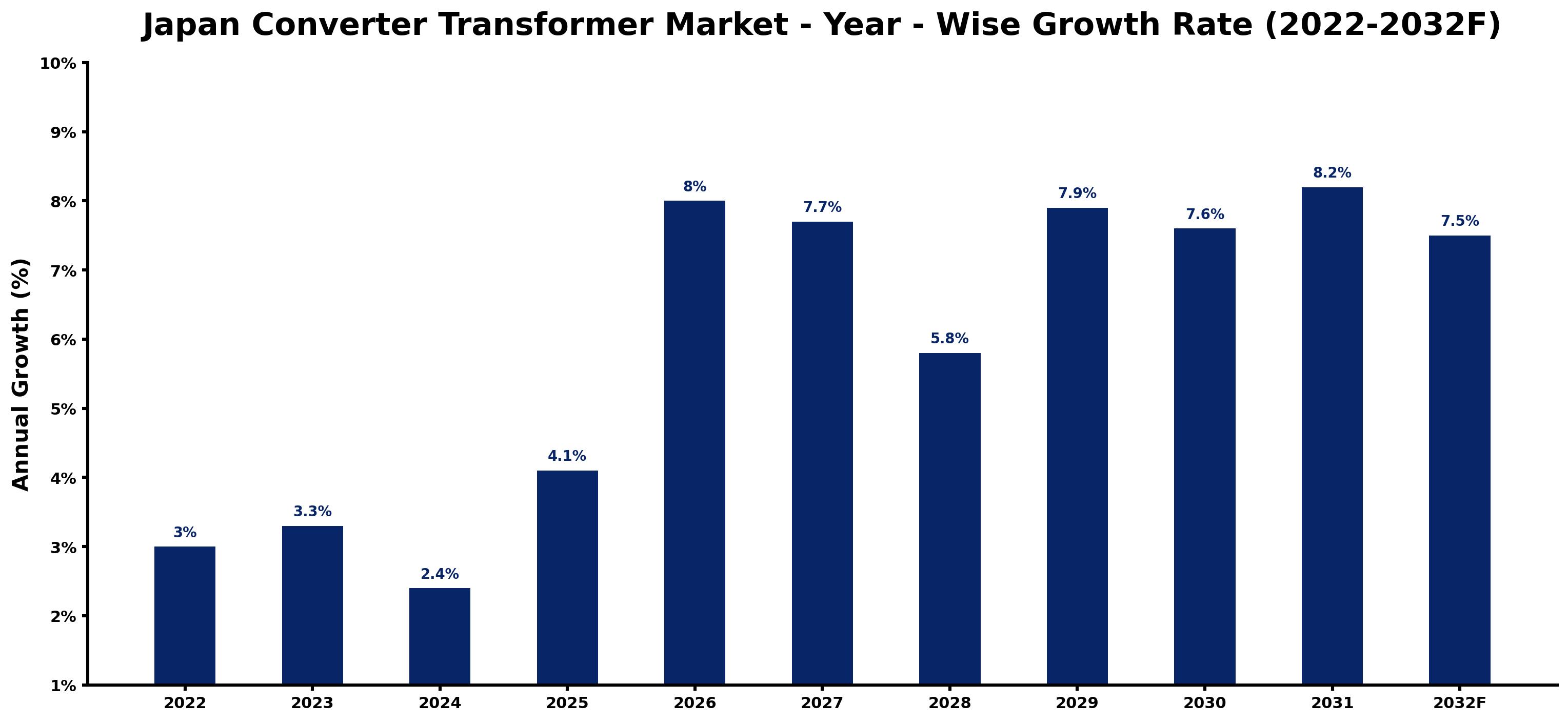
Year by year, the estimates below pair each growth rate with the development that shaped it.
| Year | Estimated Annual Growth (%) | Market Rationale |
| 2022 | 3.0 | The market exhibited steady growth, reflecting ongoing investments in renewable energy infrastructure. |
| 2023 | 3.3 | Demand continued to rise, supported by grid modernization projects and renewable energy initiatives. |
| 2024 | 2.4 | Growth slowed as projects faced delays, yet demand remained strong in the energy sector. |
| 2025 | 4.1 | A surge in installations drove growth, particularly in grid interconnections and renewable sources. |
| 2026 | 8.0 | Increased investments in renewable energy technologies will spur demand for converter transformers. |
| 2027 | 7.7 | Growth is projected to moderate as the market adjusts to previous high levels of activity. |
| 2028 | 5.8 | A continued focus on renewable energy will lead to further demand, albeit at a slower pace. |
| 2029 | 7.9 | Renewable energy projects are expected to revitalise growth, with windfarms driving demand for transformers. |
| 2030 | 7.6 | Demand growth is projected to slow slightly as the market stabilises after rapid expansion. |
| 2031 | 8.2 | A peak in growth is anticipated, driven by heightened investments in grid interconnections and renewables. |
| 2032 | 7.5 | The market is expected to continue growing, supported by ongoing modernization efforts and renewable integration. |
Note: Market size estimations and growth projections presented in this report are based on 6Wresearch's proprietary forecasting methodology, utilizing the latest available industry data, government publications, and primary research inputs.
Japan Converter Transformer Market Synopsis
Converter transformers are essential electrical devices that convert AC to DC and vice versa, primarily used in high-voltage applications. The installed capacity of converter transformers in Japan exceeds 10,000 MW, reflecting strong demand driven by the integration of renewable sources and ongoing grid modernization. Factors such as Japan's energy policy targeting 22-24% renewable energy by 2030 and the promotion of advanced technologies are propelling market growth.
Market Dynamics Impact Analysis (2026–2032)
| Factor | Type | Impact | Primary Segment Affected |
| Growing investments in renewable energy projects | Driver | High | Grid interconnections |
| Increased demand for stable grid interconnections | Driver | High | Grid interconnections |
| Expansion of windfarms in the Tohoku region | Opportunity | High | Windfarms |
| Rising need for advanced grid technologies | Opportunity | Medium | Grid interconnections |
| High initial investment costs for infrastructure | Restraint | High | Grid interconnections |
| Limited adoption of monopolar configurations | Restraint | Medium | Monopolar |
| Competition from alternative energy solutions | Challenge | High | Grid interconnections |
| Technological challenges in transformer manufacturing | Challenge | Medium | Bipolar |
Evaluation of Drivers in Japan Converter Transformer Market (2026–2032)
Below are the drivers that matter most for revenue growth, with supporting evidence.
| Drivers | Primary Segment Affected | Why It Matters (Evidence) |
| Increased renewable energy projects | Grid interconnections | Japan's energy policy aims for 22-24% renewable energy by 2030, driving demand for grid interconnections. |
| Investment in wind energy | Windfarms | Over 50 operational windfarms in Japan are boosting demand for converter transformers to integrate renewable sources. |
| Technological advancements in transformer design | Bipolar | Innovations in materials and cooling systems improve transformer efficiency, increasing demand from energy producers. |
| Government support for grid modernization | Grid interconnections | The Agency for Natural Resources and Energy promotes initiatives that require advanced transformer installations. |
| Rising electricity consumption due to population growth | Grid interconnections | Japan's population of approximately 125 million is driving higher energy demand, necessitating improved grid solutions. |
Buyers are adding capacity as investments in renewable energy projects surge, particularly in the Tohoku region where over 50 windfarms are operational. The installed capacity of converter transformers exceeds 10,000 MW, reflecting a strong response to the growing need for stable grid interconnections. Support for modernization efforts is driving demand, with substantial investments in renewable technologies necessitating increased transformer installations. Technological advancements in transformer design are improving efficiency and reliability, encouraging energy producers to invest in new systems.
Evaluation of Restraints in Japan Converter Transformer Market
The main factors holding the market back are set out below.
| Market Restraint | Primary Segment Affected | Why It Matters (Evidence) |
| High initial investment costs for renewable energy infrastructure | Grid interconnections | The substantial financial outlay required for infrastructure development limits market entry for smaller players. |
| Limited adoption of monopolar configurations | Monopolar | Monopolar configurations are primarily used in niche applications, restricting broader market demand. |
| Technological challenges in manufacturing processes | Bipolar | Complex manufacturing processes can lead to delays and increased costs, affecting supply timelines. |
| Competition from alternative energy solutions | Grid interconnections | Emerging technologies in energy storage and generation can divert investment away from traditional transformer solutions. |
| Regulatory hurdles in project approvals | Grid interconnections | Lengthy approval processes for new projects can slow down the deployment of necessary infrastructure. |
Japan Converter Transformer Market Challenges
Delays in converter transformer installations in Japan have caused project costs to rise by 15%, impacting renewable energy developers who depend on timely grid connections. Supply chain disruptions have resulted in a 20% increase in raw material prices, forcing manufacturers to raise prices, which burdens buyers with higher operational costs. Compliance with ISO 9001 standards has extended lead times, delaying project timelines by an average of six months for energy companies. Shortages in skilled labour for advanced manufacturing techniques have reduced production rates, leading to a 10% decrease in output capacity for producers.
Trends in the Japan Converter Transformer Market
The following changes are redrawing the Japan Converter Transformer Market.
- Shift towards Renewable Energy Integration: Japan is increasingly focusing on integrating renewable energy sources into the grid, with numerous operational windfarms contributing to this effort. The country has over 50 windfarms, reflecting this shift.
- Increased Focus on Grid Modernization: Electric utilities are prioritising grid modernization to improve reliability and efficiency. The Agency for Natural Resources and Energy is spearheading initiatives to upgrade infrastructure, leading to a projected increase in transformer installations.
- Adoption of Advanced Transformer Technologies: Manufacturers are adopting advanced materials and cooling systems to improve transformer performance. The ISO 9001 standard is widely implemented, ensuring quality and reliability in production processes.
- Growing Demand for Bipolar Configurations: Bipolar configurations are becoming essential for high-voltage DC transmission, driven by the need for efficient energy transfer. Their market share is expected to rise as more projects focus on this technology.
Investment Opportunities in the Japan Converter Transformer Market
Where to invest in the Japan Converter Transformer Market: the main openings are set out below.
- Partnerships for Renewable Energy Projects: Forming joint ventures with local energy producers can facilitate entry into the renewable energy market, particularly in the Tohoku region where windfarms are expanding rapidly. This region has seen investments exceeding 1 trillion yen.
- Investment in Grid Infrastructure: Investing in grid interconnection facilities is essential as Japan modernises its energy infrastructure. The Electric Power Development Co. oversees these projects, presenting opportunities for suppliers.
- Supply of Advanced Transformer Technologies: There is a growing need for advanced converter transformers to support renewable energy integration. Collaborating with manufacturers adhering to ISO 9001 can facilitate market entry.
- Focus on Bipolar Transformer Solutions: Supplying bipolar transformer configurations presents an opportunity as demand for high-voltage DC transmission rises. Engaging with energy producers can facilitate market penetration.
Government Initiatives in the Japan Converter Transformer Market
The Hydrogen Society Promotion Act, adopted in 2024, supports the development of low-carbon hydrogen and ammonia supply chains, providing price-gap support to producers. This measure encourages investments in renewable technologies, which directly benefits converter transformer manufacturers by increasing demand for their products.
The GX Basic Policy, adopted in 2023, aims for approximately JPY 150 trillion in public-private decarbonisation investments over the next decade. The Ministry of the Environment oversees these initiatives, promoting renewable technologies that require advanced transformer solutions.
Future Insight of the Japan Converter Transformer Market
Advancements in energy storage systems will transform demand for converter transformers by 2032, as they become essential for balancing renewable supply. Japan's investment of over 1 trillion yen in renewable infrastructure will drive the need for more efficient transformers. Stricter energy efficiency standards will compel suppliers to innovate their products. Continued support from the Agency for Natural Resources and Energy will further expedite grid modernization initiatives, ensuring a reliable supply for Japan's growing population.
Market Segmentation Analysis
Japan Converter Transformer Market report covers a detailed analysis of the following market segments:
By Configuration – Bipolar Leads, Back-to-Back Expected to Grow Fastest
According to Bhawna Singh, Assistant Manager at 6Wresearch, Bipolar held 43% of the Japan Converter Transformer Market by configuration in 2025. Bipolar configurations are essential for high-voltage DC transmission, a critical component of Japan's energy infrastructure. Their widespread use in the Tohoku region, known for its substantial installations, solidifies their leading market position. The quickest growth will come from Back-to-Back, forecast to expand at a CAGR of 9.4% between 2026 and 2032. Back-to-Back configurations are rapidly gaining traction due to their vital role in interconnecting different AC systems, which improves grid reliability. The ongoing investments in renewable energy infrastructure, exceeding 1 trillion yen, will further accelerate this segment's growth. Suppliers should focus on enhancing bipolar configurations to meet the rising demand in high-voltage applications.
By Application – Grid interconnections Lead, Windfarms Expected to Grow Fastest
Grid interconnections accounted for 53% of the market by application in 2025. Grid interconnections hold the largest market share as they are pivotal for connecting various grid systems, ensuring efficient energy distribution throughout Japan. The oversight by the Electric Power Development Co. underscores their critical role in maintaining grid stability and reliability. Windfarms are projected to grow fastest, at a CAGR of 9.7% during 2026–2032. Windfarms are experiencing rapid growth, propelled by Japan's ambitious goal of achieving 22-24% renewable energy by 2030, requiring effective integration solutions. The backing from the Ministry of the Environment for renewable technologies significantly accelerates this segment's expansion. Buyers should prioritise investments in grid interconnection solutions to facilitate the transition towards renewable energy.
Key Attractiveness of the Report
- 10 Years of Market Numbers
- Historical Data Starting from 2022 to 2025
- Base Year 2025
- Forecast Data until 2032
- Key Performance Indicators Impacting the Market
- Major Upcoming Developments and Projects
Key Highlights of the Report:
- Japan Converter Transformer Market Outlook
- Market Size of Japan Converter Transformer Market, 2025
- Forecast of Japan Converter Transformer Market, 2032
- Historical Data and Forecast of Japan Converter Transformer Revenues & Volume for the Period 2022-2032
- Japan Converter Transformer Market Trend Evolution
- Japan Converter Transformer Market Drivers and Challenges
- Japan Converter Transformer Price Trends
- Japan Converter Transformer Porter's Five Forces
- Japan Converter Transformer Industry Life Cycle
- Historical Data and Forecast of Japan Converter Transformer Market Revenues & Volume By Configuration for the Period 2022-2032
- Historical Data and Forecast of Japan Converter Transformer Market Revenues & Volume By Back-to-Back for the Period 2022-2032
- Historical Data and Forecast of Japan Converter Transformer Market Revenues & Volume By Monopolar for the Period 2022-2032
- Historical Data and Forecast of Japan Converter Transformer Market Revenues & Volume By Bipolar for the Period 2022-2032
- Historical Data and Forecast of Japan Converter Transformer Market Revenues & Volume By Multi-terminal for the Period 2022-2032
- Historical Data and Forecast of Japan Converter Transformer Market Revenues & Volume By Application for the Period 2022-2032
- Historical Data and Forecast of Japan Converter Transformer Market Revenues & Volume By Windfarms for the Period 2022-2032
- Historical Data and Forecast of Japan Converter Transformer Market Revenues & Volume By Oil & Gas for the Period 2022-2032
- Historical Data and Forecast of Japan Converter Transformer Market Revenues & Volume By Grid interconnections for the Period 2022-2032
- Japan Converter Transformer Import Export Trade Statistics
- Market Opportunity Assessment By Configuration
- Market Opportunity Assessment By Application
- Japan Converter Transformer Top Companies Market Share
- Japan Converter Transformer Competitive Benchmarking By Technical and Operational Parameters
- Japan Converter Transformer Company Profiles
- Japan Converter Transformer Key Strategic Recommendations
Market Covered
The following segment groups are covered in the report.
By Configuration
- Back-to-Back
- Monopolar
- Bipolar
- Multi-terminal
By Application
- Windfarms
- Oil & Gas
- Grid interconnections































