Japan Dried Lemon Market Size & Growth Rate
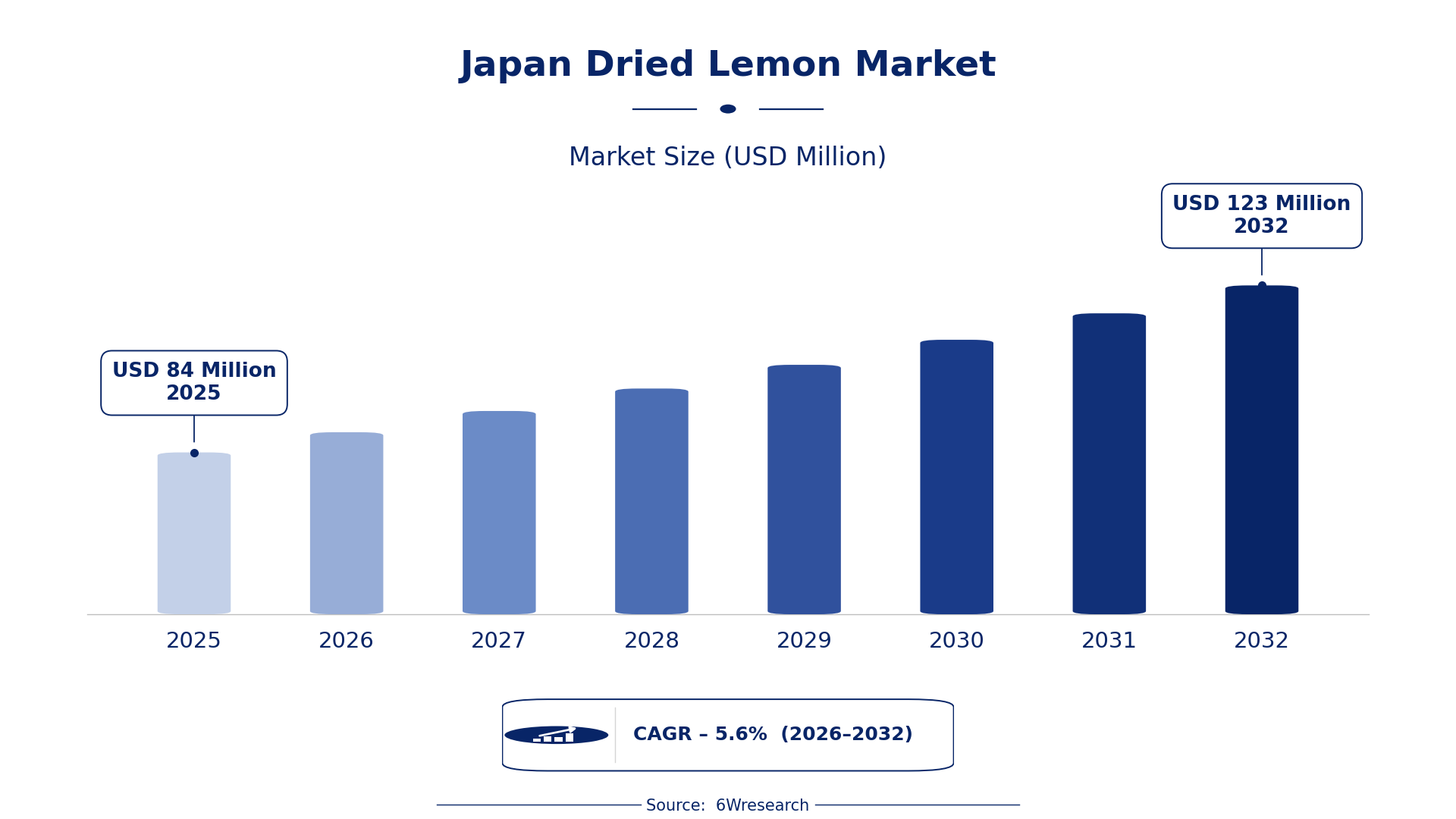
According to 6Wresearch internal database and industry insights, the Japan Dried Lemon Market was valued at USD 84 Million in 2025 and is projected to reach USD 123 Million by 2032, growing at a CAGR of approximately 5.6% during 2026–2032.
Japan Dried Lemon Market Highlights
| Report Metric | Details |
| Report Name | Japan Dried Lemon Market (2026-2032) |
| Market Size 2025 | USD 84 Million |
| Market Size 2032 | USD 123 Million |
| Absolute Growth 2025–2032 | USD 39 Million |
| CAGR 2026–2032 | 5.6% |
| Peak Annual Growth | 6.4% in 2027 |
| Forecast Period | 2026–2032 |
| Historical Data | 2022–2025 |
| Base Year | 2025 |
| Leading Type, 2025 | Species (58% share) |
| Leading Application, 2025 | Direct Consumption (38% share) |
| Fastest-Growing Type | Additive (7.6% CAGR) |
| Fastest-Growing Application | Candy and Snacks (7.4% CAGR) |
| Growing Sector | Culinary applications |
| Key End Users | Food processors, specialty food stores, herbal tea producers, confectionery manufacturers |
Japan Dried Lemon Market Year-wise Growth Rate and Key Drivers (2022–2032)
This graph illustrates the annual growth rates of the market from 2022 to 2032, highlighting a steady upward trajectory and projected market expansion over the forecast period.
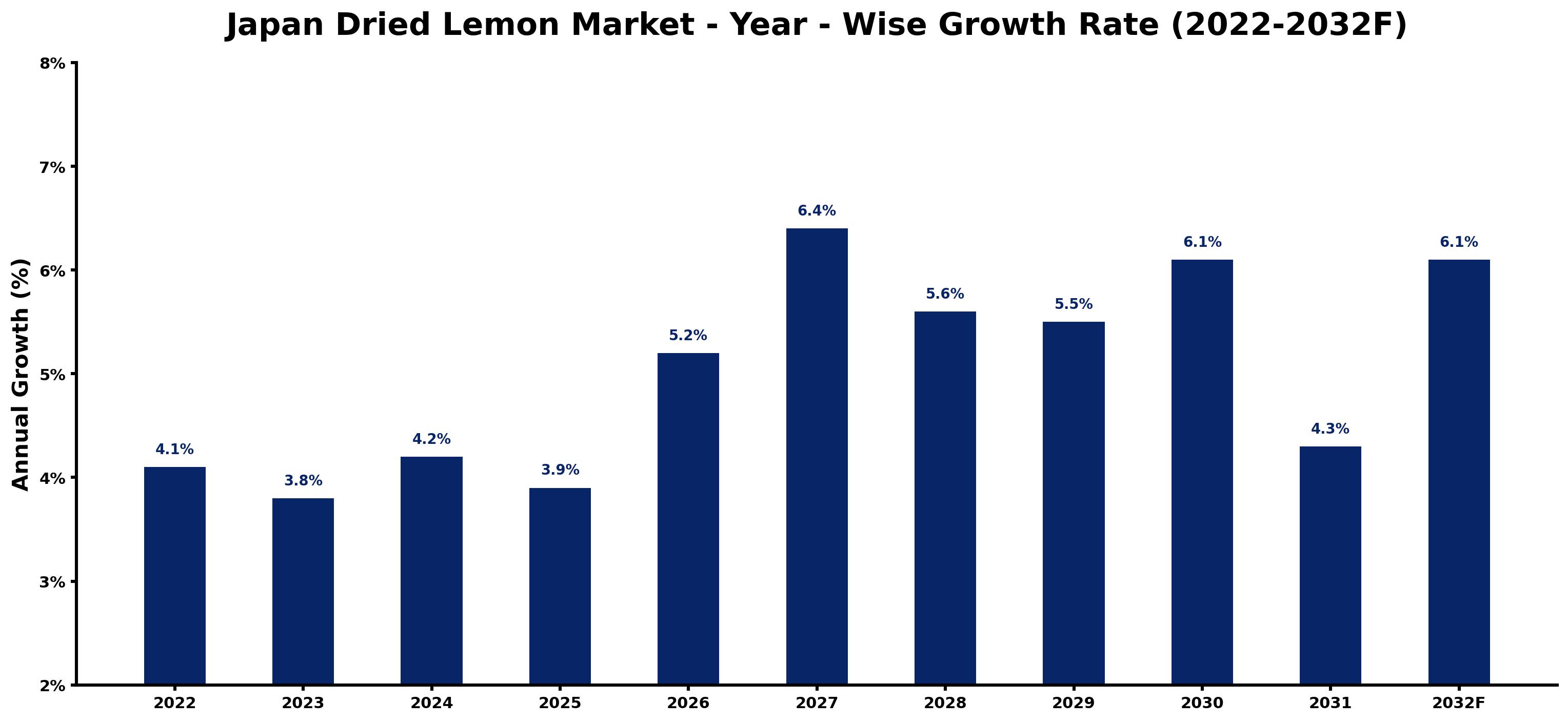
For each year, the table pairs the estimated growth rate with the leading influence on demand, showing how the drivers changed across the period.
| Year | Estimated Annual Growth (%) | Market Rationale |
| 2022 | 4.1 | The market was stable with steady demand from culinary applications and herbal teas. |
| 2023 | 3.8 | Demand growth slowed due to a temporary dip in consumer spending on specialty foods. |
| 2024 | 4.2 | Demand increased as culinary trends highlighted dried lemon's versatility in various dishes. |
| 2025 | 3.9 | Growth slowed again as competition among suppliers intensified in urban areas. |
| 2026 | 5.2 | Demand is expected to rise as the food processing industry expands and requires more dried lemon. |
| 2027 | 6.4 | The market is projected to peak as consumer interest in health and wellness products surges. |
| 2028 | 5.6 | Growth is expected to slow as market saturation begins to affect new product introductions. |
| 2029 | 5.5 | Demand will continue to slow as buyers become more discerning about product quality. |
| 2030 | 6.1 | Growth is projected to accelerate as new culinary trends embrace dried lemon in diverse recipes. |
| 2031 | 4.3 | The market will experience a slowdown as economic factors influence purchasing habits. |
| 2032 | 6.1 | Demand is expected to rise as health trends increasingly favour natural flavourings. |
Note: Market size estimations and growth projections presented in this report are based on 6Wresearch's proprietary forecasting methodology, utilizing the latest available industry data, government publications, and primary research inputs.
Japan Dried Lemon Market Synopsis
Dried lemon is a dehydrated citrus product made by removing moisture from fresh lemons, primarily used for flavouring in culinary applications, herbal teas, and as a garnish. The Japan Dried Lemon Market is growing due to rising domestic consumption and the increasing popularity of dried lemon in traditional Japanese herbal teas. In 2023, the average annual consumption of dried fruits in Japan is around 1.5 kg per person, highlighting strong market potential for dried lemon products. The demand is further supported by the expanding food processing industry, valued at approximately 20 trillion yen, which is incorporating dried lemon into various culinary applications.
Market Dynamics Impact Analysis (2026–2032)
| Factor | Type | Impact | Primary Segment Affected |
| Rising culinary trends favouring natural ingredients | Driver | High | Species |
| Growing health consciousness among consumers | Driver | High | Direct Consumption |
| Expansion of specialty food stores in urban areas | Opportunity | High | Direct Consumption |
| Increased interest in herbal teas and natural flavourings | Opportunity | High | Lemon Tea |
| Competition from alternative flavouring agents | Restraint | Medium | Species |
| Limited awareness of dried lemon benefits among consumers | Restraint | Medium | Additive |
| High production costs affecting pricing strategies | Challenge | High | Candy and Snacks |
| Supply chain disruptions impacting availability | Challenge | Medium | Candy and Snacks |
Evaluation of Drivers in Japan Dried Lemon Market (2026–2032)
Key forces behind demand, with the segment each one moves most, are listed below.
| Drivers | Primary Segment Affected | Why It Matters (Evidence) |
| Increased culinary applications for dried lemon | Species | Dried lemon is widely used in various dishes, especially in the Kansai region known for its culinary diversity. |
| Health trends promoting natural ingredients | Direct Consumption | The Japanese population, approximately 125 million, is increasingly gravitating towards health-conscious food choices, boosting demand for dried lemon. |
| Growth of the food processing industry | Additive | The Japanese food processing industry, valued at approximately 20 trillion yen, is expanding its use of flavouring agents like dried lemon. |
| Rising popularity of herbal teas | Lemon Tea | Dried lemon is often used in traditional Japanese herbal teas, appealing to health-conscious consumers seeking natural flavourings. |
| Expansion of specialty stores | Direct Consumption | Urban specialty stores are increasingly stocking dried lemon, catering to a growing consumer base. |
Behind the steady rise in orders sits the growing health consciousness among consumers in urban areas, with approximately 125 million people in Japan increasingly seeking natural flavourings. The food processing industry is expanding its use of dried lemon as a flavouring agent, particularly in confectionery and snacks. Culinary diversity in urban areas drives demand, with dried lemon being incorporated into traditional herbal teas that appeal to health-conscious consumers. The increasing popularity of specialty food stores is making dried lemon more accessible, further boosting its market presence. As consumers continue to favour natural ingredients, the demand for dried lemon is expected to rise over the coming years.
Evaluation of Restraints in Japan Dried Lemon Market
The main factors holding the market back are set out below.
| Market Restraint | Primary Segment Affected | Why It Matters (Evidence) |
| High production costs leading to elevated prices | Candy and Snacks | Producers face rising costs, which may deter price-sensitive consumers from purchasing dried lemon products. |
| Limited consumer awareness of dried lemon's benefits | Additive | Many consumers remain unaware of the culinary applications and health benefits of dried lemon, impacting demand. |
| Competition from alternative flavouring agents | Species | The market faces competition from other natural and artificial flavouring agents, limiting market share for dried lemon. |
| Supply chain disruptions affecting availability | Candy and Snacks | Logistical challenges can lead to inconsistent supply, affecting product availability in specialty stores. |
| Market saturation limiting new product introductions | Direct Consumption | As more products enter the market, differentiation becomes challenging, impacting overall sales growth. |
Japan Dried Lemon Market Challenges
Producers in the Kansai region face challenges with outdated drying technology, limiting efficiency and potentially reducing output by 15%. Compliance with JAS certification imposes financial burdens on small suppliers, leading to delays that affect product availability in urban specialty stores. Unpredictable weather patterns disrupt supply chains, causing postponed deliveries that impact retailers reliant on consistent stock. Buyers encounter rising prices as demand for dried lemon in herbal teas increases, with average annual consumption of dried fruits in Japan at 1.5 kg per person, driving costs higher for consumers.
Trends in the Japan Dried Lemon Market
The following changes are redrawing the Japan Dried Lemon Market.
- Shift in Consumer Preferences towards Natural Ingredients: Consumers are increasingly favouring natural ingredients in their diets, with dried lemon gaining traction in culinary applications. In 2023, approximately 1.5 kg of dried fruits are consumed per person in Japan, indicating a shift towards healthier options.
- Emergence of Dried Lemon in Health and Wellness Trends: Dried lemon is becoming a staple in health and wellness food trends in Japan, particularly in herbal teas. The growing health consciousness among consumers has led to a notable increase in demand for natural flavouring agents.
- Increased Use of Dried Lemon in Confectionery: Candy and snacks producers are incorporating dried lemon to improve flavour profiles, responding to consumer preferences for unique taste experiences. The sector is projected to grow with a CAGR of 7.4% from 2026 to 2032.
- Expansion of Specialty Food Stores: Specialty food stores in urban areas are expanding their offerings to include dried lemon products, catering to the growing demand for unique culinary ingredients. This trend is evident as more stores begin to feature these products prominently.
Investment Opportunities in the Japan Dried Lemon Market
Below are the investment opportunities with the strongest case in the Japan Dried Lemon Market.
- Local Partnerships for Distribution: Establishing partnerships with specialty food stores can facilitate market entry for dried lemon producers. The Kansai region, known for its culinary diversity, presents a promising opportunity for growth.
- Investment in Health Food Products: With the health food market expanding, investment in dried lemon as a natural flavouring agent is timely. The food processing industry, valued at around 20 trillion yen, is a key target for suppliers.
- Certification for Quality Assurance: Obtaining JAS certification can open doors for producers in the Japanese market, ensuring product quality and safety. This certification is essential for gaining consumer trust and increasing market share.
- Focus on Urban Markets: Targeting urban areas where consumer demand for specialty foods is rising can yield substantial returns. The average annual consumption of dried fruits in Japan is around 1.5 kg per person, indicating a growing market.
Government Initiatives in the Japan Dried Lemon Market
The Industrial Standardization Act, amended in 2019, establishes the framework for product standards in Japan, ensuring that dried lemon products meet quality and safety requirements. This law mandates compliance with JIS standards, impacting producers by requiring rigorous testing and certification processes to maintain market access. Additionally, legislation prohibiting misleading labelling protects consumers and ensures fair competition in the market.
In 2023, the GX Basic Policy aims for approximately JPY 150 trillion in public-private decarbonisation investment over ten years, administered by the Government of Japan. This initiative encourages the use of local agricultural products, including dried lemon, promoting sustainability and supporting local producers. The Ministry of Agriculture, Forestry and Fisheries plays a significant role in promoting local agricultural products, creating market opportunities for dried lemon producers.
Future Insight of the Japan Dried Lemon Market
Advancements in dehydration technology will transform production methods, allowing suppliers to meet rising demand more efficiently. By 2032, the integration of local agricultural products into culinary applications will elevate the profile of dried lemon across various markets. The Ministry of Agriculture, Forestry and Fisheries will enhance support for dried lemon, particularly in traditional herbal teas. The food processing industry will increasingly incorporate dried lemon into diverse recipes, creating new opportunities for both buyers and suppliers.
Market Segmentation Analysis
Japan Dried Lemon Market report covers a detailed analysis of the following market segments:
By Type – Species Lead, Additive Expected to Grow Fastest
According to Ravi Bhandari, Research Head at 6Wresearch, the largest type category in 2025 was Species, at 58% of revenue. The species segment commands the largest share due to its essential role in culinary applications, particularly in traditional Japanese dishes. Dried lemon is a preferred flavouring agent in various recipes, especially in the Kansai region, celebrated for its culinary diversity. Additive is set to record the highest CAGR in this split, 7.6% over 2026–2032. The additive segment is experiencing rapid growth as it is increasingly used in processed foods, catering to the rising demand for health-oriented options. This trend is underscored by the fact that the average annual consumption of dried fruits in Japan is around 1.5 kg per person. Suppliers should emphasise the versatility of dried lemon for both culinary and processed food applications.
By Application – Direct Consumption Leads, Candy and Snacks Expected to Grow Fastest
In 2025, Direct Consumption led the application split with a 38% share. Direct consumption leads the market as it includes numerous uses, such as snacks and herbal teas that are integral to Japanese culture. The significant role of dried lemon in traditional herbal teas showcases its importance in direct consumption. Candy and Snacks are projected to grow fastest, at a CAGR of 7.4% during 2026–2032. The candy and snacks segment is the fastest growing, fuelled by a rising interest in unique flavours within confectionery products. As consumer preferences evolve towards distinctive snacks, the incorporation of dried lemon is becoming more prevalent. Buyers should consider the trend of adding dried lemon to snacks, as it can enhance product appeal and meet consumer preferences.
Key Attractiveness of the Report
- 10 Years of Market Numbers
- Historical Data Starting from 2022 to 2025
- Base Year 2025
- Forecast Data until 2032
- Key Performance Indicators Impacting the Market
- Major Upcoming Developments and Projects
Key Highlights of the Report:
- Japan Dried Lemon Market Outlook
- Market Size of Japan Dried Lemon Market, 2025
- Forecast of Japan Dried Lemon Market, 2032
- Historical Data and Forecast of Japan Dried Lemon Revenues & Volume for the Period 2022-2032
- Japan Dried Lemon Market Trend Evolution
- Japan Dried Lemon Market Drivers and Challenges
- Japan Dried Lemon Price Trends
- Japan Dried Lemon Porter's Five Forces
- Japan Dried Lemon Industry Life Cycle
- Historical Data and Forecast of Japan Dried Lemon Market Revenues & Volume By Type for the Period 2022-2032
- Historical Data and Forecast of Japan Dried Lemon Market Revenues & Volume By Species for the Period 2022-2032
- Historical Data and Forecast of Japan Dried Lemon Market Revenues & Volume By Additive for the Period 2022-2032
- Historical Data and Forecast of Japan Dried Lemon Market Revenues & Volume By Color for the Period 2022-2032
- Historical Data and Forecast of Japan Dried Lemon Market Revenues & Volume By Application for the Period 2022-2032
- Historical Data and Forecast of Japan Dried Lemon Market Revenues & Volume By Direct Consumption for the Period 2022-2032
- Historical Data and Forecast of Japan Dried Lemon Market Revenues & Volume By Candy and Snacks for the Period 2022-2032
- Historical Data and Forecast of Japan Dried Lemon Market Revenues & Volume By Lemon Tea for the Period 2022-2032
- Historical Data and Forecast of Japan Dried Lemon Market Revenues & Volume By Others for the Period 2022-2032
- Japan Dried Lemon Import Export Trade Statistics
- Market Opportunity Assessment By Type
- Market Opportunity Assessment By Application
- Japan Dried Lemon Top Companies Market Share
- Japan Dried Lemon Competitive Benchmarking By Technical and Operational Parameters
- Japan Dried Lemon Company Profiles
- Japan Dried Lemon Key Strategic Recommendations
Market Covered
The report covers the following segments.
By Type
- Species
- Additive
- Color
By Application
- Direct Consumption
- Candy and Snacks
- Lemon Tea
- Others































