Japan Healthcare Staffing Market Size & Growth Rate
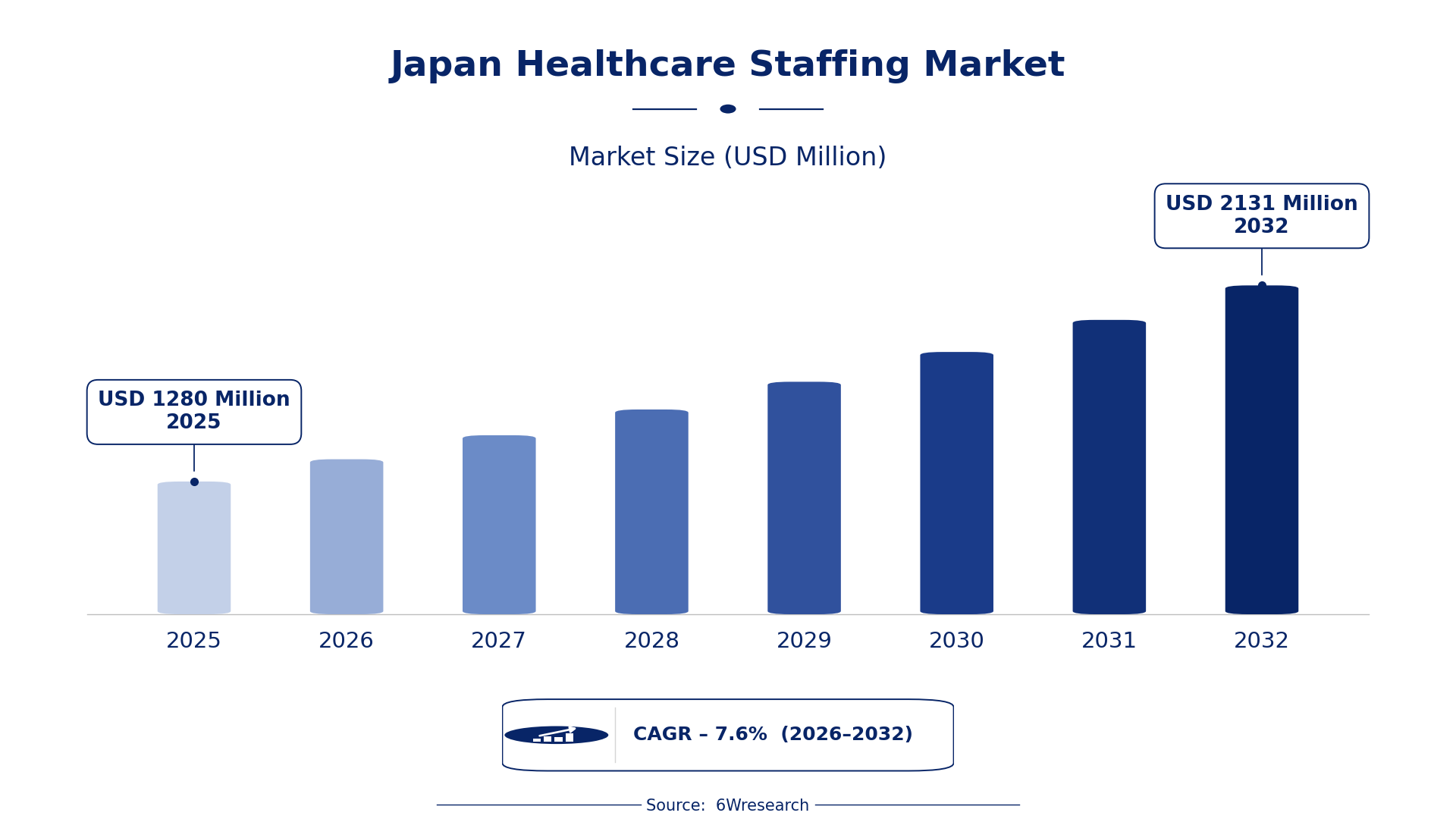
According to 6Wresearch internal database and industry insights, the Japan Healthcare Staffing Market was valued at USD 1,280 Million in 2025 and is projected to reach USD 2,131 Million by 2032, growing at a CAGR of approximately 7.6% during 2026–2032.
Japan Healthcare Staffing Market Highlights
| Report Metric | Details |
| Report Name | Japan Healthcare Staffing Market (2026-2032) |
| Market Size 2025 | USD 1,280 Million |
| Market Size 2032 | USD 2,131 Million |
| Absolute Growth 2025–2032 | USD 851 Million |
| CAGR 2026–2032 | 7.6% |
| Peak Annual Growth | 8.5% in 2029 |
| Forecast Period | 2026–2032 |
| Historical Data | 2022–2025 |
| Base Year | 2025 |
| Leading Service Type, 2025 | Travel Nurse Staffing (52% share) |
| Leading End-use, 2025 | Hospitals (41% share) |
| Fastest-Growing Service Type | Per Diem Nurse Staffing (10.1% CAGR) |
| Fastest-Growing End-use | Clinics (9.6% CAGR) |
| Growing Sector | Clinics |
| Key End Users | Hospitals, Clinics, Ambulatory Facilities, Allied Health Professionals |
Japan Healthcare Staffing Market Year-wise Growth Rate and Key Drivers (2022–2032)
This graph illustrates the annual growth rates of the market from 2022 to 2032, highlighting a steady upward trajectory and projected market expansion over the forecast period.
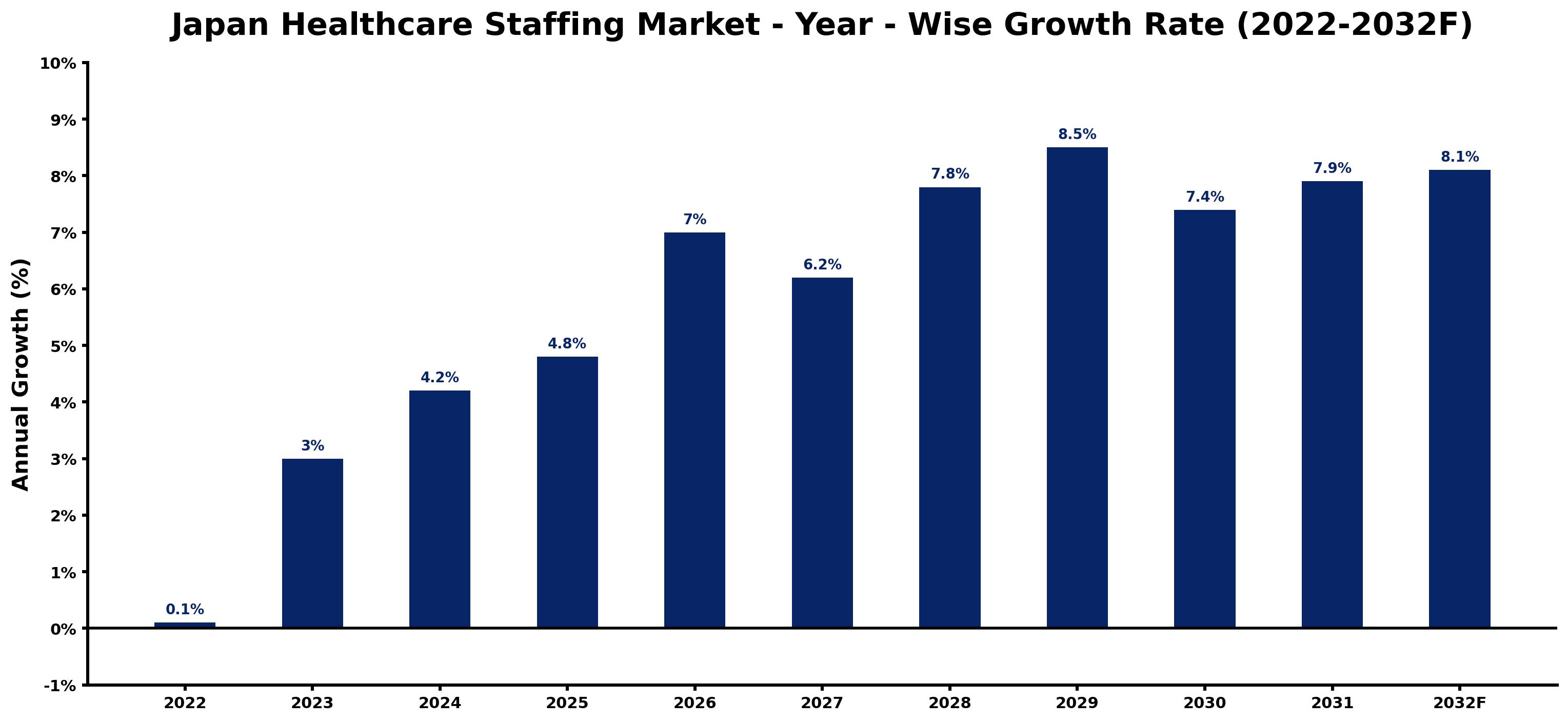
For each year, the table pairs the estimated growth rate with the leading influence on demand, showing how the drivers changed across the period.
| Year | Estimated Annual Growth (%) | Market Rationale |
| 2022 | 0.1 | The market showed minimal growth due to ongoing workforce shortages in healthcare facilities. |
| 2023 | 3.0 | Growth accelerated as healthcare facilities increased hiring to address staffing needs. |
| 2024 | 4.2 | Demand continued to rise with a focus on improving patient care standards. |
| 2025 | 4.8 | Growth peaked as hospitals expanded services amid rising patient numbers. |
| 2026 | 7.0 | The market is expected to grow due to increased nurse recruitment efforts by the government. |
| 2027 | 6.2 | Growth is expected to slow as the market adjusts to new staffing regulations and standards. |
| 2028 | 7.8 | Demand is projected to rise again as healthcare facilities adapt to an aging population's needs. |
| 2029 | 8.5 | The market is projected to reach its peak growth as healthcare staffing becomes a priority for facilities. |
| 2030 | 7.4 | Growth is expected to slow slightly as the market stabilises after rapid expansion. |
| 2031 | 7.9 | Demand is projected to increase as healthcare facilities invest in workforce development initiatives. |
| 2032 | 8.1 | Growth is expected to remain strong as the focus on quality patient care drives staffing needs. |
Note: Market size estimations and growth projections presented in this report are based on 6Wresearch's proprietary forecasting methodology, utilizing the latest available industry data, government publications, and primary research inputs.
Japan Healthcare Staffing Market Synopsis
Healthcare staffing in Japan involves recruiting and placing healthcare professionals, including nurses and allied health workers, to meet the demands of various facilities. The Japan Healthcare Staffing Market is projected to grow to USD 2,131 Million by 2032, supported by a growing aging population and healthcare spending of JPY 46.7 trillion in fiscal 2022.
Market Dynamics Impact Analysis (2026–2032)
| Factor | Type | Impact | Primary Segment Affected |
| Aging population increases demand for healthcare services. | Driver | High | Hospitals |
| Government initiatives to enhance nurse recruitment boost staffing levels. | Driver | High | Per Diem Nurse Staffing |
| Growing number of clinics creates demand for flexible staffing solutions. | Opportunity | High | Clinics |
| Increased healthcare expenditure allows for better staffing solutions. | Opportunity | Medium | Allied Healthcare Staffing |
| Regulatory challenges can limit the speed of staffing agency operations. | Restraint | High | Travel Nurse Staffing |
| Limited availability of qualified healthcare professionals constrains growth. | Restraint | Medium | Locum Tenens Staffing |
| High competition among staffing agencies can drive down pricing. | Challenge | Medium | Allied Healthcare Staffing |
| Fluctuating healthcare policies can create uncertainty for staffing agencies. | Challenge | High | Per Diem Nurse Staffing |
Evaluation of Drivers in Japan Healthcare Staffing Market (2026–2032)
These are the developments adding the most demand over the forecast period.
| Drivers | Primary Segment Affected | Why It Matters (Evidence) |
| Aging population necessitates more healthcare professionals. | Hospitals | 29.3% of Japan's population was aged 65 or older in September 2024, increasing the need for staff. |
| Government funding for nurse recruitment enhances staffing levels. | Per Diem Nurse Staffing | The government launched a program in 2023 to increase nurse recruitment by 20%. |
| Rising healthcare expenditure supports staffing agency growth. | Allied Healthcare Staffing | Japan's national medical care expenditure was about JPY 46.7 trillion in fiscal 2022. |
| Increased number of clinics boosts demand for flexible staffing. | Clinics | The number of clinics in Japan reached 100,000 in 2023, creating more staffing needs. |
| Growing focus on patient care standards drives staffing demand. | Locum Tenens Staffing | The average nurse-to-patient ratio in Japan is approximately 1:5, necessitating more staff. |
Volumes grow on the back of an aging population, with over 8 million healthcare workers in Japan as of 2023. This demographic shift increases the need for healthcare professionals, particularly in hospitals. Japan's national medical care expenditure reached JPY 46.7 trillion in fiscal 2022, allowing facilities to invest in staffing. The rise in the number of clinics to 100,000 in 2023 creates further opportunities for flexible staffing solutions, especially in urban areas like Osaka and Yokohama.
Evaluation of Restraints in Japan Healthcare Staffing Market
Several factors work against faster growth; the main ones are summarised below.
| Market Restraint | Primary Segment Affected | Why It Matters (Evidence) |
| Regulatory challenges limit the operational speed of staffing agencies. | Travel Nurse Staffing | The Ministry of Health, Labour and Welfare oversees staffing regulations, which can slow agency processes. |
| Limited availability of qualified healthcare professionals constrains growth. | Locum Tenens Staffing | The high demand for qualified staff often outpaces availability, affecting service delivery. |
| High competition among staffing agencies can drive down pricing. | Allied Healthcare Staffing | Increased competition may lead to reduced margins for staffing agencies, impacting profitability. |
| Fluctuating healthcare policies create uncertainty for staffing agencies. | Per Diem Nurse Staffing | Changes in government policies can affect staffing contracts and agency operations. |
| The average nurse-to-patient ratio can strain staffing resources. | Hospitals | With a ratio of approximately 1:5, hospitals face challenges in maintaining adequate staffing levels. |
Japan Healthcare Staffing Market Challenges
A critical obstacle in the healthcare staffing market is the shortage of qualified nurses, as Japan's population aged 65 or older reached 29.3% in 2024. This demographic trend results in longer wait times for patient care, forcing hospitals to maintain a nurse-to-patient ratio of 1:5, which strains resources. Supply issues persist as staffing agencies find it challenging to recruit personnel, particularly in urban centres like Osaka and Yokohama, leading to delays in filling essential roles. Regulatory compliance with standards such as ISO 9001 increases operational costs for agencies, which ultimately raises prices for hospitals seeking dependable staffing solutions.
Trends in the Japan Healthcare Staffing Market
Below are the shifts with the largest effect on the Japan Healthcare Staffing Market.
- Shift towards Per Diem Staffing Solutions: In 2023, per diem staffing solutions gained traction as healthcare facilities sought flexibility. This trend is evident in urban areas like Osaka, where demand for temporary staffing rose by 10%.
- Increased Focus on Allied Health Professionals: The growing recognition of allied health professionals, such as physiotherapists and radiographers, is reshaping staffing needs. In 2023, the number of allied health professionals increased by 15%.
- Expansion of Telehealth Services: Telehealth services are becoming more prevalent, necessitating staffing adjustments. In 2023, the adoption of telehealth solutions surged, impacting staffing requirements.
- Rising Demand for Flexible Staffing in Clinics: Clinics are increasingly seeking flexible staffing solutions to meet patient needs. In 2023, the number of clinics reached 100,000, driving demand for adaptable staffing.
Investment Opportunities in the Japan Healthcare Staffing Market
The openings below show where demand in the Japan Healthcare Staffing Market is visible and how suppliers can enter.
- Healthcare Facilities Seeking Staffing Solutions: Hospitals are currently looking for staffing solutions to address workforce shortages. With Japan's healthcare expenditure at JPY 46.7 trillion in 2022, agencies can meet this demand effectively.
- Timing is Right for Nurse Recruitment: Now is an opportune time for staffing agencies to invest in nurse recruitment. The government's 20% increase in nurse recruitment in 2023 creates a significant gap to fill.
- Urban Clinics in Need of Staff: Urban clinics are experiencing a surge in patient numbers, creating a need for staffing solutions. With 100,000 clinics in Japan, agencies can tap into this growing market.
- Growing Demand for Allied Health Professionals: The increasing focus on allied health professionals presents a promising opportunity. The rise in demand for these roles can be met by staffing agencies looking to expand.
Government Initiatives in the Japan Healthcare Staffing Market
The Medical Care Act of 1948 establishes standards for hospitals and clinics, including staffing requirements. This law mandates healthcare facilities to maintain adequate staffing levels, directly impacting the operations of staffing agencies. The Long-Term Care Insurance Act, in force since 2000, funds nursing care and support services for older people, further influencing staffing demands.
The Pharmaceuticals and Medical Devices Agency (PMDA) oversees the implementation of healthcare staffing regulations. Agencies must comply with these standards to operate, ensuring that they provide qualified personnel to healthcare facilities.
Future Insight of the Japan Healthcare Staffing Market
The government's focus on healthcare workforce development will reshape the market by 2032, prompting suppliers to refine recruitment strategies. The launch of new training programmes will elevate the skill levels of healthcare professionals, ensuring a more competent workforce. Technological advancements will streamline the recruitment process, allowing agencies to connect more effectively with healthcare facilities. As the number of hospitals remains around 8,100, the demand for tailored staffing solutions will grow, compelling suppliers to adjust their offerings to meet specific facility needs.
Market Segmentation Analysis
Japan Healthcare Staffing Market report covers a detailed analysis of the following market segments:
By Service Type – Travel Nurse Staffing Leads, Per Diem Nurse Staffing Expected to Grow Fastest
According to Shubham Padhi, Research Analyst at 6Wresearch, Travel Nurse Staffing took 52% of service type revenue in 2025, more than any other category. Travel Nurse Staffing holds the largest share as it is essential for hospitals to fill temporary gaps in staffing, particularly during peak seasons. For instance, the average nurse-to-patient ratio of 1:5 highlights the critical need for additional nursing staff in healthcare settings. Over 2026–2032, Per Diem Nurse Staffing is expected to post the fastest growth, at a CAGR of 10.1%. Per Diem Nurse Staffing is experiencing rapid growth due to its flexibility, enabling healthcare facilities to quickly adapt to fluctuating patient volumes. The recent government initiative to increase nurse recruitment by 20% further supports this rising demand for adaptable staffing solutions. Suppliers should focus on offering flexible staffing options to meet the increasing needs of healthcare facilities.
By End-use – Hospitals Lead, Clinics Expected to Grow Fastest
The largest end-use category in 2025 was Hospitals, at 41% of revenue. Hospitals represent the largest segment of the healthcare staffing market as they are the primary users of staffing services, necessitating a steady workforce to ensure patient care. The presence of approximately 8,100 hospitals in Japan highlights the critical need for qualified healthcare professionals to fill staffing gaps. Clinics are set to record the highest CAGR in this split, 9.6% over 2026–2032. Clinics are experiencing rapid growth in staffing requirements due to their expansion to meet outpatient care needs, with the number of clinics reaching 100,000 in 2023. This surge reflects a broader trend towards accessible healthcare, driving the demand for staffing solutions in this sector. Suppliers should focus on developing tailored staffing solutions for clinics to capitalise on the increasing demand in this rapidly growing segment.
Key Attractiveness of the Report
- 10 Years of Market Numbers
- Historical Data Starting from 2022 to 2025
- Base Year 2025
- Forecast Data until 2032
- Key Performance Indicators Impacting the Market
- Major Upcoming Developments and Projects
Key Highlights of the Report:
- Japan Healthcare Staffing Market Outlook
- Market Size of Japan Healthcare Staffing Market, 2025
- Forecast of Japan Healthcare Staffing Market, 2032
- Historical Data and Forecast of Japan Healthcare Staffing Revenues & Volume for the Period 2022-2032
- Japan Healthcare Staffing Market Trend Evolution
- Japan Healthcare Staffing Market Drivers and Challenges
- Japan Healthcare Staffing Price Trends
- Japan Healthcare Staffing Porter's Five Forces
- Japan Healthcare Staffing Industry Life Cycle
- Historical Data and Forecast of Japan Healthcare Staffing Market Revenues & Volume By Service Type for the Period 2022-2032
- Historical Data and Forecast of Japan Healthcare Staffing Market Revenues & Volume By Travel Nurse Staffing for the Period 2022-2032
- Historical Data and Forecast of Japan Healthcare Staffing Market Revenues & Volume By Per Diem Nurse Staffing for the Period 2022-2032
- Historical Data and Forecast of Japan Healthcare Staffing Market Revenues & Volume By Locum Tenens Staffing for the Period 2022-2032
- Historical Data and Forecast of Japan Healthcare Staffing Market Revenues & Volume By Allied Healthcare Staffing for the Period 2022-2032
- Historical Data and Forecast of Japan Healthcare Staffing Market Revenues & Volume By End-use for the Period 2022-2032
- Historical Data and Forecast of Japan Healthcare Staffing Market Revenues & Volume By Hospitals for the Period 2022-2032
- Historical Data and Forecast of Japan Healthcare Staffing Market Revenues & Volume By Clinics for the Period 2022-2032
- Historical Data and Forecast of Japan Healthcare Staffing Market Revenues & Volume By Ambulatory Facilities for the Period 2022-2032
- Historical Data and Forecast of Japan Healthcare Staffing Market Revenues & Volume By Others for the Period 2022-2032
- Japan Healthcare Staffing Import Export Trade Statistics
- Market Opportunity Assessment By Service Type
- Market Opportunity Assessment By End-use
- Japan Healthcare Staffing Top Companies Market Share
- Japan Healthcare Staffing Competitive Benchmarking By Technical and Operational Parameters
- Japan Healthcare Staffing Company Profiles
- Japan Healthcare Staffing Key Strategic Recommendations
Market Covered
Coverage by segment is as follows.
By Service Type
- Travel Nurse Staffing
- Per Diem Nurse Staffing
- Locum Tenens Staffing
- Allied Healthcare Staffing
By End-use
- Hospitals
- Clinics
- Ambulatory Facilities
- Others































