Japan Home Healthcare Wound Management Market Size & Growth Rate
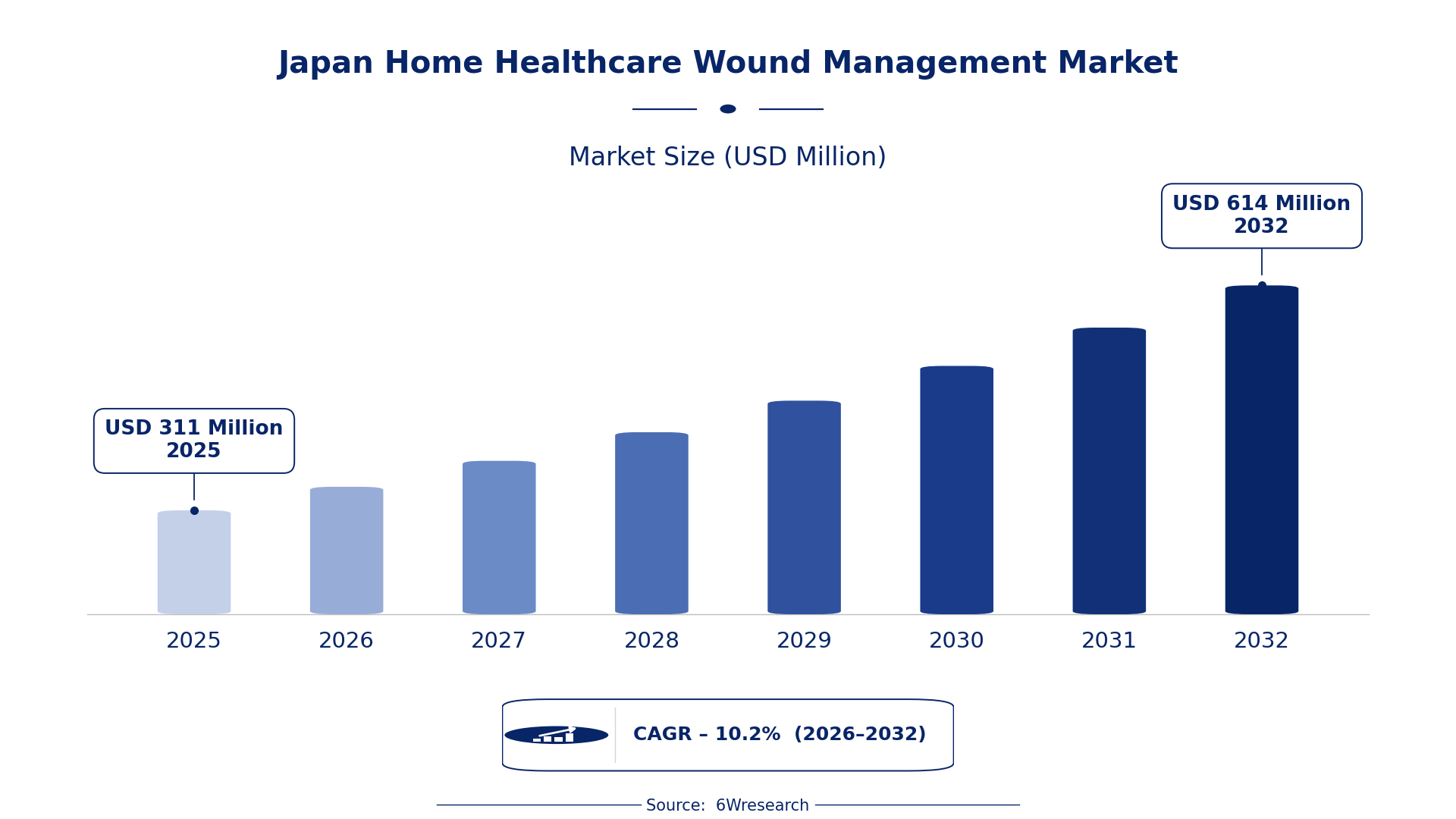
According to 6Wresearch internal database and industry insights, the Japan Home Healthcare Wound Management Market was valued at USD 311 Million in 2025 and is projected to reach USD 614 Million by 2032, growing at a CAGR of approximately 10.2% during 2026–2032.
Japan Home Healthcare Wound Management Market Highlights
| Report Metric | Details |
| Report Name | Japan Home Healthcare Wound Management Market (2026-2032) |
| Market Size 2025 | USD 311 Million |
| Market Size 2032 | USD 614 Million |
| Absolute Growth 2025–2032 | USD 303 Million |
| CAGR 2026–2032 | 10.2% |
| Peak Annual Growth | 11.0% in 2032 |
| Forecast Period | 2026–2032 |
| Historical Data | 2022–2025 |
| Base Year | 2025 |
| Leading Product Type, 2025 | Dressings & Bandages (44% share) |
| Leading Wound Type, 2025 | Minor to Chronic (37% share) |
| Leading Distribution Channel, 2025 | Pharmacies (55% share) |
| Leading End User, 2025 | Chronic Wound Patients (43% share) |
| Fastest-Growing Product Type | Negative Pressure Therapy (14.6% CAGR) |
| Fastest-Growing Wound Type | Deep Wound Recovery (14.4% CAGR) |
| Fastest-Growing Distribution Channel | Online Retail (13.3% CAGR) |
| Fastest-Growing End User | Home-Based Caregivers (13.1% CAGR) |
| Growing Sector | Home Healthcare |
| Key End Users | Chronic Wound Patients, Home-Based Caregivers, Long-Term Care Providers, Post-Operative Patients |
Japan Home Healthcare Wound Management Market Year-wise Growth Rate and Key Drivers (2022–2032)
This graph illustrates the annual growth rates of the market from 2022 to 2032, highlighting a steady upward trajectory and projected market expansion over the forecast period.
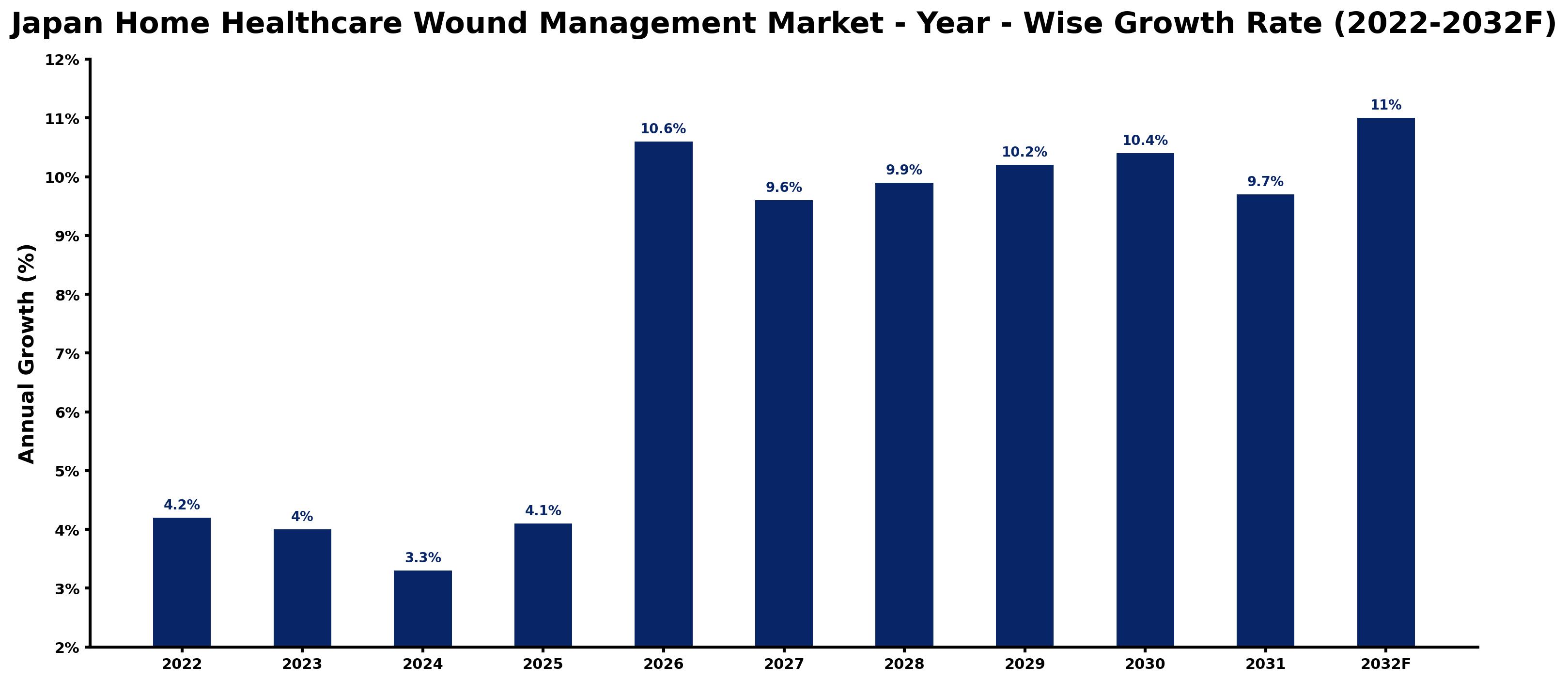
The yearly estimates that follow link every growth rate to its principal driver, so readers can see why the pace changed in each period.
| Year | Estimated Annual Growth (%) | Market Rationale |
| 2022 | 4.2 | The market experienced steady growth due to strong demand for home healthcare solutions. |
| 2023 | 4.0 | Growth slowed slightly as the market adjusted to previous high demand levels. |
| 2024 | 3.3 | The market continued to grow, but at a slower pace due to market saturation. |
| 2025 | 4.1 | Growth accelerated as awareness of home healthcare wound management increased. |
| 2026 | 10.6 | Demand is expected to surge, driven by the rising elderly population needing care. |
| 2027 | 9.6 | Growth is projected to slow as the market begins to stabilise after rapid expansion. |
| 2028 | 9.9 | Demand is expected to increase again, supported by advancements in wound management technologies. |
| 2029 | 10.2 | The market is projected to continue expanding, driven by ongoing innovations in treatment options. |
| 2030 | 10.4 | Growth is expected to remain strong as more patients opt for home-based care solutions. |
| 2031 | 9.7 | The market will see a slight slowdown as competition intensifies among suppliers. |
| 2032 | 11.0 | The market is expected to peak as demand for advanced wound care products surges. |
Note: Market size estimations and growth projections presented in this report are based on 6Wresearch's proprietary forecasting methodology, utilizing the latest available industry data, government publications, and primary research inputs.
Japan Home Healthcare Wound Management Market Synopsis
The Japan Home Healthcare Wound Management Market is expanding due to an aging population, with over 1 million chronic wound patients. The increasing prevalence of chronic conditions and the shift towards home healthcare solutions are driving demand, supported by initiatives like the 2023 program to improve services for the elderly and increase access to essential products.
Market Dynamics Impact Analysis (2026–2032)
| Factor | Type | Impact | Primary Segment Affected |
| Aging population driving demand for home healthcare solutions | Driver | High | Chronic Wound Patients |
| Advancements in negative pressure therapy technology | Driver | High | Negative Pressure Therapy |
| Growing online retail channel for healthcare products | Opportunity | Medium | Online Retail |
| Expansion of long-term care facilities offering wound management services | Opportunity | Medium | Long-Term Care Providers |
| High competition among suppliers leading to price pressures | Restraint | High | Dressings & Bandages |
| Regulatory compliance costs affecting product pricing | Restraint | Medium | Antiseptic Creams |
| Limited awareness among patients about available home care options | Challenge | High | Home-Based Caregivers |
| Supply chain disruptions impacting product availability | Challenge | Medium | Gauze & Foam Dressings |
Evaluation of Drivers in Japan Home Healthcare Wound Management Market (2026–2032)
Key forces behind demand, with the segment each one moves most, are listed below.
| Drivers | Primary Segment Affected | Why It Matters (Evidence) |
| Increasing elderly population requiring home healthcare solutions | Chronic Wound Patients | With 29.3% of the population aged 65 or older, demand for home healthcare solutions rises. |
| Rising prevalence of chronic wounds among patients | Minor to Chronic | Over 1 million chronic wound patients in Japan drive the need for effective management. |
| Growth of negative pressure therapy adoption in home settings | Negative Pressure Therapy | Negative pressure therapy is increasingly used for complex wound management at home. |
| Expansion of pharmacies as primary distribution channels | Pharmacies | Pharmacies account for over 50% of wound care product sales in Japan. |
| Advancements in wound care product technology | Dressings & Bandages | Innovations in materials improve the effectiveness of dressings and bandages. |
Orders keep climbing as the elderly population continues to grow, with over 1 million chronic wound patients needing effective management solutions. The adoption of negative pressure therapy is increasing in home care settings, improving recovery for complex wounds. Pharmacies dominate distribution, accounting for over 50% of sales, while advancements in wound care technologies improve treatment outcomes. These factors encourage more patients to seek home healthcare options, driving overall market growth.
Evaluation of Restraints in Japan Home Healthcare Wound Management Market
Several factors work against faster growth; the main ones are summarised below.
| Market Restraint | Primary Segment Affected | Why It Matters (Evidence) |
| High competition leading to price pressures | Dressings & Bandages | Intense competition among suppliers can lead to reduced profit margins for manufacturers. |
| Regulatory compliance costs affecting pricing | Antiseptic Creams | Manufacturers must invest in compliance with JIS standards, raising product costs. |
| Limited patient awareness of home care options | Home-Based Caregivers | Many patients are unaware of available home healthcare solutions, limiting market growth. |
| Supply chain disruptions impacting availability | Gauze & Foam Dressings | Disruptions in supply chains can lead to delays in product availability for consumers. |
| Challenges in training home-based caregivers | Home-Based Caregivers | Inadequate training programs can hinder effective wound management at home. |
Japan Home Healthcare Wound Management Market Challenges
Over 1 million chronic wound patients in Japan face difficulties accessing effective home healthcare solutions, resulting in prolonged recovery times and increased hospital readmissions. A shortage of trained professionals in wound management limits the quality of care, compelling buyers to rely on inadequate treatments. Rising costs for advanced wound management products strain hospitals, with national medical care expenditure reaching JPY 46.7 trillion in 2022, restricting their ability to acquire necessary supplies. Stringent regulations, such as JIS standards governing product quality, impose additional compliance costs on producers, delaying product launches and constraining market availability.
Trends in the Japan Home Healthcare Wound Management Market
Four trends stand out in the Japan Home Healthcare Wound Management Market.
- Shift Towards Online Retail for Healthcare Products: Home-based caregivers are increasingly using online sales channels, with a 30% rise in online retail sales of healthcare products last year. This shift enables consumers to conveniently access wound management products.
- Growing Demand for Negative Pressure Therapy: Negative pressure therapy is gaining popularity in home care settings, with a marked increase in its adoption among chronic wound patients. This trend is set to improve recovery rates and patient satisfaction.
- Expansion of Long-Term Care Facilities: Long-term care providers are enhancing their wound management services, responding to the rising demand from an aging population. This expansion is crucial for meeting the needs of chronic wound patients.
- Increased Focus on Training Home-Based Caregivers: Home-based caregivers are benefiting from more training programs aimed at improving wound management skills. This initiative is important for ensuring effective care for the elderly and chronic wound patients.
Investment Opportunities in the Japan Home Healthcare Wound Management Market
Several openings in the Japan Home Healthcare Wound Management Market merit attention from investors.
- Home-Based Caregivers Seeking Effective Wound Management Solutions: With over 1 million chronic wound patients, there is a rising need for effective wound management solutions. Suppliers can target home-based caregivers by offering training and products tailored for home use.
- Supply of Advanced Negative Pressure Therapy Devices: The growing adoption of negative pressure therapy presents an opportunity for suppliers to provide advanced devices. This is particularly relevant for long-term care providers aiming to improve patient outcomes.
- Investment in Online Retail Channels: Online retail sales of healthcare products have risen by 30% in the past year, highlighting a market gap. Suppliers should invest in e-commerce strategies to reach a wider audience.
- Enhancement of Wound Management Training Programs: The demand for trained home-based caregivers is increasing, creating an opportunity for educational providers. Investing in training programs can enhance wound care management in home settings.
Government Initiatives in the Japan Home Healthcare Wound Management Market
The Long-Term Care Insurance Act, in force since 2000, provides funding for nursing care and support services, ensuring access to essential home healthcare products. Additionally, the Medical Care Act sets standards for hospitals and clinics, impacting the quality of wound management services available to patients.
The Health Insurance Bureau oversees the implementation of home healthcare initiatives, including the 2023 program aimed at improving services for the elderly. This program allocates funds to enhance infrastructure and support for home-based caregivers, ensuring better access to wound management solutions.
Future Insight of the Japan Home Healthcare Wound Management Market
Negative pressure therapy will reshape home care demand by 2032, driven by technological advancements and improved caregiver training. New chronic wound management guidelines will standardise treatment protocols, enhancing patient outcomes. Government funding for home healthcare infrastructure will strengthen distribution networks, benefiting suppliers. The rise in online sales of healthcare products, which increased by 30% last year, will continue to provide buyers with better access to essential management solutions.
Market Segmentation Analysis
Japan Home Healthcare Wound Management Market report covers a detailed analysis of the following market segments:
By Product Type – Dressings & Bandages Lead, Negative Pressure Therapy Expected to Grow Fastest
According to Saurav Kr Singh, Senior Research Analyst at 6Wresearch, the largest product type category in 2025 was Dressings & Bandages, at 44% of revenue. Dressings and bandages hold the largest share as they are essential for treating various wound types, particularly in home healthcare. Their widespread use is evident in the Tokyo region, where demand for effective wound management solutions is high. The quickest growth will come from Negative Pressure Therapy, forecast to expand at a CAGR of 14.6% between 2026 and 2032. Negative pressure therapy is experiencing rapid growth due to its effectiveness in managing complex wounds, with increased adoption in home care settings. The introduction of new guidelines for chronic wound care management in 2023 is likely to further accelerate its use. Suppliers must consider expanding their offerings in negative pressure therapy to meet the increasing demand.
By Wound Type – Minor to Chronic Leads, Deep Wound Recovery Expected to Grow Fastest
Minor to Chronic took 37% of wound type revenue in 2025, more than any other category. The minor to chronic wound category leads the market as it addresses a broad spectrum of wound severity, catering to a substantial patient population. With over 1 million chronic wound patients in Japan, this segment highlights the critical need for effective wound management solutions. Deep Wound Recovery is set to record the highest CAGR in this split, 14.4% over 2026–2032. Deep wound recovery is the fastest-growing segment, driven by the urgent need for effective healing solutions for more severe injuries. The increasing prevalence of chronic wound patients further propels this growth, as they often require specialised care. Suppliers must prioritise the development of products tailored for deep wound recovery to seize this expanding market opportunity.
By Distribution Channel – Pharmacies Lead, Online Retail Expected to Grow Fastest
Pharmacies held 55% of the Japan Home Healthcare Wound Management Market by distribution channel in 2025. Pharmacies lead the distribution channel, accounting for over 50% of wound care product sales in Japan. They serve as a crucial access point for consumers seeking wound management solutions, reinforcing their importance in the market. Over 2026–2032, Online Retail is expected to post the fastest growth, at a CAGR of 13.3%. Online retail is the fastest-growing channel, with a 30% increase in sales over the past year, reflecting a shift towards more convenient purchasing methods. This trend is expected to continue as consumers increasingly prefer online options for healthcare products. Suppliers should focus on enhancing their online distribution strategies to capitalise on the growing trend towards online retail.
By End User – Chronic Wound Patients Lead, Home-Based Caregivers Expected to Grow Fastest
With 43% of end user revenue in 2025, Chronic Wound Patients was the largest category. Chronic wound patients represent the largest end-user group, as they require ongoing management for their conditions. With an average patient age over 70 years, this demographic is particularly reliant on home healthcare solutions. Home-Based Caregivers are projected to grow fastest, at a CAGR of 13.1% during 2026–2032. Home-based caregivers are the fastest-growing end-user segment, as more families are engaging them for effective wound management. Training programs for these caregivers are being implemented, which will likely increase their involvement in patient care. Suppliers should consider developing training resources and products tailored for home-based caregivers to support this emerging user group.
Key Attractiveness of the Report
- 10 Years of Market Numbers
- Historical Data Starting from 2022 to 2025
- Base Year 2025
- Forecast Data until 2032
- Key Performance Indicators Impacting the Market
- Major Upcoming Developments and Projects
Key Highlights of the Report:
- Japan Home Healthcare Wound Management Market Outlook
- Market Size of Japan Home Healthcare Wound Management Market, 2025
- Forecast of Japan Home Healthcare Wound Management Market, 2032
- Historical Data and Forecast of Japan Home Healthcare Wound Management Revenues & Volume for the Period 2022-2032F
- Japan Home Healthcare Wound Management Market Trend Evolution
- Japan Home Healthcare Wound Management Market Drivers and Challenges
- Japan Home Healthcare Wound Management Price Trends
- Japan Home Healthcare Wound Management Porter's Five Forces
- Japan Home Healthcare Wound Management Industry Life Cycle
- Historical Data and Forecast of Japan Home Healthcare Wound Management Market Revenues & Volume By Product Type for the Period 2022-2032F
- Historical Data and Forecast of Japan Home Healthcare Wound Management Market Revenues & Volume By Dressings & Bandages for the Period 2022-2032F
- Historical Data and Forecast of Japan Home Healthcare Wound Management Market Revenues & Volume By Antiseptic Creams for the Period 2022-2032F
- Historical Data and Forecast of Japan Home Healthcare Wound Management Market Revenues & Volume By Negative Pressure Therapy for the Period 2022-2032F
- Historical Data and Forecast of Japan Home Healthcare Wound Management Market Revenues & Volume By Gauze & Foam Dressings for the Period 2022-2032F
- Historical Data and Forecast of Japan Home Healthcare Wound Management Market Revenues & Volume By Wound Type for the Period 2022-2032F
- Historical Data and Forecast of Japan Home Healthcare Wound Management Market Revenues & Volume By Minor to Chronic for the Period 2022-2032F
- Historical Data and Forecast of Japan Home Healthcare Wound Management Market Revenues & Volume By Topical Treatment for the Period 2022-2032F
- Historical Data and Forecast of Japan Home Healthcare Wound Management Market Revenues & Volume By Deep Wound Recovery for the Period 2022-2032F
- Historical Data and Forecast of Japan Home Healthcare Wound Management Market Revenues & Volume By Surgical/Trauma for the Period 2022-2032F
- Historical Data and Forecast of Japan Home Healthcare Wound Management Market Revenues & Volume By Distribution Channel for the Period 2022-2032F
- Historical Data and Forecast of Japan Home Healthcare Wound Management Market Revenues & Volume By Pharmacies for the Period 2022-2032F
- Historical Data and Forecast of Japan Home Healthcare Wound Management Market Revenues & Volume By Online Retail for the Period 2022-2032F
- Historical Data and Forecast of Japan Home Healthcare Wound Management Market Revenues & Volume By Specialty Distributors for the Period 2022-2032F
- Historical Data and Forecast of Japan Home Healthcare Wound Management Market Revenues & Volume By Hospital Supply Stores for the Period 2022-2032F
- Historical Data and Forecast of Japan Home Healthcare Wound Management Market Revenues & Volume By End User for the Period 2022-2032F
- Historical Data and Forecast of Japan Home Healthcare Wound Management Market Revenues & Volume By Chronic Wound Patients for the Period 2022-2032F
- Historical Data and Forecast of Japan Home Healthcare Wound Management Market Revenues & Volume By Home-Based Caregivers for the Period 2022-2032F
- Historical Data and Forecast of Japan Home Healthcare Wound Management Market Revenues & Volume By Long-Term Care Providers for the Period 2022-2032F
- Historical Data and Forecast of Japan Home Healthcare Wound Management Market Revenues & Volume By Post-Operative Patients for the Period 2022-2032F
- Japan Home Healthcare Wound Management Import Export Trade Statistics
- Market Opportunity Assessment By Product Type
- Market Opportunity Assessment By Wound Type
- Market Opportunity Assessment By Distribution Channel
- Market Opportunity Assessment By End User
- Japan Home Healthcare Wound Management Top Companies Market Share
- Japan Home Healthcare Wound Management Competitive Benchmarking By Technical and Operational Parameters
- Japan Home Healthcare Wound Management Company Profiles
- Japan Home Healthcare Wound Management Key Strategic Recommendations
Market Covered
This report examines the market across the segments below.
By Product Type
- Dressings & Bandages
- Antiseptic Creams
- Negative Pressure Therapy
- Gauze & Foam Dressings
By Wound Type
- Minor to Chronic
- Topical Treatment
- Deep Wound Recovery
- Surgical/Trauma
By Distribution Channel
- Pharmacies
- Online Retail
- Specialty Distributors
- Hospital Supply Stores
By End User
- Chronic Wound Patients
- Home-Based Caregivers
- Long-Term Care Providers
- Post-Operative Patients































