Japan Homecare Furniture Market Size & Growth Rate
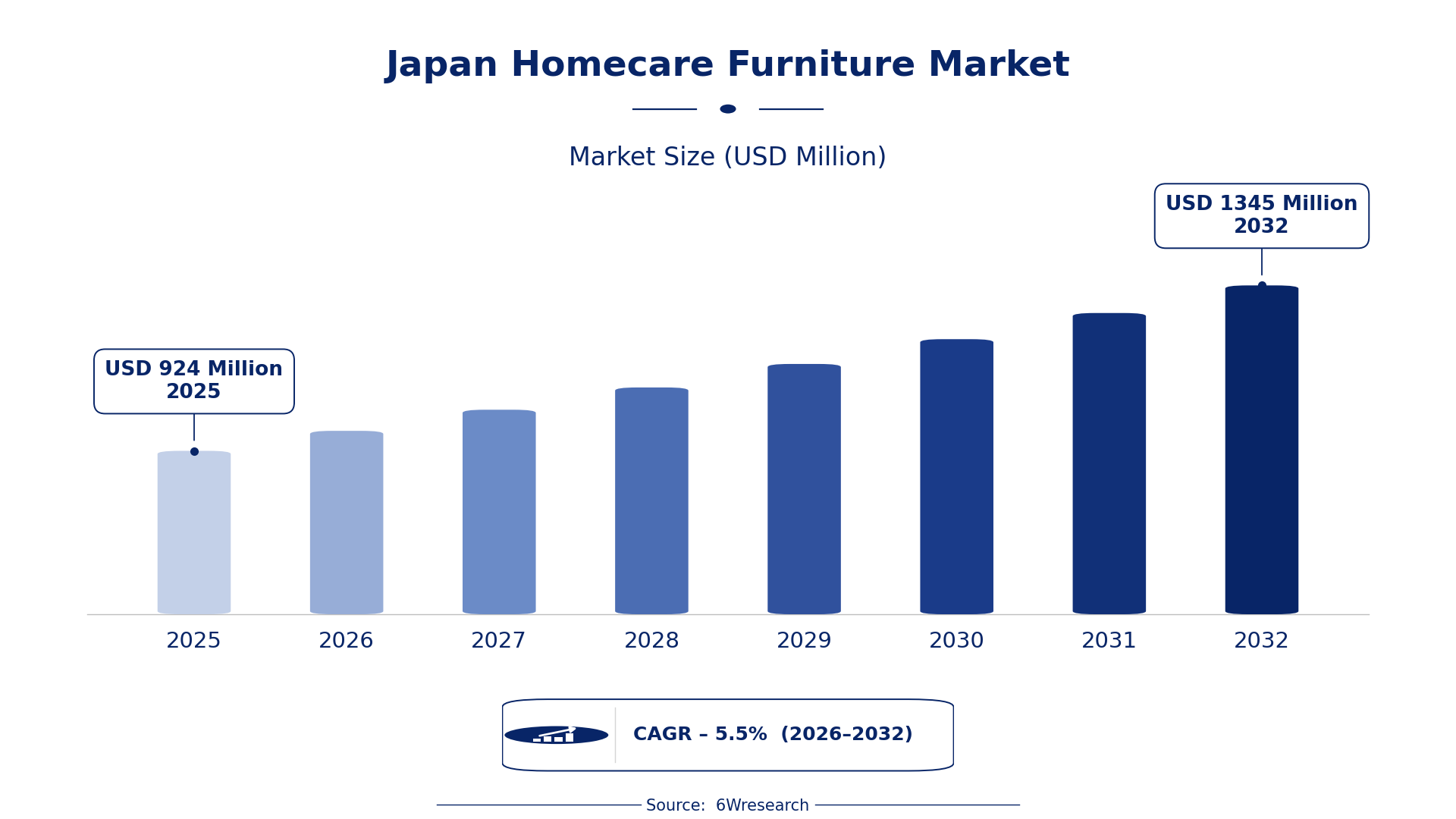
According to 6Wresearch internal database and industry insights, the Japan Homecare Furniture Market was valued at USD 924 Million in 2025 and is projected to reach USD 1,345 Million by 2032, growing at a CAGR of approximately 5.5% during 2026–2032.
Japan Homecare Furniture Market Highlights
| Report Metric | Details |
| Report Name | Japan Homecare Furniture Market (2026-2032) |
| Market Size 2025 | USD 924 Million |
| Market Size 2032 | USD 1,345 Million |
| Absolute Growth 2025–2032 | USD 421 Million |
| CAGR 2026–2032 | 5.5% |
| Peak Annual Growth | 6.1% in 2030 |
| Forecast Period | 2026–2032 |
| Historical Data | 2022–2025 |
| Base Year | 2025 |
| Leading Furniture Type, 2025 | Overbed Tables (39% share) |
| Leading Material/Feature, 2025 | Adjustable Height (43% share) |
| Leading Distribution Channel, 2025 | Hospital Suppliers (39% share) |
| Leading End User, 2025 | Elderly Patients (36% share) |
| Fastest-Growing Furniture Type | Recliner Chairs (7.6% CAGR) |
| Fastest-Growing Material/Feature | Remote Controlled (7.7% CAGR) |
| Fastest-Growing Distribution Channel | Homecare Retailers (7.1% CAGR) |
| Fastest-Growing End User | Disabled Users (7.0% CAGR) |
| Growing Sector | Disabled Users |
| Key End Users | Elderly Patients, Disabled Users, Senior Patients, Nursing Homes |
Japan Homecare Furniture Market Year-wise Growth Rate and Key Drivers (2022–2032)
This graph illustrates the annual growth rates of the market from 2022 to 2032, highlighting a steady upward trajectory and projected market expansion over the forecast period.
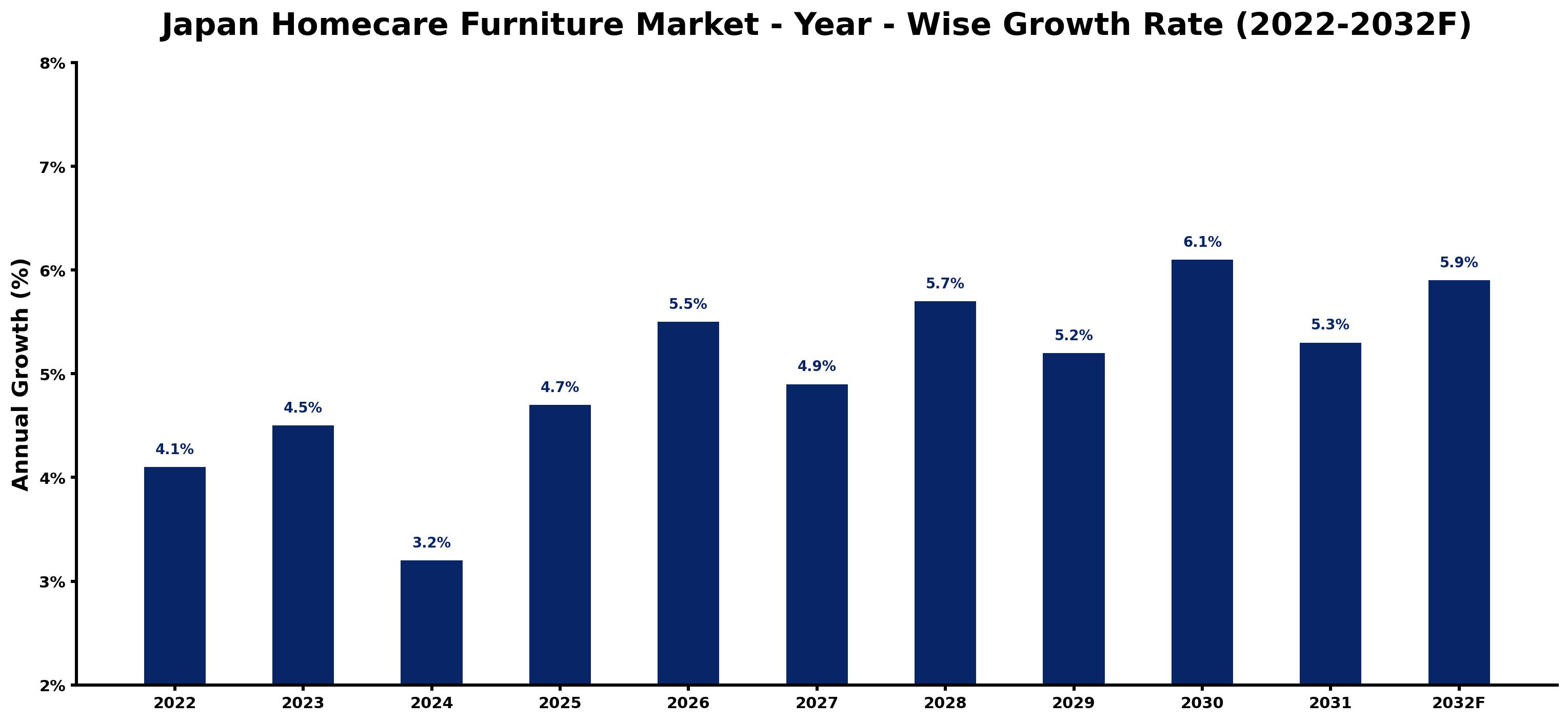
The table below sets out the estimated growth rate for each year and the main factor behind it.
| Year | Estimated Annual Growth (%) | Market Rationale |
| 2022 | 4.1 | The market showed steady growth due to increasing healthcare needs. |
| 2023 | 4.5 | Growth accelerated as the elderly population continued to rise. |
| 2024 | 3.2 | A slowdown occurred as demand stabilised amid economic factors. |
| 2025 | 4.7 | The market rebounded with stronger demand from healthcare facilities. |
| 2026 | 5.5 | Growth continued as investment in homecare solutions increased. |
| 2027 | 4.9 | A slight slowdown was noted as market dynamics adjusted. |
| 2028 | 5.7 | Demand surged again as new products entered the market. |
| 2029 | 5.2 | Growth decelerated slightly as competition intensified. |
| 2030 | 6.1 | The market peaked with heightened demand for innovative solutions. |
| 2031 | 5.3 | A slowdown was observed as the market matured. |
| 2032 | 5.9 | Growth resumed as new initiatives improved accessibility. |
Note: Market size estimations and growth projections presented in this report are based on 6Wresearch's proprietary forecasting methodology, utilizing the latest available industry data, government publications, and primary research inputs.
Japan Homecare Furniture Market Synopsis
Homecare furniture refers to specialized furniture designed for elderly and disabled individuals, focusing on safety and comfort. The market is expanding due to the rising elderly population, projected to reach 36 million by 2040, alongside increasing demand from healthcare facilities. The Tokyo metropolitan area, with its high demand for homecare furniture, is a key contributor to this growth, supported by initiatives aimed at improving accessibility and comfort for users.
Market Dynamics Impact Analysis (2026–2032)
| Factor | Type | Impact | Primary Segment Affected |
| Rising elderly population driving demand for comfort and safety features | Driver | High | Recliner Chairs |
| Increased healthcare expenditure leading to more purchases of homecare furniture | Driver | High | Overbed Tables |
| Growing demand for remote-controlled furniture due to user convenience | Opportunity | Medium | Remote Controlled |
| Investment in homecare facilities in rural areas creating new market opportunities | Opportunity | Medium | Adjustable Height |
| Regulatory compliance costs affecting production and pricing | Restraint | High | Cushioned/Wheel Support |
| Limited awareness among consumers about available products | Restraint | Medium | Geriatric Chairs |
| High production costs impacting pricing strategies | Challenge | High | Hospital Suppliers |
| Capacity constraints in manufacturing due to rising demand | Challenge | Medium | Medical Furnishing Firms |
Evaluation of Drivers in Japan Homecare Furniture Market (2026–2032)
Demand rests on the following drivers, each shown with the segment it touches most.
| Drivers | Primary Segment Affected | Why It Matters (Evidence) |
| Increasing elderly population | Recliner Chairs | 29.3% of Japan's population was aged 65 or older in September 2024, leading to higher demand for comfort. |
| Rising healthcare expenditure | Overbed Tables | Japan's national medical care expenditure was about JPY 46.7 trillion in fiscal 2022, boosting purchases of essential furniture. |
| Growing focus on safety standards | Adjustable Height | Adjustable height furniture is compliant with JIS standards, enhancing its appeal in healthcare settings. |
| Expansion of online medical stores | Homecare Retailers | Online medical stores saw a 25% increase in sales of homecare furniture in 2023, improving accessibility for consumers. |
| Increased demand from nursing homes | Geriatric Chairs | Overbed tables are widely used in over 2,000 nursing homes across Japan, indicating strong institutional demand. |
Most of the extra volume comes from the increasing elderly population, which reached 29.3% of Japan's population in September 2024. Rising healthcare expenditure, estimated at JPY 46.7 trillion in fiscal 2022, is driving purchases of essential homecare furniture. The focus on safety standards is crucial, as adjustable height furniture complies with JIS standards, appealing to healthcare facilities. Expansion of online medical stores, which saw a 25% sales increase in 2023, improves consumer access.
Evaluation of Restraints in Japan Homecare Furniture Market
The main factors holding the market back are set out below.
| Market Restraint | Primary Segment Affected | Why It Matters (Evidence) |
| Regulatory compliance costs | Adjustable Height | Producers must ensure compliance with JIS standards, increasing production expenses by 15%. |
| Approval delays | Recliner Chairs | Buyers face delays in receiving products due to lengthy approval processes, extending lead times by up to three months. |
| Competition from imports | Overbed Tables | Imported alternatives pressure local suppliers to reduce prices, impacting quality and service. |
| Supply chain disruptions | Geriatric Chairs | Delays in essential components affect the availability of furniture in nursing homes. |
| Market saturation | Homecare Retailers | The increasing number of suppliers leads to intense competition, affecting profit margins. |
Japan Homecare Furniture Market Challenges
Regulatory requirements for safety compliance impose additional costs on producers, as manufacturers must ensure that homecare furniture meets JIS standards, potentially increasing production expenses by 15%. Buyers face delays in receiving products due to lengthy approval processes, extending lead times by up to three months. Competition from imported alternatives pressures local suppliers, forcing them to reduce prices, which can compromise quality and service for healthcare facilities. Supply chain disruptions in the Kanto region can delay deliveries of essential components, impacting the availability of furniture in over 2,000 nursing homes across Japan.
Trends in the Japan Homecare Furniture Market
Several trends are reshaping the Japan Homecare Furniture Market; the most important are set out below.
- Rising Demand for Adjustable Height Furniture: The demand for adjustable height furniture is increasing as it improves user comfort and safety. In 2023, this segment accounted for 43% of the market, reflecting its importance in homecare settings.
- Growth of Online Medical Stores: Online medical stores are gaining traction, providing consumers with easier access to homecare furniture. Sales increased by 25% in 2023, indicating a shift in purchasing habits.
- Emphasis on Safety Standards: The focus on safety standards is intensifying, with adjustable height furniture meeting JIS standards. This change is important for healthcare facilities prioritising patient safety.
- Increased Demand from Nursing Homes: Nursing homes are increasingly adopting homecare furniture to improve resident comfort. Overbed tables are now standard in many facilities, reflecting this growing trend.
Investment Opportunities in the Japan Homecare Furniture Market
Several openings in the Japan Homecare Furniture Market merit attention from investors.
- Form Partnerships with Local Suppliers: Forming partnerships with local suppliers can facilitate market entry. The Tokyo metropolitan area, with its high demand, presents a prime opportunity for collaboration, especially as the elderly population grows.
- Invest in Rehabilitation Centers: Investing in rehabilitation centers is timely, given the increasing elderly population. These facilities require specialized furniture to improve patient care, creating a demand for compliant products.
- Target Rural Homecare Solutions: Now is the time to focus on rural homecare solutions, as the government promotes accessibility improvements. This initiative aligns with the growing elderly population in these areas, creating opportunities for suppliers.
- Develop Smart Furniture: Developing smart furniture with integrated technology can meet the needs of elderly users. This innovation is important as the market evolves towards more user-friendly solutions.
Government Initiatives in the Japan Homecare Furniture Market
The Long-Term Care Insurance Act, enacted in 1997, provides funding for essential services for older individuals, ensuring access to homecare furniture. The Medical Care Act of 1948 establishes standards for hospitals and clinics, including requirements for furniture used in patient care.
The Ministry of Health, Labour and Welfare oversees the implementation of these laws, approving funding for various homecare initiatives. Their recent allocation of JPY 10 billion aims to improve accessibility in senior living spaces, benefiting both producers and buyers.
Future Insight of the Japan Homecare Furniture Market
A programme for improving rural homecare facilities will increase accessibility for users by 2032, driving demand for compliant furniture. The Tokyo Metropolitan Government's subsidy initiative will encourage more buyers to invest in homecare solutions, boosting sales in urban areas. Technological advancements in remote-controlled features will cater to the preferences of users, improving their comfort and independence. By 2040, the elderly population is expected to reach 36 million, creating a market for furniture tailored to their needs, with national medical care expenditure projected at JPY 46.7 trillion.
Market Segmentation Analysis
Japan Homecare Furniture Market report covers a detailed analysis of the following market segments:
By Furniture Type – Overbed Tables Lead, Recliner Chairs Expected to Grow Fastest
According to Saurav Kr Singh, Senior Research Analyst at 6Wresearch, Overbed Tables took 39% of furniture type revenue in 2025, more than any other category. Overbed tables are extensively utilised in over 2,000 nursing homes across Japan, making them essential for patient care. Their design allows users to comfortably eat or use devices while in bed, addressing the needs of elderly patients. Recliner Chairs are projected to grow fastest, at a CAGR of 7.6% during 2026–2032. Recliner chairs are gaining traction due to their comfort and support for elderly users, particularly in geriatric care facilities. The growing emphasis on patient comfort is propelling this segment's rapid growth. Suppliers should prioritise recliner chair offerings to meet the rising demand for comfort in homecare settings.
By Material/Feature – Adjustable Height Leads, Remote Controlled Expected to Grow Fastest
The largest material/feature category in 2025 was Adjustable Height, at 43% of revenue. Adjustable height furniture is widely adopted as it allows for customisation to enhance user comfort, aligning with safety standards like JIS. This feature is crucial for accommodating the diverse needs of elderly patients. Remote Controlled is set to record the highest CAGR in this split, 7.7% over 2026–2032. Remote controlled features are becoming increasingly popular among elderly users, as they significantly improve usability and independence. The trend towards automation in homecare furniture is driving this segment's rapid expansion. Manufacturers should invest in developing remote controlled options to cater to the evolving preferences of users.
By Distribution Channel – Hospital Suppliers Lead, Homecare Retailers Expected to Grow Fastest
In 2025, Hospital Suppliers led the distribution channel split with a 39% share. Hospital suppliers play a vital role in providing essential furniture to healthcare facilities, ensuring they meet the specific needs of elderly patients. Their established relationships with hospitals facilitate consistent demand for homecare furniture. Over 2026–2032, Homecare Retailers are expected to post the fastest growth, at a CAGR of 7.1%. Homecare retailers are experiencing accelerated growth as they serve consumers directly purchasing homecare furniture for personal use. The increasing awareness of homecare solutions is driving more individuals to seek out these retail options. Retailers must enhance their product offerings to capture the growing consumer interest in homecare solutions.
By End User – Elderly Patients Lead, Disabled Users Expected to Grow Fastest
With 36% of end user revenue in 2025, Elderly Patients was the largest category. Elderly patients represent the primary users of homecare furniture, as they require specialised solutions to improve their quality of life at home. Their significant presence in the population underscores the demand for tailored furniture solutions. The quickest growth will come from Disabled Users, forecast to expand at a CAGR of 7.0% between 2026 and 2032. Disabled users are increasingly benefiting from specialised furniture designed for daily activities, leading to a surge in demand for such products. This growth reflects a broader societal focus on inclusivity and accessibility for all individuals. Suppliers should focus on developing products that cater to the specific needs of disabled users to tap into this expanding market.
Key Attractiveness of the Report
- 10 Years of Market Numbers
- Historical Data Starting from 2022 to 2025
- Base Year 2025
- Forecast Data until 2032
- Key Performance Indicators Impacting the Market
- Major Upcoming Developments and Projects
Key Highlights of the Report:
- Japan Homecare Furniture Market Outlook
- Market Size of Japan Homecare Furniture Market, 2025
- Forecast of Japan Homecare Furniture Market, 2032
- Historical Data and Forecast of Japan Homecare Furniture Revenues & Volume for the Period 2022-2032F
- Japan Homecare Furniture Market Trend Evolution
- Japan Homecare Furniture Market Drivers and Challenges
- Japan Homecare Furniture Price Trends
- Japan Homecare Furniture Porter's Five Forces
- Japan Homecare Furniture Industry Life Cycle
- Historical Data and Forecast of Japan Homecare Furniture Market Revenues & Volume By Furniture Type for the Period 2022-2032F
- Historical Data and Forecast of Japan Homecare Furniture Market Revenues & Volume By Overbed Tables for the Period 2022-2032F
- Historical Data and Forecast of Japan Homecare Furniture Market Revenues & Volume By Recliner Chairs for the Period 2022-2032F
- Historical Data and Forecast of Japan Homecare Furniture Market Revenues & Volume By Geriatric Chairs for the Period 2022-2032F
- Historical Data and Forecast of Japan Homecare Furniture Market Revenues & Volume By Bedside Cabinets for the Period 2022-2032F
- Historical Data and Forecast of Japan Homecare Furniture Market Revenues & Volume By Material/Feature for the Period 2022-2032F
- Historical Data and Forecast of Japan Homecare Furniture Market Revenues & Volume By Adjustable Height for the Period 2022-2032F
- Historical Data and Forecast of Japan Homecare Furniture Market Revenues & Volume By Remote Controlled for the Period 2022-2032F
- Historical Data and Forecast of Japan Homecare Furniture Market Revenues & Volume By Cushioned/Wheel Support for the Period 2022-2032F
- Historical Data and Forecast of Japan Homecare Furniture Market Revenues & Volume By Lockable Drawers for the Period 2022-2032F
- Historical Data and Forecast of Japan Homecare Furniture Market Revenues & Volume By Distribution Channel for the Period 2022-2032F
- Historical Data and Forecast of Japan Homecare Furniture Market Revenues & Volume By Hospital Suppliers for the Period 2022-2032F
- Historical Data and Forecast of Japan Homecare Furniture Market Revenues & Volume By Homecare Retailers for the Period 2022-2032F
- Historical Data and Forecast of Japan Homecare Furniture Market Revenues & Volume By Online Medical Stores for the Period 2022-2032F
- Historical Data and Forecast of Japan Homecare Furniture Market Revenues & Volume By Medical Furnishing Firms for the Period 2022-2032F
- Historical Data and Forecast of Japan Homecare Furniture Market Revenues & Volume By End User for the Period 2022-2032F
- Historical Data and Forecast of Japan Homecare Furniture Market Revenues & Volume By Elderly Patients for the Period 2022-2032F
- Historical Data and Forecast of Japan Homecare Furniture Market Revenues & Volume By Disabled Users for the Period 2022-2032F
- Historical Data and Forecast of Japan Homecare Furniture Market Revenues & Volume By Senior Patients for the Period 2022-2032F
- Historical Data and Forecast of Japan Homecare Furniture Market Revenues & Volume By Nursing Homes for the Period 2022-2032F
- Japan Homecare Furniture Import Export Trade Statistics
- Market Opportunity Assessment By Furniture Type
- Market Opportunity Assessment By Material/Feature
- Market Opportunity Assessment By Distribution Channel
- Market Opportunity Assessment By End User
- Japan Homecare Furniture Top Companies Market Share
- Japan Homecare Furniture Competitive Benchmarking By Technical and Operational Parameters
- Japan Homecare Furniture Company Profiles
- Japan Homecare Furniture Key Strategic Recommendations
Market Covered
The following segment groups are covered in the report.
By Furniture Type
- Overbed Tables
- Recliner Chairs
- Geriatric Chairs
- Bedside Cabinets
By Material/Feature
- Adjustable Height
- Remote Controlled
- Cushioned/Wheel Support
- Lockable Drawers
By Distribution Channel
- Hospital Suppliers
- Homecare Retailers
- Online Medical Stores
- Medical Furnishing Firms
By End User
- Elderly Patients
- Disabled Users
- Senior Patients
- Nursing Homes































