Japan Hormone Inhibitor Drugs Market Size & Growth Rate
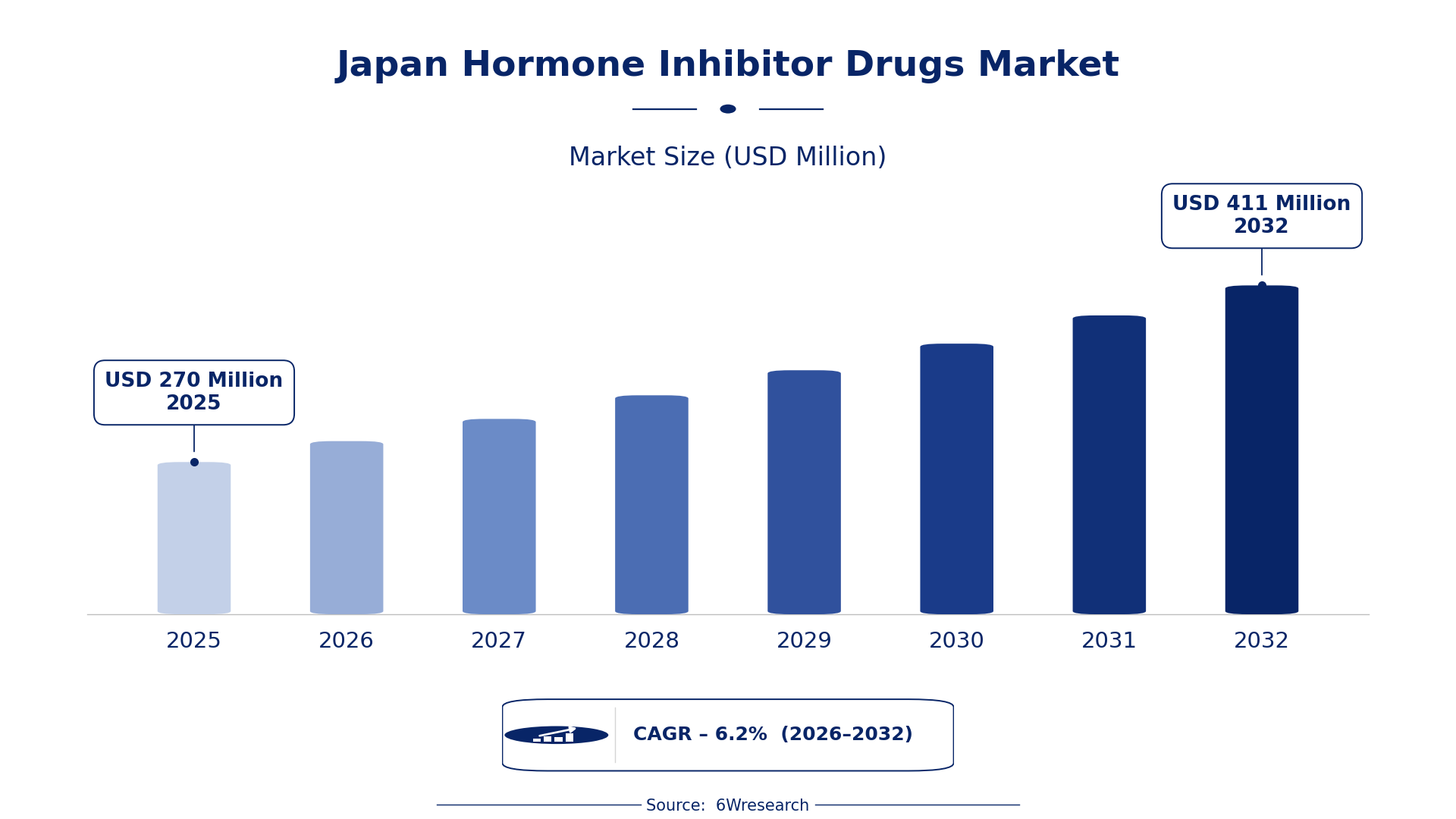
According to 6Wresearch internal database and industry insights, the Japan Hormone Inhibitor Drugs Market was valued at USD 270 Million in 2025 and is projected to reach USD 411 Million by 2032, growing at a CAGR of approximately 6.2% during 2026–2032.
Japan Hormone Inhibitor Drugs Market Highlights
| Report Metric | Details |
| Report Name | Japan Hormone Inhibitor Drugs Market (2026-2032) |
| Market Size 2025 | USD 270 Million |
| Market Size 2032 | USD 411 Million |
| Absolute Growth 2025–2032 | USD 141 Million |
| CAGR 2026–2032 | 6.2% |
| Peak Annual Growth | 7.8% in 2032 |
| Forecast Period | 2026–2032 |
| Historical Data | 2022–2025 |
| Base Year | 2025 |
| Leading Drug Type, 2025 | Aromatase Inhibitors (48% share) |
| Leading Target Hormone, 2025 | Estrogen (50% share) |
| Leading Distribution Channel, 2025 | Hospitals (47% share) |
| Leading End User, 2025 | Breast Cancer Patients (41% share) |
| Fastest-Growing Drug Type | GnRH Antagonists (8.8% CAGR) |
| Fastest-Growing Target Hormone | Testosterone (8.3% CAGR) |
| Fastest-Growing Distribution Channel | Clinics (8.7% CAGR) |
| Fastest-Growing End User | Prostate Cancer Patients (8.1% CAGR) |
| Growing Sector | hormone-sensitive cancer treatment |
| Key End Users | hospitals, clinics, specialty pharmacies, patients |
Japan Hormone Inhibitor Drugs Market Year-wise Growth Rate and Key Drivers (2022–2032)
This graph illustrates the annual growth rates of the market from 2022 to 2032, highlighting a steady upward trajectory and projected market expansion over the forecast period.
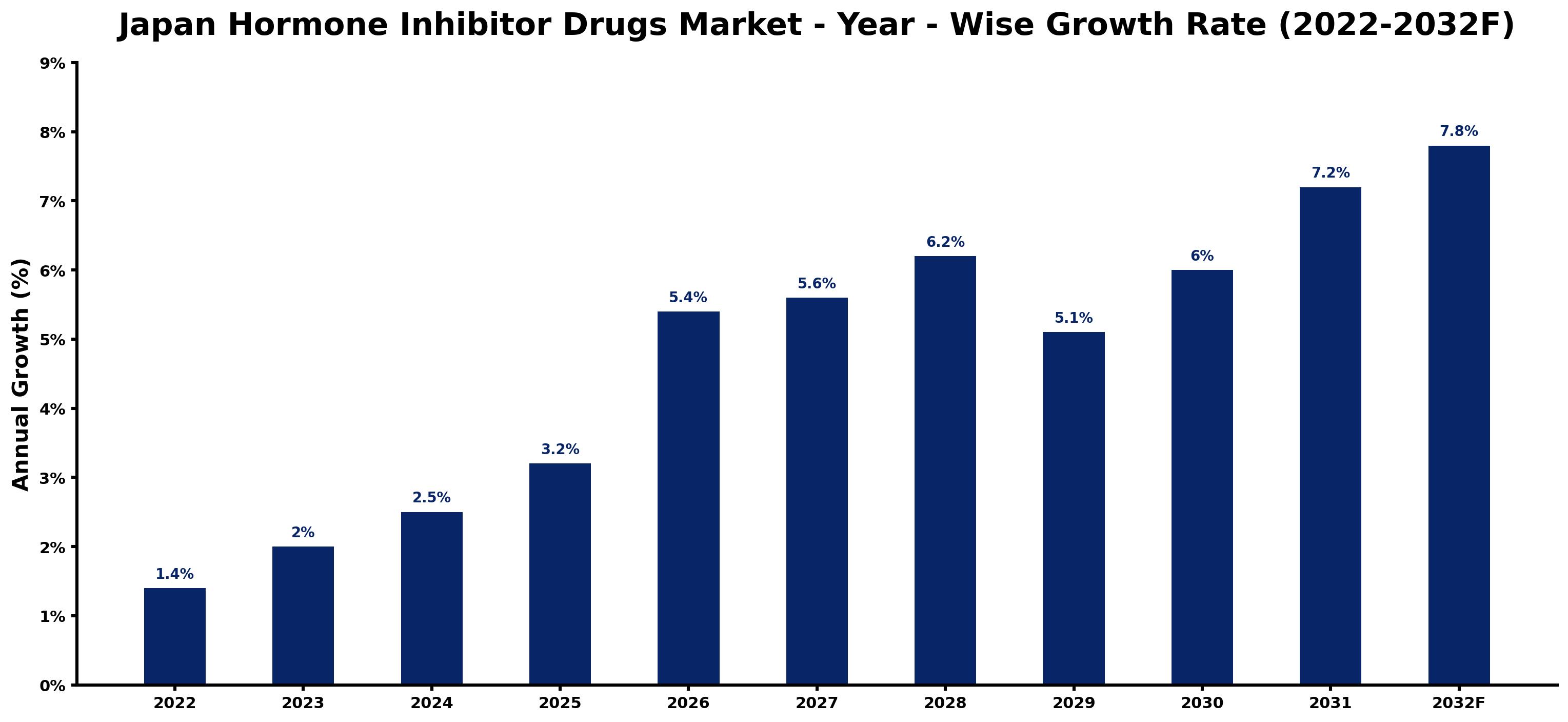
The yearly estimates that follow link every growth rate to its principal driver, so readers can see why the pace changed in each period.
| Year | Estimated Annual Growth (%) | Market Rationale |
| 2022 | 1.4 | The market showed steady demand for hormone inhibitors in hospitals and clinics. |
| 2023 | 2.0 | Growth accelerated as new treatment protocols gained traction among healthcare providers. |
| 2024 | 2.5 | Increased patient awareness led to higher prescription rates for hormone therapies. |
| 2025 | 3.2 | The introduction of advanced treatment options contributed to market expansion. |
| 2026 | 5.4 | Growing investments in cancer treatment facilities is expected to stimulate demand for hormone inhibitors. |
| 2027 | 5.6 | The rise in breast cancer diagnoses will further boost market growth. |
| 2028 | 6.2 | Increased funding for cancer research is projected to enhance the availability of hormone therapies. |
| 2029 | 5.1 | A slowdown occurs as market saturation begins to affect growth rates. |
| 2030 | 6.0 | Demand increases again as new treatment guidelines are adopted by clinics. |
| 2031 | 7.2 | The market expands with the introduction of innovative hormone therapies. |
| 2032 | 7.8 | The peak growth rate is driven by heightened awareness of hormone-related conditions. |
Note: Market size estimations and growth projections presented in this report are based on 6Wresearch's proprietary forecasting methodology, utilizing the latest available industry data, government publications, and primary research inputs.
Japan Hormone Inhibitor Drugs Market Synopsis
Hormone Inhibitor Drugs are pharmaceutical agents that inhibit hormone production or action, primarily used in treating hormone-sensitive cancers and disorders. In Japan, the market is expanding due to rising breast cancer diagnoses, with approximately 1.5 million cases in 2022. Hospitals and clinics are the main buyers, supported by government initiatives to improve access to cancer treatments and ongoing investments in healthcare facilities. This growth is driven by increasing patient demand and advancements in treatment protocols, with the average treatment duration for hormone inhibitors being around five years.
Market Dynamics Impact Analysis (2026–2032)
| Factor | Type | Impact | Primary Segment Affected |
| Rising breast cancer diagnoses drive demand for hormone inhibitors, particularly aromatase inhibitors. | Driver | High | Aromatase Inhibitors |
| Government funding for cancer research supports the development of new hormone therapies. | Driver | High | GnRH Antagonists |
| Increasing patient awareness of hormone-related conditions creates opportunities for new therapies. | Opportunity | High | Dopamine Agonists |
| Growth in the number of clinics offering hormone therapy presents entry points for suppliers. | Opportunity | Medium | Thyroid Inhibitors |
| Regulatory approval timelines can delay the introduction of new hormone inhibitors. | Restraint | High | Aromatase Inhibitors |
| High treatment costs may limit access for some patients, affecting overall market growth. | Restraint | Medium | GnRH Antagonists |
| Competition among suppliers can lead to pricing pressures, impacting profitability. | Challenge | High | Dopamine Agonists |
| The complexity of hormone therapy protocols can create challenges in patient adherence. | Challenge | Medium | Thyroid Inhibitors |
Evaluation of Drivers in Japan Hormone Inhibitor Drugs Market (2026–2032)
The following drivers explain most of the expected growth.
| Drivers | Primary Segment Affected | Why It Matters (Evidence) |
| Increasing incidence of breast cancer leads to higher demand for aromatase inhibitors. | Aromatase Inhibitors | In 2022, approximately 1.5 million patients were diagnosed with breast cancer, driving prescriptions. |
| Government funding for cancer research supports the development of new GnRH antagonists. | GnRH Antagonists | In 2023, a new government program was launched to improve access to cancer treatments. |
| Growing awareness of hormone-related disorders boosts demand for dopamine agonists. | Dopamine Agonists | The average treatment duration for hormone inhibitors is around 5 years, encouraging ongoing prescriptions. |
| Expansion of clinics providing hormone therapy increases access to thyroid inhibitors. | Thyroid Inhibitors | The total number of clinics providing hormone therapy is estimated at 3,000, improving patient access. |
| Urban hospitals are adopting advanced hormone therapies at higher rates. | Aromatase Inhibitors | Hospitals in urban areas have higher adoption rates of advanced hormone therapies. |
Orders keep climbing as the incidence of breast cancer rises, prompting hospitals to increase prescriptions for aromatase inhibitors. In 2022, approximately 1.5 million patients were diagnosed, which drives demand. Funding for cancer research supports the development of new therapies, while awareness of hormone-related conditions is also increasing, encouraging ongoing treatment. The expansion of clinics providing hormone therapy improves access to thyroid inhibitors, further driving market growth. The average treatment duration for hormone inhibitors is around five years, which sustains demand from patients.
Evaluation of Restraints in Japan Hormone Inhibitor Drugs Market
Below are the constraints most often cited by buyers and suppliers, with the segment each affects.
| Market Restraint | Primary Segment Affected | Why It Matters (Evidence) |
| Regulatory approval timelines for new hormone inhibitors can extend up to two years. | Aromatase Inhibitors | Approval delays hinder market entry for new products, affecting availability. |
| High costs of hormone inhibitor treatments may limit patient access. | GnRH Antagonists | The average cost of hormone inhibitor drugs is around ¥30,000 per month, restricting affordability. |
| Limited availability of online pharmacies affects access to hormone therapies. | Dopamine Agonists | Online pharmacies are regulated, restricting access for some patients. |
| Complex treatment protocols can affect patient adherence to prescribed therapies. | Thyroid Inhibitors | Patients may struggle to follow complicated hormone therapy regimens, impacting outcomes. |
| Intense competition among suppliers can pressure pricing in the market. | Prolactin | Competition may affect profit margins for suppliers. |
Japan Hormone Inhibitor Drugs Market Challenges
In 2022, approximately 1.5 million breast cancer patients in Japan faced delays in receiving hormone inhibitor drugs due to outdated production technology, extending lead times for hospitals by up to six months. Producers encounter pressure from generic manufacturers, which forces them to lower prices and can lead to compromised drug quality for clinics. Regulatory hurdles from the Ministry of Health, Labour and Welfare can delay new hormone inhibitor approvals by 1-2 years, impacting treatment accessibility for patients. A shortage of skilled workers in pharmaceutical manufacturing restricts producers' capacity to innovate, limiting the development of advanced therapies for buyers.
Trends in the Japan Hormone Inhibitor Drugs Market
The shifts below are changing how Japan Hormone Inhibitor Drugs Market products are bought and supplied.
- Shift in Treatment Protocols in Tokyo: Tokyo is experiencing a shift towards more personalized treatment protocols for hormone-sensitive cancers. In 2023, hospitals began adopting new guidelines from the Japanese Society of Clinical Oncology, improving patient outcomes.
- Increase in Clinic-Based Hormone Therapy: In 2023, the number of clinics offering hormone therapy increased significantly, meeting the growing demand for accessible treatment options.
- Rise in Specialty Pharmacy Utilization: Specialty pharmacies are focusing more on rare and complex medications, catering to specific hormone-related disorders. This trend is evident as these pharmacies increase their offerings to meet patient needs.
- Growing Online Pharmacy Regulation: Regulations surrounding online pharmacies are becoming stricter, impacting how hormone inhibitors are accessed. In 2023, the Ministry of Health, Labour and Welfare enforced new guidelines to ensure patient safety.
Investment Opportunities in the Japan Hormone Inhibitor Drugs Market
The openings below show where demand in the Japan Hormone Inhibitor Drugs Market is visible and how suppliers can enter.
- Collaborate with Local Clinics: Now is an ideal time to partner with local clinics to supply hormone inhibitors, as the number of treatment facilities is increasing. With an estimated 3,000 clinics, there is potential for growth.
- Invest in Research for New Therapies: Investment in research for new hormone therapies is essential, especially as funding for cancer research is increasing. In 2023, a new program was launched to support this area.
- Expand Specialty Pharmacy Offerings: Expanding offerings in specialty pharmacies presents a valuable opportunity, particularly for rare hormone-related disorders. These pharmacies are focusing on complex medications to meet specific patient needs.
- Capitalize on Online Pharmacy Growth: With the rise of online pharmacies, there is a gap in access to hormone inhibitors. Investing in online distribution channels can help reach more patients effectively.
Government Initiatives in the Japan Hormone Inhibitor Drugs Market
The Pharmaceuticals and Medical Devices Act regulates the approval and quality of hormone inhibitors, ensuring that producers meet safety and efficacy standards. The NHI drug price standard, revised regularly, sets reimbursement prices for hormone inhibitors, ensuring affordability for patients. This framework impacts how producers manufacture and market their products.
Hospitals and clinics utilize the NHI drug price standard to provide affordable treatment options to patients. The Ministry of Health, Labour and Welfare oversees its implementation, ensuring that hormone inhibitor drugs are accessible and that patients receive necessary treatments.
Future Insight of the Japan Hormone Inhibitor Drugs Market
In 2023, a new government programme will improve access to cancer treatments, boosting the distribution of hormone inhibitor drugs across Japan. By 2032, advancements in production technology will streamline manufacturing processes, enabling suppliers to meet rising demand efficiently. The establishment of additional facilities providing hormone therapy will improve patient access to treatments. Updated standards from the Japanese Pharmacological Society will ensure consistent quality and efficacy in hormone therapy.
Market Segmentation Analysis
Japan Hormone Inhibitor Drugs Market report covers a detailed analysis of the following market segments:
By Drug Type – Aromatase Inhibitors Lead, GnRH Antagonists Expected to Grow Fastest
According to Saurav Kr Singh, Senior Research Analyst at 6Wresearch, in 2025, Aromatase Inhibitors led the drug type split with a 48% share. Aromatase inhibitors dominate the market due to their widespread application in treating breast cancer, which affects approximately 1.5 million patients in Japan. The high concentration of oncology departments in the Tokyo region further supports the demand for these drugs. The quickest growth will come from GnRH Antagonists, forecast to expand at a CAGR of 8.8% between 2026 and 2032. GnRH antagonists are experiencing rapid growth as they become more commonly prescribed for prostate cancer, impacting around 500,000 patients in Japan. Recent government initiatives aimed at improving access to cancer therapies are expected to further accelerate their adoption. Suppliers should prioritise aromatase inhibitors while also preparing for the rising demand for GnRH antagonists.
By Target Hormone – Estrogen Leads, Testosterone Expected to Grow Fastest
Estrogen accounted for 50% of the market by target hormone in 2025. Estrogen inhibitors dominate the market as they are essential for treating hormone-sensitive cancers, particularly in breast cancer cases. The guidelines from the Japanese Society of Clinical Oncology highlight their critical role in therapy protocols. Over 2026–2032, Testosterone is expected to post the fastest growth, at a CAGR of 8.3%. Testosterone inhibitors are experiencing rapid growth, driven by heightened awareness and diagnosis of prostate cancer among men. The introduction of new treatment guidelines is expected to accelerate their clinical adoption. Buyers should consider the impact of treatment guidelines on their purchasing decisions for hormone inhibitors.
By Distribution Channel – Hospitals Lead, Clinics Expected to Grow Fastest
Hospitals took 47% of distribution channel revenue in 2025, more than any other category. Hospitals are the primary distribution channel for hormone inhibitor treatments, offering comprehensive cancer care to patients. The higher adoption rates of advanced therapies in urban hospitals highlight their essential role in the market. Clinics are projected to grow fastest, at a CAGR of 8.7% during 2026–2032. Clinics are rapidly growing as they increasingly accommodate patients seeking outpatient hormone therapy services. The rising number of clinics focused on hormone treatments is likely to support this upward trend. Suppliers need to adjust their distribution strategies to effectively engage both hospitals and the expanding network of clinics.
By End User – Breast Cancer Patients Lead, Prostate Cancer Patients Expected to Grow Fastest
The largest end user category in 2025 was Breast Cancer Patients, at 41% of revenue. Breast cancer patients form the largest user group for hormone inhibitors, reflecting the high incidence of breast cancer in Japan. The average treatment duration of five years for these patients ensures a sustained demand for these drugs. Prostate Cancer Patients are set to record the highest CAGR in this split, 8.1% over 2026–2032. Prostate cancer patients represent the fastest-growing user group, with increasing diagnoses leading to more prescriptions of hormone inhibitors. This growth is likely to be supported by new treatment protocols and government initiatives. Suppliers should tailor their marketing strategies to address the needs of both breast and prostate cancer patients.
Key Attractiveness of the Report
- 10 Years of Market Numbers
- Historical Data Starting from 2022 to 2025
- Base Year 2025
- Forecast Data until 2032
- Key Performance Indicators Impacting the Market
- Major Upcoming Developments and Projects
Key Highlights of the Report:
- Japan Hormone Inhibitor Drugs Market Outlook
- Market Size of Japan Hormone Inhibitor Drugs Market, 2025
- Forecast of Japan Hormone Inhibitor Drugs Market, 2032
- Historical Data and Forecast of Japan Hormone Inhibitor Drugs Revenues & Volume for the Period 2022-2032F
- Japan Hormone Inhibitor Drugs Market Trend Evolution
- Japan Hormone Inhibitor Drugs Market Drivers and Challenges
- Japan Hormone Inhibitor Drugs Price Trends
- Japan Hormone Inhibitor Drugs Porter's Five Forces
- Japan Hormone Inhibitor Drugs Industry Life Cycle
- Historical Data and Forecast of Japan Hormone Inhibitor Drugs Market Revenues & Volume By Drug Type for the Period 2022-2032F
- Historical Data and Forecast of Japan Hormone Inhibitor Drugs Market Revenues & Volume By Aromatase Inhibitors for the Period 2022-2032F
- Historical Data and Forecast of Japan Hormone Inhibitor Drugs Market Revenues & Volume By GnRH Antagonists for the Period 2022-2032F
- Historical Data and Forecast of Japan Hormone Inhibitor Drugs Market Revenues & Volume By Dopamine Agonists for the Period 2022-2032F
- Historical Data and Forecast of Japan Hormone Inhibitor Drugs Market Revenues & Volume By Thyroid Inhibitors for the Period 2022-2032F
- Historical Data and Forecast of Japan Hormone Inhibitor Drugs Market Revenues & Volume By Target Hormone for the Period 2022-2032F
- Historical Data and Forecast of Japan Hormone Inhibitor Drugs Market Revenues & Volume By Estrogen for the Period 2022-2032F
- Historical Data and Forecast of Japan Hormone Inhibitor Drugs Market Revenues & Volume By Testosterone for the Period 2022-2032F
- Historical Data and Forecast of Japan Hormone Inhibitor Drugs Market Revenues & Volume By Prolactin for the Period 2022-2032F
- Historical Data and Forecast of Japan Hormone Inhibitor Drugs Market Revenues & Volume By T3/T4 for the Period 2022-2032F
- Historical Data and Forecast of Japan Hormone Inhibitor Drugs Market Revenues & Volume By Distribution Channel for the Period 2022-2032F
- Historical Data and Forecast of Japan Hormone Inhibitor Drugs Market Revenues & Volume By Hospitals for the Period 2022-2032F
- Historical Data and Forecast of Japan Hormone Inhibitor Drugs Market Revenues & Volume By Clinics for the Period 2022-2032F
- Historical Data and Forecast of Japan Hormone Inhibitor Drugs Market Revenues & Volume By Online Pharmacies for the Period 2022-2032F
- Historical Data and Forecast of Japan Hormone Inhibitor Drugs Market Revenues & Volume By Specialty Pharmacies for the Period 2022-2032F
- Historical Data and Forecast of Japan Hormone Inhibitor Drugs Market Revenues & Volume By End User for the Period 2022-2032F
- Historical Data and Forecast of Japan Hormone Inhibitor Drugs Market Revenues & Volume By Breast Cancer Patients for the Period 2022-2032F
- Historical Data and Forecast of Japan Hormone Inhibitor Drugs Market Revenues & Volume By Prostate Cancer Patients for the Period 2022-2032F
- Historical Data and Forecast of Japan Hormone Inhibitor Drugs Market Revenues & Volume By Pituitary Disorder Patients for the Period 2022-2032F
- Historical Data and Forecast of Japan Hormone Inhibitor Drugs Market Revenues & Volume By Hyperthyroid Patients for the Period 2022-2032F
- Japan Hormone Inhibitor Drugs Import Export Trade Statistics
- Market Opportunity Assessment By Drug Type
- Market Opportunity Assessment By Target Hormone
- Market Opportunity Assessment By Distribution Channel
- Market Opportunity Assessment By End User
- Japan Hormone Inhibitor Drugs Top Companies Market Share
- Japan Hormone Inhibitor Drugs Competitive Benchmarking By Technical and Operational Parameters
- Japan Hormone Inhibitor Drugs Company Profiles
- Japan Hormone Inhibitor Drugs Key Strategic Recommendations
Market Covered
The report covers the following segments.
By Drug Type
- Aromatase Inhibitors
- GnRH Antagonists
- Dopamine Agonists
- Thyroid Inhibitors
By Target Hormone
- Estrogen
- Testosterone
- Prolactin
- T3/T4
By Distribution Channel
- Hospitals
- Clinics
- Online Pharmacies
- Specialty Pharmacies
By End User
- Breast Cancer Patients
- Prostate Cancer Patients
- Pituitary Disorder Patients
- Hyperthyroid Patients































