Japan Hormone Therapy Market Size & Growth Rate
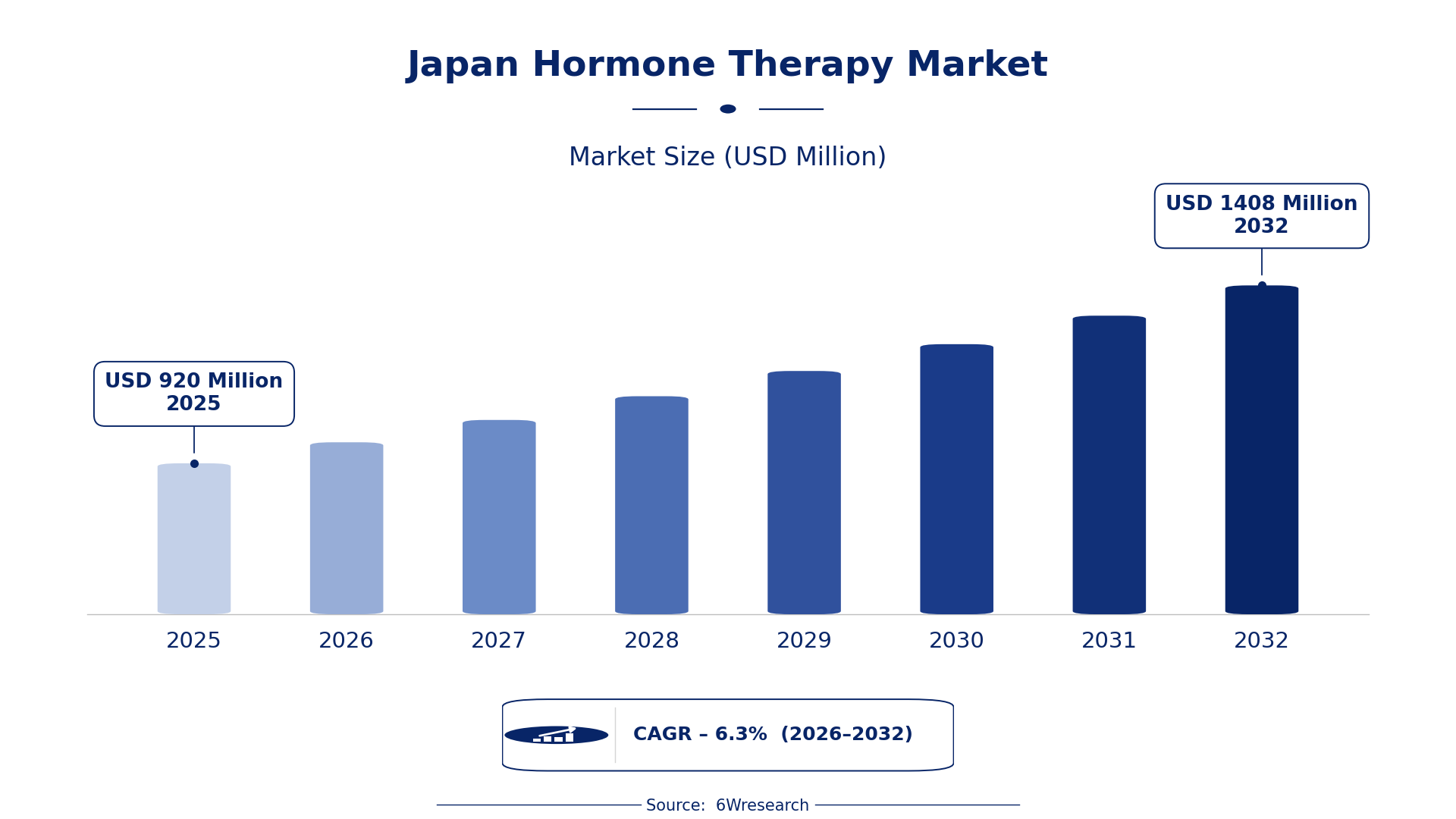
According to 6Wresearch internal database and industry insights, the Japan Hormone Therapy Market was valued at USD 920 Million in 2025 and is projected to reach USD 1,408 Million by 2032, growing at a CAGR of approximately 6.3% during 2026–2032.
Japan Hormone Therapy Market Highlights
| Report Metric | Details |
| Report Name | Japan Hormone Therapy Market (2026-2032) |
| Market Size 2025 | USD 920 Million |
| Market Size 2032 | USD 1,408 Million |
| Absolute Growth 2025–2032 | USD 488 Million |
| CAGR 2026–2032 | 6.3% |
| Peak Annual Growth | 8.1% in 2026 |
| Forecast Period | 2026–2032 |
| Historical Data | 2022–2025 |
| Base Year | 2025 |
| Leading Therapy Category, 2025 | Hormone Replacement (40% share) |
| Leading Indication, 2025 | Menopause (43% share) |
| Leading Distribution Channel, 2025 | Hospitals (45% share) |
| Leading End User, 2025 | Female Patients (44% share) |
| Fastest-Growing Therapy Category | Suppressive Therapy (8.2% CAGR) |
| Fastest-Growing Indication | Thyroid Disorders (8.3% CAGR) |
| Fastest-Growing Distribution Channel | Clinics (8.0% CAGR) |
| Fastest-Growing End User | Thyroid Patients (7.8% CAGR) |
| Growing Sector | Reproductive Health |
| Key End Users | Female Patients, Thyroid Patients, LGBTQ+ Community, Reproductive Age Group |
Japan Hormone Therapy Market Year-wise Growth Rate and Key Drivers (2022–2032)
This graph illustrates the annual growth rates of the market from 2022 to 2032, highlighting a steady upward trajectory and projected market expansion over the forecast period.
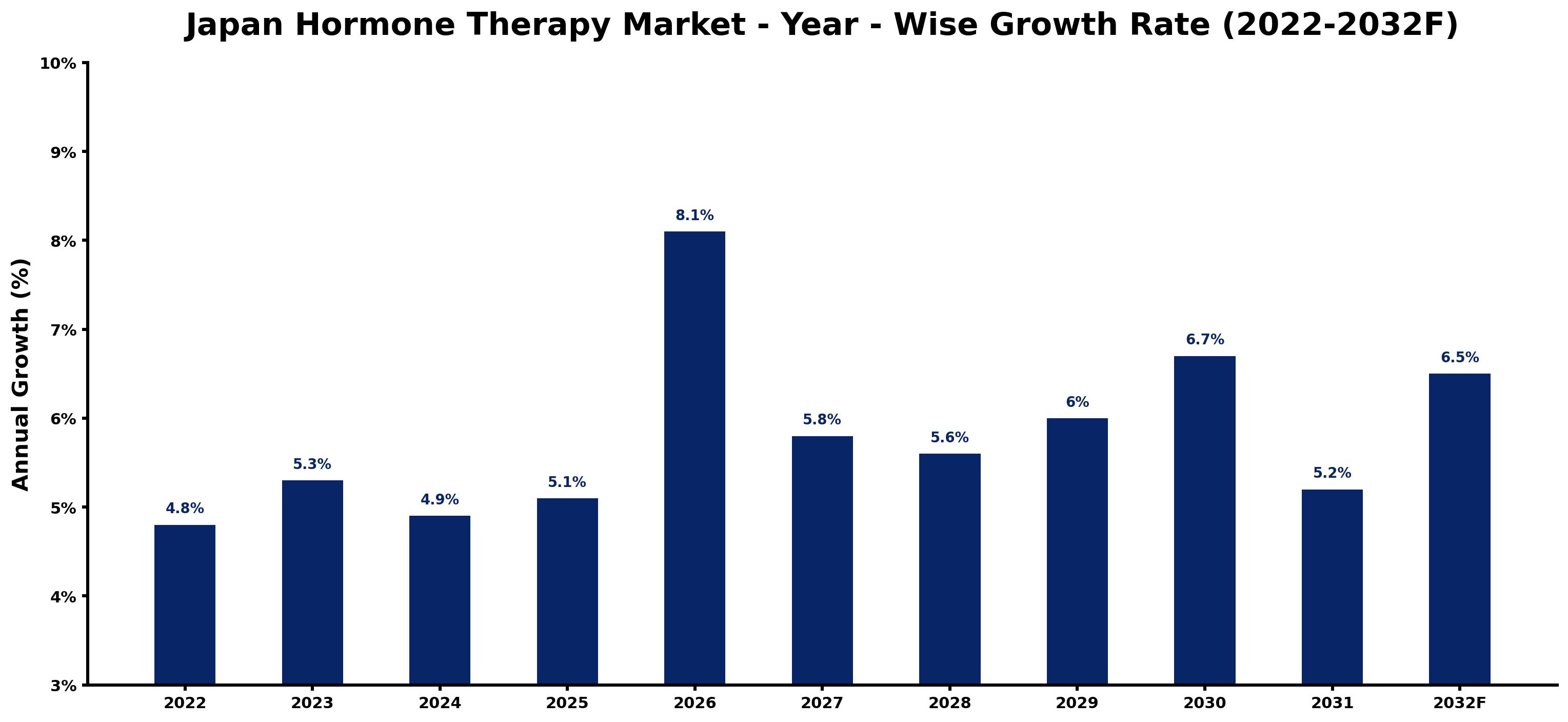
Each row of the following table gives one year's estimated growth and the event or demand shift that explains it.
| Year | Estimated Annual Growth (%) | Market Rationale |
| 2022 | 4.8 | The market experienced moderate growth as healthcare providers increased hormone therapy access. |
| 2023 | 5.3 | Demand rose due to heightened awareness of menopause management among women. |
| 2024 | 4.9 | Growth slowed slightly as competition intensified in the hormone therapy sector. |
| 2025 | 5.1 | The market saw renewed interest as new clinics opened in major urban areas. |
| 2026 | 8.1 | A surge in prescriptions occurred as more patients sought hormone therapy options. |
| 2027 | 5.8 | Growth slowed as established providers faced increased regulatory scrutiny. |
| 2028 | 5.6 | Demand remained steady as public health campaigns promoted hormone therapy benefits. |
| 2029 | 6.0 | An uptick in fertility treatments drove higher hormone therapy prescriptions. |
| 2030 | 6.7 | Growth accelerated due to advancements in treatment protocols and patient education. |
| 2031 | 5.2 | The market experienced a slowdown as patient preferences shifted towards alternative therapies. |
| 2032 | 6.5 | An increase in awareness among the LGBTQ+ community will boost hormone therapy demand. |
Note: Market size estimations and growth projections presented in this report are based on 6Wresearch's proprietary forecasting methodology, utilizing the latest available industry data, government publications, and primary research inputs.
Japan Hormone Therapy Market Synopsis
Hormone therapy in Japan involves the use of synthetic or natural hormones to treat various medical conditions, including menopause symptoms and thyroid disorders. The Japan Hormone Therapy Market is growing due to a broader customer base, with increasing demand from healthcare providers and patients. In 2023, over 1 million prescriptions were filled, driven by rising awareness and access to hormone therapy, particularly in urban areas like Tokyo and Osaka. The establishment of ISO standards and support from the Ministry of Health, Labour and Welfare further boosts the market's growth potential.
Market Dynamics Impact Analysis (2026–2032)
| Factor | Type | Impact | Primary Segment Affected |
| Growing awareness of menopause management among women drives demand for hormone replacement therapy. | Driver | High | Hormone Replacement |
| The increasing number of IVF centers supports the demand for fertility hormone therapy. | Driver | High | Fertility Hormone Therapy |
| The rise in online consultations for hormone therapy presents an opportunity for remote care solutions. | Opportunity | High | Online Clinics |
| The expansion of clinics catering to the LGBTQ+ community creates demand for gender transition therapies. | Opportunity | Medium | Gender Transition Therapy |
| Regulatory scrutiny may limit the number of clinics offering hormone therapy services. | Restraint | High | Clinics |
| The high cost of hormone therapy may deter some patients from seeking treatment. | Restraint | Medium | Female Patients |
| Limited access to specialized training for healthcare providers can hinder service delivery. | Challenge | High | Hospitals |
| Increased competition among providers may lead to pricing pressures. | Challenge | Medium | Clinics |
Evaluation of Drivers in Japan Hormone Therapy Market (2026–2032)
Key forces behind demand, with the segment each one moves most, are listed below.
| Drivers | Primary Segment Affected | Why It Matters (Evidence) |
| Increased healthcare investments in reproductive health expand access to hormone therapy. | Fertility Hormone Therapy | In 2023, over 500 IVF centers in Japan facilitated greater demand for fertility treatments. |
| Rising awareness of menopause symptoms drives demand for hormone replacement therapy. | Hormone Replacement | In 2022, 30% of women in Japan experienced menopause symptoms requiring treatment. |
| The growing number of specialized clinics improves access to gender transition therapies. | Gender Transition Therapy | The LGBTQ+ community has increased access to hormone therapy through specialized clinics. |
| Public health campaigns promote awareness of thyroid disorders, boosting hormone therapy use. | Thyroid Disorders | The Japanese Thyroid Association has been active in raising awareness and treatment options. |
| The establishment of ISO standards ensures quality and safety in hormone therapy practices. | Hormone Replacement | Japan's commitment to ISO standards improves patient trust and encourages more prescriptions. |
A wider customer base explains much of the growth, as increased healthcare investments in reproductive health have expanded access to hormone therapy. In 2023, over 500 IVF centers facilitated greater demand for fertility treatments, driving up the need for fertility hormone therapy. About 30% of women in Japan experienced menopause symptoms requiring treatment in 2022, leading to heightened demand for hormone replacement therapy. Awareness of thyroid disorders has also increased, supported by public health campaigns. The establishment of ISO standards ensures quality and safety, improving patient trust and encouraging more prescriptions.
Evaluation of Restraints in Japan Hormone Therapy Market
The main factors holding the market back are set out below.
| Market Restraint | Primary Segment Affected | Why It Matters (Evidence) |
| Regulatory scrutiny may limit the number of clinics offering hormone therapy services. | Clinics | Increased regulations can restrict new clinic openings, affecting patient access to treatments. |
| The high cost of hormone therapy may deter some patients from seeking treatment. | Female Patients | Affordability remains a barrier, with many patients unable to cover out-of-pocket expenses. |
| Limited access to specialized training for healthcare providers can hinder service delivery. | Hospitals | Without adequate training, providers may struggle to offer effective hormone therapy. |
| Insurance coverage limitations can restrict access to necessary treatments for patients. | Thyroid Patients | Many patients face challenges in obtaining insurance reimbursement for hormone therapies. |
| Market saturation in urban areas may lead to increased competition among providers. | Clinics | As more clinics open, existing providers may face challenges in maintaining patient volumes. |
Japan Hormone Therapy Market Challenges
Producers of hormone therapy in Japan face high production costs driven by stringent quality standards and the need for costly raw materials. Buyers encounter delays in obtaining hormone therapy, especially in rural areas, which can postpone treatment initiation by up to three months. Increased competition among suppliers leads to reduced prices, squeezing profit margins and limiting funds for essential research and development. Shortages of skilled healthcare providers hinder the timely delivery of hormone therapy services, resulting in longer wait times for patients, particularly those seeking treatment for menopause symptoms and thyroid disorders.
Trends in the Japan Hormone Therapy Market
Four trends stand out in the Japan Hormone Therapy Market.
- Shift towards Online Consultations: The trend towards online consultations for hormone therapy is gaining traction, with the number of clinics offering this service doubling since 2020. This change allows for greater accessibility, particularly for patients in remote areas, and reflects a growing preference for telehealth solutions.
- Increased Focus on Menopause Management: The Japanese Society of Obstetrics and Gynecology has intensified its focus on menopause management, promoting guidelines for hormone replacement therapy. This initiative aims to improve treatment outcomes for the 30% of women experiencing menopause symptoms in Japan.
- Expansion of IVF Centers: The number of IVF centers in Japan has increased to over 500 as of 2023, reflecting a growing demand for fertility treatments. This expansion supports the need for fertility hormone therapies and improves patient access to assisted reproductive technologies.
- Rising Awareness in the LGBTQ+ Community: The LGBTQ+ community is increasingly aware of available gender transition therapies, leading to a rise in hormone therapy demand. Specialized clinics provide tailored services to meet the unique needs of this demographic.
Investment Opportunities in the Japan Hormone Therapy Market
Investors looking at the Japan Hormone Therapy Market should consider the following areas.
- Timing for Remote Care Solutions: With the number of clinics offering online consultations doubling since 2020, there is an opportunity to invest in telehealth solutions for hormone therapy. This trend caters to patients seeking convenient access to healthcare services.
- Gap in Specialized Clinics: The increasing demand for gender transition therapies presents an opportunity for new specialized clinics. With a growing LGBTQ+ community seeking services, establishing clinics in urban areas can meet this need effectively.
- Investment in Fertility Treatments: The rise in IVF centers, now over 500, indicates a strong market for fertility hormone therapies. Investing in partnerships with these centers can improve service offerings and patient access.
- Focus on Menopause Management: The heightened focus on menopause management creates opportunities for providers to develop targeted hormone replacement therapies. Engaging with healthcare providers to promote these therapies can capture a significant market share.
Government Initiatives in the Japan Hormone Therapy Market
The Medical Care Act of 1948 sets essential standards for hospitals and clinics, including staffing and facilities, ensuring that hormone therapy is delivered safely and effectively. This law has been fundamental in shaping healthcare services in Japan, particularly for hormone therapy services.
In 2023, the Ministry of Health, Labour and Welfare allocated funds for programs aimed at improving access to hormone therapies. The agency supports initiatives that promote reproductive health, ensuring that patients receive necessary treatments and that healthcare providers adhere to established guidelines.
Future Insight of the Japan Hormone Therapy Market
Patients seeking hormone therapy will benefit from improved access as the government expands reproductive health programmes by 2032. The number of patients receiving hormone therapy for infertility is expected to rise, with 250,000 currently receiving treatment. Advancements in telemedicine will facilitate remote consultations, enhancing convenience for patients. The establishment of updated ISO standards will ensure higher quality and safety in hormone therapy practices across Japan.
Market Segmentation Analysis
Japan Hormone Therapy Market report covers a detailed analysis of the following market segments:
By Therapy Category – Hormone Replacement Leads, Suppressive Therapy Expected to Grow Fastest
According to Saurav Kr Singh, Senior Research Analyst at 6Wresearch, Hormone Replacement held 40% of the Japan Hormone Therapy Market by therapy category in 2025. Hormone Replacement therapy dominates the market as it effectively addresses menopause symptoms for a large portion of women, with around 30% of the female population experiencing these issues. The Japanese Society of Obstetrics and Gynecology's established guidelines further solidify its widespread adoption in clinical practice. Over 2026–2032, Suppressive Therapy is expected to post the fastest growth, at a CAGR of 8.2%. Suppressive Therapy is expanding rapidly due to increasing awareness of conditions such as endometriosis, prompting more patients to seek effective treatment solutions. The rise in specialised clinics offering these therapies is also driving this segment's growth. Suppliers should prioritise the development of suppressive therapy products to meet the rising demand in this area.
By Indication – Menopause Leads, Thyroid Disorders Expected to Grow Fastest
The largest indication category in 2025 was Menopause, at 43% of revenue. Menopause is the leading indication for hormone therapy, addressing the needs of a large portion of women experiencing menopausal symptoms. With about 30% of women in Japan requiring these therapies, the market is robust and well-supported by healthcare guidelines. The quickest growth will come from Thyroid Disorders, forecast to expand at a CAGR of 8.3% between 2026 and 2032. Thyroid Disorders are witnessing rapid growth as more patients are diagnosed and treated, with the Japanese Thyroid Association playing a key role in promoting awareness. This focus on thyroid health is likely to attract additional patients seeking hormone therapies. Suppliers should prioritise marketing efforts towards menopause treatments to capitalise on the established demand.
By Distribution Channel – Hospitals Lead, Clinics Expected to Grow Fastest
In 2025, Hospitals led the distribution channel split with a 45% share. Hospitals dominate the distribution channel for hormone therapy, serving as the primary setting for administering treatments to patients. Their established infrastructure and medical expertise make them a trusted choice for patients requiring hormone therapy. Clinics are projected to grow fastest, at a CAGR of 8.0% during 2026–2032. Clinics are experiencing the fastest growth as they offer more accessible outpatient services, catering to the increasing number of patients seeking hormone therapy. The doubling of clinics providing online consultations since 2020 indicates a shift towards more convenient care options. Suppliers should consider expanding their partnerships with clinics to reach a broader patient base.
By End User – Female Patients Lead, Thyroid Patients Expected to Grow Fastest
Female Patients accounted for 44% of the market by end user in 2025. Female Patients are the predominant users of hormone therapies, largely due to the high prevalence of menopause-related issues among women. This significant user base ensures a steady demand for hormone replacement therapies across Japan. Thyroid Patients are set to record the highest CAGR in this split, 7.8% over 2026–2032. Thyroid Patients are the fastest-growing group, as increasing awareness leads to more individuals seeking treatment for thyroid imbalances. This trend is likely to continue as healthcare providers enhance their focus on thyroid management. Suppliers must adapt their offerings to meet the specific needs of thyroid patients, as this segment is expanding rapidly.
Key Attractiveness of the Report
- 10 Years of Market Numbers
- Historical Data Starting from 2022 to 2025
- Base Year 2025
- Forecast Data until 2032
- Key Performance Indicators Impacting the Market
- Major Upcoming Developments and Projects
Key Highlights of the Report:
- Japan Hormone Therapy Market Outlook
- Market Size of Japan Hormone Therapy Market, 2025
- Forecast of Japan Hormone Therapy Market, 2032
- Historical Data and Forecast of Japan Hormone Therapy Revenues & Volume for the Period 2022-2032F
- Japan Hormone Therapy Market Trend Evolution
- Japan Hormone Therapy Market Drivers and Challenges
- Japan Hormone Therapy Price Trends
- Japan Hormone Therapy Porter's Five Forces
- Japan Hormone Therapy Industry Life Cycle
- Historical Data and Forecast of Japan Hormone Therapy Market Revenues & Volume By Therapy Category for the Period 2022-2032F
- Historical Data and Forecast of Japan Hormone Therapy Market Revenues & Volume By Hormone Replacement for the Period 2022-2032F
- Historical Data and Forecast of Japan Hormone Therapy Market Revenues & Volume By Suppressive Therapy for the Period 2022-2032F
- Historical Data and Forecast of Japan Hormone Therapy Market Revenues & Volume By Gender Transition Therapy for the Period 2022-2032F
- Historical Data and Forecast of Japan Hormone Therapy Market Revenues & Volume By Fertility Hormone Therapy for the Period 2022-2032F
- Historical Data and Forecast of Japan Hormone Therapy Market Revenues & Volume By Indication for the Period 2022-2032F
- Historical Data and Forecast of Japan Hormone Therapy Market Revenues & Volume By Menopause for the Period 2022-2032F
- Historical Data and Forecast of Japan Hormone Therapy Market Revenues & Volume By Thyroid Disorders for the Period 2022-2032F
- Historical Data and Forecast of Japan Hormone Therapy Market Revenues & Volume By Gender Dysphoria for the Period 2022-2032F
- Historical Data and Forecast of Japan Hormone Therapy Market Revenues & Volume By Infertility for the Period 2022-2032F
- Historical Data and Forecast of Japan Hormone Therapy Market Revenues & Volume By Distribution Channel for the Period 2022-2032F
- Historical Data and Forecast of Japan Hormone Therapy Market Revenues & Volume By Hospitals for the Period 2022-2032F
- Historical Data and Forecast of Japan Hormone Therapy Market Revenues & Volume By Clinics for the Period 2022-2032F
- Historical Data and Forecast of Japan Hormone Therapy Market Revenues & Volume By Online Clinics for the Period 2022-2032F
- Historical Data and Forecast of Japan Hormone Therapy Market Revenues & Volume By IVF Centers for the Period 2022-2032F
- Historical Data and Forecast of Japan Hormone Therapy Market Revenues & Volume By End User for the Period 2022-2032F
- Historical Data and Forecast of Japan Hormone Therapy Market Revenues & Volume By Female Patients for the Period 2022-2032F
- Historical Data and Forecast of Japan Hormone Therapy Market Revenues & Volume By Thyroid Patients for the Period 2022-2032F
- Historical Data and Forecast of Japan Hormone Therapy Market Revenues & Volume By LGBTQ+ Community for the Period 2022-2032F
- Historical Data and Forecast of Japan Hormone Therapy Market Revenues & Volume By Reproductive Age Group for the Period 2022-2032F
- Japan Hormone Therapy Import Export Trade Statistics
- Market Opportunity Assessment By Therapy Category
- Market Opportunity Assessment By Indication
- Market Opportunity Assessment By Distribution Channel
- Market Opportunity Assessment By End User
- Japan Hormone Therapy Top Companies Market Share
- Japan Hormone Therapy Competitive Benchmarking By Technical and Operational Parameters
- Japan Hormone Therapy Company Profiles
- Japan Hormone Therapy Key Strategic Recommendations
Market Covered
This report examines the market across the segments below.
By Therapy Category
- Hormone Replacement
- Suppressive Therapy
- Gender Transition Therapy
- Fertility Hormone Therapy
By Indication
- Menopause
- Thyroid Disorders
- Gender Dysphoria
- Infertility
By Distribution Channel
- Hospitals
- Clinics
- Online Clinics
- IVF Centers
By End User
- Female Patients
- Thyroid Patients
- LGBTQ+ Community
- Reproductive Age Group































